 The original English-language version of
the ABC scale was developed and tested in
ambulatory, community-dwelling older adults living
in Canada
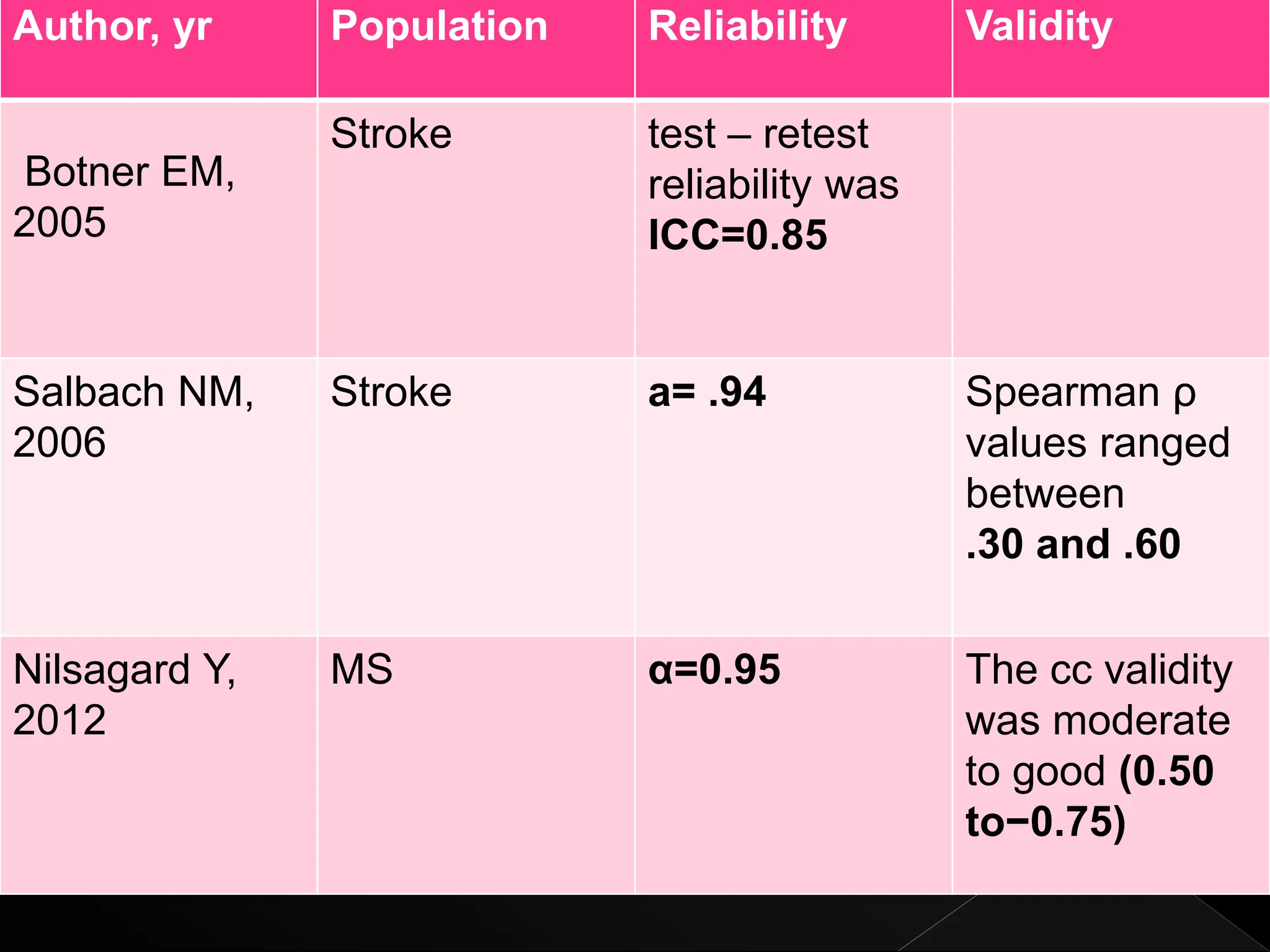
Author, yr Population Reliability Validity
Botner EM,
2005
Stroke test – retest
reliability was
ICC=0.85
Salbach NM,
2006
Stroke a= .94 Spearman ρ
values ranged
between
.30 and .60
Nilsagard Y,
2012
MS α=0.95 The cc validity
was moderate
to good (0.50
to−0.75)
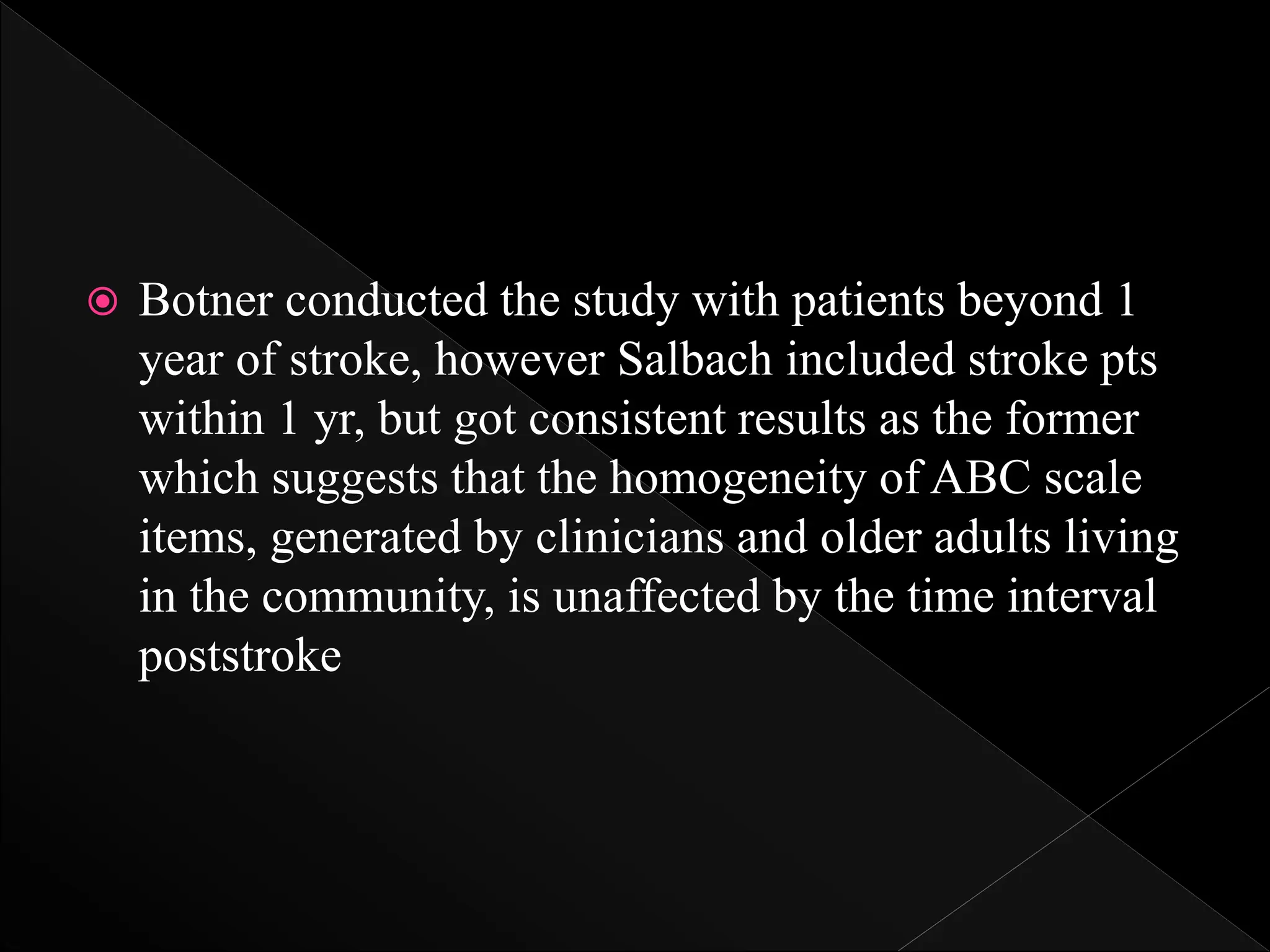
 Botner conducted the study with patients beyond 1
year of stroke, however Salbach included stroke pts
within 1 yr, but got consistent results as the former
which suggests that the homogeneity of ABC scale
items, generated by clinicians and older adults living
in the community, is unaffected by the time interval
poststroke
 All 3 studies agree that ABC items (not all) have ceiling
and flooring effect ; however the summary score of ABC
does not have either of the effects
 The lack of floor or ceiling effects for the summary score
ranging between 20% and 80% on the scale indicates that
the ABC scale covers a range of walking-related tasks that
are relevant to community life in the first year post stroke
(Salbach, 2006)
 According to the study by Nilsagard, a significant
difference was found between non-fallers and the
multiple fallers and a statistically significant
difference was also found in ABC scoring between
those reporting using assistive device outdoors or not
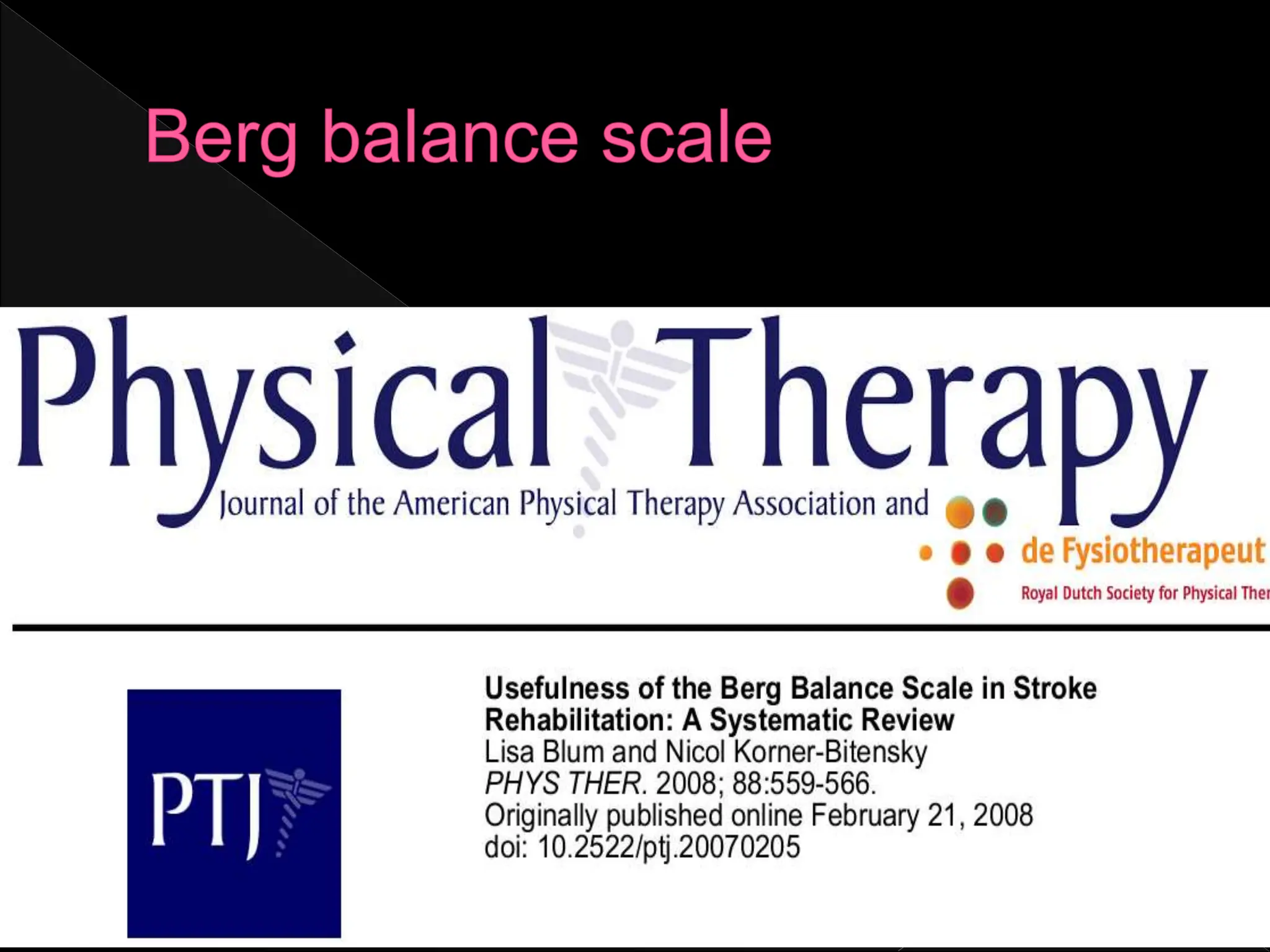
 The purposes of this study were to conduct a
systematic review of the psychometric properties of
the BBS specific to stroke and to identify strengths
and weaknesses in its usefulness for stroke
rehabilitation
 1966 - July 2007
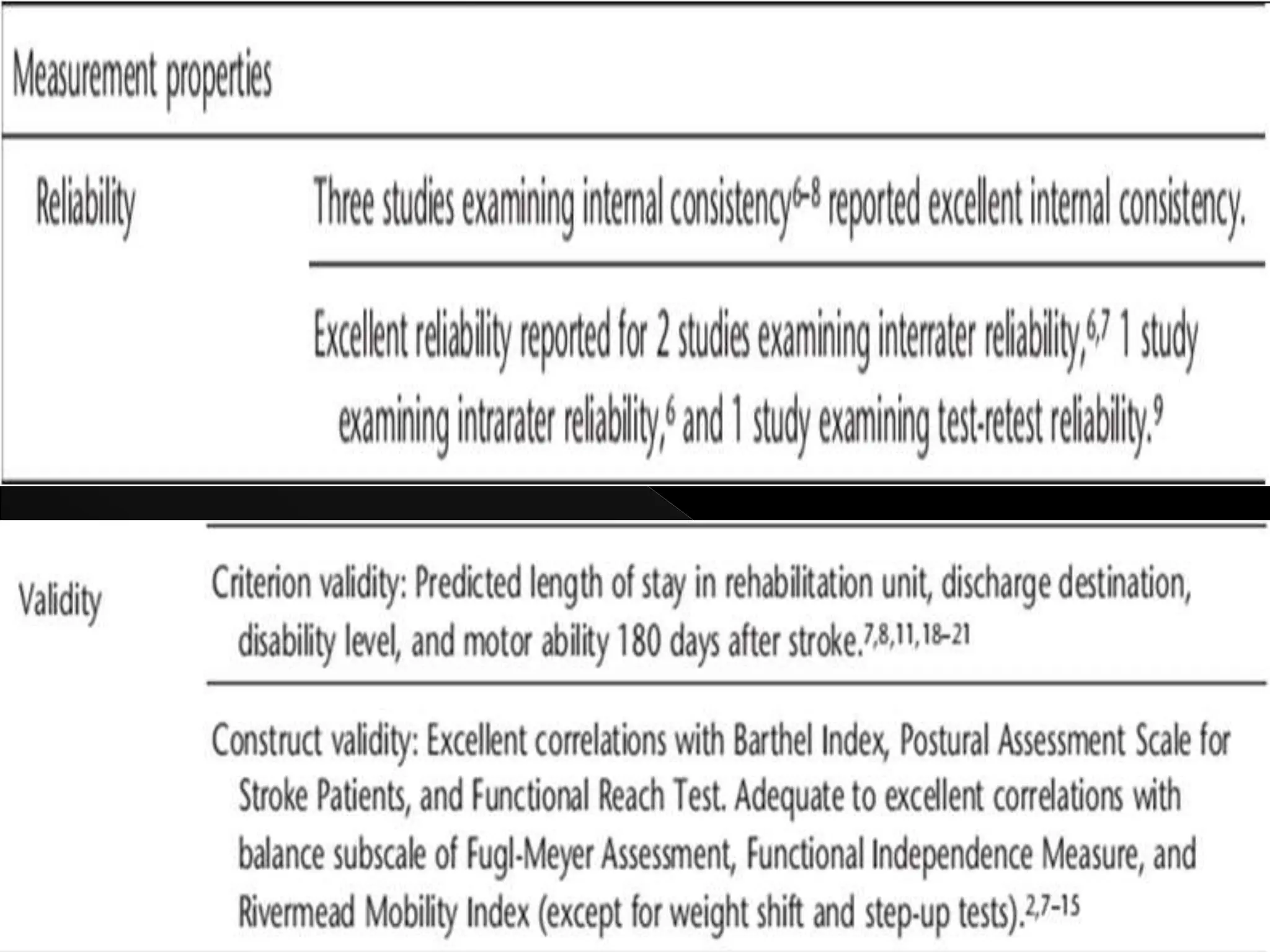
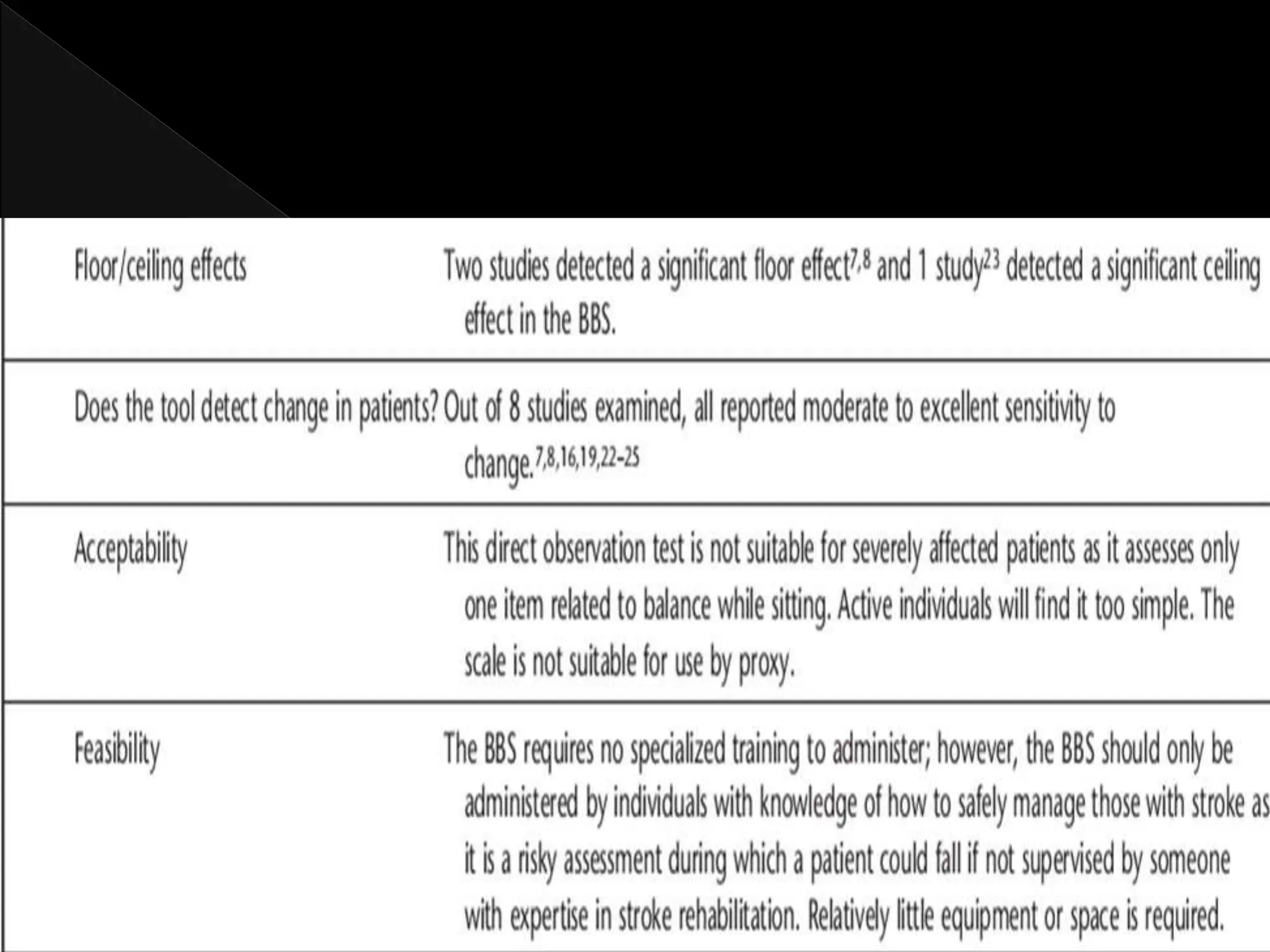
 Total 21 studies included: 4 examined reliability, 16
studied validity, and 8 examined responsiveness
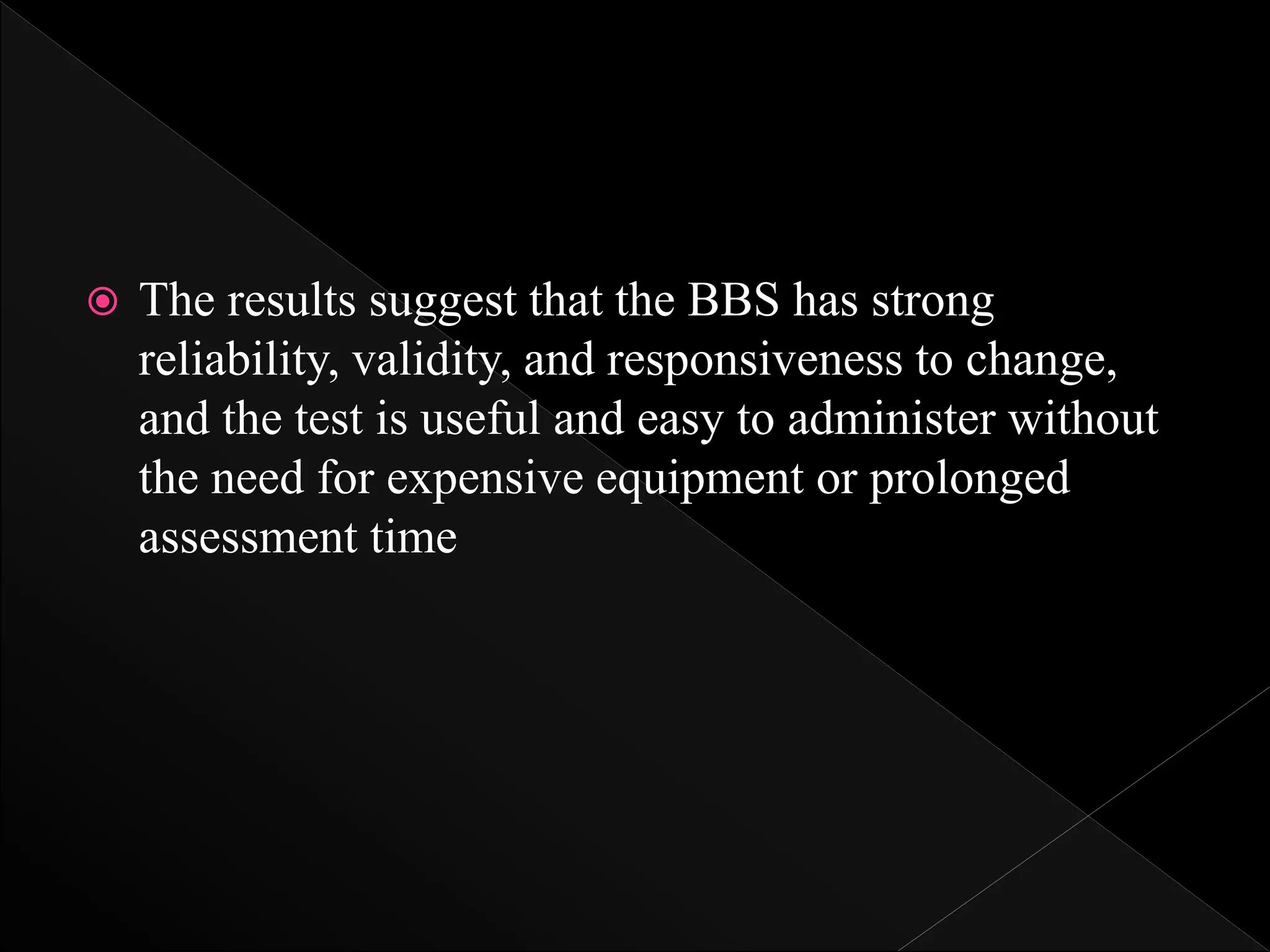
 The results suggest that the BBS has strong
reliability, validity, and responsiveness to change,
and the test is useful and easy to administer without
the need for expensive equipment or prolonged
assessment time
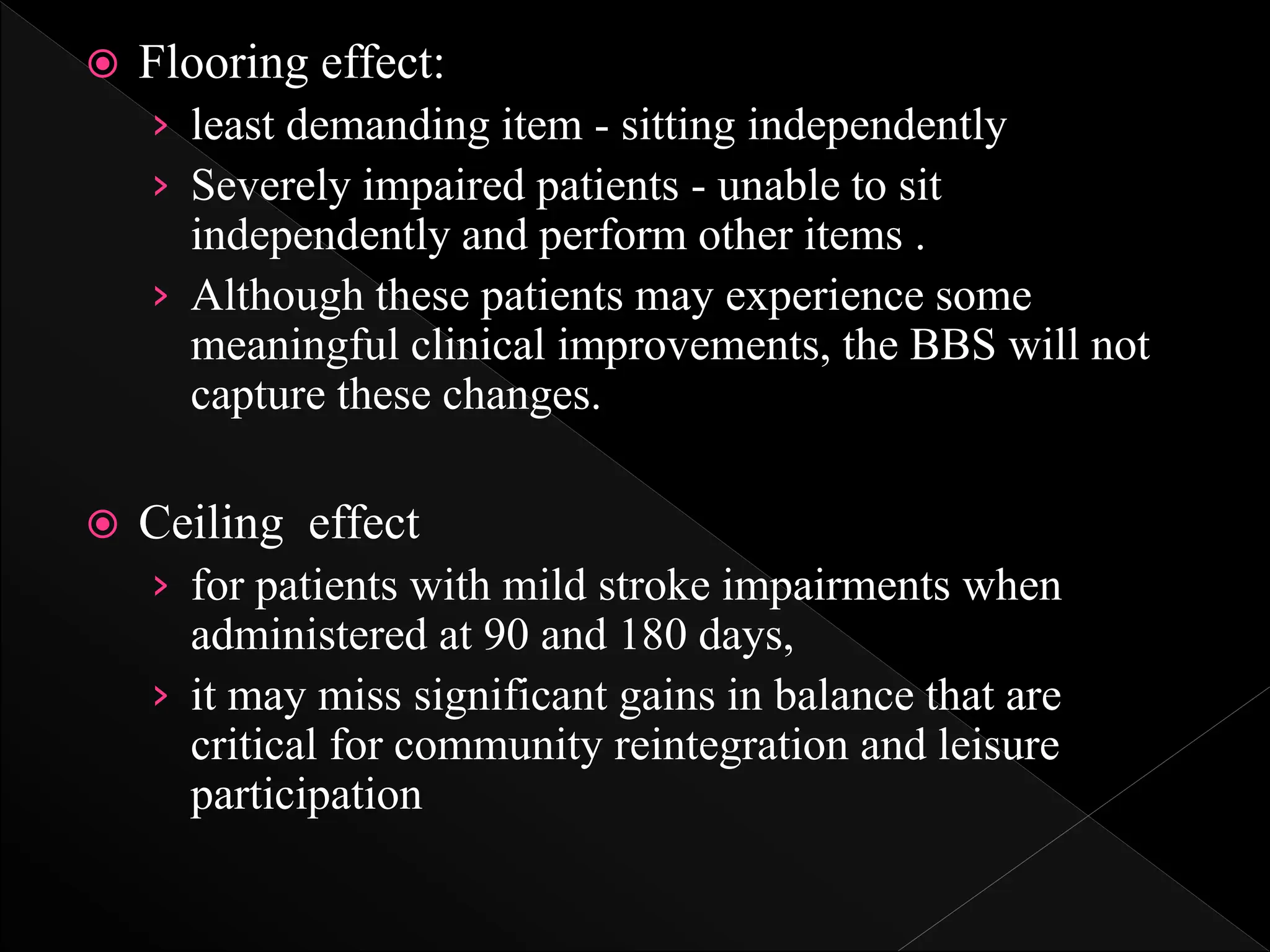
 Flooring effect:
› least demanding item - sitting independently
› Severely impaired patients - unable to sit
independently and perform other items .
› Although these patients may experience some
meaningful clinical improvements, the BBS will not
capture these changes.
 Ceiling effect
› for patients with mild stroke impairments when
administered at 90 and 180 days,
› it may miss significant gains in balance that are
critical for community reintegration and leisure
participation
 The PASS has been reported to have slightly better
psychometric proper-ties than the BBS and it does
not demonstrate the significant floor or ceiling
effects reported with the other measures
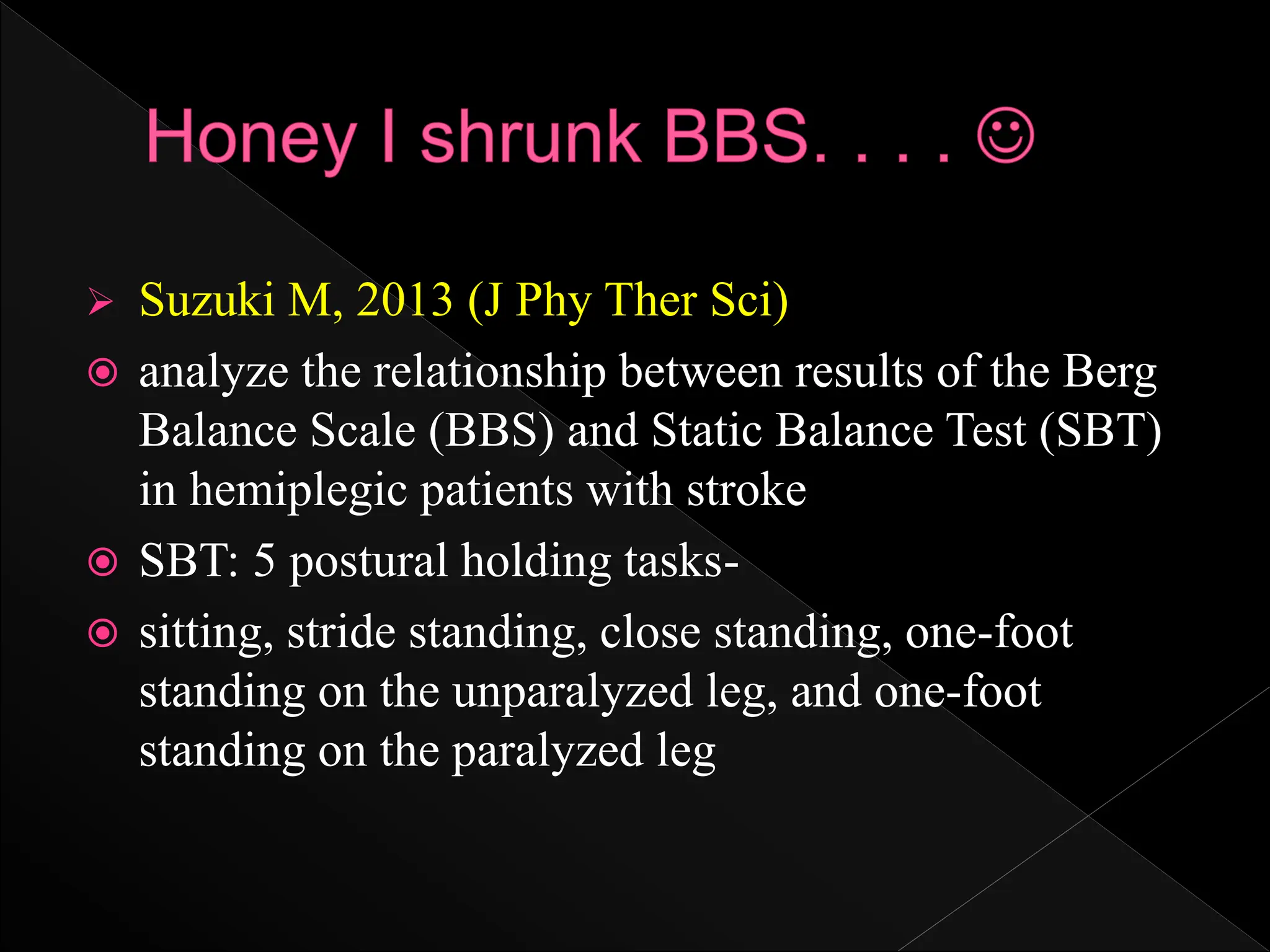
 Suzuki M, 2013 (J Phy Ther Sci)
 analyze the relationship between results of the Berg
Balance Scale (BBS) and Static Balance Test (SBT)
in hemiplegic patients with stroke
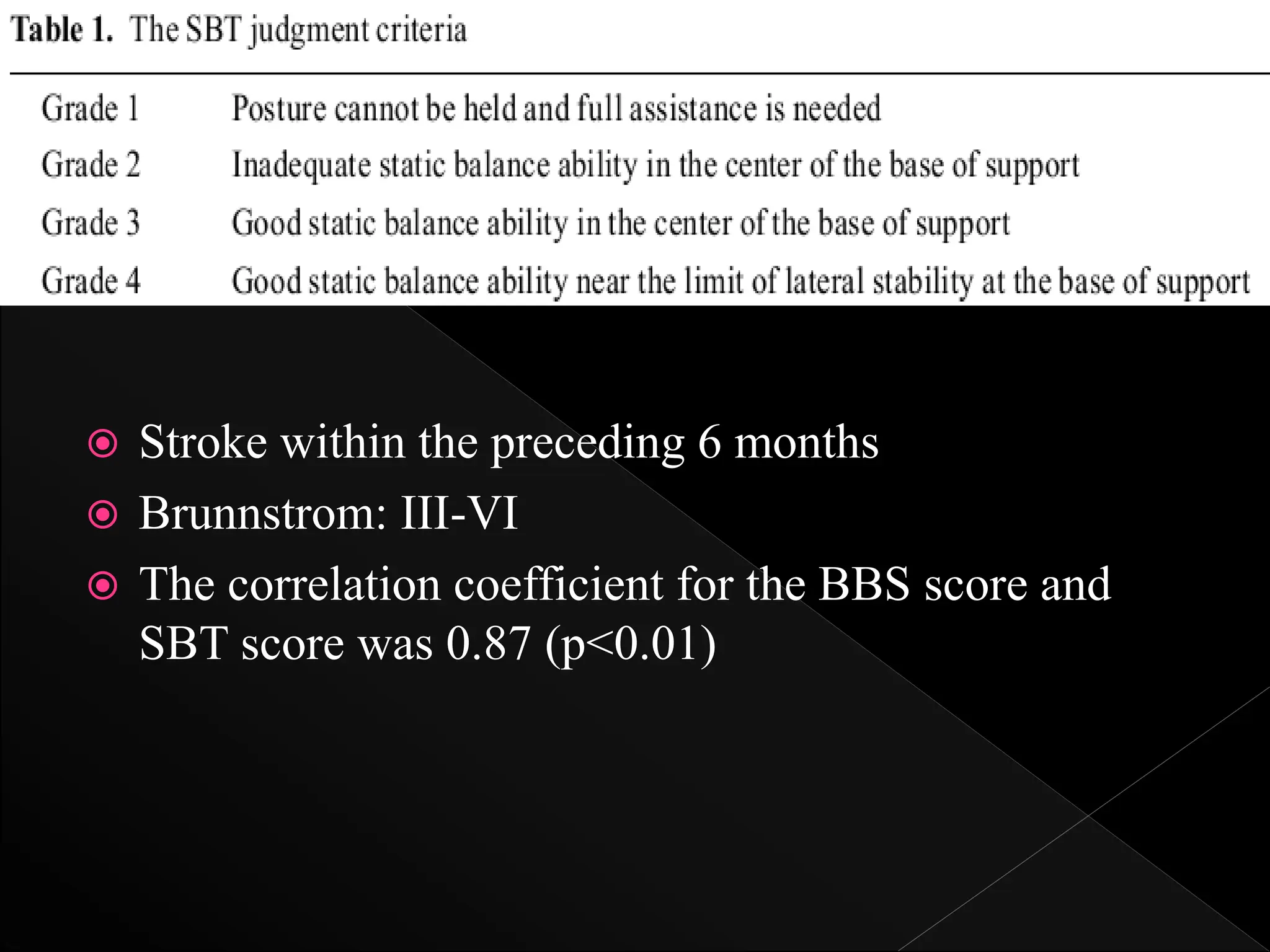
 SBT: 5 postural holding tasks-
 sitting, stride standing, close standing, one-foot
standing on the unparalyzed leg, and one-foot
standing on the paralyzed leg
 Stroke within the preceding 6 months
 Brunnstrom: III-VI
 The correlation coefficient for the BBS score and
SBT score was 0.87 (p<0.01)
 The reason behind this finding may be the influence
of assessing static balance ability near the limit of
stability
 Subjects who obtained the maximum score of 56 on
the BBS, further differences in balance ability could
be detected using the SBT
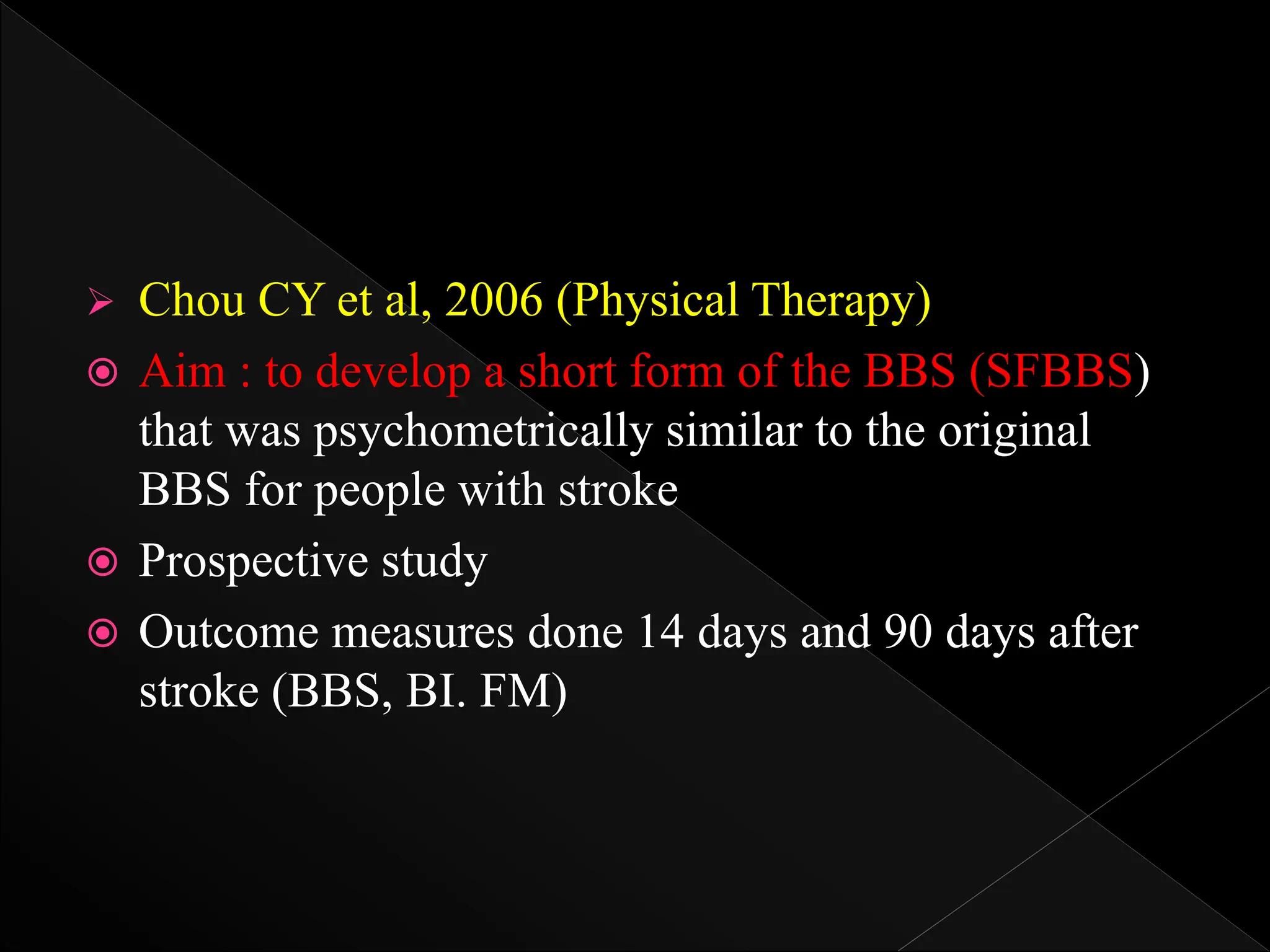
 Chou CY et al, 2006 (Physical Therapy)
 Aim : to develop a short form of the BBS (SFBBS)
that was psychometrically similar to the original
BBS for people with stroke
 Prospective study
 Outcome measures done 14 days and 90 days after
stroke (BBS, BI. FM)
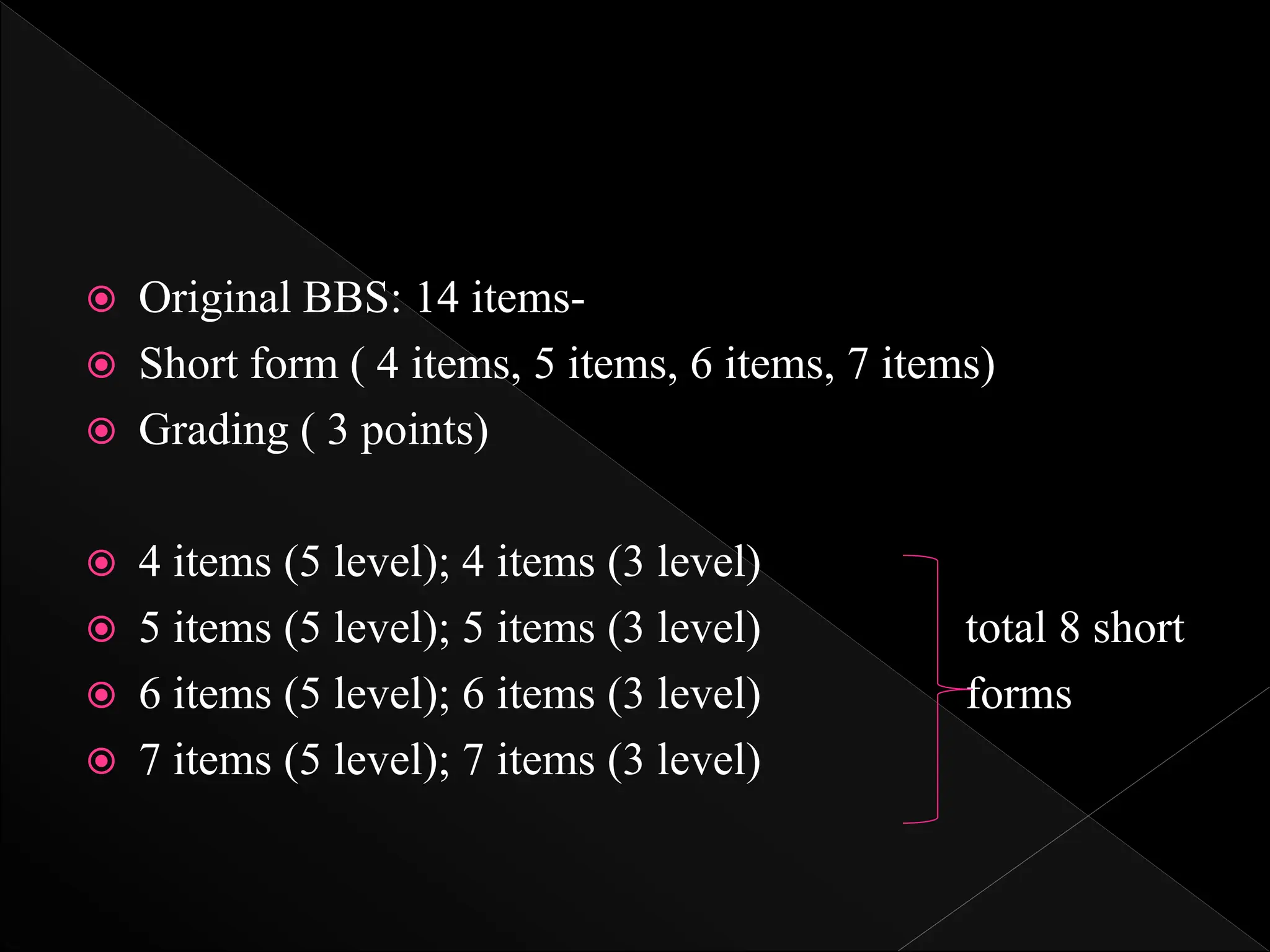
 Original BBS: 14 items-
 Short form ( 4 items, 5 items, 6 items, 7 items)
 Grading ( 3 points)
 4 items (5 level); 4 items (3 level)
 5 items (5 level); 5 items (3 level) total 8 short
 6 items (5 level); 6 items (3 level) forms
 7 items (5 level); 7 items (3 level)
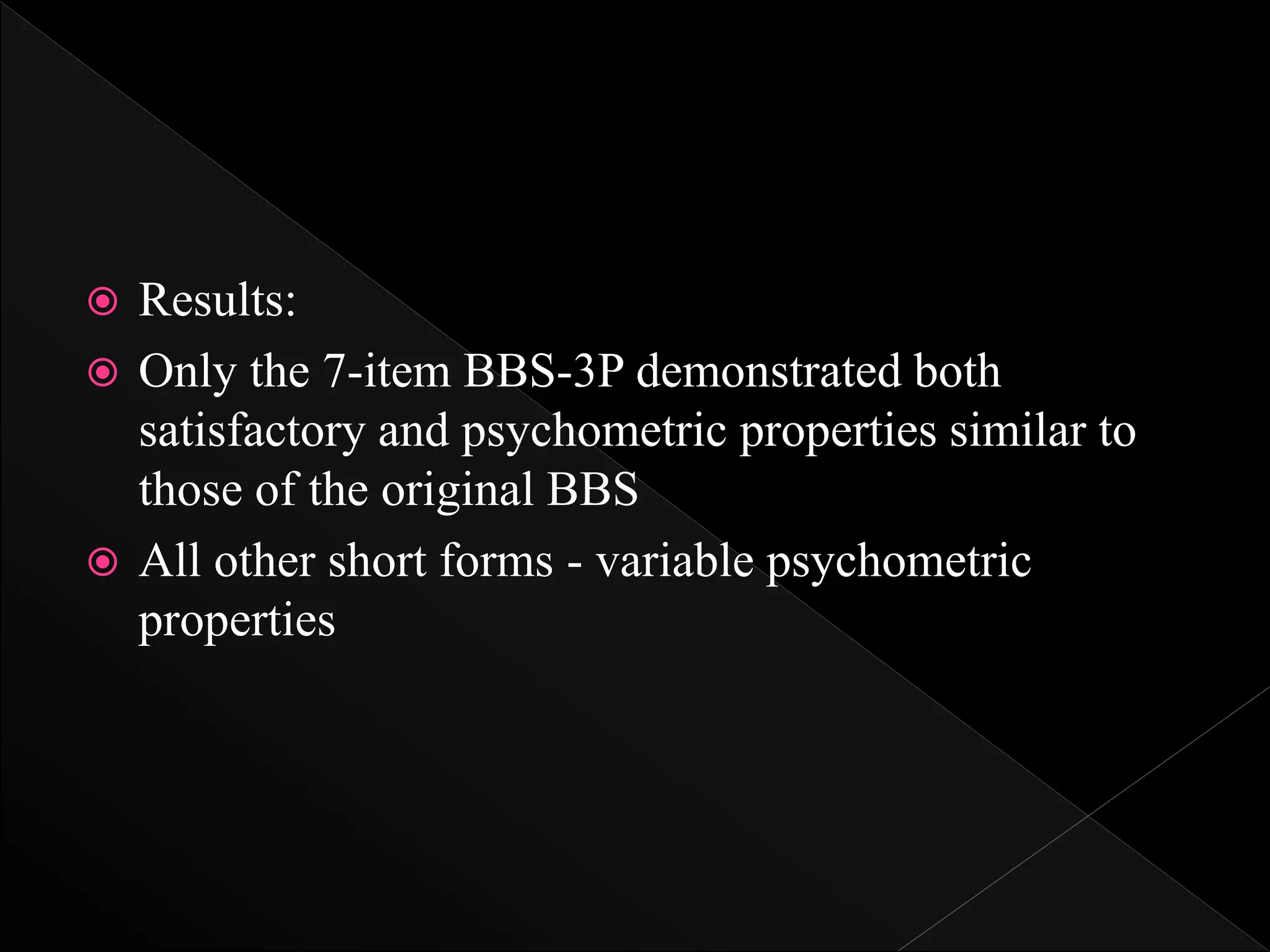
 Results:
 Only the 7-item BBS-3P demonstrated both
satisfactory and psychometric properties similar to
those of the original BBS
 All other short forms - variable psychometric
properties
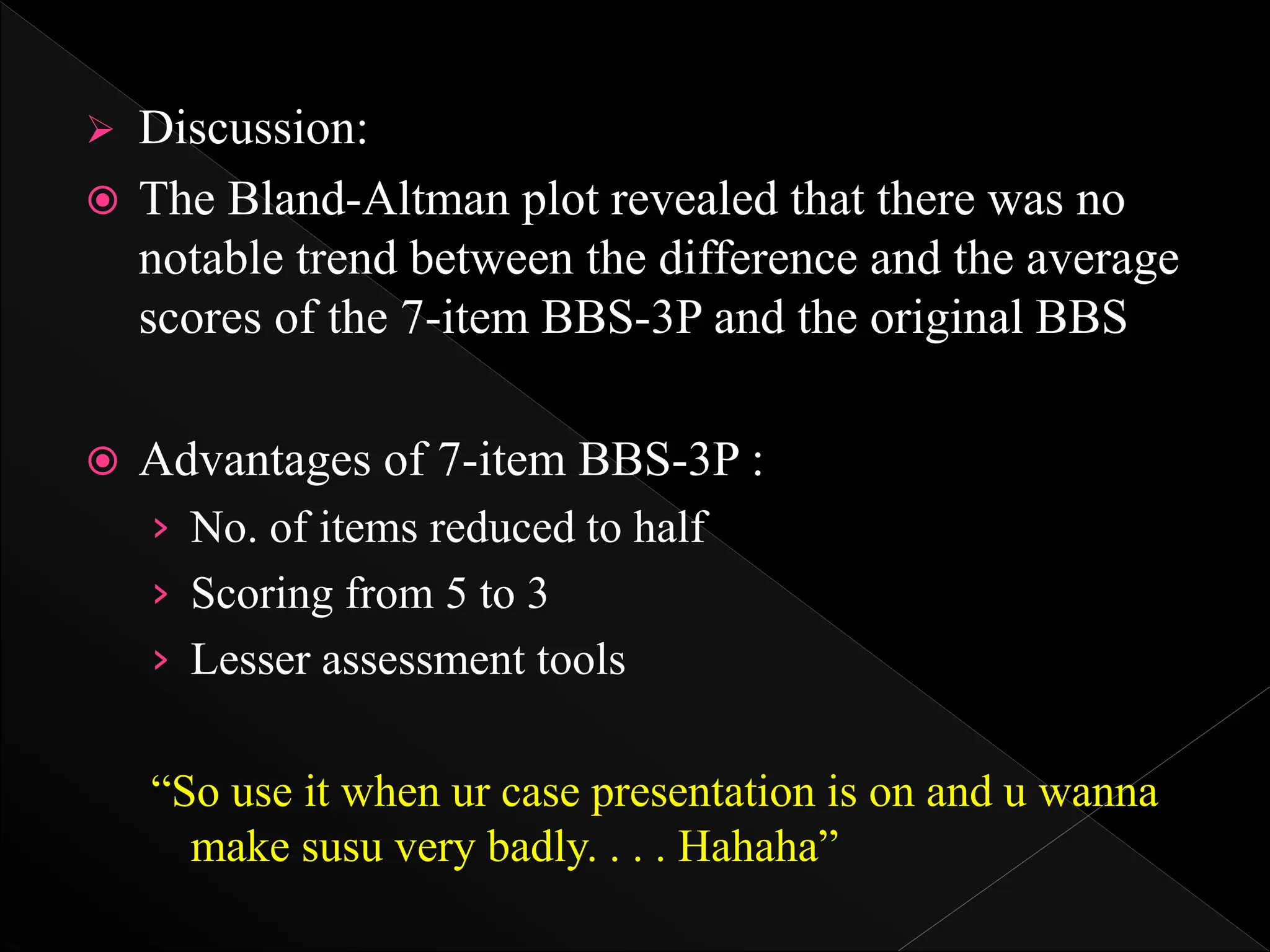
 Discussion:
 The Bland-Altman plot revealed that there was no
notable trend between the difference and the average
scores of the 7-item BBS-3P and the original BBS
 Advantages of 7-item BBS-3P :
› No. of items reduced to half
› Scoring from 5 to 3
› Lesser assessment tools
“So use it when ur case presentation is on and u wanna
make susu very badly. . . . Hahaha”
 Horak FB in 2009 (Physical Therapy)
 Goal :
› To develop a clinical balance assessment tool that
aims to target 6 different balance control systems so
that specific rehabilitation approaches can be designed
for different balance deficits.
› presents psychometric properties of The Balance
Evaluation Systems Test (BESTest)
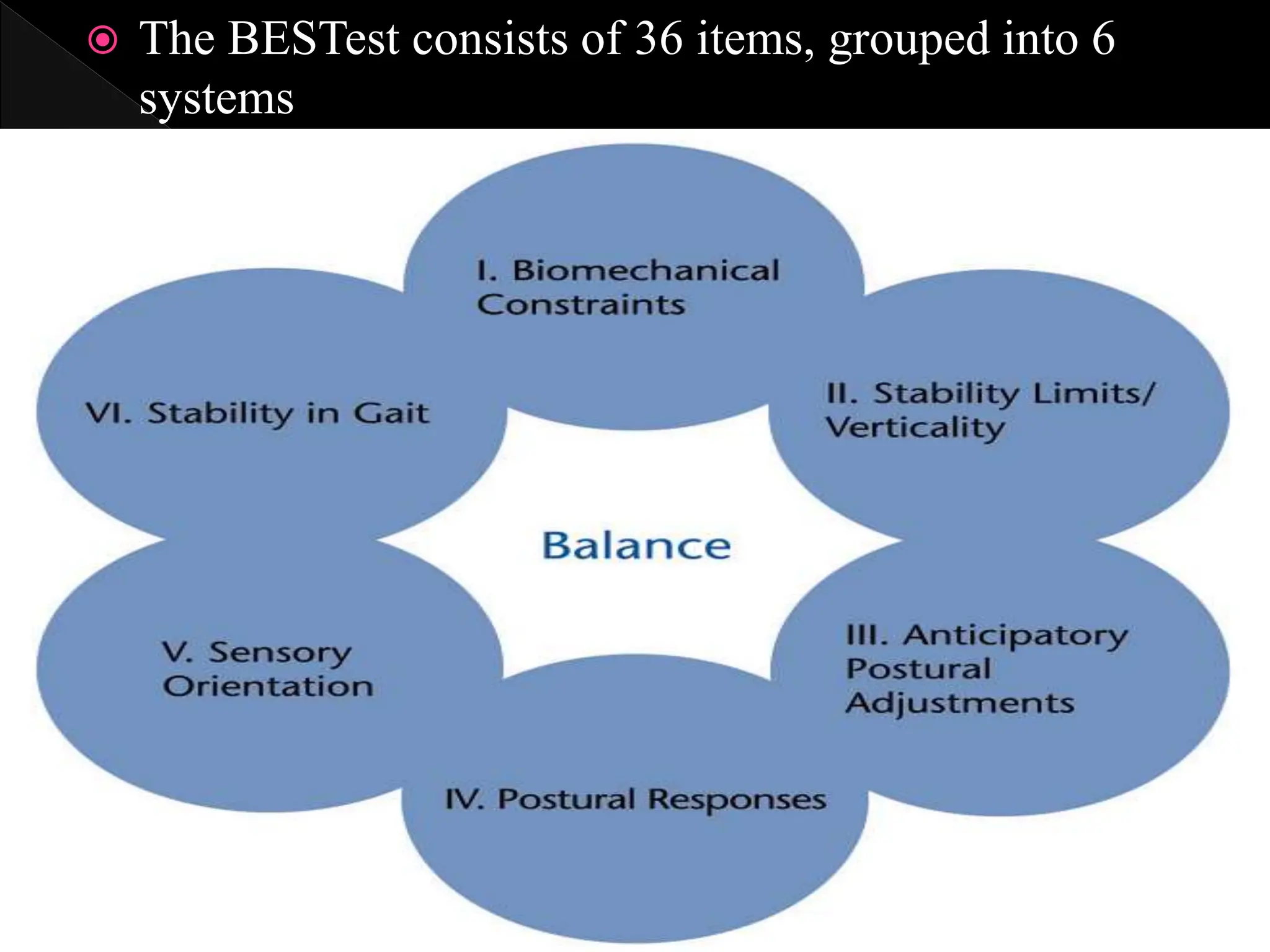
 The BESTest consists of 36 items, grouped into 6
systems
 22 subjects: with and without balance disorders
 Raters were given training
 Total time for each patient: 20 – 30 min
 Results:
 (ICC) for interrater reliability for the test as a whole
was .91
 The Kendall coefficient of concordance among raters
ranged from .46 to 1.00 for the 36 individual items.
 Concurrent validity of the correlation between the
BESTest and the ABC Scale was r = .636, P < .01
 stop conceptualizing balance as a single system so that
treatment can be more specific than generalized
“balance training” for a generalized “balance problem”
 Whether or not the sections of the BESTest accurately
detect dissociable balance deficits remains to be
investigated to establish its construct validity
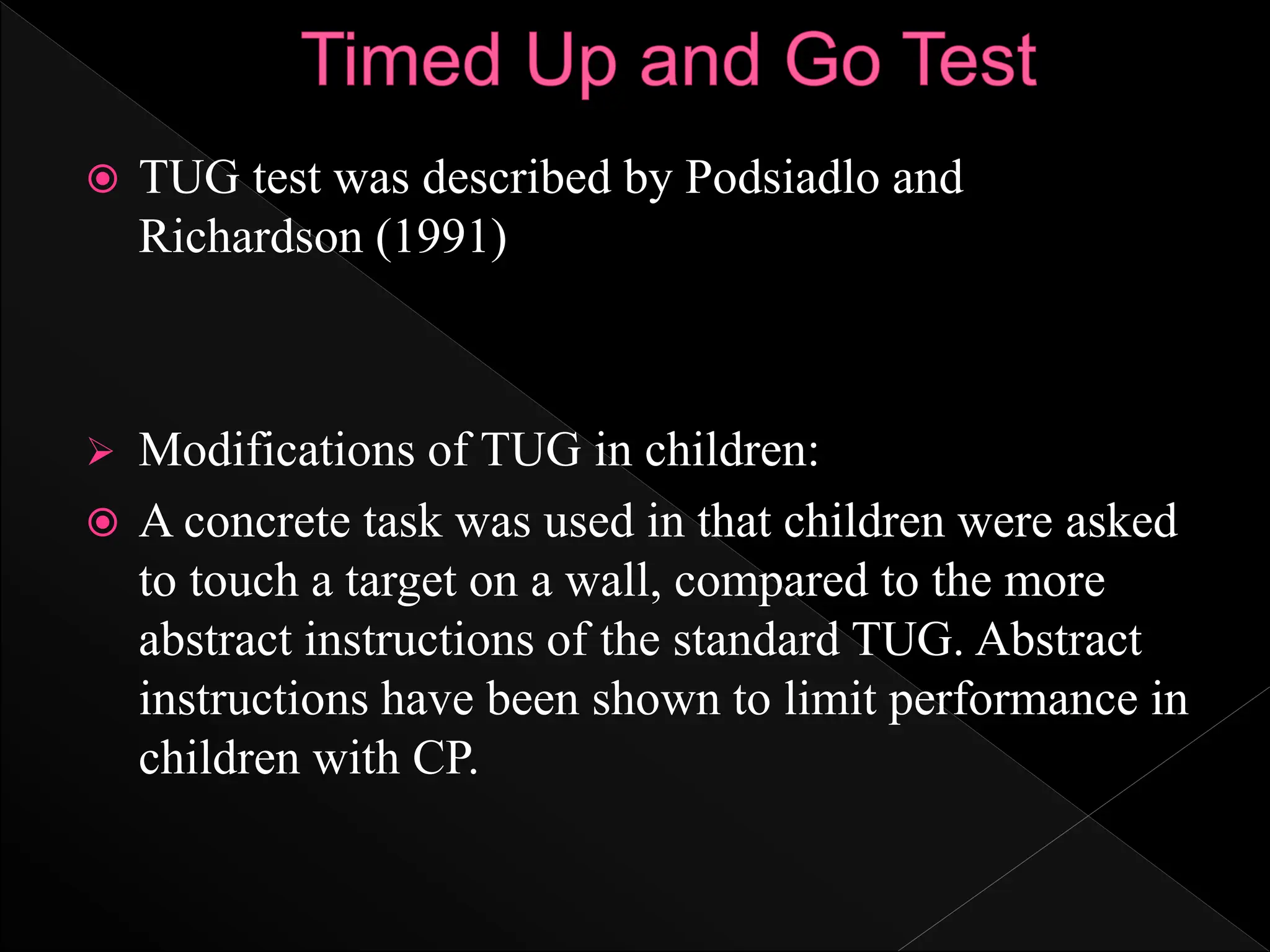
 TUG test was described by Podsiadlo and
Richardson (1991)
 Modifications of TUG in children:
 A concrete task was used in that children were asked
to touch a target on a wall, compared to the more
abstract instructions of the standard TUG. Abstract
instructions have been shown to limit performance in
children with CP.
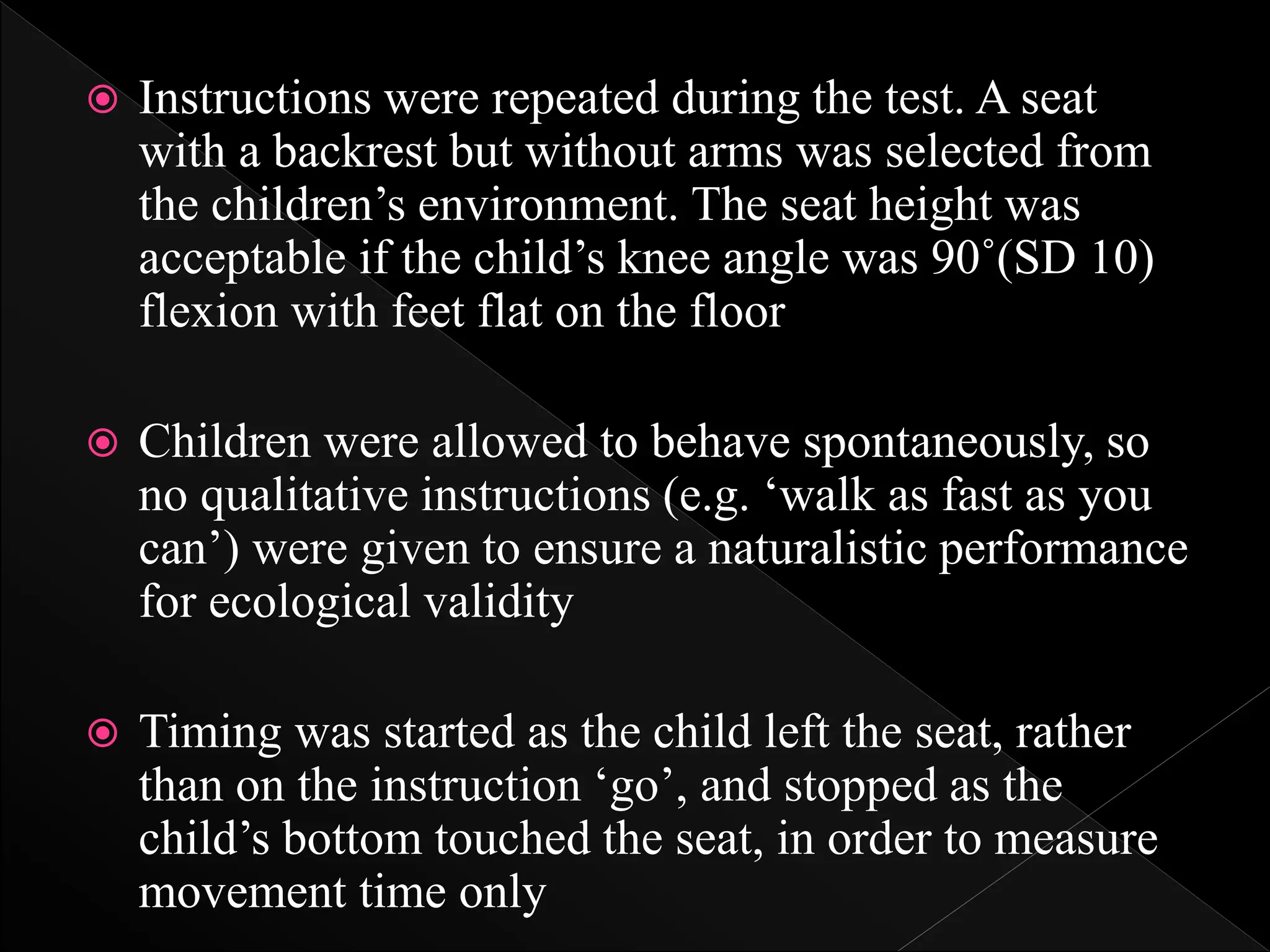
 Instructions were repeated during the test. A seat
with a backrest but without arms was selected from
the children’s environment. The seat height was
acceptable if the child’s knee angle was 90˚(SD 10)
flexion with feet flat on the floor
 Children were allowed to behave spontaneously, so
no qualitative instructions (e.g. ‘walk as fast as you
can’) were given to ensure a naturalistic performance
for ecological validity
 Timing was started as the child left the seat, rather
than on the instruction ‘go’, and stopped as the
child’s bottom touched the seat, in order to measure
movement time only
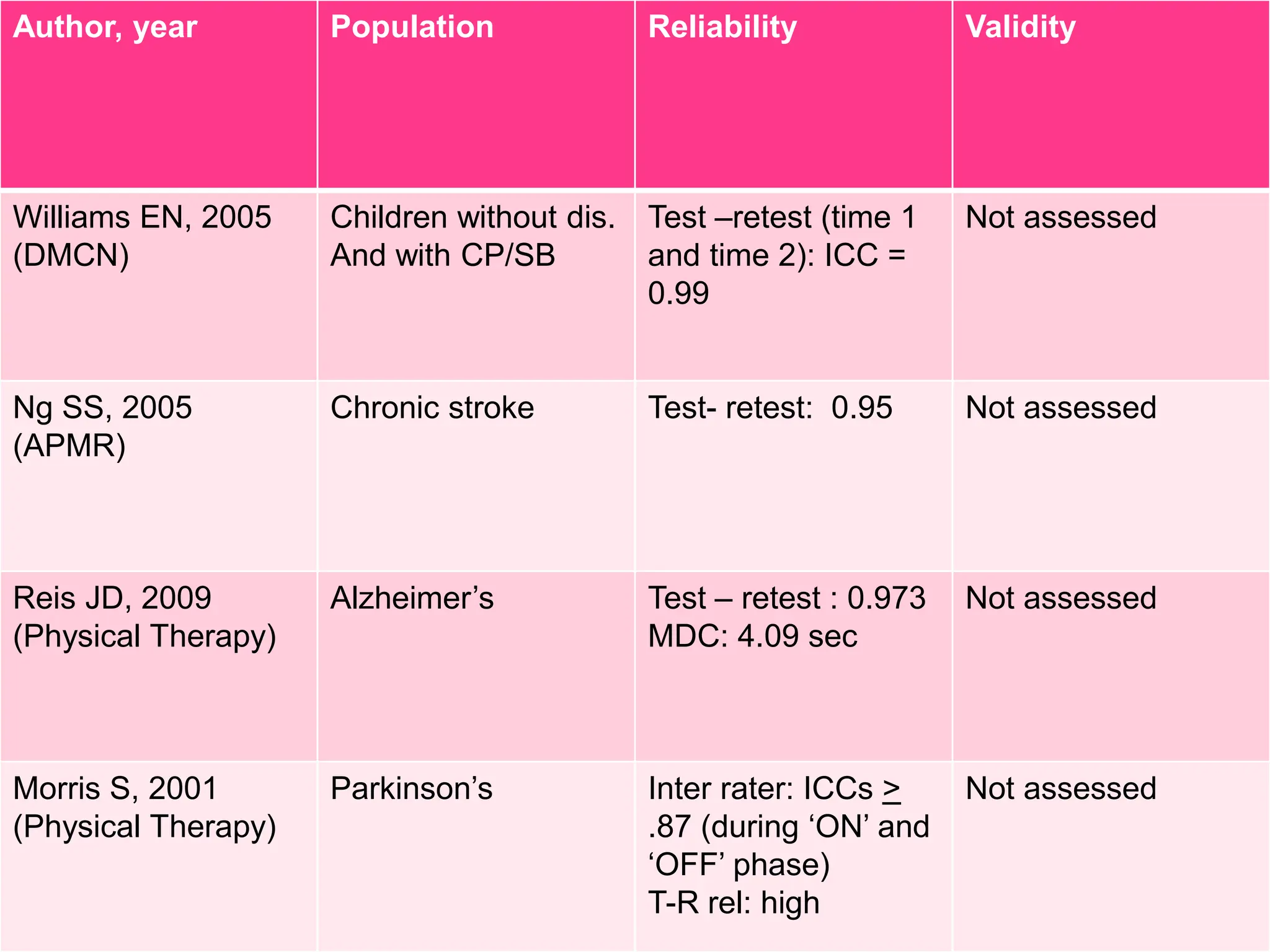
Author, year Population Reliability Validity
Williams EN, 2005
(DMCN)
Children without dis.
And with CP/SB
Test –retest (time 1
and time 2): ICC =
0.99
Not assessed
Ng SS, 2005
(APMR)
Chronic stroke Test- retest: 0.95 Not assessed
Reis JD, 2009
(Physical Therapy)
Alzheimer’s Test – retest : 0.973
MDC: 4.09 sec
Not assessed
Morris S, 2001
(Physical Therapy)
Parkinson’s Inter rater: ICCs >
.87 (during ‘ON’ and
‘OFF’ phase)
T-R rel: high
Not assessed
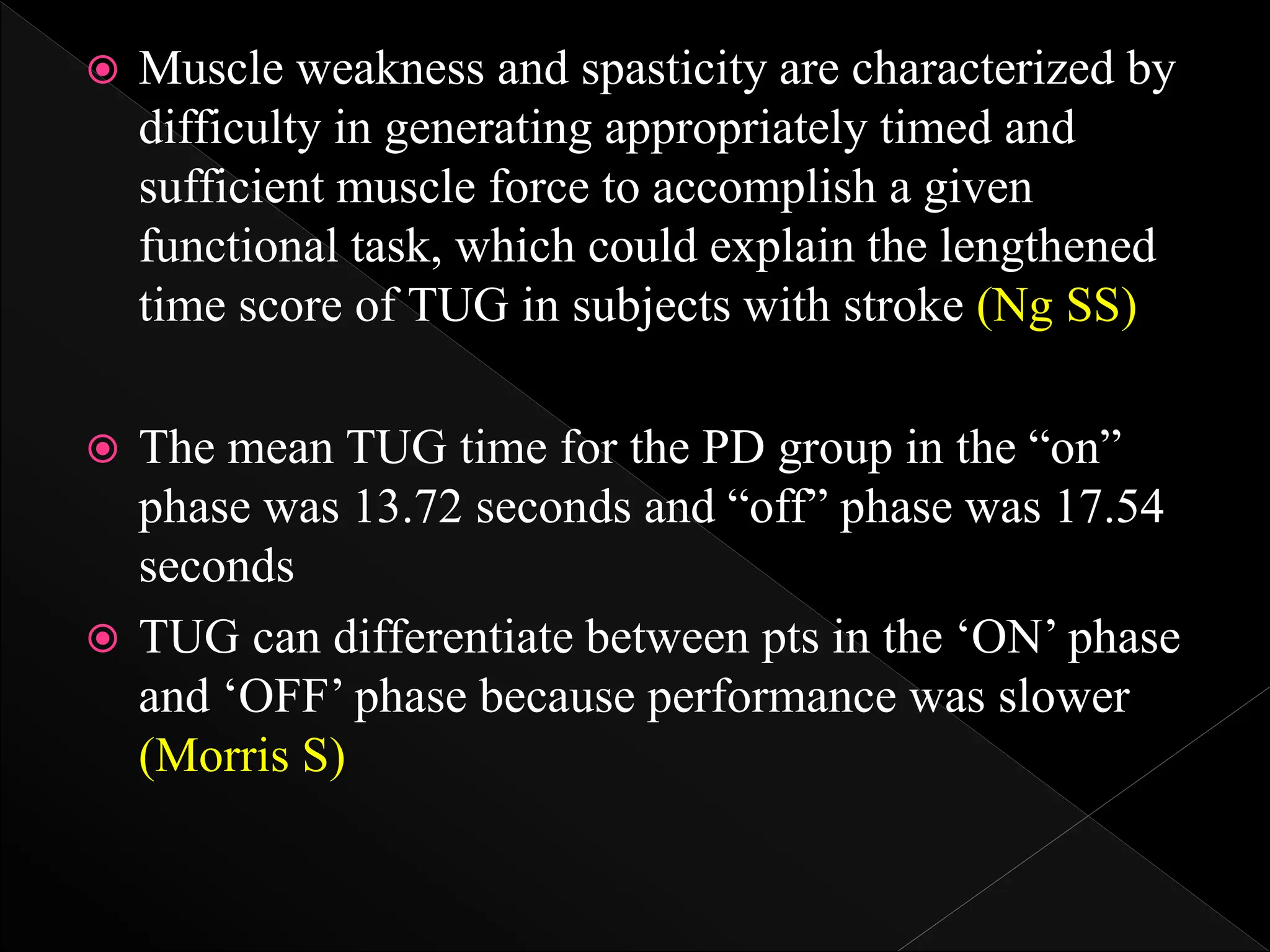
 Muscle weakness and spasticity are characterized by
difficulty in generating appropriately timed and
sufficient muscle force to accomplish a given
functional task, which could explain the lengthened
time score of TUG in subjects with stroke (Ng SS)
 The mean TUG time for the PD group in the “on”
phase was 13.72 seconds and “off” phase was 17.54
seconds
 TUG can differentiate between pts in the ‘ON’ phase
and ‘OFF’ phase because performance was slower
(Morris S)
 Participants in the moderately severe to severe AD
group had comparable MMSE scores (10.2 [8.8])
and were able to perform the test with excellent
relative reliability results (Reis JD)
 The moderate negative correlation (rho=–0.52) of
TUG scores with the Standing and Walking
dimensions of GMFM indicates the potential for
TUG to be administered between GMFM testing
sessions to provide an indication of progress or
deterioration with regard to functional mobility.
 However, a larger group of young people with
disability may provide stronger evidence of the
validity of TUG as a functional measure compared
with GMFM (Williams)
 The Modified Functional Reach Test (MFRT) was
developed by Duncan
 In spinal cord injury:
 Modified FRT was used (consider ulnar styloid
process instead of 3rd MC)
 Lynch SM in 1998 revealed that mFRT could
differentiate between group 1 and 3; and between
group 2 and 3
 Reason for no diff between group 1 and 2 – further
trials required
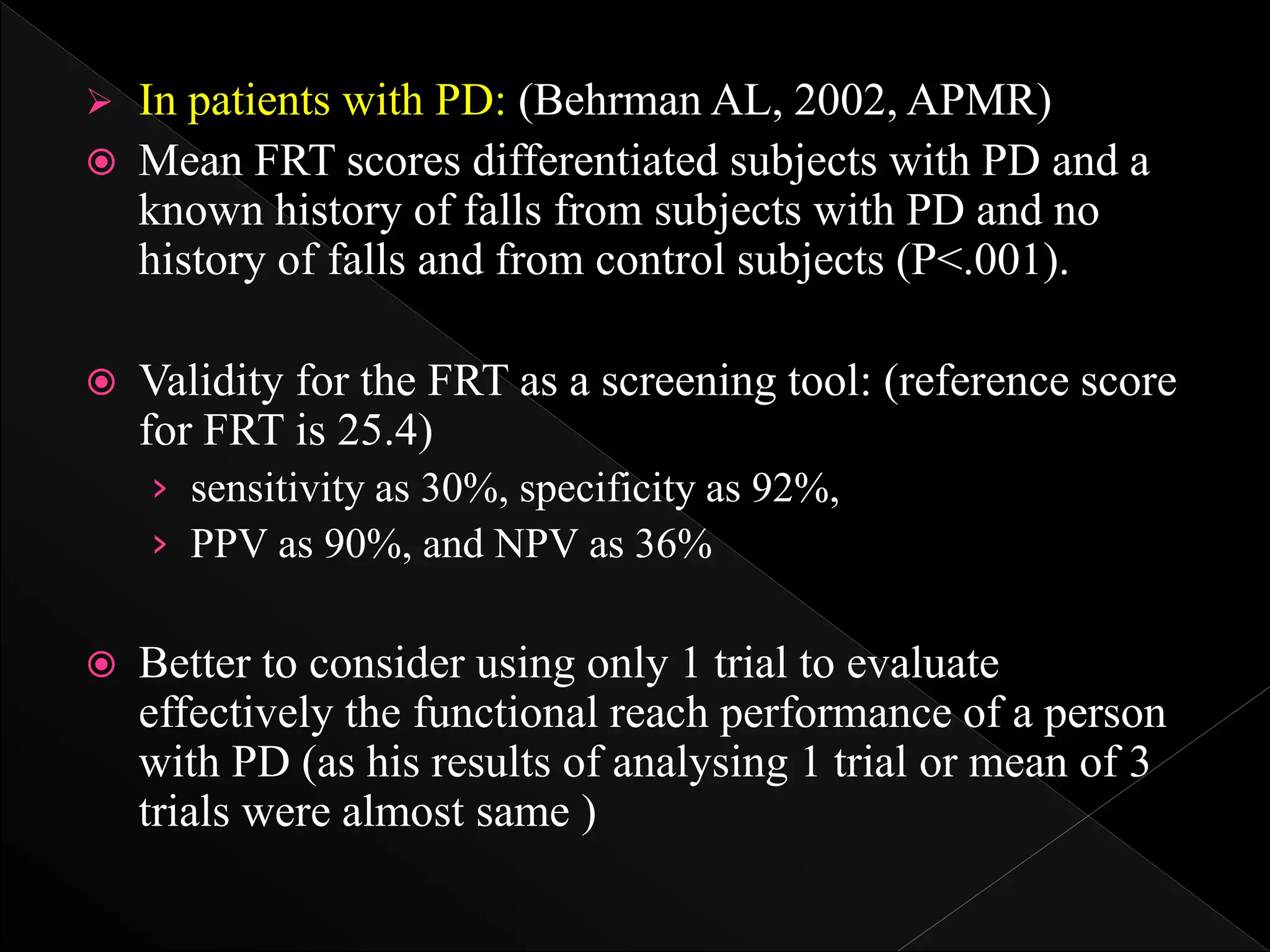
 In patients with PD: (Behrman AL, 2002, APMR)
 Mean FRT scores differentiated subjects with PD and a
known history of falls from subjects with PD and no
history of falls and from control subjects (P<.001).
 Validity for the FRT as a screening tool: (reference score
for FRT is 25.4)
› sensitivity as 30%, specificity as 92%,
› PPV as 90%, and NPV as 36%
 Better to consider using only 1 trial to evaluate
effectively the functional reach performance of a person
with PD (as his results of analysing 1 trial or mean of 3
trials were almost same )
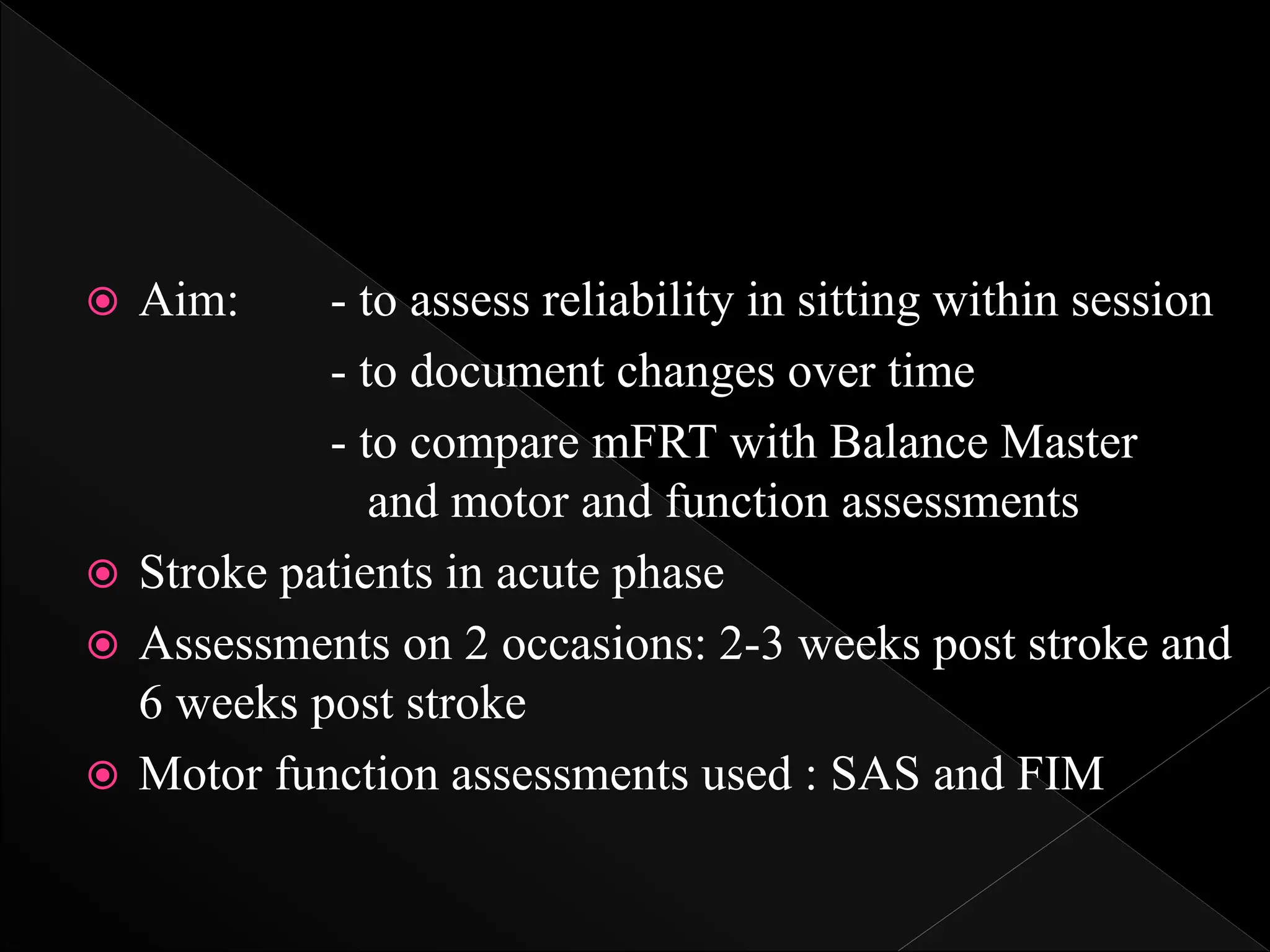
 Aim: - to assess reliability in sitting within session
- to document changes over time
- to compare mFRT with Balance Master
and motor and function assessments
 Stroke patients in acute phase
 Assessments on 2 occasions: 2-3 weeks post stroke and
6 weeks post stroke
 Motor function assessments used : SAS and FIM
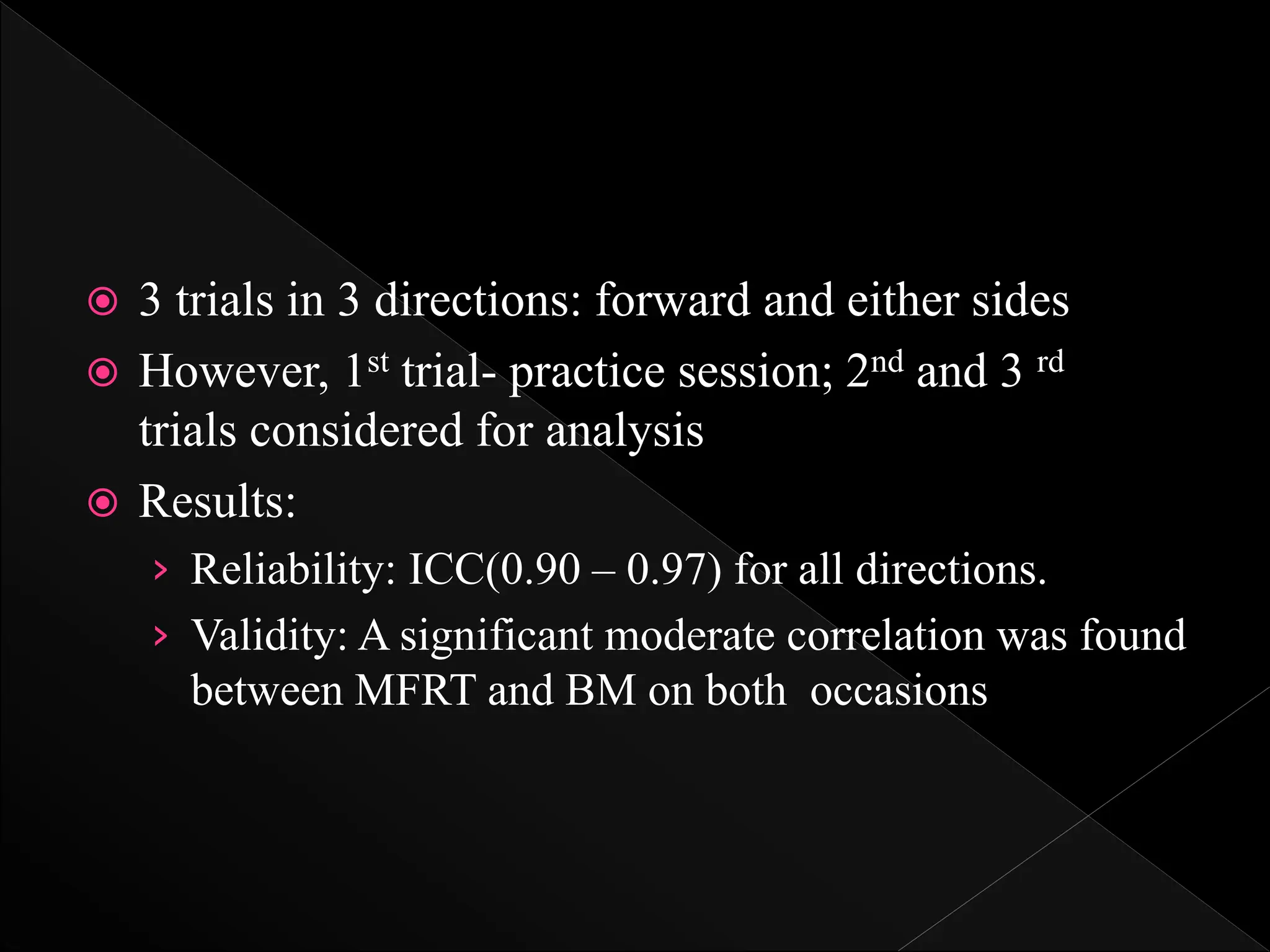
 3 trials in 3 directions: forward and either sides
 However, 1st trial- practice session; 2nd and 3 rd
trials considered for analysis
 Results:
› Reliability: ICC(0.90 – 0.97) for all directions.
› Validity: A significant moderate correlation was found
between MFRT and BM on both occasions
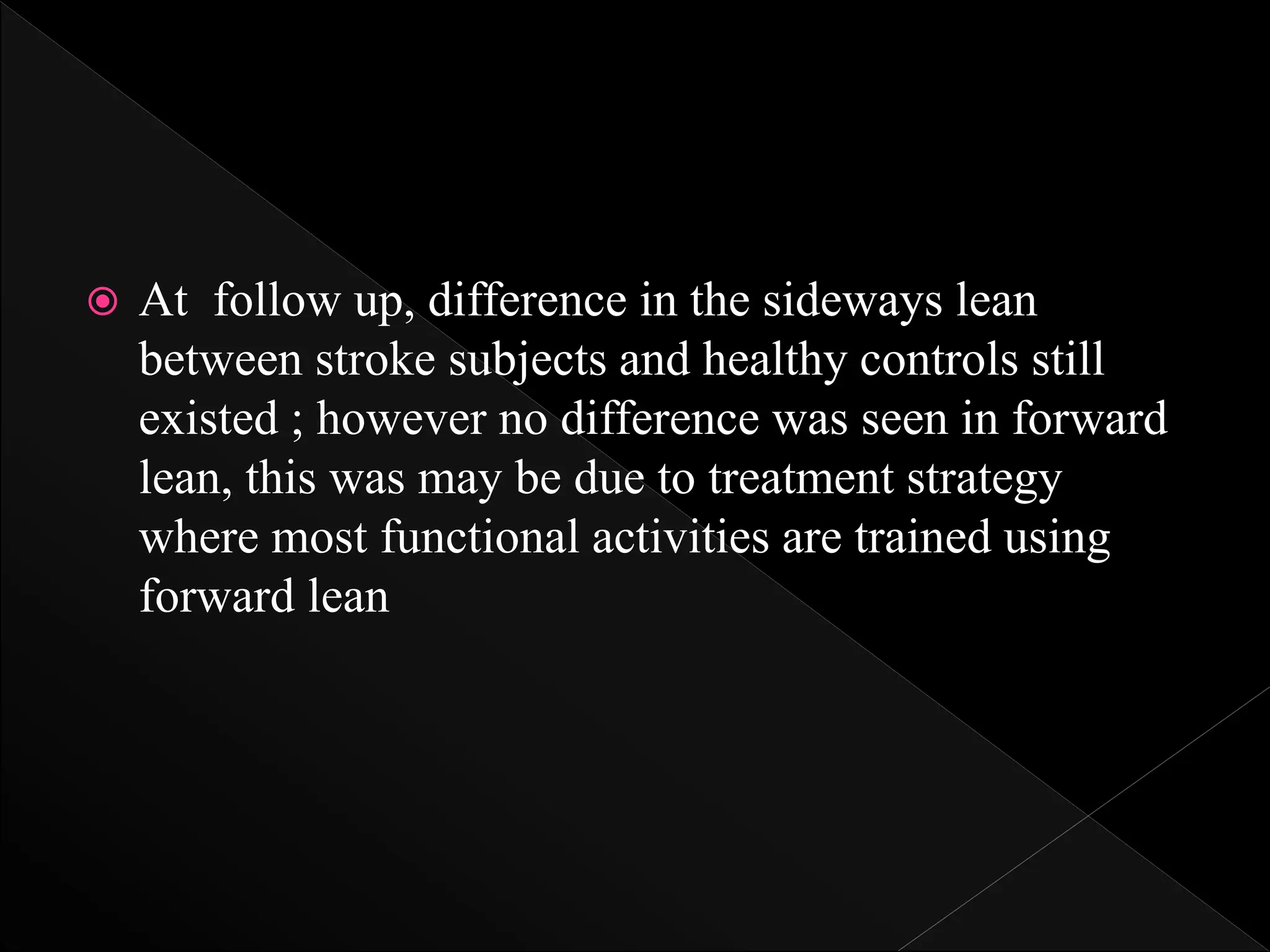
 At follow up, difference in the sideways lean
between stroke subjects and healthy controls still
existed ; however no difference was seen in forward
lean, this was may be due to treatment strategy
where most functional activities are trained using
forward lean
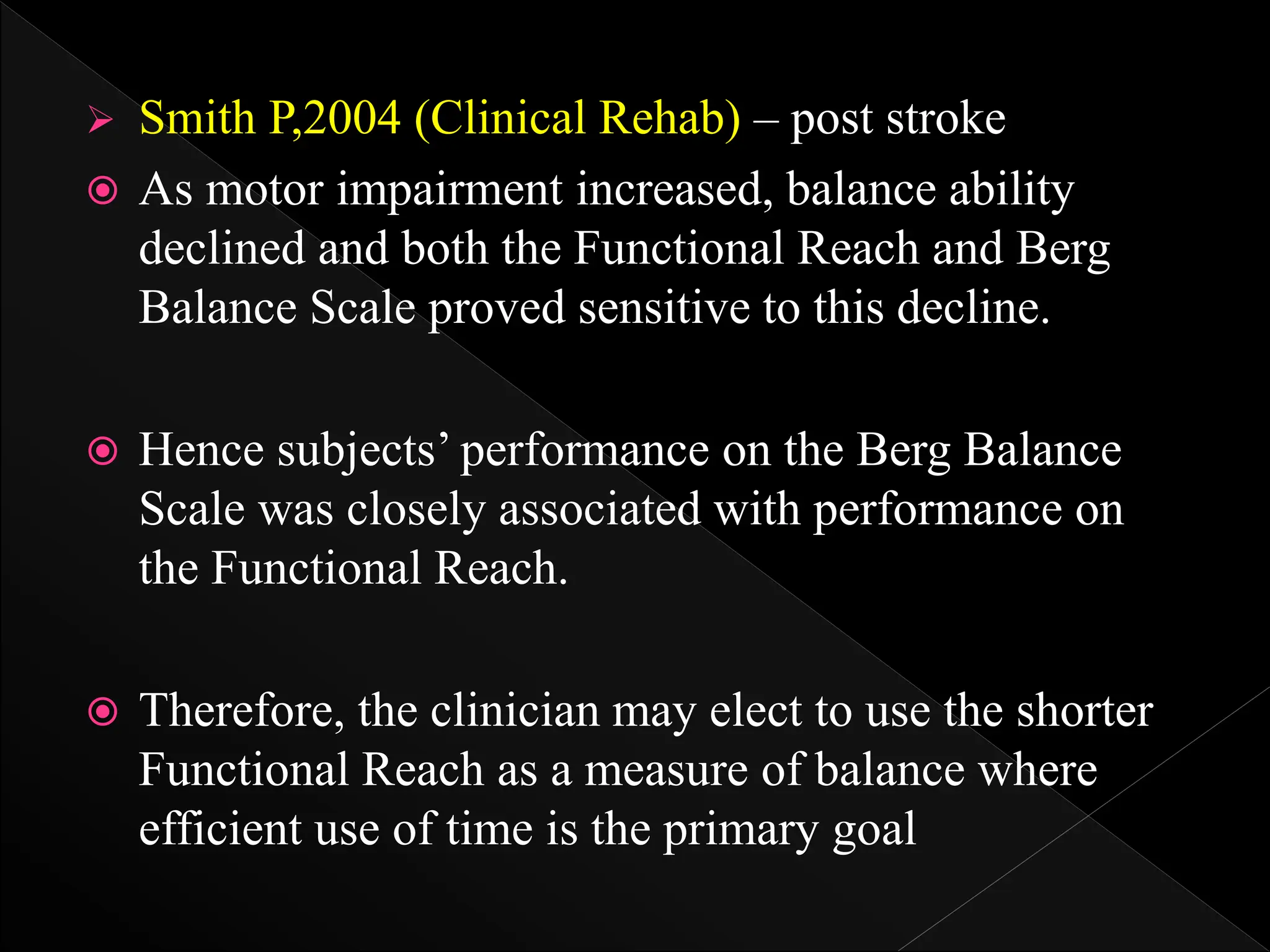
 Smith P,2004 (Clinical Rehab) – post stroke
 As motor impairment increased, balance ability
declined and both the Functional Reach and Berg
Balance Scale proved sensitive to this decline.
 Hence subjects’ performance on the Berg Balance
Scale was closely associated with performance on
the Functional Reach.
 Therefore, the clinician may elect to use the shorter
Functional Reach as a measure of balance where
efficient use of time is the primary goal
 Winter DA, Prince F, Frank JS, Powell C, Zabjek KF.
Unified theory regarding A/P and M/L balance in quiet
stance. J Neurophysiol 1996;75:2334–43.
 [33] Dickstein R, Abulaffio N. Postural sway of the
affected and non-affected pelvis and leg in stance of
hemiparetic patients. Arch Phys Med Rehabil
2000;81:364–7.
 [34] Paillex R, So A. Posture debout chez sujet adultes:
spe ´cificite´sde l’he ´miple´gie. Ann Readapt Med Phys
2003;46:71–8.
 [35] Karlsson A, Frykberg G. Correlations between force
plate measures for assessment of balance. Clin Biomech
2000;15:365–9.
 36] Niam S, Cheung W, Sullivan PE, Kent S, Gu X.
Balance and physical impairments after stroke. Arch
Phys Med Rehabil 1999; 80:1227–33.
 [37] Pyoria O, Era P, Talvitie U. Relationships between
standing balance and symmetry measurements in patients
following recent strokes (3 weeks or less) or older
strokes (6 months or more). Phys Ther 2004; 84:128–36.
 [38] Stevenson TJ, Garland SJ. Standing balance during
internally pro-duced perturbations in subjects with
hemiplegia: validation of the balance scale. Arch Phys
Med Rehabil 1996;77:656–62.
 [39] Corriveau H, Hebert R, Raiche M, Prince F.
Evaluation of postural stability in the elderly with stroke.
Arch Phys Med Rehabil 2004;85:1095–101.

Objective Assessment of Postural Control.pptx

  • 2.
     The originalEnglish-language version of the ABC scale was developed and tested in ambulatory, community-dwelling older adults living in Canada
  • 3.
    Author, yr PopulationReliability Validity Botner EM, 2005 Stroke test – retest reliability was ICC=0.85 Salbach NM, 2006 Stroke a= .94 Spearman ρ values ranged between .30 and .60 Nilsagard Y, 2012 MS α=0.95 The cc validity was moderate to good (0.50 to−0.75)
  • 4.
     Botner conductedthe study with patients beyond 1 year of stroke, however Salbach included stroke pts within 1 yr, but got consistent results as the former which suggests that the homogeneity of ABC scale items, generated by clinicians and older adults living in the community, is unaffected by the time interval poststroke
  • 5.
     All 3studies agree that ABC items (not all) have ceiling and flooring effect ; however the summary score of ABC does not have either of the effects  The lack of floor or ceiling effects for the summary score ranging between 20% and 80% on the scale indicates that the ABC scale covers a range of walking-related tasks that are relevant to community life in the first year post stroke (Salbach, 2006)
  • 6.
     According tothe study by Nilsagard, a significant difference was found between non-fallers and the multiple fallers and a statistically significant difference was also found in ABC scoring between those reporting using assistive device outdoors or not
  • 8.
     The purposesof this study were to conduct a systematic review of the psychometric properties of the BBS specific to stroke and to identify strengths and weaknesses in its usefulness for stroke rehabilitation  1966 - July 2007  Total 21 studies included: 4 examined reliability, 16 studied validity, and 8 examined responsiveness
  • 11.
     The resultssuggest that the BBS has strong reliability, validity, and responsiveness to change, and the test is useful and easy to administer without the need for expensive equipment or prolonged assessment time
  • 12.
     Flooring effect: ›least demanding item - sitting independently › Severely impaired patients - unable to sit independently and perform other items . › Although these patients may experience some meaningful clinical improvements, the BBS will not capture these changes.  Ceiling effect › for patients with mild stroke impairments when administered at 90 and 180 days, › it may miss significant gains in balance that are critical for community reintegration and leisure participation
  • 13.
     The PASShas been reported to have slightly better psychometric proper-ties than the BBS and it does not demonstrate the significant floor or ceiling effects reported with the other measures
  • 14.
     Suzuki M,2013 (J Phy Ther Sci)  analyze the relationship between results of the Berg Balance Scale (BBS) and Static Balance Test (SBT) in hemiplegic patients with stroke  SBT: 5 postural holding tasks-  sitting, stride standing, close standing, one-foot standing on the unparalyzed leg, and one-foot standing on the paralyzed leg
  • 15.
     Stroke withinthe preceding 6 months  Brunnstrom: III-VI  The correlation coefficient for the BBS score and SBT score was 0.87 (p<0.01)
  • 16.
     The reasonbehind this finding may be the influence of assessing static balance ability near the limit of stability  Subjects who obtained the maximum score of 56 on the BBS, further differences in balance ability could be detected using the SBT
  • 17.
     Chou CYet al, 2006 (Physical Therapy)  Aim : to develop a short form of the BBS (SFBBS) that was psychometrically similar to the original BBS for people with stroke  Prospective study  Outcome measures done 14 days and 90 days after stroke (BBS, BI. FM)
  • 18.
     Original BBS:14 items-  Short form ( 4 items, 5 items, 6 items, 7 items)  Grading ( 3 points)  4 items (5 level); 4 items (3 level)  5 items (5 level); 5 items (3 level) total 8 short  6 items (5 level); 6 items (3 level) forms  7 items (5 level); 7 items (3 level)
  • 19.
     Results:  Onlythe 7-item BBS-3P demonstrated both satisfactory and psychometric properties similar to those of the original BBS  All other short forms - variable psychometric properties
  • 20.
     Discussion:  TheBland-Altman plot revealed that there was no notable trend between the difference and the average scores of the 7-item BBS-3P and the original BBS  Advantages of 7-item BBS-3P : › No. of items reduced to half › Scoring from 5 to 3 › Lesser assessment tools “So use it when ur case presentation is on and u wanna make susu very badly. . . . Hahaha”
  • 21.
     Horak FBin 2009 (Physical Therapy)  Goal : › To develop a clinical balance assessment tool that aims to target 6 different balance control systems so that specific rehabilitation approaches can be designed for different balance deficits. › presents psychometric properties of The Balance Evaluation Systems Test (BESTest)
  • 22.
     The BESTestconsists of 36 items, grouped into 6 systems
  • 23.
     22 subjects:with and without balance disorders  Raters were given training  Total time for each patient: 20 – 30 min  Results:  (ICC) for interrater reliability for the test as a whole was .91  The Kendall coefficient of concordance among raters ranged from .46 to 1.00 for the 36 individual items.  Concurrent validity of the correlation between the BESTest and the ABC Scale was r = .636, P < .01
  • 24.
     stop conceptualizingbalance as a single system so that treatment can be more specific than generalized “balance training” for a generalized “balance problem”  Whether or not the sections of the BESTest accurately detect dissociable balance deficits remains to be investigated to establish its construct validity
  • 25.
     TUG testwas described by Podsiadlo and Richardson (1991)  Modifications of TUG in children:  A concrete task was used in that children were asked to touch a target on a wall, compared to the more abstract instructions of the standard TUG. Abstract instructions have been shown to limit performance in children with CP.
  • 26.
     Instructions wererepeated during the test. A seat with a backrest but without arms was selected from the children’s environment. The seat height was acceptable if the child’s knee angle was 90˚(SD 10) flexion with feet flat on the floor  Children were allowed to behave spontaneously, so no qualitative instructions (e.g. ‘walk as fast as you can’) were given to ensure a naturalistic performance for ecological validity  Timing was started as the child left the seat, rather than on the instruction ‘go’, and stopped as the child’s bottom touched the seat, in order to measure movement time only
  • 27.
    Author, year PopulationReliability Validity Williams EN, 2005 (DMCN) Children without dis. And with CP/SB Test –retest (time 1 and time 2): ICC = 0.99 Not assessed Ng SS, 2005 (APMR) Chronic stroke Test- retest: 0.95 Not assessed Reis JD, 2009 (Physical Therapy) Alzheimer’s Test – retest : 0.973 MDC: 4.09 sec Not assessed Morris S, 2001 (Physical Therapy) Parkinson’s Inter rater: ICCs > .87 (during ‘ON’ and ‘OFF’ phase) T-R rel: high Not assessed
  • 28.
     Muscle weaknessand spasticity are characterized by difficulty in generating appropriately timed and sufficient muscle force to accomplish a given functional task, which could explain the lengthened time score of TUG in subjects with stroke (Ng SS)  The mean TUG time for the PD group in the “on” phase was 13.72 seconds and “off” phase was 17.54 seconds  TUG can differentiate between pts in the ‘ON’ phase and ‘OFF’ phase because performance was slower (Morris S)
  • 29.
     Participants inthe moderately severe to severe AD group had comparable MMSE scores (10.2 [8.8]) and were able to perform the test with excellent relative reliability results (Reis JD)  The moderate negative correlation (rho=–0.52) of TUG scores with the Standing and Walking dimensions of GMFM indicates the potential for TUG to be administered between GMFM testing sessions to provide an indication of progress or deterioration with regard to functional mobility.  However, a larger group of young people with disability may provide stronger evidence of the validity of TUG as a functional measure compared with GMFM (Williams)
  • 30.
     The ModifiedFunctional Reach Test (MFRT) was developed by Duncan
  • 31.
     In spinalcord injury:  Modified FRT was used (consider ulnar styloid process instead of 3rd MC)  Lynch SM in 1998 revealed that mFRT could differentiate between group 1 and 3; and between group 2 and 3  Reason for no diff between group 1 and 2 – further trials required
  • 32.
     In patientswith PD: (Behrman AL, 2002, APMR)  Mean FRT scores differentiated subjects with PD and a known history of falls from subjects with PD and no history of falls and from control subjects (P<.001).  Validity for the FRT as a screening tool: (reference score for FRT is 25.4) › sensitivity as 30%, specificity as 92%, › PPV as 90%, and NPV as 36%  Better to consider using only 1 trial to evaluate effectively the functional reach performance of a person with PD (as his results of analysing 1 trial or mean of 3 trials were almost same )
  • 34.
     Aim: -to assess reliability in sitting within session - to document changes over time - to compare mFRT with Balance Master and motor and function assessments  Stroke patients in acute phase  Assessments on 2 occasions: 2-3 weeks post stroke and 6 weeks post stroke  Motor function assessments used : SAS and FIM
  • 35.
     3 trialsin 3 directions: forward and either sides  However, 1st trial- practice session; 2nd and 3 rd trials considered for analysis  Results: › Reliability: ICC(0.90 – 0.97) for all directions. › Validity: A significant moderate correlation was found between MFRT and BM on both occasions
  • 36.
     At followup, difference in the sideways lean between stroke subjects and healthy controls still existed ; however no difference was seen in forward lean, this was may be due to treatment strategy where most functional activities are trained using forward lean
  • 37.
     Smith P,2004(Clinical Rehab) – post stroke  As motor impairment increased, balance ability declined and both the Functional Reach and Berg Balance Scale proved sensitive to this decline.  Hence subjects’ performance on the Berg Balance Scale was closely associated with performance on the Functional Reach.  Therefore, the clinician may elect to use the shorter Functional Reach as a measure of balance where efficient use of time is the primary goal
  • 39.
     Winter DA,Prince F, Frank JS, Powell C, Zabjek KF. Unified theory regarding A/P and M/L balance in quiet stance. J Neurophysiol 1996;75:2334–43.  [33] Dickstein R, Abulaffio N. Postural sway of the affected and non-affected pelvis and leg in stance of hemiparetic patients. Arch Phys Med Rehabil 2000;81:364–7.  [34] Paillex R, So A. Posture debout chez sujet adultes: spe ´cificite´sde l’he ´miple´gie. Ann Readapt Med Phys 2003;46:71–8.  [35] Karlsson A, Frykberg G. Correlations between force plate measures for assessment of balance. Clin Biomech 2000;15:365–9.
  • 40.
     36] NiamS, Cheung W, Sullivan PE, Kent S, Gu X. Balance and physical impairments after stroke. Arch Phys Med Rehabil 1999; 80:1227–33.  [37] Pyoria O, Era P, Talvitie U. Relationships between standing balance and symmetry measurements in patients following recent strokes (3 weeks or less) or older strokes (6 months or more). Phys Ther 2004; 84:128–36.  [38] Stevenson TJ, Garland SJ. Standing balance during internally pro-duced perturbations in subjects with hemiplegia: validation of the balance scale. Arch Phys Med Rehabil 1996;77:656–62.  [39] Corriveau H, Hebert R, Raiche M, Prince F. Evaluation of postural stability in the elderly with stroke. Arch Phys Med Rehabil 2004;85:1095–101.

Editor's Notes

  • #4 Salbach NM, APMR; botner 2005- dis and rehab; nilsagard Y- multiple sclerosis international
  • #28 Cp: cerebral palsy; SB: spina bifida; williams- time 1 is 1st session time2 is 10-20min after 1st session time 3 is 1 wk after 1st session and time 4 is 5 months later
  • #32 Group 1: c5-c6 tetra; group 2 t1-t4- para; group 3: t10-t12 para; mFRT SCIRE project
  • #35 SAS: stroke assessment scale