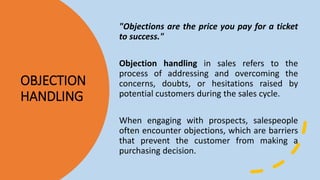
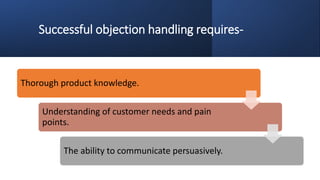
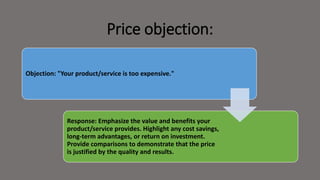
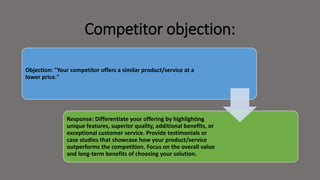
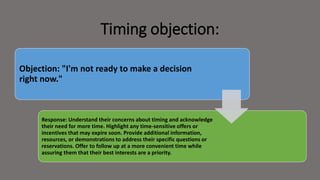
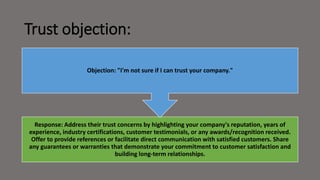
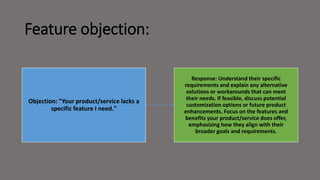
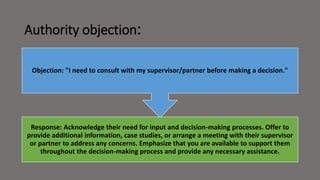
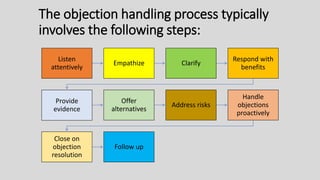
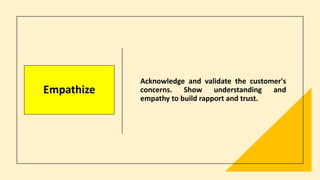
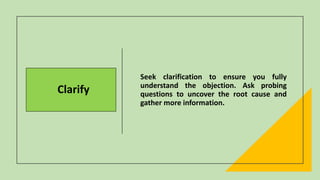
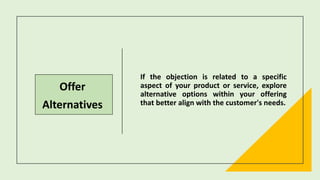
The document discusses objection handling in sales. It defines objections as concerns, doubts or hesitations that prevent customers from making purchase decisions. Successful objection handling requires thorough product knowledge, understanding customer needs, and persuasive communication skills. Common objections include pricing, competition, product features, authority issues, and timing concerns. The document provides examples of responses to each objection type and outlines the typical steps in the objection handling process which are to listen, empathize, clarify, respond with benefits, provide evidence, offer alternatives, address risks, handle proactively, close on resolution, and follow up.