Prepared by,
Nethravathi AP
 What is an Objection?
 Why understanding an objection is
Important?
 Commonly known Objections
 Handling the known Objections
 Methods for overcoming objections
 What is in “it” for us?
 An objection is anything that customers’ talk
about that must be addressed in order to
progress with the conversation.
 Objections are concerns, hesitations, doubts,
or any other reason a customer has for not
making a purchase.
 Objections give us an opportunity to present
more information to the customer
 Objections can guide us in the sales process by
helping us redefine the customer's needs and
determine if the customer wants more
information or perhaps a different product
◦ Example: If you see a customer making use of a normal
reward card for flight booking then offer a miles card
 Most objections are based on key decisions
that the customer have to make prior to a
purchase
 Need
 Product
 Source (brand)
 Price
 Time
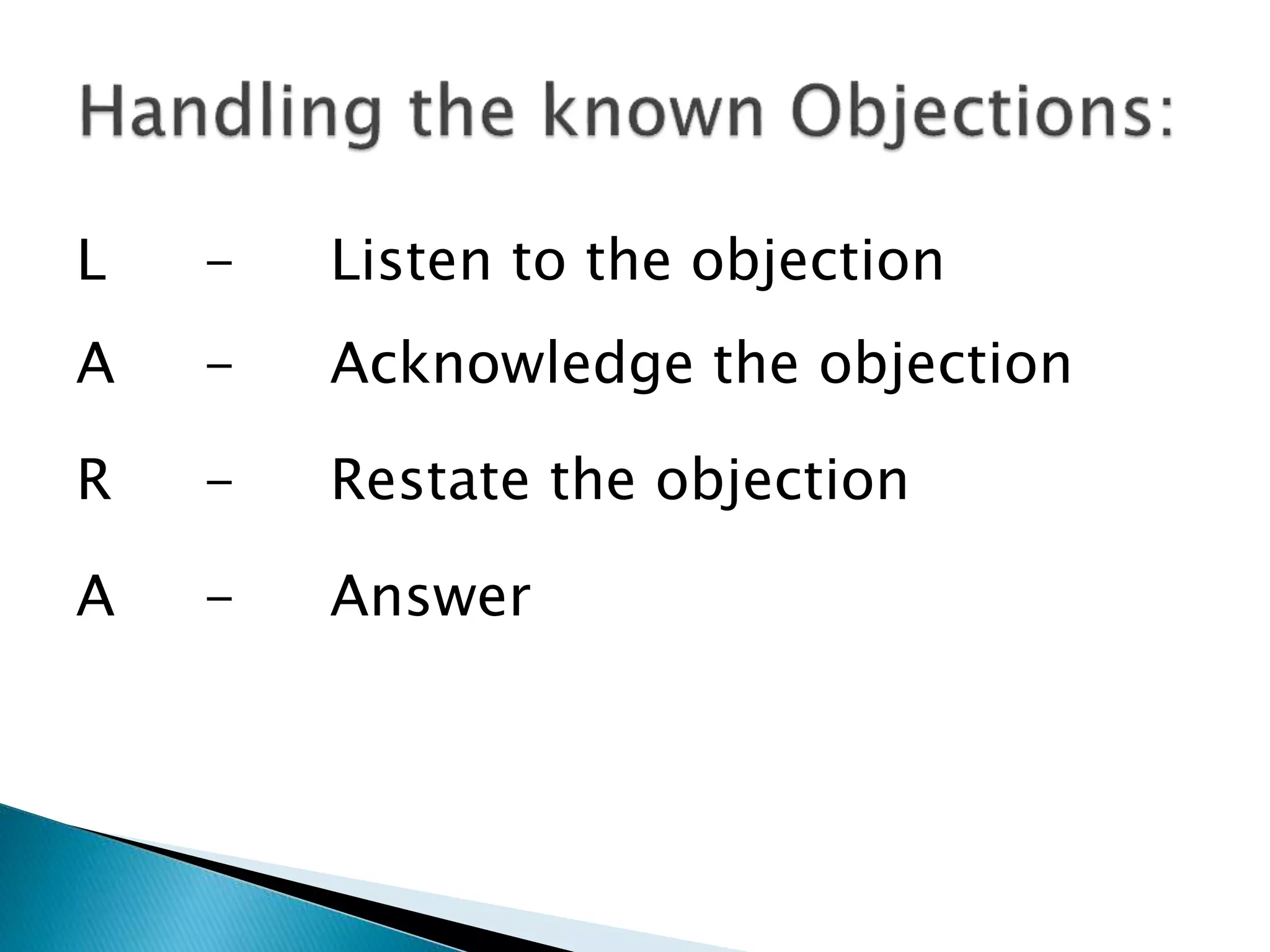
L - Listen to the objection
R - Restate the objection
A - Answer
A - Acknowledge the objection
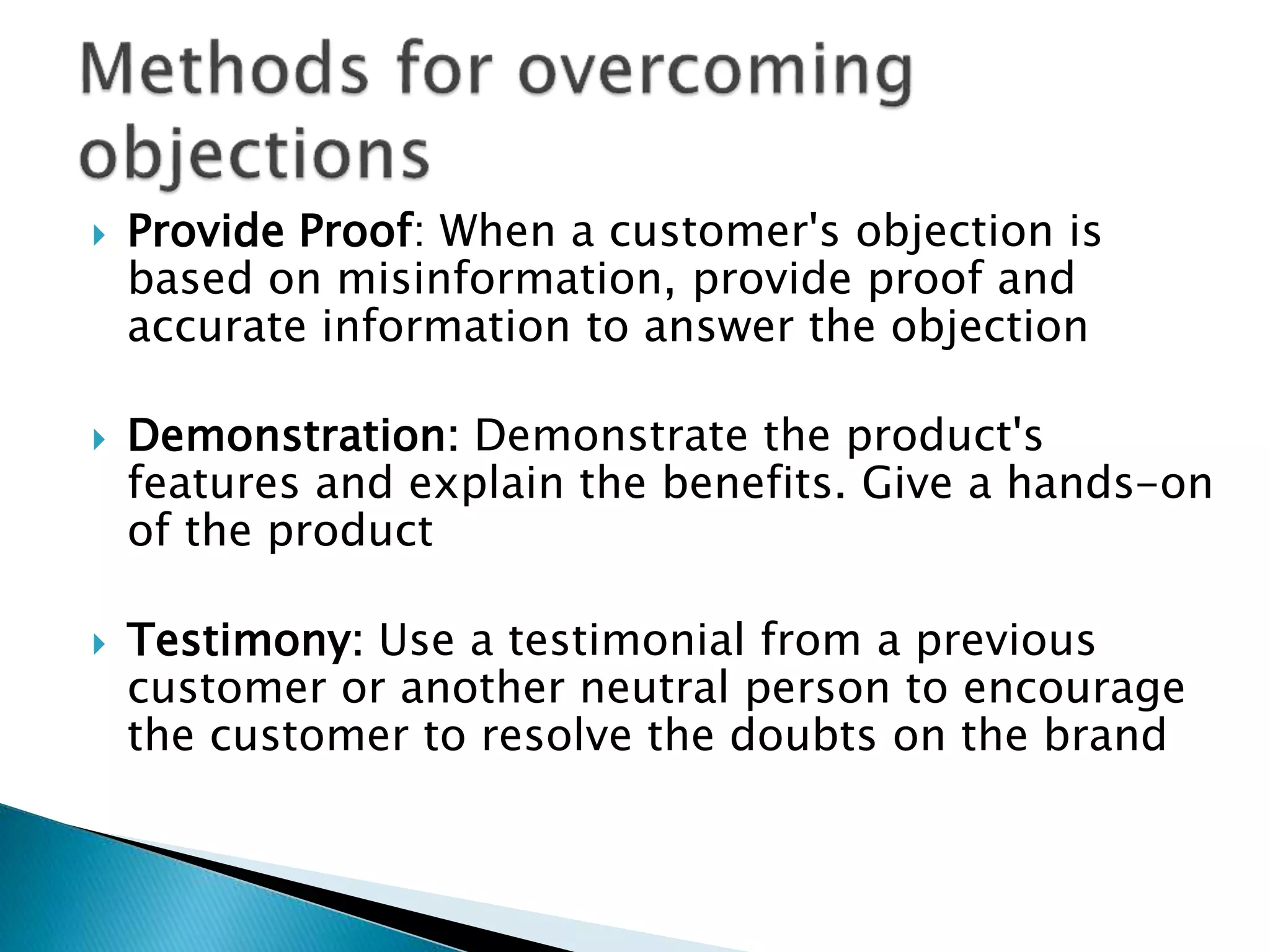
 Provide Proof: When a customer's objection is
based on misinformation, provide proof and
accurate information to answer the objection
 Demonstration: Demonstrate the product's
features and explain the benefits. Give a hands-on
of the product
 Testimony: Use a testimonial from a previous
customer or another neutral person to encourage
the customer to resolve the doubts on the brand
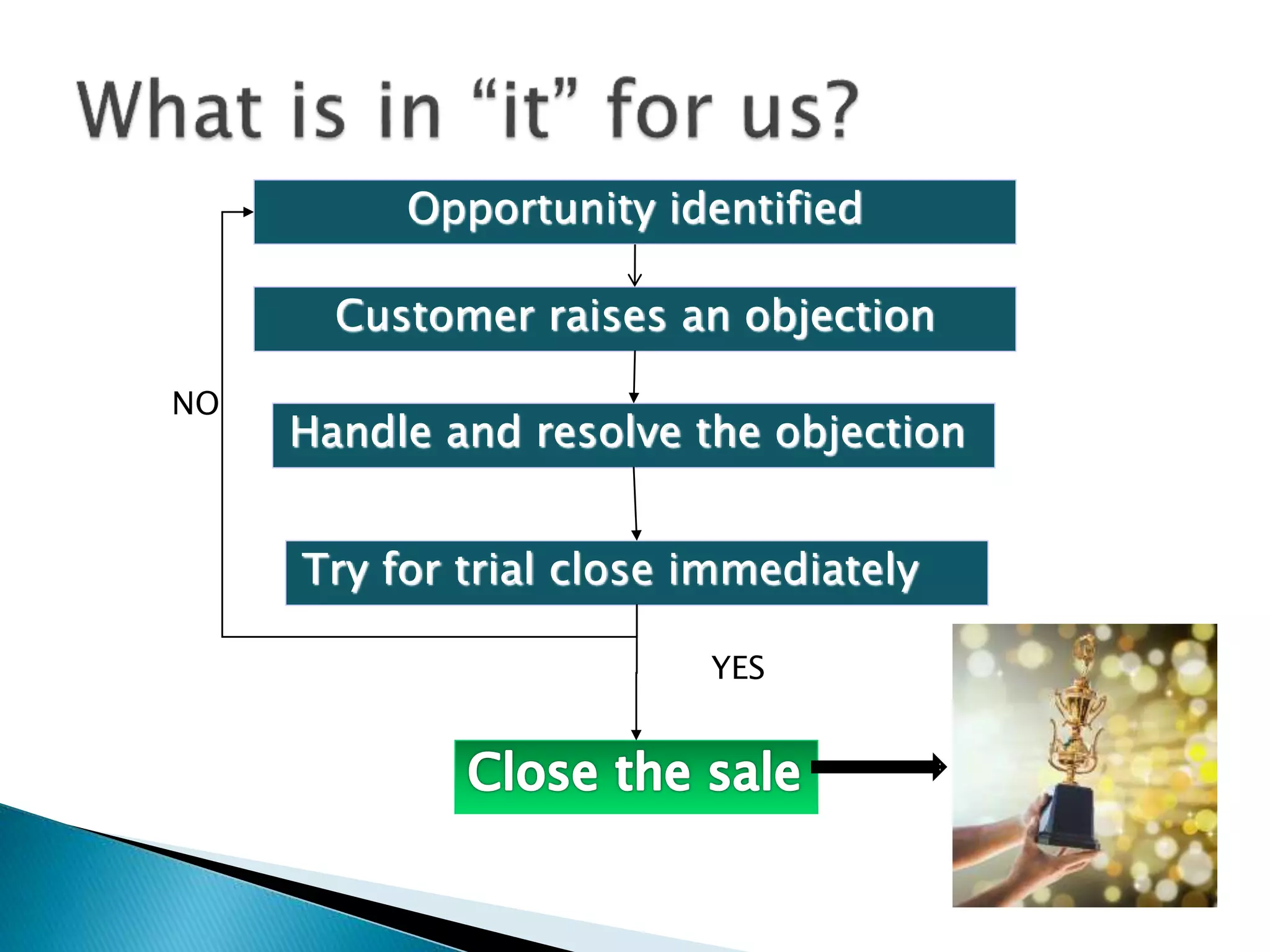
Customer raises an objection
Handle and resolve the objection
Try for trial close immediately
Opportunity identified
YES
NO
Objection handling

Objection handling

  • 1.
  • 2.
     What isan Objection?  Why understanding an objection is Important?  Commonly known Objections  Handling the known Objections  Methods for overcoming objections  What is in “it” for us?
  • 3.
     An objectionis anything that customers’ talk about that must be addressed in order to progress with the conversation.  Objections are concerns, hesitations, doubts, or any other reason a customer has for not making a purchase.
  • 4.
     Objections giveus an opportunity to present more information to the customer  Objections can guide us in the sales process by helping us redefine the customer's needs and determine if the customer wants more information or perhaps a different product ◦ Example: If you see a customer making use of a normal reward card for flight booking then offer a miles card
  • 5.
     Most objectionsare based on key decisions that the customer have to make prior to a purchase  Need  Product  Source (brand)  Price  Time
  • 6.
    L - Listento the objection R - Restate the objection A - Answer A - Acknowledge the objection
  • 7.
     Provide Proof:When a customer's objection is based on misinformation, provide proof and accurate information to answer the objection  Demonstration: Demonstrate the product's features and explain the benefits. Give a hands-on of the product  Testimony: Use a testimonial from a previous customer or another neutral person to encourage the customer to resolve the doubts on the brand
  • 8.
    Customer raises anobjection Handle and resolve the objection Try for trial close immediately Opportunity identified YES NO

Editor's Notes

  • #6 Need The customer does not have an immediate need for the item or wants the item but does not truly need it. Product The customer is concerned about such things as construction, ease of use, quality, color, size, or style. Source The customer has had negative past experiences with the firm or brand. Price The customer does not want to spend so much money. Time The customer is hesitant to buy immediately (sometimes an excuse).
  • #7 Acknowledge the Customer's Objections Acknowledging objections demonstrates that you understand and care about the customer's concerns. This makes a customer feel that his or her objections are understandable, valid, and worthy of further discussion Restate the Objections To be sure you understand the customer, paraphrase the objections (restate them in a different way), but don't change the meaning of the customer's objection. Answer the Objections Answer each objection tactfully. Think of yourself as a consultant, using the objections to further define or redefine the customer's needs