
Objection Handling Technique

      By Leonardo D’Souza


                            1
Objection Handling
• There’s no need to feel uncomfortable when prospects voice
   their concerns -- it’s just one of the ways they express their
   needs

• By encouraging the free expression of concerns and facilitating
   an open exchange with them; demonstrate your commitment of
   helping the customer make a beneficial decision


                                                      2
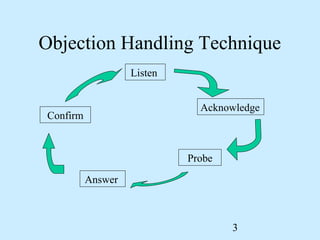
Objection Handling Technique
                    Listen


                               Acknowledge
 Confirm


                             Probe

           Answer


                                     3
Listen
• Keep an open mind – Be willing to listen to the other person view point

• Don’t interrupt the prospect

• Do not start thinking of the answer before the prospect has finished
  speaking

• Don’t get distracted by the environment

• Listen “ Between the lines”

• Always have a smile on your face when listening (however don’t over
  do it)
                                                         4
Acknowledge
• The purpose is to communicate to the prospect that you understand his
  situation

• Some Examples

• “I understand your point of view”

• “Yes, Many of my prospects have the same query”

• “Thank you for bringing this point up for discussion”

• “That’s an interesting subject that you bought out”

                                                          5
Probe
• Your object in probing is to build a clear, complete, mutual
  understanding of a customer’s needs, life style and aspirations

• You probe when you want to elicit information from a customer

• Whenever you feel you need additional information

• Use Open Ended question to get more information

• Use close ended question to confirm understanding

• Do not use questions that are repetitive, interrogative and
  intrusive


                                                   6
Answer
• Your answer should be to the point

• Use facts/data/reason to resolve the prospects concern

• Link the answer to the prospects needs and aspirations

• Show the prospect how it would be beneficial

• Do not get in a confrontation with the prospect

                                               7
Confirm
• Find out whether your answer has satisfied the prospect or
  is there any other concern

• Some examples

• Does that answer query?

• Do you need any clarifications?

• I hope I have answered your question?

                                               8
Thank You for Your Attention


                      9

Objection handling leo

  • 1.
    Objection Handling Technique By Leonardo D’Souza 1
  • 2.
    Objection Handling • There’sno need to feel uncomfortable when prospects voice their concerns -- it’s just one of the ways they express their needs • By encouraging the free expression of concerns and facilitating an open exchange with them; demonstrate your commitment of helping the customer make a beneficial decision 2
  • 3.
    Objection Handling Technique Listen Acknowledge Confirm Probe Answer 3
  • 4.
    Listen • Keep anopen mind – Be willing to listen to the other person view point • Don’t interrupt the prospect • Do not start thinking of the answer before the prospect has finished speaking • Don’t get distracted by the environment • Listen “ Between the lines” • Always have a smile on your face when listening (however don’t over do it) 4
  • 5.
    Acknowledge • The purposeis to communicate to the prospect that you understand his situation • Some Examples • “I understand your point of view” • “Yes, Many of my prospects have the same query” • “Thank you for bringing this point up for discussion” • “That’s an interesting subject that you bought out” 5
  • 6.
    Probe • Your objectin probing is to build a clear, complete, mutual understanding of a customer’s needs, life style and aspirations • You probe when you want to elicit information from a customer • Whenever you feel you need additional information • Use Open Ended question to get more information • Use close ended question to confirm understanding • Do not use questions that are repetitive, interrogative and intrusive 6
  • 7.
    Answer • Your answershould be to the point • Use facts/data/reason to resolve the prospects concern • Link the answer to the prospects needs and aspirations • Show the prospect how it would be beneficial • Do not get in a confrontation with the prospect 7
  • 8.
    Confirm • Find outwhether your answer has satisfied the prospect or is there any other concern • Some examples • Does that answer query? • Do you need any clarifications? • I hope I have answered your question? 8
  • 9.
    Thank You forYour Attention 9