Your Guide
to
Intelligent
Giving
Where the
Heart
Meets the
Mind
Critical Friend to Charities
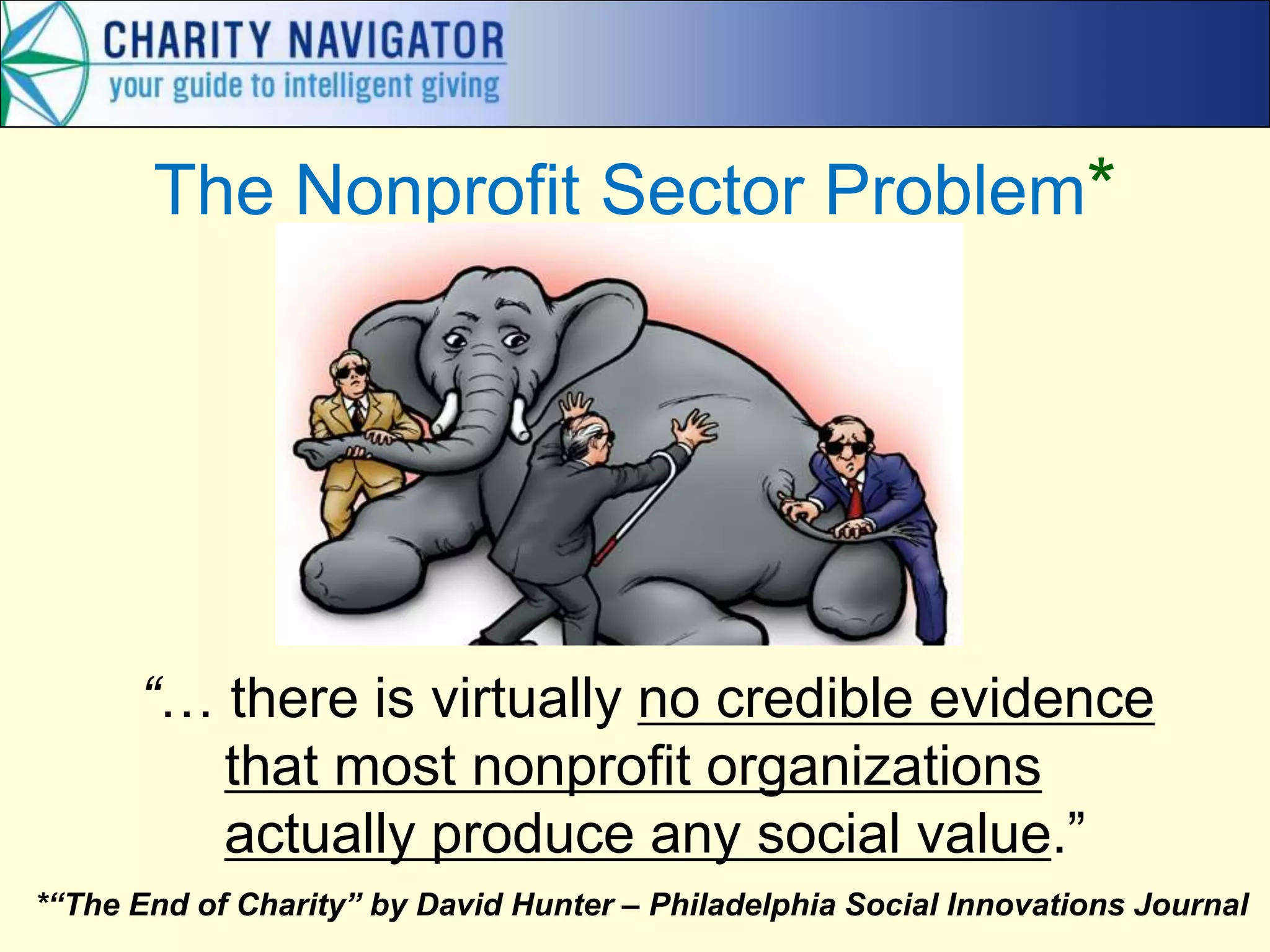
The Nonprofit Sector Problem*
“… there is virtually no credible evidence
that most nonprofit organizations
actually produce any social value.”
*“The End of Charity” by David Hunter – Philadelphia Social Innovations Journal
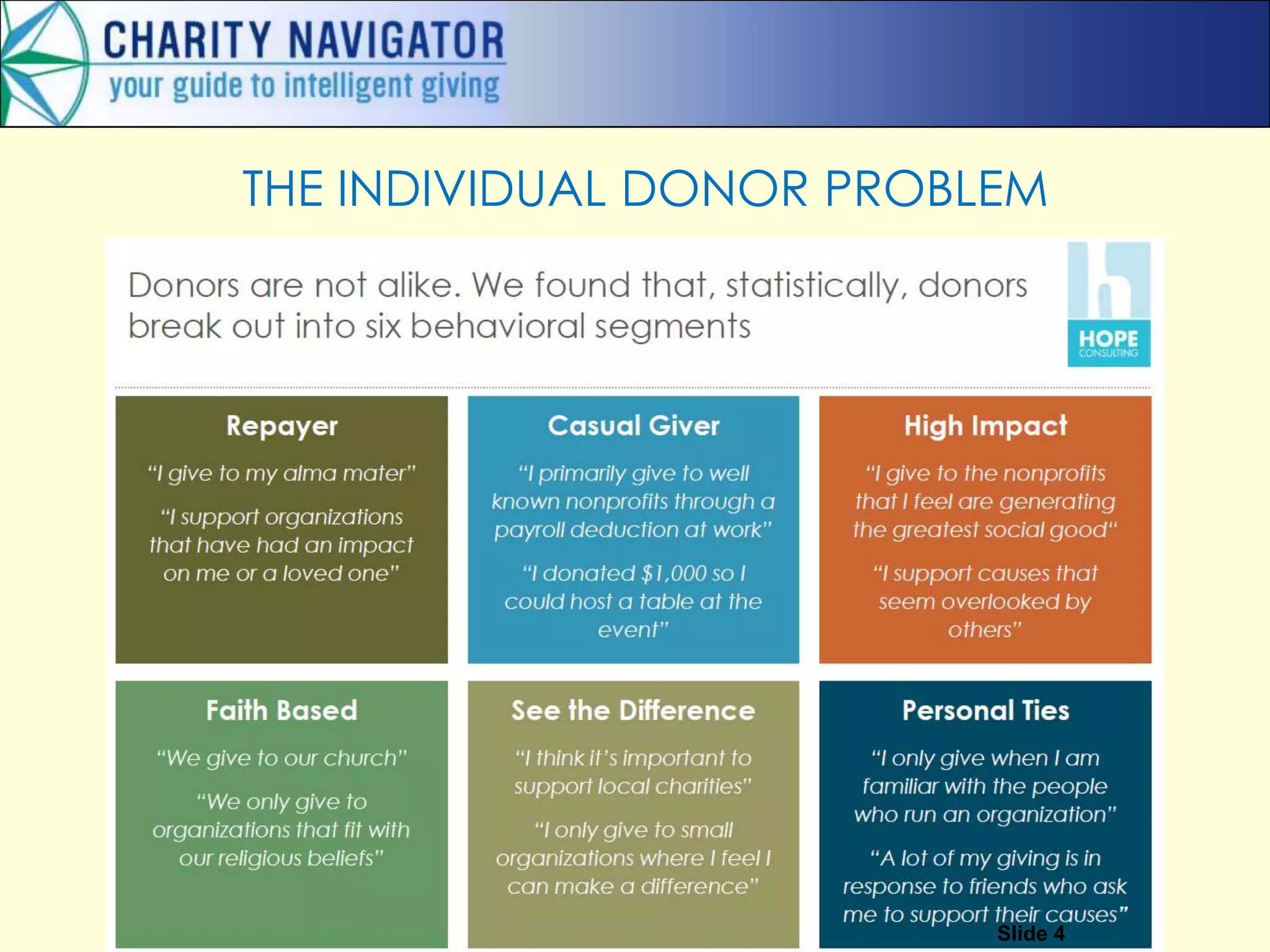
THE INDIVIDUAL DONOR PROBLEM
Slide 4
5
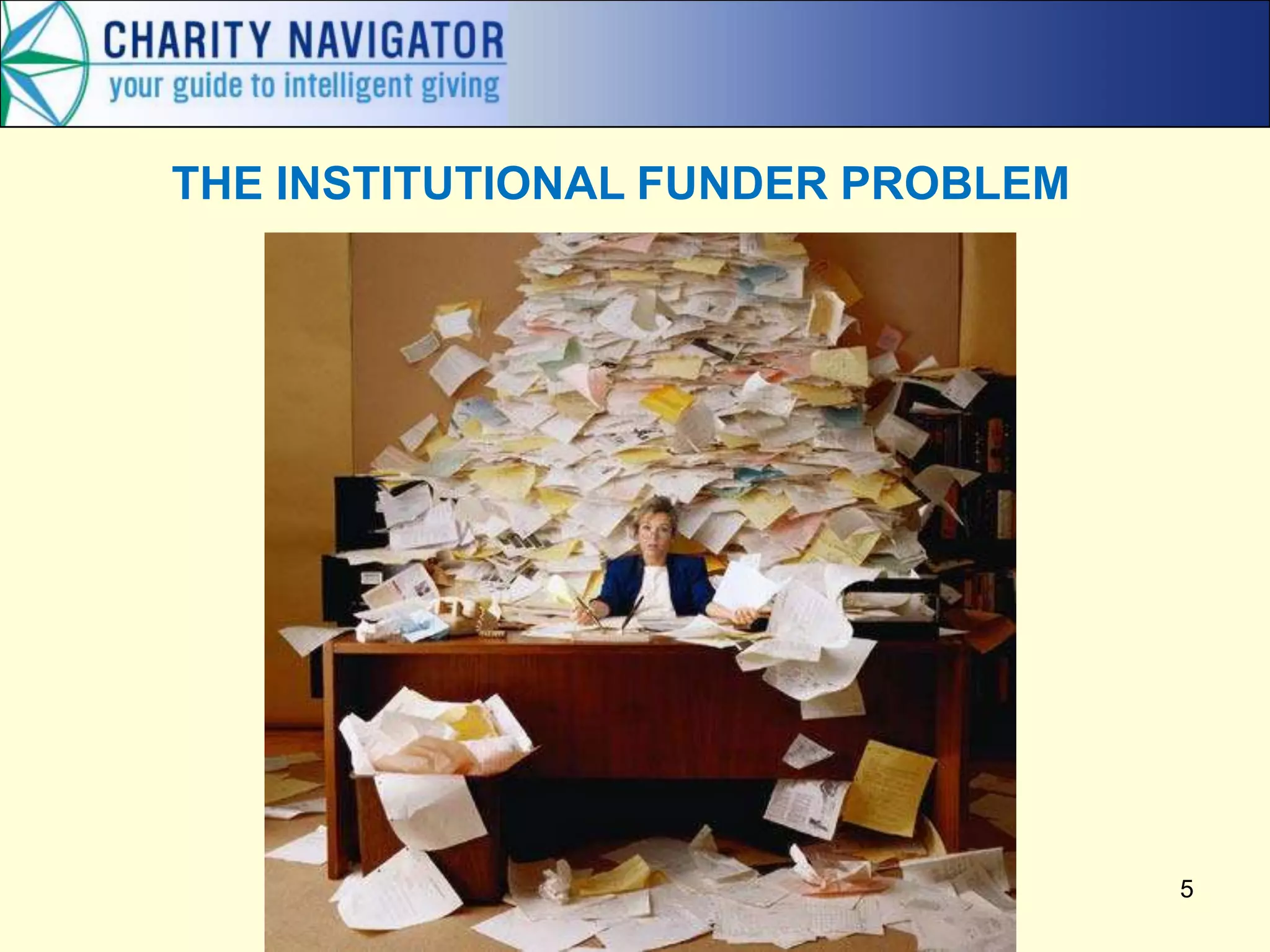
THE INSTITUTIONAL FUNDER PROBLEM
6
THE BENEFICIARY PROBLEM
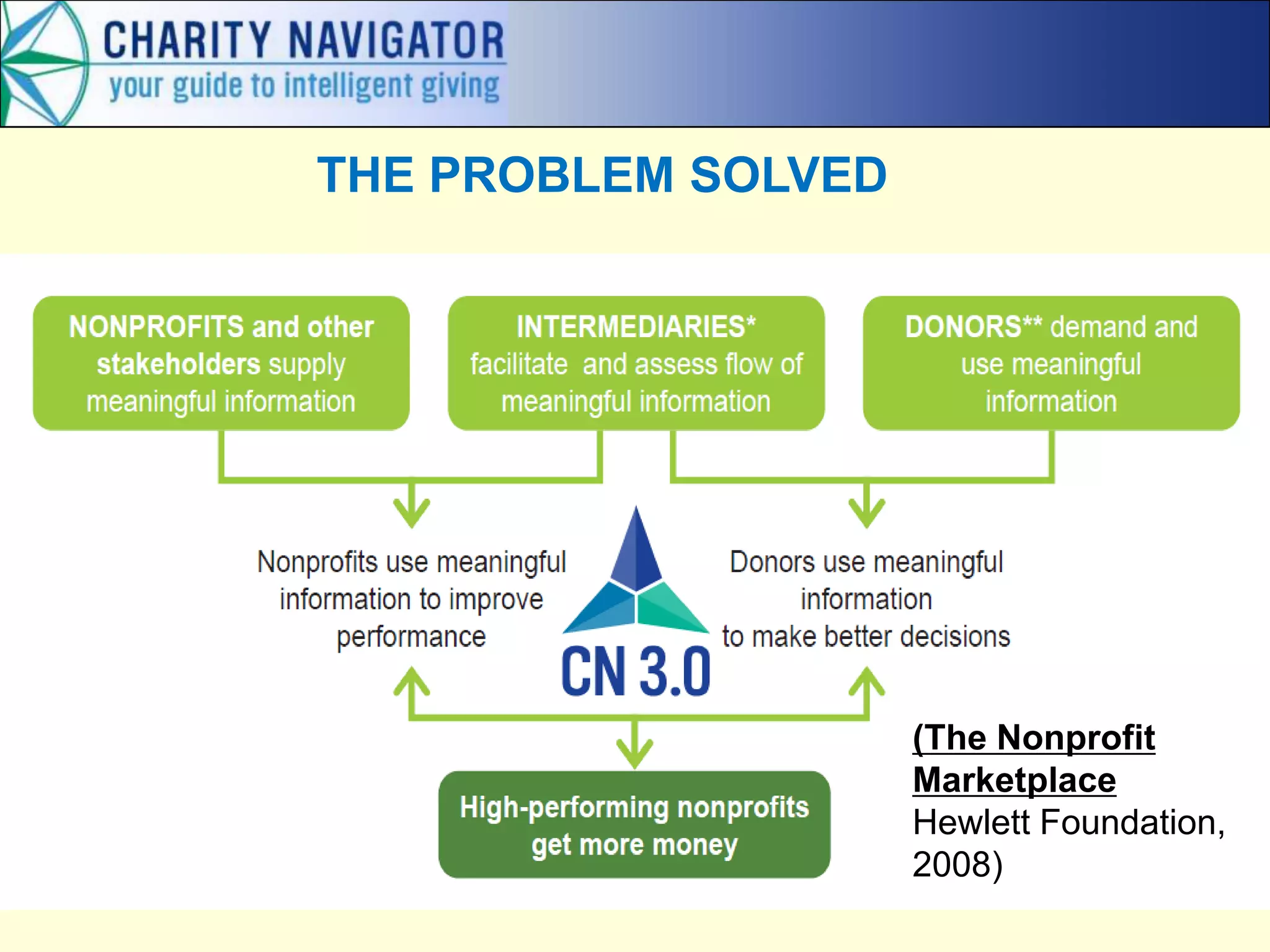
(The Nonprofit
Marketplace
Hewlett Foundation,
2008)
THE PROBLEM SOLVED
8
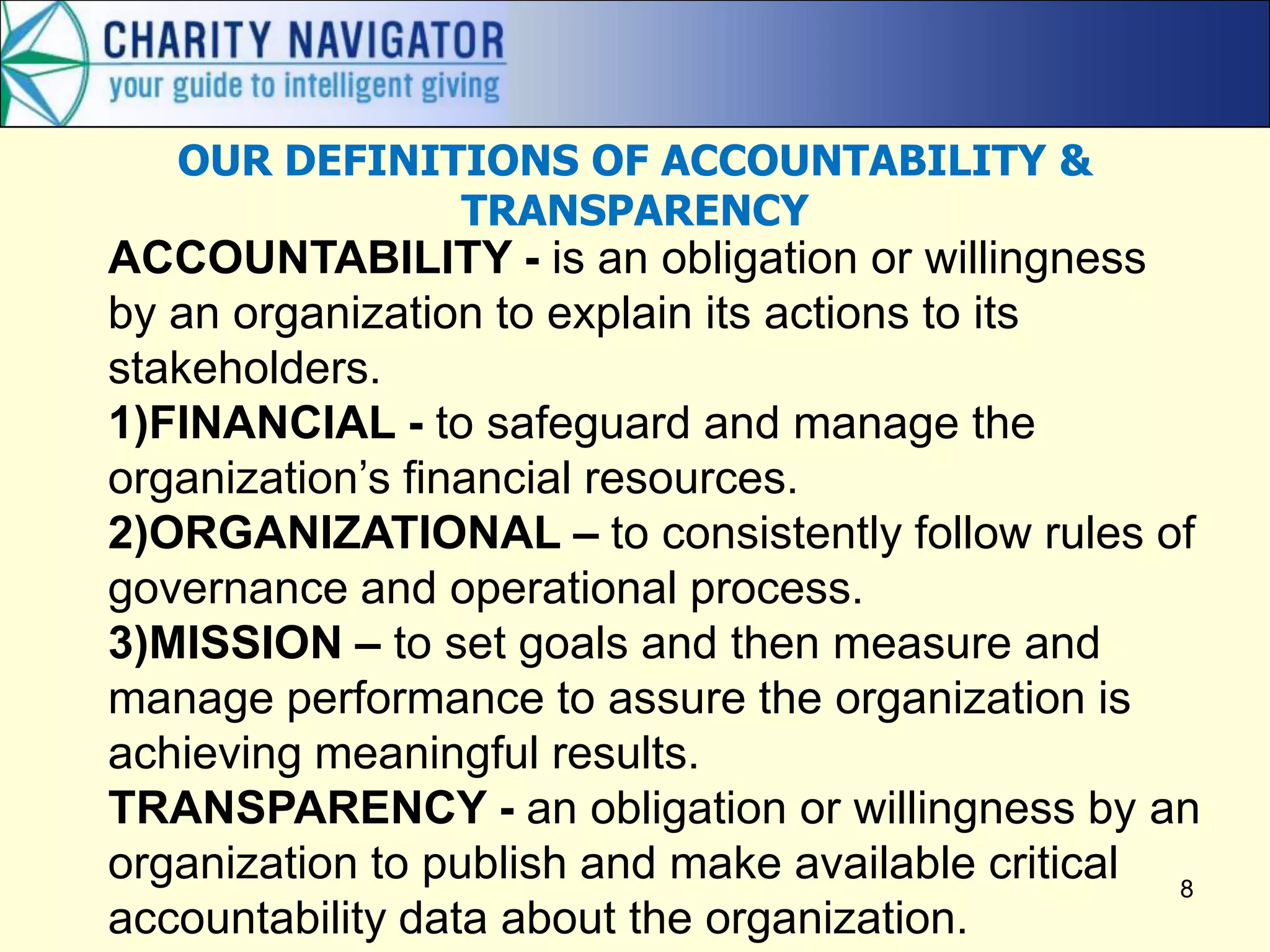
OUR DEFINITIONS OF ACCOUNTABILITY &
TRANSPARENCY
ACCOUNTABILITY - is an obligation or willingness
by an organization to explain its actions to its
stakeholders.
1)FINANCIAL - to safeguard and manage the
organization’s financial resources.
2)ORGANIZATIONAL – to consistently follow rules of
governance and operational process.
3)MISSION – to set goals and then measure and
manage performance to assure the organization is
achieving meaningful results.
TRANSPARENCY - an obligation or willingness by an
organization to publish and make available critical
accountability data about the organization.
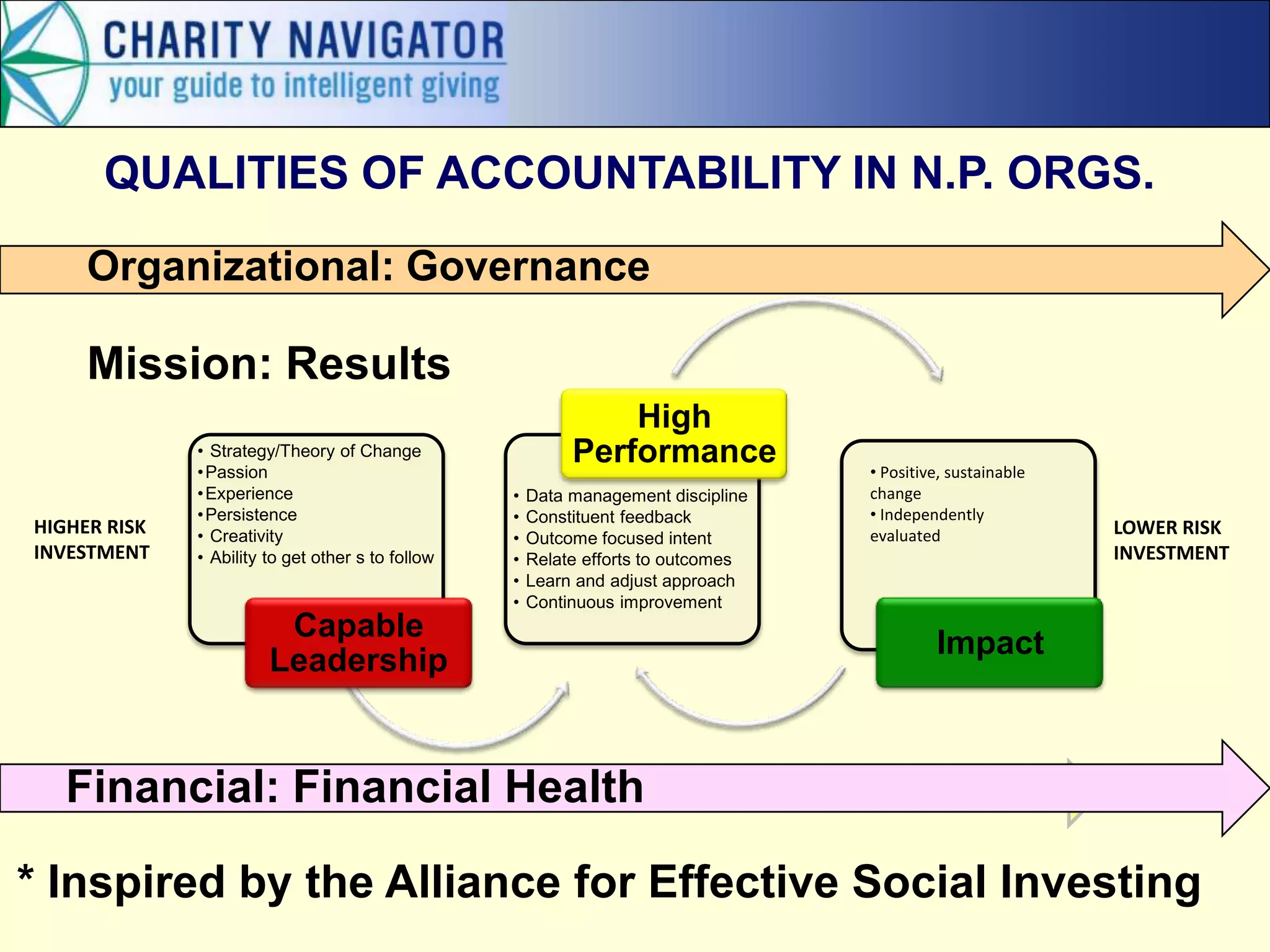
QUALITIES OF ACCOUNTABILITY IN N.P. ORGS.
Financial Health
• Strategy/Theory of Change
•Passion
•Experience
•Persistence
• Creativity
• Ability to get other s to follow
Capable
Leadership
• Data management discipline
• Constituent feedback
• Outcome focused intent
• Relate efforts to outcomes
• Learn and adjust approach
• Continuous improvement
High
Performance
Impact
• Positive, sustainable
change
• Independently
evaluatedHIGHER RISK
INVESTMENT
LOWER RISK
INVESTMENT
* Inspired by the Alliance for Effective Social Investing
Mission: Results
Organizational: Governance
Financial: Financial Health
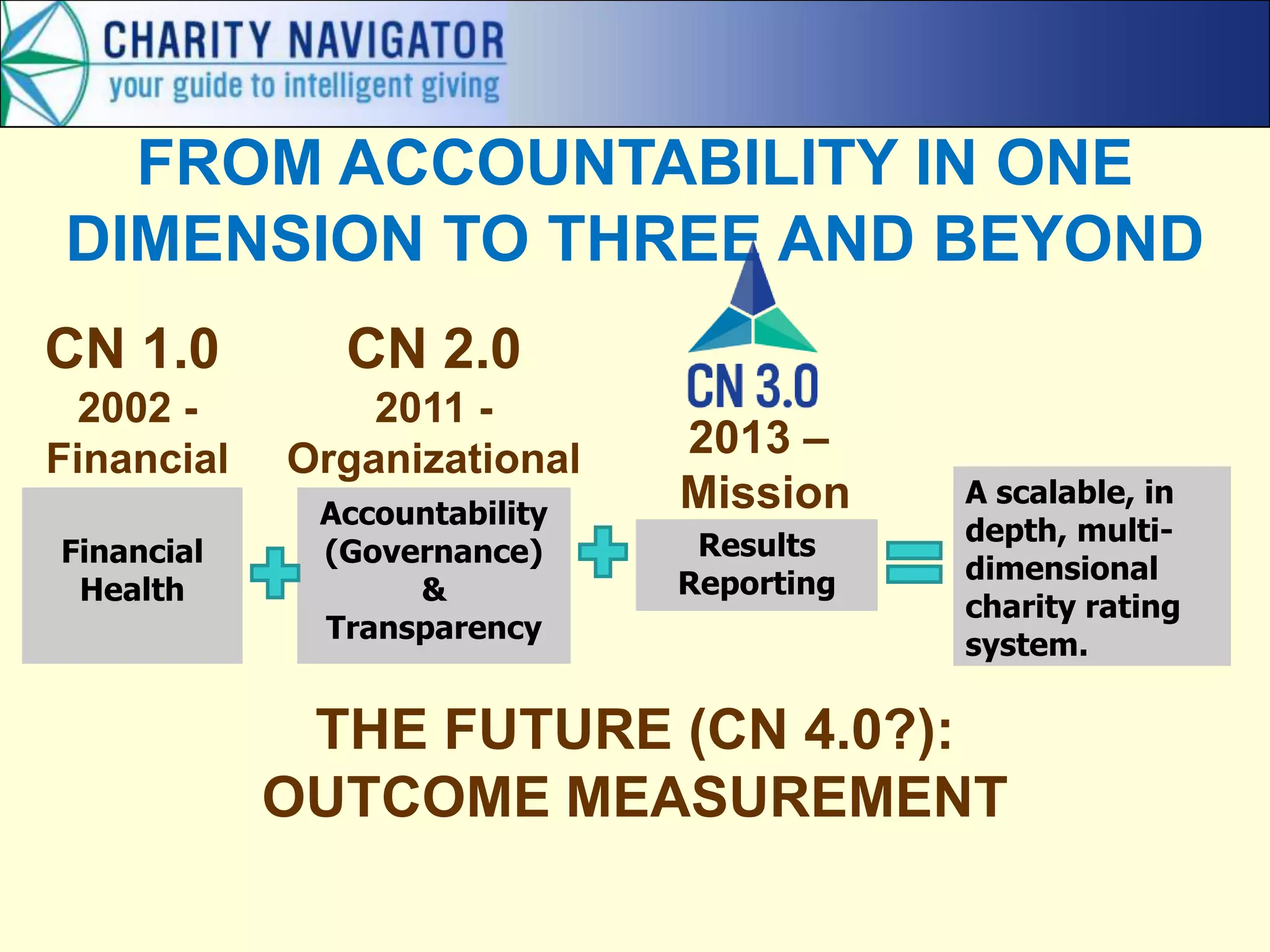
Financial
Health
Accountability
(Governance)
&
Transparency
Results
Reporting
A scalable, in
depth, multi-
dimensional
charity rating
system.
CN 2.0
2011 -
Organizational
CN 1.0
2002 -
Financial
FROM ACCOUNTABILITY IN ONE
DIMENSION TO THREE AND BEYOND
THE FUTURE (CN 4.0?):
OUTCOME MEASUREMENT
2013 –
Mission
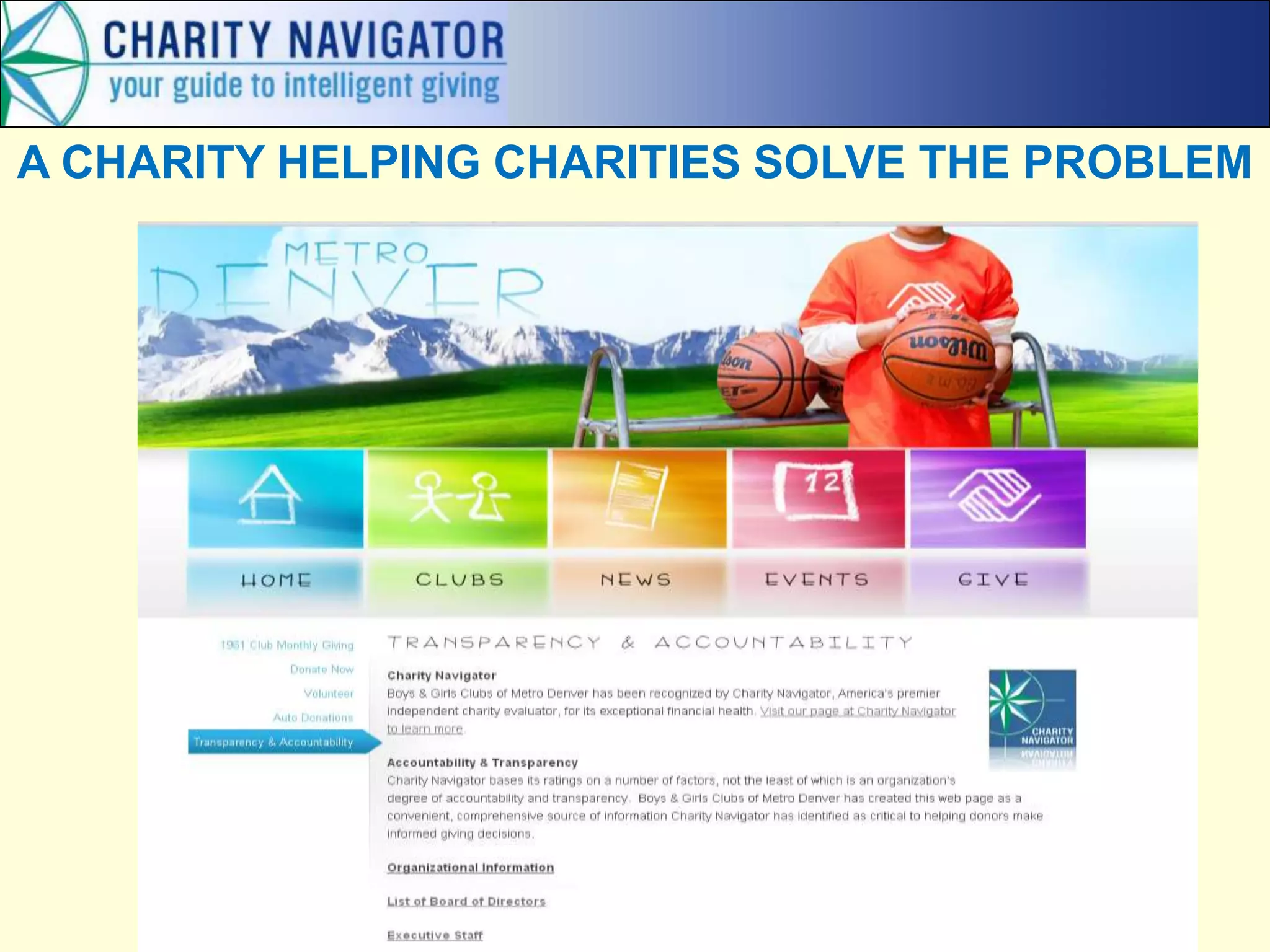
A CHARITY HELPING CHARITIES SOLVE THE PROBLEM
Recommended Resources
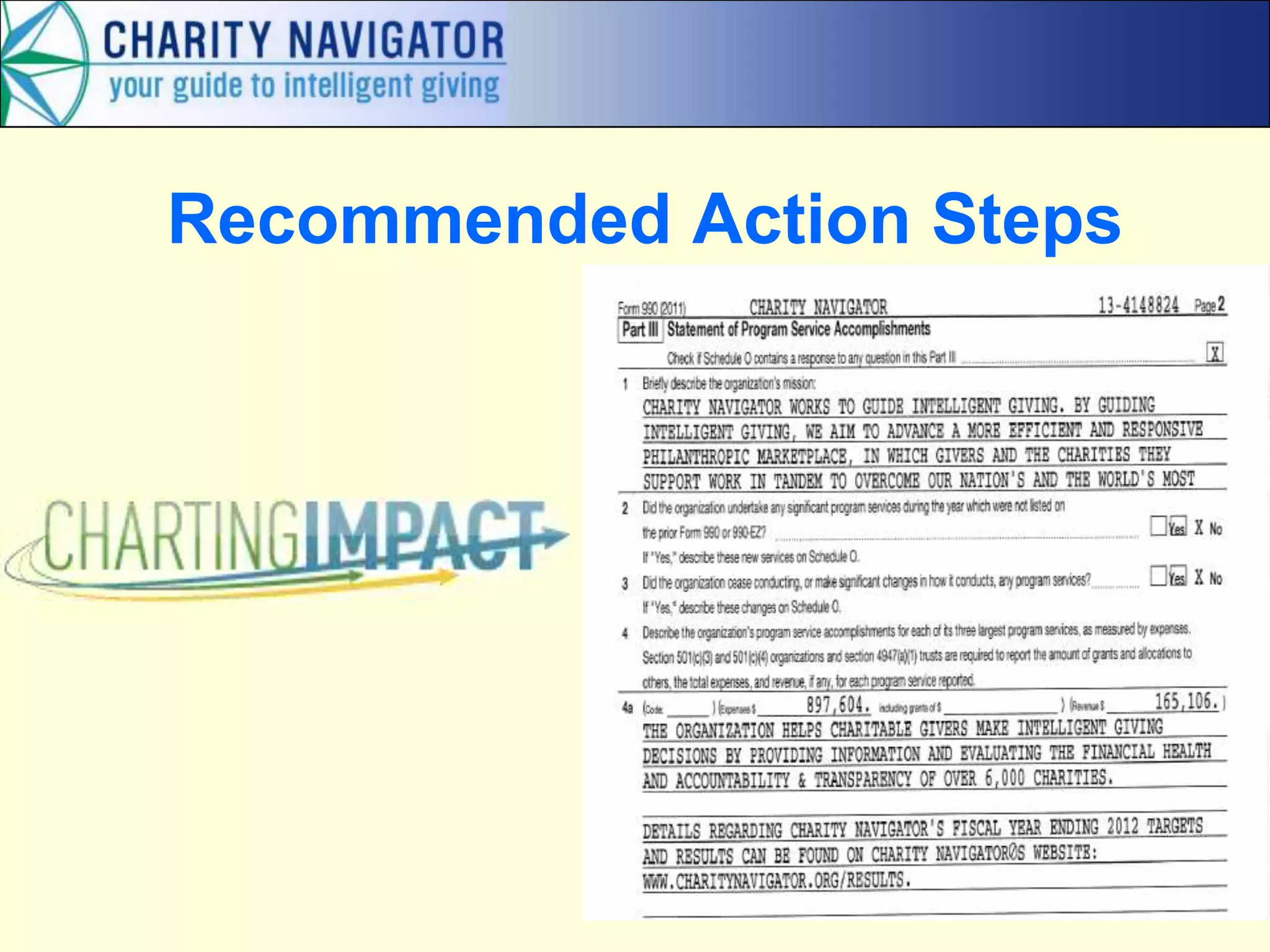
Recommended Action Steps

NYU Conference 5-3-2013

  • 2.
    Your Guide to Intelligent Giving Where the Heart Meetsthe Mind Critical Friend to Charities
  • 3.
    The Nonprofit SectorProblem* “… there is virtually no credible evidence that most nonprofit organizations actually produce any social value.” *“The End of Charity” by David Hunter – Philadelphia Social Innovations Journal
  • 4.
    THE INDIVIDUAL DONORPROBLEM Slide 4
  • 5.
  • 6.
  • 7.
  • 8.
    8 OUR DEFINITIONS OFACCOUNTABILITY & TRANSPARENCY ACCOUNTABILITY - is an obligation or willingness by an organization to explain its actions to its stakeholders. 1)FINANCIAL - to safeguard and manage the organization’s financial resources. 2)ORGANIZATIONAL – to consistently follow rules of governance and operational process. 3)MISSION – to set goals and then measure and manage performance to assure the organization is achieving meaningful results. TRANSPARENCY - an obligation or willingness by an organization to publish and make available critical accountability data about the organization.
  • 9.
    QUALITIES OF ACCOUNTABILITYIN N.P. ORGS. Financial Health • Strategy/Theory of Change •Passion •Experience •Persistence • Creativity • Ability to get other s to follow Capable Leadership • Data management discipline • Constituent feedback • Outcome focused intent • Relate efforts to outcomes • Learn and adjust approach • Continuous improvement High Performance Impact • Positive, sustainable change • Independently evaluatedHIGHER RISK INVESTMENT LOWER RISK INVESTMENT * Inspired by the Alliance for Effective Social Investing Mission: Results Organizational: Governance Financial: Financial Health
  • 10.
    Financial Health Accountability (Governance) & Transparency Results Reporting A scalable, in depth,multi- dimensional charity rating system. CN 2.0 2011 - Organizational CN 1.0 2002 - Financial FROM ACCOUNTABILITY IN ONE DIMENSION TO THREE AND BEYOND THE FUTURE (CN 4.0?): OUTCOME MEASUREMENT 2013 – Mission
  • 11.
    A CHARITY HELPINGCHARITIES SOLVE THE PROBLEM
  • 12.
  • 13.