Golden guidelines
for women health
Kusuma Neela Bolla M.Sc, M.B.A
Dept. Appiled Nutrition
Life Span Development
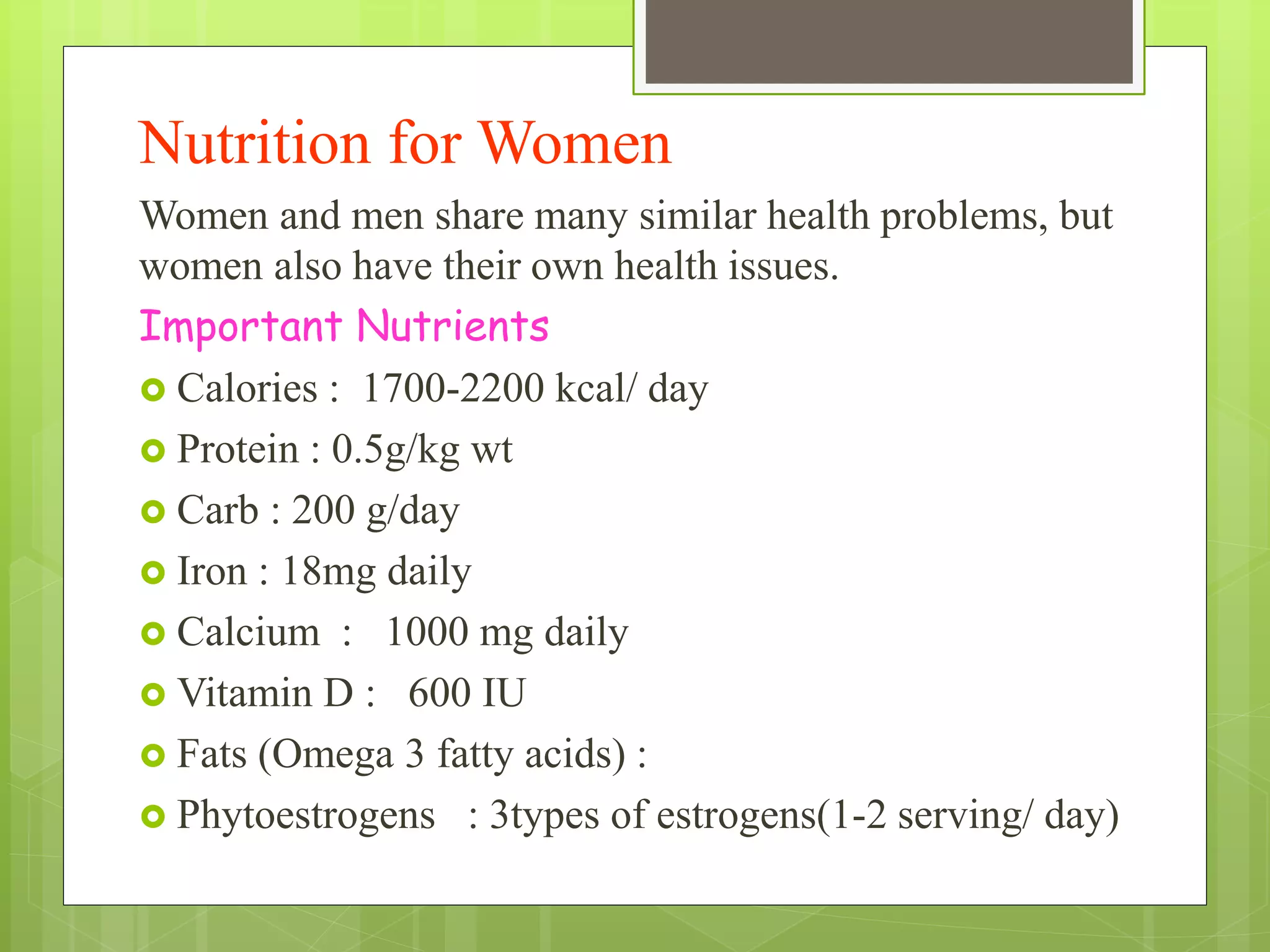
Nutrition for Women
Women and men share many similar health problems, but
women also have their own health issues.
Important Nutrients
 Calories : 1700-2200 kcal/ day
 Protein : 0.5g/kg wt
 Carb : 200 g/day
 Iron : 18mg daily
 Calcium : 1000 mg daily
 Vitamin D : 600 IU
 Fats (Omega 3 fatty acids) :
 Phytoestrogens : 3types of estrogens(1-2 serving/ day)
Women’s health is much influenced by the Female
Hormone “Estrogen
Role of Estrogen:
 Cellular division
 Maintenance of bone health
 Heart disease protection
 Storage and distribution of body fat
 Responsible for soft & smooth texture of the skin
The Reduction in Estrogen production that results to
 Reduces in Metabolism
 Menopause
 Changes in Energy Levels
 Memory
 Increase risk for Heart Disease
 Decrease In Bone Health
 Weight Gain, Urinary & Other Complications
 Fat Shift to Abdomen
For example: women’s waist size measure more than 35”she
is more likely to develop heart disease, high blood pressure
and diabetes
Causes
 Use of menstrual control pills
 Use of birth control pills
 Overuse of cosmetics
 Over use of antibiotics
 Non organic animal products
 Lack of exercise
 Obesity
 Stress
Preventive Nutrition is defined as dietary practices directed
towards reducing diseases & promoting health & well being.
 Eat Unrefined Carbohydrates instead of refined food
 Avoid trans fats & saturated fats, include omega 3 & mono
saturated foods
 Antioxidant rich foods
 Include hormone-balancing phytoestrogens in diet
 Avoid or reduce your intake of caffeine.
 Reduce or eliminate alcohol
 Omega 3 foods: Flaxseeds, salmon
 Detoxifying effect: cabbage, tomatoes, pineapple, green &
black tea
 Hyperglycemia : Fenugreek
 ß-glucan and phytochemicals: Oats
 Antibacterial effect: Garlic, Cinnamon
 Antioxidant effect: β carotene, vitamins – C,D & Iron,
zinc foods
 Soy based foods
Human soya consumption
Questions about consumption Coronary heart disease
(inhibited LDL oxidation
Frequency of soya consumption? Osteoporosis (↑sed bone
density ,↓sed osteoclast )
Amount of soya consumption?
Isoflavone content of soya? Cancer (inhibited initiation,
proliferation,angiogenesis
Menopause
(reduces symptoms)
Objective Daily dose
Lowering cholesterol 25 – 50gms of soya protein
Cancer prevention 20-40gms of soya protein
Hot flashes (menopausal
symptoms)
45 gms of soya flour/ day or 80-
160mg of isoflavones
Osteoporosis, post –
menopausal women
40gms of soya protein/day
containing 90mg isoflavones for
six months hada +ve effect on
bone density
Daily amount of Soya Isoflavones studied to prevent a
range of diseases
Weight management
 Increase intake of unrefined foods
 Increases intake of whole grains
 Avoid trans fats, saturated fats and use of omega 3
 Include fresh fruits and vegetables daily
 Include functional foods daily
 Drink plenty of fluids & avoid alcoholic, caffeine
beverages.
 Dieting: Not to cut food try to Burn fat & calories to
maintain good health & normal weight
A balanced
Food pyramid
Be Physically Active
Intentional exercise
Walking
Running
Cycling
Swimming
Active lifestyle
 Take the stairs
Walk to work
Sit less, move more
Women nutrition

Women nutrition

  • 1.
    Golden guidelines for womenhealth Kusuma Neela Bolla M.Sc, M.B.A Dept. Appiled Nutrition
  • 2.
  • 3.
    Nutrition for Women Womenand men share many similar health problems, but women also have their own health issues. Important Nutrients  Calories : 1700-2200 kcal/ day  Protein : 0.5g/kg wt  Carb : 200 g/day  Iron : 18mg daily  Calcium : 1000 mg daily  Vitamin D : 600 IU  Fats (Omega 3 fatty acids) :  Phytoestrogens : 3types of estrogens(1-2 serving/ day)
  • 4.
    Women’s health ismuch influenced by the Female Hormone “Estrogen Role of Estrogen:  Cellular division  Maintenance of bone health  Heart disease protection  Storage and distribution of body fat  Responsible for soft & smooth texture of the skin
  • 5.
    The Reduction inEstrogen production that results to  Reduces in Metabolism  Menopause  Changes in Energy Levels  Memory  Increase risk for Heart Disease  Decrease In Bone Health  Weight Gain, Urinary & Other Complications  Fat Shift to Abdomen For example: women’s waist size measure more than 35”she is more likely to develop heart disease, high blood pressure and diabetes
  • 6.
    Causes  Use ofmenstrual control pills  Use of birth control pills  Overuse of cosmetics  Over use of antibiotics  Non organic animal products  Lack of exercise  Obesity  Stress
  • 7.
    Preventive Nutrition isdefined as dietary practices directed towards reducing diseases & promoting health & well being.  Eat Unrefined Carbohydrates instead of refined food  Avoid trans fats & saturated fats, include omega 3 & mono saturated foods  Antioxidant rich foods  Include hormone-balancing phytoestrogens in diet  Avoid or reduce your intake of caffeine.  Reduce or eliminate alcohol
  • 8.
     Omega 3foods: Flaxseeds, salmon  Detoxifying effect: cabbage, tomatoes, pineapple, green & black tea  Hyperglycemia : Fenugreek  ß-glucan and phytochemicals: Oats  Antibacterial effect: Garlic, Cinnamon  Antioxidant effect: β carotene, vitamins – C,D & Iron, zinc foods  Soy based foods
  • 9.
    Human soya consumption Questionsabout consumption Coronary heart disease (inhibited LDL oxidation Frequency of soya consumption? Osteoporosis (↑sed bone density ,↓sed osteoclast ) Amount of soya consumption? Isoflavone content of soya? Cancer (inhibited initiation, proliferation,angiogenesis Menopause (reduces symptoms)
  • 10.
    Objective Daily dose Loweringcholesterol 25 – 50gms of soya protein Cancer prevention 20-40gms of soya protein Hot flashes (menopausal symptoms) 45 gms of soya flour/ day or 80- 160mg of isoflavones Osteoporosis, post – menopausal women 40gms of soya protein/day containing 90mg isoflavones for six months hada +ve effect on bone density Daily amount of Soya Isoflavones studied to prevent a range of diseases
  • 12.
    Weight management  Increaseintake of unrefined foods  Increases intake of whole grains  Avoid trans fats, saturated fats and use of omega 3  Include fresh fruits and vegetables daily  Include functional foods daily  Drink plenty of fluids & avoid alcoholic, caffeine beverages.  Dieting: Not to cut food try to Burn fat & calories to maintain good health & normal weight
  • 13.
  • 14.
    Be Physically Active Intentionalexercise Walking Running Cycling Swimming Active lifestyle  Take the stairs Walk to work Sit less, move more