Download to read offline



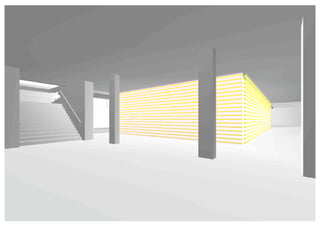
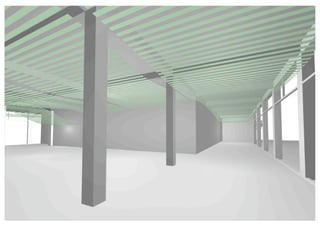
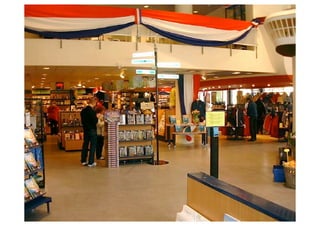
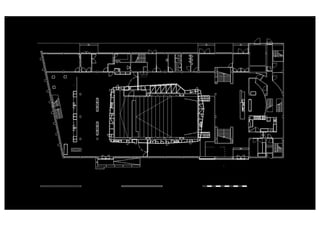

![FLEXIBILITY
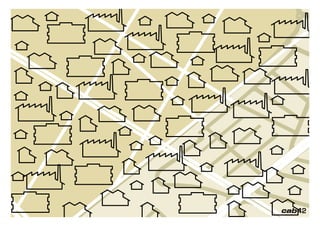
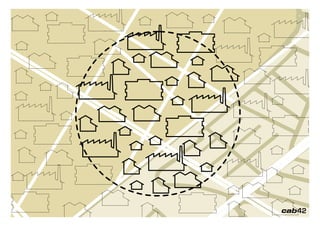
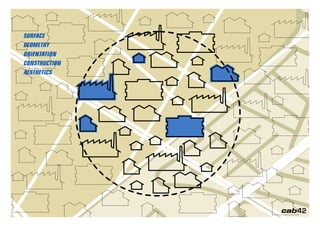
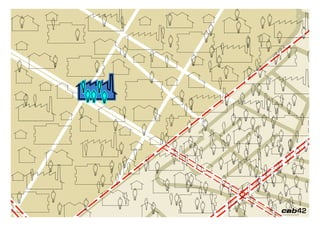
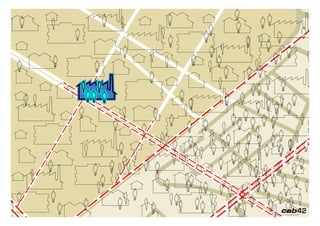
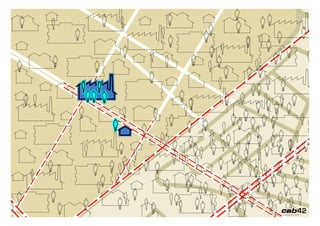
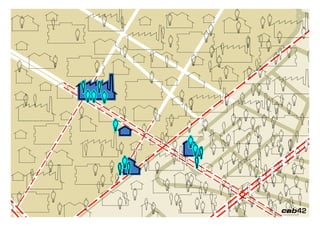
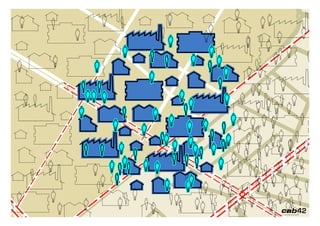
The present-day condition of the western city demands a more flexible tool
of management, since its population, use and technology change ever more
rapidly. The modern city is the result of an attempt for controlled modification
and growth, but things are getting out of control. Too many intentions of
different periods are superimposed which blurs our comprehension. The city
has taken control of itself as points out Koolhaas when he mentions urbanism
despite planning [*04/S,M,L,XL].
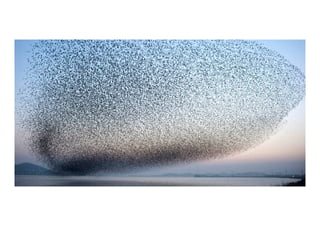
The city has taken on a proper life almost like a natural phenomenon. We look
in awe at its technological and cultural manifestations but we can no longer
understand or control it. An exemplary case was explained by D.C. Dennett:
“If British Telecom sponsors a conference on robotics, it’s because they have
an interest in developping a tool that could control their network that oneone
can grasp anymore. This shows the uncomfortable position of a company
that no longer controls their own invention.” [*04/D.C. Dennett] The city has
become a second nature. The original biotope has become a techotope, i.e.
our daily living environment - and so, as Darwin established, survival is for
the fittest, meaning the most adapted. Buildings have to adapt to a changing
context, in other words to be flexible, to survive.
Paradoxically, recapitulating the paragraphs, a. acquiring identity requires
time and sustainability, b. sustainability requires flexibility towards changing
conditions, so c. identity requires flexibility. This situation calls for ‘hybrid
identities’, multi-functional objects with a multiplex profile and the capacity to
adapt.
Hybridity in architecture means the end of programmatic typology (the ‘form-
follows-function’ kind), and if nothing else replaces that, it will introduce the
architectural degeneration as was announced : “all buildings are hotels..” [*06/
S,M,L,XL].
Instead of fleeing forwards towards a ‘generic city’, design approaches can
be developped that intend the construction of ‘speciville’. In this ‘city’ each
occasion for specificity in architectural design is seized in order to maintain
and increase the profile of a specific public landscape, even during dramatic
changes. The extreme complexity of this mission, to embrace the need for
hybrid architecture and acknowledge the value of architectural diversity,
requires taking some distance and re-evaluating certain matters.
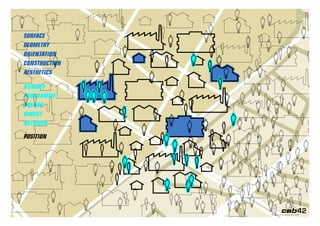
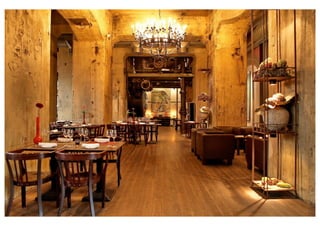
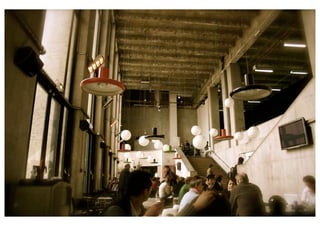
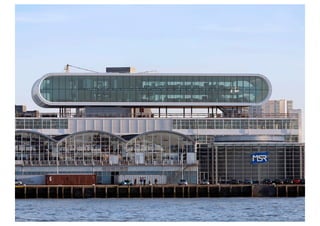
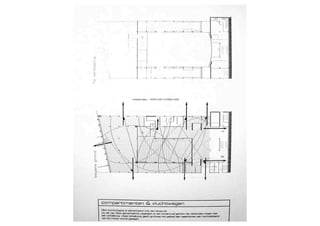
SCULPTUUR De specifieke sculpturale vorm
van de stedenbouwkundige volumes zijn een
garantie voor een locatiespecifiek stedenlijk
weefsel - een plek identiteit - houvast voor de
verdere ontwikkelingen.
STRUCTUUR De open structuur van de
gebouwen refereert naar prototypische pre-fab
haven architectuur, en biedt de mogelijkheid
van een exploitatie-afhankelijke invulling
terwijl de sculpturaliteit herkenbaar blijft.
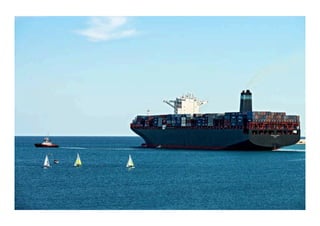
HOUT Houten pallets zijn typisch elemnten
uit een haveninrichting. In het nieuwe
ontwerp komt het hout in verschillende fases
terug in eenvoudige basis en een luxe en
gerafineerde uitvoering.
STUC De zakelijk ogende pleisterlaag van
een aantal bestaande gebouwen is goed
toepasbaar. Het maakt een stapsgewijze
upgrade van kaal casco naar chique volume
mogelijk.
METAAL De sierlijk glans en curven van de
scheepsschroeven, en de daaraan verwante
materialen, vult de geometrische architectuur
aan met feestelijke elementen. De totale
compositie is daarmee compleet.
B
C1
C2
D
E](https://image.slidesharecdn.com/nuee-151222134308/85/NUEE-Tactical-Urbanism-68-320.jpg)

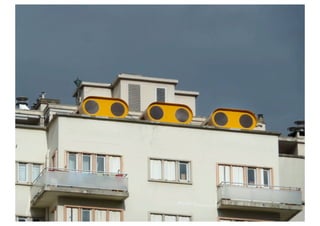
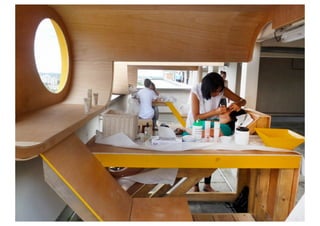
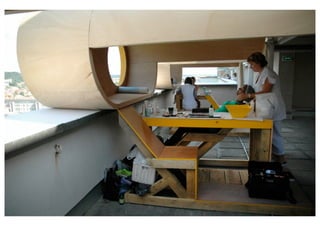
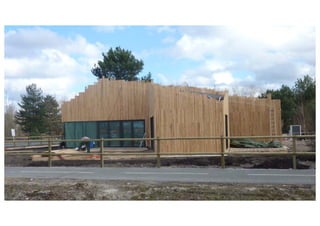

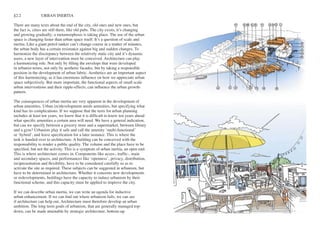
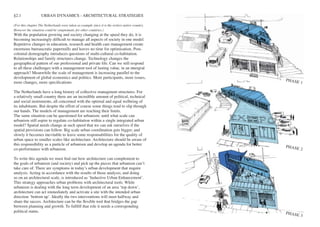
The document discusses urban inertia and how the urban fabric changes more slowly than the uses within the urban space. It argues that architecture can play a role in harmonizing this discrepancy by intervening at a smaller scale through functional schemes that can influence urban growth patterns. It also notes that specifying amenities far in advance for urban planning is difficult, so architecture must be able to flexibly activate sites as needs change. The document calls for analyzing symptoms in urban development where urbanism fails and developing an "inductive urban enhancement" strategy where architecture approaches urban problems with flexible tools to meet urban goals from the bottom-up while urban planning works from the top-down.


![IRJET- Water Imprints: The Process of Contemporary Urbanization for [Re]-Stru...](https://cdn.slidesharecdn.com/ss_thumbnails/irjet-v6i5575-190928093730-thumbnail.jpg?width=640&height=640&fit=bounds)


