Norrköping 01042014
Tailoring the policy-mixes to the needs of priorities –
state of the art in innovation policy research
Vesa Harmaakorpi
Professor of Innovation Systems
Dean of School of Industrial Engineering and Management
Lappeenranta University of Technology
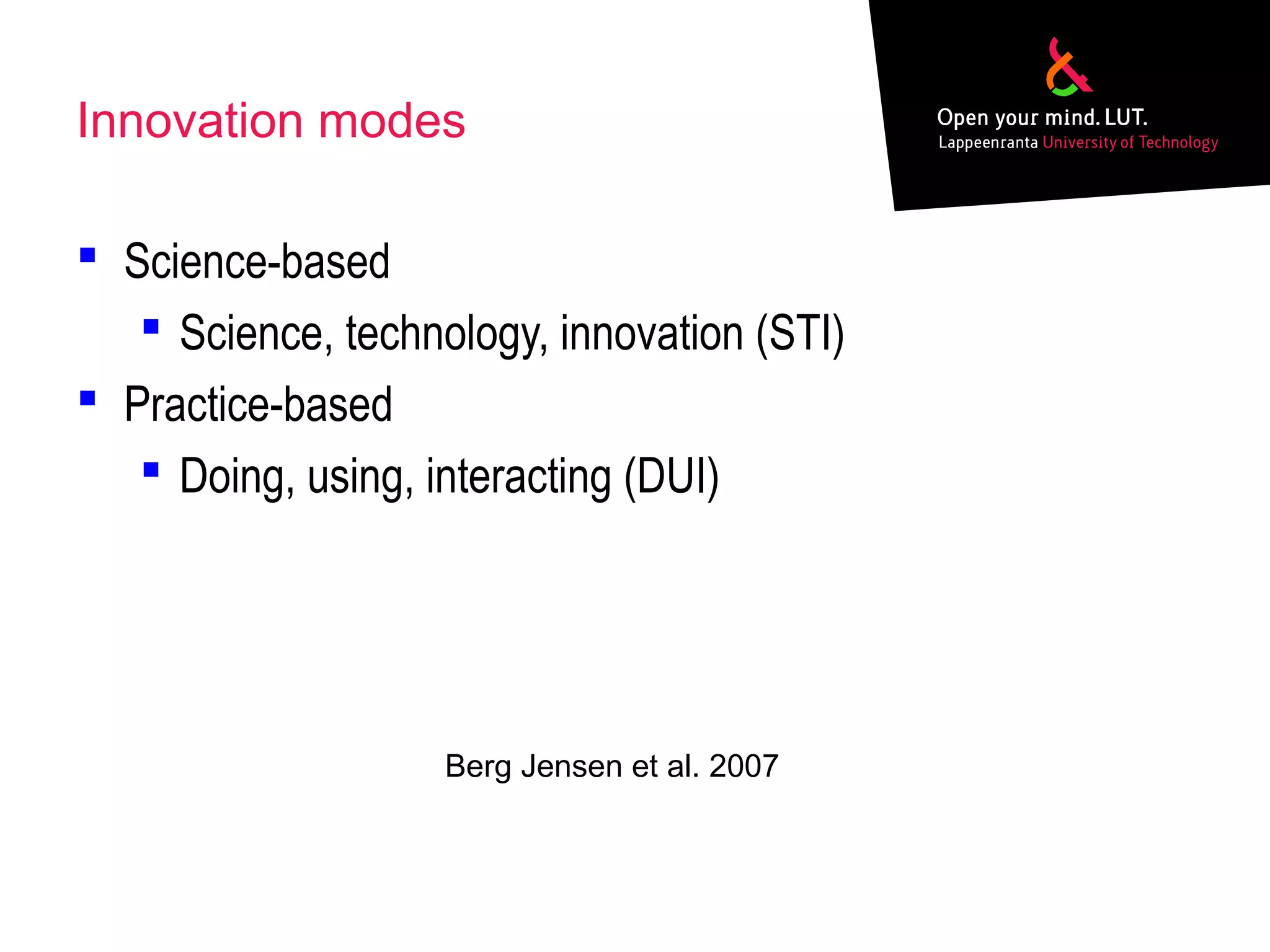
Innovation modes
 Science-based
 Science, technology, innovation (STI)
 Practice-based
 Doing, using, interacting (DUI)
Berg Jensen et al. 2007
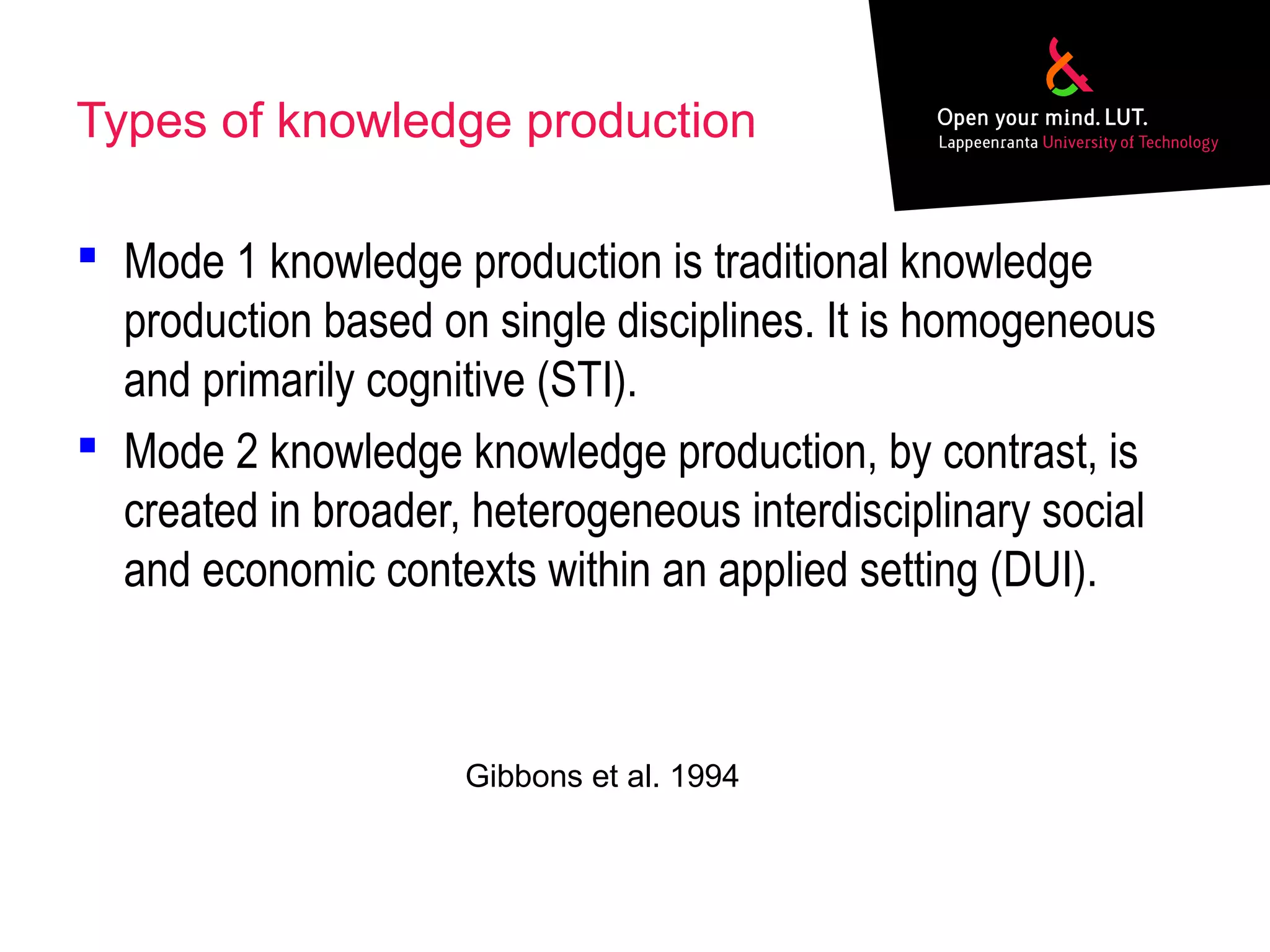
Types of knowledge production
 Mode 1 knowledge production is traditional knowledge
production based on single disciplines. It is homogeneous
and primarily cognitive (STI).
 Mode 2 knowledge knowledge production, by contrast, is
created in broader, heterogeneous interdisciplinary social
and economic contexts within an applied setting (DUI).
Gibbons et al. 1994
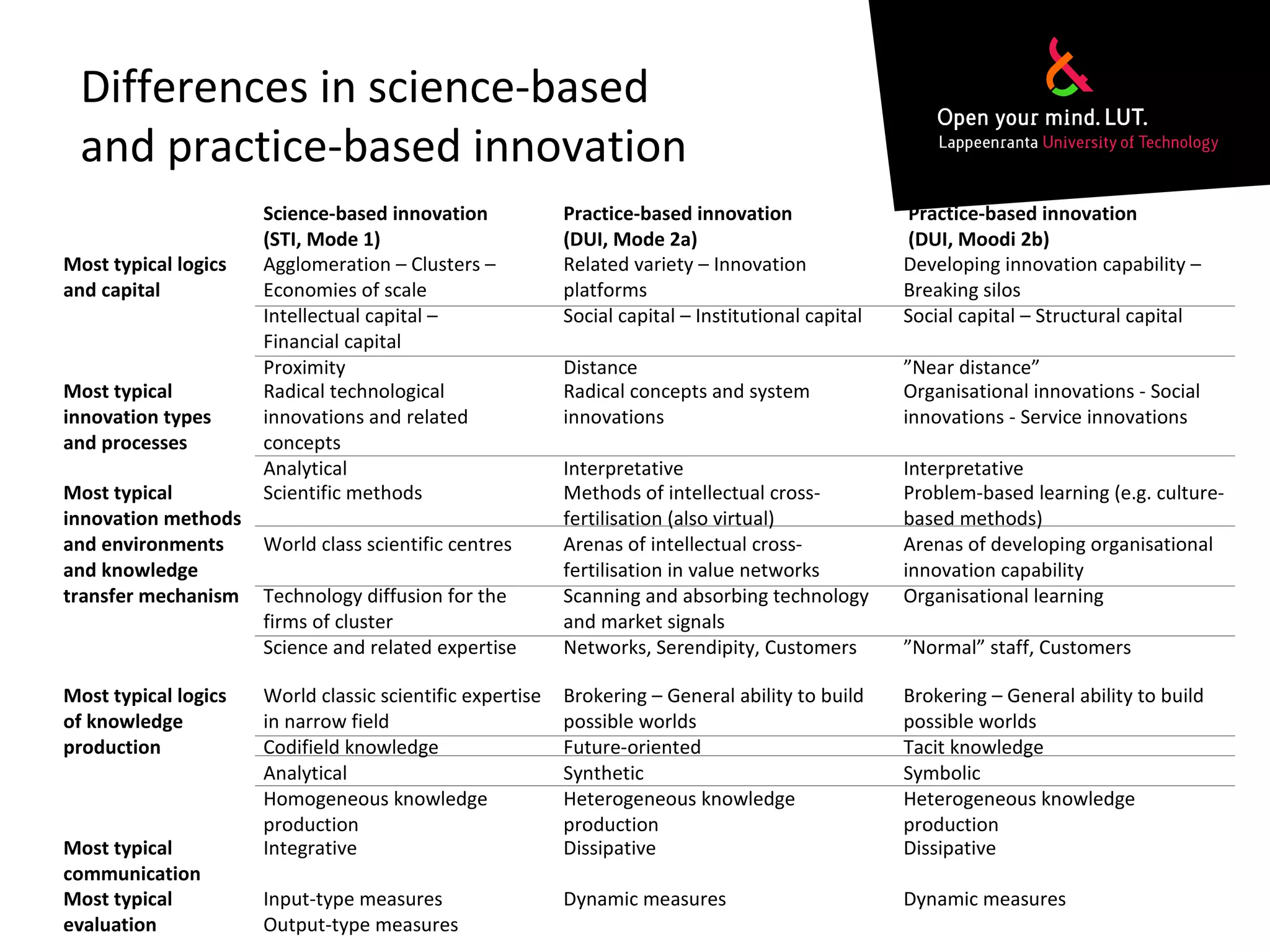
Science-based innovation
(STI, Mode 1)
Practice-based innovation
(DUI, Mode 2a)
Practice-based innovation
(DUI, Moodi 2b)
Most typical logics
and capital
Agglomeration – Clusters –
Economies of scale
Intellectual capital –
Financial capital
Proximity
Related variety – Innovation
platforms
Social capital – Institutional capital
Distance
Developing innovation capability –
Breaking silos
Social capital – Structural capital
”Near distance”
Most typical
innovation types
and processes
Radical technological
innovations and related
concepts
Analytical
Radical concepts and system
innovations
Interpretative
Organisational innovations - Social
innovations - Service innovations
Interpretative
Most typical
innovation methods
and environments
and knowledge
transfer mechanism
Scientific methods
World class scientific centres
Technology diffusion for the
firms of cluster
Science and related expertise
Methods of intellectual cross-
fertilisation (also virtual)
Arenas of intellectual cross-
fertilisation in value networks
Scanning and absorbing technology
and market signals
Networks, Serendipity, Customers
Problem-based learning (e.g. culture-
based methods)
Arenas of developing organisational
innovation capability
Organisational learning
”Normal” staff, Customers
Most typical logics
of knowledge
production
World classic scientific expertise
in narrow field
Codifield knowledge
Analytical
Homogeneous knowledge
production
Brokering – General ability to build
possible worlds
Future-oriented
Synthetic
Heterogeneous knowledge
production
Brokering – General ability to build
possible worlds
Tacit knowledge
Symbolic
Heterogeneous knowledge
production
Most typical
communication
Integrative Dissipative Dissipative
Most typical
evaluation
Input-type measures
Output-type measures
Dynamic measures Dynamic measures
Differences in science-based
and practice-based innovation
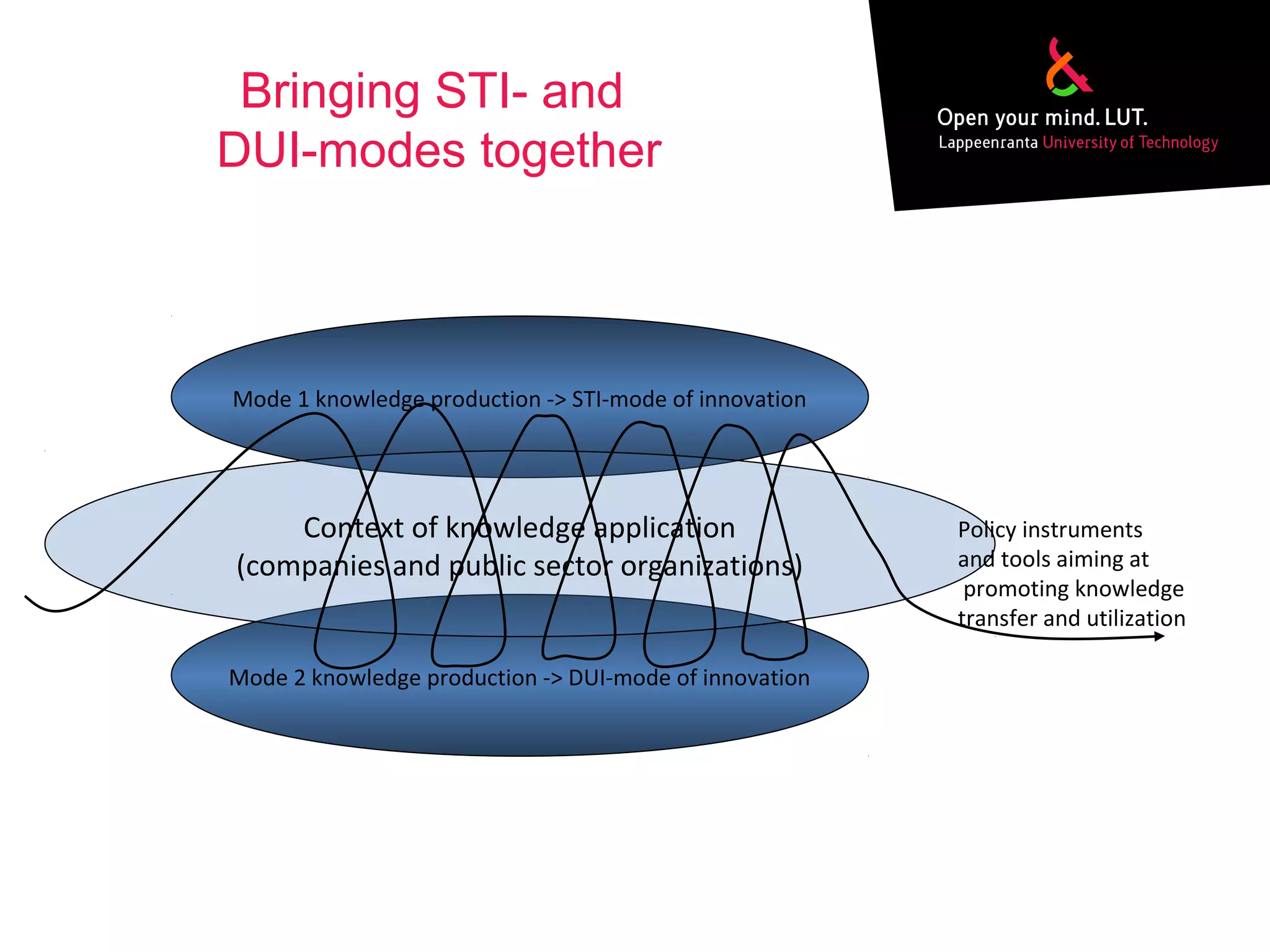
Bringing STI- and
DUI-modes together
Mode 2 knowledge production -> DUI-mode of innovation
Mode 1 knowledge production -> STI-mode of innovation
Context of knowledge application
(companies and public sector organizations)
Policy instruments
and tools aiming at
promoting knowledge
transfer and utilization
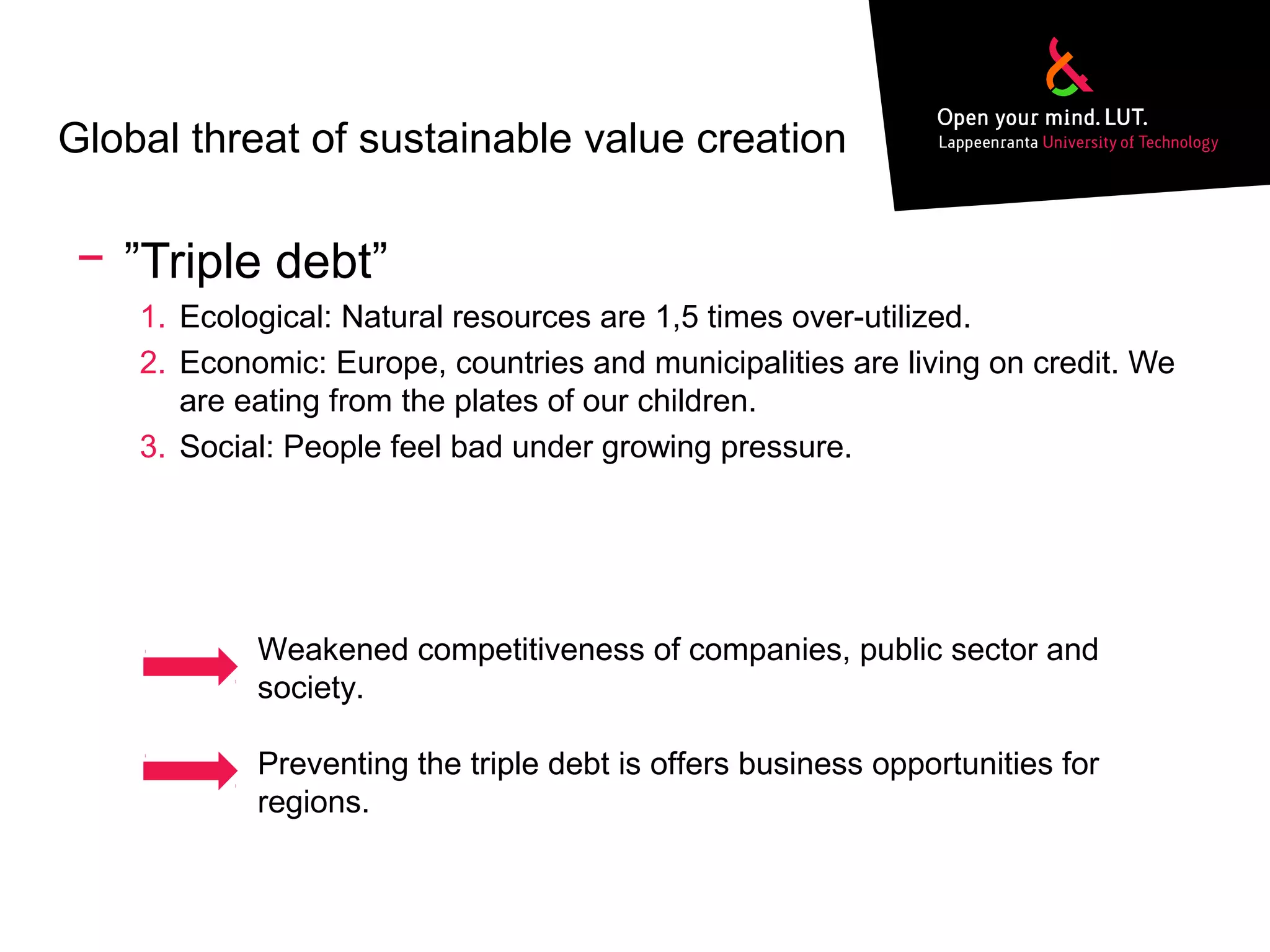
Global threat of sustainable value creation
− ”Triple debt”
1. Ecological: Natural resources are 1,5 times over-utilized.
2. Economic: Europe, countries and municipalities are living on credit. We
are eating from the plates of our children.
3. Social: People feel bad under growing pressure.
Weakened competitiveness of companies, public sector and
society.
Preventing the triple debt is offers business opportunities for
regions.
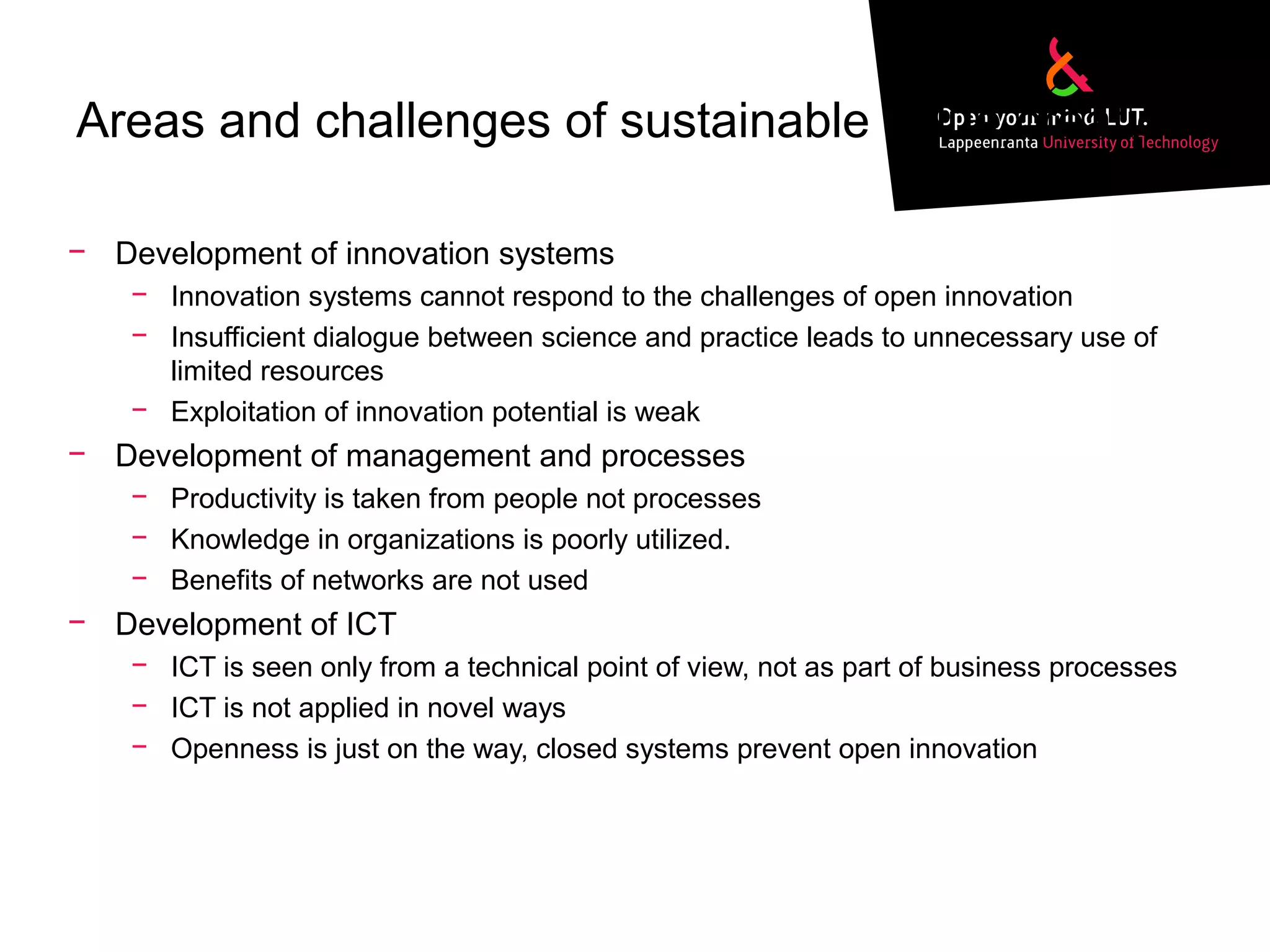
Areas and challenges of sustainable value creation
− Development of innovation systems
− Innovation systems cannot respond to the challenges of open innovation
− Insufficient dialogue between science and practice leads to unnecessary use of
limited resources
− Exploitation of innovation potential is weak
− Development of management and processes
− Productivity is taken from people not processes
− Knowledge in organizations is poorly utilized.
− Benefits of networks are not used
− Development of ICT
− ICT is seen only from a technical point of view, not as part of business processes
− ICT is not applied in novel ways
− Openness is just on the way, closed systems prevent open innovation
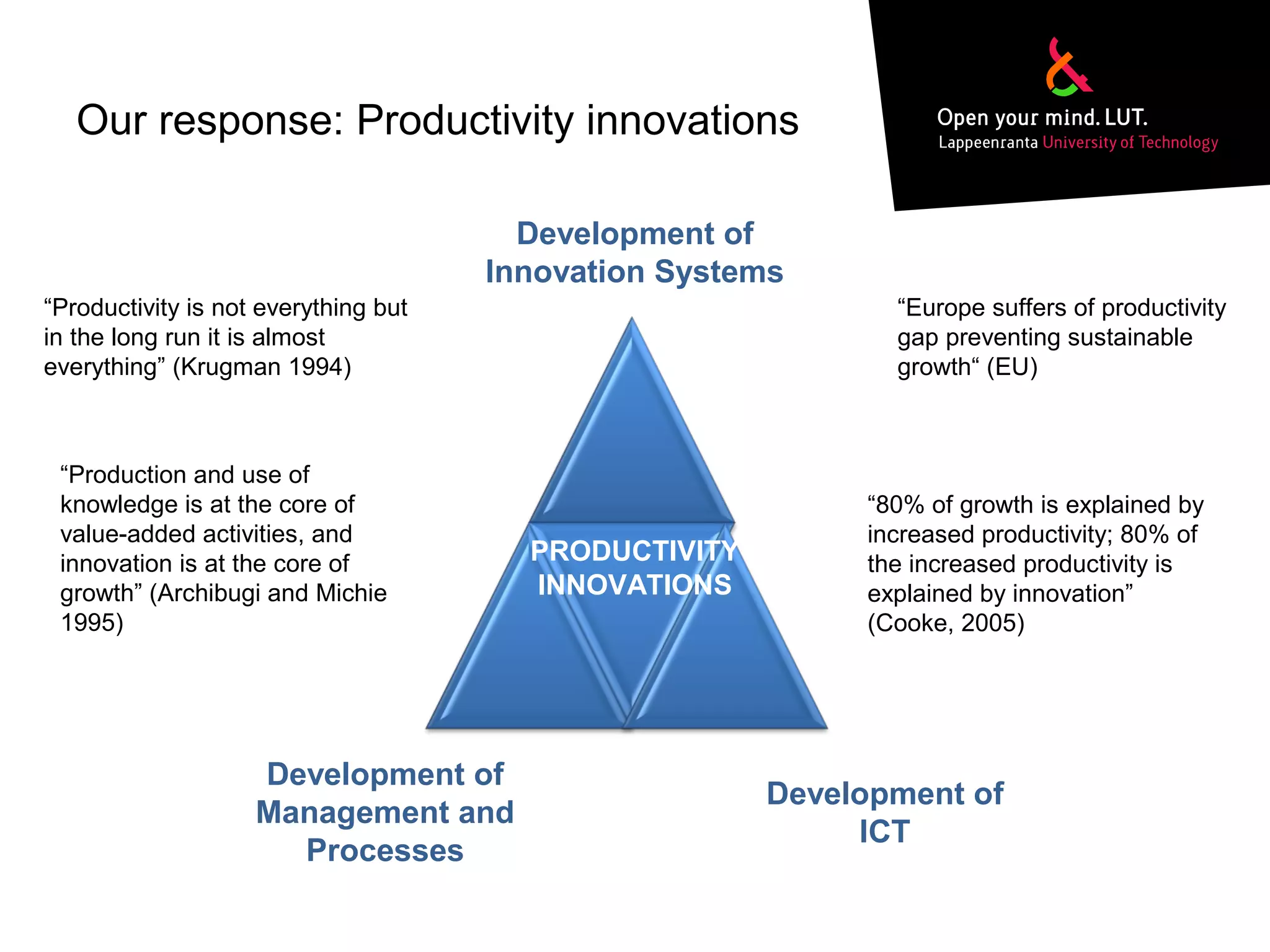
Our response: Productivity innovations
“Productivity is not everything but
in the long run it is almost
everything” (Krugman 1994)
“Production and use of
knowledge is at the core of
value-added activities, and
innovation is at the core of
growth” (Archibugi and Michie
1995)
“Europe suffers of productivity
gap preventing sustainable
growth“ (EU)
“80% of growth is explained by
increased productivity; 80% of
the increased productivity is
explained by innovation”
(Cooke, 2005)
Development of
Innovation Systems
Development of
Management and
Processes
Development of
ICT
PRODUCTIVITY
INNOVATIONS
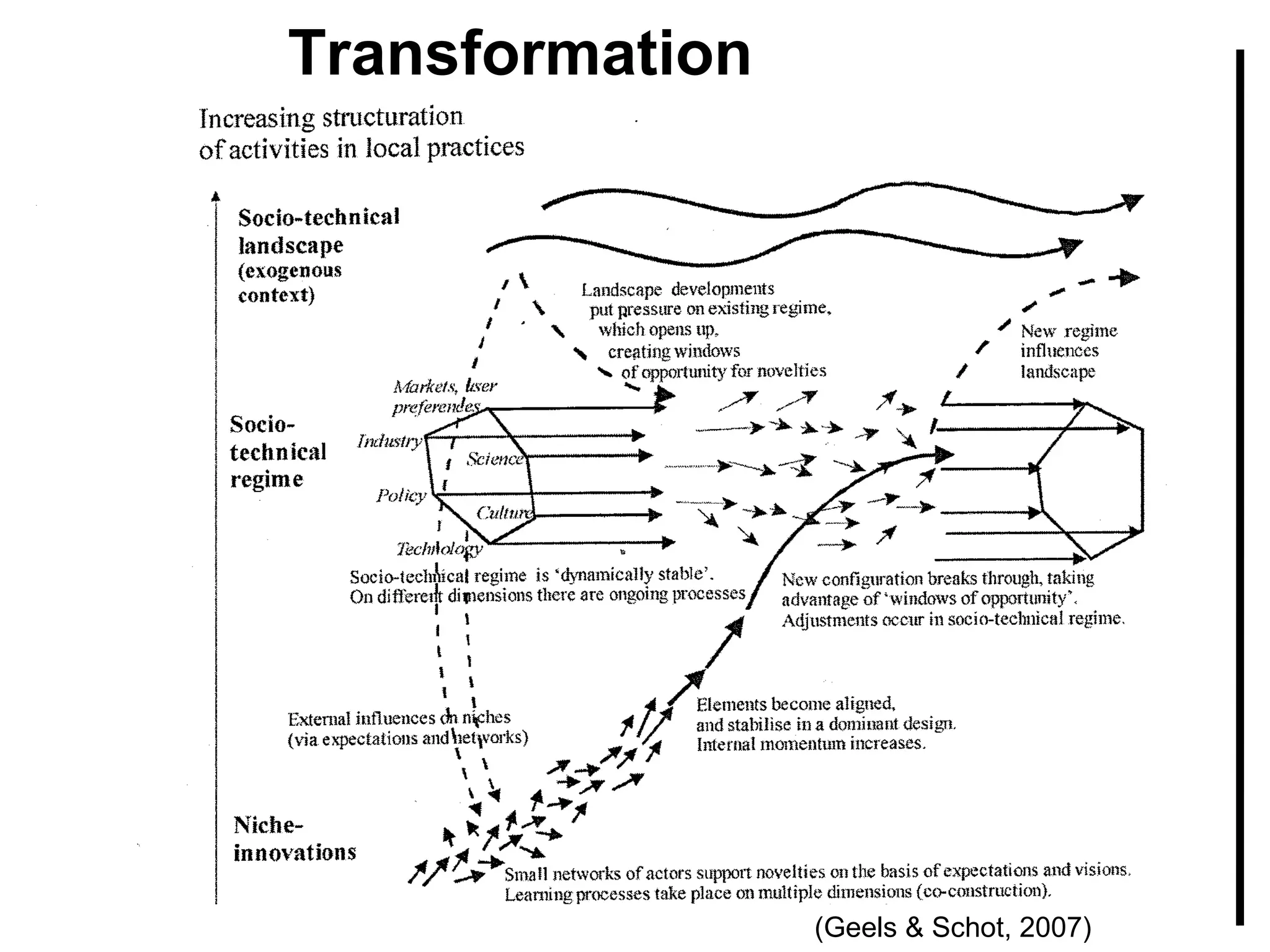
(Geels & Schot, 2007)
Transformation
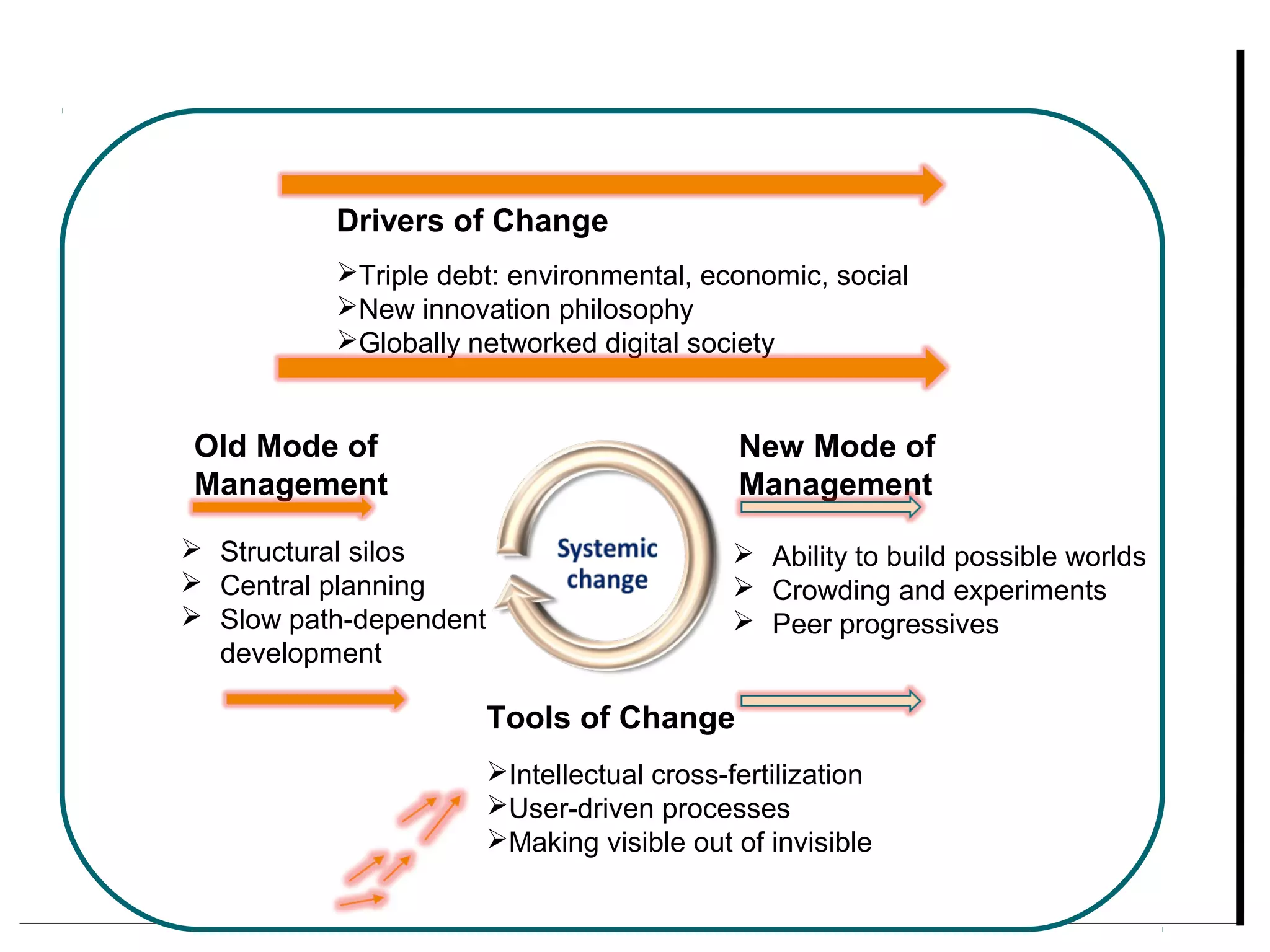
Tools of Change
Intellectual cross-fertilization
User-driven processes
Making visible out of invisible
Drivers of Change
Triple debt: environmental, economic, social
New innovation philosophy
Globally networked digital society
 Structural silos
 Central planning
 Slow path-dependent
development
Old Mode of
Management
 Ability to build possible worlds
 Crowding and experiments
 Peer progressives
New Mode of
Management
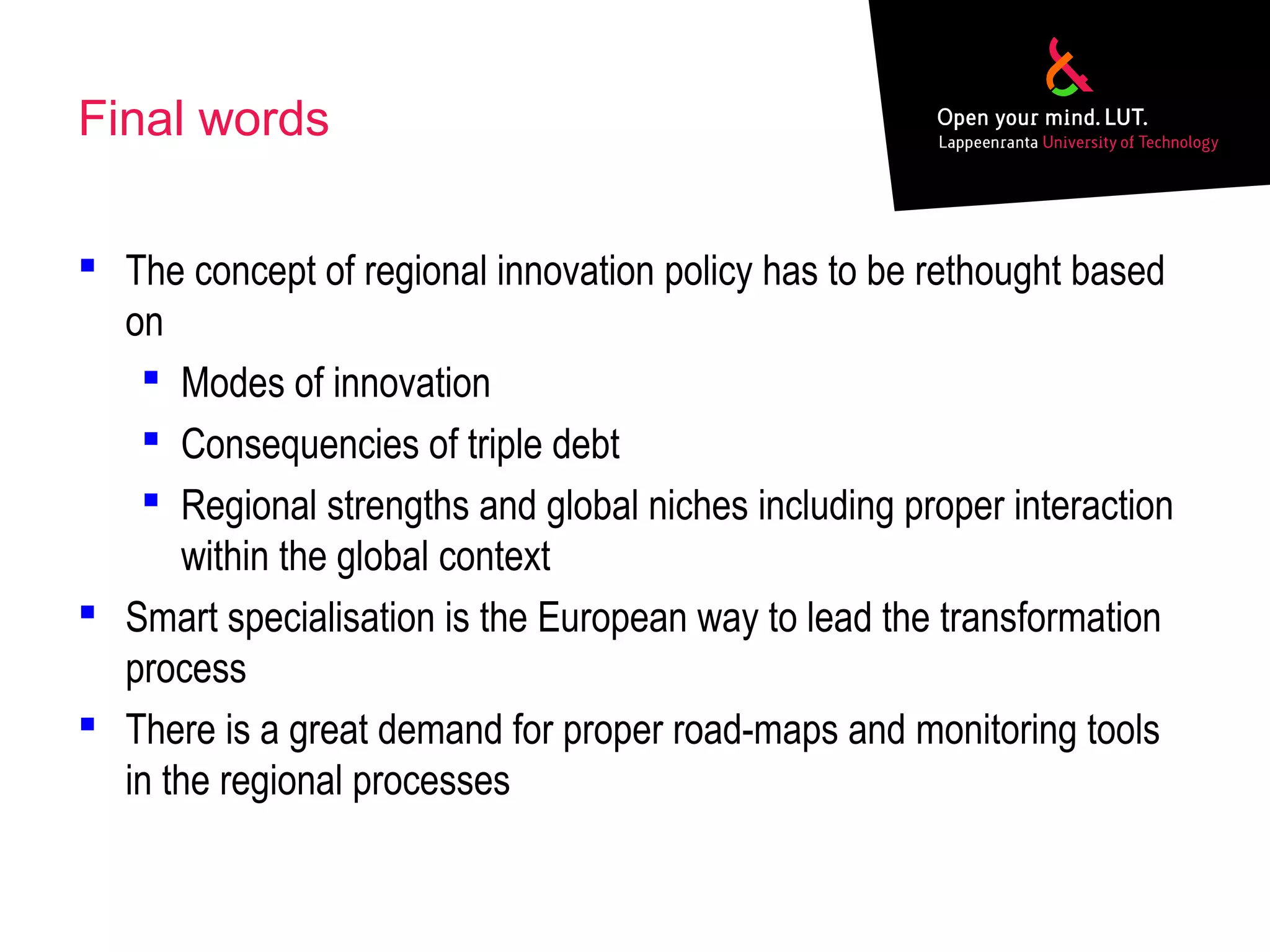
Final words
 The concept of regional innovation policy has to be rethought based
on
 Modes of innovation
 Consequencies of triple debt
 Regional strengths and global niches including proper interaction
within the global context
 Smart specialisation is the European way to lead the transformation
process
 There is a great demand for proper road-maps and monitoring tools
in the regional processes
Book on practice-based
innovation
 Melkas, H. & Harmaakorpi, V. (eds.) (2012). Practice-
based Innovation. Insights, Applications and Policy
Implications. Axel Springer Verlag.

Innovation policy mix

  • 1.
    Norrköping 01042014 Tailoring thepolicy-mixes to the needs of priorities – state of the art in innovation policy research Vesa Harmaakorpi Professor of Innovation Systems Dean of School of Industrial Engineering and Management Lappeenranta University of Technology
  • 2.
    Innovation modes  Science-based Science, technology, innovation (STI)  Practice-based  Doing, using, interacting (DUI) Berg Jensen et al. 2007
  • 3.
    Types of knowledgeproduction  Mode 1 knowledge production is traditional knowledge production based on single disciplines. It is homogeneous and primarily cognitive (STI).  Mode 2 knowledge knowledge production, by contrast, is created in broader, heterogeneous interdisciplinary social and economic contexts within an applied setting (DUI). Gibbons et al. 1994
  • 4.
    Science-based innovation (STI, Mode1) Practice-based innovation (DUI, Mode 2a) Practice-based innovation (DUI, Moodi 2b) Most typical logics and capital Agglomeration – Clusters – Economies of scale Intellectual capital – Financial capital Proximity Related variety – Innovation platforms Social capital – Institutional capital Distance Developing innovation capability – Breaking silos Social capital – Structural capital ”Near distance” Most typical innovation types and processes Radical technological innovations and related concepts Analytical Radical concepts and system innovations Interpretative Organisational innovations - Social innovations - Service innovations Interpretative Most typical innovation methods and environments and knowledge transfer mechanism Scientific methods World class scientific centres Technology diffusion for the firms of cluster Science and related expertise Methods of intellectual cross- fertilisation (also virtual) Arenas of intellectual cross- fertilisation in value networks Scanning and absorbing technology and market signals Networks, Serendipity, Customers Problem-based learning (e.g. culture- based methods) Arenas of developing organisational innovation capability Organisational learning ”Normal” staff, Customers Most typical logics of knowledge production World classic scientific expertise in narrow field Codifield knowledge Analytical Homogeneous knowledge production Brokering – General ability to build possible worlds Future-oriented Synthetic Heterogeneous knowledge production Brokering – General ability to build possible worlds Tacit knowledge Symbolic Heterogeneous knowledge production Most typical communication Integrative Dissipative Dissipative Most typical evaluation Input-type measures Output-type measures Dynamic measures Dynamic measures Differences in science-based and practice-based innovation
  • 5.
    Bringing STI- and DUI-modestogether Mode 2 knowledge production -> DUI-mode of innovation Mode 1 knowledge production -> STI-mode of innovation Context of knowledge application (companies and public sector organizations) Policy instruments and tools aiming at promoting knowledge transfer and utilization
  • 6.
    Global threat ofsustainable value creation − ”Triple debt” 1. Ecological: Natural resources are 1,5 times over-utilized. 2. Economic: Europe, countries and municipalities are living on credit. We are eating from the plates of our children. 3. Social: People feel bad under growing pressure. Weakened competitiveness of companies, public sector and society. Preventing the triple debt is offers business opportunities for regions.
  • 7.
    Areas and challengesof sustainable value creation − Development of innovation systems − Innovation systems cannot respond to the challenges of open innovation − Insufficient dialogue between science and practice leads to unnecessary use of limited resources − Exploitation of innovation potential is weak − Development of management and processes − Productivity is taken from people not processes − Knowledge in organizations is poorly utilized. − Benefits of networks are not used − Development of ICT − ICT is seen only from a technical point of view, not as part of business processes − ICT is not applied in novel ways − Openness is just on the way, closed systems prevent open innovation
  • 8.
    Our response: Productivityinnovations “Productivity is not everything but in the long run it is almost everything” (Krugman 1994) “Production and use of knowledge is at the core of value-added activities, and innovation is at the core of growth” (Archibugi and Michie 1995) “Europe suffers of productivity gap preventing sustainable growth“ (EU) “80% of growth is explained by increased productivity; 80% of the increased productivity is explained by innovation” (Cooke, 2005) Development of Innovation Systems Development of Management and Processes Development of ICT PRODUCTIVITY INNOVATIONS
  • 9.
    (Geels & Schot,2007) Transformation
  • 10.
    Tools of Change Intellectualcross-fertilization User-driven processes Making visible out of invisible Drivers of Change Triple debt: environmental, economic, social New innovation philosophy Globally networked digital society  Structural silos  Central planning  Slow path-dependent development Old Mode of Management  Ability to build possible worlds  Crowding and experiments  Peer progressives New Mode of Management
  • 11.
    Final words  Theconcept of regional innovation policy has to be rethought based on  Modes of innovation  Consequencies of triple debt  Regional strengths and global niches including proper interaction within the global context  Smart specialisation is the European way to lead the transformation process  There is a great demand for proper road-maps and monitoring tools in the regional processes
  • 12.
    Book on practice-based innovation Melkas, H. & Harmaakorpi, V. (eds.) (2012). Practice- based Innovation. Insights, Applications and Policy Implications. Axel Springer Verlag.