The Battle of Somme A Major Battle of World War I
When did it happen? First Day of battle was on the 1st of July, 1916 Bombardment started on the 24th of June, for eight days Happened after the Battle of Verdun, causing rippling affects after Allied defeat The battle ended on the 18th of November 1916 when the British called it off
Where did it take place? The battle took place in northern France, north of the Somme river The battle took place on a 30 kilometer front between the towns of Arras and Albert
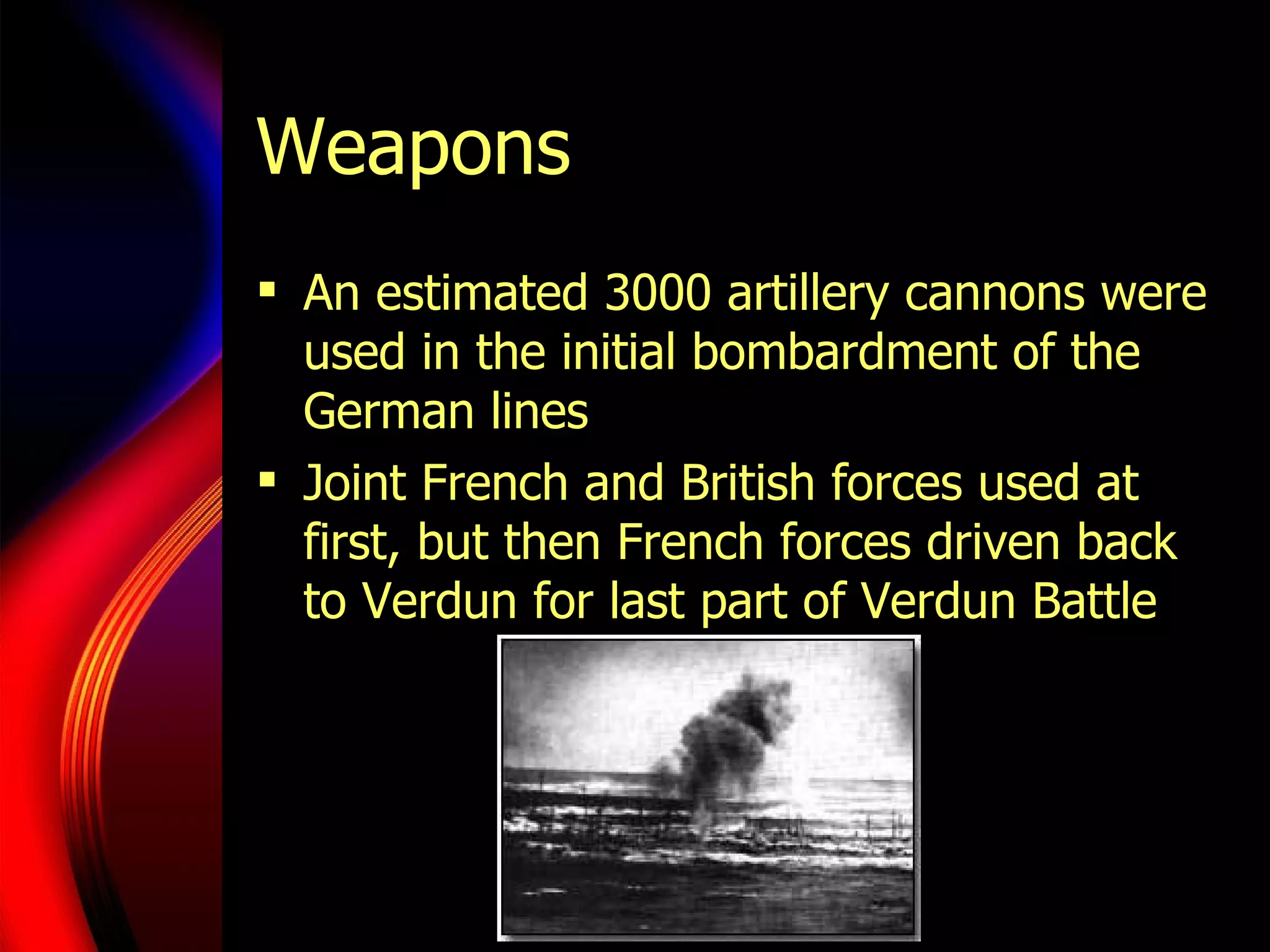
Weapons An estimated 3000 artillery cannons were used in the initial bombardment of the German lines Joint French and British forces used at first, but then French forces driven back to Verdun for last part of Verdun Battle
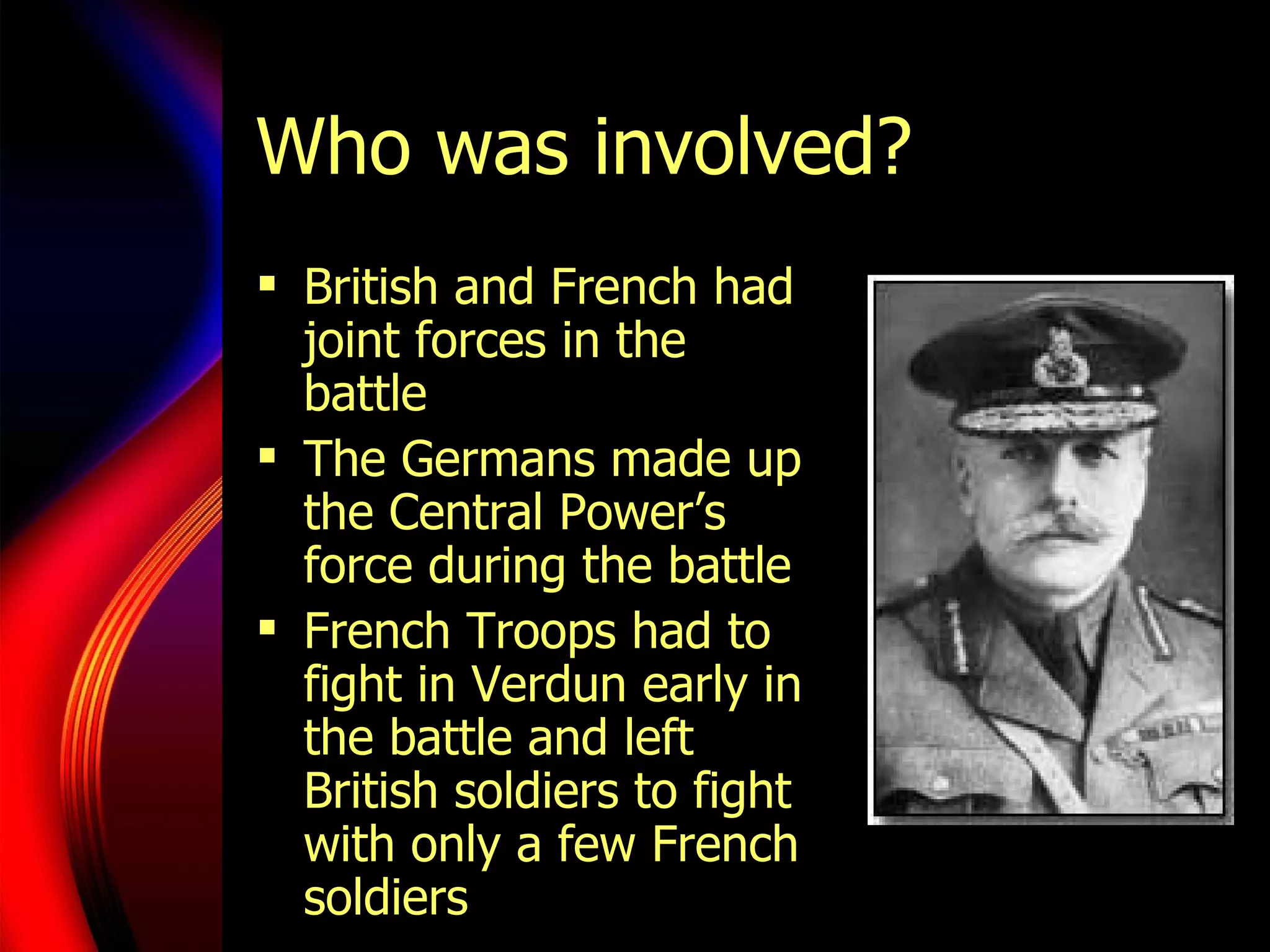
Who was involved? British and French had joint forces in the battle The Germans made up the Central Power’s force during the battle French Troops had to fight in Verdun early in the battle and left British soldiers to fight with only a few French soldiers
Why was battle waged? The British and French allies decided to try and drain Central Power’s resources and supplies at Somme Overtaking of land was a secondary goal in the Battle
The tactics for the battle The goal was to drain the German lines of resources and supplies There was to be a full frontal attack by the joint allied troops in the center of the battle There was another force of army and cavalry that was to be used to push through the German lines and break through to Cambrai and Douai which would cut the German force into two
The tactics for the battle (cont.) Another 750,000 men, which was made up of 20% French and 80% British Expeditionary Force, was used to to go around the opposite side as the Cavalry units and push in through the trenches The entire Allied force used heavy machine guns and artillery, but this slowed their advance to a gravely slow pace
The Reinforcements The Germans had constructed sturdy, well built concrete bunkers which were able to protect their troops for over eight days of Allied bombardment The Germans near to nothing and when the Allied forced advanced on “empty” trenches, they were mowed down by the German machine guns and the amount of troops still living
Major Events in the Battle The British conducted a 8 day bombardment of German front lines The attack was signaled to start at 7:20, 10 minutes earlier than planned, by a series of 17 mines. The Allied Troops were slaughtered by the German machine guns that had supposedly been  destroyed.
Major Events in the Battle (cont.) Advances were short and limited 58,000 British soldiers killed on the first day of the battle Sir Douglas Haig commanded that the offensive continued as planned French troops completed their goals on the Southern end of the Front due to their surprise attack, and they were expected by the Germans not to attack to do the Battle at Verdun
Major Events in the Battle (cont.) On July 11, German troops from Verdun arrived and doubled the German’s number’s in their offensive Generals both convinced the other was ready to retreat, this is the reason the battle lasted until November Tanks were first used on the 15th of September by the British, this move only gained under 1 kilometer of land
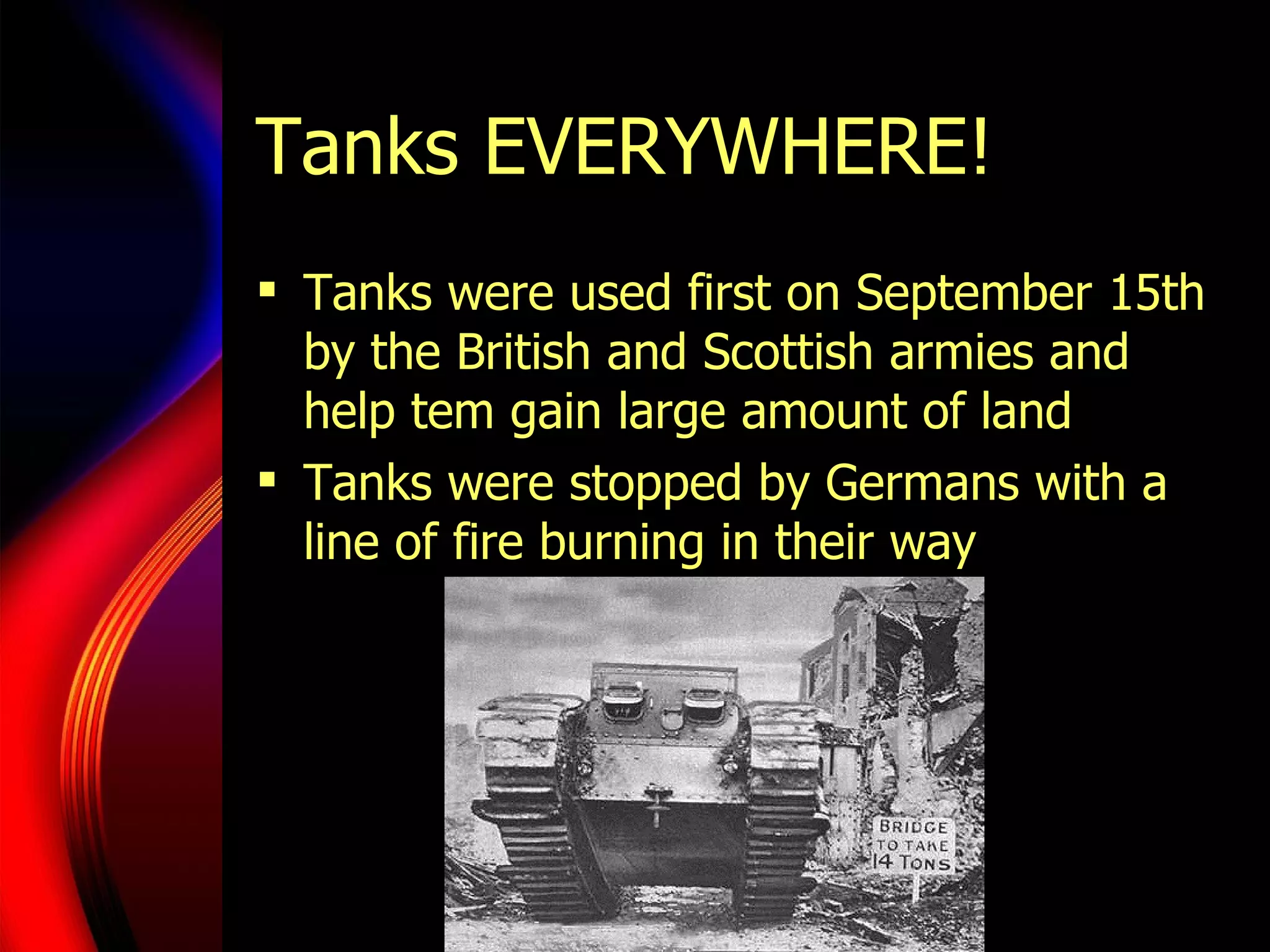
Tanks EVERYWHERE! Tanks were used first on September 15th by the British and Scottish armies and help tem gain large amount of land Tanks were stopped by Germans with a line of fire burning in their way
Tanks (cont.) This wall of fire created confusion, leading men to fire at their own companions Four tanks saved the small town of Flers from being reoccupied and saved many men from a mixed platoon
The Battle Drags on Through out October and November, both Generals urge their men on and continue with the same battle plans from before the battle’s beginning On the 13th of November the British expeditionary Force captured the fortress of Beaumont Hamel which allowed them to control their surrounding area
The End Snow fell on the Area of Somme, ending the offensive of both sides on November 18, 1916. The allies gained a total of 12 kilometers The British lost 420,000 men while the French lost 200,000 men. The German’s lose is estimated at 500,000 soldiers For every Meter gained, about 52 men lost their lives
After the End The overall effect on the war in Somme was that tanks were improving; the German supplies and resources were drained and this all lead the way to victory for the Allies.
Bibliography Benoit, Ty. “History 6, Twentieth Century  World History”.  Butte Community   College .7 Feb. 2007.  <http://www.butte.edu/~tben/ wwI/wwI.html>. Duffy, Michael. “Battles: The Battle of the  Somme, 1916”.  First World War.com .  2007. 4 Feb. 2007.  <http://www.firstworldwar.com/ battles/somme.htm>.
Bibliography (cont.) Duffy, Michael. “Battles: The Battle of the  Somme, 1916”.  First World War.com .  2007. 4 Feb. 2007.  <http://www.firstworldwar.com/ maps/graphics/maps_34_wfront_ somme_(1600).jpg>.

WWI Presentation

  • 1.
    The Battle ofSomme A Major Battle of World War I
  • 2.
    When did ithappen? First Day of battle was on the 1st of July, 1916 Bombardment started on the 24th of June, for eight days Happened after the Battle of Verdun, causing rippling affects after Allied defeat The battle ended on the 18th of November 1916 when the British called it off
  • 3.
    Where did ittake place? The battle took place in northern France, north of the Somme river The battle took place on a 30 kilometer front between the towns of Arras and Albert
  • 4.
    Weapons An estimated3000 artillery cannons were used in the initial bombardment of the German lines Joint French and British forces used at first, but then French forces driven back to Verdun for last part of Verdun Battle
  • 5.
    Who was involved?British and French had joint forces in the battle The Germans made up the Central Power’s force during the battle French Troops had to fight in Verdun early in the battle and left British soldiers to fight with only a few French soldiers
  • 6.
    Why was battlewaged? The British and French allies decided to try and drain Central Power’s resources and supplies at Somme Overtaking of land was a secondary goal in the Battle
  • 7.
    The tactics forthe battle The goal was to drain the German lines of resources and supplies There was to be a full frontal attack by the joint allied troops in the center of the battle There was another force of army and cavalry that was to be used to push through the German lines and break through to Cambrai and Douai which would cut the German force into two
  • 8.
    The tactics forthe battle (cont.) Another 750,000 men, which was made up of 20% French and 80% British Expeditionary Force, was used to to go around the opposite side as the Cavalry units and push in through the trenches The entire Allied force used heavy machine guns and artillery, but this slowed their advance to a gravely slow pace
  • 9.
    The Reinforcements TheGermans had constructed sturdy, well built concrete bunkers which were able to protect their troops for over eight days of Allied bombardment The Germans near to nothing and when the Allied forced advanced on “empty” trenches, they were mowed down by the German machine guns and the amount of troops still living
  • 10.
    Major Events inthe Battle The British conducted a 8 day bombardment of German front lines The attack was signaled to start at 7:20, 10 minutes earlier than planned, by a series of 17 mines. The Allied Troops were slaughtered by the German machine guns that had supposedly been destroyed.
  • 11.
    Major Events inthe Battle (cont.) Advances were short and limited 58,000 British soldiers killed on the first day of the battle Sir Douglas Haig commanded that the offensive continued as planned French troops completed their goals on the Southern end of the Front due to their surprise attack, and they were expected by the Germans not to attack to do the Battle at Verdun
  • 12.
    Major Events inthe Battle (cont.) On July 11, German troops from Verdun arrived and doubled the German’s number’s in their offensive Generals both convinced the other was ready to retreat, this is the reason the battle lasted until November Tanks were first used on the 15th of September by the British, this move only gained under 1 kilometer of land
  • 13.
    Tanks EVERYWHERE! Tankswere used first on September 15th by the British and Scottish armies and help tem gain large amount of land Tanks were stopped by Germans with a line of fire burning in their way
  • 14.
    Tanks (cont.) Thiswall of fire created confusion, leading men to fire at their own companions Four tanks saved the small town of Flers from being reoccupied and saved many men from a mixed platoon
  • 15.
    The Battle Dragson Through out October and November, both Generals urge their men on and continue with the same battle plans from before the battle’s beginning On the 13th of November the British expeditionary Force captured the fortress of Beaumont Hamel which allowed them to control their surrounding area
  • 16.
    The End Snowfell on the Area of Somme, ending the offensive of both sides on November 18, 1916. The allies gained a total of 12 kilometers The British lost 420,000 men while the French lost 200,000 men. The German’s lose is estimated at 500,000 soldiers For every Meter gained, about 52 men lost their lives
  • 17.
    After the EndThe overall effect on the war in Somme was that tanks were improving; the German supplies and resources were drained and this all lead the way to victory for the Allies.
  • 18.
    Bibliography Benoit, Ty.“History 6, Twentieth Century World History”. Butte Community College .7 Feb. 2007. <http://www.butte.edu/~tben/ wwI/wwI.html>. Duffy, Michael. “Battles: The Battle of the Somme, 1916”. First World War.com . 2007. 4 Feb. 2007. <http://www.firstworldwar.com/ battles/somme.htm>.
  • 19.
    Bibliography (cont.) Duffy,Michael. “Battles: The Battle of the Somme, 1916”. First World War.com . 2007. 4 Feb. 2007. <http://www.firstworldwar.com/ maps/graphics/maps_34_wfront_ somme_(1600).jpg>.