



Shrink-Wrapped in Our Own Thinking:
Thinking That Transforms
 Presented by
 Ariane David, PhD
 Senior Partner
 The Veritas Group
 Senior Lecturer
 California State University, Northridge
 ADavid@TheVeritasGroup.com
Non-Positional Thinking and
The Uncertainty Contingency
Yolo County Department of Child Support Services
Ariane David, PhD
The VERITAS Group
California State University, Northridge
Woodbury University
ADavid@TheVeritasGroup.com www.theveritasgroup.com
Today you’ll see
 that you don’t really know what you think you know
…at the same time you’ll learn
 how to “see” what you’ve never been able to see before
Non-Positional Thinking:
Thinking Beyond the Obvious
We’ll look at:
• How we think vs. how we think we think
• The tyrant brain and what it means in real life
• So now what?
Non-Positional Thinking:
Thinking Beyond the Obvious
The Science of the Brain:
A Quick Tour
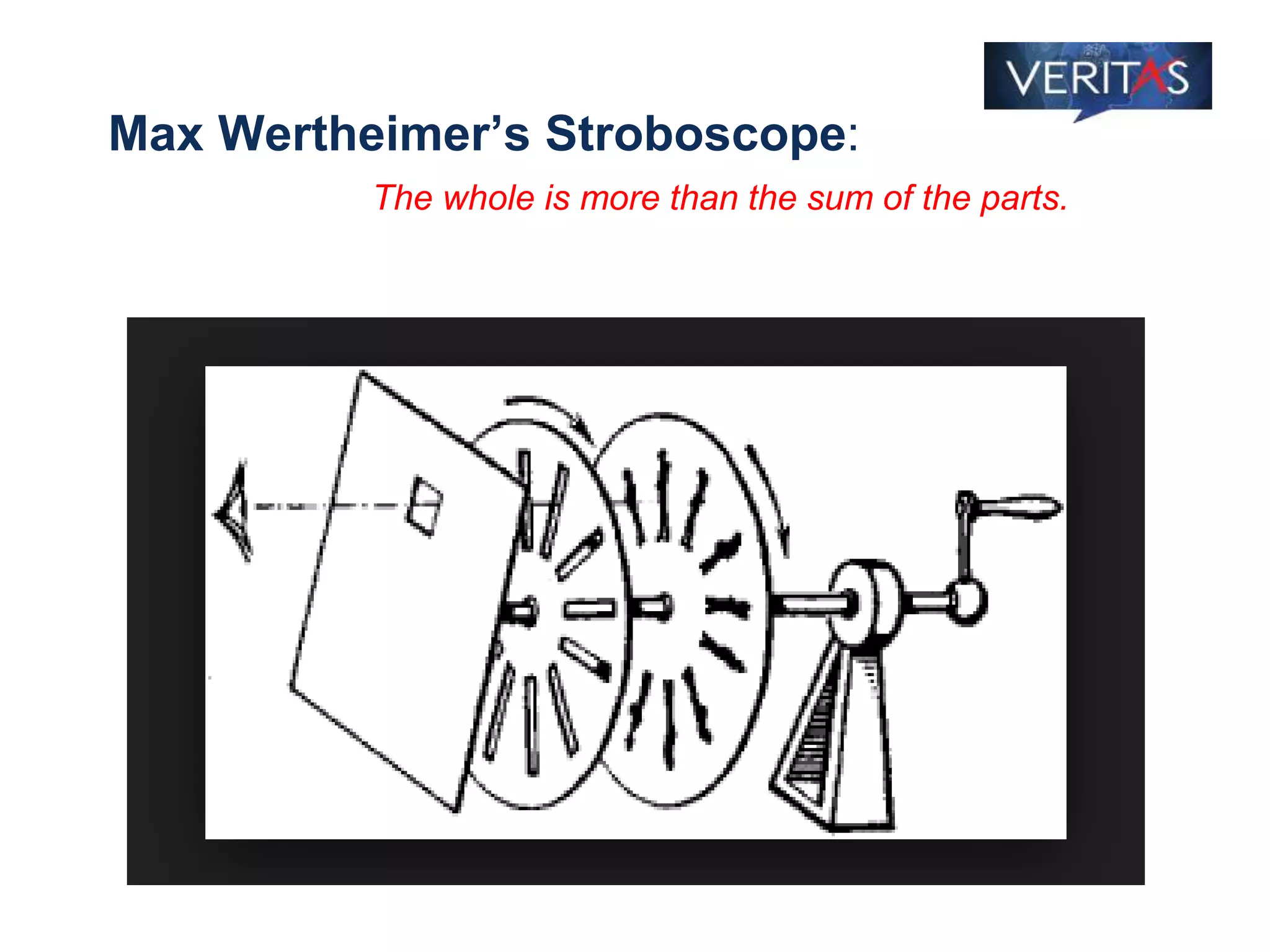
Max Wertheimer’s Stroboscope:
The whole is more than the sum of the parts.
Sir Frederick Bartlett -
Making Memory, Meaning, & Schemas
 The War of the Ghosts - Sydney
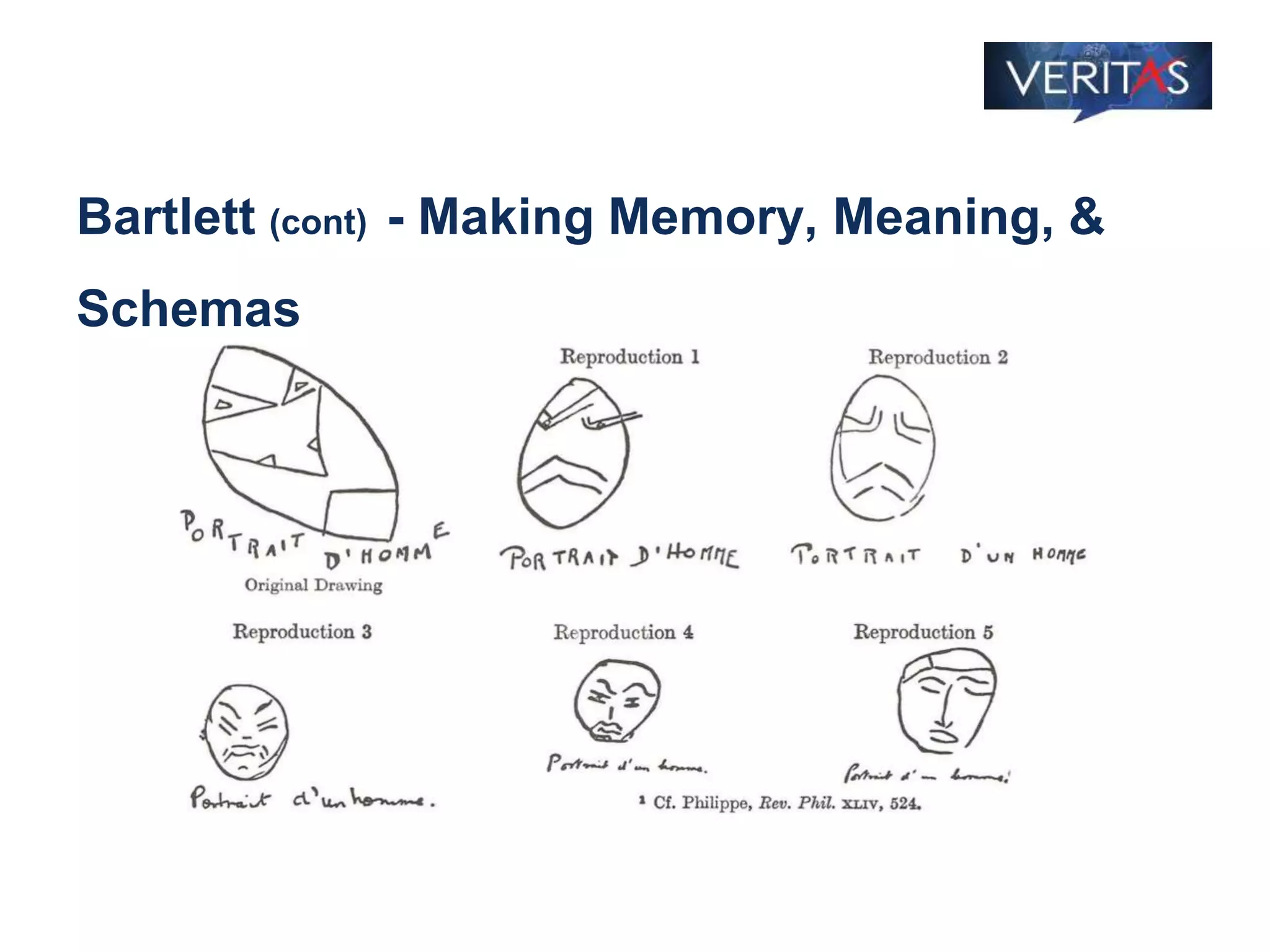
 “Asian” mask *
 Schemas
Bartlett (cont) - Making Memory, Meaning, &
Schemas
Sir Frederick Bartlett - Making Memory,
Meaning, & Schemas
 The War of the Ghosts - Sydney
 “Asian” mask
 Schemas
Elizabeth Loftus – Eyewitness Testimony
What we store in memory is affected not only by pre-
existing knowledge but also by post-event information
including
• Language
• Other information
What we remember might never have happened.
Antonio Damasio: The Neurobiology of Thinking
Perception
 Millions of bits of information assail our senses every minute;
we can perceive only a tiny number of sensory impressions.
 We focus only on what is immediately relevant and what
arouses us emotionally.
 Perception is shaped by past experiences including
memories and beliefs.
 As a result, our actions are based on what we believe is so,
not on what actually is so.
Antonio Damasio: The Neurobiology of Thinking
Emotions
 Emotions are body reactions to what’s happening
 Every sensory impression is paired with an emotion (called an
emotional tag) at the moment of perception
 The pair become memory
 The purpose of emotional tags is rapid response
Antonio Damasio: The Neurobiology of Thinking
Emotions
 The role of emotions in decision-making
 The myth of rational decision-making
 Suppressed vs. no emotions
Antonio Damasio: The Neurobiology of Thinking
Memory
Antonio Damasio: The Neurobiology of Thinking
Memory
 Memory is not a video; memories are NOT stored complete
anywhere in the brain.
 What we think of as memory is the result the simultaneous
firing of neurons, “a trick of timing”.
 Neurons carry no content, only the pattern code by which
neurons will fire, and when.
Think the image on your TV.
…thus
 What we remember is a subjective and creative
fabrication
 What we remember changes every time we recall it.
 We can never be certain about what we remember.
 Confidence in our memories has nothing to do with
accuracy: memories can be completely fabricated and
seem absolutely real.
…as a result
You can never be certain that what you remember
actually happened the way you remember it;
in fact, you can be certain that it didn't!
Thus Uncertainty is the first contingency of non-positional thinking.
Organizing Patterns: a model of the thinking brain
 Organizing patterns are a kind of template that allow us to organize
everything we know.
 We start building organizing patterns at birth.
 Our first/master organizing patterns are the strongest, and most
persistent and resilient.
 All future organizing patterns are formed within master organizing
patterns.
 The totality of all our organizing patterns creates our constructed
universe – our entire reality.
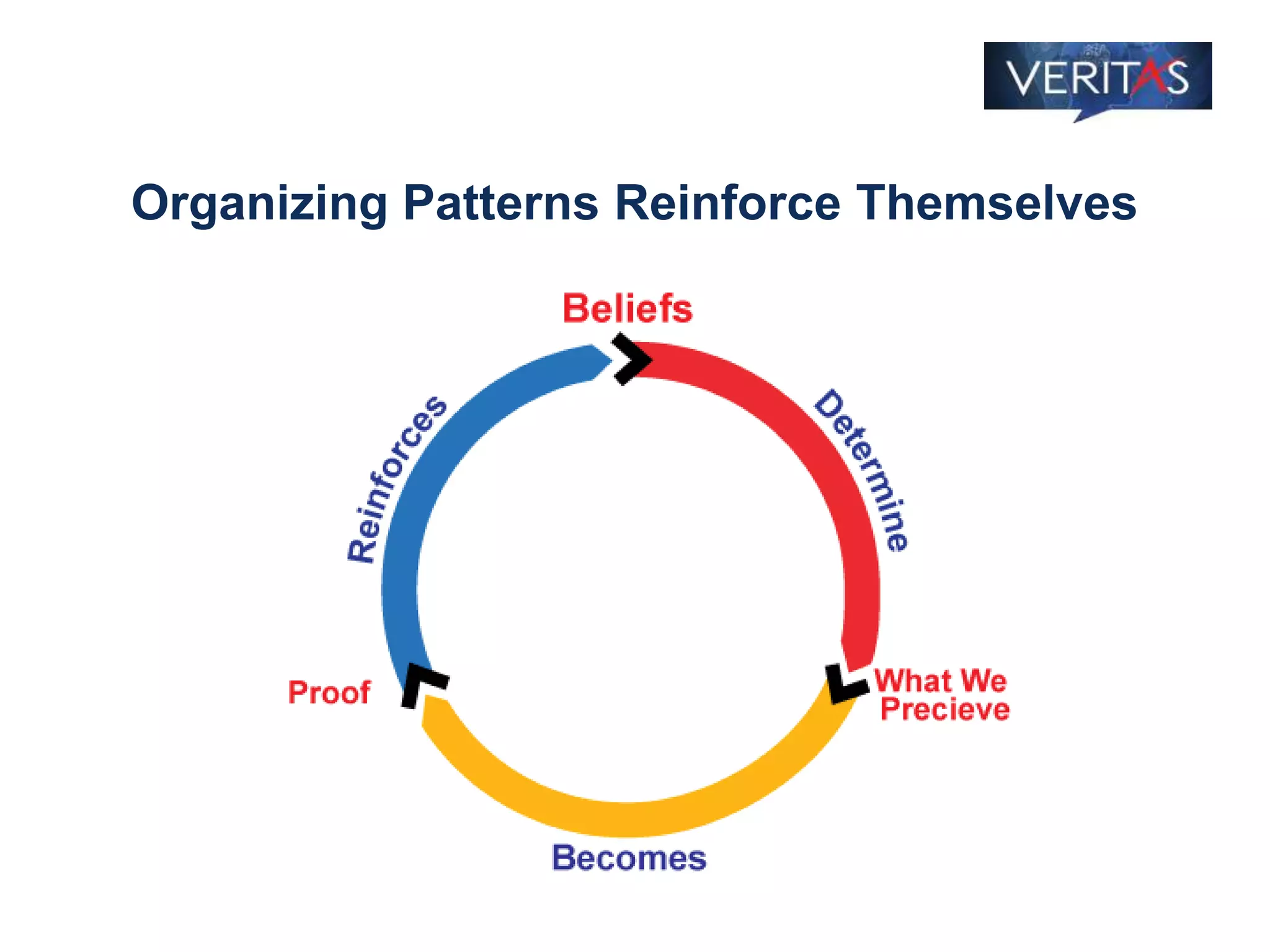
Organizing Patterns: reinforce themselves
 No impartial evidence needed.
 What we perceive is taken as proof that
our position/beliefs are right.
 Position/beliefs dictate what we see,
what we see reinforces the
position/beliefs.
Organizing Patterns Reinforce Themselves
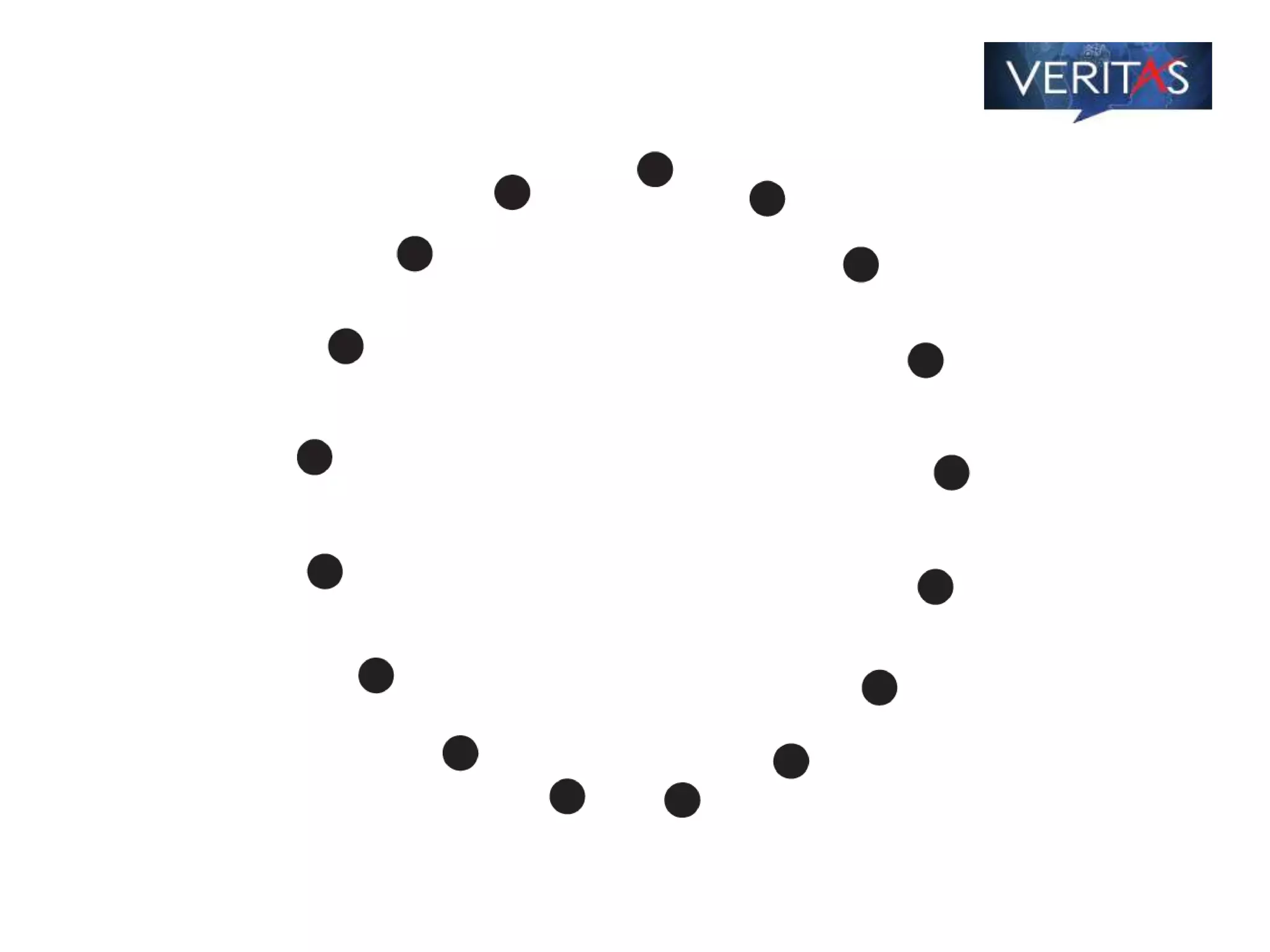
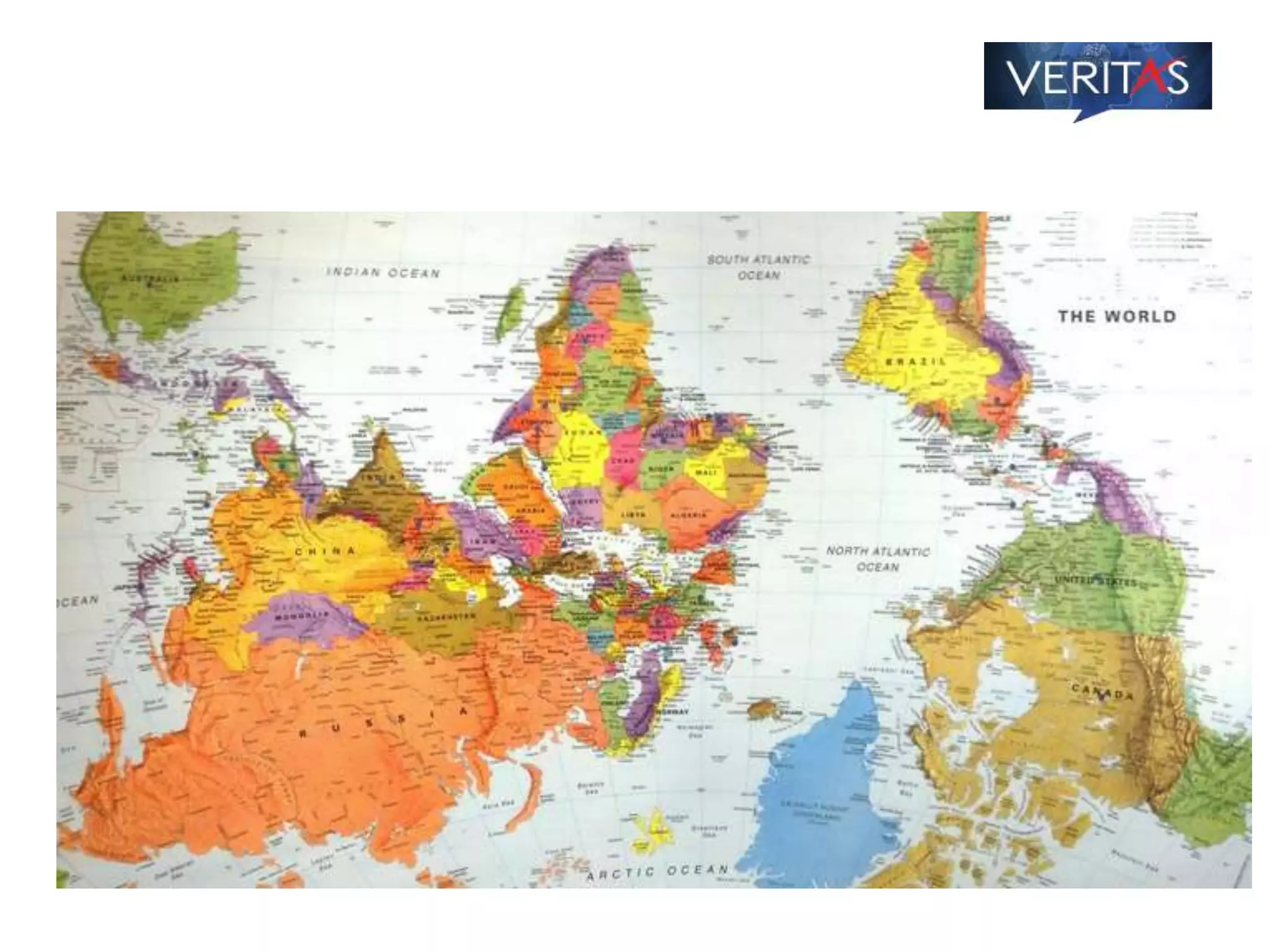
Examples of Simple Organizing Patterns
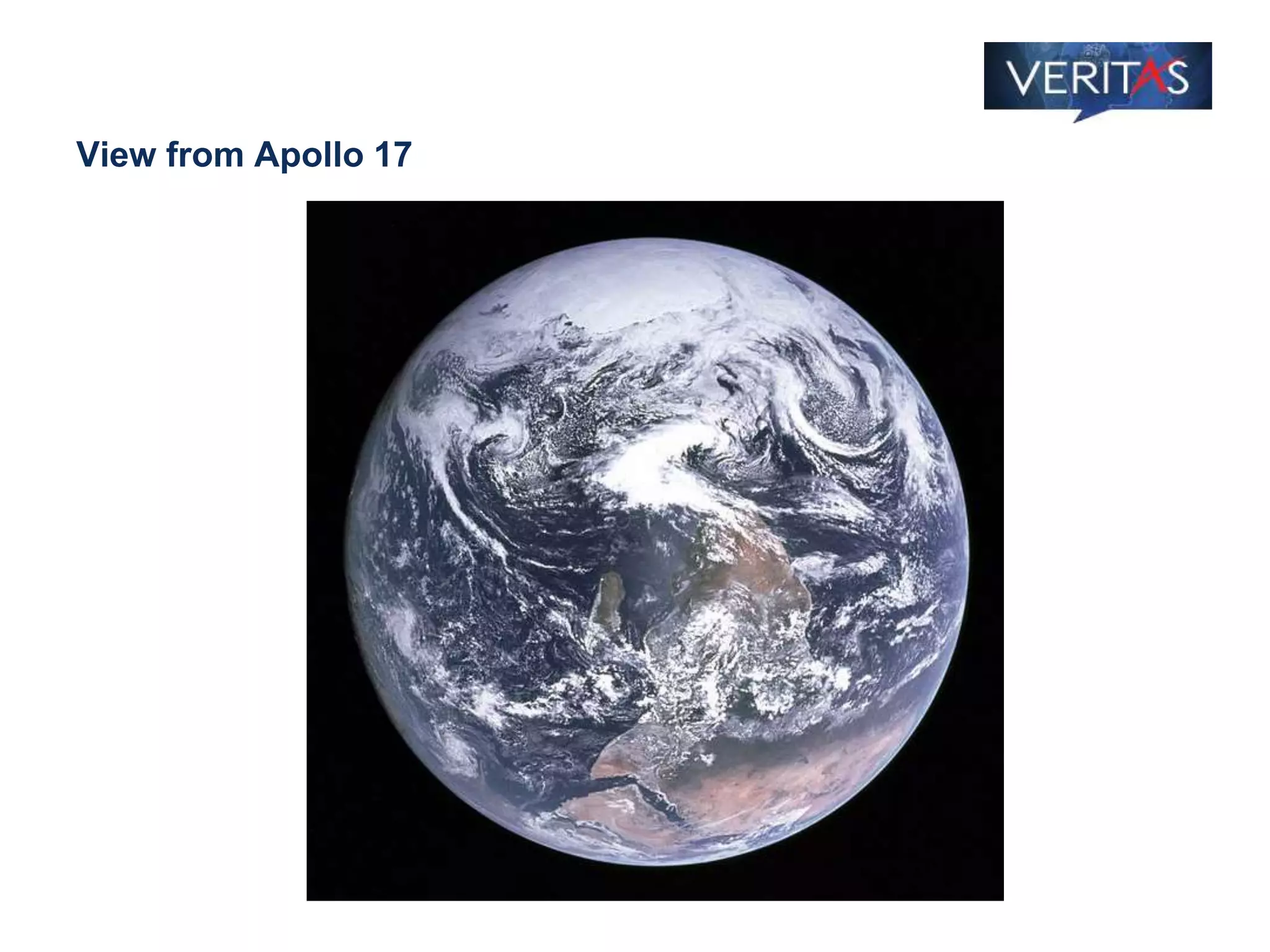
View from Apollo 17
Here's the details for the October Hill Country Wine & Supper Club
Dinner:
Date: Thursday, October 4, 2012
Time: 6:30 p.m.
Where: River City Grille, Marble Falls, TX
Cost: $40 per person, which includes a three-course meal, three glasses
of wine, and recipe booklet. Tax and gratuity not included.
Featured Winery: Stone House Vineyard
October Hill Country Wine & Supper Club Menu
Warm Artichoke & Crap Dip with Toasted Baguettes
Filet of Sole Fish En Papillote with Au Gratin Potatoes
Raspberry & Chocolate Cream Cheese Stuffed Cupcakes
Why is it important to know this?
 We each live in a universe of our own construction.
 Its organizing patterns and logic are perfect for physical survival,
but absent the beasts they can be a real barrier to clear thinking.
Uncertainty is the first contingency of non-positional thinking.
Organizing Patterns > Positional Thinking
The Tyrant Brain
 Tyranny of Knowledge*
 Tyranny of Emotions*
 Tyranny of Logic *
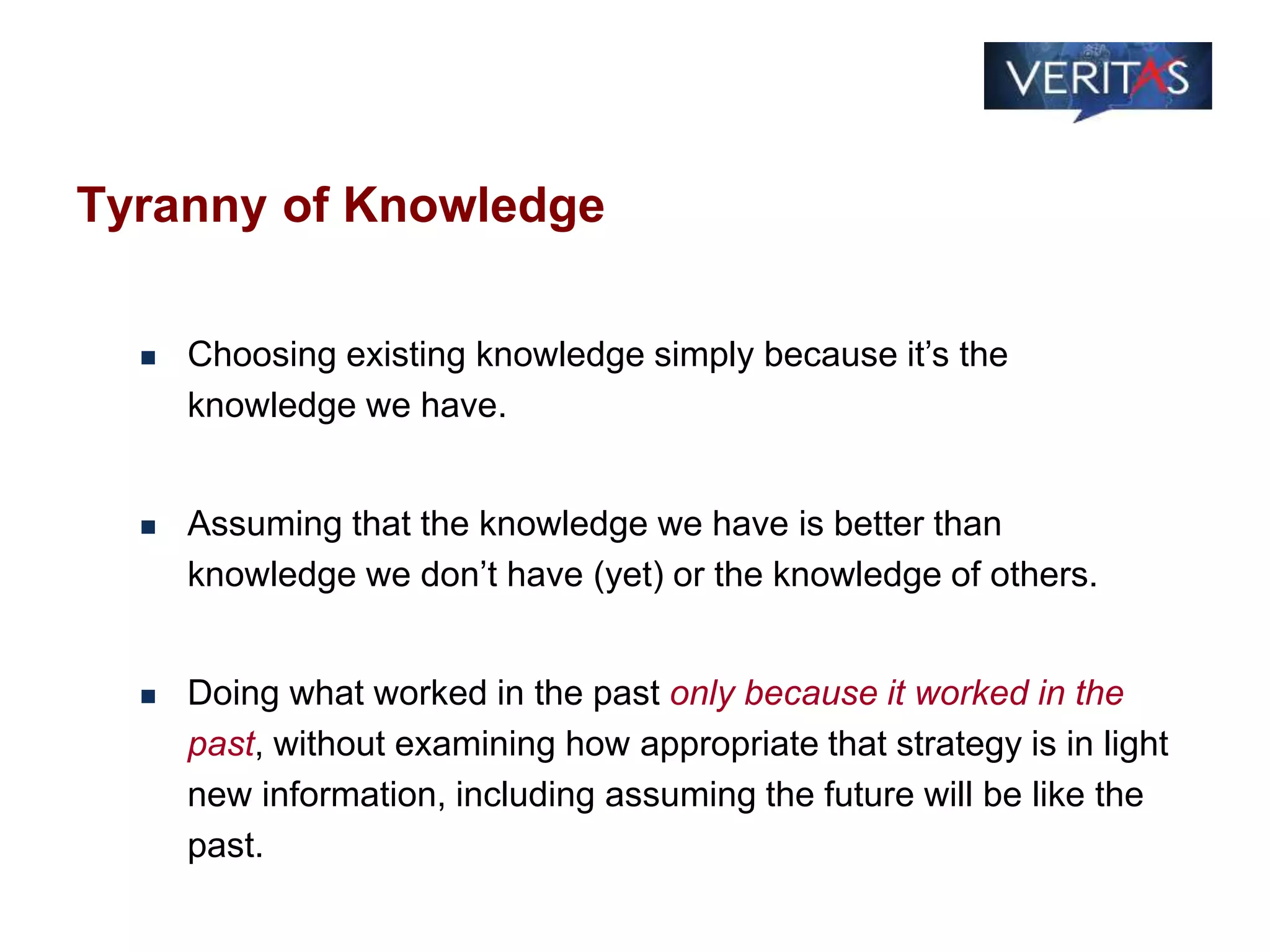
Tyranny of Knowledge
 Choosing existing knowledge simply because it’s the
knowledge we have.
 Assuming that the knowledge we have is better than
knowledge we don’t have (yet) or the knowledge of others.
 Doing what worked in the past only because it worked in the
past, without examining how appropriate that strategy is in light
new information, including assuming the future will be like the
past.
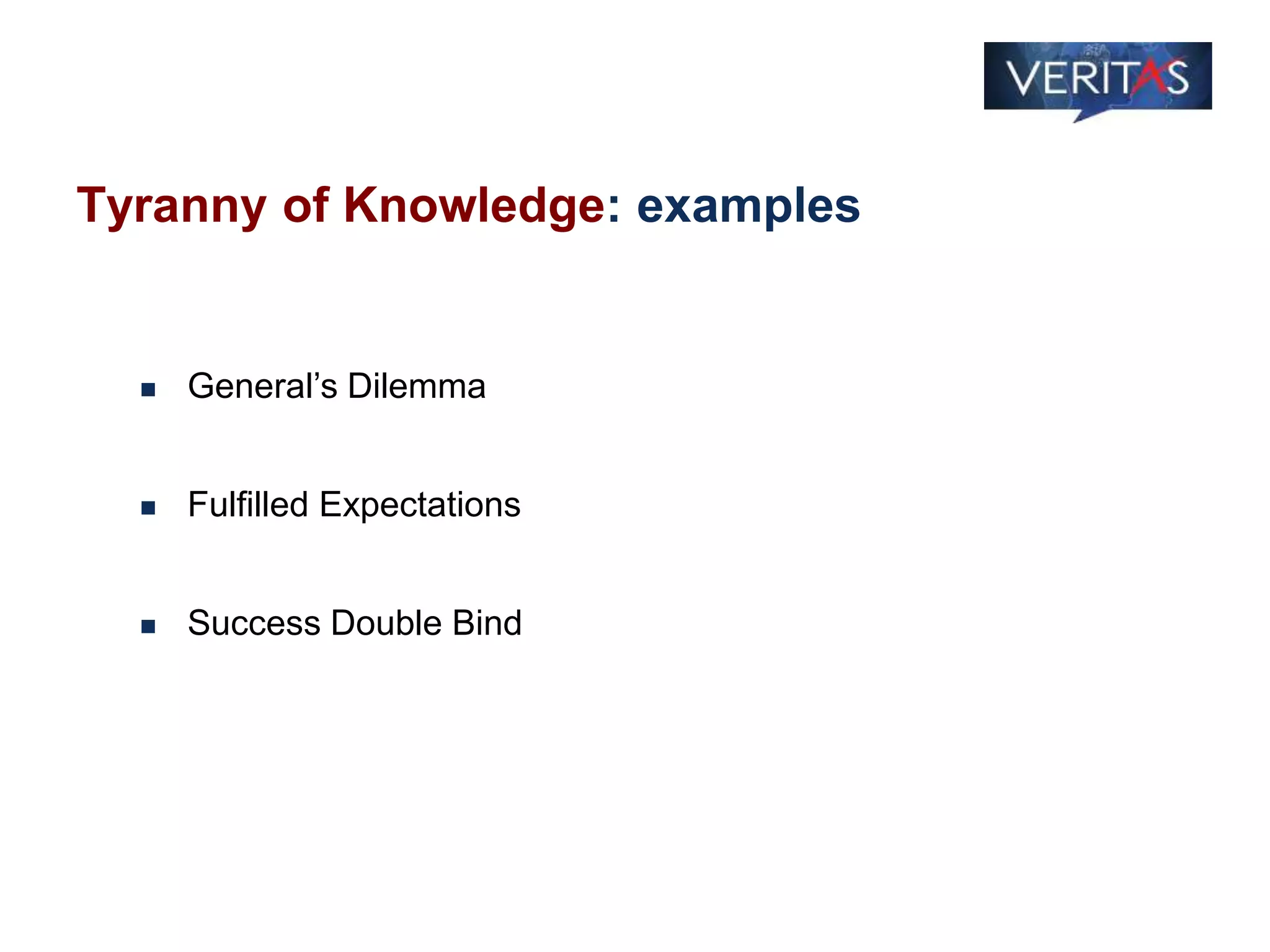
Tyranny of Knowledge: examples
 General’s Dilemma
 Fulfilled Expectations
 Success Double Bind
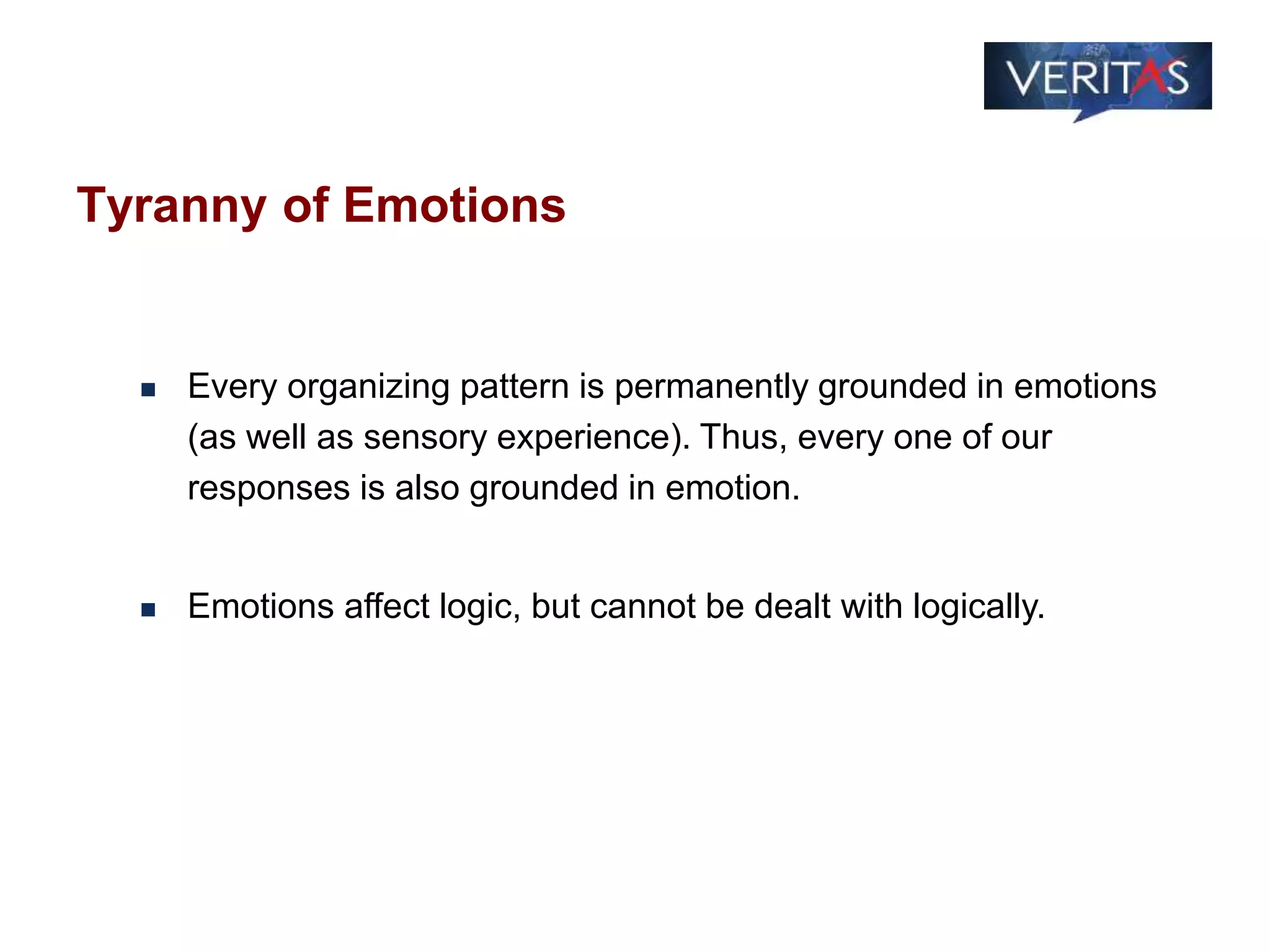
Tyranny of Emotions
 Every organizing pattern is permanently grounded in emotions
(as well as sensory experience). Thus, every one of our
responses is also grounded in emotion.
 Emotions affect logic, but cannot be dealt with logically.
Tyranny of Emotion: examples
We take cognitive shortcuts in our reasoning to help us
make sense quickly, but fail to verify the accuracy.
Shortcut errors
 Stereotyping
 Biases
These had important survival value on the savannah!
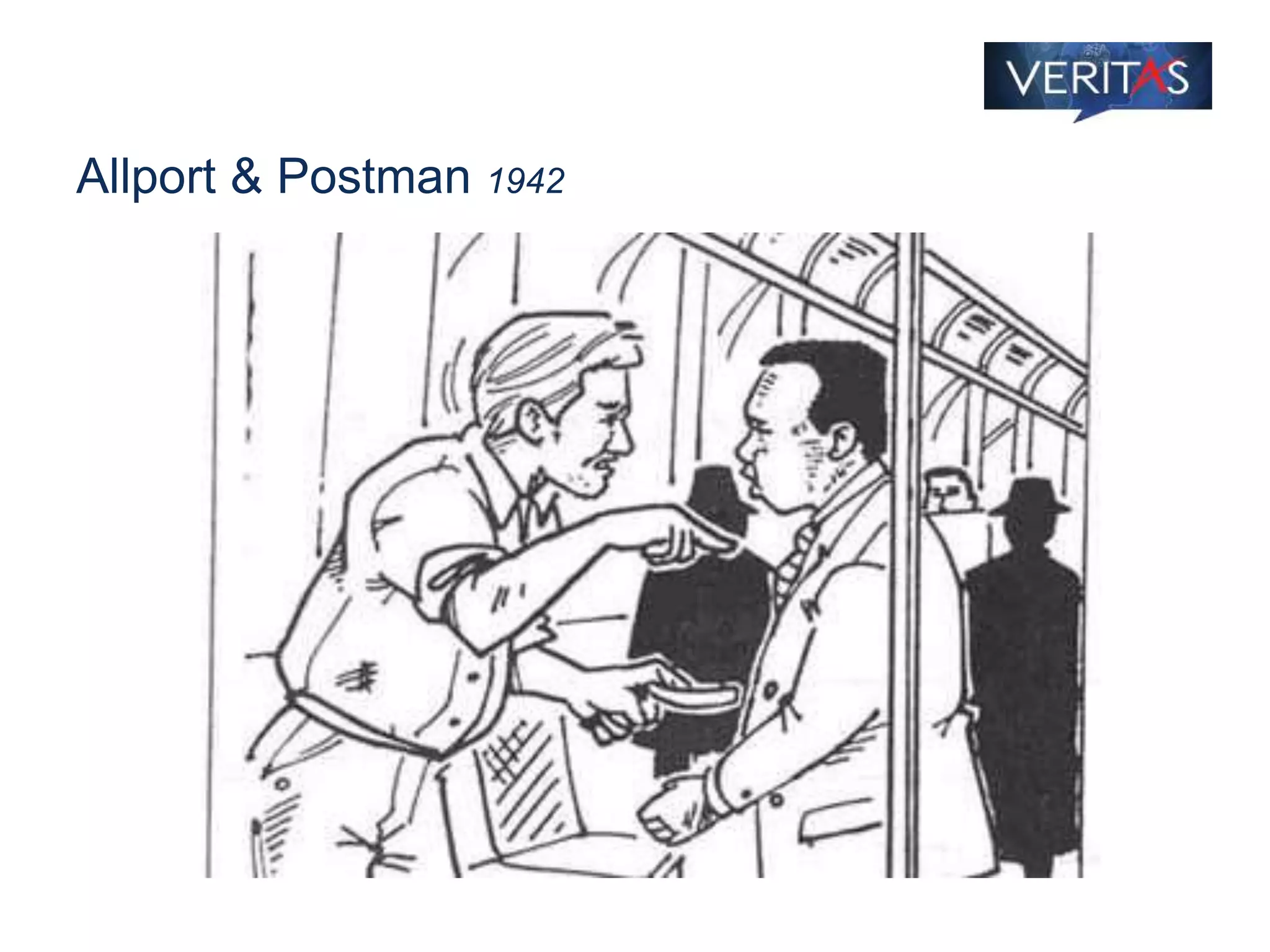
Allport & Postman 1942
Tyranny of Logic
 What is logic?
 What determines if something is logical?
 Can logic be wrong?
Tyranny of Logic
 Logic is nothing more than the rules you’ve made up for navigating within
your constructed universe!
 These rules are based on how easily and powerfully one thought gets
connected to another: thoughts that connect easily are seen to be logical.
 There are as many different systems of logic as there are beings on the
earth.
 Logic is subjective like taste. Nothing is ever “illogical”; things are just
“differently-logical”
Why does this matter in non-positional thinking?
Tyranny of Logic: examples
 Zero-sum illusion*
 Baboon trap*
 Lost Key dilemma*
Logic/Reasonableness
 What is logic?
 What determines if something is logical?
 Can logic be wrong?
Logic/Reasonableness
 Logic is nothing more than the rules you’ve made up for navigating within
your constructed universe!
 These rules are based on how easily and powerfully one thought gets
connected to another: thoughts that connect easily are seen to be logical.
 There are as many different systems of logic as there are beings on the
earth. (The jury’s out on extra-terrestrials)
 Logic is subjective like taste. Nothing is ever “illogical”; things are just
“differently-logical”
Why does this matter in non-positional thinking?
Zero Sum Illusion
 Believing that there is a limited amount of “solution”,
including “either/or”, “middle-of-the-road”, and “fixed
position” thinking.
 Think politics!
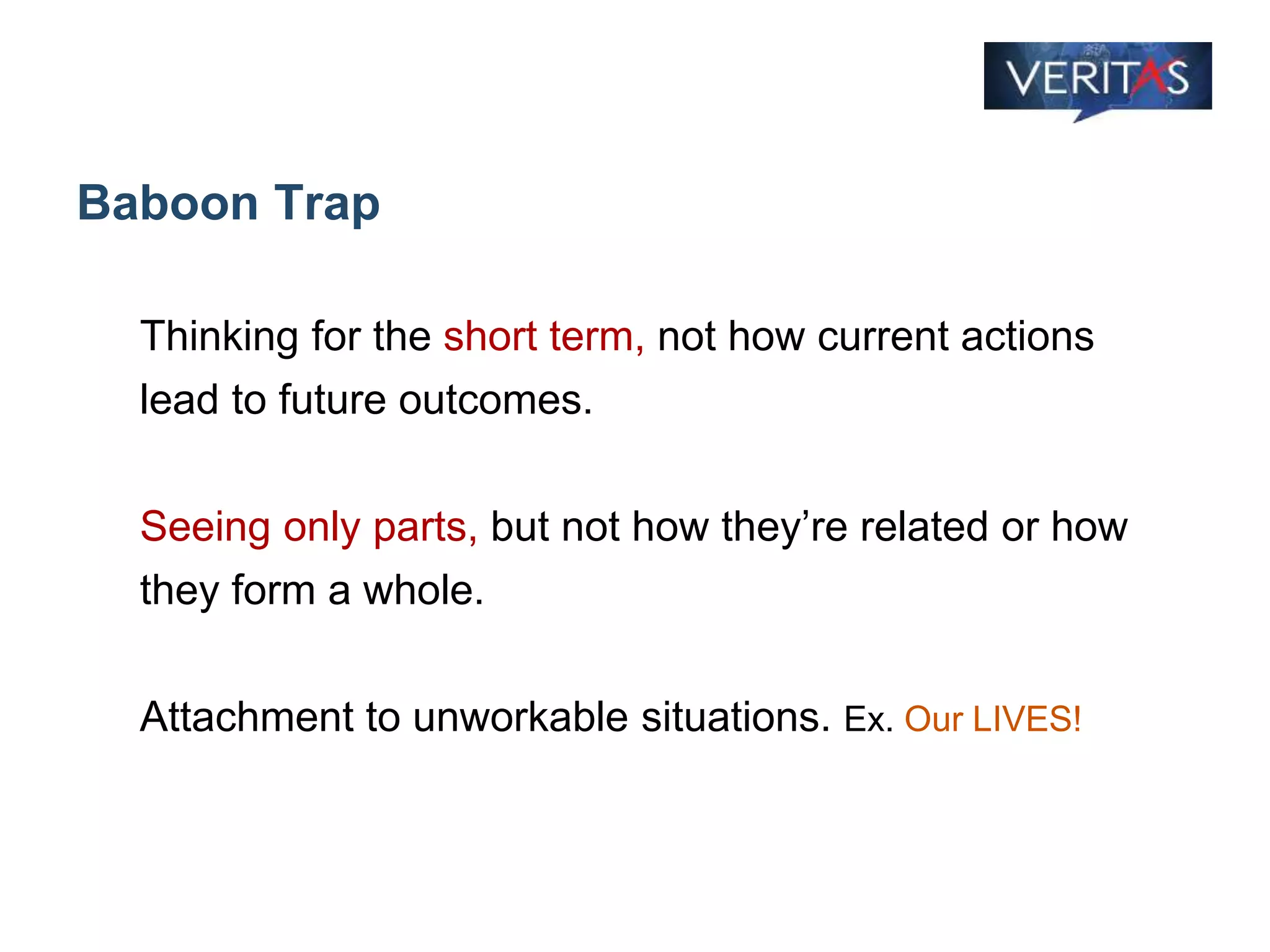
Baboon Trap
Thinking for the short term, not how current actions
lead to future outcomes.
Seeing only parts, but not how they’re related or how
they form a whole.
Attachment to unworkable situations. Ex. Our LIVES!
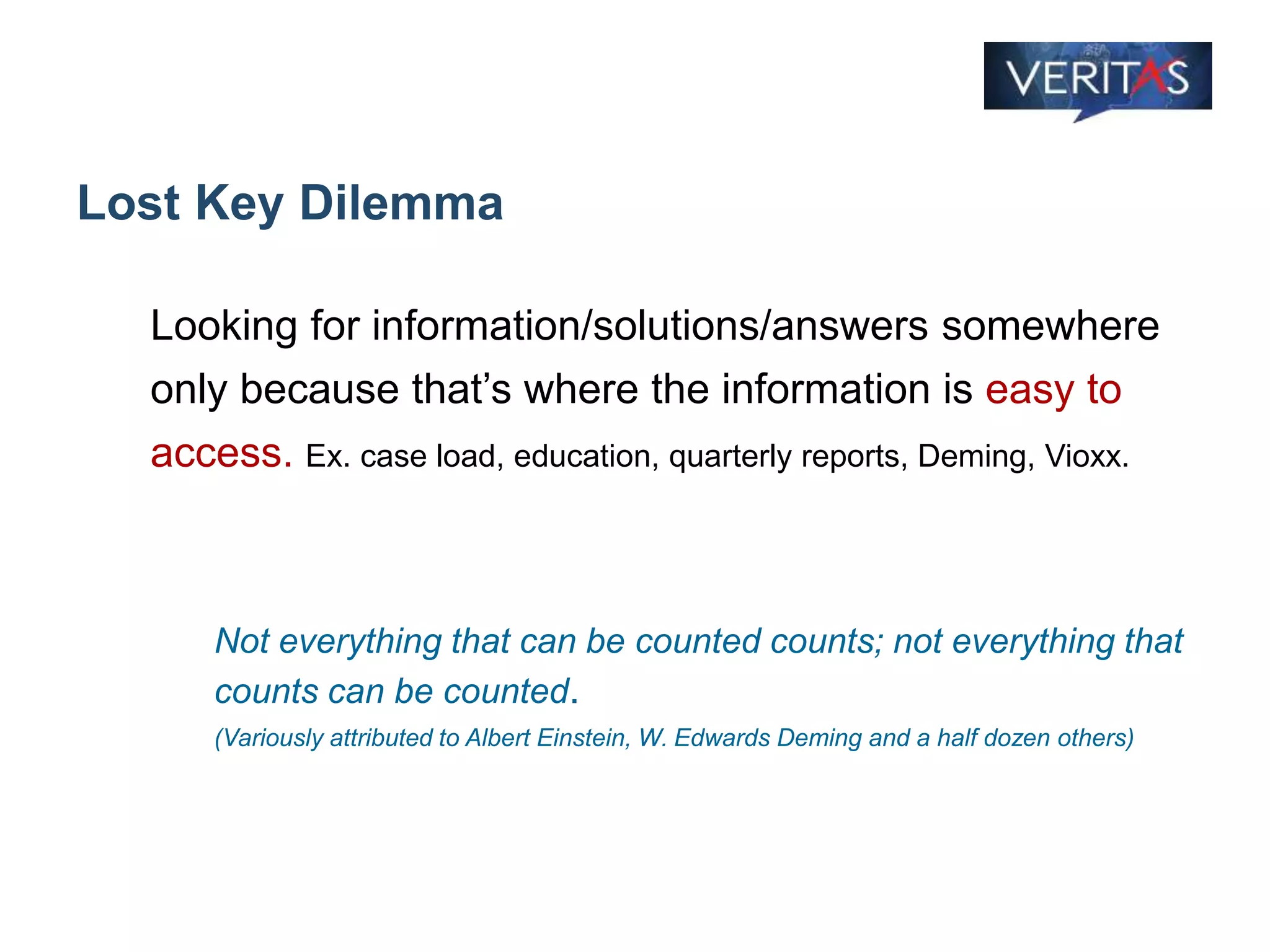
Lost Key Dilemma
Looking for information/solutions/answers somewhere
only because that’s where the information is easy to
access. Ex. case load, education, quarterly reports, Deming, Vioxx.
Not everything that can be counted counts; not everything that
counts can be counted.
(Variously attributed to Albert Einstein, W. Edwards Deming and a half dozen others)
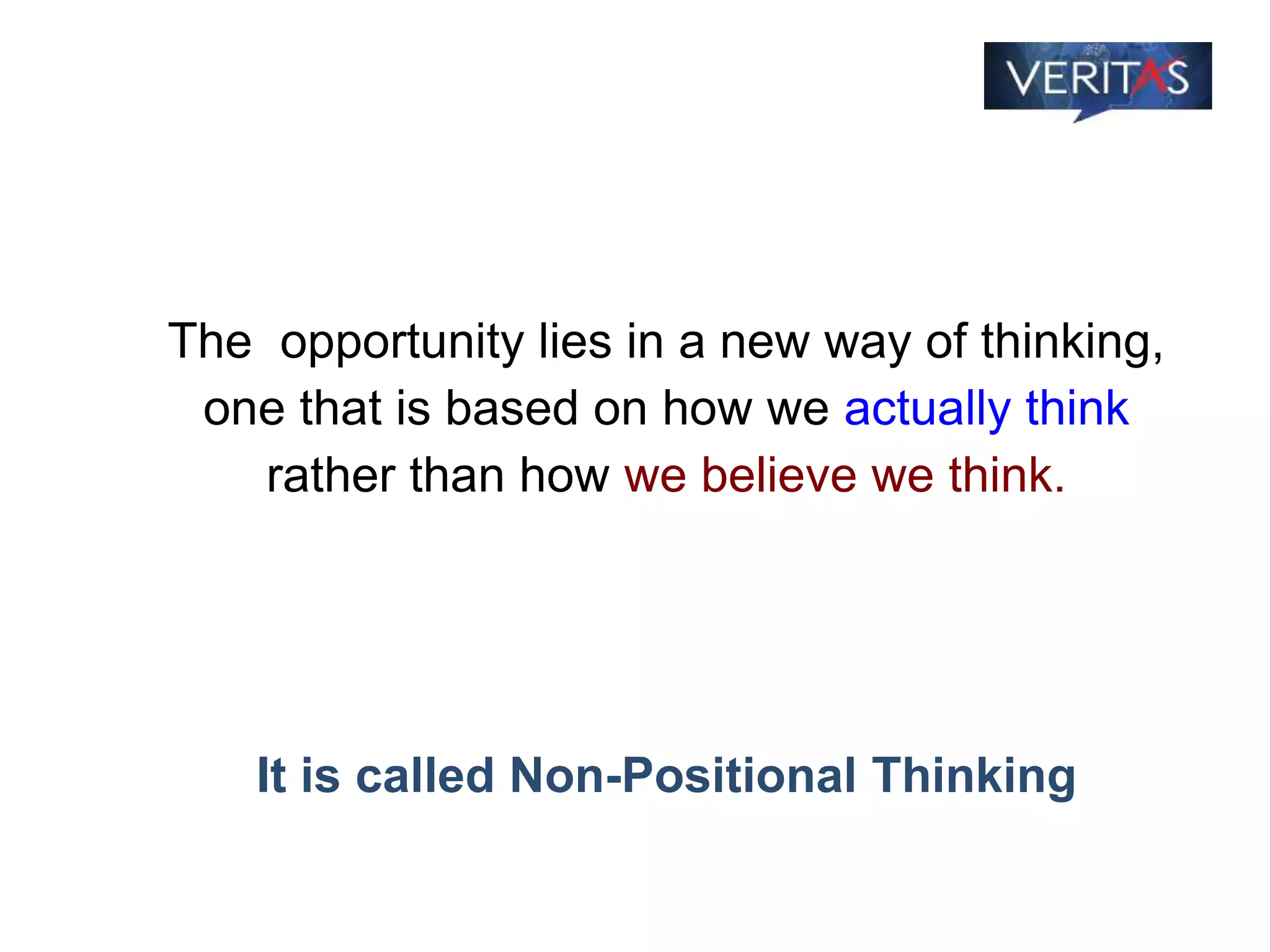
The opportunity lies in a new way of thinking,
one that is based on how we actually think
rather than how we believe we think.
It is called Non-Positional Thinking
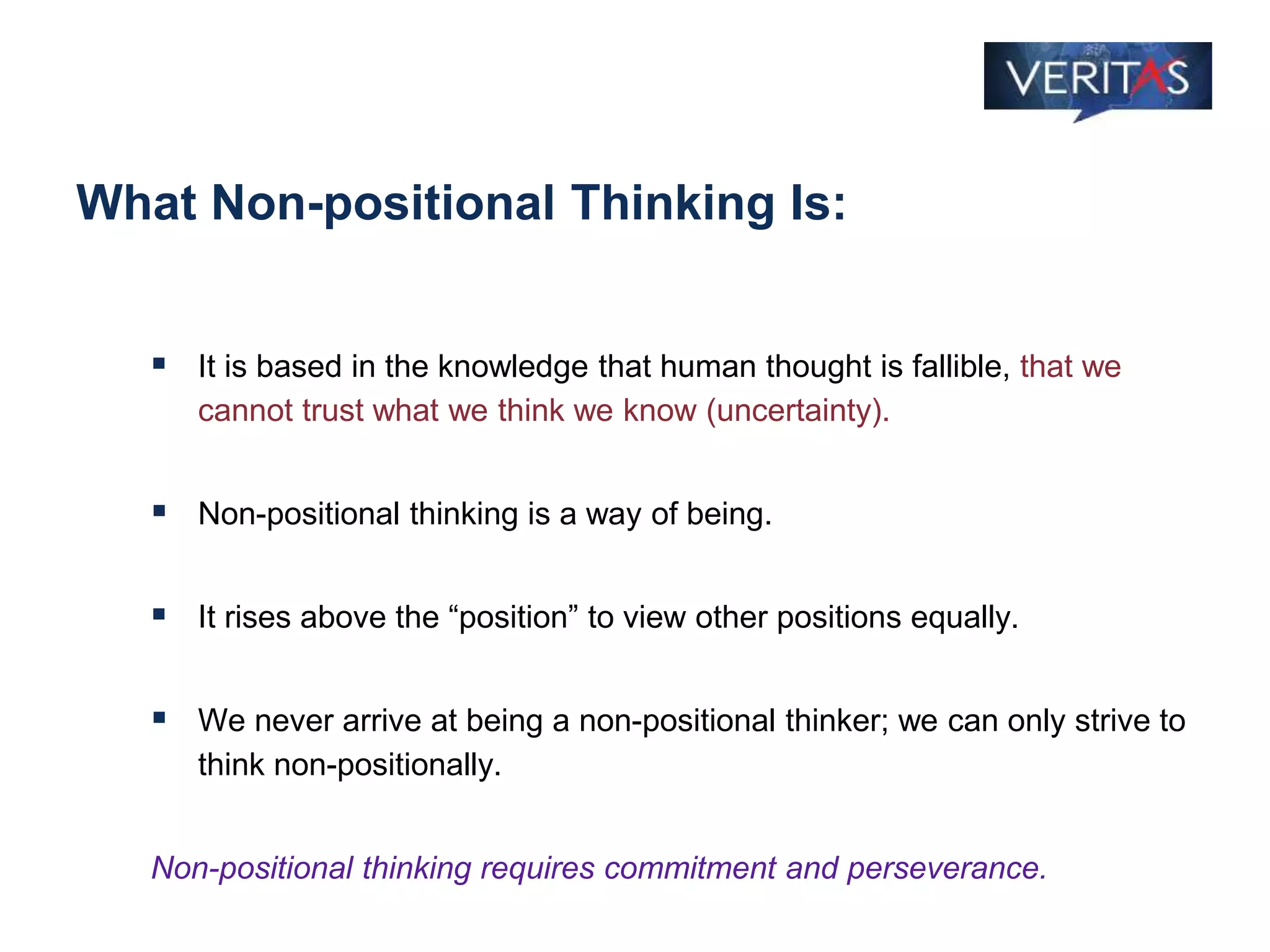
What Non-positional Thinking Is:
 It is based in the knowledge that human thought is fallible, that we
cannot trust what we think we know (uncertainty).
 Non-positional thinking is a way of being.
 It rises above the “position” to view other positions equally.
 We never arrive at being a non-positional thinker; we can only strive to
think non-positionally.
Non-positional thinking requires commitment and perseverance.
What Non-positional Thinking Is Not:
 Non-positional thinking is not a short-cut to effective
reasoning.
 A linear process, recipe, or check list for how to think (we
cannot think non-positionally until we grasp the fallibility of our
thought).
 A tool-kit of techniques and methodologies.
 A destination or a position in the middle.
Non-Positional thinking is Based on
Four Contingencies
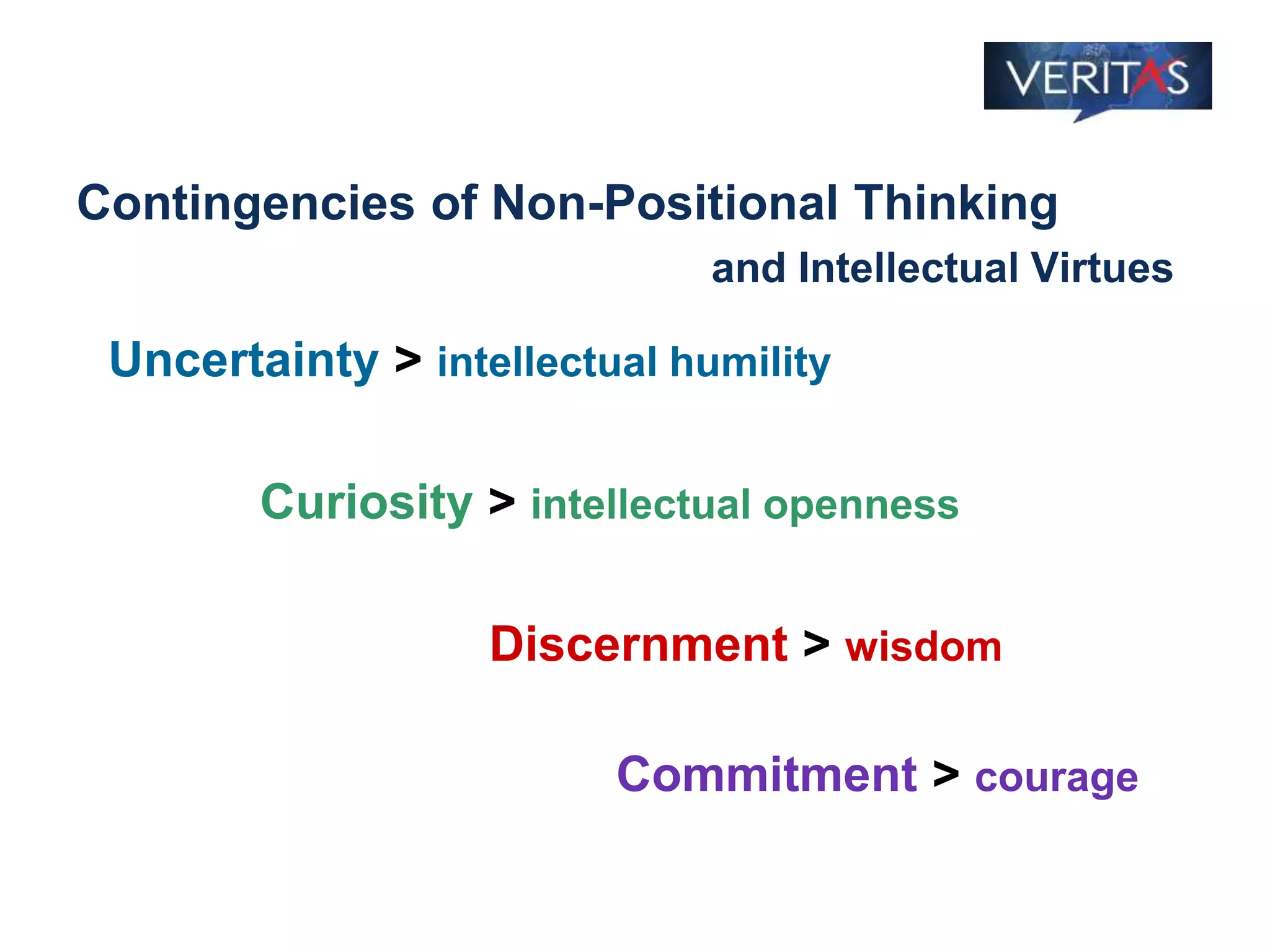
Contingencies of Non-Positional Thinking
and Intellectual Virtues
Uncertainty > intellectual humility
Curiosity > intellectual openness
Discernment > wisdom
Commitment > courage
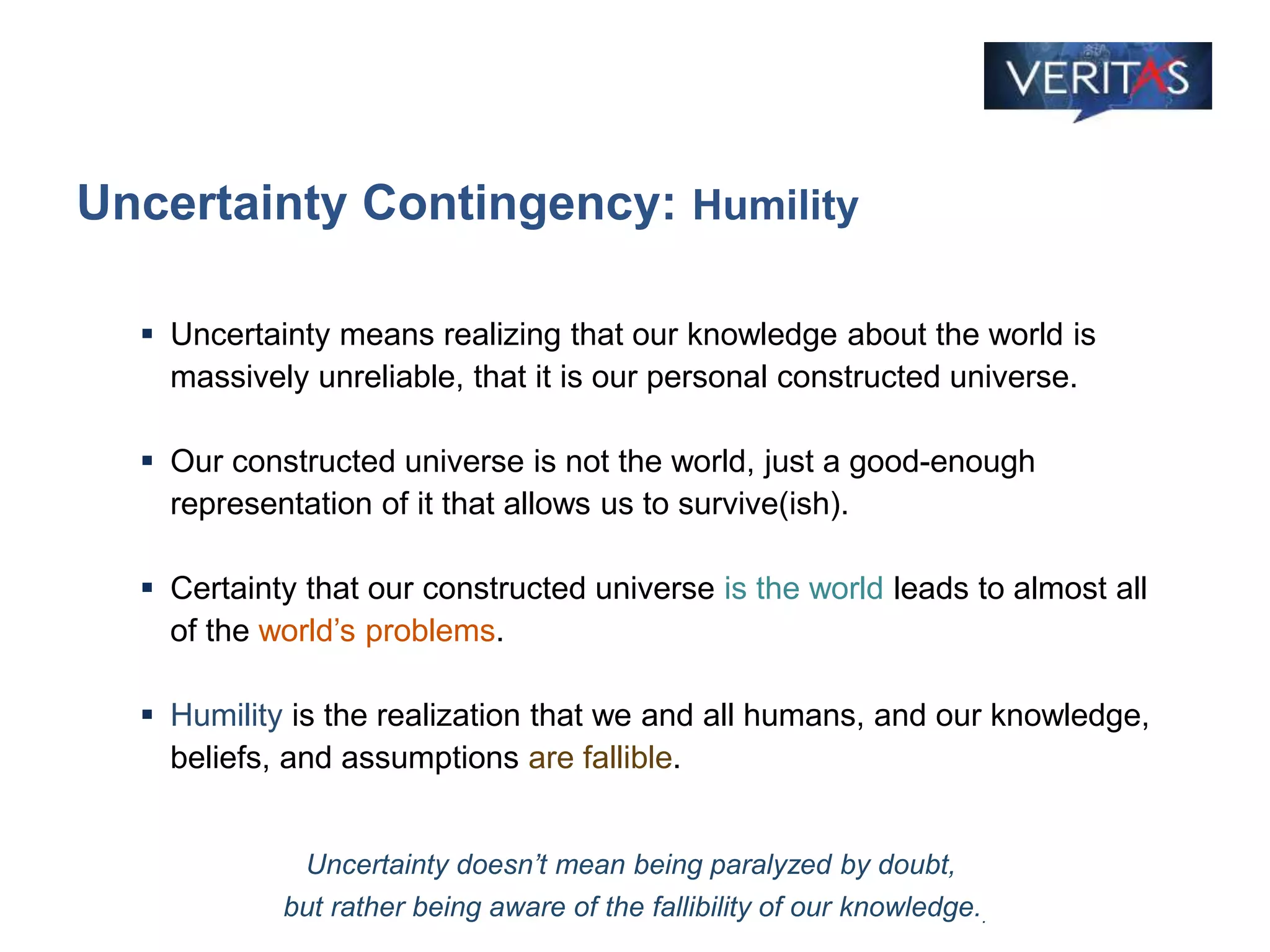
Uncertainty Contingency: Humility
 Uncertainty means realizing that our knowledge about the world is
massively unreliable, that it is our personal constructed universe.
 Our constructed universe is not the world, just a good-enough
representation of it that allows us to survive(ish).
 Certainty that our constructed universe is the world leads to almost all
of the world’s problems.
 Humility is the realization that we and all humans, and our knowledge,
beliefs, and assumptions are fallible.
Uncertainty doesn’t mean being paralyzed by doubt,
but rather being aware of the fallibility of our knowledge..
Uncertainty Contingency: Skills
What is it that I am not seeing the seeing of which would change everything?
The Ability To:
 Being able to accept hold in our minds the notion that human
beings, and our knowledge and beliefs are fallible, and...
 that we base our point of view on assumptions that may or may
not be accurate.
 Keep ALL conclusions, no matter how excellent they are now,
open to future scrutiny.
 Doubt constructively, with the intention of learning.
 Realize that our beliefs cannot tell us anything about the world.
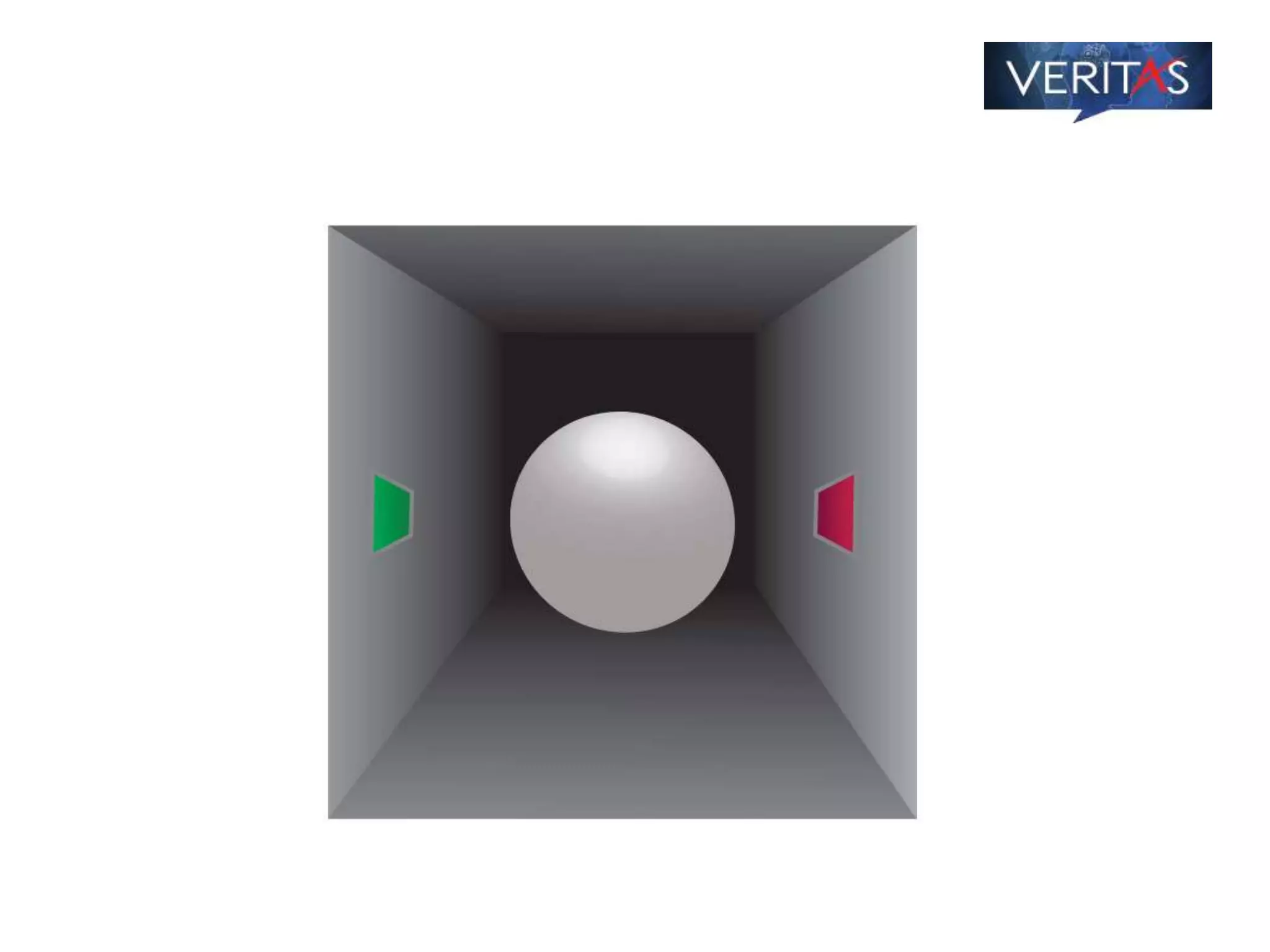
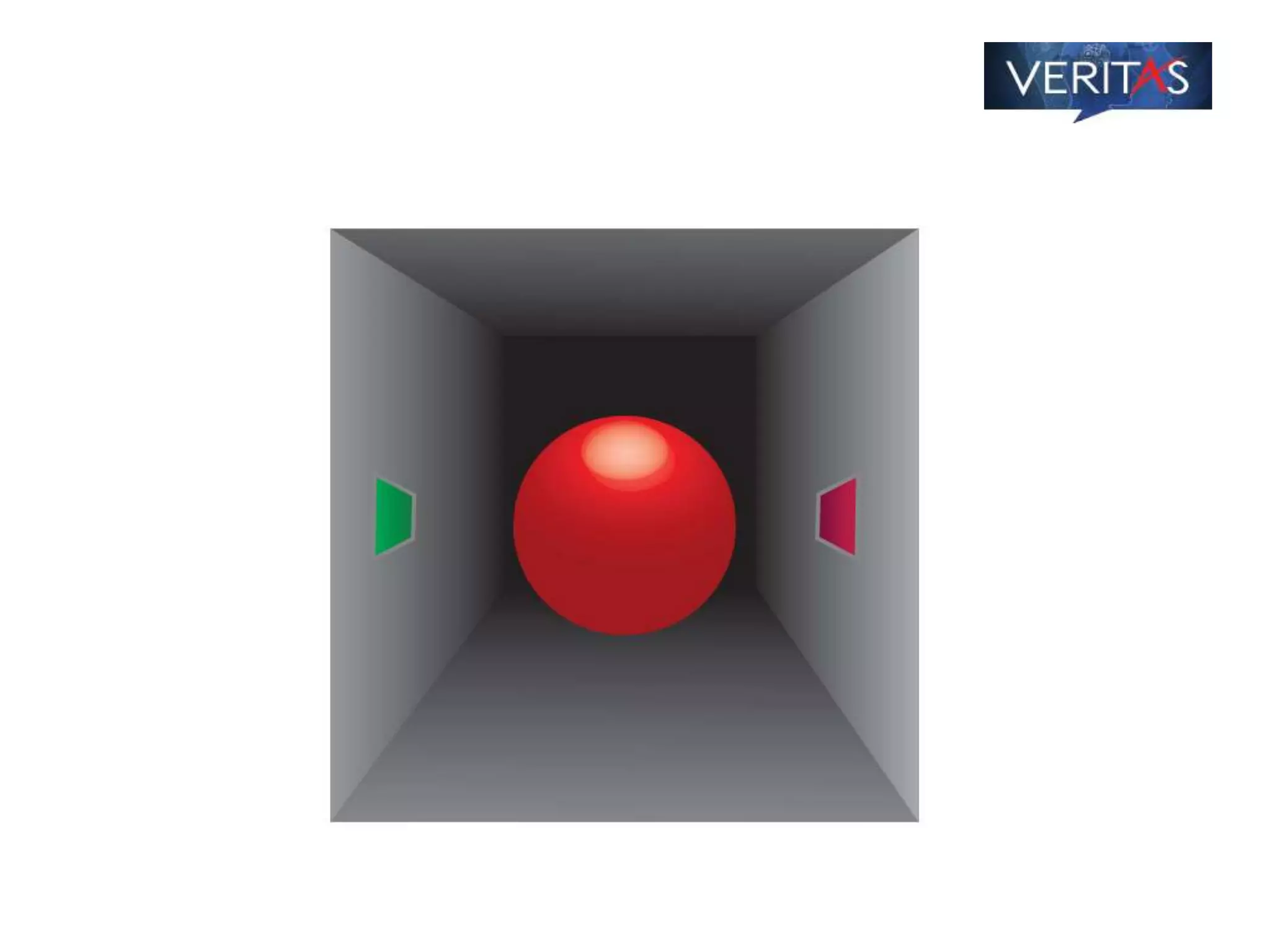
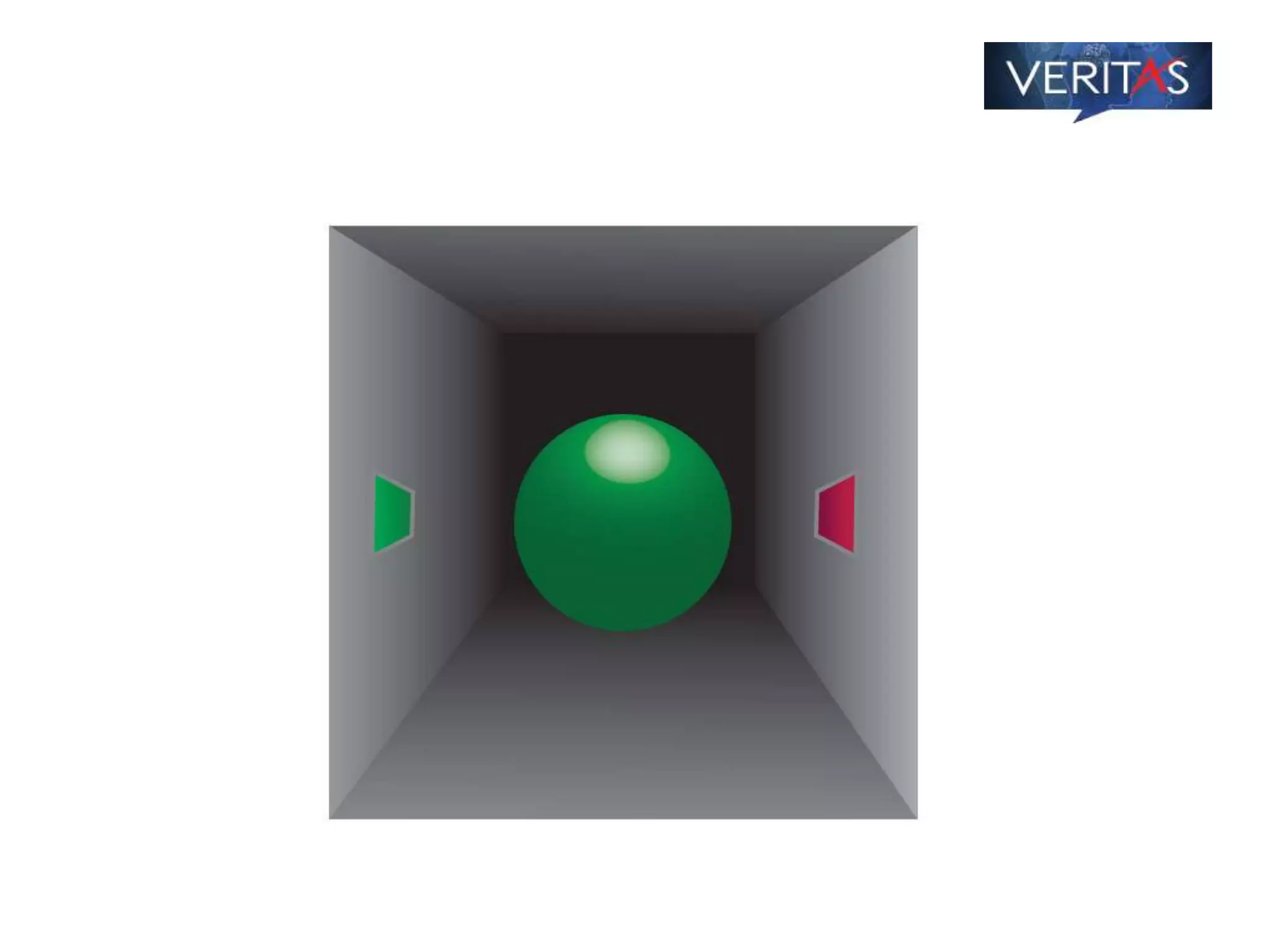
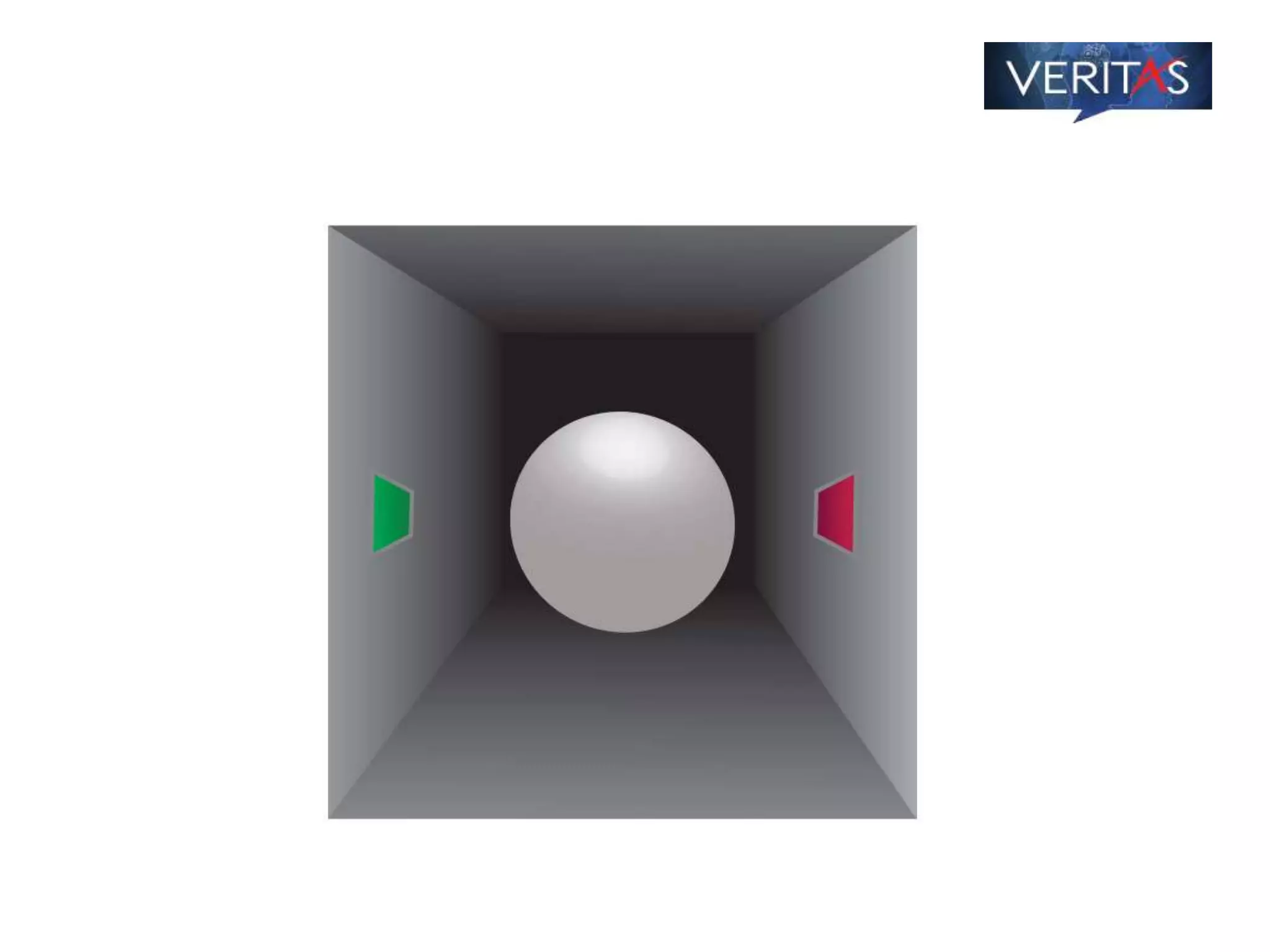
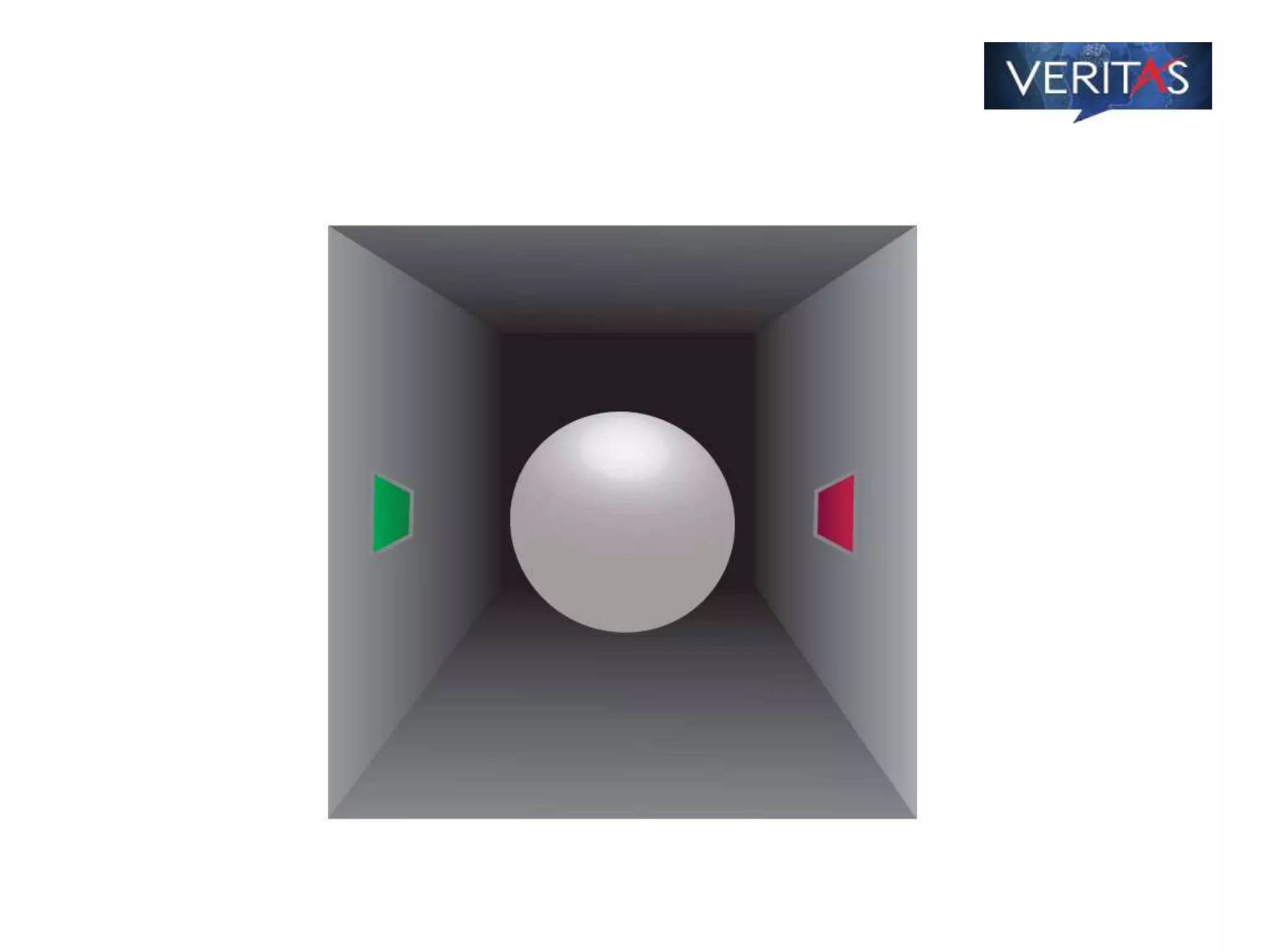
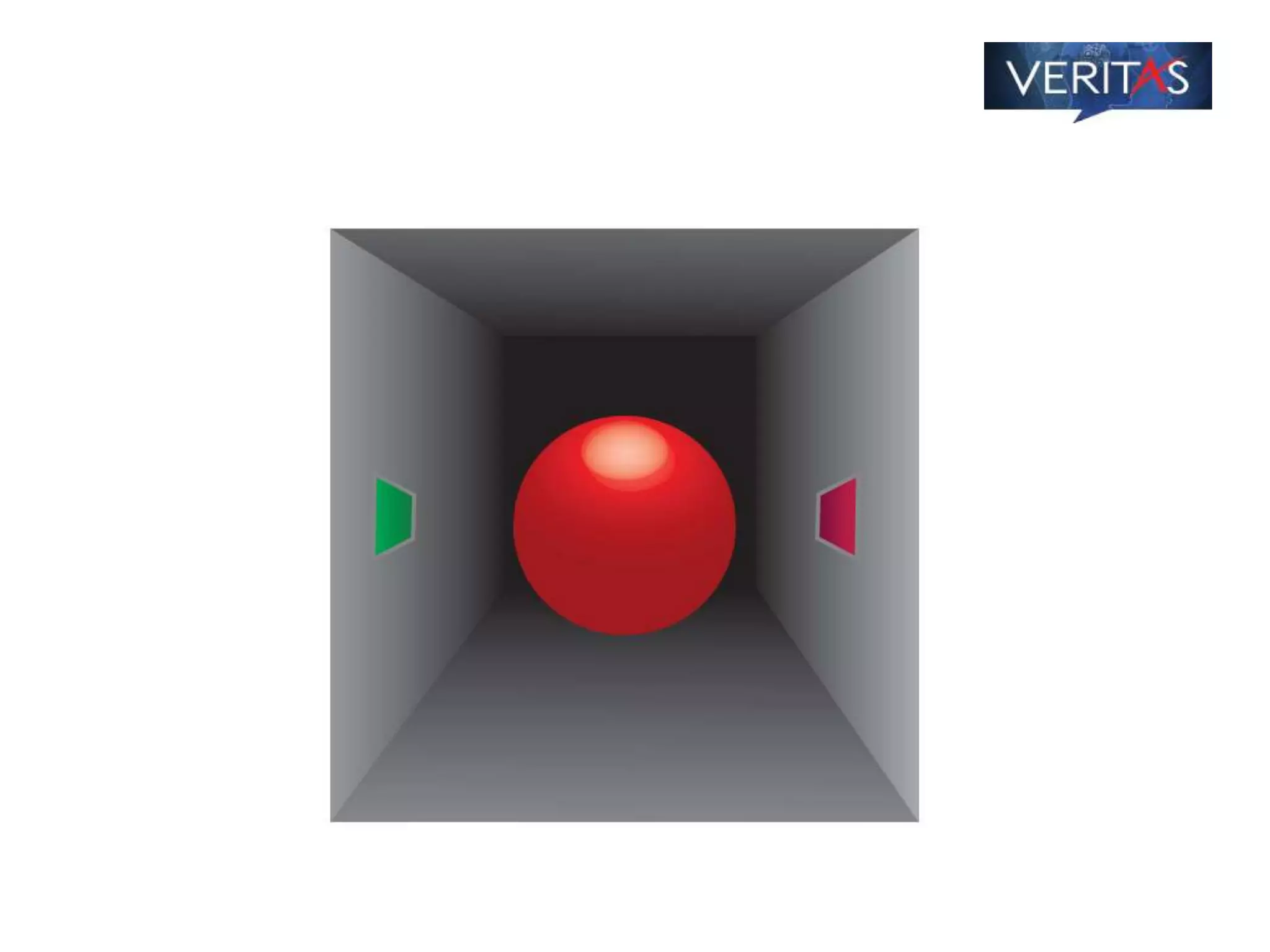
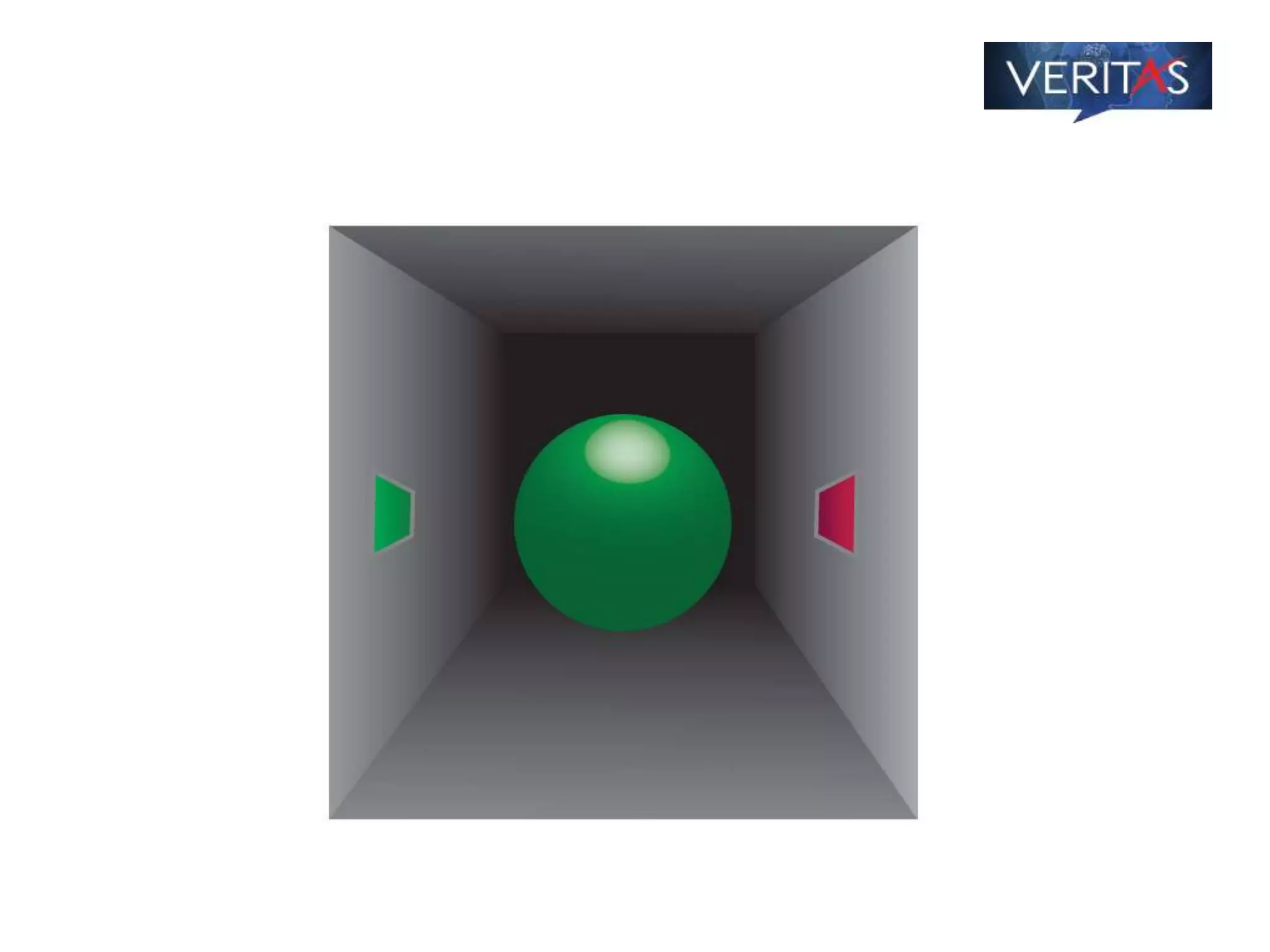
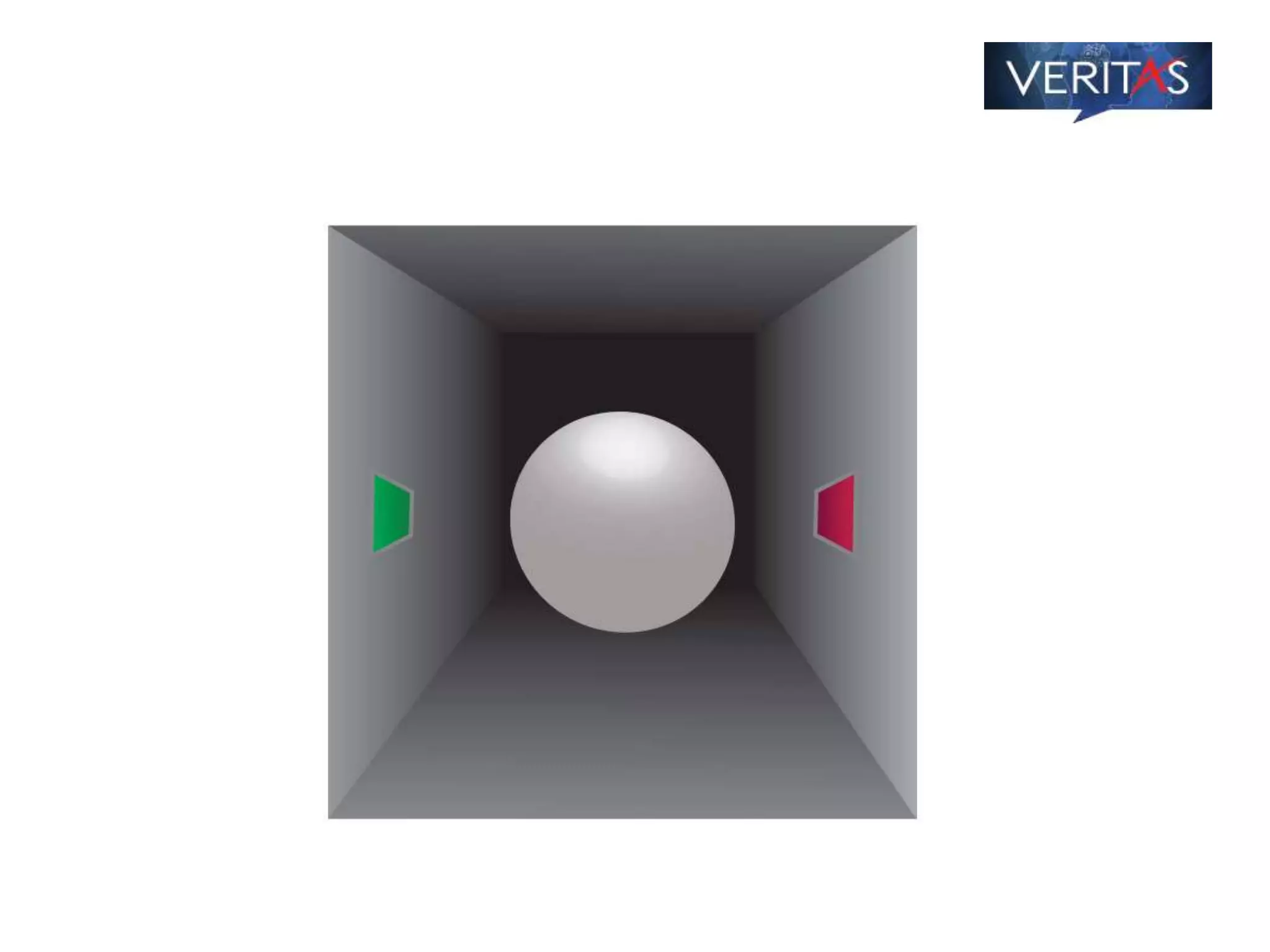
The uncertainty contingency makes us realize that
we can’t be certain what color the ball actually is no
matter how obvious it seems.
The curiosity contingency makes us want to find out.
Curiosity Contingency: Openness
 Curiosity means that (in the light of our uncertainty) we are eager
and determined to discover what we don’t know, the knowing of
which could change everything.
 That we are eager to see the merit in the other points of view.
 It leads to the impartial gathering of relevant information.
Curiosity Contingency: Skills
 Enthusiastically and impartially seek and collect the relevant
information.
 Maintain an open-minded outlook with respect to our own beliefs
and to the assertions of others.
 Honestly ask and answer, “Do I really want to know what lies
outside my point of view?”
The Ability To:
What is it that I am not seeing the seeing of which would change everything?
Discernment Contingency: Wisdom
 Attempting to see things truly as opposed to looking for
confirming evidence; desire to weigh evidence impartially.
 Recognizing and questioning our own assumptions and biases
and seeking to go beyond them.
 Judging the merits of our own point of view by the same
standards we use to judge others’ points of view.
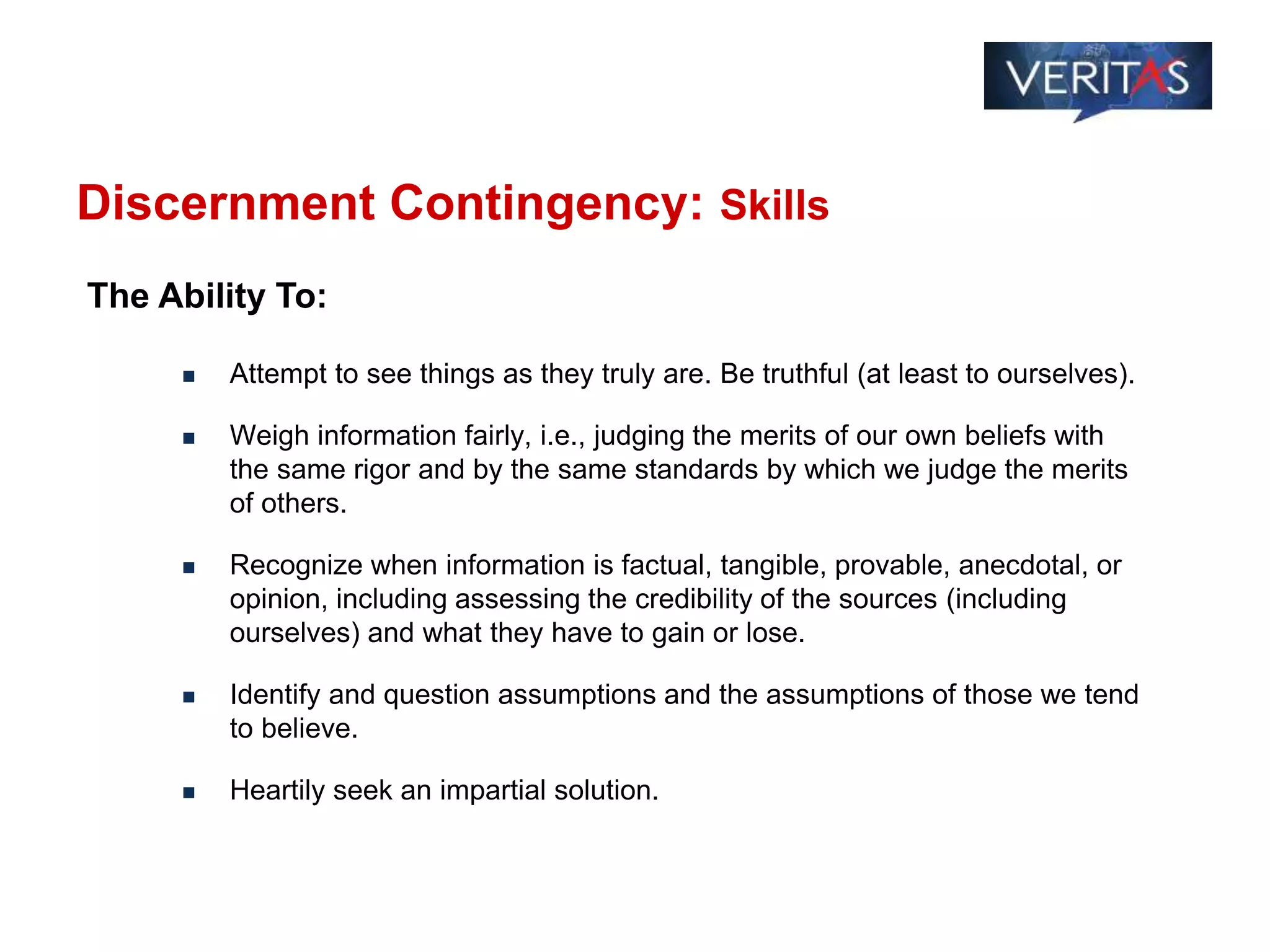
Discernment Contingency: Skills
 Attempt to see things as they truly are. Be truthful (at least to ourselves).
 Weigh information fairly, i.e., judging the merits of our own beliefs with
the same rigor and by the same standards by which we judge the merits
of others.
 Recognize when information is factual, tangible, provable, anecdotal, or
opinion, including assessing the credibility of the sources (including
ourselves) and what they have to gain or lose.
 Identify and question assumptions and the assumptions of those we tend
to believe.
 Heartily seek an impartial solution.
The Ability To:
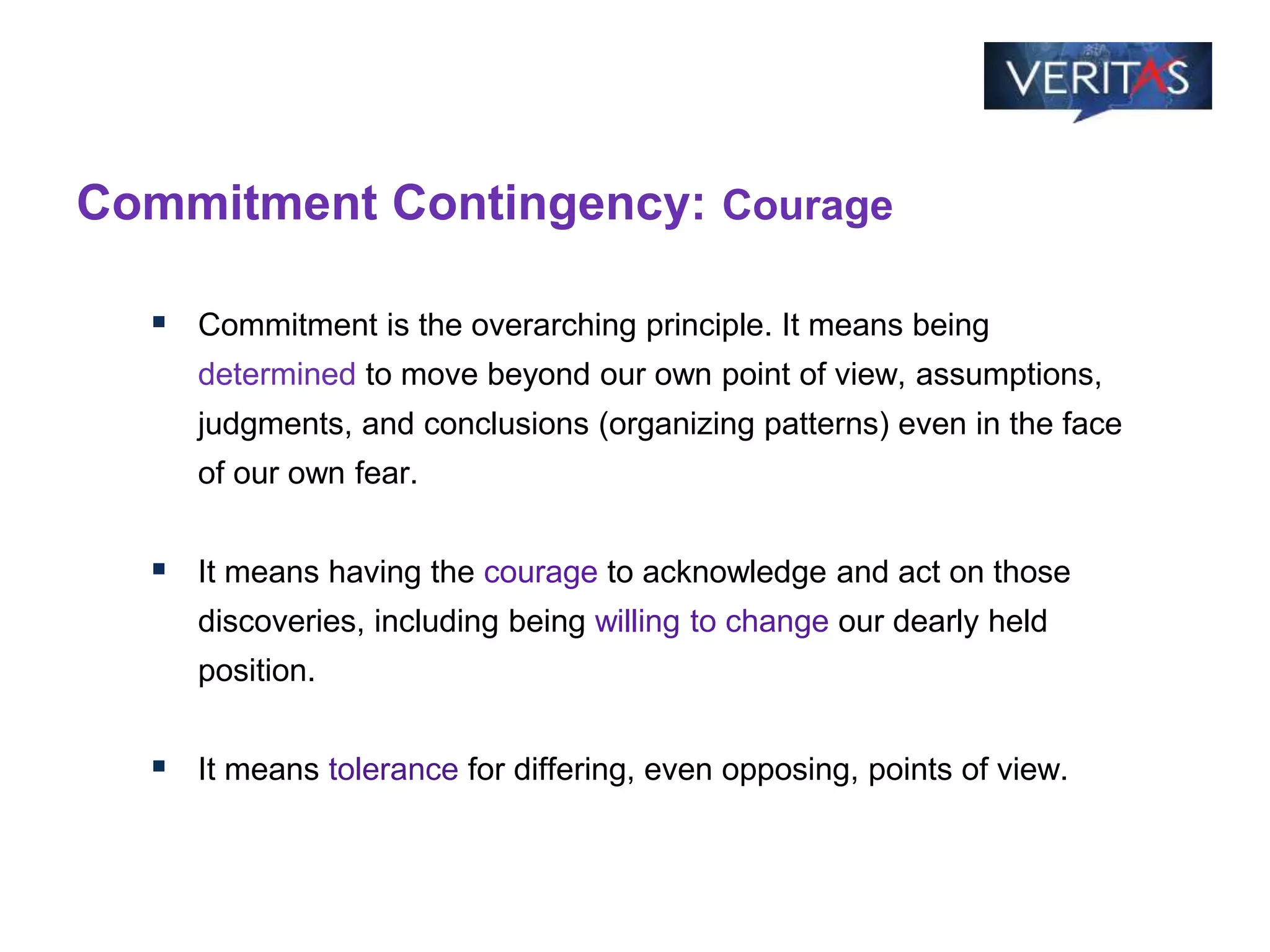
Commitment Contingency: Courage
 Commitment is the overarching principle. It means being
determined to move beyond our own point of view, assumptions,
judgments, and conclusions (organizing patterns) even in the face
of our own fear.
 It means having the courage to acknowledge and act on those
discoveries, including being willing to change our dearly held
position.
 It means tolerance for differing, even opposing, points of view.
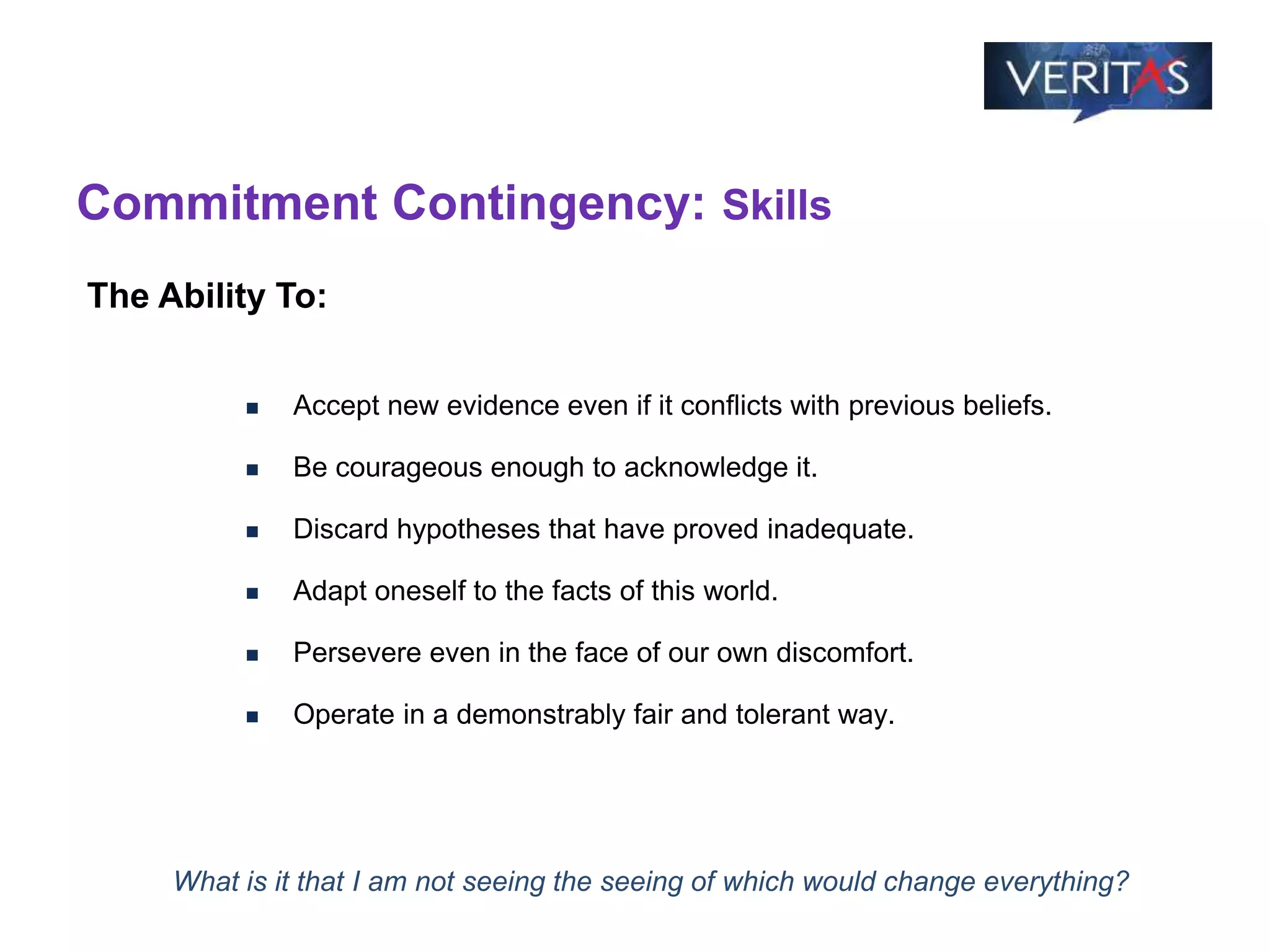
Commitment Contingency: Skills
 Accept new evidence even if it conflicts with previous beliefs.
 Be courageous enough to acknowledge it.
 Discard hypotheses that have proved inadequate.
 Adapt oneself to the facts of this world.
 Persevere even in the face of our own discomfort.
 Operate in a demonstrably fair and tolerant way.
The Ability To:
What is it that I am not seeing the seeing of which would change everything?
Strategic Doubting and Believing
 We need strategic doubting for those things we’re certain of, things
that we think need no questioning.
 We need strategic believing for those things that we tend to dismiss
or that repel us.
 Neither comes easy to human beings.
 Both are necessary to non-positional thinking
What is it that I am not seeing the seeing of which would change everything?
Strategic Doubting:
Doubt About What is Most Believable to Us
 The intention is to open-mindedly scrutinize appealing assertions or beliefs. The
purpose is not to reject them but to better understand them.
 It involves conscious and willful skepticism for our own dearly held beliefs and
other assertions we find particularly attractive.
 In non-positional doubting we are testing for validity.
 Strategic doubting comes from the realization that we can’t be certain of what
we know.
Strategic Believing:
Believing What is Most Doubtful
 The intention is to act “as if” we believed an unattractive proposition in
order to see the merits of the argument before we attempt to debunk it.
 The purpose is not to accept the proposition, but to try to see all the things
about it that we hadn’t seen before, including hidden merits, in order to to
understand it.
 It is not just about listening to different views, or being respectful of them,
but being able to restate them impartially. (Note to myself: maybe this
shouldn’t be here and should be in the “to do” part as part of the tool kit.)
Strategic Doubting and Believing
Breakout Exercise
Problem Solving and Decision Making
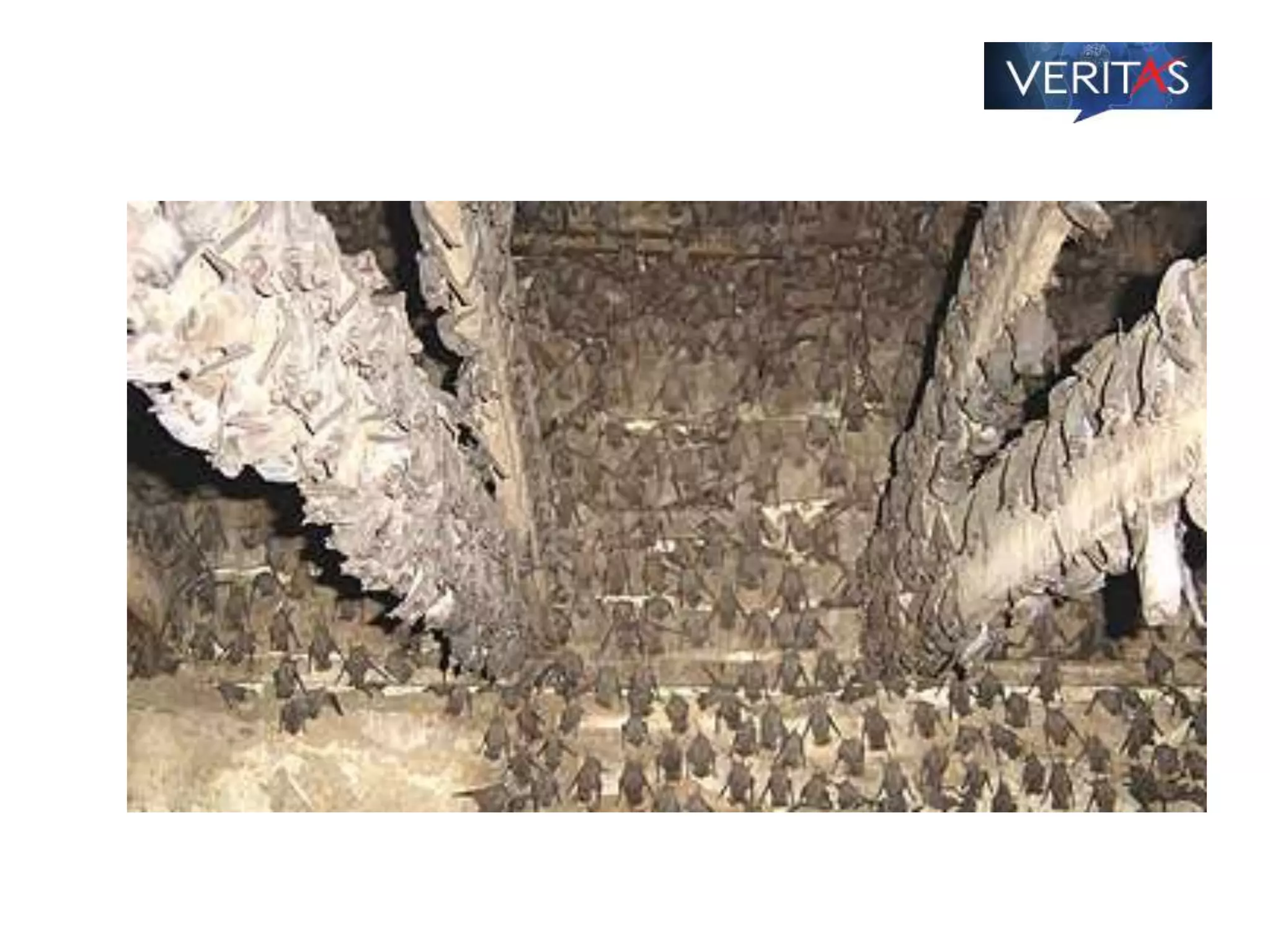
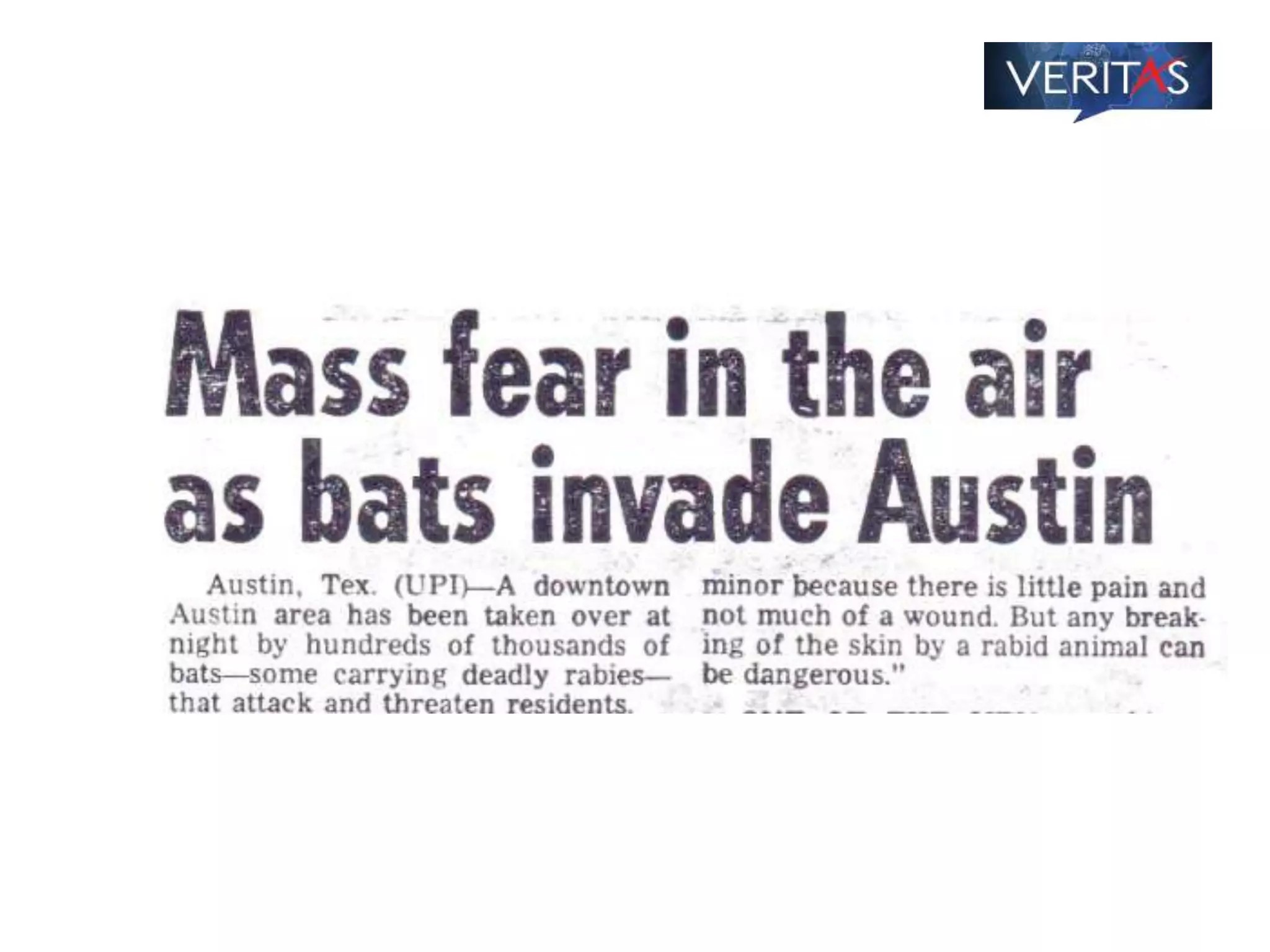
How To Get Rid of the Bridge Bat Problem
Bridge-Bats Bind: Classic Problem Solving Methodology
 What is the issue or problem?
 What information do I have?
 What information do you need to solve it?
 What is the plan/methodology for solving the problem?
 What are possible solutions?
 What are pros and cons of each solution?
 What is your solution?
Bat Breakout and Discussion
Break, 10 minutes
Non-Positional Problem Solving
A View of the Problem From Higher Up
Non-Positional Problem Solving
Is based on the notions that
 Beneath every apparent problem lies the actual far more complex and
hard to see problem. Solving only the apparent problem usually leads
to worse problems.
 The actual problem involves people and how they think about the
problem.
 Discovering what the actual problem is is the most important part of
finding the solution!
There is no problem that doesn’t have a solution if we are willing to
change the way we think about it.
Constantin David
Classical Problem Solving Methodology
(doesn’t work for a complex problem; never has!)
 Identify the issue or problem.
 Gather information about the problem.
 Identify possible solutions/decisions.
 Determine the pros and cons of each solution.
 Choose a solution.
 Do it.
 Review the outcomes.
First ask
 What is my/the goal?
– Is the goal to get rid of the issue or to validate my position?( Ex. To
get rid of the “problem” or get rid of the bats? To serve the customer
or to serve the needs of managers?)
 What is my position?
– Am I willing to find out that I’m wrong? Do I really want to know or do I
have my mind made up?
– What will I lose if I am wrong? (note: we ALWAYS have something to
lose.)
– Is there anything that could persuade me I’m wrong? If the answer is
YES, and you are actually in uncertainty, then…
A Different Approach:
Finding the Actual Issue is the most important part
Next
 Find out what is the problem or issue actually is
– Are we looking at the same problem? What do I believe the
problem to be? What do they believe it to be? (Feelings often
masquerade as facts.)
– What am I taking as a given (assumptions)? What if those things
were not so? (Non-positional doubting of our own position)
– What are the facts? (observables, behaviors, results?)
– What human dynamics are involved?
Non-positional Problem Solving:
Finding the Actual Issue
Next
 Find out what is the problem or issue actually is
– Look for what you haven’t seen before. “What is it I’m not seeing
about this problem that is keeping this problem in place?”
If you’ve heard it all before, you’re not listening.
– Have I honestly sought information that disconfirms my beliefs?
– What language is being used? Does it mean the same thing to
both of us? Neutral or positional? How is it biasing our
understanding of the problem?
Non-positional Problem Solving:
Finding the Actual Issue
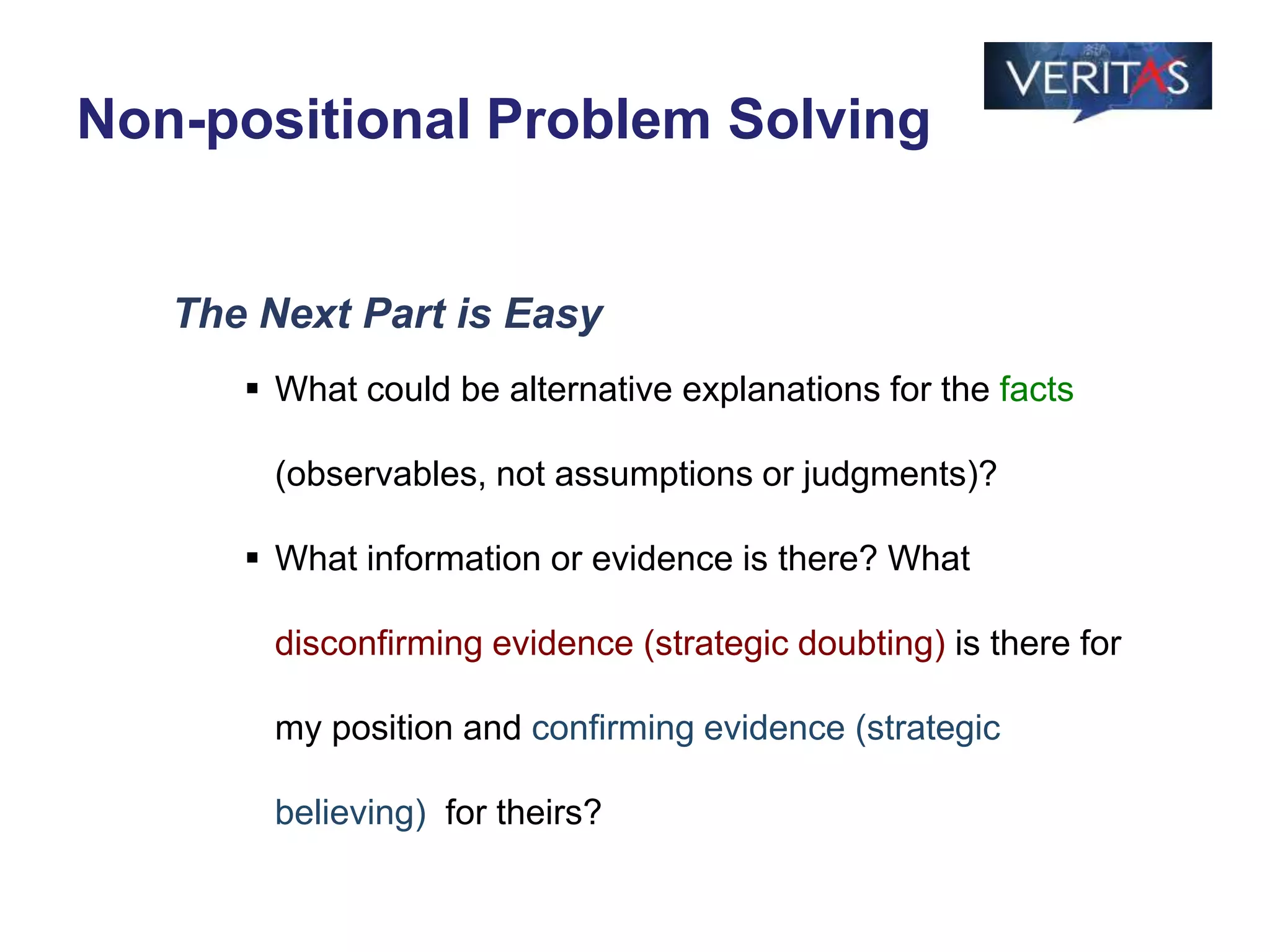
The Next Part is Easy
 What could be alternative explanations for the facts
(observables, not assumptions or judgments)?
 What information or evidence is there? What
disconfirming evidence (strategic doubting) is there for
my position and confirming evidence (strategic
believing) for theirs?
Non-positional Problem Solving
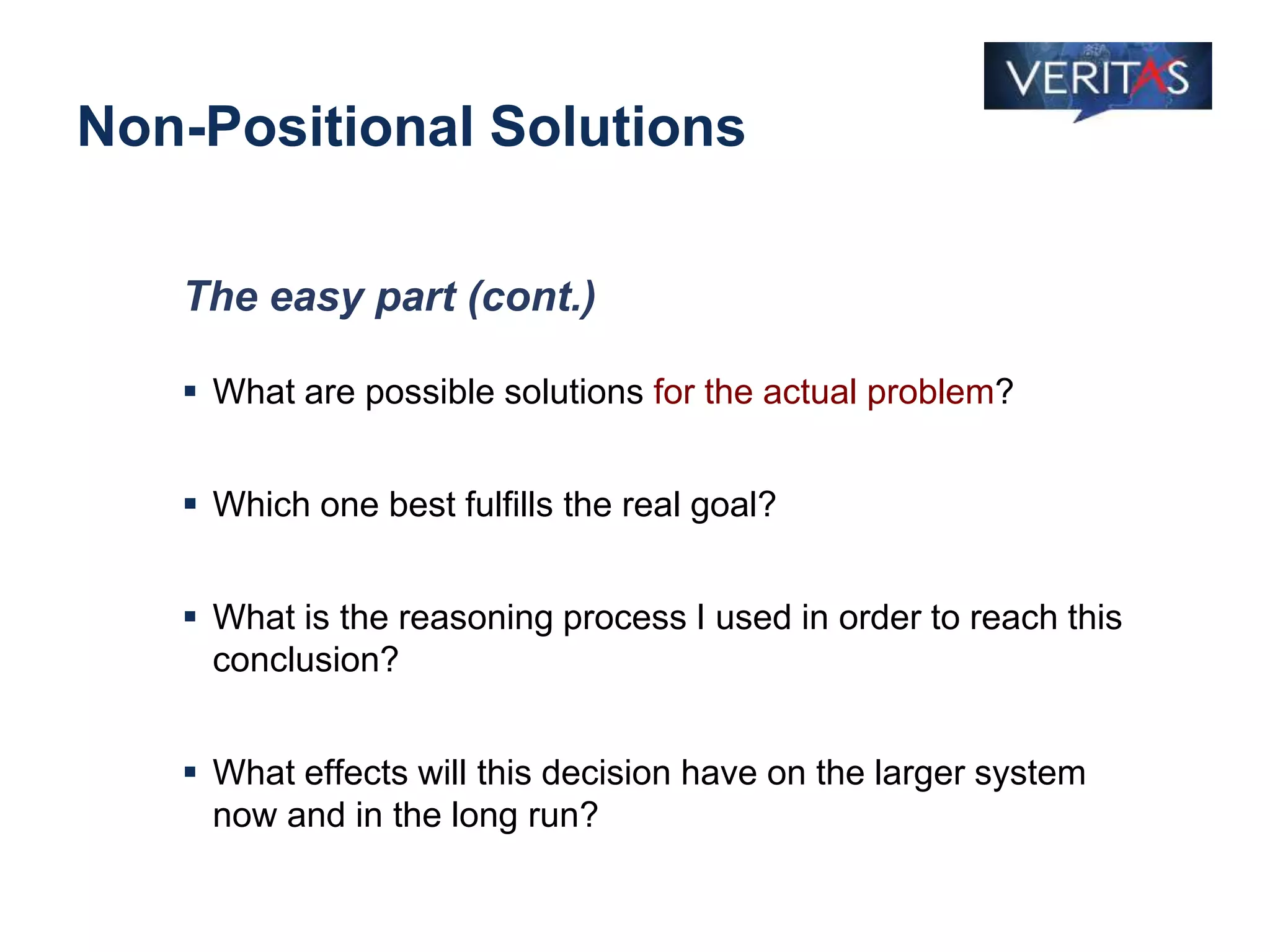
Non-Positional Solutions
The easy part (cont.)
 What are possible solutions for the actual problem?
 Which one best fulfills the real goal?
 What is the reasoning process I used in order to reach this
conclusion?
 What effects will this decision have on the larger system
now and in the long run?
Solving the Bridge Bat Problem
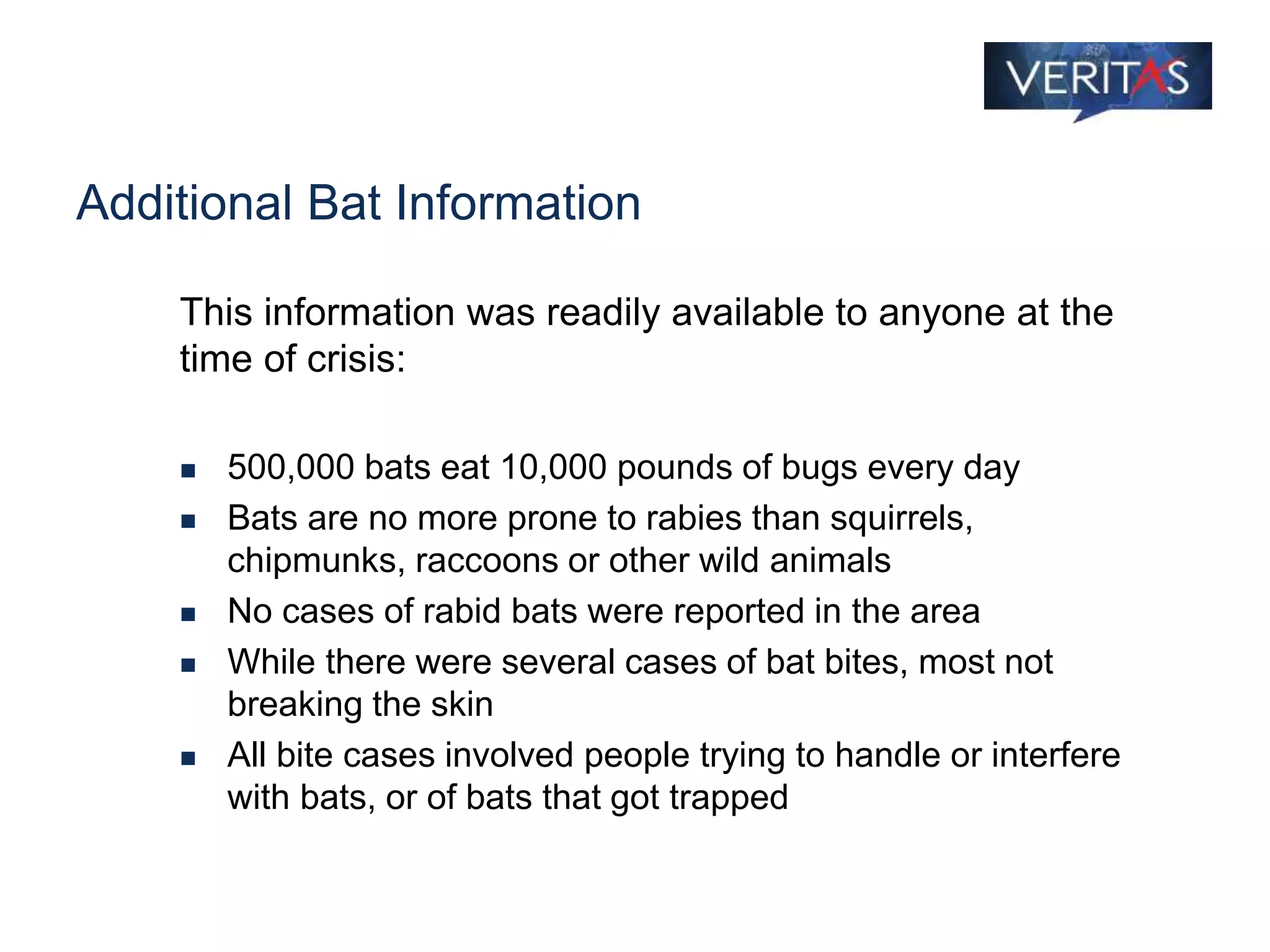
Additional Bat Information
This information was readily available to anyone at the
time of crisis:
 500,000 bats eat 10,000 pounds of bugs every day
 Bats are no more prone to rabies than squirrels,
chipmunks, raccoons or other wild animals
 No cases of rabid bats were reported in the area
 While there were several cases of bat bites, most not
breaking the skin
 All bite cases involved people trying to handle or interfere
with bats, or of bats that got trapped
Bridge-bats - what is the real problem?
Breakout
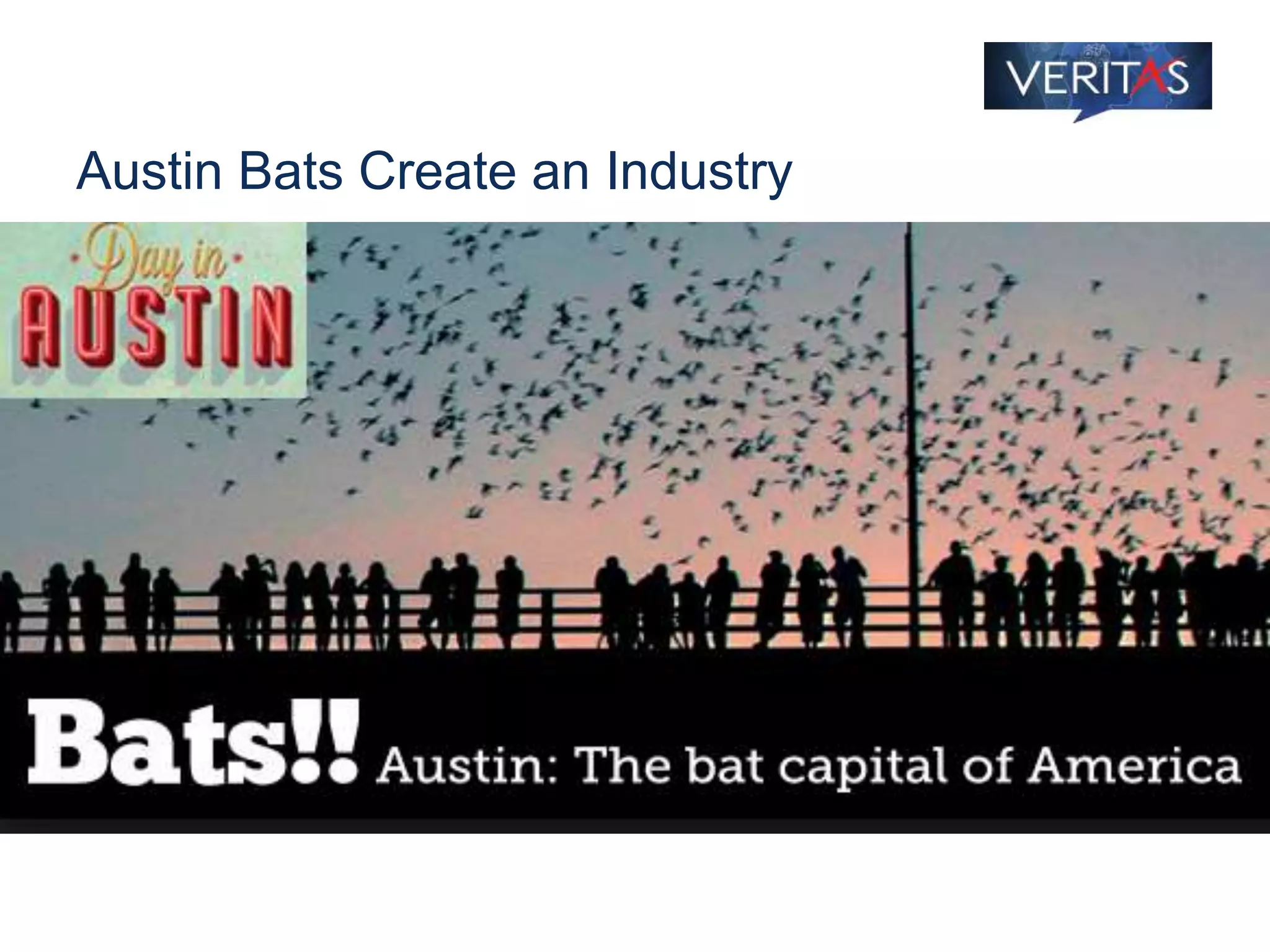
Austin Bats Create an Industry
Creating a Learning Organization
Two Kinds of Learning
 Adaptive learning
– Based in fear
– Uses blame to succeed
– Purpose is survival
– Defensive
 Generative learning
– Based in curiosity and openness
– Uses accountability to succeed
– Purpose is growth and self-expression
– Creative
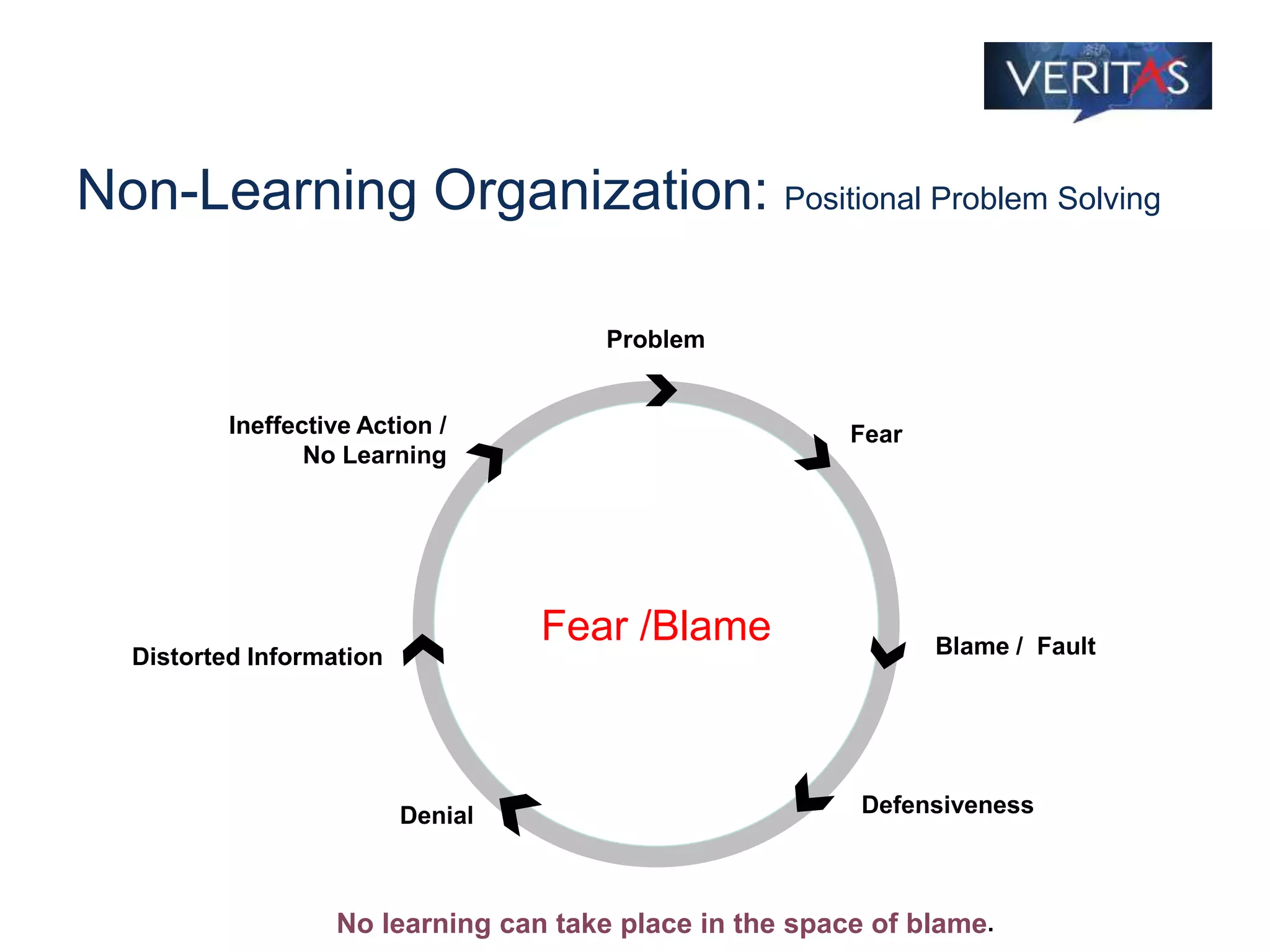
Non-Learning Organization: Positional Problem Solving
BLAME
Problem
Fear
Blame / Fault
DefensivenessDenial
Distorted Information
Ineffective Action /
No Learning
Fear /Blame
No learning can take place in the space of blame.
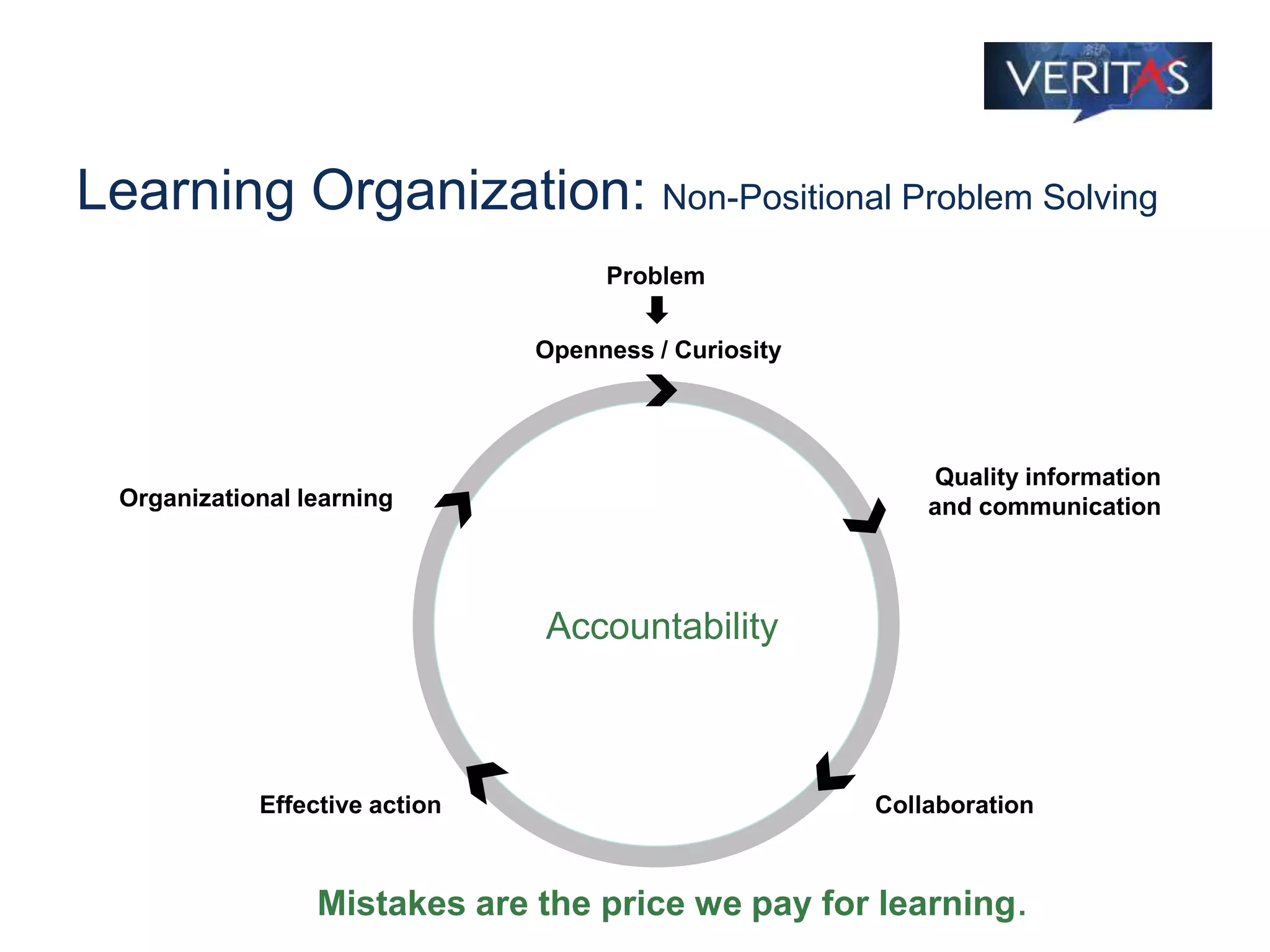
Learning Organization: Non-Positional Problem Solving
Problem
Quality information
and communication
CollaborationEffective action
Organizational learning
Openness / Curiosity
Accountability
Mistakes are the price we pay for learning.
Workplace Issue
Breakout
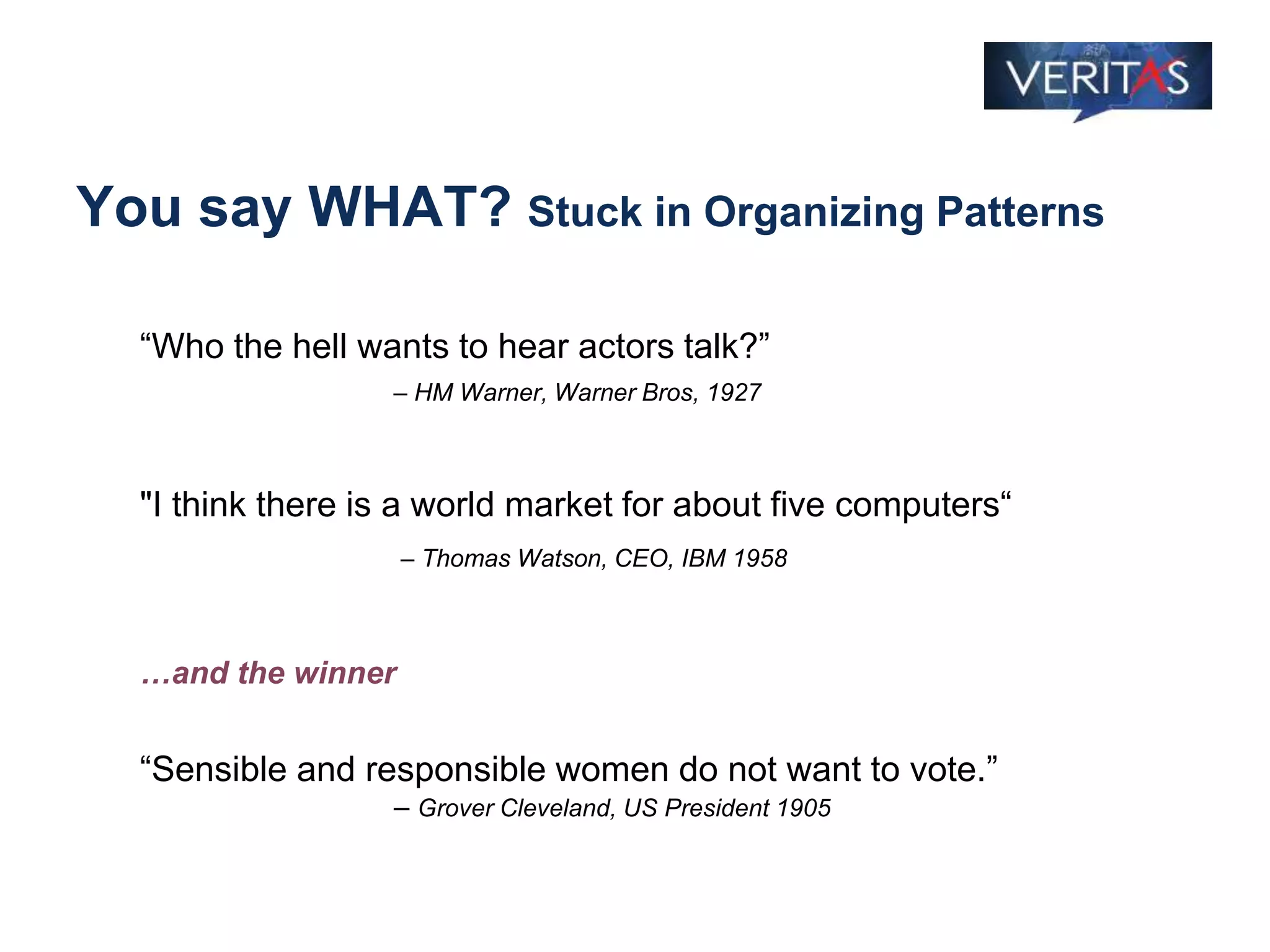
You say WHAT? Stuck in Organizing Patterns
“Who the hell wants to hear actors talk?”
– HM Warner, Warner Bros, 1927
"I think there is a world market for about five computers“
– Thomas Watson, CEO, IBM 1958
…and the winner
“Sensible and responsible women do not want to vote.”
– Grover Cleveland, US President 1905
Non-Positional Thinking:
Thinking That Transforms Everything
 A great many people think they are thinking when they
are merely rearranging their prejudices.
– William James
 It is much easier to believe than to think.
– James Harvey Robinson
The Uncertainty Proposition
“Question everything at least once in your life…”
(not “something” but “everything”!)
“Doubt is the organ of wisdom.”
Rene Descartes
Parting Thought…
It ain’t what you don’t know that gets you into trouble,
it’s what you know for sure that just ain’t so.
– Mark Twain
Shrink-Wrapped in Our Own Thinking:
Thinking That Transforms
Questions/Comments/Feedback
Ariane David, PhD
The Veritas Group
Additional Information
ADavid@TheVeritasGroup.com
www.theveritasgroup.com
Non-Positional Thinking and
The Uncertainty Contingency

Non-positional Thinking Yolo County 2014

  • 1.
    Shrink-Wrapped in OurOwn Thinking: Thinking That Transforms  Presented by  Ariane David, PhD  Senior Partner  The Veritas Group  Senior Lecturer  California State University, Northridge  ADavid@TheVeritasGroup.com Non-Positional Thinking and The Uncertainty Contingency Yolo County Department of Child Support Services Ariane David, PhD The VERITAS Group California State University, Northridge Woodbury University ADavid@TheVeritasGroup.com www.theveritasgroup.com
  • 2.
    Today you’ll see that you don’t really know what you think you know …at the same time you’ll learn  how to “see” what you’ve never been able to see before Non-Positional Thinking: Thinking Beyond the Obvious
  • 3.
    We’ll look at: •How we think vs. how we think we think • The tyrant brain and what it means in real life • So now what? Non-Positional Thinking: Thinking Beyond the Obvious
  • 4.
    The Science ofthe Brain: A Quick Tour
  • 5.
    Max Wertheimer’s Stroboscope: Thewhole is more than the sum of the parts.
  • 6.
    Sir Frederick Bartlett- Making Memory, Meaning, & Schemas  The War of the Ghosts - Sydney  “Asian” mask *  Schemas
  • 7.
    Bartlett (cont) -Making Memory, Meaning, & Schemas
  • 8.
    Sir Frederick Bartlett- Making Memory, Meaning, & Schemas  The War of the Ghosts - Sydney  “Asian” mask  Schemas
  • 9.
    Elizabeth Loftus –Eyewitness Testimony What we store in memory is affected not only by pre- existing knowledge but also by post-event information including • Language • Other information What we remember might never have happened.
  • 10.
    Antonio Damasio: TheNeurobiology of Thinking Perception  Millions of bits of information assail our senses every minute; we can perceive only a tiny number of sensory impressions.  We focus only on what is immediately relevant and what arouses us emotionally.  Perception is shaped by past experiences including memories and beliefs.  As a result, our actions are based on what we believe is so, not on what actually is so.
  • 11.
    Antonio Damasio: TheNeurobiology of Thinking Emotions  Emotions are body reactions to what’s happening  Every sensory impression is paired with an emotion (called an emotional tag) at the moment of perception  The pair become memory  The purpose of emotional tags is rapid response
  • 12.
    Antonio Damasio: TheNeurobiology of Thinking Emotions  The role of emotions in decision-making  The myth of rational decision-making  Suppressed vs. no emotions
  • 13.
    Antonio Damasio: TheNeurobiology of Thinking Memory
  • 14.
    Antonio Damasio: TheNeurobiology of Thinking Memory  Memory is not a video; memories are NOT stored complete anywhere in the brain.  What we think of as memory is the result the simultaneous firing of neurons, “a trick of timing”.  Neurons carry no content, only the pattern code by which neurons will fire, and when. Think the image on your TV.
  • 15.
    …thus  What weremember is a subjective and creative fabrication  What we remember changes every time we recall it.  We can never be certain about what we remember.  Confidence in our memories has nothing to do with accuracy: memories can be completely fabricated and seem absolutely real.
  • 16.
    …as a result Youcan never be certain that what you remember actually happened the way you remember it; in fact, you can be certain that it didn't! Thus Uncertainty is the first contingency of non-positional thinking.
  • 17.
    Organizing Patterns: amodel of the thinking brain  Organizing patterns are a kind of template that allow us to organize everything we know.  We start building organizing patterns at birth.  Our first/master organizing patterns are the strongest, and most persistent and resilient.  All future organizing patterns are formed within master organizing patterns.  The totality of all our organizing patterns creates our constructed universe – our entire reality.
  • 18.
    Organizing Patterns: reinforcethemselves  No impartial evidence needed.  What we perceive is taken as proof that our position/beliefs are right.  Position/beliefs dictate what we see, what we see reinforces the position/beliefs.
  • 19.
  • 20.
    Examples of SimpleOrganizing Patterns
  • 24.
  • 25.
    Here's the detailsfor the October Hill Country Wine & Supper Club Dinner: Date: Thursday, October 4, 2012 Time: 6:30 p.m. Where: River City Grille, Marble Falls, TX Cost: $40 per person, which includes a three-course meal, three glasses of wine, and recipe booklet. Tax and gratuity not included. Featured Winery: Stone House Vineyard October Hill Country Wine & Supper Club Menu Warm Artichoke & Crap Dip with Toasted Baguettes Filet of Sole Fish En Papillote with Au Gratin Potatoes Raspberry & Chocolate Cream Cheese Stuffed Cupcakes
  • 27.
    Why is itimportant to know this?  We each live in a universe of our own construction.  Its organizing patterns and logic are perfect for physical survival, but absent the beasts they can be a real barrier to clear thinking. Uncertainty is the first contingency of non-positional thinking.
  • 28.
    Organizing Patterns >Positional Thinking The Tyrant Brain  Tyranny of Knowledge*  Tyranny of Emotions*  Tyranny of Logic *
  • 29.
    Tyranny of Knowledge Choosing existing knowledge simply because it’s the knowledge we have.  Assuming that the knowledge we have is better than knowledge we don’t have (yet) or the knowledge of others.  Doing what worked in the past only because it worked in the past, without examining how appropriate that strategy is in light new information, including assuming the future will be like the past.
  • 30.
    Tyranny of Knowledge:examples  General’s Dilemma  Fulfilled Expectations  Success Double Bind
  • 31.
    Tyranny of Emotions Every organizing pattern is permanently grounded in emotions (as well as sensory experience). Thus, every one of our responses is also grounded in emotion.  Emotions affect logic, but cannot be dealt with logically.
  • 32.
    Tyranny of Emotion:examples We take cognitive shortcuts in our reasoning to help us make sense quickly, but fail to verify the accuracy. Shortcut errors  Stereotyping  Biases These had important survival value on the savannah!
  • 33.
  • 34.
    Tyranny of Logic What is logic?  What determines if something is logical?  Can logic be wrong?
  • 35.
    Tyranny of Logic Logic is nothing more than the rules you’ve made up for navigating within your constructed universe!  These rules are based on how easily and powerfully one thought gets connected to another: thoughts that connect easily are seen to be logical.  There are as many different systems of logic as there are beings on the earth.  Logic is subjective like taste. Nothing is ever “illogical”; things are just “differently-logical” Why does this matter in non-positional thinking?
  • 36.
    Tyranny of Logic:examples  Zero-sum illusion*  Baboon trap*  Lost Key dilemma*
  • 37.
    Logic/Reasonableness  What islogic?  What determines if something is logical?  Can logic be wrong?
  • 38.
    Logic/Reasonableness  Logic isnothing more than the rules you’ve made up for navigating within your constructed universe!  These rules are based on how easily and powerfully one thought gets connected to another: thoughts that connect easily are seen to be logical.  There are as many different systems of logic as there are beings on the earth. (The jury’s out on extra-terrestrials)  Logic is subjective like taste. Nothing is ever “illogical”; things are just “differently-logical” Why does this matter in non-positional thinking?
  • 39.
    Zero Sum Illusion Believing that there is a limited amount of “solution”, including “either/or”, “middle-of-the-road”, and “fixed position” thinking.  Think politics!
  • 44.
    Baboon Trap Thinking forthe short term, not how current actions lead to future outcomes. Seeing only parts, but not how they’re related or how they form a whole. Attachment to unworkable situations. Ex. Our LIVES!
  • 45.
    Lost Key Dilemma Lookingfor information/solutions/answers somewhere only because that’s where the information is easy to access. Ex. case load, education, quarterly reports, Deming, Vioxx. Not everything that can be counted counts; not everything that counts can be counted. (Variously attributed to Albert Einstein, W. Edwards Deming and a half dozen others)
  • 46.
    The opportunity liesin a new way of thinking, one that is based on how we actually think rather than how we believe we think. It is called Non-Positional Thinking
  • 47.
    What Non-positional ThinkingIs:  It is based in the knowledge that human thought is fallible, that we cannot trust what we think we know (uncertainty).  Non-positional thinking is a way of being.  It rises above the “position” to view other positions equally.  We never arrive at being a non-positional thinker; we can only strive to think non-positionally. Non-positional thinking requires commitment and perseverance.
  • 48.
    What Non-positional ThinkingIs Not:  Non-positional thinking is not a short-cut to effective reasoning.  A linear process, recipe, or check list for how to think (we cannot think non-positionally until we grasp the fallibility of our thought).  A tool-kit of techniques and methodologies.  A destination or a position in the middle.
  • 49.
    Non-Positional thinking isBased on Four Contingencies
  • 50.
    Contingencies of Non-PositionalThinking and Intellectual Virtues Uncertainty > intellectual humility Curiosity > intellectual openness Discernment > wisdom Commitment > courage
  • 51.
    Uncertainty Contingency: Humility Uncertainty means realizing that our knowledge about the world is massively unreliable, that it is our personal constructed universe.  Our constructed universe is not the world, just a good-enough representation of it that allows us to survive(ish).  Certainty that our constructed universe is the world leads to almost all of the world’s problems.  Humility is the realization that we and all humans, and our knowledge, beliefs, and assumptions are fallible. Uncertainty doesn’t mean being paralyzed by doubt, but rather being aware of the fallibility of our knowledge..
  • 52.
    Uncertainty Contingency: Skills Whatis it that I am not seeing the seeing of which would change everything? The Ability To:  Being able to accept hold in our minds the notion that human beings, and our knowledge and beliefs are fallible, and...  that we base our point of view on assumptions that may or may not be accurate.  Keep ALL conclusions, no matter how excellent they are now, open to future scrutiny.  Doubt constructively, with the intention of learning.  Realize that our beliefs cannot tell us anything about the world.
  • 57.
    The uncertainty contingencymakes us realize that we can’t be certain what color the ball actually is no matter how obvious it seems. The curiosity contingency makes us want to find out.
  • 58.
    Curiosity Contingency: Openness Curiosity means that (in the light of our uncertainty) we are eager and determined to discover what we don’t know, the knowing of which could change everything.  That we are eager to see the merit in the other points of view.  It leads to the impartial gathering of relevant information.
  • 59.
    Curiosity Contingency: Skills Enthusiastically and impartially seek and collect the relevant information.  Maintain an open-minded outlook with respect to our own beliefs and to the assertions of others.  Honestly ask and answer, “Do I really want to know what lies outside my point of view?” The Ability To: What is it that I am not seeing the seeing of which would change everything?
  • 60.
    Discernment Contingency: Wisdom Attempting to see things truly as opposed to looking for confirming evidence; desire to weigh evidence impartially.  Recognizing and questioning our own assumptions and biases and seeking to go beyond them.  Judging the merits of our own point of view by the same standards we use to judge others’ points of view.
  • 61.
    Discernment Contingency: Skills Attempt to see things as they truly are. Be truthful (at least to ourselves).  Weigh information fairly, i.e., judging the merits of our own beliefs with the same rigor and by the same standards by which we judge the merits of others.  Recognize when information is factual, tangible, provable, anecdotal, or opinion, including assessing the credibility of the sources (including ourselves) and what they have to gain or lose.  Identify and question assumptions and the assumptions of those we tend to believe.  Heartily seek an impartial solution. The Ability To:
  • 62.
    Commitment Contingency: Courage Commitment is the overarching principle. It means being determined to move beyond our own point of view, assumptions, judgments, and conclusions (organizing patterns) even in the face of our own fear.  It means having the courage to acknowledge and act on those discoveries, including being willing to change our dearly held position.  It means tolerance for differing, even opposing, points of view.
  • 63.
    Commitment Contingency: Skills Accept new evidence even if it conflicts with previous beliefs.  Be courageous enough to acknowledge it.  Discard hypotheses that have proved inadequate.  Adapt oneself to the facts of this world.  Persevere even in the face of our own discomfort.  Operate in a demonstrably fair and tolerant way. The Ability To: What is it that I am not seeing the seeing of which would change everything?
  • 64.
  • 65.
    Strategic Doubting andBelieving  We need strategic doubting for those things we’re certain of, things that we think need no questioning.  We need strategic believing for those things that we tend to dismiss or that repel us.  Neither comes easy to human beings.  Both are necessary to non-positional thinking What is it that I am not seeing the seeing of which would change everything?
  • 66.
    Strategic Doubting: Doubt AboutWhat is Most Believable to Us  The intention is to open-mindedly scrutinize appealing assertions or beliefs. The purpose is not to reject them but to better understand them.  It involves conscious and willful skepticism for our own dearly held beliefs and other assertions we find particularly attractive.  In non-positional doubting we are testing for validity.  Strategic doubting comes from the realization that we can’t be certain of what we know.
  • 67.
    Strategic Believing: Believing Whatis Most Doubtful  The intention is to act “as if” we believed an unattractive proposition in order to see the merits of the argument before we attempt to debunk it.  The purpose is not to accept the proposition, but to try to see all the things about it that we hadn’t seen before, including hidden merits, in order to to understand it.  It is not just about listening to different views, or being respectful of them, but being able to restate them impartially. (Note to myself: maybe this shouldn’t be here and should be in the “to do” part as part of the tool kit.)
  • 68.
    Strategic Doubting andBelieving Breakout Exercise
  • 69.
    Problem Solving andDecision Making
  • 70.
    How To GetRid of the Bridge Bat Problem
  • 74.
    Bridge-Bats Bind: ClassicProblem Solving Methodology  What is the issue or problem?  What information do I have?  What information do you need to solve it?  What is the plan/methodology for solving the problem?  What are possible solutions?  What are pros and cons of each solution?  What is your solution? Bat Breakout and Discussion
  • 75.
  • 76.
    Non-Positional Problem Solving AView of the Problem From Higher Up
  • 77.
    Non-Positional Problem Solving Isbased on the notions that  Beneath every apparent problem lies the actual far more complex and hard to see problem. Solving only the apparent problem usually leads to worse problems.  The actual problem involves people and how they think about the problem.  Discovering what the actual problem is is the most important part of finding the solution! There is no problem that doesn’t have a solution if we are willing to change the way we think about it. Constantin David
  • 78.
    Classical Problem SolvingMethodology (doesn’t work for a complex problem; never has!)  Identify the issue or problem.  Gather information about the problem.  Identify possible solutions/decisions.  Determine the pros and cons of each solution.  Choose a solution.  Do it.  Review the outcomes.
  • 79.
    First ask  Whatis my/the goal? – Is the goal to get rid of the issue or to validate my position?( Ex. To get rid of the “problem” or get rid of the bats? To serve the customer or to serve the needs of managers?)  What is my position? – Am I willing to find out that I’m wrong? Do I really want to know or do I have my mind made up? – What will I lose if I am wrong? (note: we ALWAYS have something to lose.) – Is there anything that could persuade me I’m wrong? If the answer is YES, and you are actually in uncertainty, then… A Different Approach: Finding the Actual Issue is the most important part
  • 80.
    Next  Find outwhat is the problem or issue actually is – Are we looking at the same problem? What do I believe the problem to be? What do they believe it to be? (Feelings often masquerade as facts.) – What am I taking as a given (assumptions)? What if those things were not so? (Non-positional doubting of our own position) – What are the facts? (observables, behaviors, results?) – What human dynamics are involved? Non-positional Problem Solving: Finding the Actual Issue
  • 81.
    Next  Find outwhat is the problem or issue actually is – Look for what you haven’t seen before. “What is it I’m not seeing about this problem that is keeping this problem in place?” If you’ve heard it all before, you’re not listening. – Have I honestly sought information that disconfirms my beliefs? – What language is being used? Does it mean the same thing to both of us? Neutral or positional? How is it biasing our understanding of the problem? Non-positional Problem Solving: Finding the Actual Issue
  • 82.
    The Next Partis Easy  What could be alternative explanations for the facts (observables, not assumptions or judgments)?  What information or evidence is there? What disconfirming evidence (strategic doubting) is there for my position and confirming evidence (strategic believing) for theirs? Non-positional Problem Solving
  • 83.
    Non-Positional Solutions The easypart (cont.)  What are possible solutions for the actual problem?  Which one best fulfills the real goal?  What is the reasoning process I used in order to reach this conclusion?  What effects will this decision have on the larger system now and in the long run?
  • 84.
    Solving the BridgeBat Problem
  • 85.
    Additional Bat Information Thisinformation was readily available to anyone at the time of crisis:  500,000 bats eat 10,000 pounds of bugs every day  Bats are no more prone to rabies than squirrels, chipmunks, raccoons or other wild animals  No cases of rabid bats were reported in the area  While there were several cases of bat bites, most not breaking the skin  All bite cases involved people trying to handle or interfere with bats, or of bats that got trapped
  • 86.
    Bridge-bats - whatis the real problem? Breakout
  • 87.
    Austin Bats Createan Industry
  • 88.
    Creating a LearningOrganization
  • 89.
    Two Kinds ofLearning  Adaptive learning – Based in fear – Uses blame to succeed – Purpose is survival – Defensive  Generative learning – Based in curiosity and openness – Uses accountability to succeed – Purpose is growth and self-expression – Creative
  • 90.
    Non-Learning Organization: PositionalProblem Solving BLAME Problem Fear Blame / Fault DefensivenessDenial Distorted Information Ineffective Action / No Learning Fear /Blame No learning can take place in the space of blame.
  • 91.
    Learning Organization: Non-PositionalProblem Solving Problem Quality information and communication CollaborationEffective action Organizational learning Openness / Curiosity Accountability Mistakes are the price we pay for learning.
  • 92.
  • 93.
    You say WHAT?Stuck in Organizing Patterns “Who the hell wants to hear actors talk?” – HM Warner, Warner Bros, 1927 "I think there is a world market for about five computers“ – Thomas Watson, CEO, IBM 1958 …and the winner “Sensible and responsible women do not want to vote.” – Grover Cleveland, US President 1905
  • 94.
    Non-Positional Thinking: Thinking ThatTransforms Everything  A great many people think they are thinking when they are merely rearranging their prejudices. – William James  It is much easier to believe than to think. – James Harvey Robinson
  • 95.
    The Uncertainty Proposition “Questioneverything at least once in your life…” (not “something” but “everything”!) “Doubt is the organ of wisdom.” Rene Descartes
  • 96.
    Parting Thought… It ain’twhat you don’t know that gets you into trouble, it’s what you know for sure that just ain’t so. – Mark Twain
  • 97.
    Shrink-Wrapped in OurOwn Thinking: Thinking That Transforms Questions/Comments/Feedback Ariane David, PhD The Veritas Group Additional Information ADavid@TheVeritasGroup.com www.theveritasgroup.com Non-Positional Thinking and The Uncertainty Contingency

Editor's Notes

  • #2 I’m going to show you this afternoon that you don’t really know what you think you know.
  • #7 First, we can only take in a small amount of information that reaches our senses. Not only do physical conditions intervene, but historically, our survival depended on our focusing only on the most important phenomena. READ WAR OF GHOSTS ACTUAL AND FINAL SLIDE OF ASIAN MASK
  • #8 First, we can only take in a small amount of information that reaches our senses. Not only do physical conditions intervene, but historically, our survival depended on our focusing only on the most important phenomena. READ WAR OF GHOSTS ACTUAL AND FINAL SLIDE OF ASIAN MASK
  • #9 First, we can only take in a small amount of information that reaches our senses. Not only do physical conditions intervene, but historically, our survival depended on our focusing only on the most important phenomena. READ WAR OF GHOSTS ACTUAL AND FINAL SLIDE OF ASIAN MASK
  • #10 POST-EVENT- Language: “crash” vs “hit”’ Information: family feud wedding; hitler PRE-EVENT (expectations based on memory) – Students disrupting class; hunters
  • #11 Non-conscious biases that allow us to respond instantaneously to situations because they carry a good or a bad feelings. Emotional tag tells us how our body responded to a particular event. If the feelings were good (endorphins) then the event carries a positive emotional tag that will make it more likely that the behavior will be reproduced. Emotional tag is literally a map of what was goin g on in oiur body during the evnt. We’ll talk more about emotions and rapid responses
  • #12 Non-conscious biases that allow us to respond instantaneously to situations because they carry a good or a bad feelings. Emotional tag tells us how our body responded to a particular event. If the feelings were good (endorphins) then the event carries a positive emotional tag that will make it more likely that the behavior will be reproduced. Emotional tag is literally a map of what was goin g on in oiur body during the evnt. We’ll talk more about emotions and rapid responses
  • #13 Non-conscious biases that allow us to respond instantaneously to situations because they carry a good or a bad feelings. Emotional tag tells us how our body responded to a particular event. If the feelings were good (endorphins) then the event carries a positive emotional tag that will make it more likely that the behavior will be reproduced. Emotional tag is literally a map of what was goin g on in oiur body during the evnt. We’ll talk more about emotions and rapid responses
  • #14 Neurons (through event representations) carry NO CONTENT, only the algorithm for the firing of neurons simultaneously. Like the FIRING OF PIXELS on your TV. I”LL EXPLAIN MORE ON THIS. So lets ook at what happens to create the memories we have.
  • #15 Neurons (through event representations) carry NO CONTENT, only the algorithm for the firing of neurons simultaneously. Like the FIRING OF PIXELS on your TV. I”LL EXPLAIN MORE ON THIS. So lets ook at what happens to create the memories we have.
  • #16 POST-EVENT- Language: “crash” vs “hit”’ Information: family feud wedding; hitler PRE-EVENT (expectations based on memory) – Students disrupting class; hunters
  • #17 Just as particiants in the war oif the ghosts and asian mask studies mad meaning by fitting the story or picture into an existing organizing pattern.
  • #18 Just as particiants in the war oif the ghosts and asian mask studies mad meaning by fitting the story or picture into an existing organizing pattern.
  • #19 Just as particiants in the war oif the ghosts and asian mask studies mad meaning by fitting the story or picture into an existing organizing pattern.
  • #21 Imagine our prehistoric forebears on the savannah. They see something move in the grass. Some thought YIKES, a lion, and ran. Some thought, hmm, something moved, I wonder what it is. I’ll go investigate. Which ones do you suppose survived to pass on their genes? So we think the way we think because it worked in pre-historic times. Note: Schemas help us bypass slow and cumbersome cognitive processes and allow us to make instantaneous decisions, allowing us to excape lige threatening situations. Moveent in the grass.  
  • #22 This pattern makes the most sense as a circle, so the brain perceives a circle, but in reality it’s just dotd. The brain fills in the rest.
  • #29 Our current way of thinking is based on assumptions that are grossly erroneous.
  • #30 Our current way of thinking is based on assumptions that are grossly erroneous.
  • #31 Our current way of thinking is based on assumptions that are grossly erroneous.
  • #32 Our current way of thinking is based on assumptions that are grossly erroneous.
  • #34 1. Allport 1942 Subway 2. Loftus 1970s Car crash Recovered memories
  • #36 Logic is nothing more than the rules that govern the processes inside the constructed universe. There is no right or wrong logic no more than there is a right or wrong taste for mashed potatoes.
  • #39 Logic is nothing more than the rules that govern the processes inside the constructed universe. There is no right or wrong logic no more than there is a right or wrong taste for mashed potatoes.
  • #46 Sufi story
  • #48 Non-positional thinking is an ideal. As long as we live within our constructed universe being guided by schemas we will never be non-positional. However, in striving for it we become powerful thinkers.
  • #49 Non-positional thinking is an ideal. As long as we live within our constructed universe being guided by schemas we will never be non-positional. However, in striving for it we become powerful thinkers.
  • #50 Imagine our prehistoric forebears on the savannah. They see something move in the grass. Some thought YIKES, a lion, and ran. Some thought, hmm, something moved, I wonder what it is. I’ll go investigate. Which ones do you suppose survived to pass on their genes? So we think the way we think because it worked in pre-historic times. Note: Schemas help us bypass slow and cumbersome cognitive processes and allow us to make instantaneous decisions, allowing us to excape lige threatening situations. Moveent in the grass.  
  • #51 In the end, you only know what is in your constructed universe. You constructed universe is NOT the world.Courage means acting according to what you’ve learned even if it means discomfort.
  • #52 Logic is nothing more than the rules that govern the processes inside the constructed universe. There is no right or wrong logic no more than there is a right or wrong taste for mashed potatoes.
  • #53 Logic is nothing more than the rules that govern the processes inside the constructed universe. There is no right or wrong logic no more than there is a right or wrong taste for mashed potatoes.
  • #58 Logic is nothing more than the rules that govern the processes inside the constructed universe. There is no right or wrong logic no more than there is a right or wrong taste for mashed potatoes.
  • #59 In the end, you only know what is in your constructed universe. You constructed universe is NOT the world.Courage means acting according to what you’ve learned even if it means discomfort.
  • #60 In the end, you only know what is in your constructed universe. You constructed universe is NOT the world.Courage means acting according to what you’ve learned even if it means discomfort.
  • #61 In the end, you only know what is in your constructed universe. You constructed universe is NOT the world.Courage means acting according to what you’ve learned even if it means discomfort.
  • #62 In the end, you only know what is in your constructed universe. You constructed universe is NOT the world.Courage means acting according to what you’ve learned even if it means discomfort.
  • #63 In the end, you only know what is in your constructed universe. You constructed universe is NOT the world.Courage means acting according to what you’ve learned even if it means discomfort.
  • #64 In the end, you only know what is in your constructed universe. You constructed universe is NOT the world.Courage means acting according to what you’ve learned even if it means discomfort.
  • #65 Imagine our prehistoric forebears on the savannah. They see something move in the grass. Some thought YIKES, a lion, and ran. Some thought, hmm, something moved, I wonder what it is. I’ll go investigate. Which ones do you suppose survived to pass on their genes? So we think the way we think because it worked in pre-historic times. Note: Schemas help us bypass slow and cumbersome cognitive processes and allow us to make instantaneous decisions, allowing us to excape lige threatening situations. Moveent in the grass.  
  • #66 In the end, you only know what is in your constructed universe. You constructed universe is NOT the world.Courage means acting according to what you’ve learned even if it means discomfort.
  • #67 In the end, you only know what is in your constructed universe. You constructed universe is NOT the world.Courage means acting according to what you’ve learned even if it means discomfort.
  • #68 In the end, you only know what is in your constructed universe. You constructed universe is NOT the world.Courage means acting according to what you’ve learned even if it means discomfort.
  • #69 Imagine our prehistoric forebears on the savannah. They see something move in the grass. Some thought YIKES, a lion, and ran. Some thought, hmm, something moved, I wonder what it is. I’ll go investigate. Which ones do you suppose survived to pass on their genes? So we think the way we think because it worked in pre-historic times. Note: Schemas help us bypass slow and cumbersome cognitive processes and allow us to make instantaneous decisions, allowing us to excape lige threatening situations. Moveent in the grass.  
  • #70 Imagine our prehistoric forebears on the savannah. They see something move in the grass. Some thought YIKES, a lion, and ran. Some thought, hmm, something moved, I wonder what it is. I’ll go investigate. Which ones do you suppose survived to pass on their genes? So we think the way we think because it worked in pre-historic times. Note: Schemas help us bypass slow and cumbersome cognitive processes and allow us to make instantaneous decisions, allowing us to excape lige threatening situations. Moveent in the grass.  
  • #71 Imagine our prehistoric forebears on the savannah. They see something move in the grass. Some thought YIKES, a lion, and ran. Some thought, hmm, something moved, I wonder what it is. I’ll go investigate. Which ones do you suppose survived to pass on their genes? So we think the way we think because it worked in pre-historic times. Note: Schemas help us bypass slow and cumbersome cognitive processes and allow us to make instantaneous decisions, allowing us to excape lige threatening situations. Moveent in the grass.  
  • #75 What do I think is so? This is tricky. We think we know what we think but it’s important to break it into all of its components. Ex: I think the job isn’t getting done. I think joe is stupid. I think joe has bad intentions. Etc.
  • #76 Curiosity is the desire to find out what it is we might not know….
  • #77 Imagine our prehistoric forebears on the savannah. They see something move in the grass. Some thought YIKES, a lion, and ran. Some thought, hmm, something moved, I wonder what it is. I’ll go investigate. Which ones do you suppose survived to pass on their genes? So we think the way we think because it worked in pre-historic times. Note: Schemas help us bypass slow and cumbersome cognitive processes and allow us to make instantaneous decisions, allowing us to excape lige threatening situations. Moveent in the grass.  
  • #79 What do I think is so? This is tricky. We think we know what we think but it’s important to break it into all of its components. Ex: I think the job isn’t getting done. I think joe is stupid. I think joe has bad intentions. Etc.
  • #80 What do I think is so? This is tricky. We think we know what we think but it’s important to break it into all of its components. Ex: I think the job isn’t getting done. I think joe is stupid. I think joe has bad intentions. Etc.
  • #81 What do I think is so? This is tricky. We think we know what we think but it’s important to break it into all of its components. Ex: I think the job isn’t getting done. I think joe is stupid. I think joe has bad intentions. Etc.
  • #82 What do I think is so? This is tricky. We think we know what we think but it’s important to break it into all of its components. Ex: I think the job isn’t getting done. I think joe is stupid. I think joe has bad intentions. Etc.
  • #83 What do I think is so? This is tricky. We think we know what we think but it’s important to break it into all of its components. Ex: I think the job isn’t getting done. I think joe is stupid. I think joe has bad intentions. Etc.
  • #84 What do I think is so? This is tricky. We think we know what we think but it’s important to break it into all of its components. Ex: I think the job isn’t getting done. I think joe is stupid. I think joe has bad intentions. Etc. CONGRESS STREET BATS
  • #85 Imagine our prehistoric forebears on the savannah. They see something move in the grass. Some thought YIKES, a lion, and ran. Some thought, hmm, something moved, I wonder what it is. I’ll go investigate. Which ones do you suppose survived to pass on their genes? So we think the way we think because it worked in pre-historic times. Note: Schemas help us bypass slow and cumbersome cognitive processes and allow us to make instantaneous decisions, allowing us to excape lige threatening situations. Moveent in the grass.  
  • #86 What do I think is so? This is tricky. We think we know what we think but it’s important to break it into all of its components. Ex: I think the job isn’t getting done. I think joe is stupid. I think joe has bad intentions. Etc.
  • #87 Curiosity is the desire to find out what it is we might not know….
  • #89 Curiosity is the desire to find out what it is we might not know….
  • #90 What do I think is so? This is tricky. We think we know what we think but it’s important to break it into all of its components. Ex: I think the job isn’t getting done. I think joe is stupid. I think joe has bad intentions. Etc. CONGRESS STREET BATS
  • #91 Non-positional thinking is an ideal. As long as we live within our constructed universe being guided by schemas we will never be non-positional. However, in striving for it we become powerful thinkers.
  • #92 Non-positional thinking is an ideal. As long as we live within our constructed universe being guided by schemas we will never be non-positional. However, in striving for it we become powerful thinkers.
  • #93 Curiosity is the desire to find out what it is we might not know….
  • #94 The way we think about things is often more important than the things themselves.
  • #96 What do I think is so? This is tricky. We think we know what we think but it’s important to break it into all of its components. Ex: I think the job isn’t getting done. I think joe is stupid. I think joe has bad intentions. Etc.
  • #97 Curiosity is the desire to find out what it is we might not know….