“Measure what is measurable and what is
not measurable – Make measurable”

-Galileo Galilei
◦ Anything in the product behavior or surrounding
environments, which is not a functional aspect
◦ The functional execution of the product in order
to achieve “other” product requirements
◦ Focus on Performance, Dependability,
Operational aspects, production readiness issues

◦ Some methodologies and standards exist in the
market place (ISO 9126)
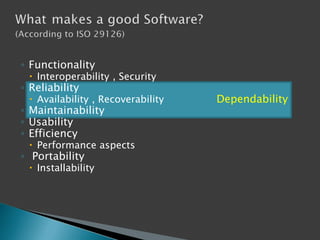
◦ Functionality

 Interoperability , Security

◦ Reliability

 Availability , Recoverability

◦ Maintainability
◦ Usability
◦ Efficiency

 Performance aspects

◦ Portability

 Installability

Dependability
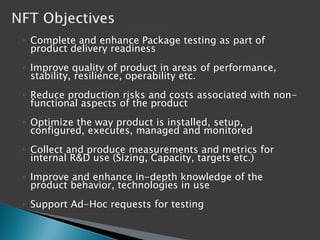
◦ Complete and enhance Package testing as part of
product delivery readiness
◦ Improve quality of product in areas of performance,
stability, resilience, operability etc.
◦ Reduce production risks and costs associated with nonfunctional aspects of the product
◦ Optimize the way product is installed, setup,
configured, executes, managed and monitored
◦ Collect and produce measurements and metrics for
internal R&D use (Sizing, Capacity, targets etc.)
◦ Improve and enhance in-depth knowledge of the
product behavior, technologies in use
◦ Support Ad-Hoc requests for testing


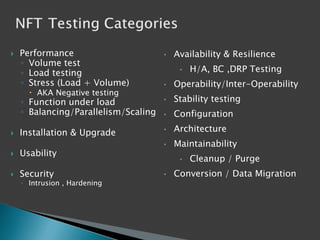
Performance
◦ Volume test
◦ Load testing
◦ Stress (Load + Volume)

•

Availability & Resilience
•

H/A, BC ,DRP Testing

•

Operability/Inter-Operability

◦ Function under load
◦ Balancing/Parallelism/Scaling

•

Stability testing

•

Configuration

Installation & Upgrade

•

Architecture

•

Maintainability

 AKA Negative testing




Usability



Security

◦ Intrusion , Hardening

•
•

Cleanup / Purge

Conversion / Data Migration
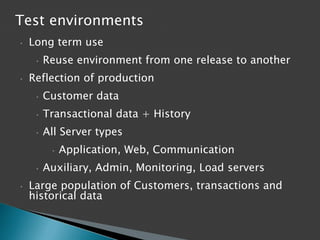
Test environments
•

Long term use
•

•

Reuse environment from one release to another

Reflection of production
•

Customer data

•

Transactional data + History

•

All Server types
•

•
•

Application, Web, Communication

Auxiliary, Admin, Monitoring, Load servers

Large population of Customers, transactions and
historical data
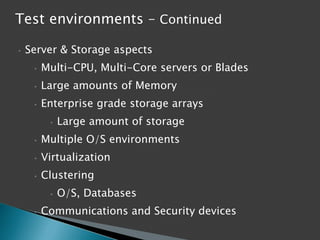
Test environments – Continued
•

Server & Storage aspects
•

Multi-CPU, Multi-Core servers or Blades

•

Large amounts of Memory

•

Enterprise grade storage arrays
•

Large amount of storage

•

Multiple O/S environments

•

Virtualization

•

Clustering
•

•

O/S, Databases

Communications and Security devices
Test environments – Tools
•

In-house tools
•
•

Test automation and envelopes

•
•

Scripts
Application tools & Simulators

3rd party tools
•

Debuggers

•

Performance & Load testing tools

•

Profiling / Instrumentation tools

•

Memory management tools

•

Monitoring tools

•

Tuning tools

•

Simulators

•

Many others….
Administration
•

Direct Staffing
•
•

Environment & SCM

•

Application / SME’s

•

Testers

•
•

PM & Team Lead

Infrastructure

Additional Staff (Ad-hoc & Expert support)
•

Middleware

•

Performance

•

R&D Development

•

Application experts

•

Database Experts

•

System Unix/Linux/Microsoft

•

Storage guys

•

Etc…
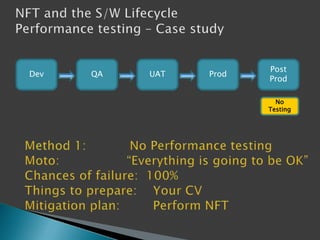
Dev

QA

UAT

Prod

Post
Prod
No
Testing
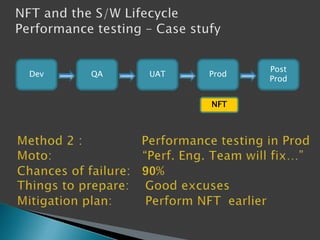
Dev

QA

UAT

Prod
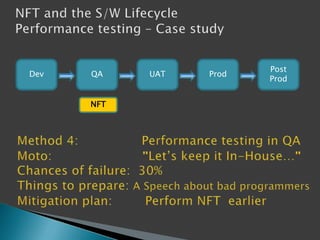
NFT

Post
Prod
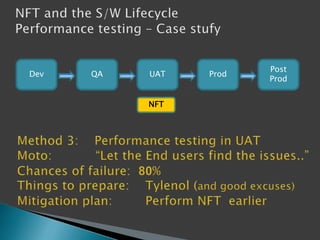
Dev

QA

UAT
NFT

Prod

Post
Prod
Dev

QA
NFT

UAT

Prod

Post
Prod
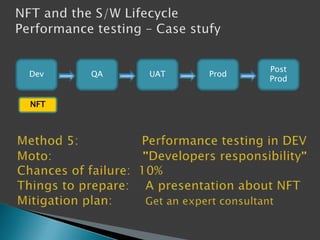
Dev
NFT

QA

UAT

Prod

Post
Prod
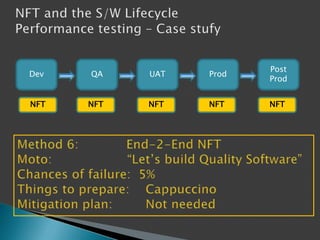
Dev

QA

UAT

Prod

Post
Prod

NFT

NFT

NFT

NFT

NFT
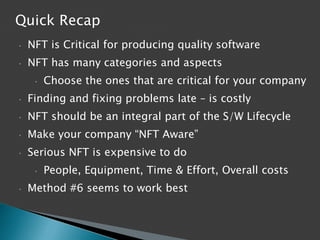
Quick Recap
•

NFT is Critical for producing quality software

•

NFT has many categories and aspects
•

Choose the ones that are critical for your company

•

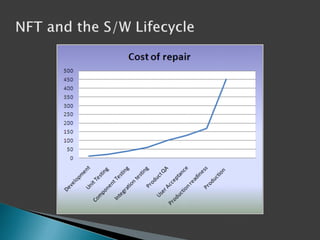
Finding and fixing problems late – is costly

•

NFT should be an integral part of the S/W Lifecycle

•

Make your company “NFT Aware”

•

Serious NFT is expensive to do
•

•

People, Equipment, Time & Effort, Overall costs

Method #6 seems to work best
Thank you !

Non-functional Testing (NFT) Overview

  • 1.
    “Measure what ismeasurable and what is not measurable – Make measurable” -Galileo Galilei
  • 2.
    ◦ Anything inthe product behavior or surrounding environments, which is not a functional aspect ◦ The functional execution of the product in order to achieve “other” product requirements ◦ Focus on Performance, Dependability, Operational aspects, production readiness issues ◦ Some methodologies and standards exist in the market place (ISO 9126)
  • 3.
    ◦ Functionality  Interoperability, Security ◦ Reliability  Availability , Recoverability ◦ Maintainability ◦ Usability ◦ Efficiency  Performance aspects ◦ Portability  Installability Dependability
  • 4.
    ◦ Complete andenhance Package testing as part of product delivery readiness ◦ Improve quality of product in areas of performance, stability, resilience, operability etc. ◦ Reduce production risks and costs associated with nonfunctional aspects of the product ◦ Optimize the way product is installed, setup, configured, executes, managed and monitored ◦ Collect and produce measurements and metrics for internal R&D use (Sizing, Capacity, targets etc.) ◦ Improve and enhance in-depth knowledge of the product behavior, technologies in use ◦ Support Ad-Hoc requests for testing
  • 5.
     Performance ◦ Volume test ◦Load testing ◦ Stress (Load + Volume) • Availability & Resilience • H/A, BC ,DRP Testing • Operability/Inter-Operability ◦ Function under load ◦ Balancing/Parallelism/Scaling • Stability testing • Configuration Installation & Upgrade • Architecture • Maintainability  AKA Negative testing   Usability  Security ◦ Intrusion , Hardening • • Cleanup / Purge Conversion / Data Migration
  • 6.
    Test environments • Long termuse • • Reuse environment from one release to another Reflection of production • Customer data • Transactional data + History • All Server types • • • Application, Web, Communication Auxiliary, Admin, Monitoring, Load servers Large population of Customers, transactions and historical data
  • 7.
    Test environments –Continued • Server & Storage aspects • Multi-CPU, Multi-Core servers or Blades • Large amounts of Memory • Enterprise grade storage arrays • Large amount of storage • Multiple O/S environments • Virtualization • Clustering • • O/S, Databases Communications and Security devices
  • 8.
    Test environments –Tools • In-house tools • • Test automation and envelopes • • Scripts Application tools & Simulators 3rd party tools • Debuggers • Performance & Load testing tools • Profiling / Instrumentation tools • Memory management tools • Monitoring tools • Tuning tools • Simulators • Many others….
  • 9.
    Administration • Direct Staffing • • Environment &SCM • Application / SME’s • Testers • • PM & Team Lead Infrastructure Additional Staff (Ad-hoc & Expert support) • Middleware • Performance • R&D Development • Application experts • Database Experts • System Unix/Linux/Microsoft • Storage guys • Etc…
  • 12.
  • 13.
  • 14.
  • 15.
  • 16.
  • 17.
  • 18.
    Quick Recap • NFT isCritical for producing quality software • NFT has many categories and aspects • Choose the ones that are critical for your company • Finding and fixing problems late – is costly • NFT should be an integral part of the S/W Lifecycle • Make your company “NFT Aware” • Serious NFT is expensive to do • • People, Equipment, Time & Effort, Overall costs Method #6 seems to work best
  • 19.