Non-violence (Ahimsa) and its importance in global Context
1.
Course Title AMD301: Indian Knowledge System
Sachin Kr. Tiwary
sachintiwary@bhu.ac.i
B.A. (Hons.) Sem.III_MD
UNIT-II : Indian Ethical and Moral Values
5. Non-violence (Ahimsa) and its importance in the global
Context
3.
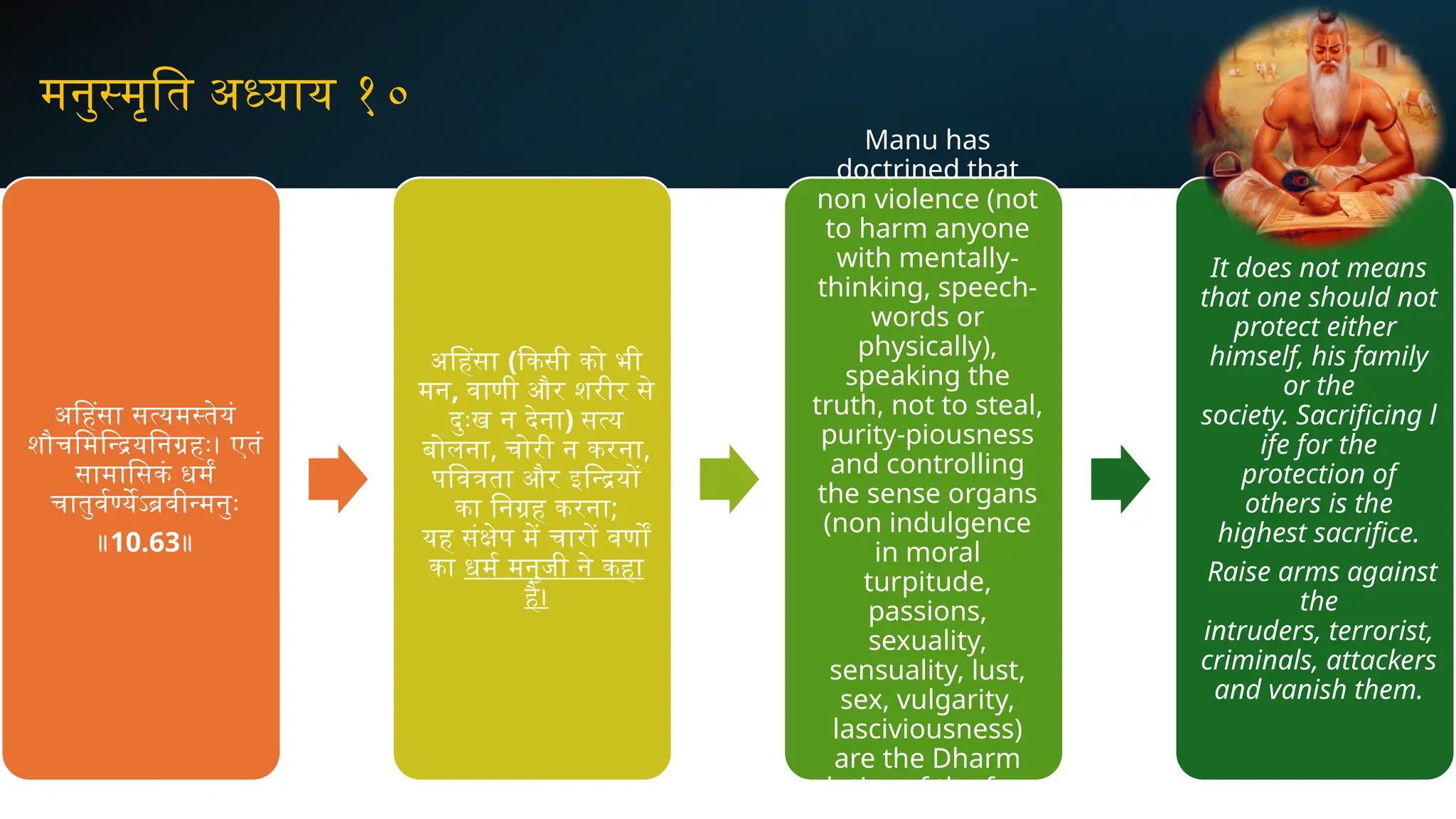
मनुस्मृति अध्याय १०
अहिंसासत्यमस्तेयं
शौचमिन्द्रियनिग्रहः। एतं
सामासिकं धर्मं
चातुर्वर्ण्येऽब्रवीन्मनुः
॥10.63॥
अहिंसा (किसी को भी
मन, वाणी और शरीर से
दुःख न देना) सत्य
बोलना, चोरी न करना,
पवित्रता और इन्द्रियों
का निग्रह करना;
यह संक्षेप में चारों वर्णों
का धर्म मनुजी ने कहा
है।
Manu has
doctrined that
non violence (not
to harm anyone
with mentally-
thinking, speech-
words or
physically),
speaking the
truth, not to steal,
purity-piousness
and controlling
the sense organs
(non indulgence
in moral
turpitude,
passions,
sexuality,
sensuality, lust,
sex, vulgarity,
lasciviousness)
are the Dharm
duties of the four
It does not means
that one should not
protect either
himself, his family
or the
society. Sacrificing l
ife for the
protection of
others is the
highest sacrifice.
Raise arms against
the
intruders, terrorist,
criminals, attackers
and vanish them.
4.
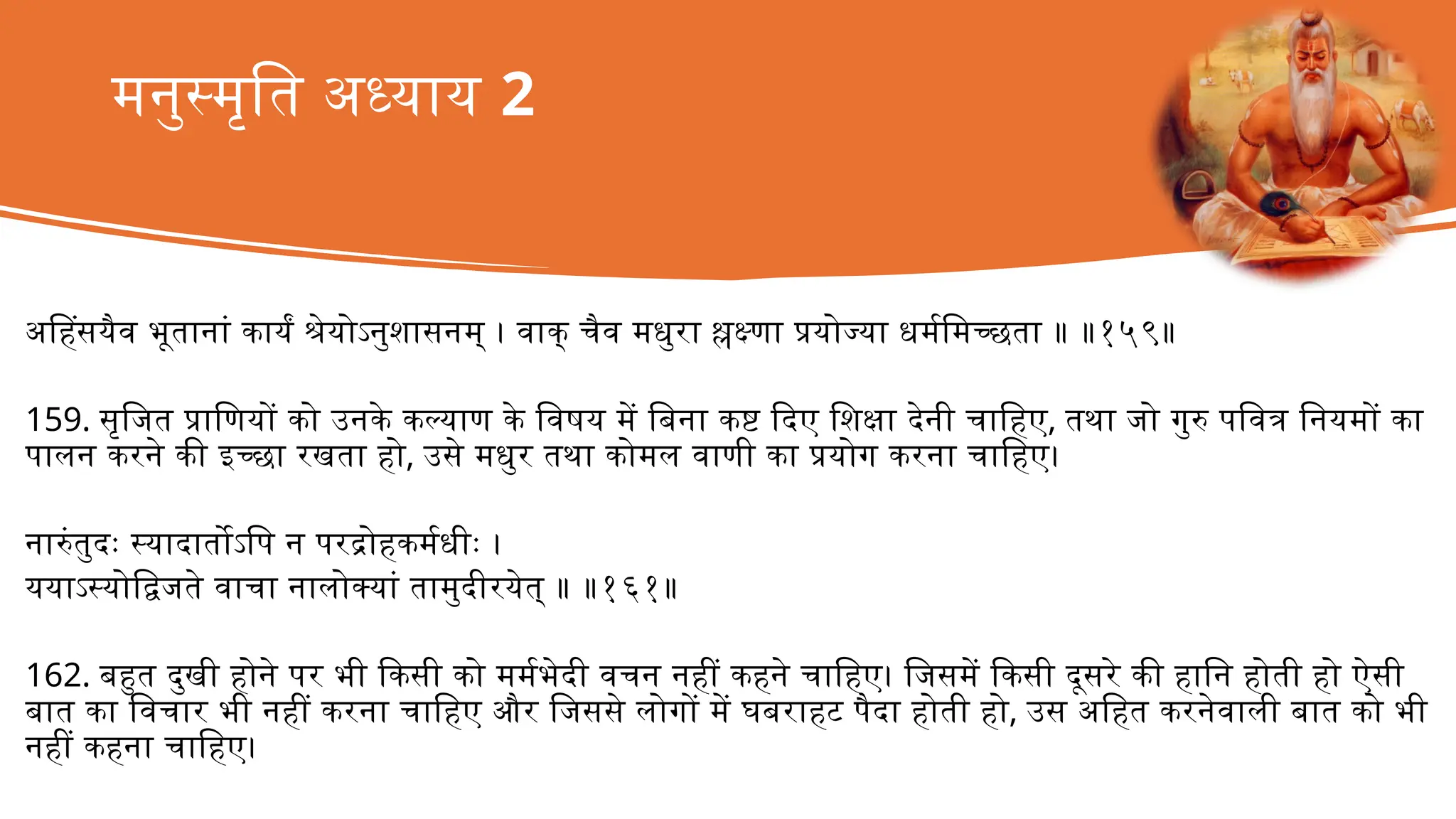
मनुस्मृति अध्याय 2
अहिंसयैवभूतानां कार्यं श्रेयोऽनुशासनम् । वाक् चैव मधुरा श्लक्ष्णा प्रयोज्या धर्ममिच्छता ॥ ॥१५९॥
159. सृजित प्राणियों को उनके कल्याण के विषय में बिना कष्ट दिए शिक्षा देनी चाहिए, तथा जो गुरु पवित्र नियमों का
पालन करने की इच्छा रखता हो, उसे मधुर तथा कोमल वाणी का प्रयोग करना चाहिए।
नारुंतुदः स्यादार्तोऽपि न परद्रोहकर्मधीः ।
ययाऽस्योद्विजते वाचा नालोक्यां तामुदीरयेत् ॥ ॥१६१॥
162. बहुत दुखी होने पर भी किसी को मर्मभेदी वचन नहीं कहने चाहिए। जिसमें किसी दूसरे की हानि होती हो ऐसी
बात का विचार भी नहीं करना चाहिए और जिससे लोगों में घबराहट पैदा होती हो, उस अहित करनेवाली बात को भी
नहीं कहना चाहिए।
5.
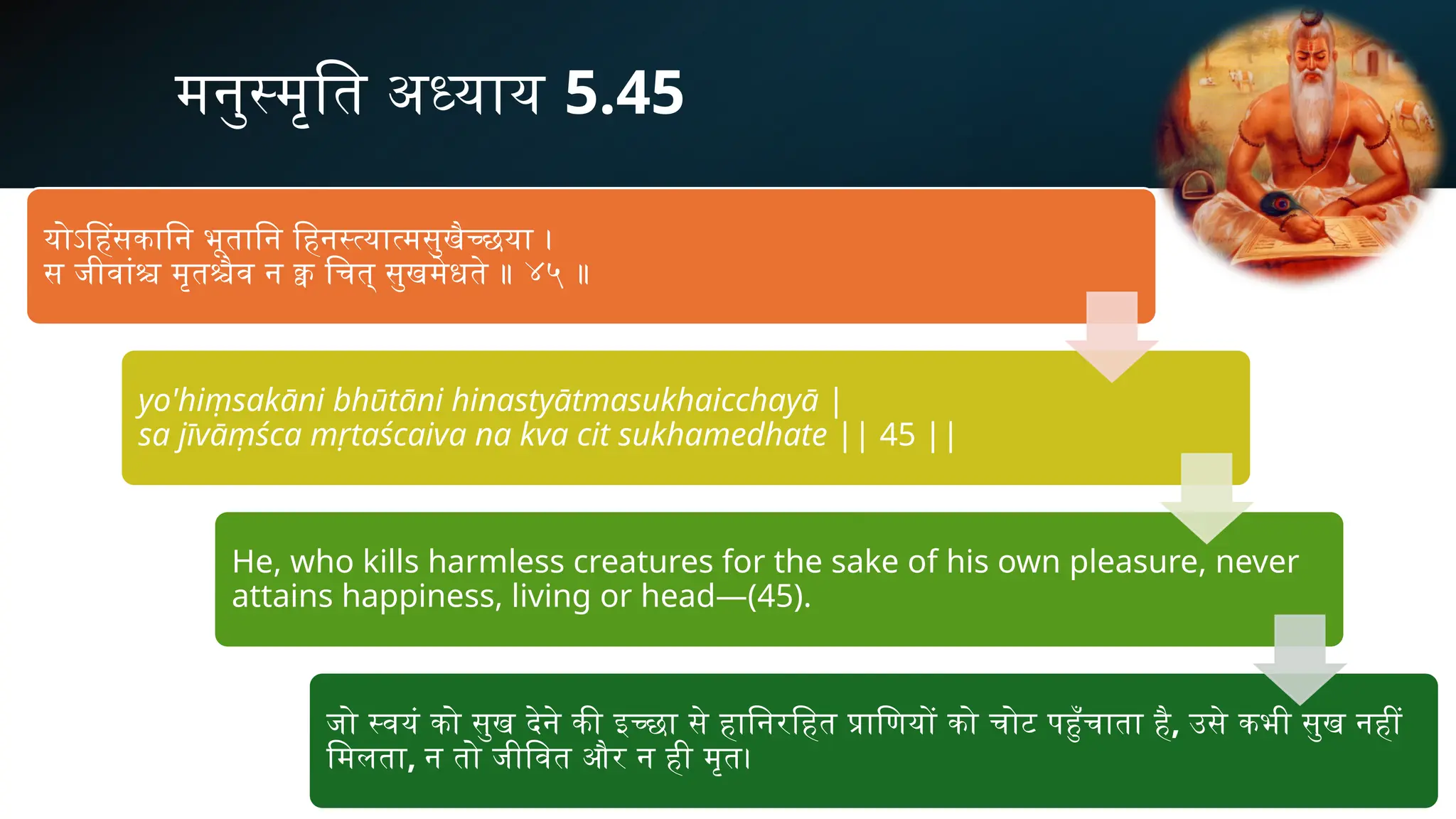
मनुस्मृति अध्याय 5.45
योऽहिंसकानिभूतानि हिनस्त्यात्मसुखैच्छया ।
स जीवांश्च मृतश्चैव न क्व चित् सुखमेधते ॥ ४५ ॥
yo'hiṃsakāni bhūtāni hinastyātmasukhaicchayā |
sa jīvāṃśca mṛtaścaiva na kva cit sukhamedhate || 45 ||
He, who kills harmless creatures for the sake of his own pleasure, never
attains happiness, living or head—(45).
जो स्वयं को सुख देने की इच्छा से हानिरहित प्राणियों को चोट पहुँचाता है, उसे कभी सुख नहीं
मिलता, न तो जीवित और न ही मृत।
6.
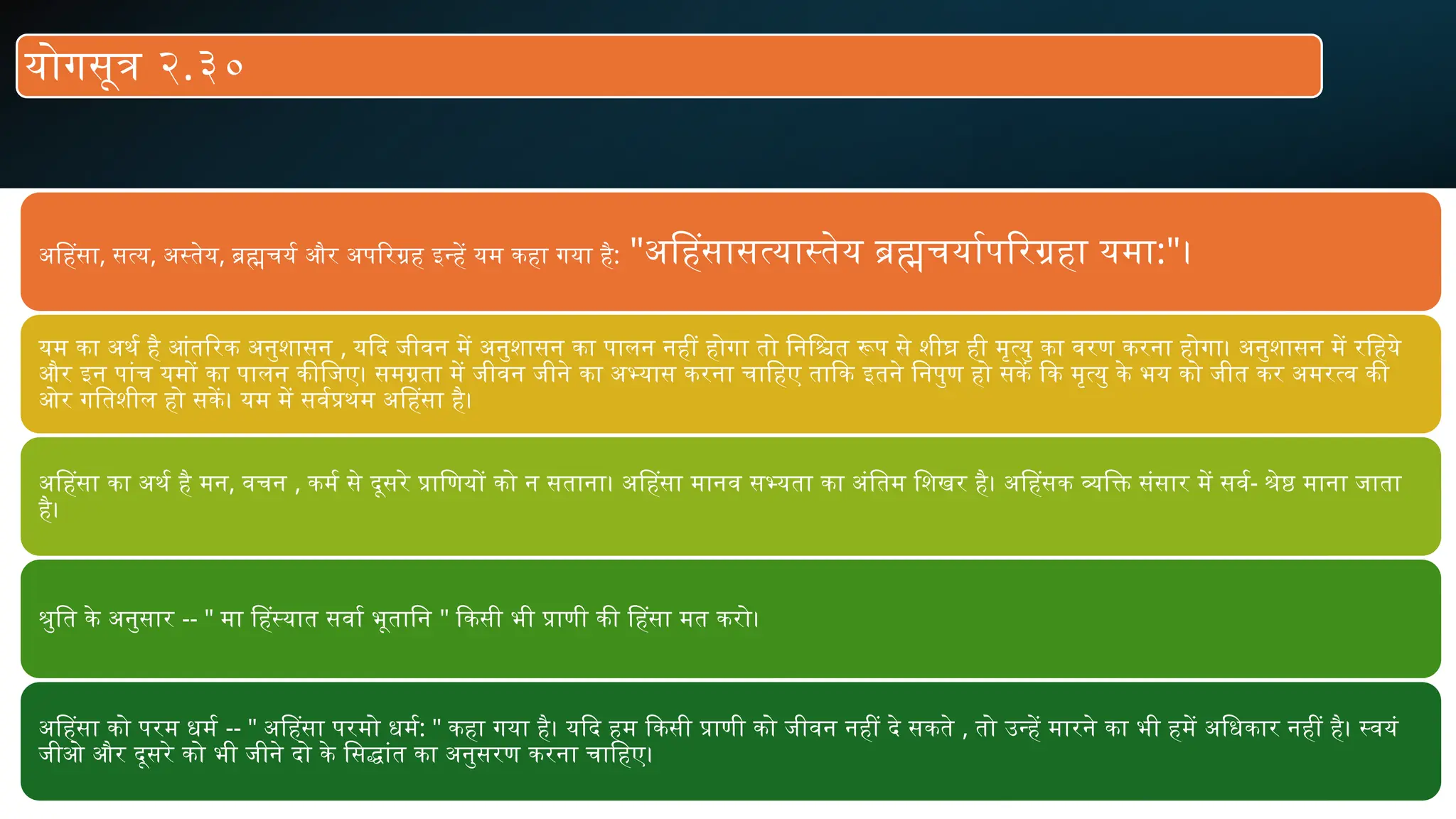
अहिंसा, सत्य, अस्तेय,ब्रह्मचर्य और अपरिग्रह इन्हें यम कहा गया है: "अहिंसासत्यास्तेय ब्रह्मचर्यापरिग्रहा यमा:"।
यम का अर्थ है आंतरिक अनुशासन , यदि जीवन में अनुशासन का पालन नहीं होगा तो निश्चित रूप से शीघ्र ही मृत्यु का वरण करना होगा। अनुशासन में रहिये
और इन पांच यमों का पालन कीजिए। समग्रता में जीवन जीने का अभ्यास करना चाहिए ताकि इतने निपुण हो सकें कि मृत्यु के भय को जीत कर अमरत्व की
ओर गतिशील हो सकें। यम में सर्वप्रथम अहिंसा है।
अहिंसा का अर्थ है मन, वचन , कर्म से दूसरे प्राणियों को न सताना। अहिंसा मानव सभ्यता का अंतिम शिखर है। अहिंसक व्यक्ति संसार में सर्व- श्रेष्ठ माना जाता
है।
श्रुति के अनुसार -- " मा हिंस्यात सर्वा भूतानि " किसी भी प्राणी की हिंसा मत करो।
अहिंसा को परम धर्म -- " अहिंसा परमो धर्म: " कहा गया है। यदि हम किसी प्राणी को जीवन नहीं दे सकते , तो उन्हें मारने का भी हमें अधिकार नहीं है। स्वयं
जीओ और दूसरे को भी जीने दो के सिद्धांत का अनुसरण करना चाहिए।
योगसूत्र २.३०
7.
महाभारत, पौलोम पर्व- अध्याय ११
अहिंसा परमो धर्मः सर्वप्राणभृतां स्मृतः ।
तस्मत्प्राणभृतः सर्वान्न हिंस्याद्ब्राह्मणः क्वचित् ॥॥
यहां अहिंसा फल को सभी यज्ञ दान तीर्थ के फलों से भी श्रेष्ठ बताया गया है
सर्वयज्ञेषु वा दानं सर्वतीर्थेषु वाऽऽप्लुतम् ।
सर्वदानफलं वापि नैतत्तुल्यमहिंसया ॥॥
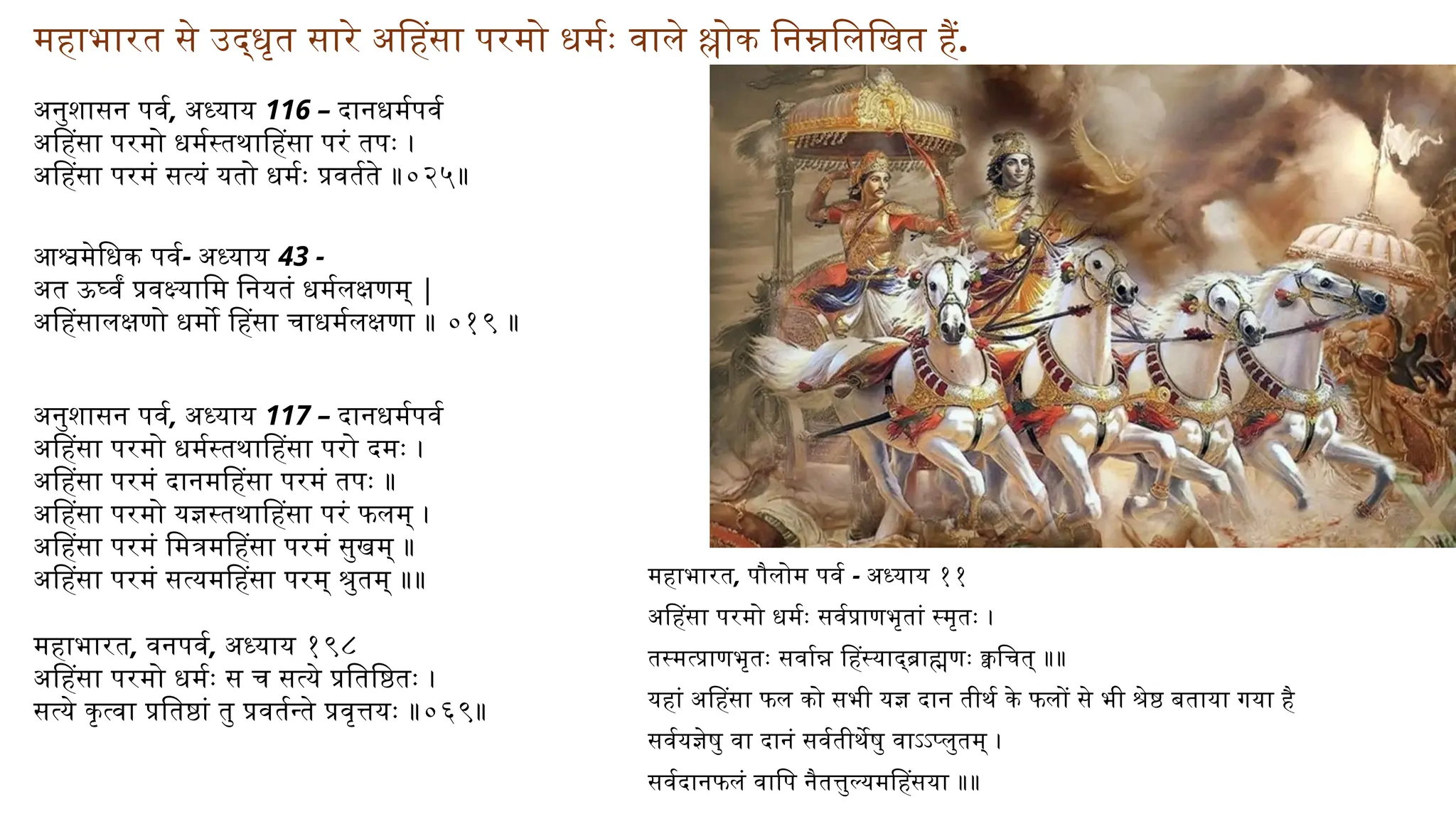
महाभारत से उद्धृत सारे अहिंसा परमो धर्मः वाले श्लोक निम्नलिखित हैं.
अनुशासन पर्व, अध्याय 116 – दानधर्मपर्व
अहिंसा परमो धर्मस्तथाहिंसा परं तपः ।
अहिंसा परमं सत्यं यतो धर्मः प्रवर्तते ॥०२५॥
अनुशासन पर्व, अध्याय 117 – दानधर्मपर्व
अहिंसा परमो धर्मस्तथाहिंसा परो दमः ।
अहिंसा परमं दानमहिंसा परमं तपः ॥
अहिंसा परमो यज्ञस्तथाहिंसा परं फलम् ।
अहिंसा परमं मित्रमहिंसा परमं सुखम् ॥
अहिंसा परमं सत्यमहिंसा परम् श्रुतम् ॥॥
आश्वमेधिक पर्व- अध्याय 43 -
अत ऊर्घ्वं प्रवक्ष्यामि नियतं धर्मलक्षणम् |
अहिंसालक्षणो धर्मो हिंसा चाधर्मलक्षणा ॥ ०१९ ॥
महाभारत, वनपर्व, अध्याय १९८
अहिंसा परमो धर्मः स च सत्ये प्रतिष्ठितः ।
सत्ये कृत्वा प्रतिष्ठां तु प्रवर्तन्ते प्रवृत्तयः ॥०६९॥
8.
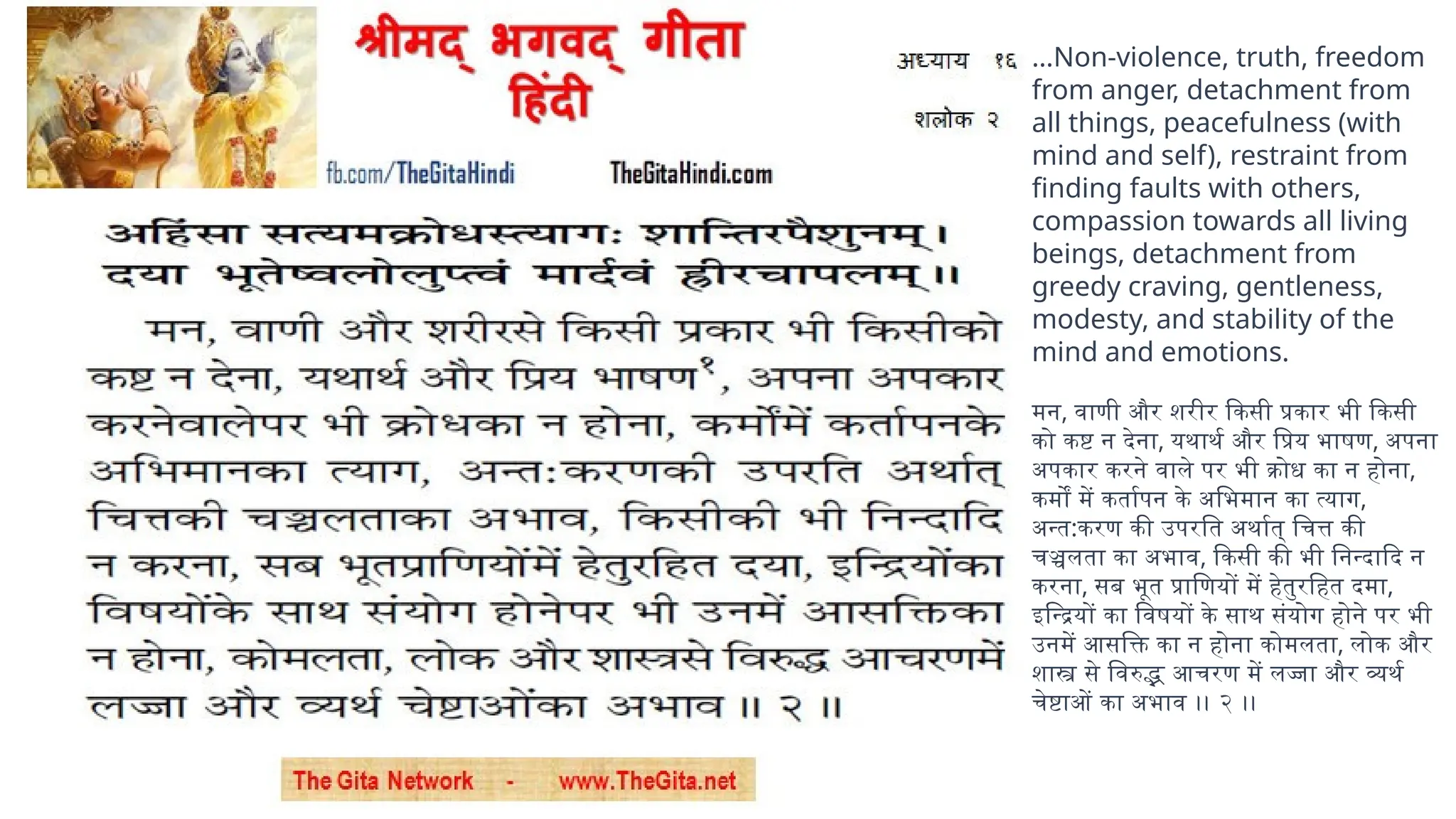
…Non-violence, truth, freedom
fromanger, detachment from
all things, peacefulness (with
mind and self), restraint from
finding faults with others,
compassion towards all living
beings, detachment from
greedy craving, gentleness,
modesty, and stability of the
mind and emotions.
मन, वाणी और शरीर किसी प्रकार भी किसी
को कष्ट न देना, यथार्थ और प्रिय भाषण, अपना
अपकार करने वाले पर भी क्रोध का न होना,
कर्मों में कर्तापन के अभिमान का त्याग,
अन्त:करण की उपरति अर्थात् चित्त की
चञ्चलता का अभाव, किसी की भी निन्दादि न
करना, सब भूत प्राणियों में हेतुरहित दमा,
इन्द्रियों का विषयों के साथ संयोग होने पर भी
उनमें आसक्ति का न होना कोमलता, लोक और
शास्त्र से विरुद्भ आचरण में लज्जा और व्यर्थ
चेष्टाओं का अभाव ।। २ ।।
9.
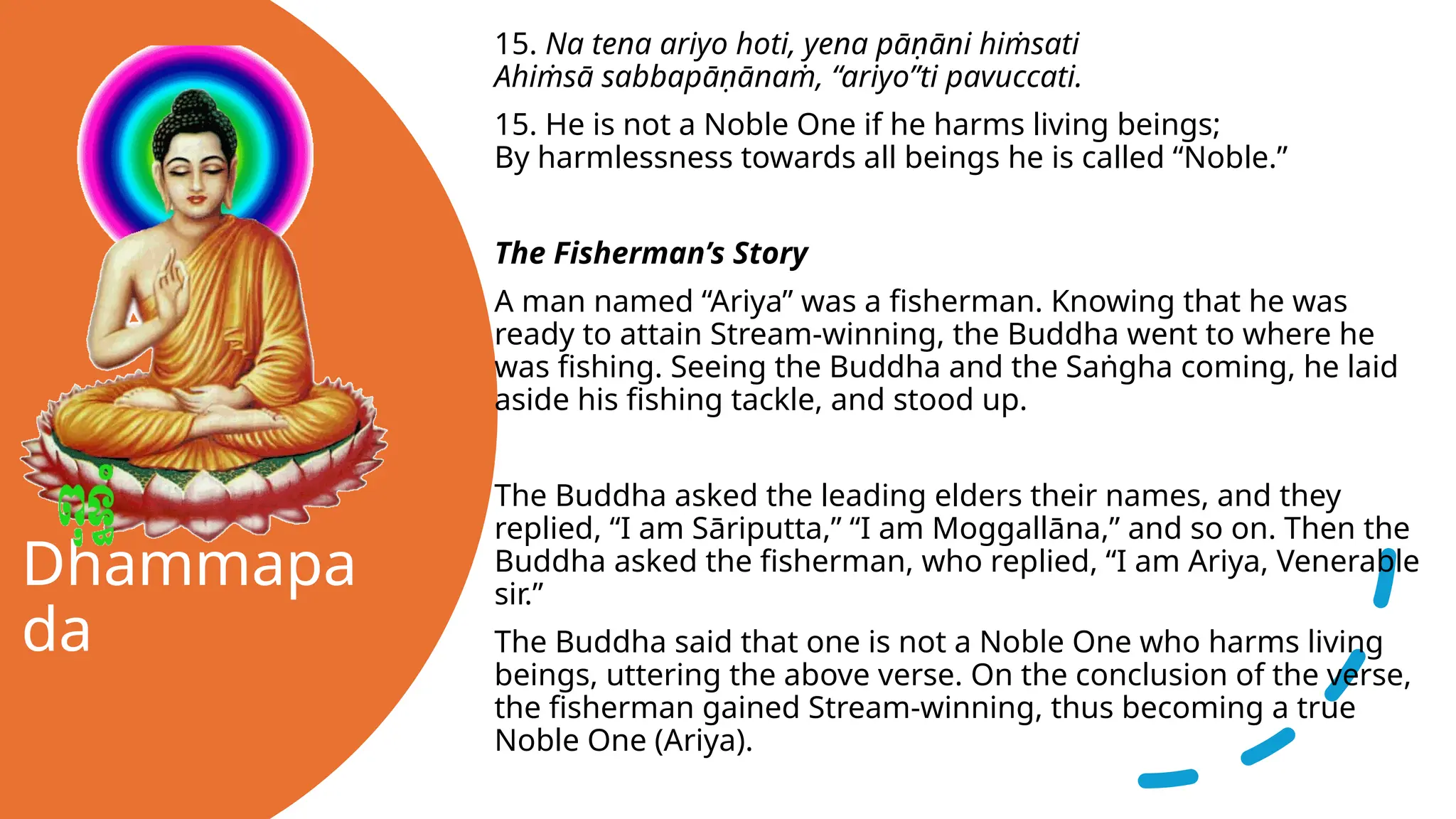
Dhammapa
da
15. Na tenaariyo hoti, yena pāṇāni hiṁsati
Ahiṁsā sabbapāṇānaṁ, “ariyo”ti pavuccati.
15. He is not a Noble One if he harms living beings;
By harmlessness towards all beings he is called “Noble.”
The Fisherman’s Story
A man named “Ariya” was a fisherman. Knowing that he was
ready to attain Stream-winning, the Buddha went to where he
was fishing. Seeing the Buddha and the Saṅgha coming, he laid
aside his fishing tackle, and stood up.
The Buddha asked the leading elders their names, and they
replied, “I am Sāriputta,” “I am Moggallāna,” and so on. Then the
Buddha asked the fisherman, who replied, “I am Ariya, Venerable
sir.”
The Buddha said that one is not a Noble One who harms living
beings, uttering the above verse. On the conclusion of the verse,
the fisherman gained Stream-winning, thus becoming a true
Noble One (Ariya).
10.
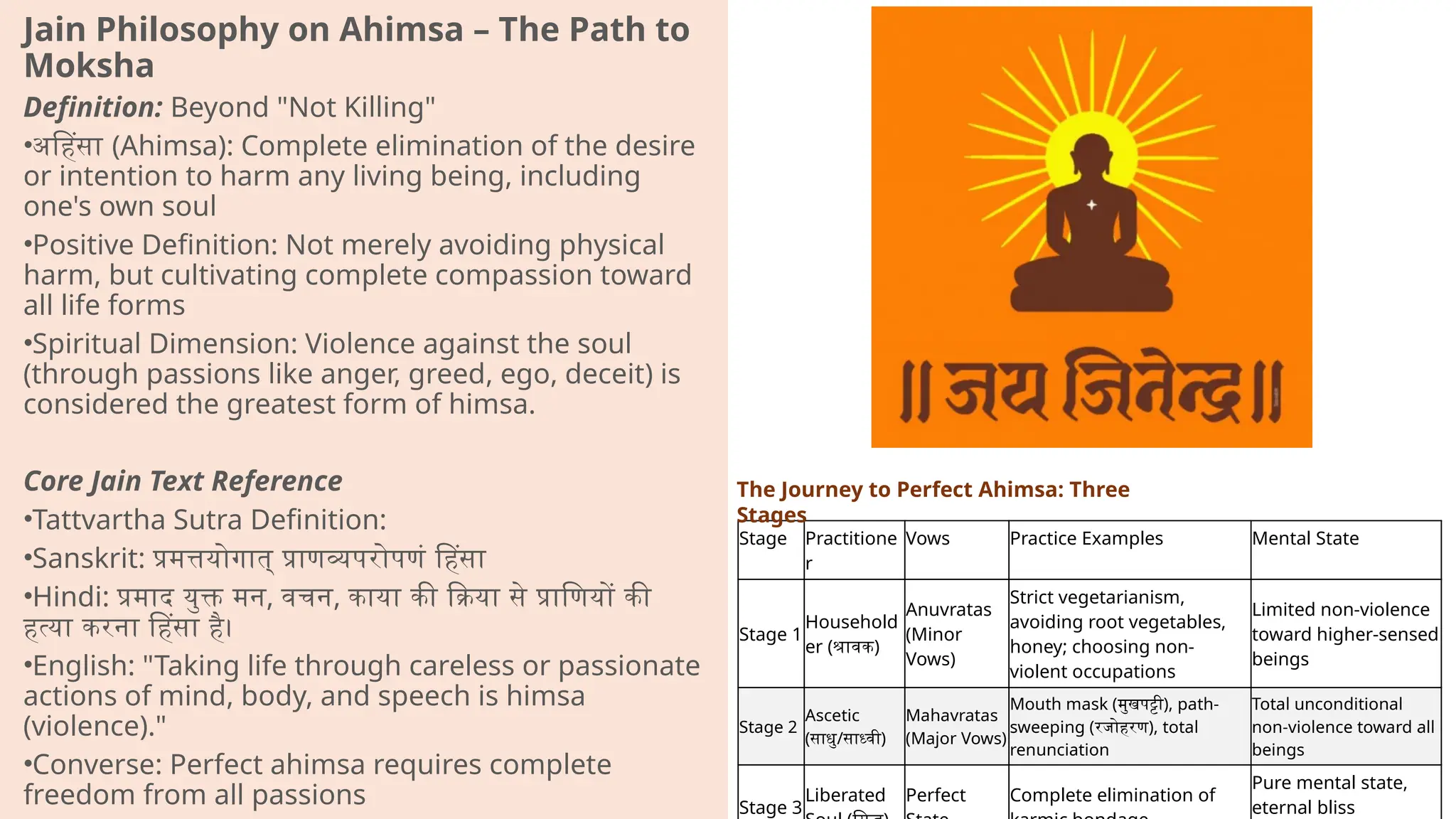
Jain Philosophy onAhimsa – The Path to
Moksha
Definition: Beyond "Not Killing"
•अहिंसा (Ahimsa): Complete elimination of the desire
or intention to harm any living being, including
one's own soul
•Positive Definition: Not merely avoiding physical
harm, but cultivating complete compassion toward
all life forms
•Spiritual Dimension: Violence against the soul
(through passions like anger, greed, ego, deceit) is
considered the greatest form of himsa.
Core Jain Text Reference
•Tattvartha Sutra Definition:
•Sanskrit: प्रमत्तयोगात् प्राणव्यपरोपणं हिंसा
•Hindi: प्रमाद युक्त मन, वचन, काया की क्रिया से प्राणियों की
हत्या करना हिंसा है।
•English: "Taking life through careless or passionate
actions of mind, body, and speech is himsa
(violence)."
•Converse: Perfect ahimsa requires complete
freedom from all passions
Stage Practitione
r
Vows Practice Examples Mental State
Stage 1
Household
er (श्रावक)
Anuvratas
(Minor
Vows)
Strict vegetarianism,
avoiding root vegetables,
honey; choosing non-
violent occupations
Limited non-violence
toward higher-sensed
beings
Stage 2
Ascetic
(साधु/साध्वी)
Mahavratas
(Major Vows)
Mouth mask (मुखपट्टी), path-
sweeping (रजोहरण), total
renunciation
Total unconditional
non-violence toward all
beings
Stage 3
Liberated Perfect Complete elimination of
Pure mental state,
eternal bliss
The Journey to Perfect Ahimsa: Three
Stages
11.
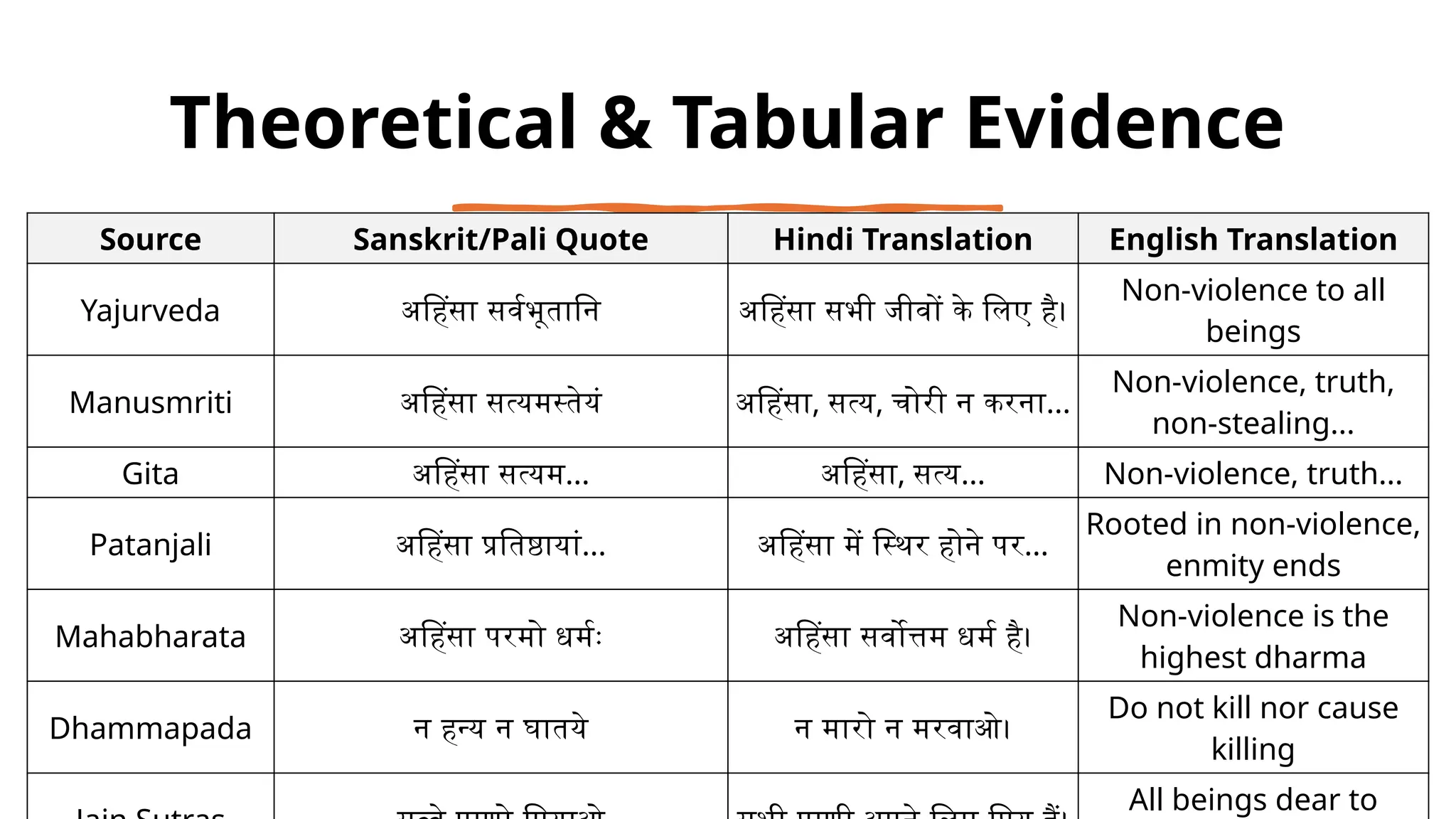
Theoretical & TabularEvidence
Source Sanskrit/Pali Quote Hindi Translation English Translation
Yajurveda अहिंसा सर्वभूतानि अहिंसा सभी जीवों के लिए है।
Non-violence to all
beings
Manusmriti अहिंसा सत्यमस्तेयं अहिंसा, सत्य, चोरी न करना...
Non-violence, truth,
non-stealing...
Gita अहिंसा सत्यम... अहिंसा, सत्य... Non-violence, truth...
Patanjali अहिंसा प्रतिष्ठायां... अहिंसा में स्थिर होने पर...
Rooted in non-violence,
enmity ends
Mahabharata अहिंसा परमो धर्मः अहिंसा सर्वोत्तम धर्म है।
Non-violence is the
highest dharma
Dhammapada न हन्य न घातये न मारो न मरवाओ।
Do not kill nor cause
killing
All beings dear to
12.
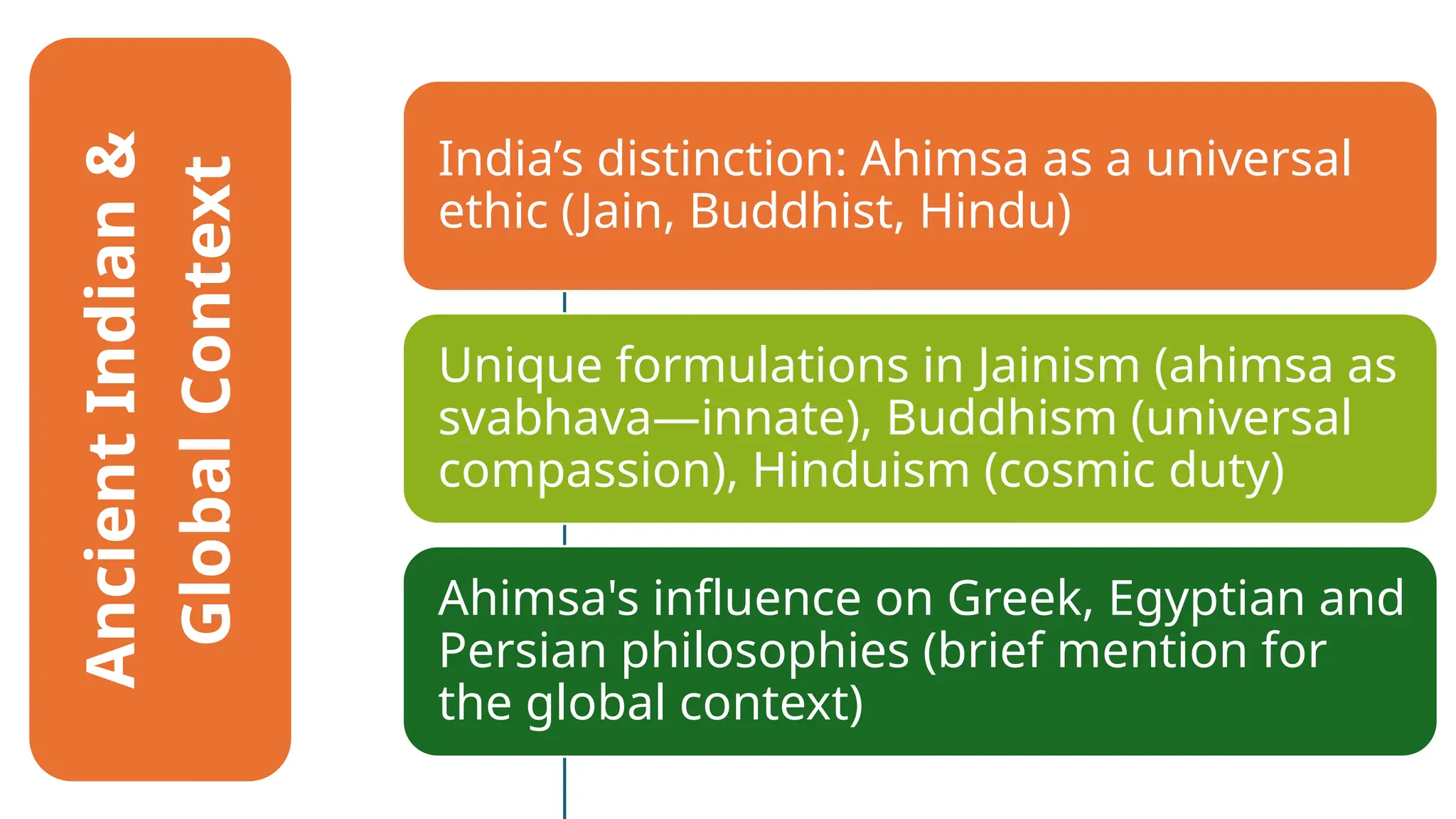
India’s distinction: Ahimsaas a universal
ethic (Jain, Buddhist, Hindu)
Unique formulations in Jainism (ahimsa as
svabhava—innate), Buddhism (universal
compassion), Hinduism (cosmic duty)
Ahimsa's influence on Greek, Egyptian and
Persian philosophies (brief mention for
the global context)
Ancient
Indian
&
Global
Context
13.
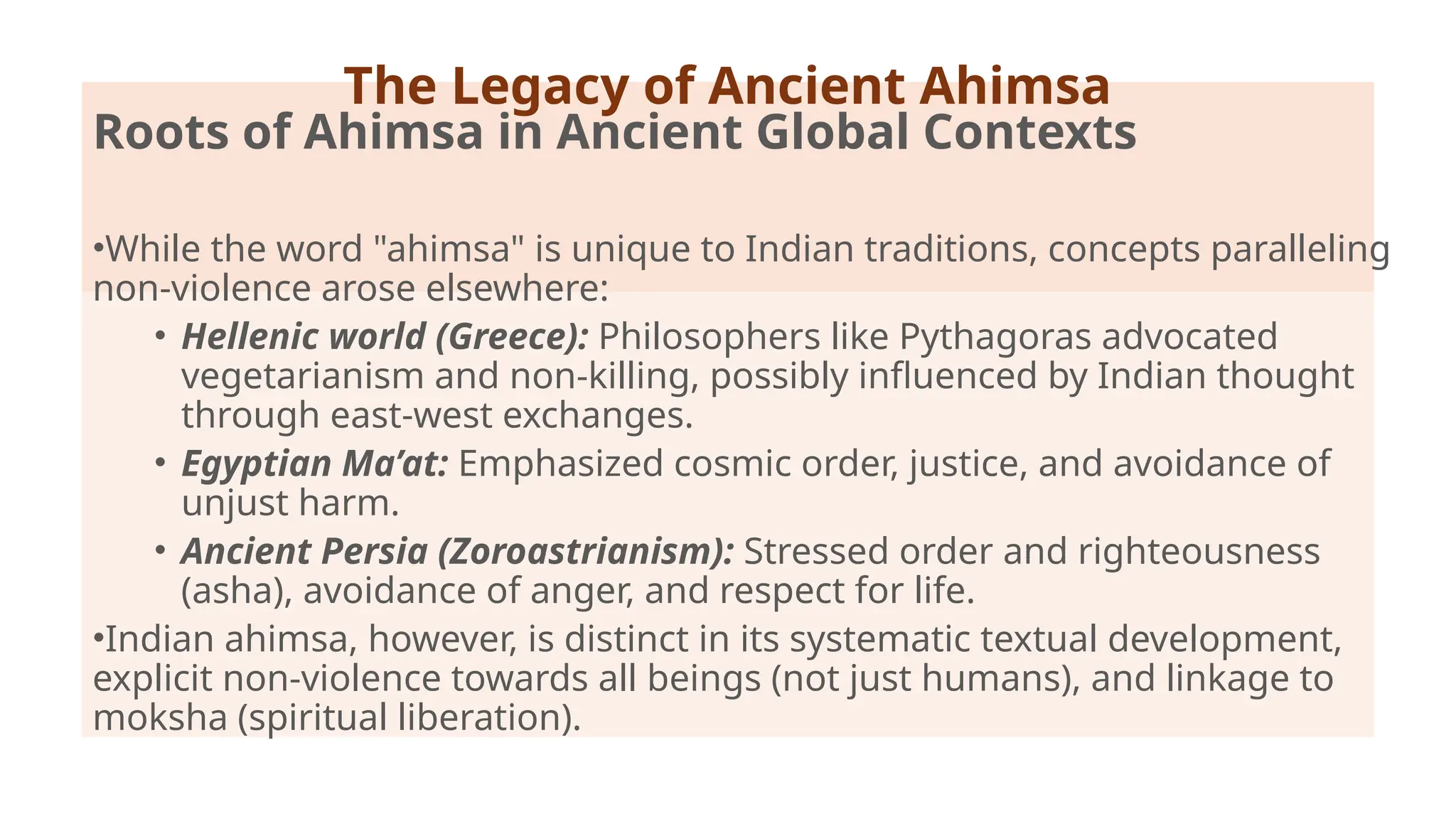
Roots of Ahimsain Ancient Global Contexts
•While the word "ahimsa" is unique to Indian traditions, concepts paralleling
non-violence arose elsewhere:
• Hellenic world (Greece): Philosophers like Pythagoras advocated
vegetarianism and non-killing, possibly influenced by Indian thought
through east-west exchanges.
• Egyptian Ma’at: Emphasized cosmic order, justice, and avoidance of
unjust harm.
• Ancient Persia (Zoroastrianism): Stressed order and righteousness
(asha), avoidance of anger, and respect for life.
•Indian ahimsa, however, is distinct in its systematic textual development,
explicit non-violence towards all beings (not just humans), and linkage to
moksha (spiritual liberation).
The Legacy of Ancient Ahimsa
14.
The Legacy ofAncient Ahimsa
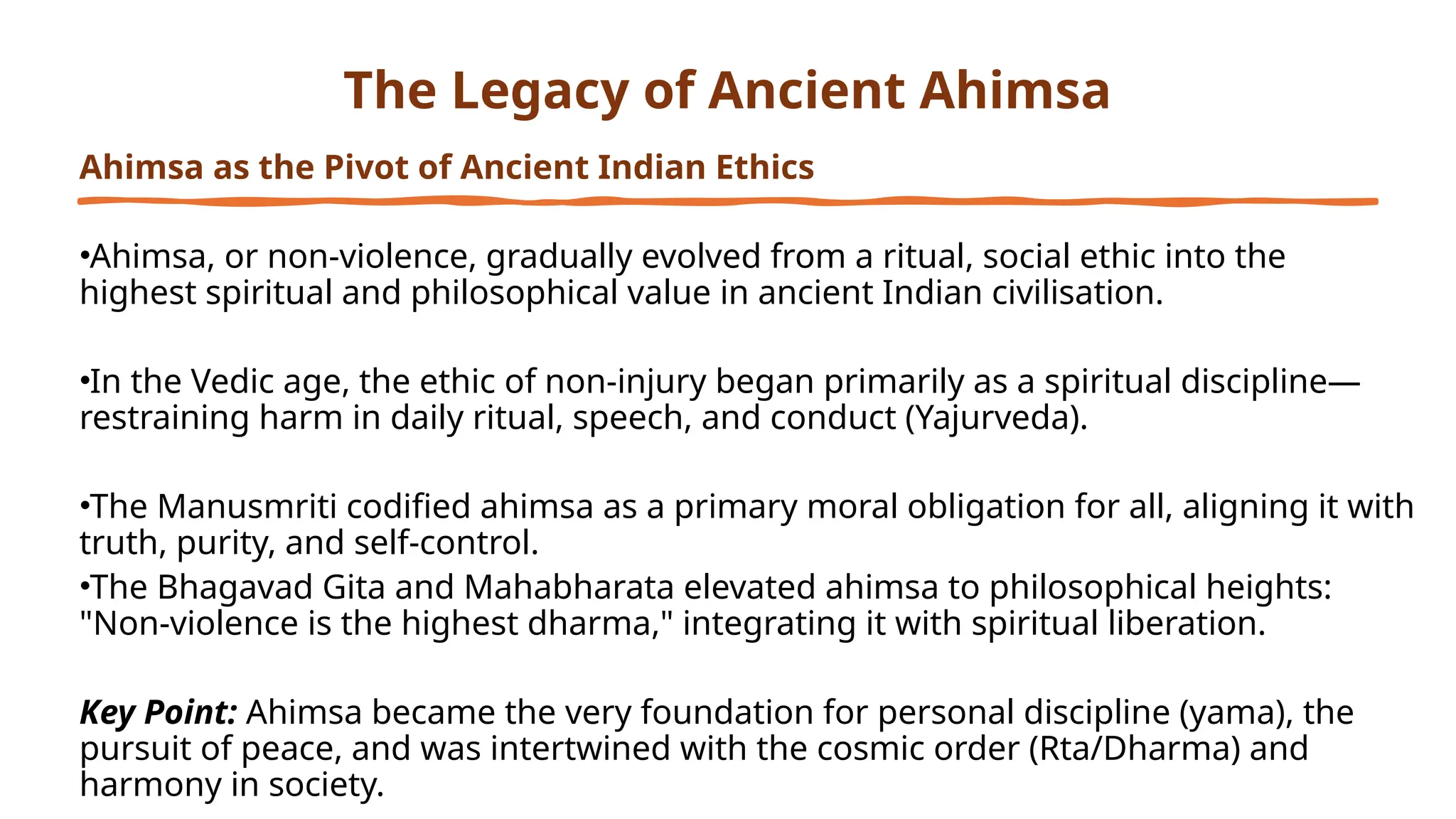
Ahimsa as the Pivot of Ancient Indian Ethics
•Ahimsa, or non-violence, gradually evolved from a ritual, social ethic into the
highest spiritual and philosophical value in ancient Indian civilisation.
•In the Vedic age, the ethic of non-injury began primarily as a spiritual discipline—
restraining harm in daily ritual, speech, and conduct (Yajurveda).
•The Manusmriti codified ahimsa as a primary moral obligation for all, aligning it with
truth, purity, and self-control.
•The Bhagavad Gita and Mahabharata elevated ahimsa to philosophical heights:
"Non-violence is the highest dharma," integrating it with spiritual liberation.
Key Point: Ahimsa became the very foundation for personal discipline (yama), the
pursuit of peace, and was intertwined with the cosmic order (Rta/Dharma) and
harmony in society.
15.
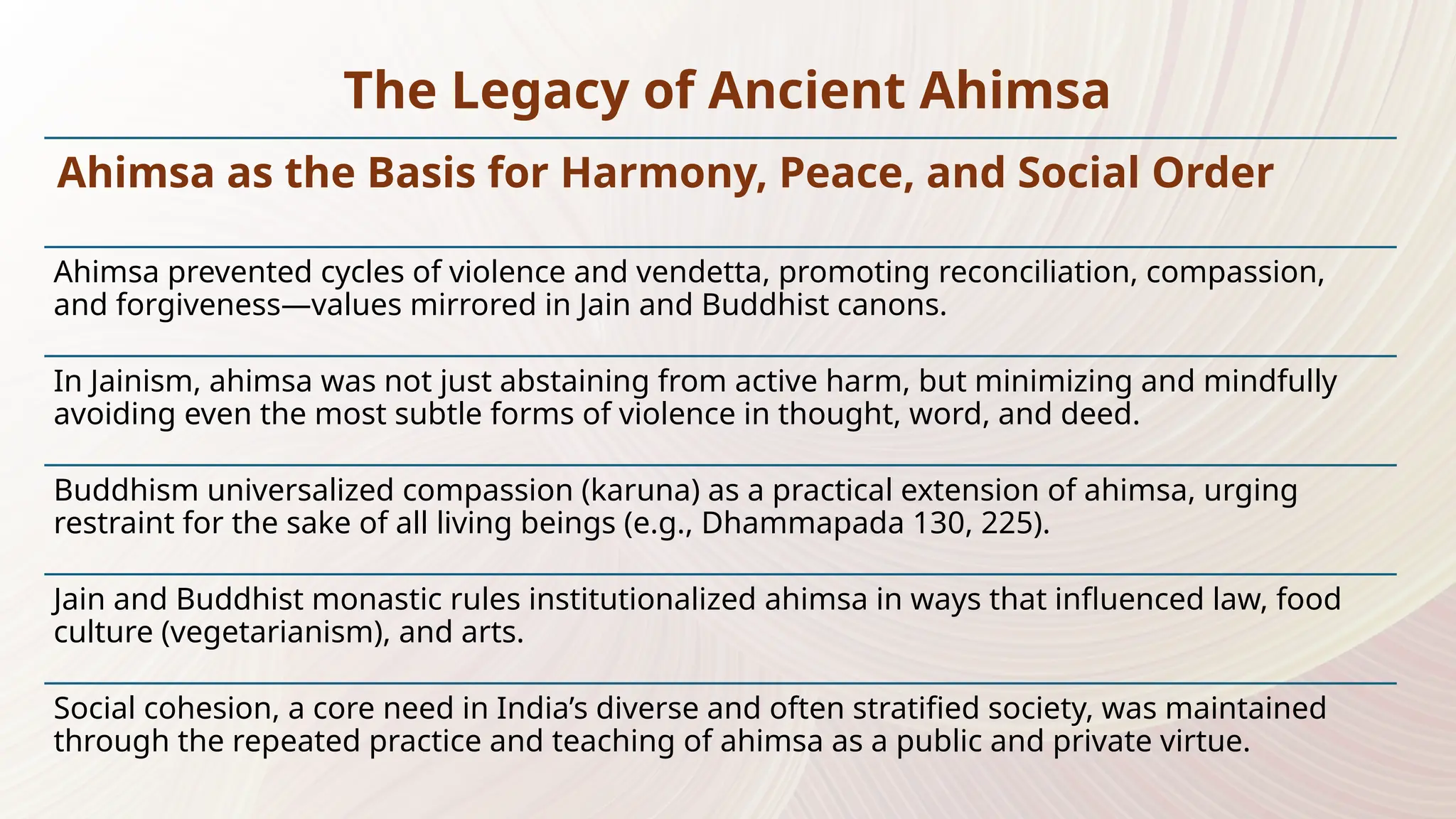
Ahimsa as theBasis for Harmony, Peace, and Social Order
Ahimsa prevented cycles of violence and vendetta, promoting reconciliation, compassion,
and forgiveness—values mirrored in Jain and Buddhist canons.
In Jainism, ahimsa was not just abstaining from active harm, but minimizing and mindfully
avoiding even the most subtle forms of violence in thought, word, and deed.
Buddhism universalized compassion (karuna) as a practical extension of ahimsa, urging
restraint for the sake of all living beings (e.g., Dhammapada 130, 225).
Jain and Buddhist monastic rules institutionalized ahimsa in ways that influenced law, food
culture (vegetarianism), and arts.
Social cohesion, a core need in India’s diverse and often stratified society, was maintained
through the repeated practice and teaching of ahimsa as a public and private virtue.
The Legacy of Ancient Ahimsa
16.
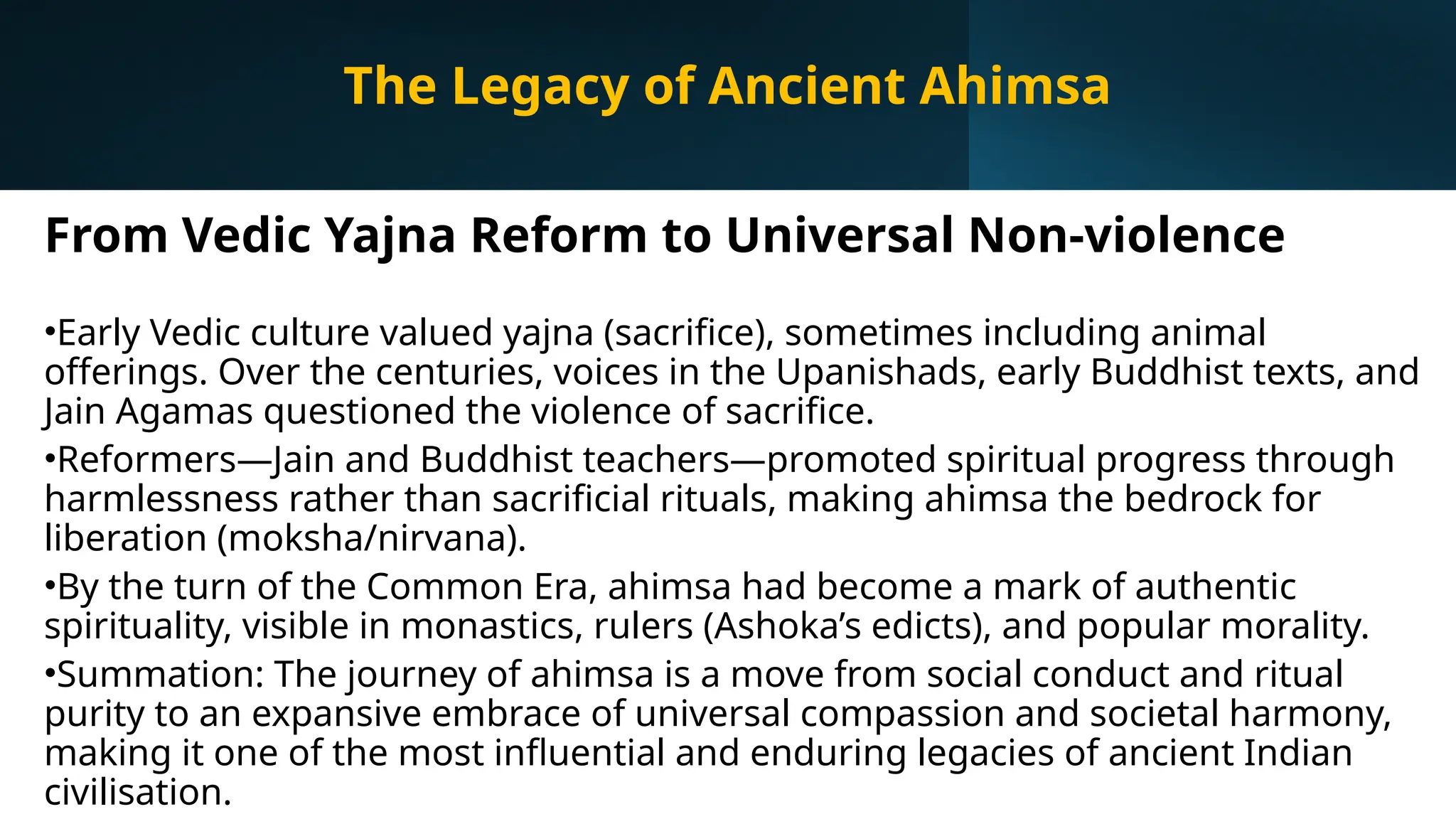
From Vedic YajnaReform to Universal Non-violence
•Early Vedic culture valued yajna (sacrifice), sometimes including animal
offerings. Over the centuries, voices in the Upanishads, early Buddhist texts, and
Jain Agamas questioned the violence of sacrifice.
•Reformers—Jain and Buddhist teachers—promoted spiritual progress through
harmlessness rather than sacrificial rituals, making ahimsa the bedrock for
liberation (moksha/nirvana).
•By the turn of the Common Era, ahimsa had become a mark of authentic
spirituality, visible in monastics, rulers (Ashoka’s edicts), and popular morality.
•Summation: The journey of ahimsa is a move from social conduct and ritual
purity to an expansive embrace of universal compassion and societal harmony,
making it one of the most influential and enduring legacies of ancient Indian
civilisation.
The Legacy of Ancient Ahimsa
17.
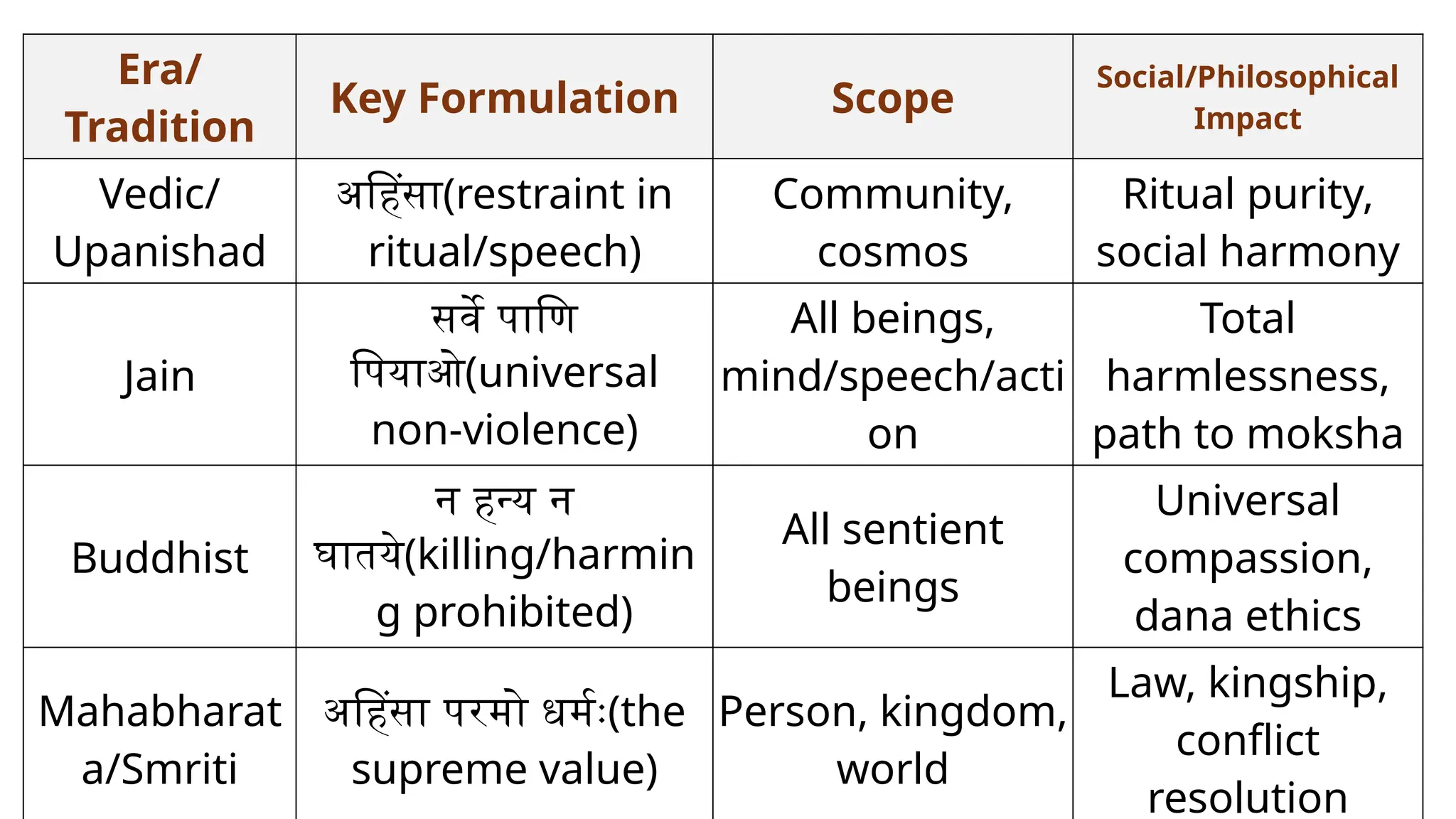
Era/
Tradition
Key Formulation Scope
Social/Philosophical
Impact
Vedic/
Upanishad
अहिंसा(restraintin
ritual/speech)
Community,
cosmos
Ritual purity,
social harmony
Jain
सर्वे पाणि
पियाओ(universal
non-violence)
All beings,
mind/speech/acti
on
Total
harmlessness,
path to moksha
Buddhist
न हन्य न
घातये(killing/harmin
g prohibited)
All sentient
beings
Universal
compassion,
dana ethics
Mahabharat
a/Smriti
अहिंसा परमो धर्मः(the
supreme value)
Person, kingdom,
world
Law, kingship,
conflict
resolution
18.
Course Title AMD301: Indian Knowledge System
Sachin Kr. Tiwary
sachintiwary@bhu.ac.i
B.A. (Hons.) Sem.III_MD
UNIT-II : Indian Ethical and Moral Values
NEXT TOPIC:
6. Traditional Indian Environmental ethics