NON-PROBABILITY
SAMPLING
Non-probability sampling is a sampling
technique where the odds of any
member being selected for a sample
cannot be calculated.
TYPES OF SAMPLING
O CONVINIENCE SAMPLING
O JUDGMENTAL SAMPLING
O QUOTA SAMPLING
O SNOWBALL SAMPLING
CONVINIENCE SAMPLING
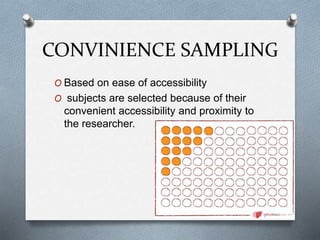
O Based on ease of accessibility
O subjects are selected because of their
convenient accessibility and proximity to
the researcher.
JUDGMENTAL SAMPLING
O researcher selects units to be sampled
based on their knowledge and
professional judgment.
O Hand picking from accesisible population
those individual judged most appropriate
for the study.
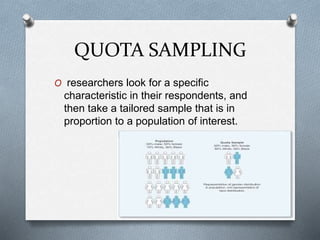
QUOTA SAMPLING
O researchers look for a specific
characteristic in their respondents, and
then take a tailored sample that is in
proportion to a population of interest.
SNOWBALL SAMPLING
O Snowball sampling is choosing the
participants to find more participants for
making a sample group
O Mostly researchers used this sampling
technique where participants are difficult
to locate in a general population.
THANKYO
U
!!

Non probability sampling

  • 1.
    NON-PROBABILITY SAMPLING Non-probability sampling isa sampling technique where the odds of any member being selected for a sample cannot be calculated.
  • 2.
    TYPES OF SAMPLING OCONVINIENCE SAMPLING O JUDGMENTAL SAMPLING O QUOTA SAMPLING O SNOWBALL SAMPLING
  • 3.
    CONVINIENCE SAMPLING O Basedon ease of accessibility O subjects are selected because of their convenient accessibility and proximity to the researcher.
  • 5.
    JUDGMENTAL SAMPLING O researcherselects units to be sampled based on their knowledge and professional judgment. O Hand picking from accesisible population those individual judged most appropriate for the study.
  • 7.
    QUOTA SAMPLING O researcherslook for a specific characteristic in their respondents, and then take a tailored sample that is in proportion to a population of interest.
  • 9.
    SNOWBALL SAMPLING O Snowballsampling is choosing the participants to find more participants for making a sample group O Mostly researchers used this sampling technique where participants are difficult to locate in a general population.
  • 11.