Perspectives on research and policy on
weight loss and obesity in men’s health

       Weigh to Men’s Health
       Belfast 8th June 2011

           Noel Richardson PhD
            Centre for Men’s Health
        Institute of Technology Carlow
         Noel.richardson@itcarlow.ie
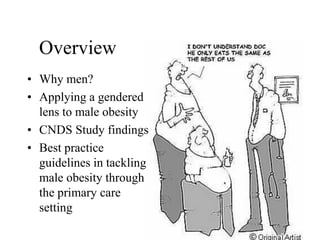
Overview
• Why men?
• Applying a gendered
  lens to male obesity
• CNDS Study findings
• Best practice
  guidelines in tackling
  male obesity through
  the primary care
  setting
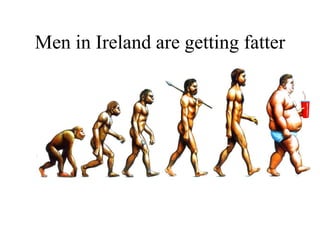
Men in Ireland are getting fatter
• Obesity levels in men have more than tripled since
  1990 (up from 7.8% in 1990 to 25.8% in 2011)
  and have quadrupled in 51-64 year old men
  (10.7% to 42.1%)
                                 (IUNA, 2011)
• Central (or visceral) obesity is more prevalent
  among men than women and is associated with an
  increased risk of hypertension, diabetes and
  metabolic syndrome
            (World Health Organisation 2009)
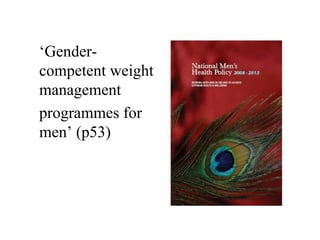
‘Gender-
competent weight
management
programmes for
men’ (p53)
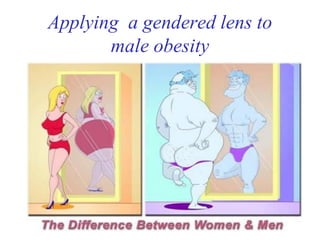
Applying a gendered lens to
       male obesity
1. Men’s diets are less healthy than women’s
   diets
2. Men who are overweight/obese tend not to
   see their [excess] weight as a cause of
   concern
3. Men tend to lack control over their diets
   and are less knowledgeable about healthy
   eating
4. Men’s dietary habits tend to be adversely
   influenced by working unsociable hours
5. Men’s approach to food tends to be
   pleasure-oriented
6. ‘Bigness’ is associated with more
   dominant notions of masculinity
7. Men can often be resistant to healthy
   eating messages or to being told what to
   eat
8. Men are much less likely than women to
   consider dieting as a means to weight-loss
9. Men tend to view exercise and sport as a
   more acceptable means of trying to lose or
   maintain weight
10.Men are more open to dietary change or to
   losing weight when prompted to do so by
   their GP
Key findings from the Community Nutrition and
 Dietician Service (CNDS) Study HSE South
 • Quantitative Phase 1
 (i) a review of HSE (South) referrals data for the year 2008
 (ii) phone questionnaires with 67 obese men who had
     previously attended the CNDS in 2008
 • Qualitative Phase 2
 Semi-structured interviews with a purposive sub-sample of
   obese men (n=10)
 • Qualitative Phase 3
 Two focus groups with CNDS dieticians (n=16)
• Men are less likely than women to be
  referred for lifestyle counselling for obesity
Men comprised just 38% (n=3,200) of overall referrals
  (n=8,424) to the CNDS in 2008...
• Addressing Obesity as a Health Issue – ‘the
  elephant in the room’
Obesity typically presents as a secondary rather than a
  primary condition
Spotlight on other chronic conditions rather than ‘just’
  overweight/obesity
• Relationship between obesity, identity, self
  concept and self-esteem
  Depression, anxiety, feeling embarrassed, emasculated and
  physically disabled by their weight were frequently cited
  as consequences of excess weight
• Tailored lifestyle interventions have a key
  role to play in tackling male obesity
  The CNDS was credited with having a major impact on
  men’s dietary and lifestyle behaviours.
• Lifestyle behaviour change targeted at men
  should emphasise personal choice and
  responsibility
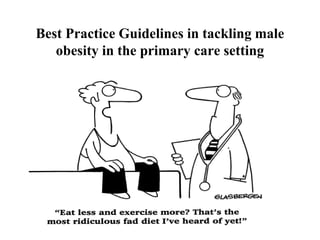
Best Practice Guidelines in tackling male
   obesity in the primary care setting
1. Don’t ignore the problem [of male obesity]
   GPs have a crucial role to play
2. Adopt a ‘shared investment’ approach to
   lifestyle change
3. Increase the breadth and capacity of
   primary care teams to deal with obesity
   Exercise referral, mental health & addiction services
4. Consider the impact of key ‘transitional’
   periods in men’s lives
5. Account for and anticipate likely problems
   or barriers to weight-loss
6. Place a strong focus on physical activity as a
  means to weight loss for men
7. Use practical approaches when working with men
8. Provide long term follow up with men to enable
  them to sustain lifestyle changes
9. Not all men are the same
10. Provide training for primary care teams on how to
  work effectively with men
• (i) increasing men’s awareness of the potential ill effects of excess
  weight; (ii) ensuring that discussions on weight are an in-built and a
  natural part of GPs’ consultations with men; (iii) availing of
  opportunistic brief interventions with men in relation to their weight;
  (iv) adopting a client-centred approach to weight loss; (v) improving
  lines of communication between dieticians and GPs in relation to
  referrals; and (vi) using BMI and/or waist circumference measurements
  as a routine part of all consultations
Noel richardson

Noel richardson

  • 1.
    Perspectives on researchand policy on weight loss and obesity in men’s health Weigh to Men’s Health Belfast 8th June 2011 Noel Richardson PhD Centre for Men’s Health Institute of Technology Carlow Noel.richardson@itcarlow.ie
  • 2.
    Overview • Why men? •Applying a gendered lens to male obesity • CNDS Study findings • Best practice guidelines in tackling male obesity through the primary care setting
  • 3.
    Men in Irelandare getting fatter
  • 4.
    • Obesity levelsin men have more than tripled since 1990 (up from 7.8% in 1990 to 25.8% in 2011) and have quadrupled in 51-64 year old men (10.7% to 42.1%) (IUNA, 2011) • Central (or visceral) obesity is more prevalent among men than women and is associated with an increased risk of hypertension, diabetes and metabolic syndrome (World Health Organisation 2009)
  • 5.
  • 6.
    Applying a genderedlens to male obesity
  • 7.
    1. Men’s dietsare less healthy than women’s diets 2. Men who are overweight/obese tend not to see their [excess] weight as a cause of concern 3. Men tend to lack control over their diets and are less knowledgeable about healthy eating 4. Men’s dietary habits tend to be adversely influenced by working unsociable hours 5. Men’s approach to food tends to be pleasure-oriented
  • 8.
    6. ‘Bigness’ isassociated with more dominant notions of masculinity 7. Men can often be resistant to healthy eating messages or to being told what to eat 8. Men are much less likely than women to consider dieting as a means to weight-loss 9. Men tend to view exercise and sport as a more acceptable means of trying to lose or maintain weight 10.Men are more open to dietary change or to losing weight when prompted to do so by their GP
  • 9.
    Key findings fromthe Community Nutrition and Dietician Service (CNDS) Study HSE South • Quantitative Phase 1 (i) a review of HSE (South) referrals data for the year 2008 (ii) phone questionnaires with 67 obese men who had previously attended the CNDS in 2008 • Qualitative Phase 2 Semi-structured interviews with a purposive sub-sample of obese men (n=10) • Qualitative Phase 3 Two focus groups with CNDS dieticians (n=16)
  • 10.
    • Men areless likely than women to be referred for lifestyle counselling for obesity Men comprised just 38% (n=3,200) of overall referrals (n=8,424) to the CNDS in 2008... • Addressing Obesity as a Health Issue – ‘the elephant in the room’ Obesity typically presents as a secondary rather than a primary condition Spotlight on other chronic conditions rather than ‘just’ overweight/obesity
  • 11.
    • Relationship betweenobesity, identity, self concept and self-esteem Depression, anxiety, feeling embarrassed, emasculated and physically disabled by their weight were frequently cited as consequences of excess weight • Tailored lifestyle interventions have a key role to play in tackling male obesity The CNDS was credited with having a major impact on men’s dietary and lifestyle behaviours. • Lifestyle behaviour change targeted at men should emphasise personal choice and responsibility
  • 12.
    Best Practice Guidelinesin tackling male obesity in the primary care setting
  • 13.
    1. Don’t ignorethe problem [of male obesity] GPs have a crucial role to play 2. Adopt a ‘shared investment’ approach to lifestyle change 3. Increase the breadth and capacity of primary care teams to deal with obesity Exercise referral, mental health & addiction services 4. Consider the impact of key ‘transitional’ periods in men’s lives 5. Account for and anticipate likely problems or barriers to weight-loss
  • 14.
    6. Place astrong focus on physical activity as a means to weight loss for men 7. Use practical approaches when working with men 8. Provide long term follow up with men to enable them to sustain lifestyle changes 9. Not all men are the same 10. Provide training for primary care teams on how to work effectively with men • (i) increasing men’s awareness of the potential ill effects of excess weight; (ii) ensuring that discussions on weight are an in-built and a natural part of GPs’ consultations with men; (iii) availing of opportunistic brief interventions with men in relation to their weight; (iv) adopting a client-centred approach to weight loss; (v) improving lines of communication between dieticians and GPs in relation to referrals; and (vi) using BMI and/or waist circumference measurements as a routine part of all consultations