A N I N T R O D U C T I O N
# N O S Q L
NoSQL
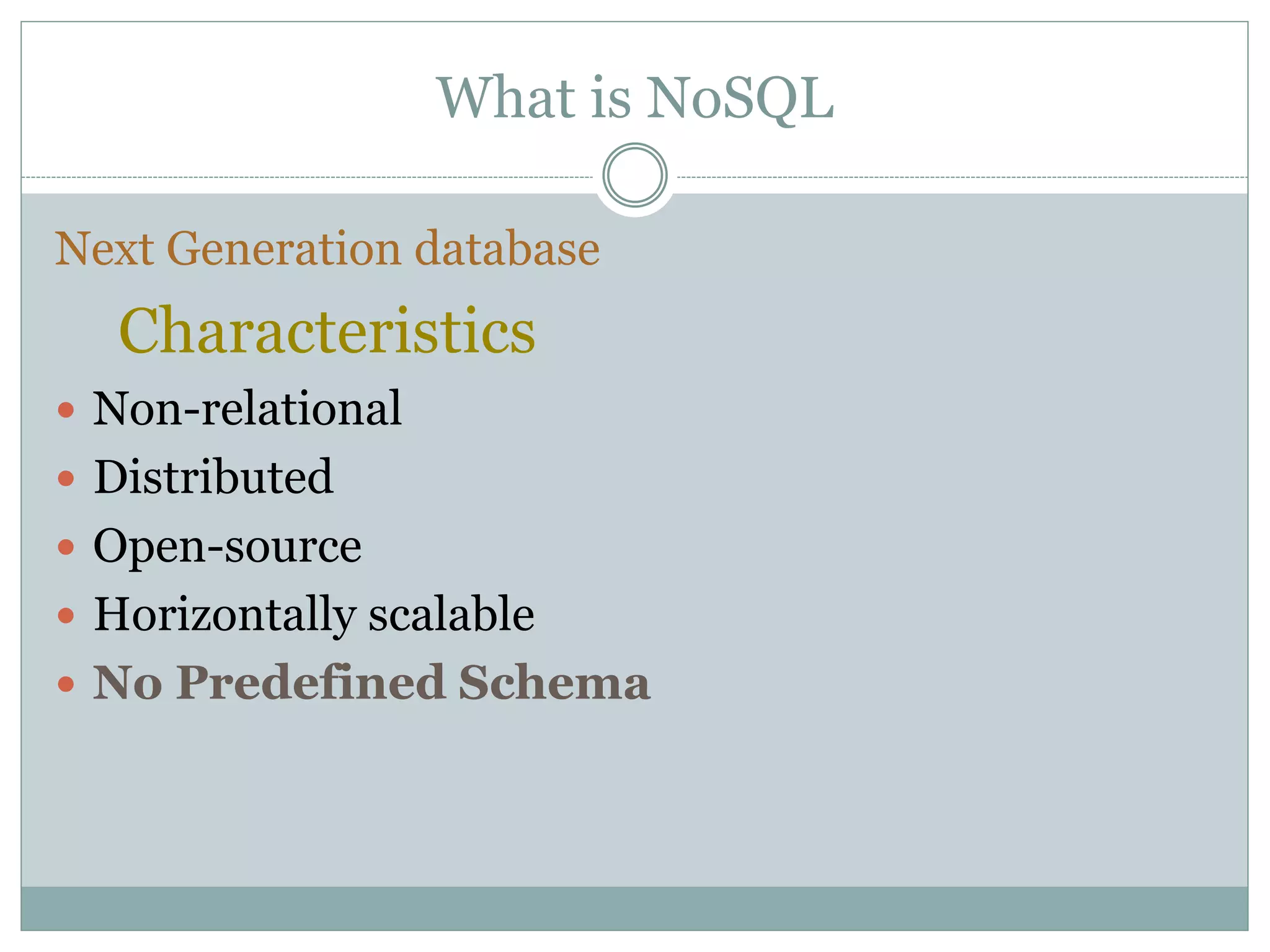
What is NoSQL
Next Generation database
Characteristics
 Non-relational
 Distributed
 Open-source
 Horizontally scalable
 No Predefined Schema
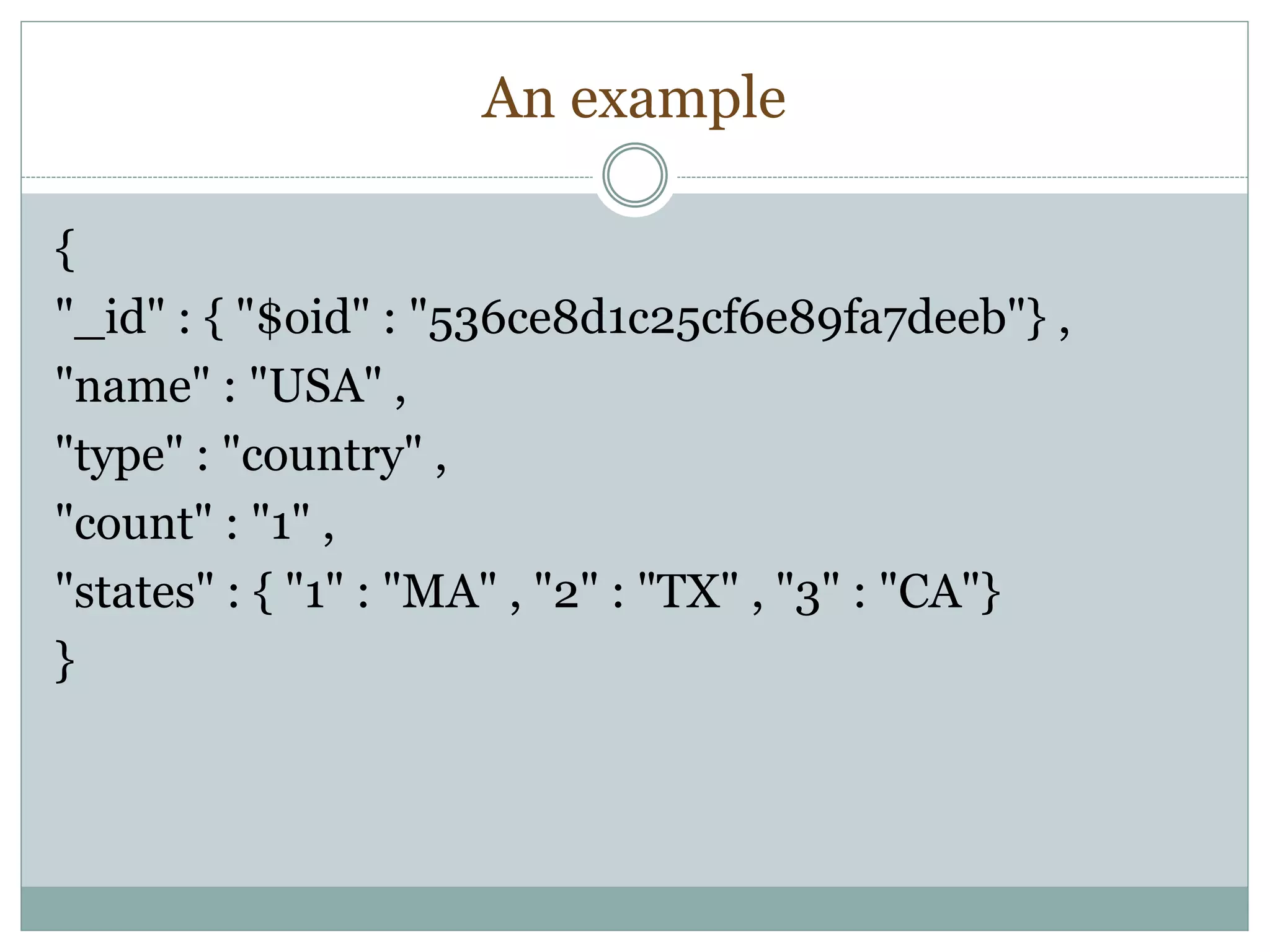
An example
{
"_id" : { "$oid" : "536ce8d1c25cf6e89fa7deeb"} ,
"name" : "USA" ,
"type" : "country" ,
"count" : "1" ,
"states" : { "1" : "MA" , "2" : "TX" , "3" : "CA"}
}
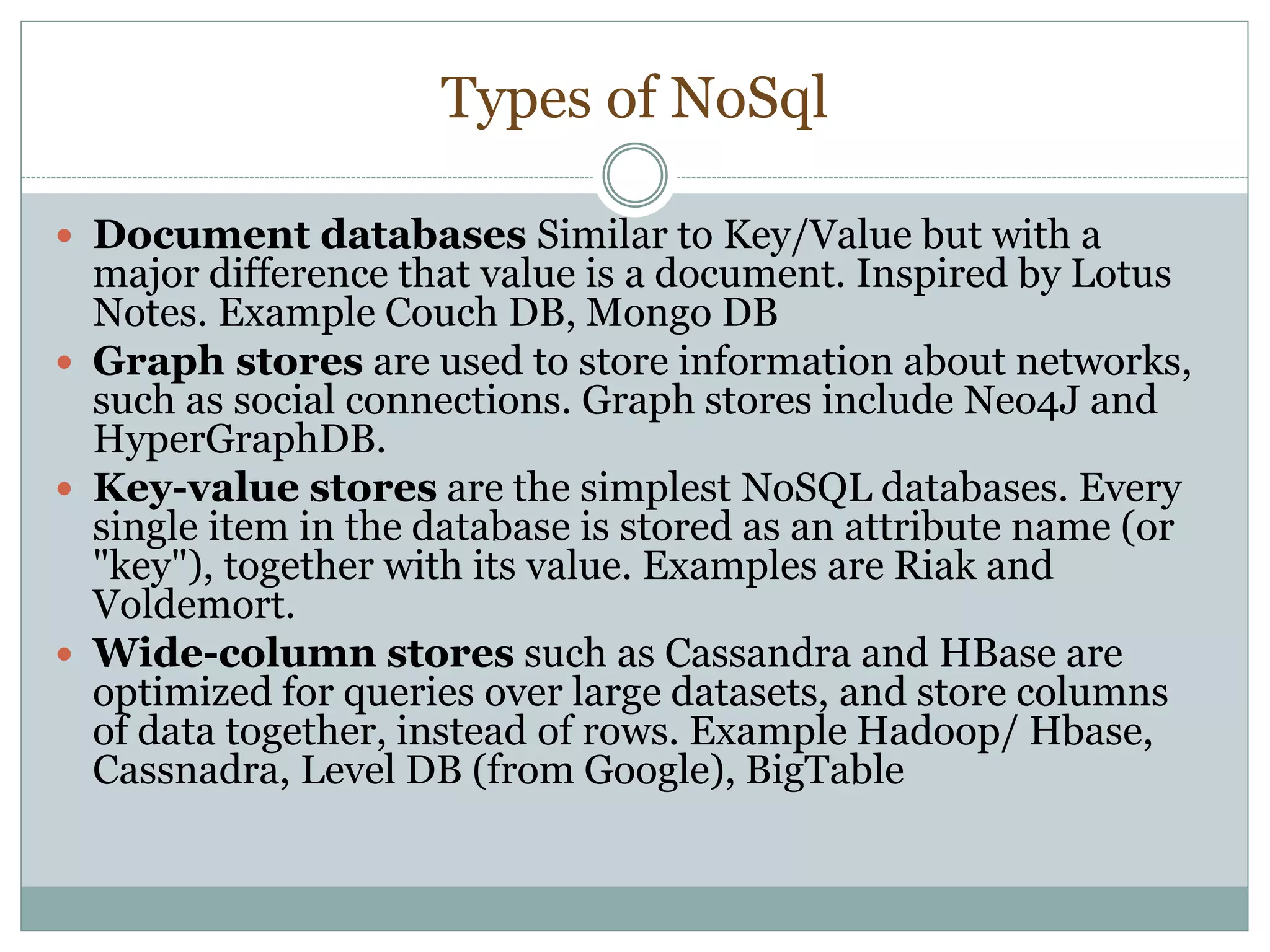
Types of NoSql
 Document databases Similar to Key/Value but with a
major difference that value is a document. Inspired by Lotus
Notes. Example Couch DB, Mongo DB
 Graph stores are used to store information about networks,
such as social connections. Graph stores include Neo4J and
HyperGraphDB.
 Key-value stores are the simplest NoSQL databases. Every
single item in the database is stored as an attribute name (or
"key"), together with its value. Examples are Riak and
Voldemort.
 Wide-column stores such as Cassandra and HBase are
optimized for queries over large datasets, and store columns
of data together, instead of rows. Example Hadoop/ Hbase,
Cassnadra, Level DB (from Google), BigTable
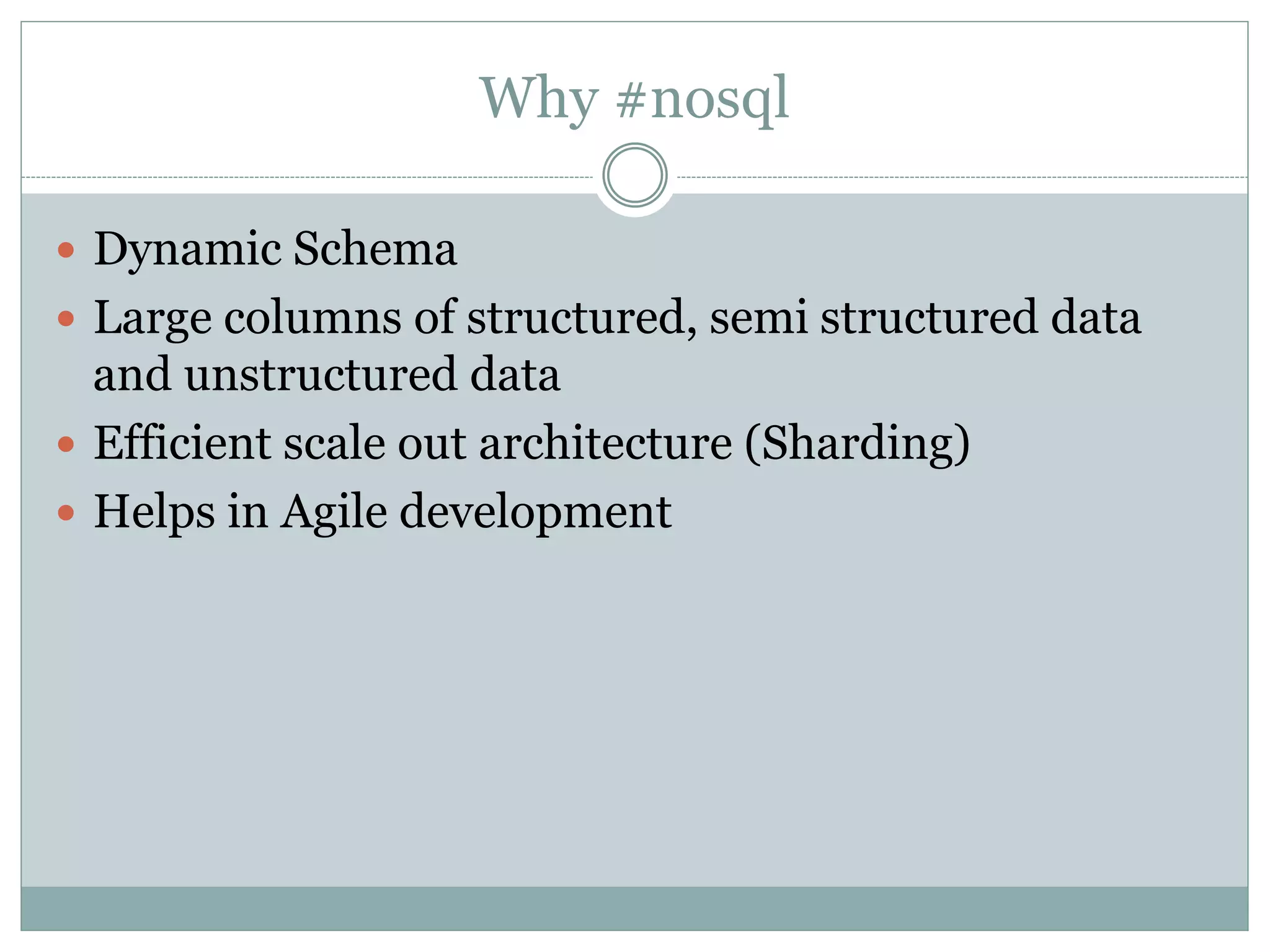
Why #nosql
 Dynamic Schema
 Large columns of structured, semi structured data
and unstructured data
 Efficient scale out architecture (Sharding)
 Helps in Agile development
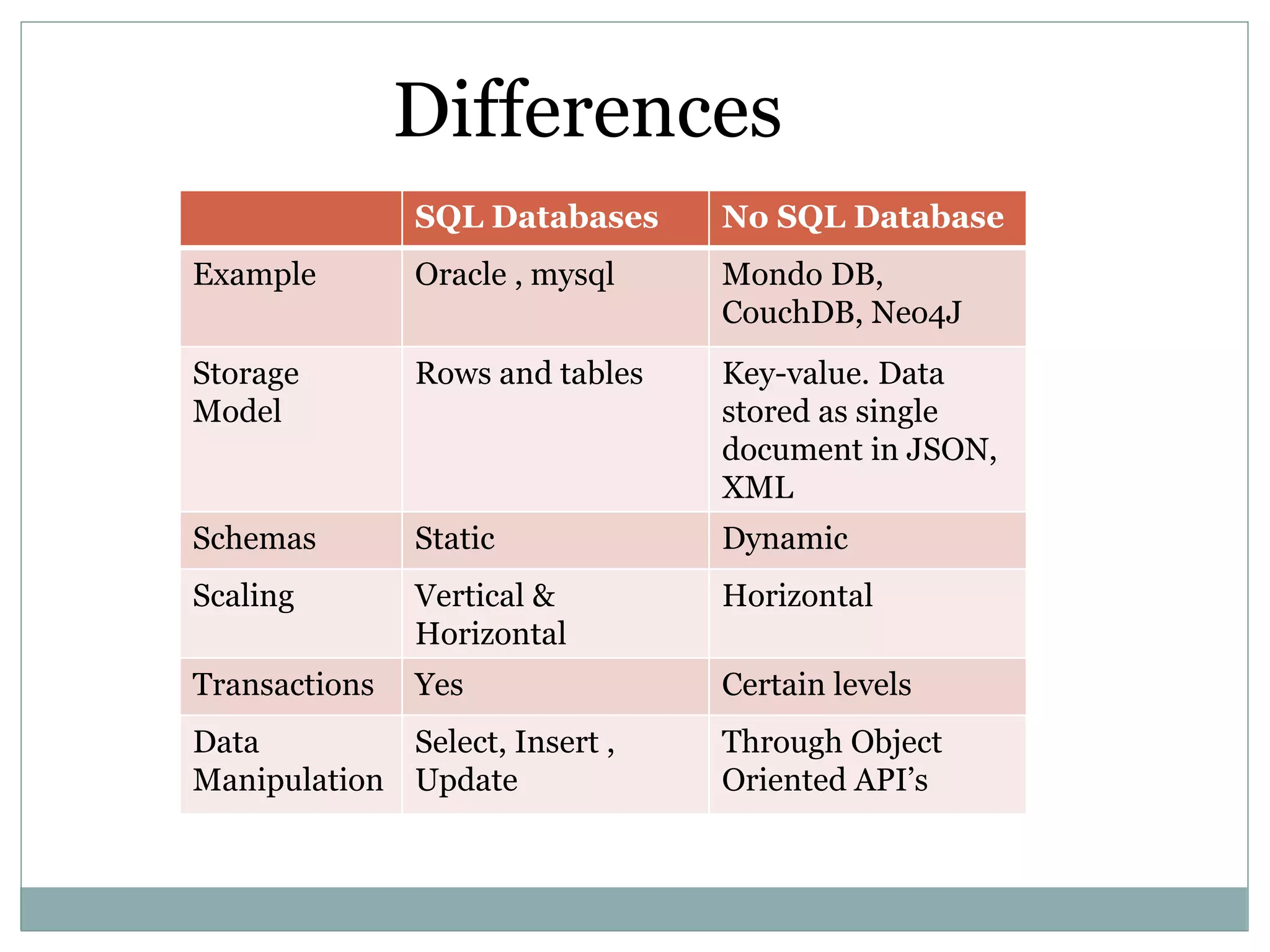
SQL Databases No SQL Database
Example Oracle , mysql Mondo DB,
CouchDB, Neo4J
Storage
Model
Rows and tables Key-value. Data
stored as single
document in JSON,
XML
Schemas Static Dynamic
Scaling Vertical &
Horizontal
Horizontal
Transactions Yes Certain levels
Data
Manipulation
Select, Insert ,
Update
Through Object
Oriented API’s
Differences
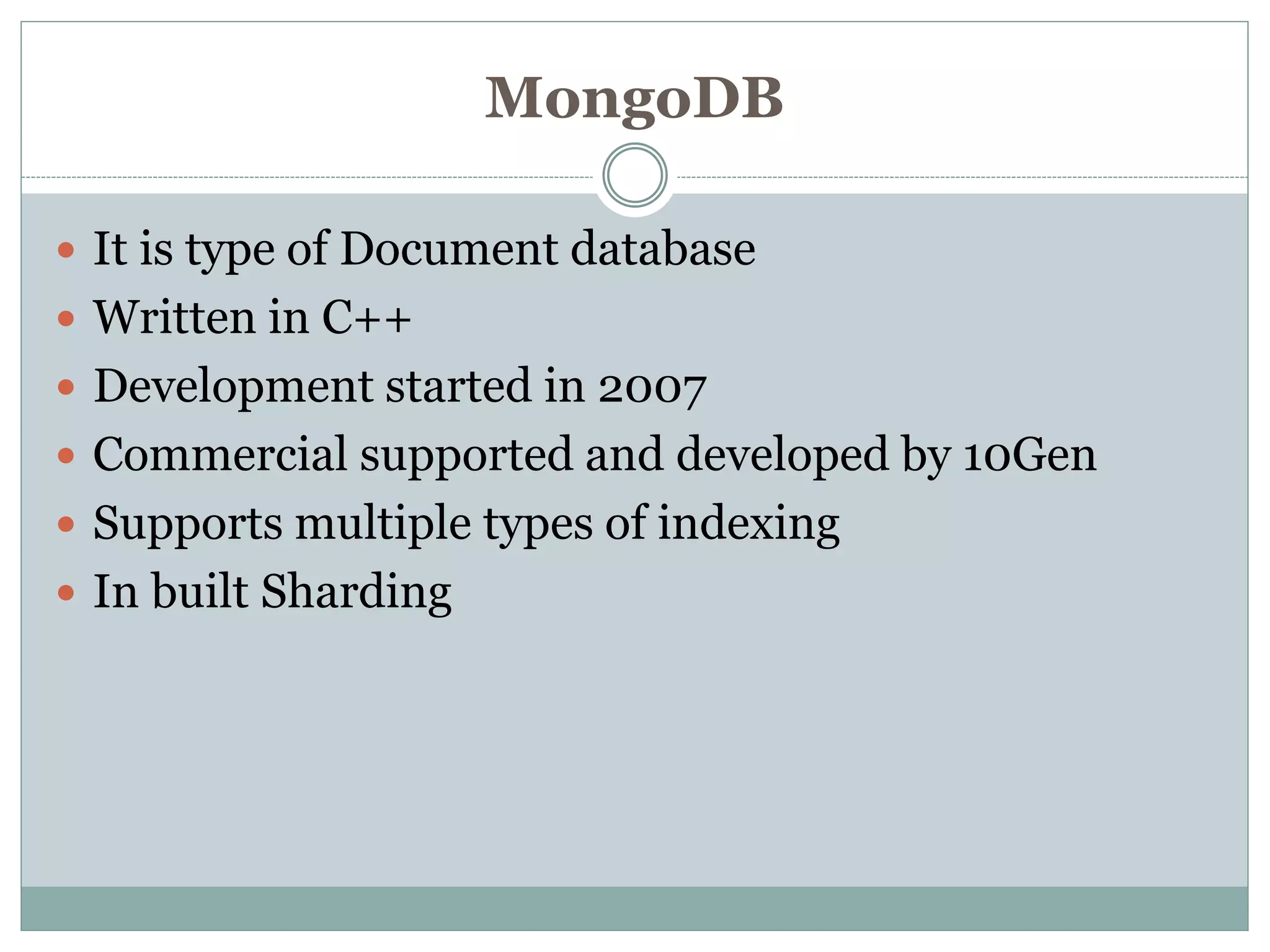
MongoDB
 It is type of Document database
 Written in C++
 Development started in 2007
 Commercial supported and developed by 10Gen
 Supports multiple types of indexing
 In built Sharding
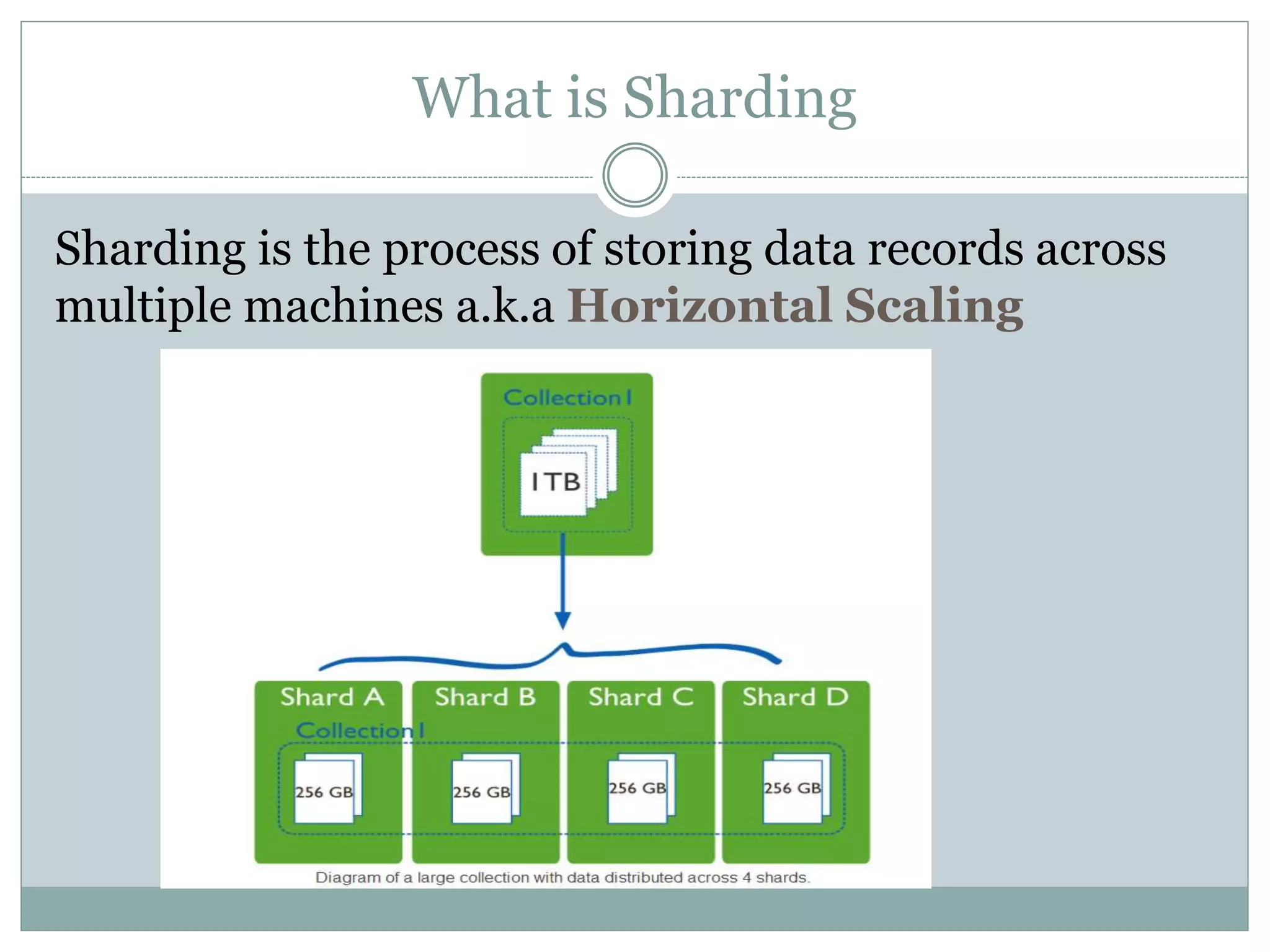
What is Sharding
Sharding is the process of storing data records across
multiple machines a.k.a Horizontal Scaling
References
 http://nosql-database.org/
 http://www.mongodb.com/nosql-explained
 http://www.slideshare.net/dstainer/introduction-
to-nosql-databases

An introduction to Nosql

  • 1.
    A N IN T R O D U C T I O N # N O S Q L NoSQL
  • 2.
    What is NoSQL NextGeneration database Characteristics  Non-relational  Distributed  Open-source  Horizontally scalable  No Predefined Schema
  • 3.
    An example { "_id" :{ "$oid" : "536ce8d1c25cf6e89fa7deeb"} , "name" : "USA" , "type" : "country" , "count" : "1" , "states" : { "1" : "MA" , "2" : "TX" , "3" : "CA"} }
  • 4.
    Types of NoSql Document databases Similar to Key/Value but with a major difference that value is a document. Inspired by Lotus Notes. Example Couch DB, Mongo DB  Graph stores are used to store information about networks, such as social connections. Graph stores include Neo4J and HyperGraphDB.  Key-value stores are the simplest NoSQL databases. Every single item in the database is stored as an attribute name (or "key"), together with its value. Examples are Riak and Voldemort.  Wide-column stores such as Cassandra and HBase are optimized for queries over large datasets, and store columns of data together, instead of rows. Example Hadoop/ Hbase, Cassnadra, Level DB (from Google), BigTable
  • 5.
    Why #nosql  DynamicSchema  Large columns of structured, semi structured data and unstructured data  Efficient scale out architecture (Sharding)  Helps in Agile development
  • 6.
    SQL Databases NoSQL Database Example Oracle , mysql Mondo DB, CouchDB, Neo4J Storage Model Rows and tables Key-value. Data stored as single document in JSON, XML Schemas Static Dynamic Scaling Vertical & Horizontal Horizontal Transactions Yes Certain levels Data Manipulation Select, Insert , Update Through Object Oriented API’s Differences
  • 7.
    MongoDB  It istype of Document database  Written in C++  Development started in 2007  Commercial supported and developed by 10Gen  Supports multiple types of indexing  In built Sharding
  • 8.
    What is Sharding Shardingis the process of storing data records across multiple machines a.k.a Horizontal Scaling
  • 9.
    References  http://nosql-database.org/  http://www.mongodb.com/nosql-explained http://www.slideshare.net/dstainer/introduction- to-nosql-databases