NIST Cybersecurity Framework (CSF) on the
Public Cloud
Topics
• Introduction
• ExampleWorkload: End User Computing
• What can go wrong? Ransomware Incident Response in End User Computing
• End User Computing Security Best Practices
• Modernizing Security Controls
• NIST Cybersecurity Framework
• Adjacent Frameworks
• Public Cloud Services alignment to NIST Cybersecurity Framework
Introduction
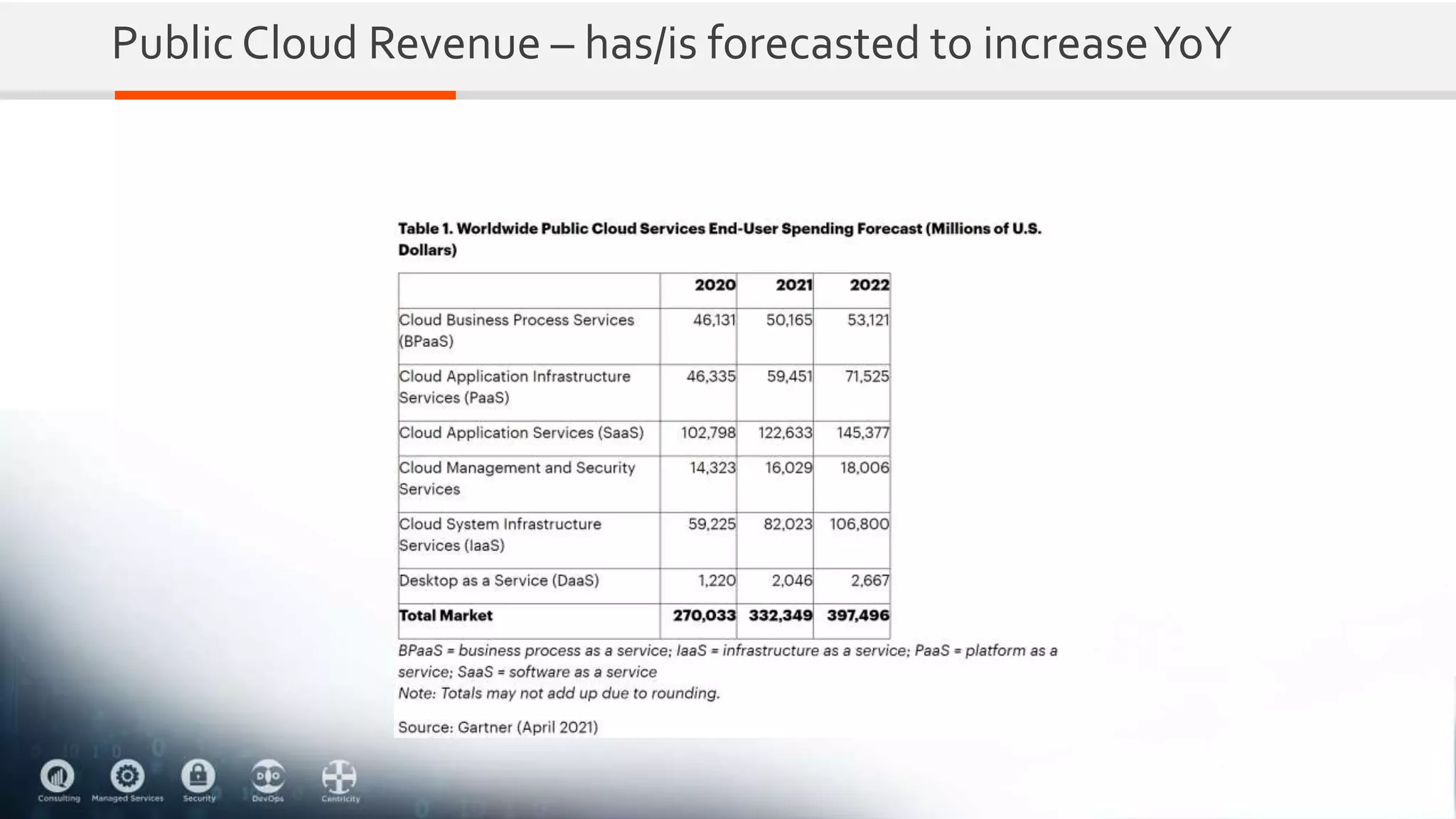
Public Cloud Revenue – has/is forecasted to increaseYoY
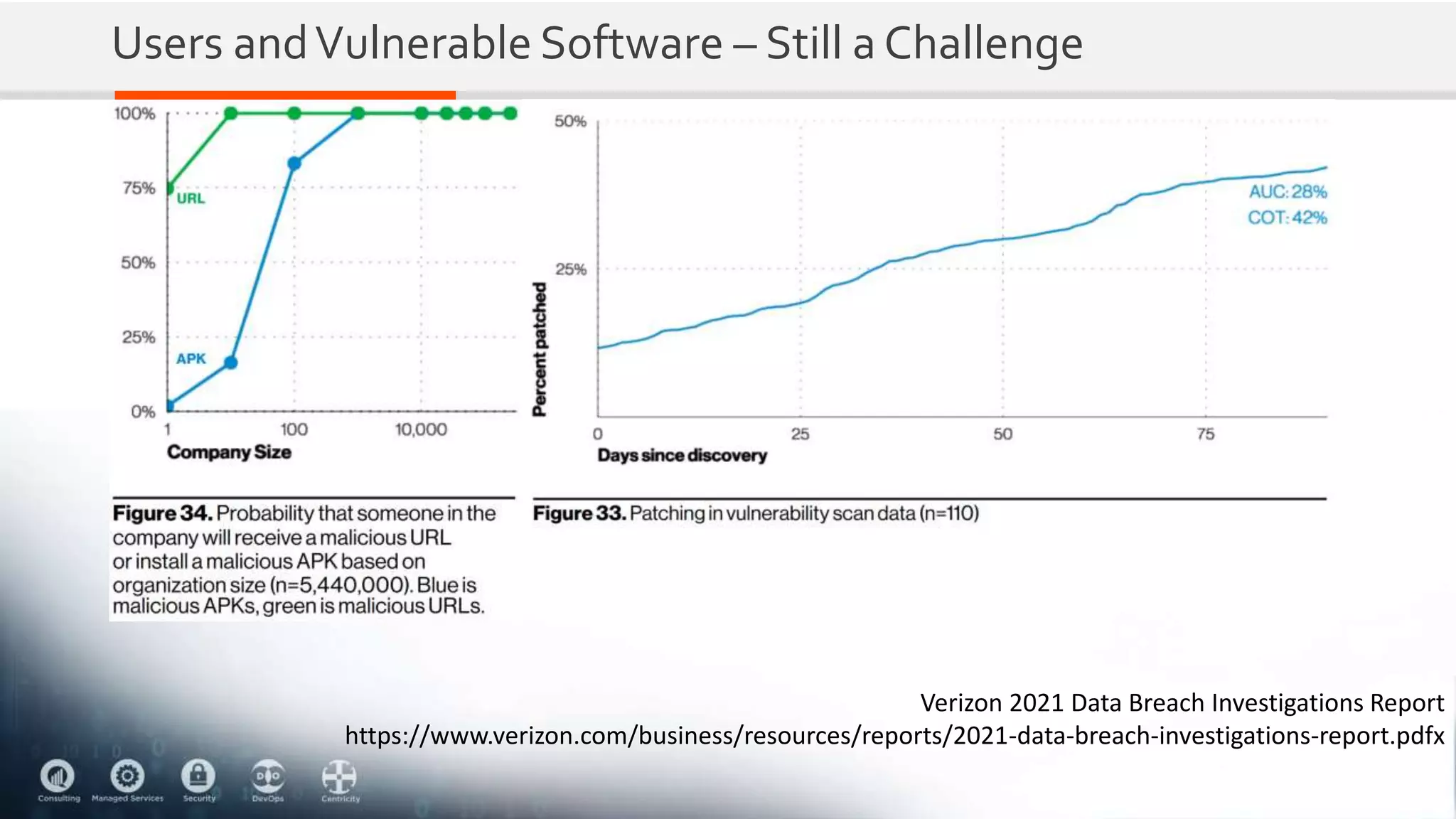
Users andVulnerable Software – Still a Challenge
Verizon 2021 Data Breach Investigations Report
https://www.verizon.com/business/resources/reports/2021-data-breach-investigations-report.pdfx
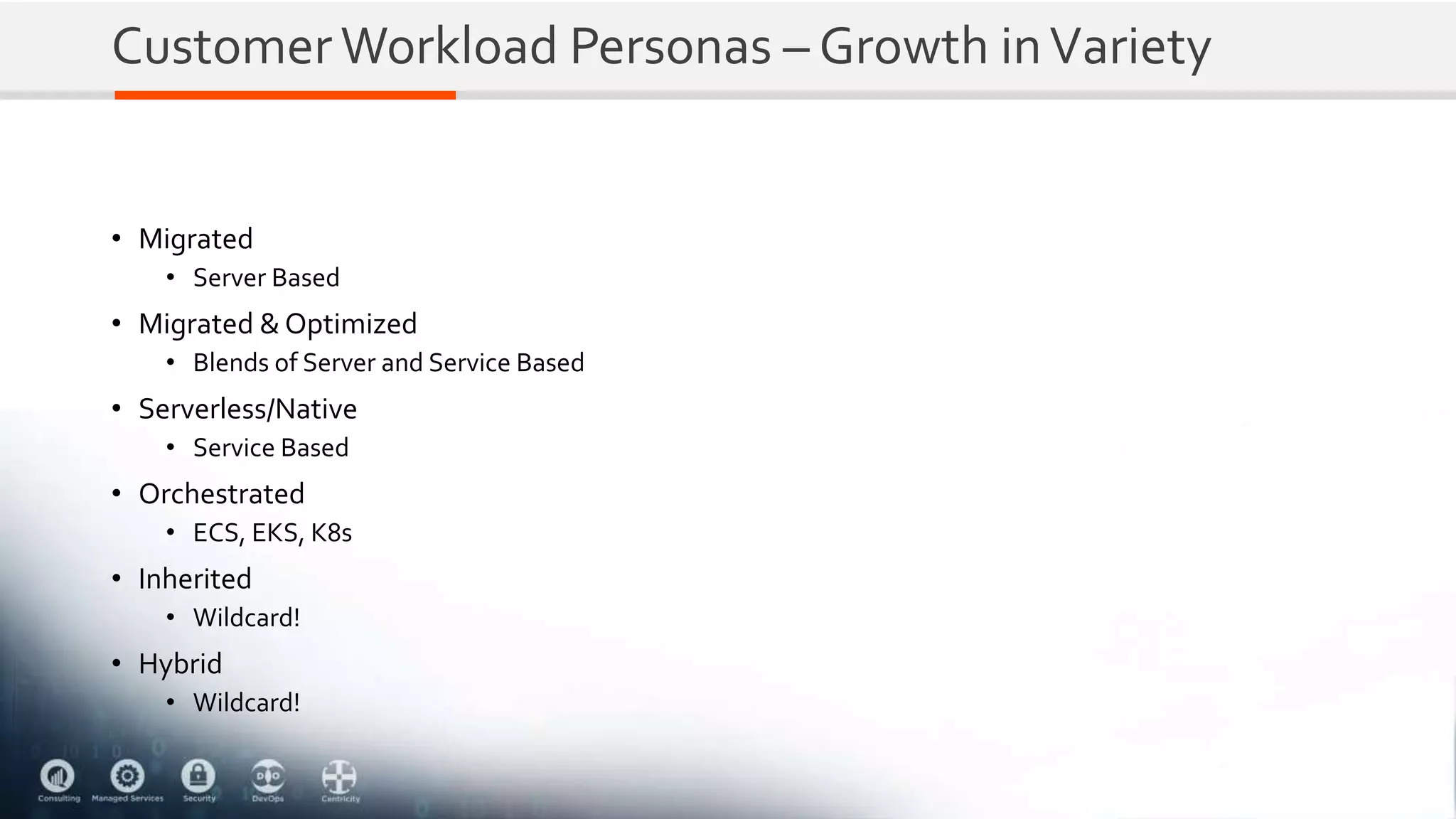
CustomerWorkload Personas – Growth inVariety
• Migrated
• Server Based
• Migrated & Optimized
• Blends of Server and Service Based
• Serverless/Native
• Service Based
• Orchestrated
• ECS, EKS, K8s
• Inherited
• Wildcard!
• Hybrid
• Wildcard!
Service Categories – Also Growth inVariety
• Analytics
• Application Integration
• AR &VR
• AWS Cost Management
• Blockchain
• Business Applications
• Compute
• Customer Engagement
• Database
• Developer Tools
• End User Computing
• GameTech
• Internet ofThings
• Machine Learning
• Management & Governance
• Media Services
• Migration &Transfer
• Mobile
• Networking & Content Delivery
• QuantumTechnologies
• Robotics
• Satellite
• Security, Identity, & Compliance
• Storage
The Scenario
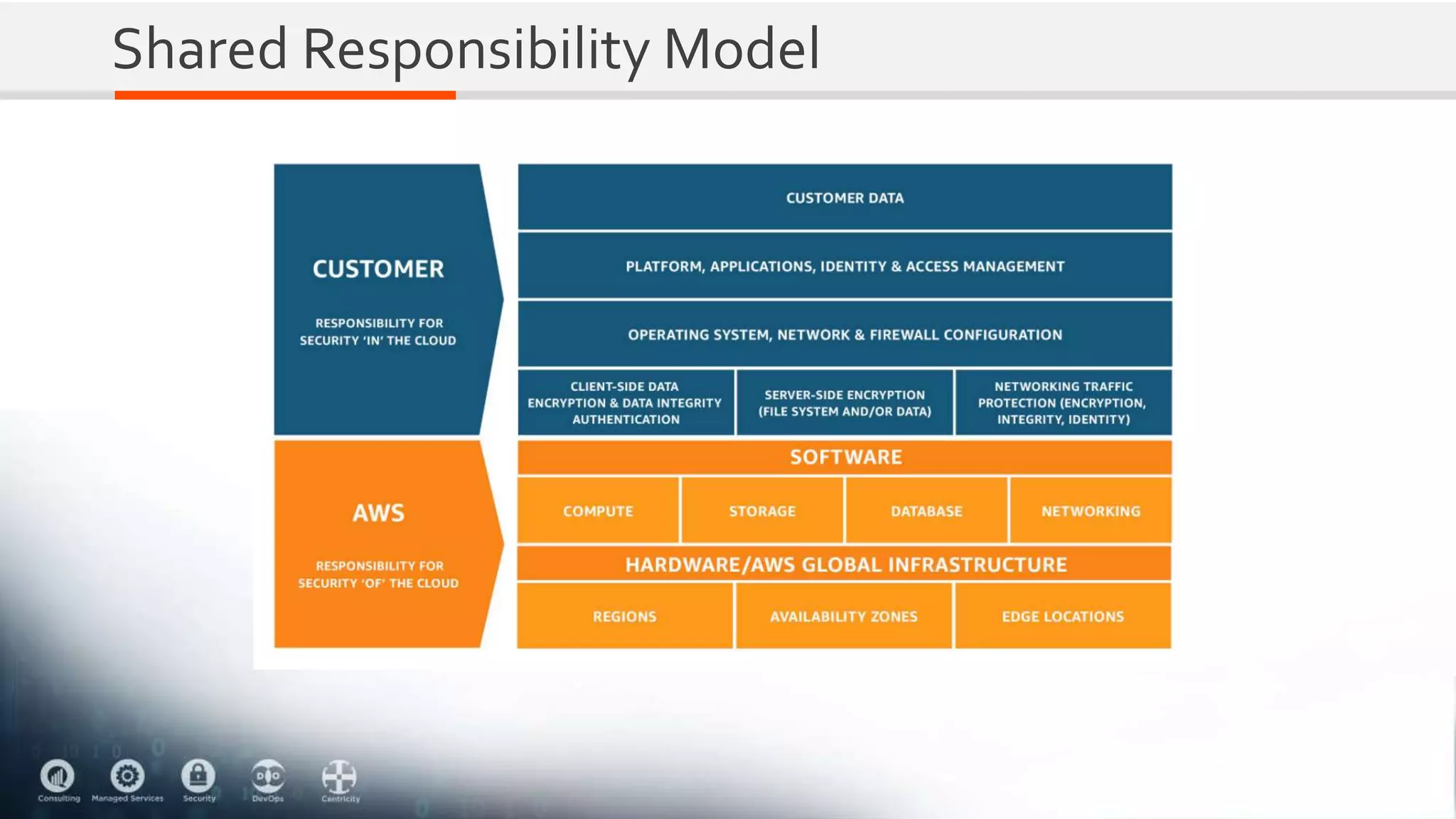
Shared Responsibility Model
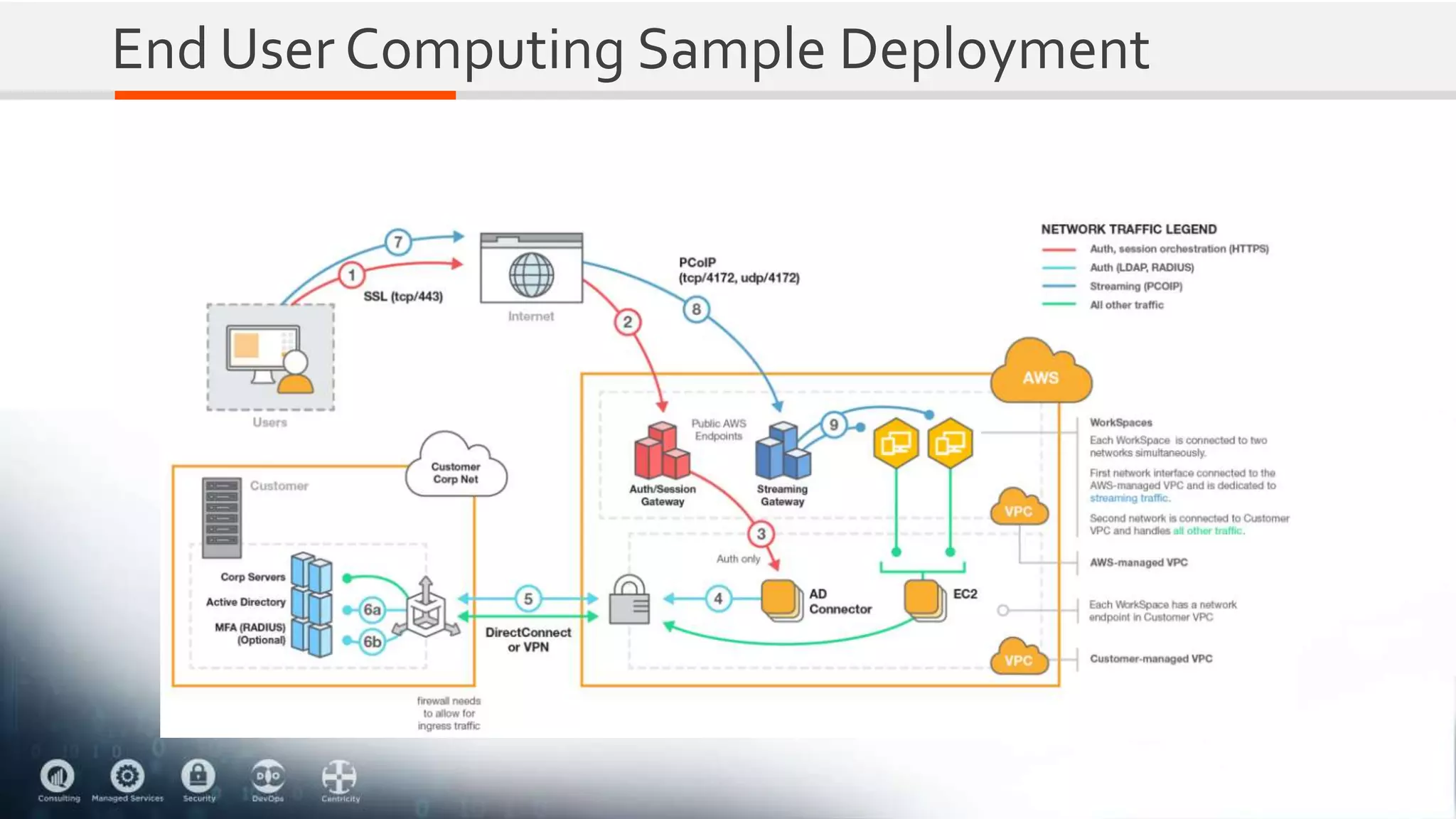
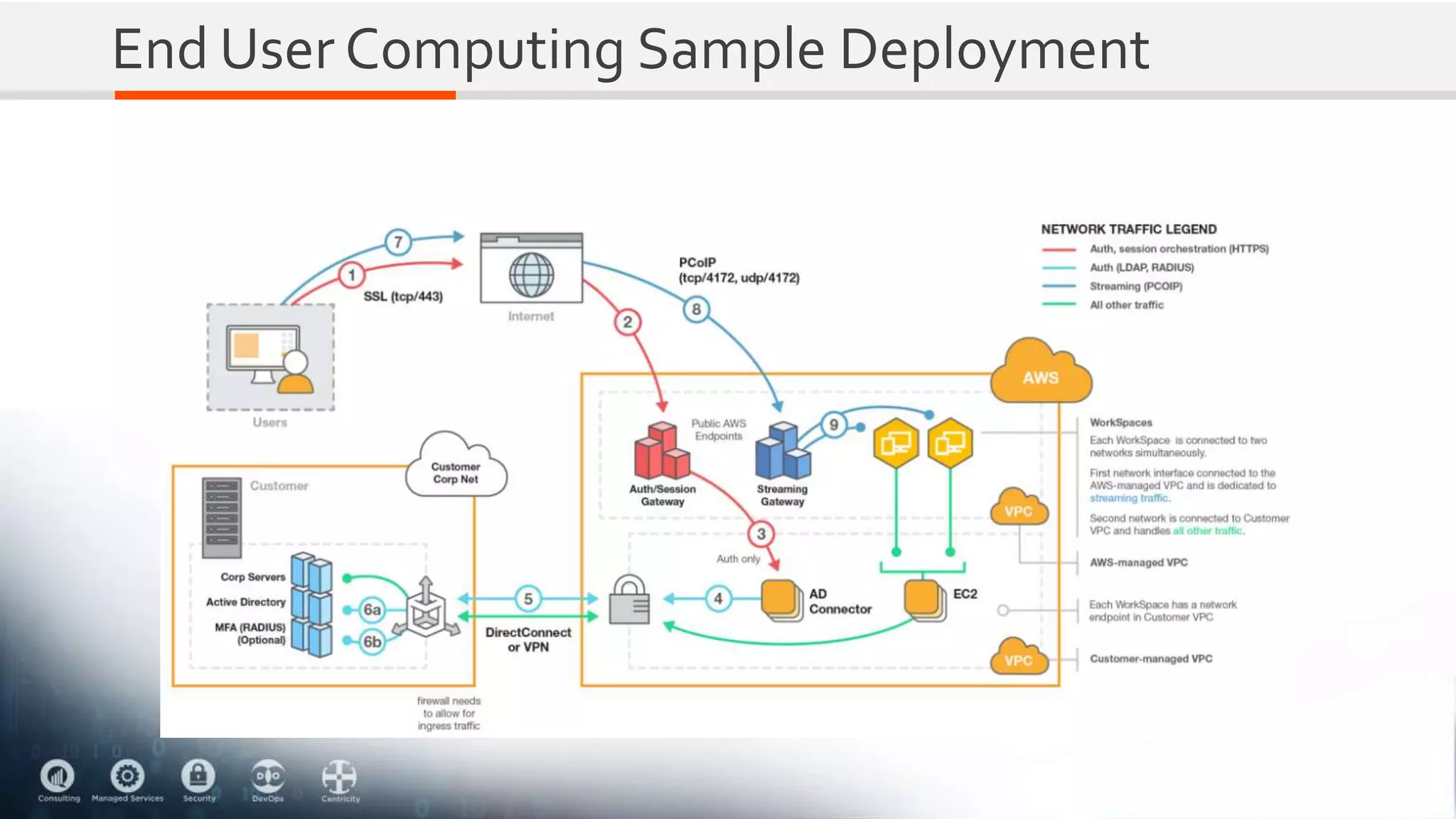
End User Computing Sample Deployment
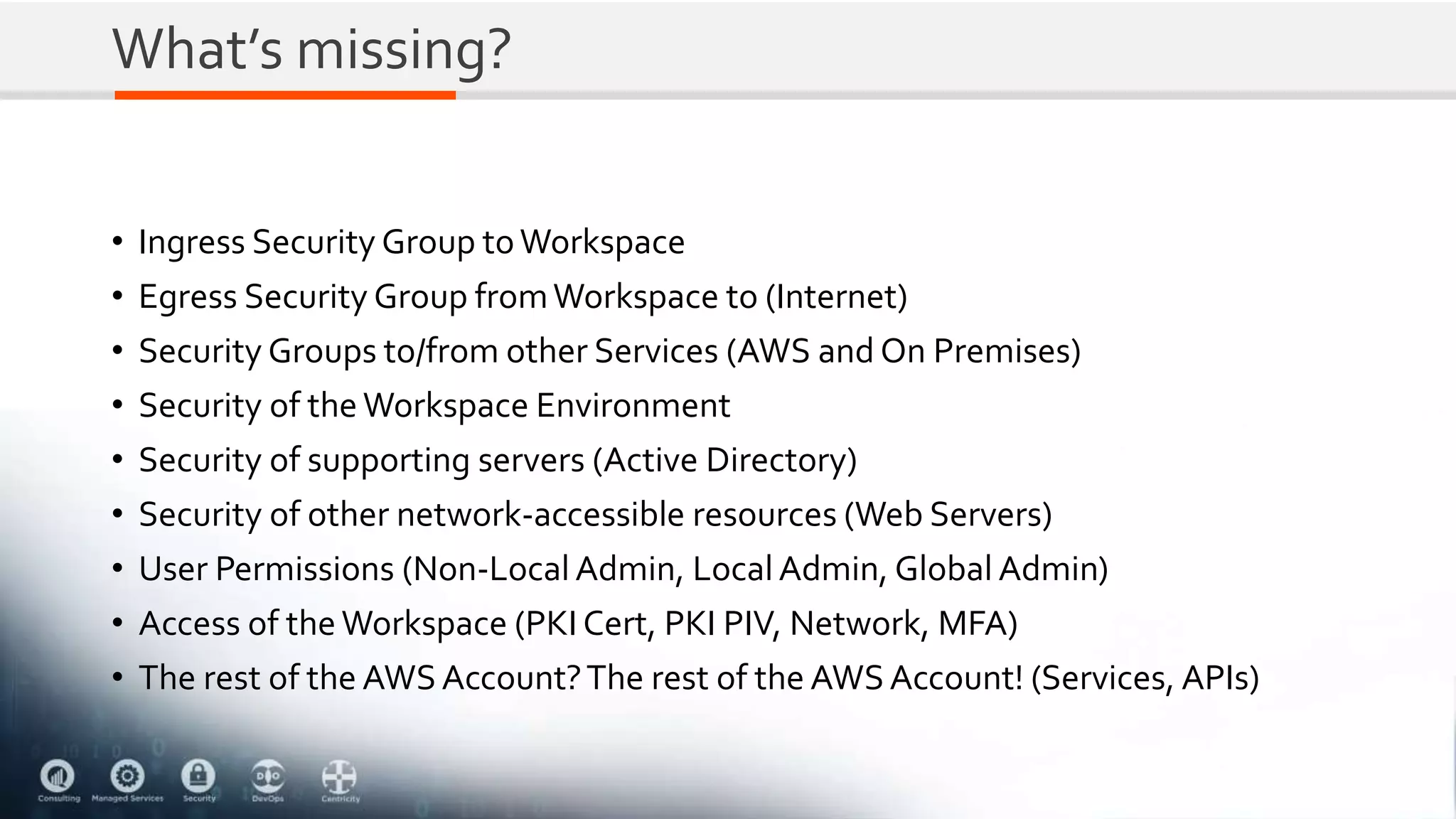
What’s missing?
• Ingress Security Group toWorkspace
• Egress Security Group fromWorkspace to (Internet)
• Security Groups to/from other Services (AWS and On Premises)
• Security of the Workspace Environment
• Security of supporting servers (Active Directory)
• Security of other network-accessible resources (Web Servers)
• User Permissions (Non-Local Admin, Local Admin, Global Admin)
• Access of the Workspace (PKI Cert, PKI PIV, Network, MFA)
• The rest of the AWSAccount?The rest of the AWSAccount! (Services, APIs)
End User Computing Sample Deployment
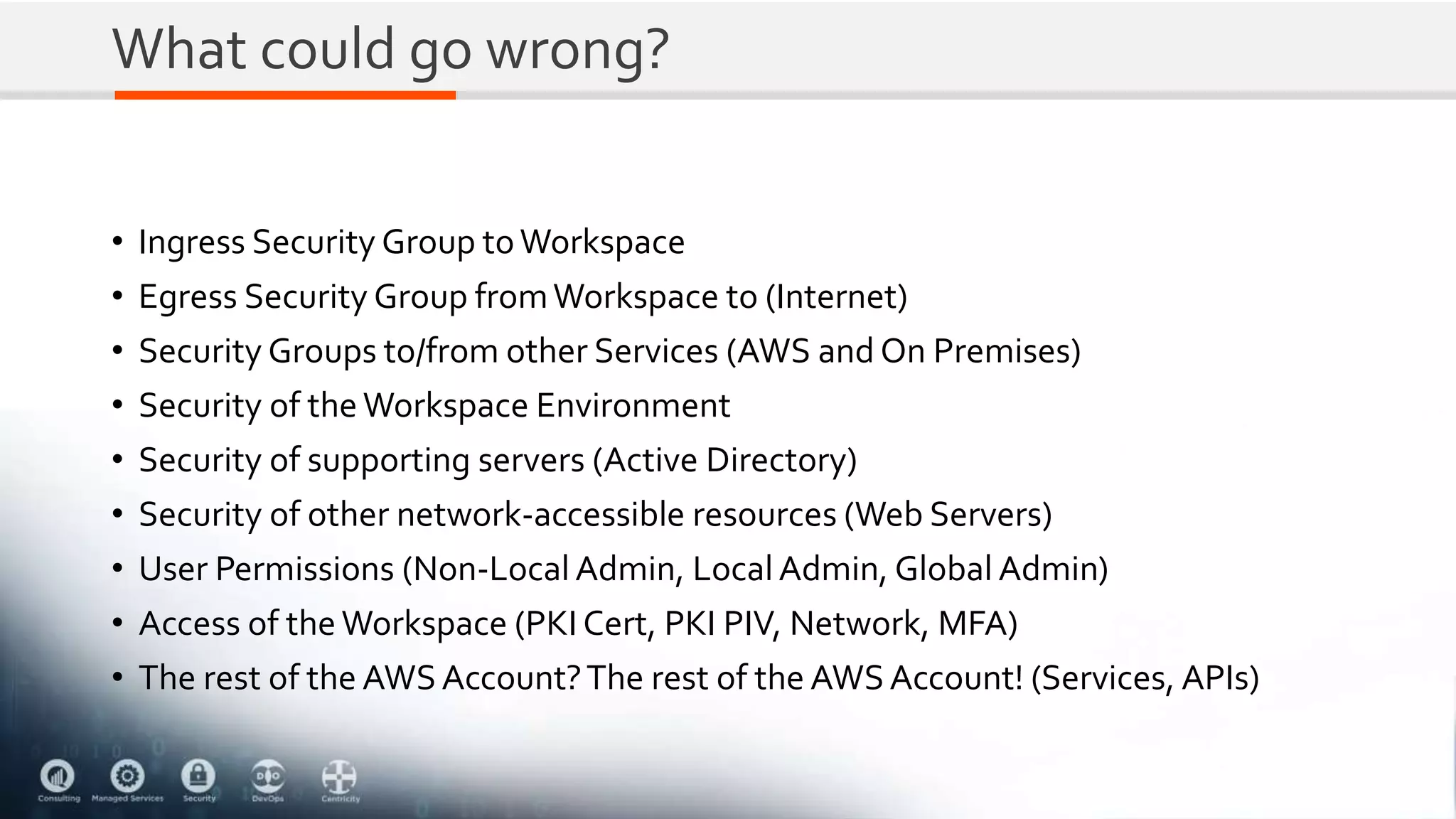
What could go wrong?
• Ingress Security Group toWorkspace
• Egress Security Group fromWorkspace to (Internet)
• Security Groups to/from other Services (AWS and On Premises)
• Security of the Workspace Environment
• Security of supporting servers (Active Directory)
• Security of other network-accessible resources (Web Servers)
• User Permissions (Non-Local Admin, Local Admin, Global Admin)
• Access of the Workspace (PKI Cert, PKI PIV, Network, MFA)
• The rest of the AWSAccount?The rest of the AWSAccount! (Services, APIs)
The Approach
Overview
• Through the lens of the NIST Cybersecurity Framework we will look at frameworks developed
by, and services available onAWS.
• Cloud Services, such as those offered by AWS either/both play a supporting role in your security
posture, supporting both non-AWS resources andAWS resources alike but secure configuration
of AWS resources can also play a role in supporting your security posture.
• The NIST Cybersecurity Framework provides a policy framework of computer security guidance
for how private sector organizations in the United States can assess and improve their ability to
prevent, detect, and respond to cyber attacks.
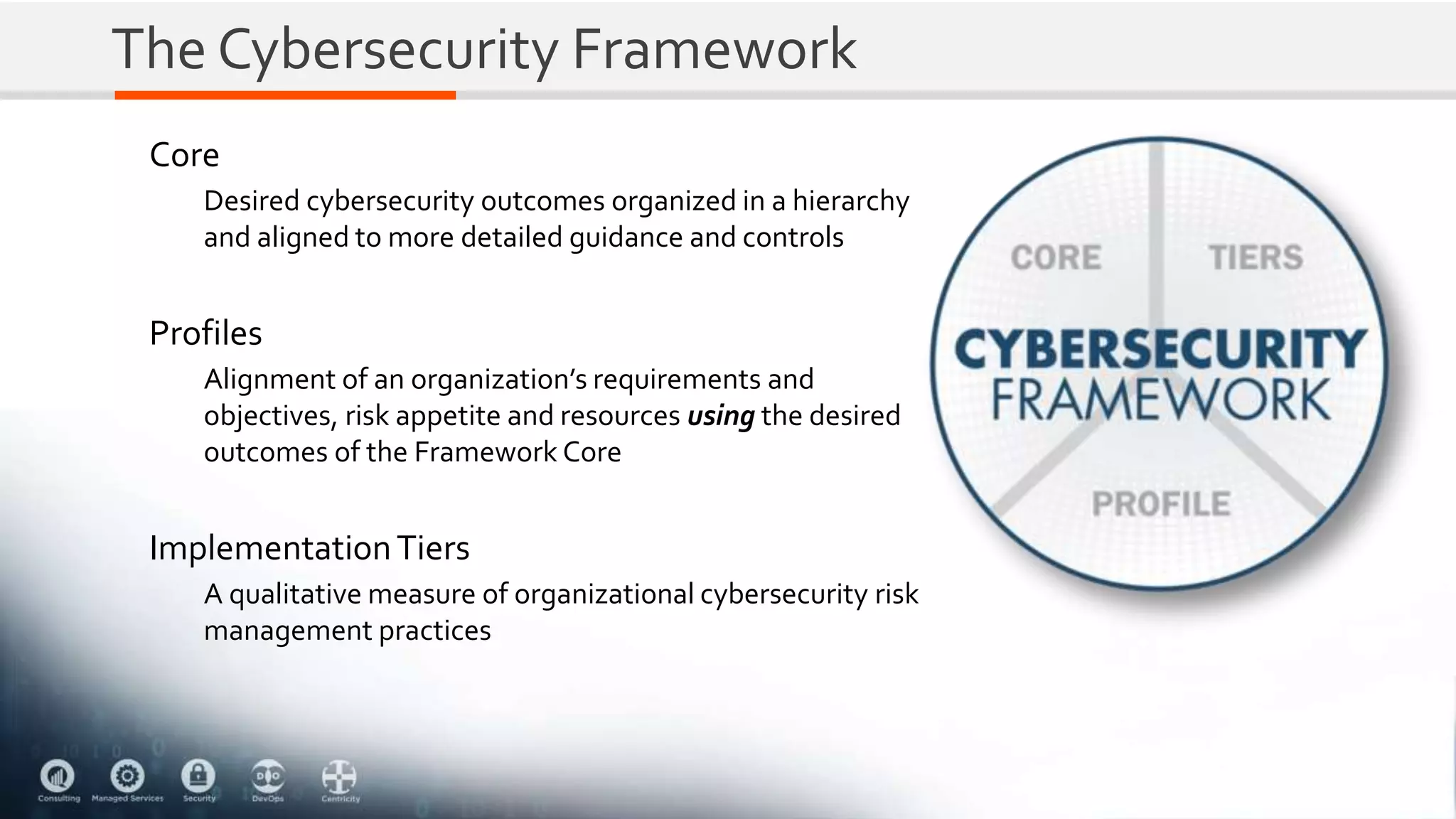
The Cybersecurity Framework
Core
Desired cybersecurity outcomes organized in a hierarchy
and aligned to more detailed guidance and controls
Profiles
Alignment of an organization’s requirements and
objectives, risk appetite and resources using the desired
outcomes of the Framework Core
ImplementationTiers
A qualitative measure of organizational cybersecurity risk
management practices
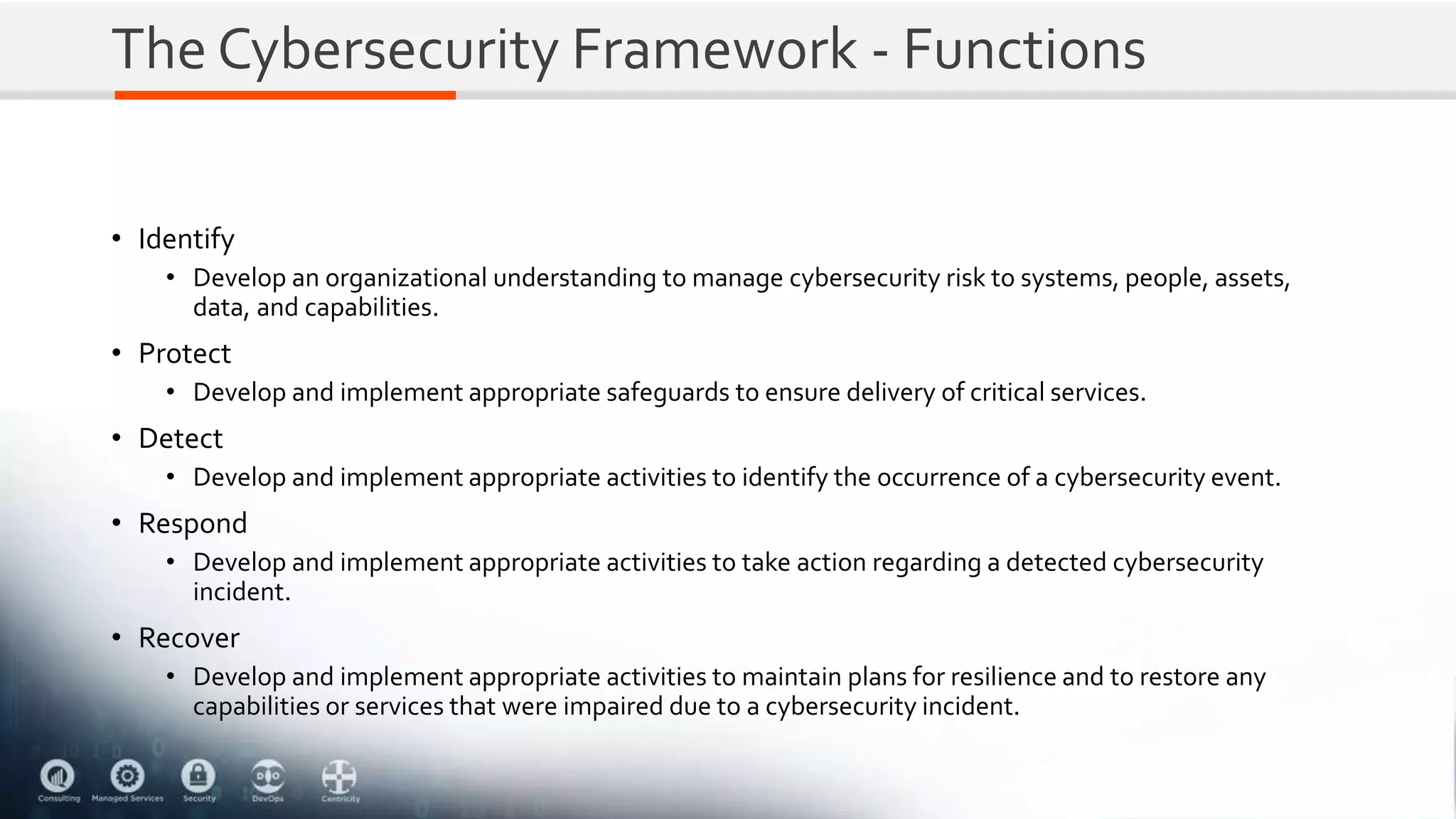
The Cybersecurity Framework - Functions
• Identify
• Develop an organizational understanding to manage cybersecurity risk to systems, people, assets,
data, and capabilities.
• Protect
• Develop and implement appropriate safeguards to ensure delivery of critical services.
• Detect
• Develop and implement appropriate activities to identify the occurrence of a cybersecurity event.
• Respond
• Develop and implement appropriate activities to take action regarding a detected cybersecurity
incident.
• Recover
• Develop and implement appropriate activities to maintain plans for resilience and to restore any
capabilities or services that were impaired due to a cybersecurity incident.
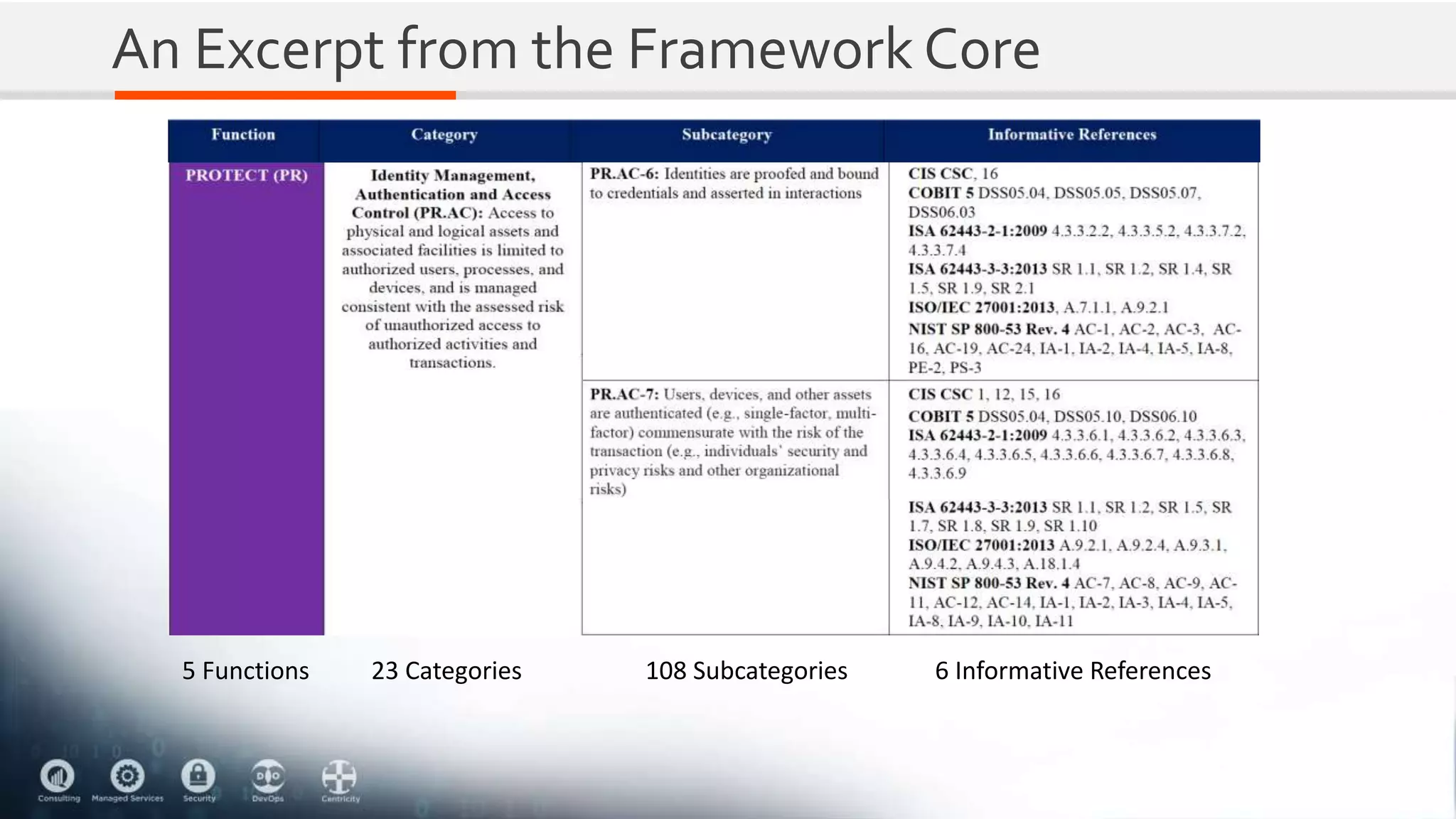
An Excerpt from the Framework Core
5 Functions 23 Categories 108 Subcategories 6 Informative References
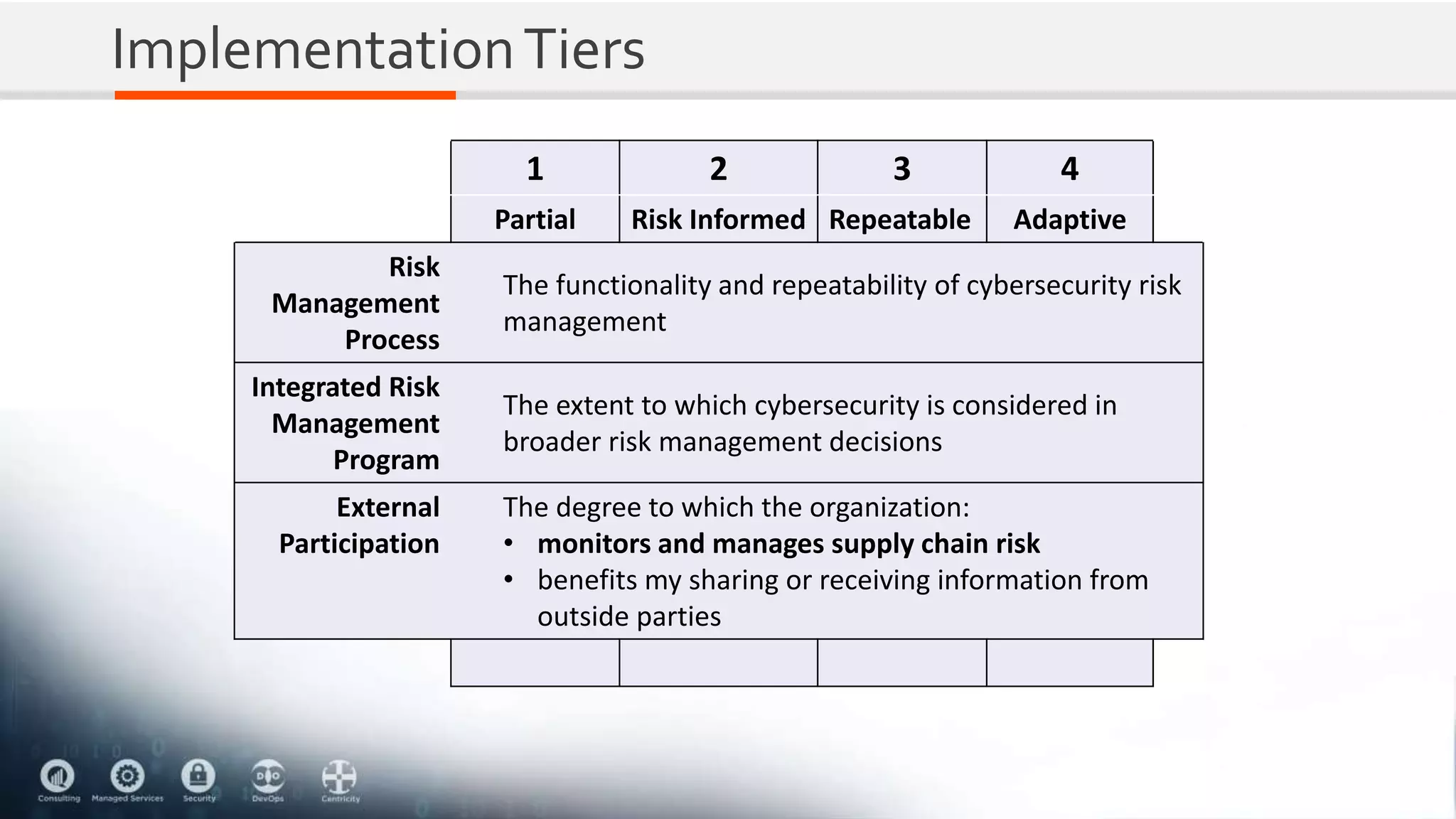
ImplementationTiers
1 2 3 4
Partial Risk Informed Repeatable Adaptive
Risk
Management
Process
The functionality and repeatability of cybersecurity risk
management
Integrated Risk
Management
Program
The extent to which cybersecurity is considered in
broader risk management decisions
External
Participation
The degree to which the organization:
• monitors and manages supply chain risk
• benefits my sharing or receiving information from
outside parties
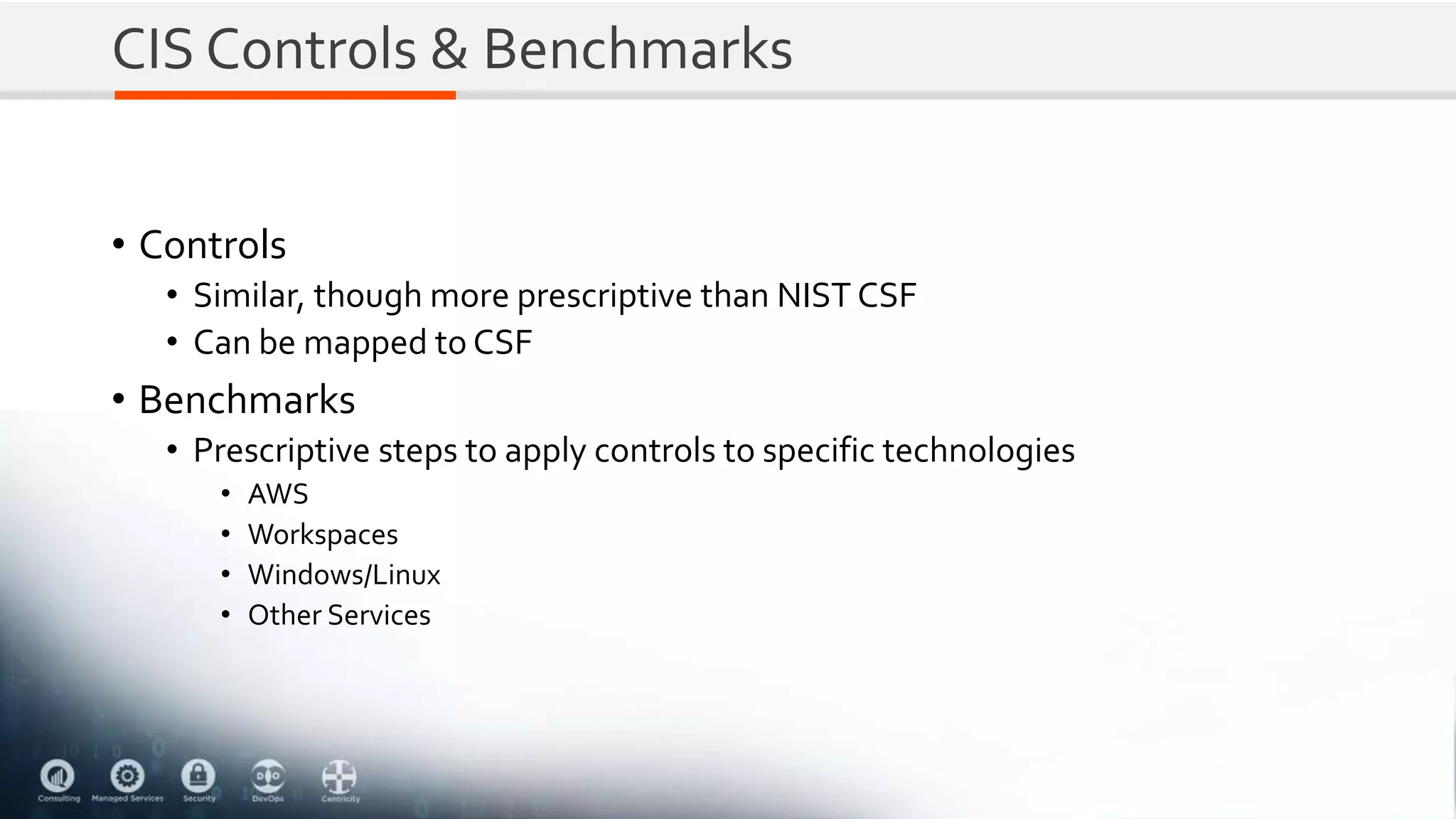
CIS Controls & Benchmarks
• Controls
• Similar, though more prescriptive than NIST CSF
• Can be mapped to CSF
• Benchmarks
• Prescriptive steps to apply controls to specific technologies
• AWS
• Workspaces
• Windows/Linux
• Other Services
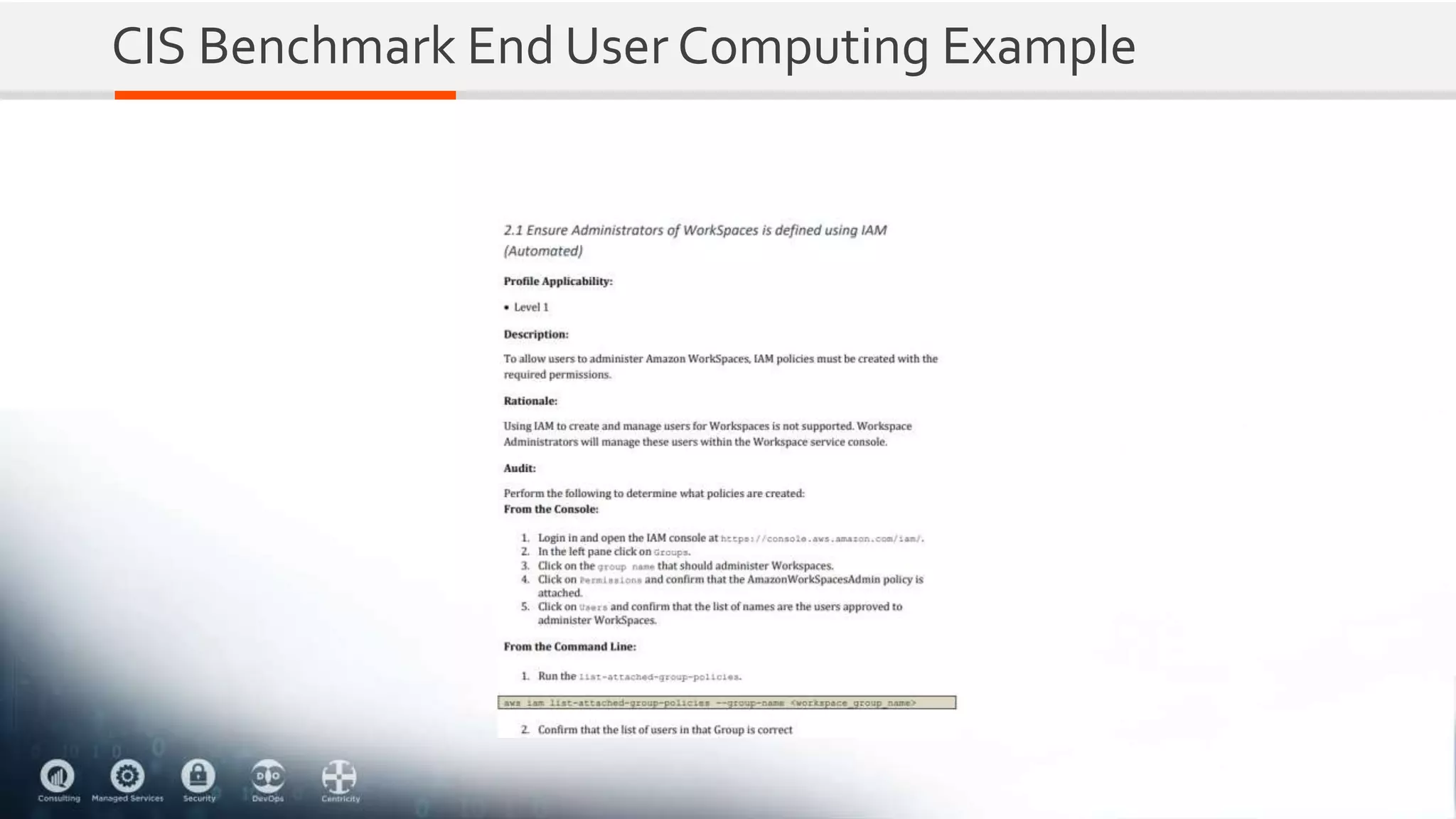
CIS Benchmark End User Computing Example
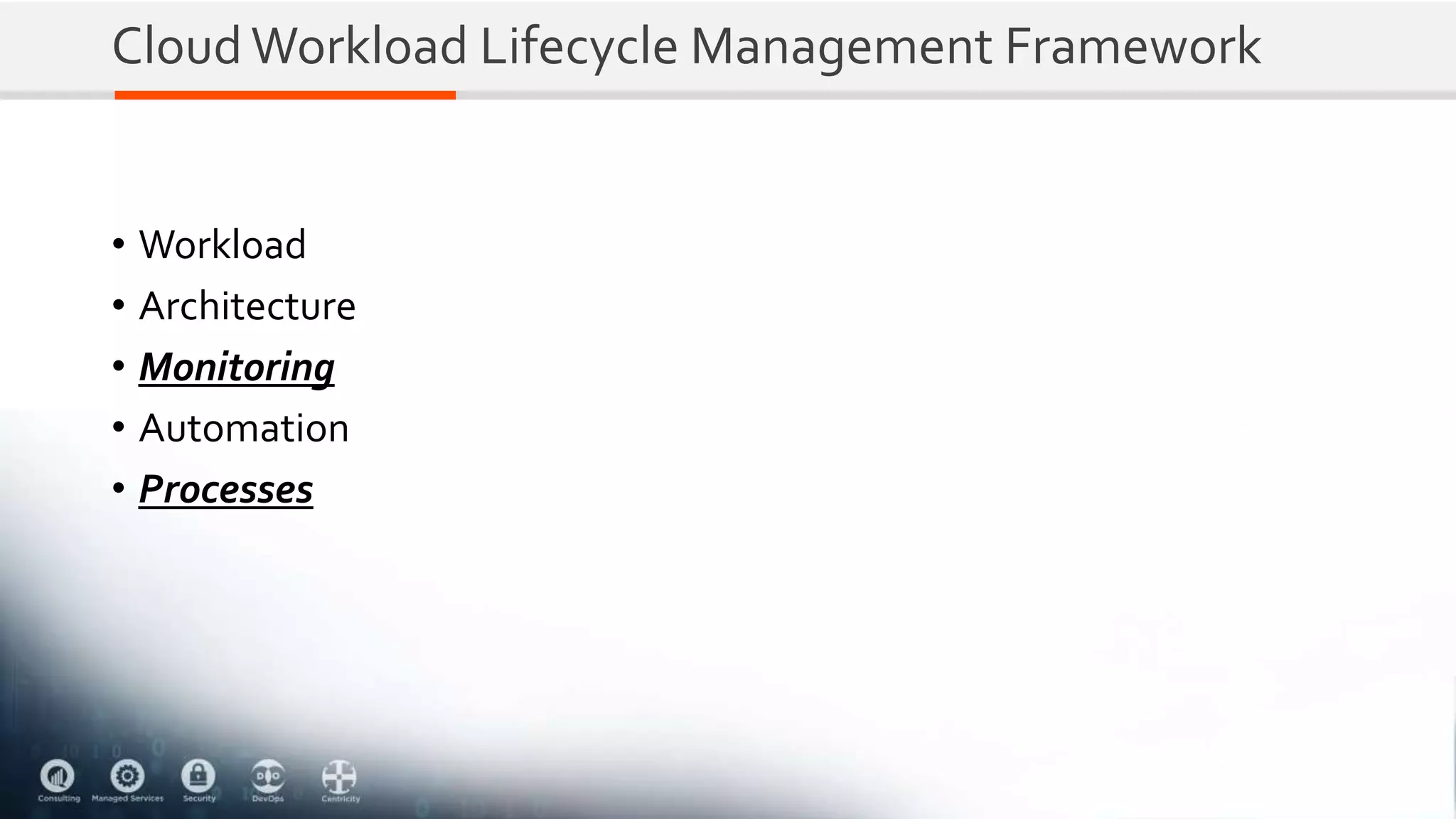
CloudWorkload Lifecycle Management Framework
• Workload
• Architecture
• Monitoring
• Automation
• Processes
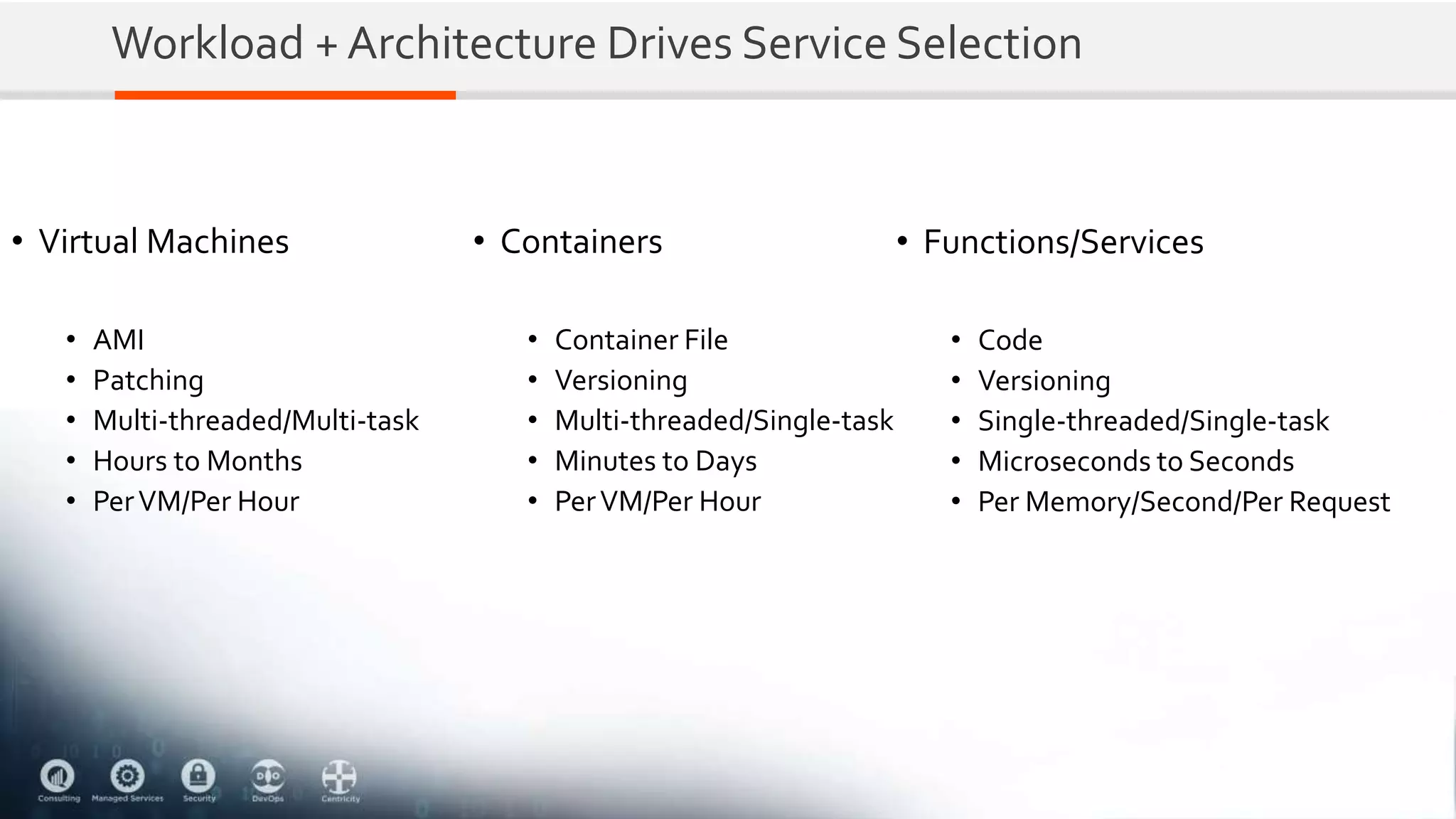
Workload + Architecture Drives Service Selection
• Virtual Machines
• AMI
• Patching
• Multi-threaded/Multi-task
• Hours to Months
• PerVM/Per Hour
• Functions/Services
• Code
• Versioning
• Single-threaded/Single-task
• Microseconds to Seconds
• Per Memory/Second/Per Request
• Containers
• Container File
• Versioning
• Multi-threaded/Single-task
• Minutes to Days
• PerVM/Per Hour
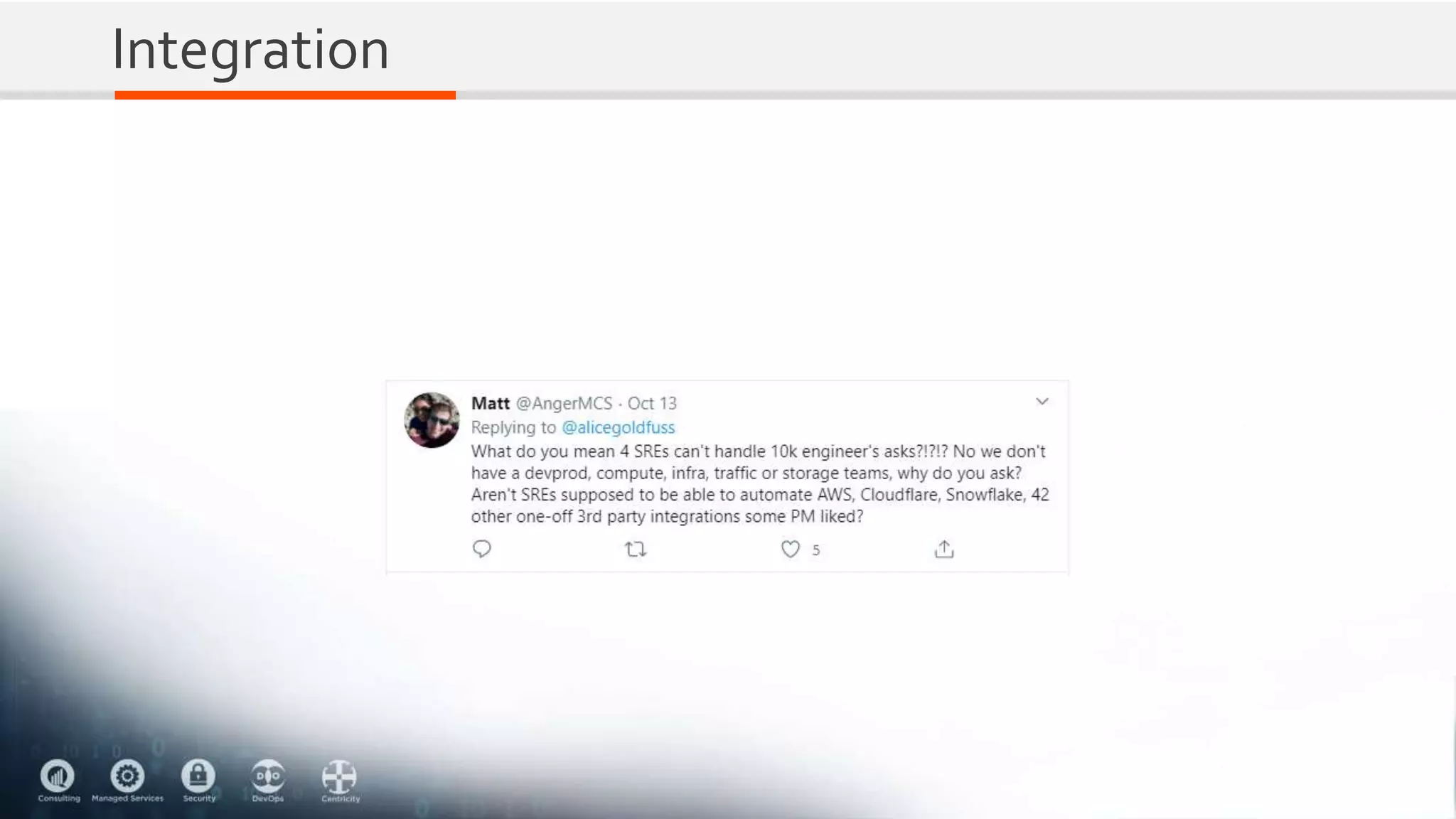
Integration
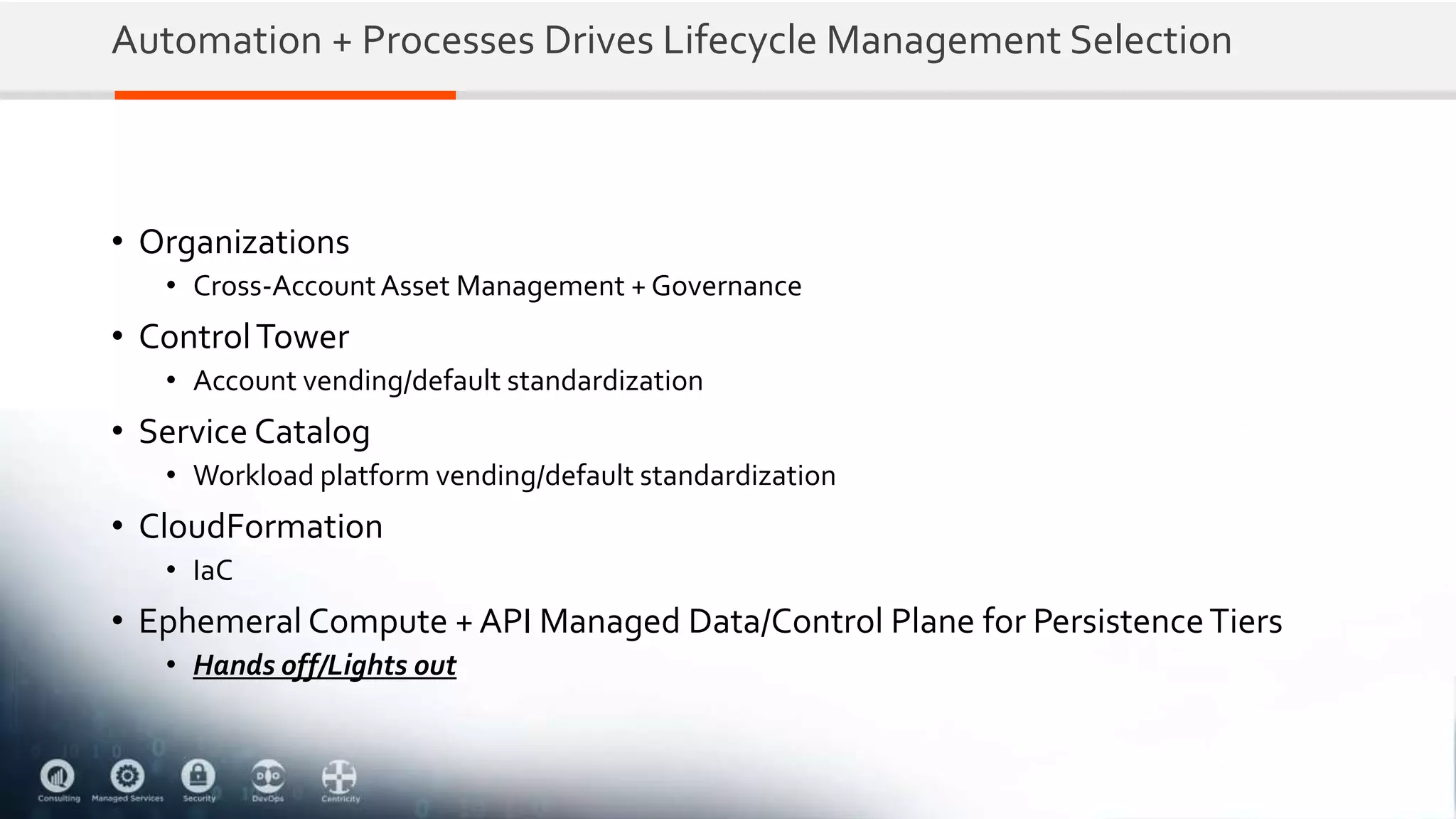
Automation + Processes Drives Lifecycle Management Selection
• Organizations
• Cross-AccountAsset Management + Governance
• ControlTower
• Account vending/default standardization
• Service Catalog
• Workload platform vending/default standardization
• CloudFormation
• IaC
• Ephemeral Compute + API Managed Data/Control Plane for PersistenceTiers
• Hands off/Lights out
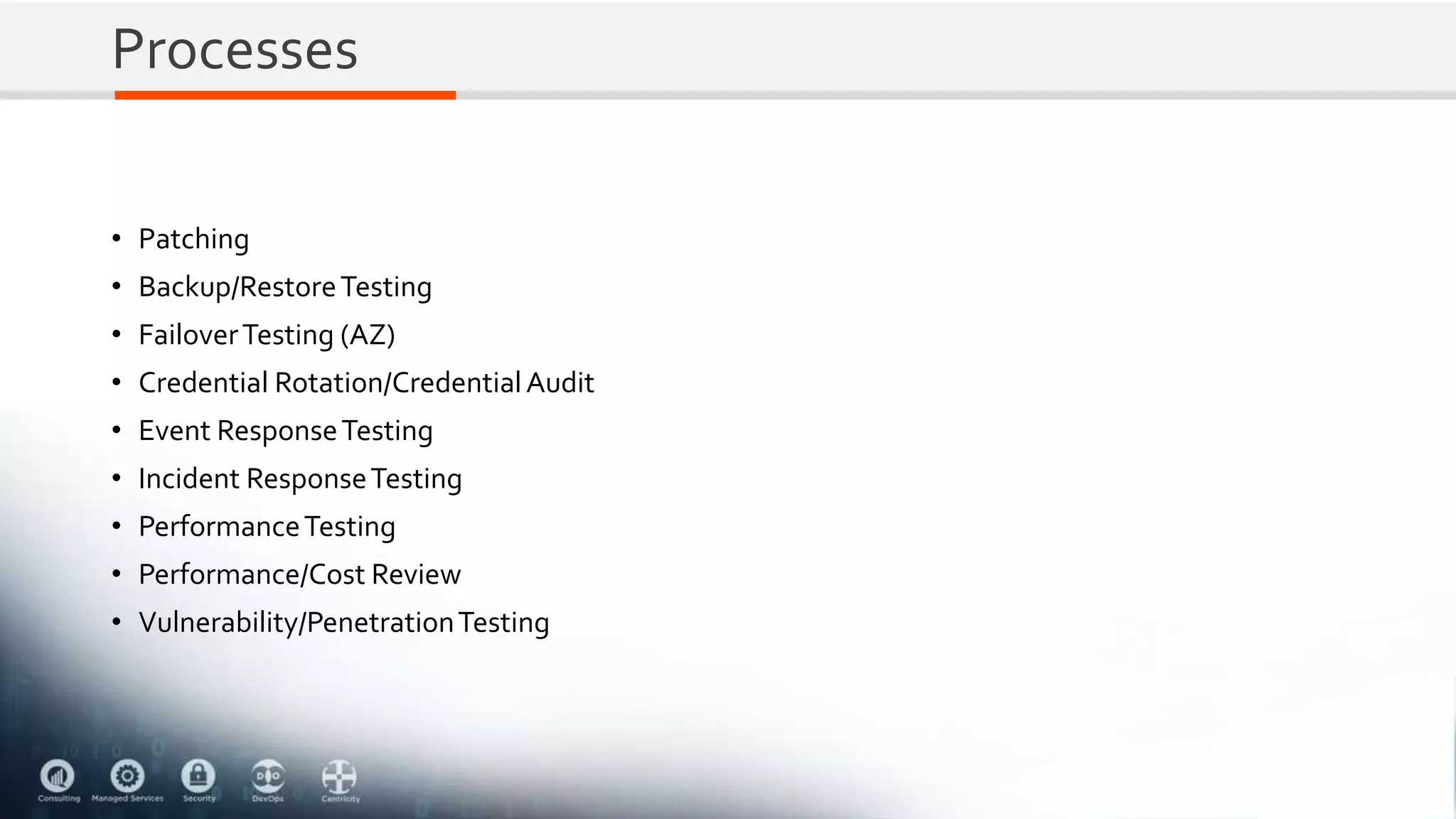
Processes
• Patching
• Backup/RestoreTesting
• FailoverTesting (AZ)
• Credential Rotation/CredentialAudit
• Event ResponseTesting
• Incident ResponseTesting
• PerformanceTesting
• Performance/Cost Review
• Vulnerability/PenetrationTesting
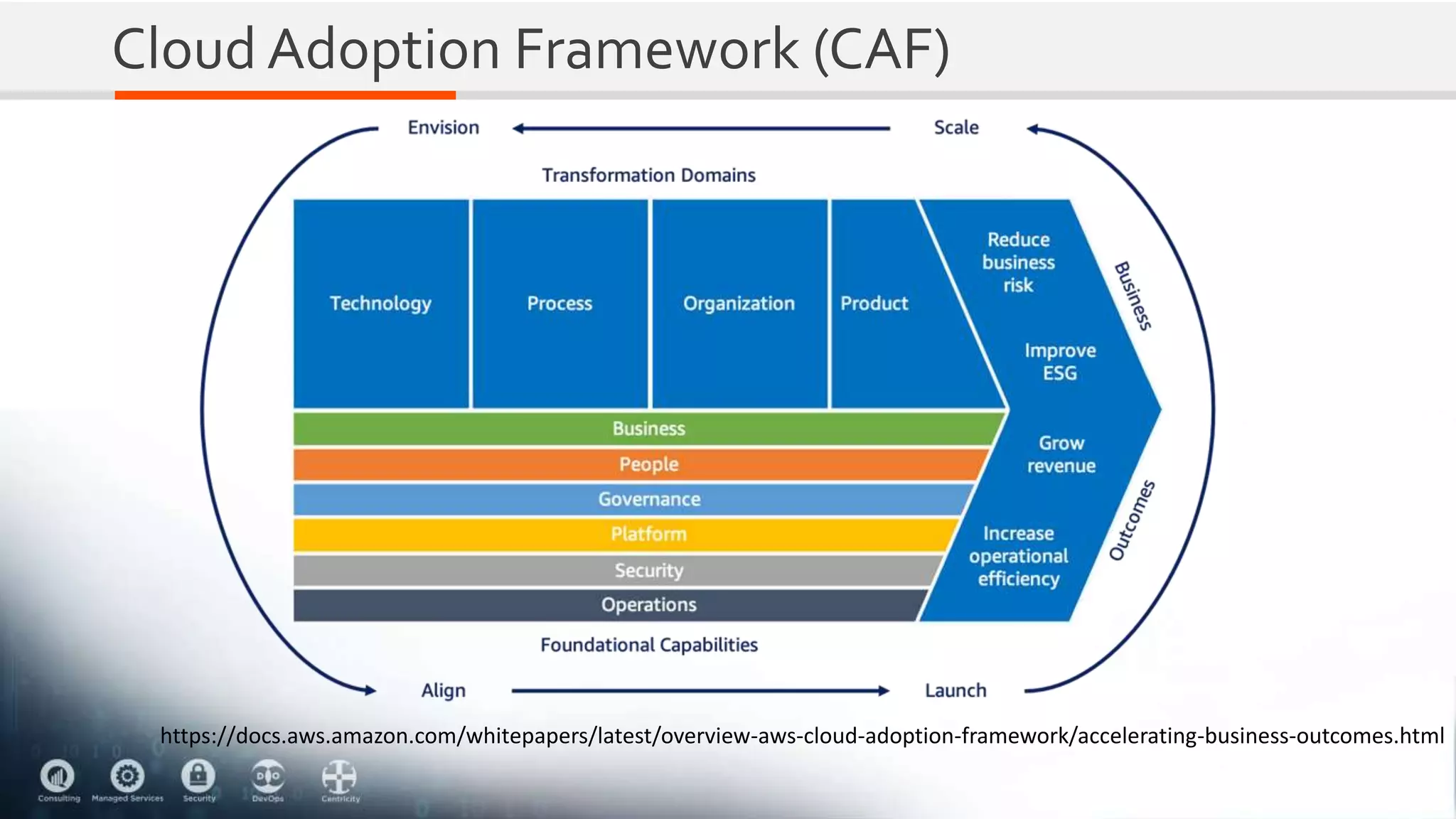
Cloud Adoption Framework (CAF)
https://docs.aws.amazon.com/whitepapers/latest/overview-aws-cloud-adoption-framework/accelerating-business-outcomes.html
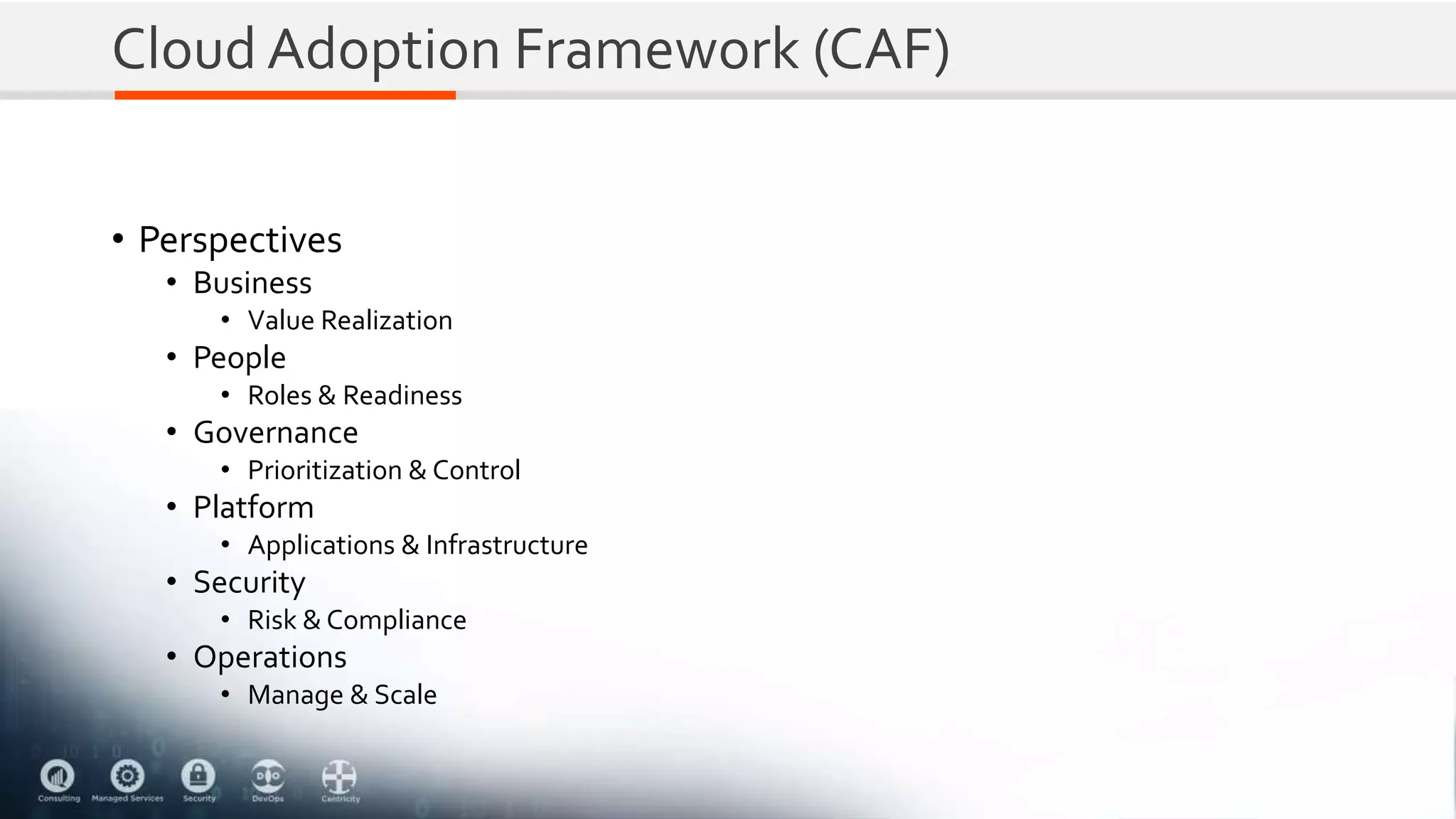
Cloud Adoption Framework (CAF)
• Perspectives
• Business
• Value Realization
• People
• Roles & Readiness
• Governance
• Prioritization & Control
• Platform
• Applications & Infrastructure
• Security
• Risk & Compliance
• Operations
• Manage & Scale
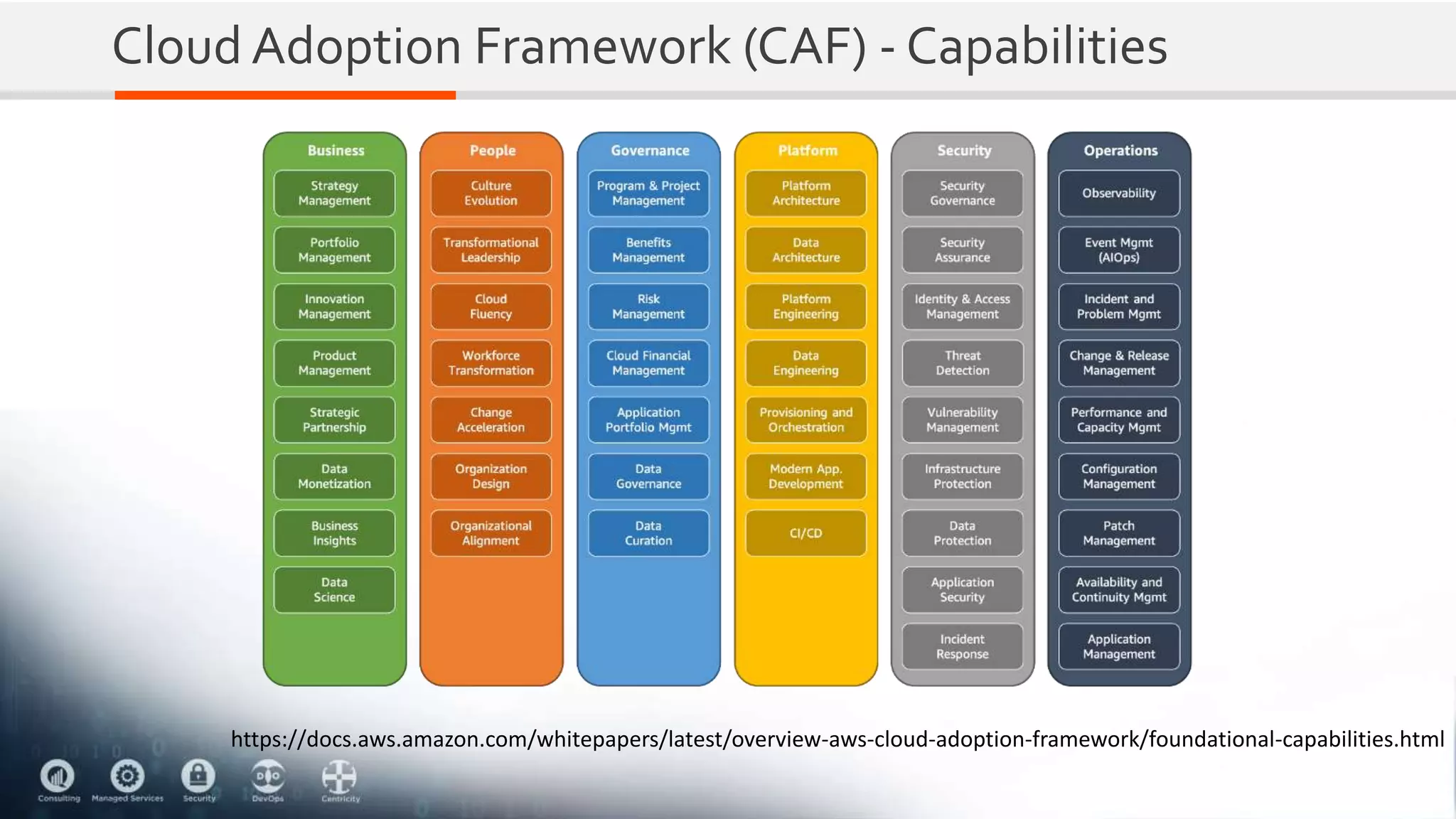
Cloud Adoption Framework (CAF) - Capabilities
https://docs.aws.amazon.com/whitepapers/latest/overview-aws-cloud-adoption-framework/foundational-capabilities.html
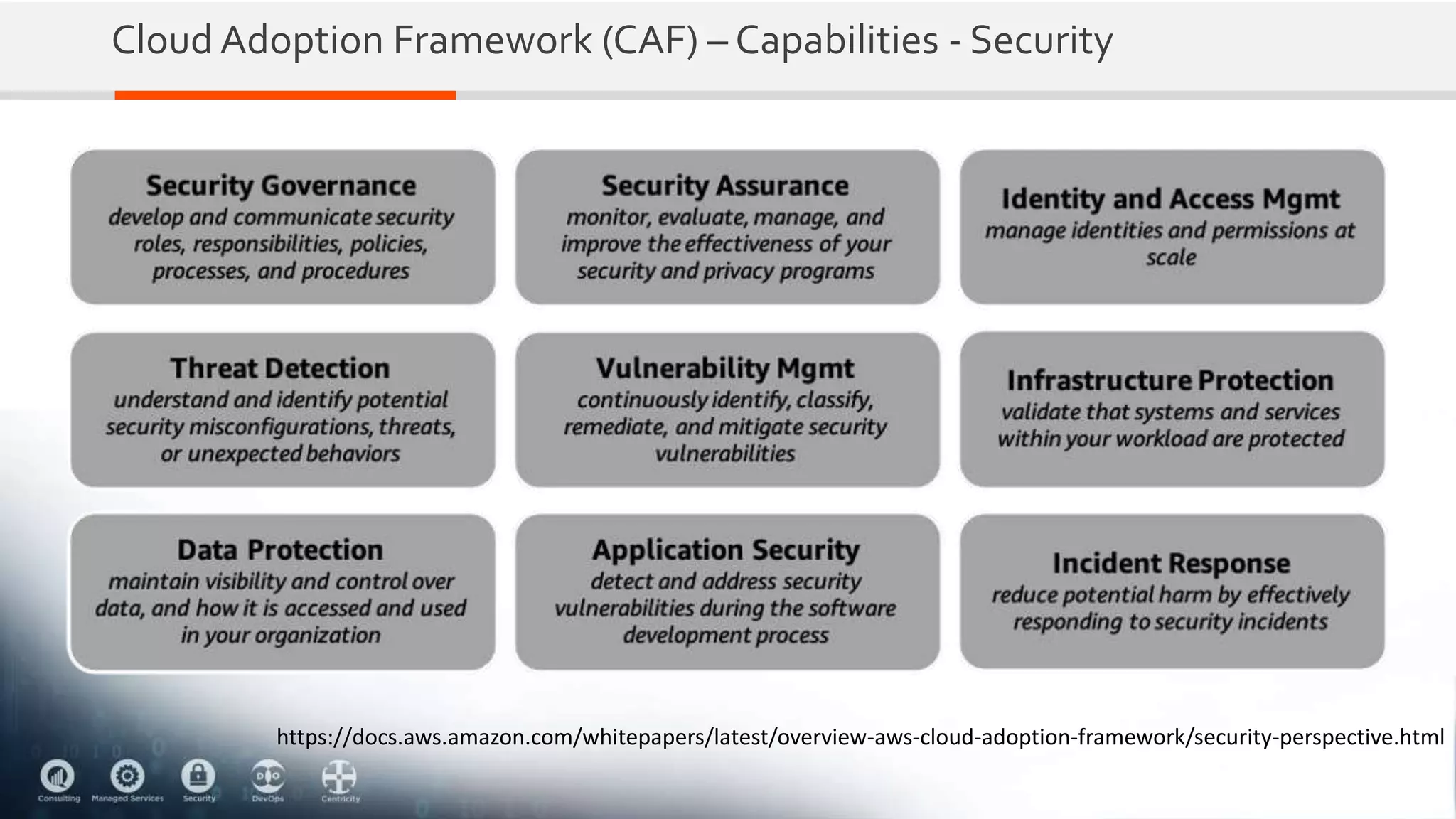
Cloud Adoption Framework (CAF) – Capabilities - Security
https://docs.aws.amazon.com/whitepapers/latest/overview-aws-cloud-adoption-framework/security-perspective.html
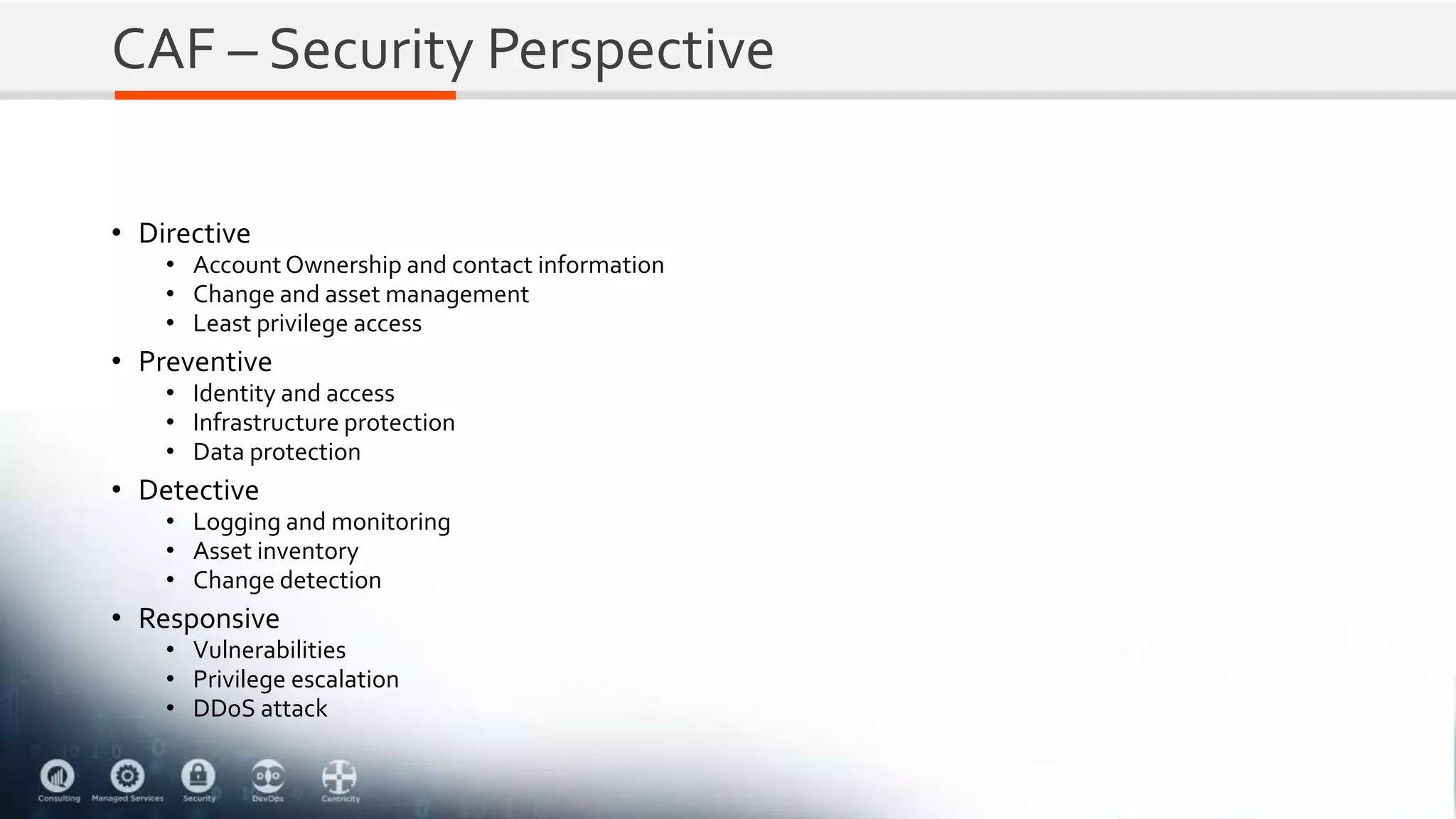
CAF – Security Perspective
• Directive
• Account Ownership and contact information
• Change and asset management
• Least privilege access
• Preventive
• Identity and access
• Infrastructure protection
• Data protection
• Detective
• Logging and monitoring
• Asset inventory
• Change detection
• Responsive
• Vulnerabilities
• Privilege escalation
• DDoS attack
Well Architected Framework (WAF)
• General
• Event-Triggered
• Workload-Focused
• General Design Principals
• Pillars
• Design Principals
• Best Practices
• Lenses
WAF – Pillars
• Operational Excellence
• Security
• Reliability
• Performance Efficiency
• Cost Optimization
• Sustainability – New!
WAF – Lenses
• High Performance Computing (HPC)
• Serverless
• Internet ofThings (IOT)
• Financial Services Industry (FinServ)
• FoundationalTechnical Review (FTR)
• SaaS
• Streaming Media
• Machine Learning
• SAP
• DataAnalytics
• Games Industry
• Hybrid Networking
• Management and Governance –Well Aligned!
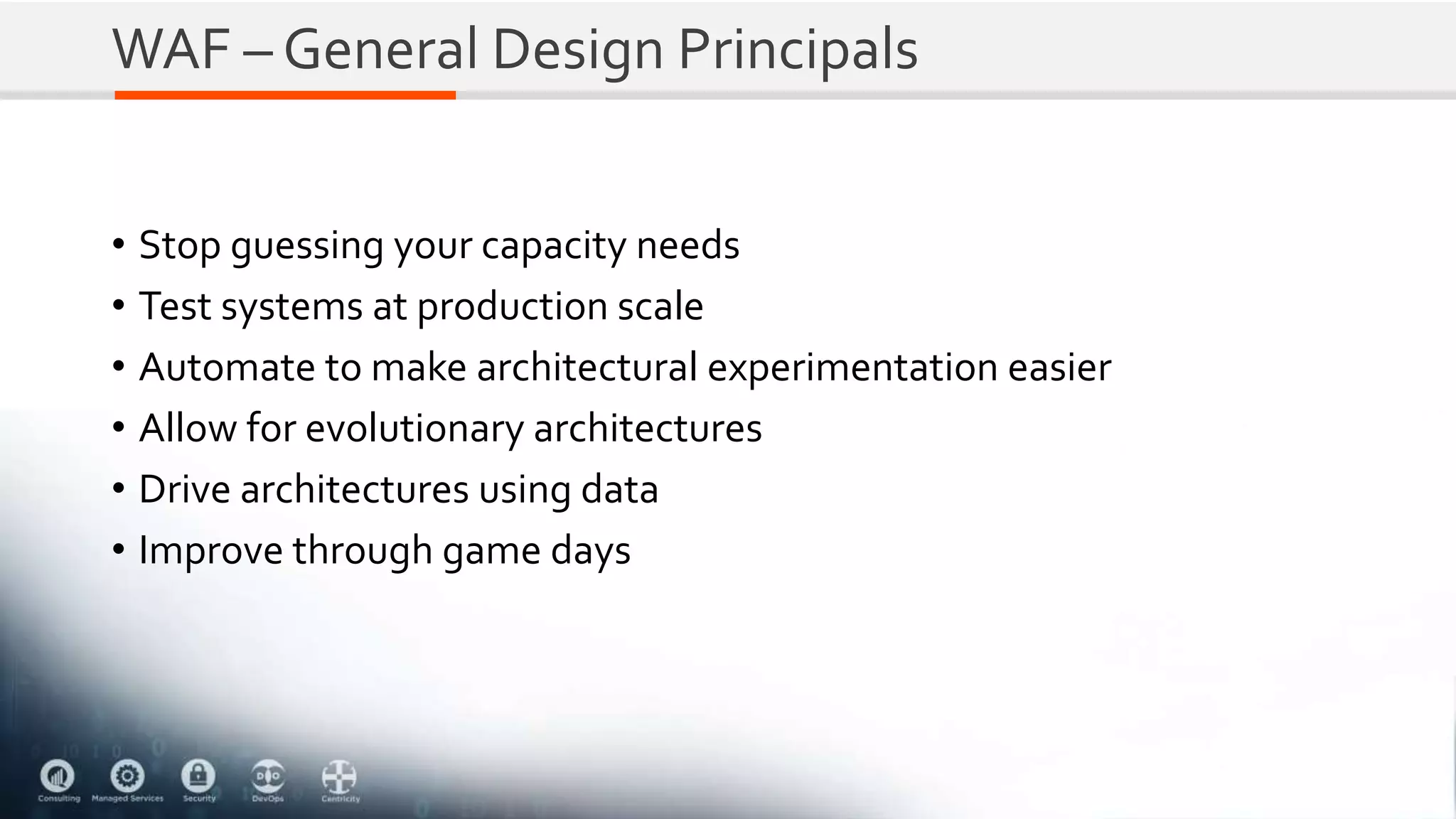
WAF – General Design Principals
• Stop guessing your capacity needs
• Test systems at production scale
• Automate to make architectural experimentation easier
• Allow for evolutionary architectures
• Drive architectures using data
• Improve through game days
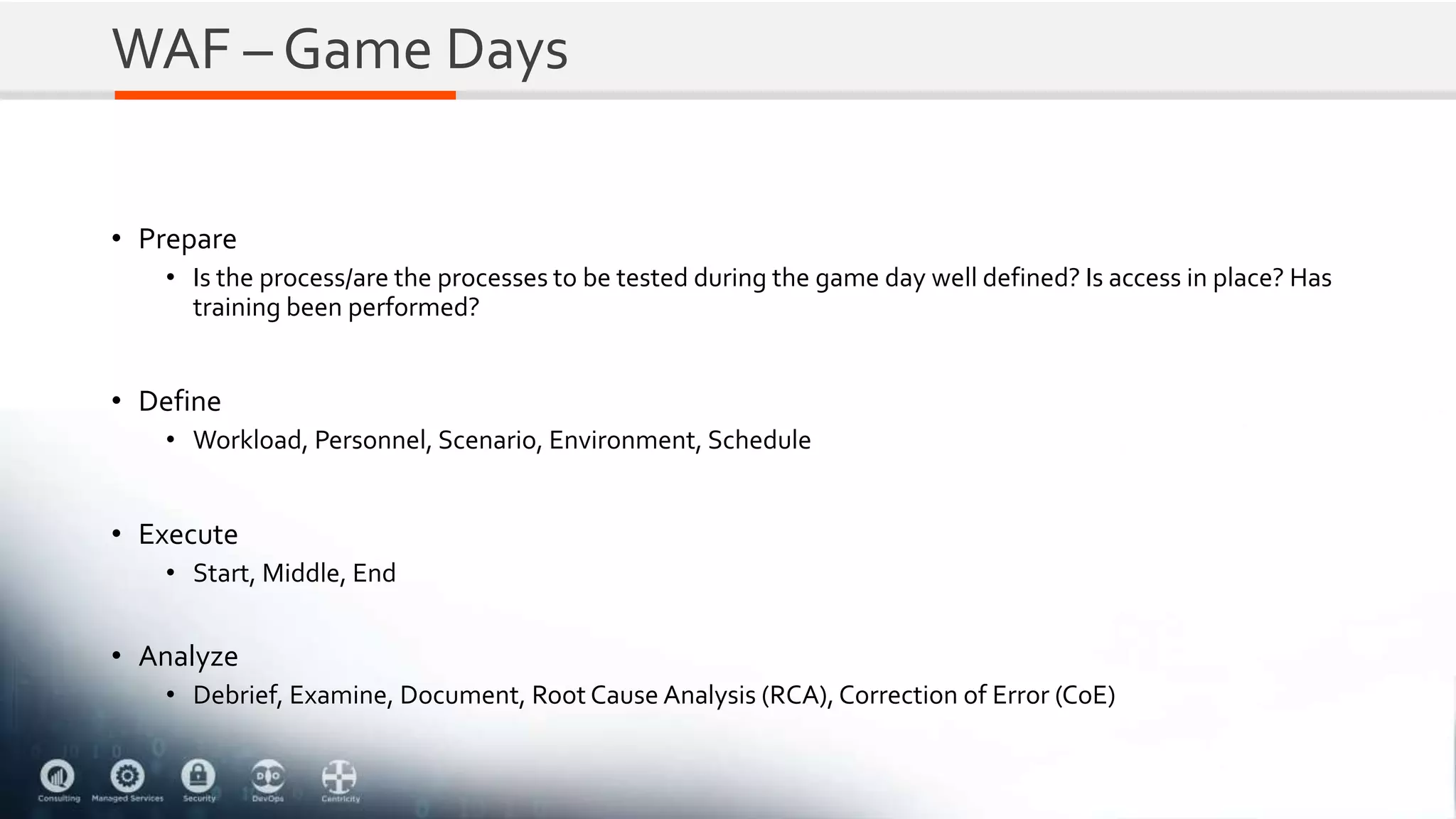
WAF – Game Days
• Prepare
• Is the process/are the processes to be tested during the game day well defined? Is access in place? Has
training been performed?
• Define
• Workload, Personnel, Scenario, Environment, Schedule
• Execute
• Start, Middle, End
• Analyze
• Debrief, Examine, Document, Root Cause Analysis (RCA), Correction of Error (CoE)
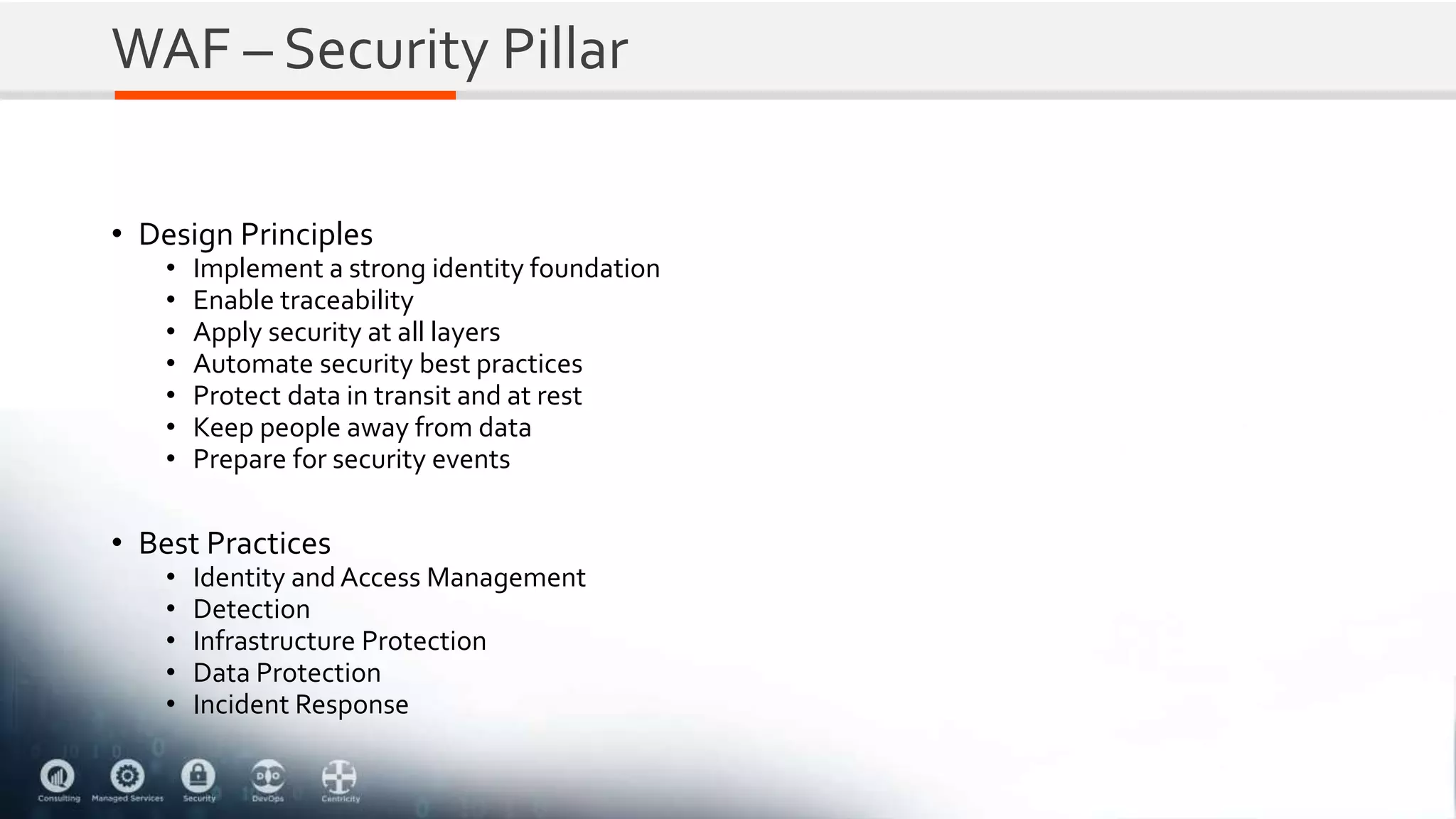
WAF – Security Pillar
• Design Principles
• Implement a strong identity foundation
• Enable traceability
• Apply security at all layers
• Automate security best practices
• Protect data in transit and at rest
• Keep people away from data
• Prepare for security events
• Best Practices
• Identity and Access Management
• Detection
• Infrastructure Protection
• Data Protection
• Incident Response
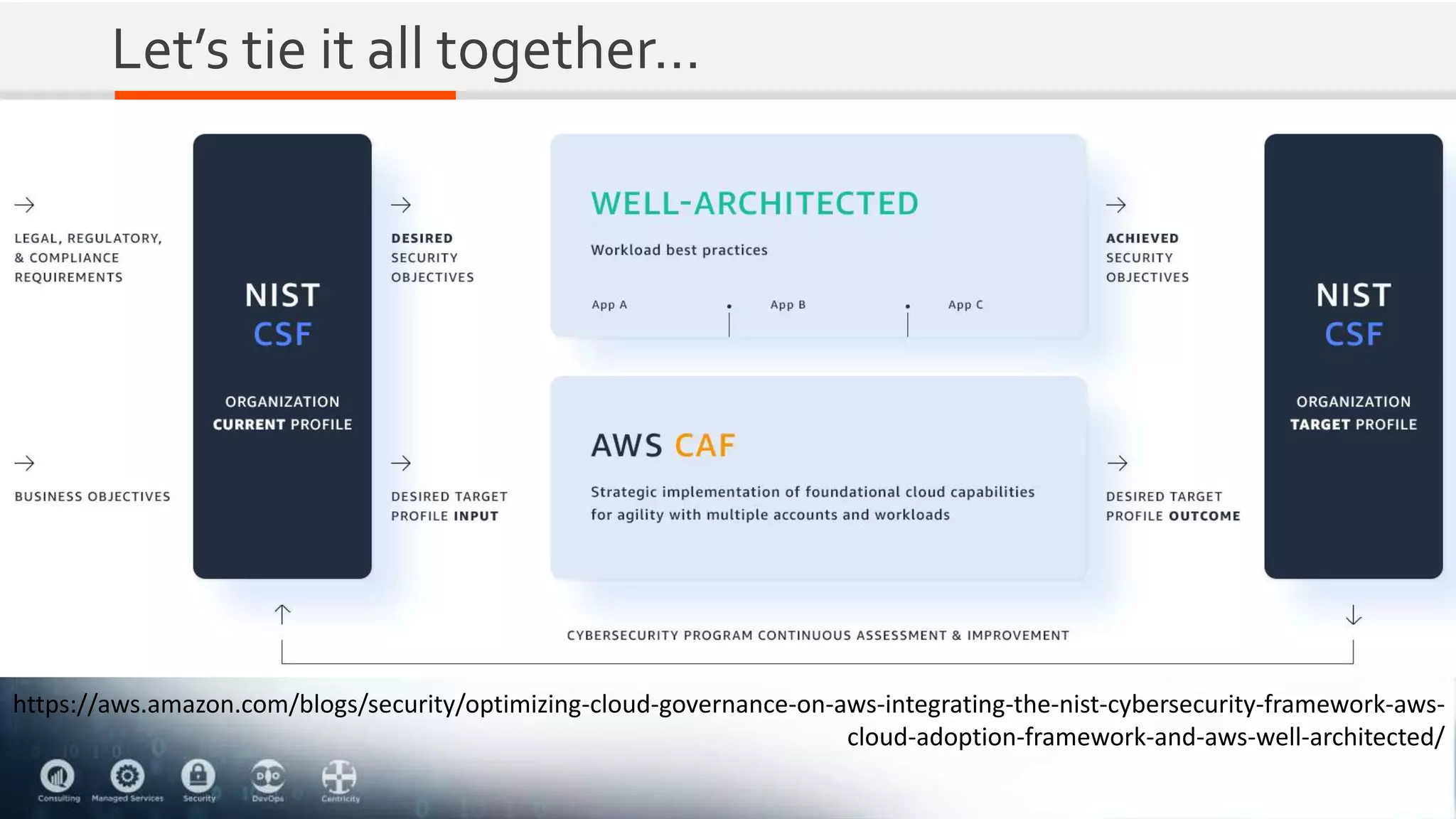
Let’s tie it all together…
https://aws.amazon.com/blogs/security/optimizing-cloud-governance-on-aws-integrating-the-nist-cybersecurity-framework-aws-
cloud-adoption-framework-and-aws-well-architected/
Identify
Identify
• Everything on the previous slides 
Identify
• Audit Manager
• Cost Management Services (Individual Services)
• Certificate Manager (Public + Private)
• Firewall Manager (WAF + Security Groups)
• Directory Service + Identity and Access Management (+ Services with their own Policies)
• AccessAdvisor,Access Analyzer,Organization Activity
• Inspector
• Key Management Service + Secrets Manager
• Macie
• Premium Support +Trusted Advisor + Personal Health Dashboard
• Systems Manager
• Security Hub + Config + Config Rules
• Tags
Identify – Organizations
• Tag policies
• Artifact
• Backup
• CloudFormation StackSets
• CloudTrail
• Config
• Directory Service
• Firewall Manager
• Resource Access Manager
• Service Catalog
• Single Sign-On
• Systems Manager
Protect/Detect
Protect
• VPC: Security Groups (Stateful Firewall) + NACLs (Stateless Firewall), Network Firewall, DNS
Firewall,Gateway Load Balancer
• WAF: Layer 7WAF
• Shield + AutoScaling + ELB + Cloud Front: DoS/DDoS Protection
• VPC:VGW (Point to Point and IPSECConnectivity) + Peering (VPC toVPC Connectivity) +
Endpoints (Private Connectivity to AWS Services), ClientVPN (Client toVPC Connectivity)
• IAM + Directory Service + SSO: Standalone and Federated AAA
• KMS: FIPS 140-2 Certified cryptographic module with integration to various AWS services,
provides expiration and ability to provide self-generated cryptographic material
• ACM: Public and Private PKI Certificate Authority
• Secure Credential Storage: Secrets Manager, Systems Manager
• Nitro Enclaves
Protect
• AWS Auto Scaling: EC2, Dynamo,Aurora Autoscaling
• Code Commit/ECS (Image Scanning)/Signer: Secure Application and Artifact Repository +
dedicated account
• Code Deploy/Systems Manager: “Hands off” OS and configuration management + application
deployment
• EC2: Systems Manager (OS and above patching + auditing), Amazon Linux 2 Live Patching
• AWS Backup: EC2, RDS, EFS, Dynamo Backups + dedicated account
• Workspaces: Secure Bastion
• CloudFormation + OpsWorks + Elastic Beanstalk: “Hands off” infrastructure management
• S3/Glacier: File based storage with AAA, versioning, secure delete + policy based retention
• Host Based Security
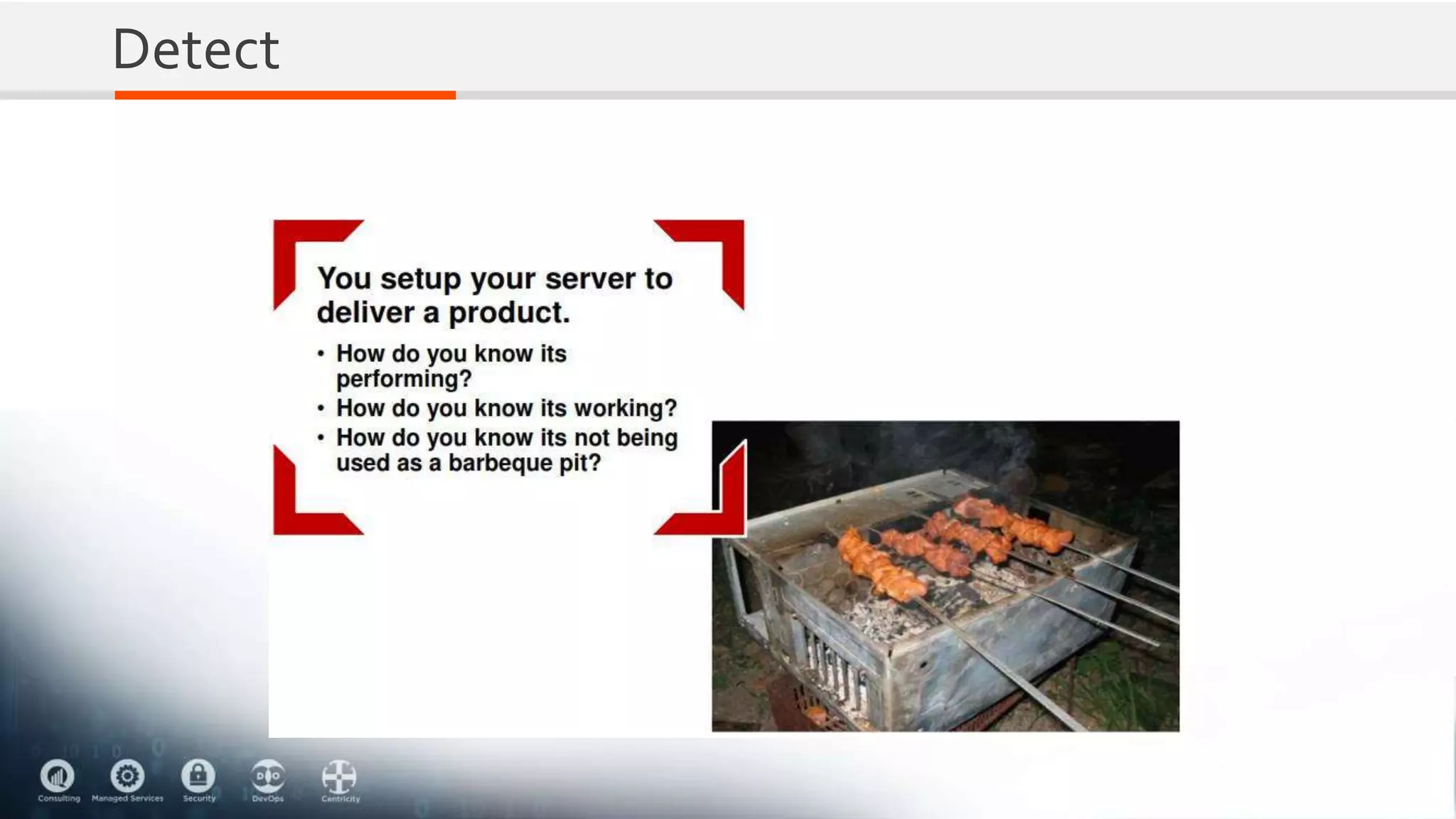
Detect
Detect
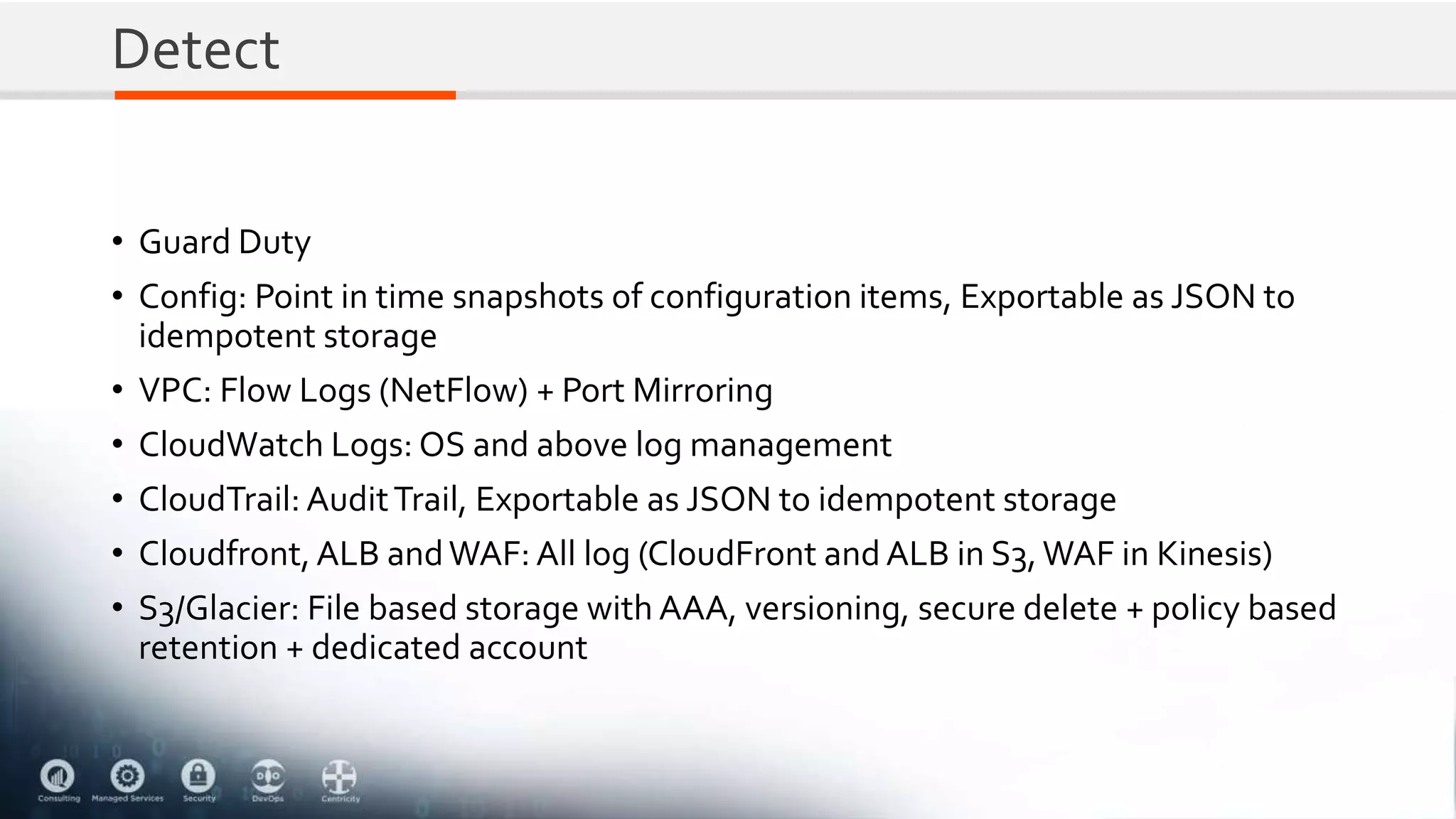
• Guard Duty
• Config: Point in time snapshots of configuration items, Exportable as JSON to
idempotent storage
• VPC: Flow Logs (NetFlow) + Port Mirroring
• CloudWatch Logs: OS and above log management
• CloudTrail: AuditTrail, Exportable as JSON to idempotent storage
• Cloudfront, ALB andWAF: All log (CloudFront and ALB in S3,WAF in Kinesis)
• S3/Glacier: File based storage with AAA, versioning, secure delete + policy based
retention + dedicated account
Respond/Recover
Respond
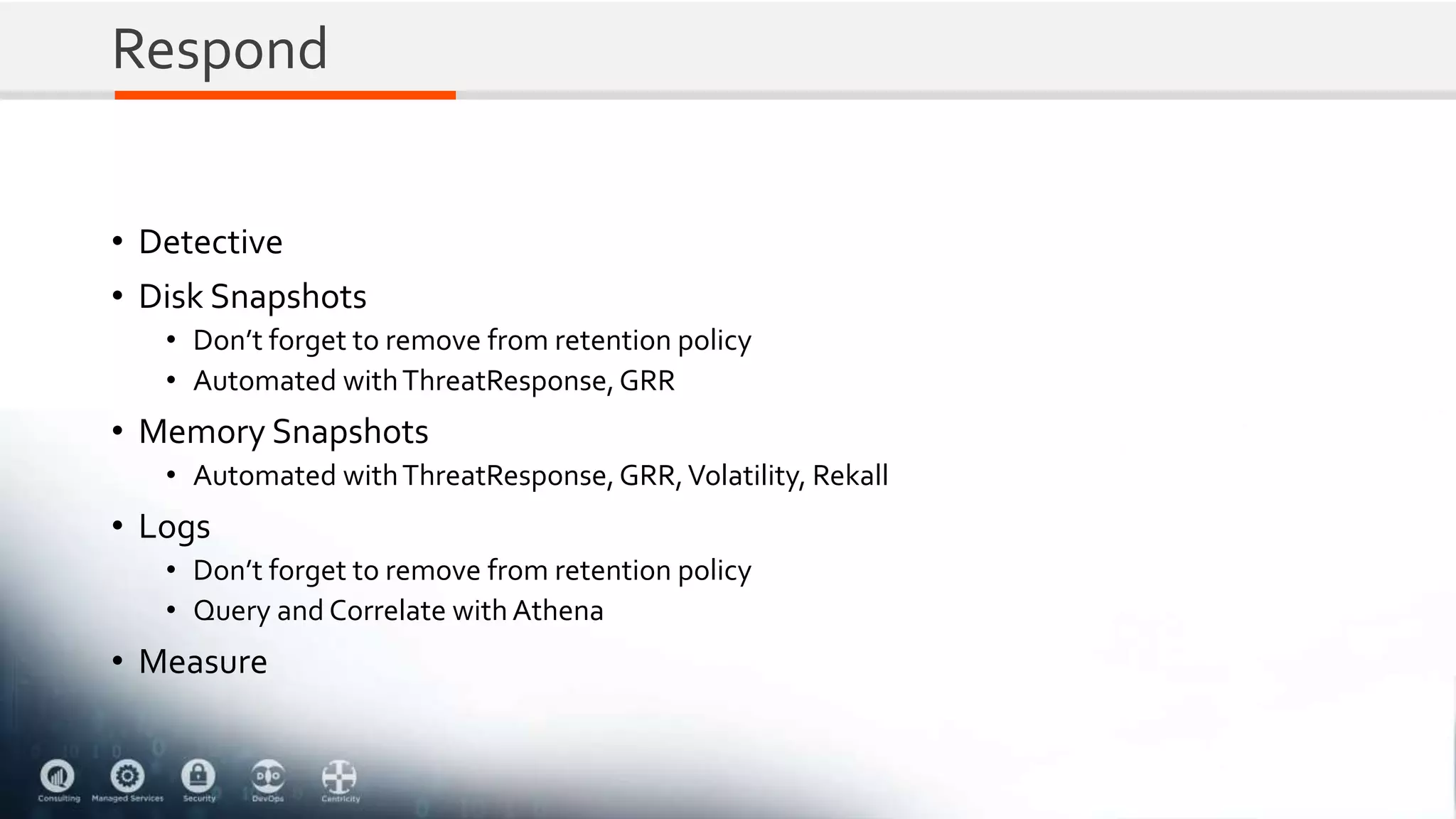
• Detective
• Disk Snapshots
• Don’t forget to remove from retention policy
• Automated withThreatResponse,GRR
• Memory Snapshots
• Automated withThreatResponse,GRR,Volatility, Rekall
• Logs
• Don’t forget to remove from retention policy
• Query and Correlate with Athena
• Measure
Recover
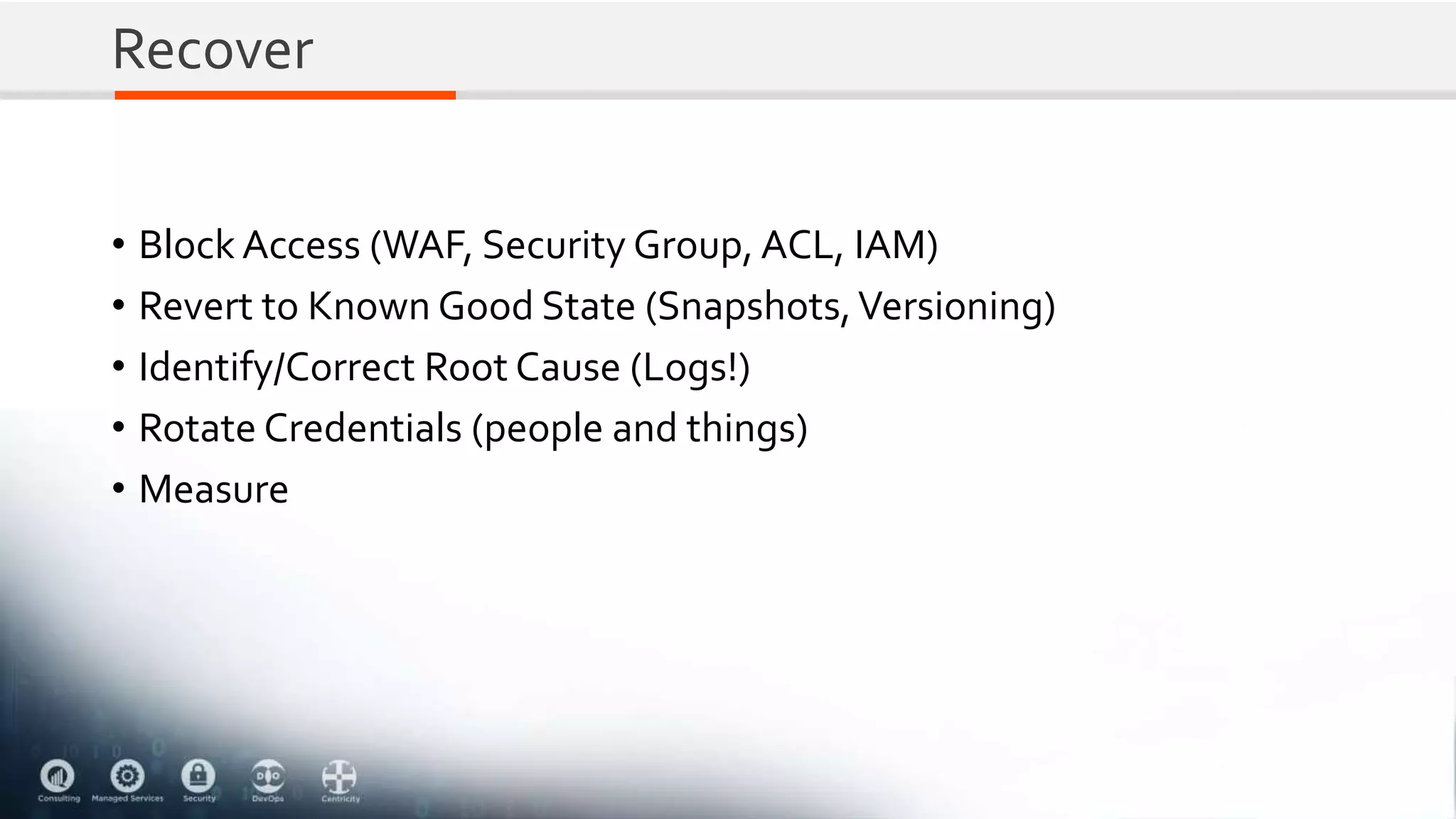
• Block Access (WAF, Security Group, ACL, IAM)
• Revert to Known Good State (Snapshots,Versioning)
• Identify/Correct Root Cause (Logs!)
• Rotate Credentials (people and things)
• Measure
Conclusion
• Iterate introduction of your security controls – some in the short term is better than none in the
long term.
• Detective Controls are just as important as Preventative Controls, they play a significant
response in incident detection and response.
• Whether your workload is onAWS or not,AWS services can be used to supplement your controls.
• There is no lack of frameworks – pick and choose from them to make a framework that works
best for your organization’s needs.
ThankYou!

NIST Cybersecurity Framework (CSF) on the Public Cloud

  • 1.
    NIST Cybersecurity Framework(CSF) on the Public Cloud
  • 2.
    Topics • Introduction • ExampleWorkload:End User Computing • What can go wrong? Ransomware Incident Response in End User Computing • End User Computing Security Best Practices • Modernizing Security Controls • NIST Cybersecurity Framework • Adjacent Frameworks • Public Cloud Services alignment to NIST Cybersecurity Framework
  • 3.
  • 4.
    Public Cloud Revenue– has/is forecasted to increaseYoY
  • 5.
    Users andVulnerable Software– Still a Challenge Verizon 2021 Data Breach Investigations Report https://www.verizon.com/business/resources/reports/2021-data-breach-investigations-report.pdfx
  • 6.
    CustomerWorkload Personas –Growth inVariety • Migrated • Server Based • Migrated & Optimized • Blends of Server and Service Based • Serverless/Native • Service Based • Orchestrated • ECS, EKS, K8s • Inherited • Wildcard! • Hybrid • Wildcard!
  • 7.
    Service Categories –Also Growth inVariety • Analytics • Application Integration • AR &VR • AWS Cost Management • Blockchain • Business Applications • Compute • Customer Engagement • Database • Developer Tools • End User Computing • GameTech • Internet ofThings • Machine Learning • Management & Governance • Media Services • Migration &Transfer • Mobile • Networking & Content Delivery • QuantumTechnologies • Robotics • Satellite • Security, Identity, & Compliance • Storage
  • 8.
  • 9.
  • 10.
    End User ComputingSample Deployment
  • 11.
    What’s missing? • IngressSecurity Group toWorkspace • Egress Security Group fromWorkspace to (Internet) • Security Groups to/from other Services (AWS and On Premises) • Security of the Workspace Environment • Security of supporting servers (Active Directory) • Security of other network-accessible resources (Web Servers) • User Permissions (Non-Local Admin, Local Admin, Global Admin) • Access of the Workspace (PKI Cert, PKI PIV, Network, MFA) • The rest of the AWSAccount?The rest of the AWSAccount! (Services, APIs)
  • 12.
    End User ComputingSample Deployment
  • 13.
    What could gowrong? • Ingress Security Group toWorkspace • Egress Security Group fromWorkspace to (Internet) • Security Groups to/from other Services (AWS and On Premises) • Security of the Workspace Environment • Security of supporting servers (Active Directory) • Security of other network-accessible resources (Web Servers) • User Permissions (Non-Local Admin, Local Admin, Global Admin) • Access of the Workspace (PKI Cert, PKI PIV, Network, MFA) • The rest of the AWSAccount?The rest of the AWSAccount! (Services, APIs)
  • 14.
  • 15.
    Overview • Through thelens of the NIST Cybersecurity Framework we will look at frameworks developed by, and services available onAWS. • Cloud Services, such as those offered by AWS either/both play a supporting role in your security posture, supporting both non-AWS resources andAWS resources alike but secure configuration of AWS resources can also play a role in supporting your security posture. • The NIST Cybersecurity Framework provides a policy framework of computer security guidance for how private sector organizations in the United States can assess and improve their ability to prevent, detect, and respond to cyber attacks.
  • 16.
    The Cybersecurity Framework Core Desiredcybersecurity outcomes organized in a hierarchy and aligned to more detailed guidance and controls Profiles Alignment of an organization’s requirements and objectives, risk appetite and resources using the desired outcomes of the Framework Core ImplementationTiers A qualitative measure of organizational cybersecurity risk management practices
  • 17.
    The Cybersecurity Framework- Functions • Identify • Develop an organizational understanding to manage cybersecurity risk to systems, people, assets, data, and capabilities. • Protect • Develop and implement appropriate safeguards to ensure delivery of critical services. • Detect • Develop and implement appropriate activities to identify the occurrence of a cybersecurity event. • Respond • Develop and implement appropriate activities to take action regarding a detected cybersecurity incident. • Recover • Develop and implement appropriate activities to maintain plans for resilience and to restore any capabilities or services that were impaired due to a cybersecurity incident.
  • 18.
    An Excerpt fromthe Framework Core 5 Functions 23 Categories 108 Subcategories 6 Informative References
  • 19.
    ImplementationTiers 1 2 34 Partial Risk Informed Repeatable Adaptive Risk Management Process The functionality and repeatability of cybersecurity risk management Integrated Risk Management Program The extent to which cybersecurity is considered in broader risk management decisions External Participation The degree to which the organization: • monitors and manages supply chain risk • benefits my sharing or receiving information from outside parties
  • 20.
    CIS Controls &Benchmarks • Controls • Similar, though more prescriptive than NIST CSF • Can be mapped to CSF • Benchmarks • Prescriptive steps to apply controls to specific technologies • AWS • Workspaces • Windows/Linux • Other Services
  • 21.
    CIS Benchmark EndUser Computing Example
  • 22.
    CloudWorkload Lifecycle ManagementFramework • Workload • Architecture • Monitoring • Automation • Processes
  • 23.
    Workload + ArchitectureDrives Service Selection • Virtual Machines • AMI • Patching • Multi-threaded/Multi-task • Hours to Months • PerVM/Per Hour • Functions/Services • Code • Versioning • Single-threaded/Single-task • Microseconds to Seconds • Per Memory/Second/Per Request • Containers • Container File • Versioning • Multi-threaded/Single-task • Minutes to Days • PerVM/Per Hour
  • 24.
  • 25.
    Automation + ProcessesDrives Lifecycle Management Selection • Organizations • Cross-AccountAsset Management + Governance • ControlTower • Account vending/default standardization • Service Catalog • Workload platform vending/default standardization • CloudFormation • IaC • Ephemeral Compute + API Managed Data/Control Plane for PersistenceTiers • Hands off/Lights out
  • 26.
    Processes • Patching • Backup/RestoreTesting •FailoverTesting (AZ) • Credential Rotation/CredentialAudit • Event ResponseTesting • Incident ResponseTesting • PerformanceTesting • Performance/Cost Review • Vulnerability/PenetrationTesting
  • 27.
    Cloud Adoption Framework(CAF) https://docs.aws.amazon.com/whitepapers/latest/overview-aws-cloud-adoption-framework/accelerating-business-outcomes.html
  • 28.
    Cloud Adoption Framework(CAF) • Perspectives • Business • Value Realization • People • Roles & Readiness • Governance • Prioritization & Control • Platform • Applications & Infrastructure • Security • Risk & Compliance • Operations • Manage & Scale
  • 29.
    Cloud Adoption Framework(CAF) - Capabilities https://docs.aws.amazon.com/whitepapers/latest/overview-aws-cloud-adoption-framework/foundational-capabilities.html
  • 30.
    Cloud Adoption Framework(CAF) – Capabilities - Security https://docs.aws.amazon.com/whitepapers/latest/overview-aws-cloud-adoption-framework/security-perspective.html
  • 31.
    CAF – SecurityPerspective • Directive • Account Ownership and contact information • Change and asset management • Least privilege access • Preventive • Identity and access • Infrastructure protection • Data protection • Detective • Logging and monitoring • Asset inventory • Change detection • Responsive • Vulnerabilities • Privilege escalation • DDoS attack
  • 32.
    Well Architected Framework(WAF) • General • Event-Triggered • Workload-Focused • General Design Principals • Pillars • Design Principals • Best Practices • Lenses
  • 33.
    WAF – Pillars •Operational Excellence • Security • Reliability • Performance Efficiency • Cost Optimization • Sustainability – New!
  • 34.
    WAF – Lenses •High Performance Computing (HPC) • Serverless • Internet ofThings (IOT) • Financial Services Industry (FinServ) • FoundationalTechnical Review (FTR) • SaaS • Streaming Media • Machine Learning • SAP • DataAnalytics • Games Industry • Hybrid Networking • Management and Governance –Well Aligned!
  • 35.
    WAF – GeneralDesign Principals • Stop guessing your capacity needs • Test systems at production scale • Automate to make architectural experimentation easier • Allow for evolutionary architectures • Drive architectures using data • Improve through game days
  • 36.
    WAF – GameDays • Prepare • Is the process/are the processes to be tested during the game day well defined? Is access in place? Has training been performed? • Define • Workload, Personnel, Scenario, Environment, Schedule • Execute • Start, Middle, End • Analyze • Debrief, Examine, Document, Root Cause Analysis (RCA), Correction of Error (CoE)
  • 37.
    WAF – SecurityPillar • Design Principles • Implement a strong identity foundation • Enable traceability • Apply security at all layers • Automate security best practices • Protect data in transit and at rest • Keep people away from data • Prepare for security events • Best Practices • Identity and Access Management • Detection • Infrastructure Protection • Data Protection • Incident Response
  • 38.
    Let’s tie itall together… https://aws.amazon.com/blogs/security/optimizing-cloud-governance-on-aws-integrating-the-nist-cybersecurity-framework-aws- cloud-adoption-framework-and-aws-well-architected/
  • 39.
  • 40.
    Identify • Everything onthe previous slides 
  • 41.
    Identify • Audit Manager •Cost Management Services (Individual Services) • Certificate Manager (Public + Private) • Firewall Manager (WAF + Security Groups) • Directory Service + Identity and Access Management (+ Services with their own Policies) • AccessAdvisor,Access Analyzer,Organization Activity • Inspector • Key Management Service + Secrets Manager • Macie • Premium Support +Trusted Advisor + Personal Health Dashboard • Systems Manager • Security Hub + Config + Config Rules • Tags
  • 42.
    Identify – Organizations •Tag policies • Artifact • Backup • CloudFormation StackSets • CloudTrail • Config • Directory Service • Firewall Manager • Resource Access Manager • Service Catalog • Single Sign-On • Systems Manager
  • 43.
  • 44.
    Protect • VPC: SecurityGroups (Stateful Firewall) + NACLs (Stateless Firewall), Network Firewall, DNS Firewall,Gateway Load Balancer • WAF: Layer 7WAF • Shield + AutoScaling + ELB + Cloud Front: DoS/DDoS Protection • VPC:VGW (Point to Point and IPSECConnectivity) + Peering (VPC toVPC Connectivity) + Endpoints (Private Connectivity to AWS Services), ClientVPN (Client toVPC Connectivity) • IAM + Directory Service + SSO: Standalone and Federated AAA • KMS: FIPS 140-2 Certified cryptographic module with integration to various AWS services, provides expiration and ability to provide self-generated cryptographic material • ACM: Public and Private PKI Certificate Authority • Secure Credential Storage: Secrets Manager, Systems Manager • Nitro Enclaves
  • 45.
    Protect • AWS AutoScaling: EC2, Dynamo,Aurora Autoscaling • Code Commit/ECS (Image Scanning)/Signer: Secure Application and Artifact Repository + dedicated account • Code Deploy/Systems Manager: “Hands off” OS and configuration management + application deployment • EC2: Systems Manager (OS and above patching + auditing), Amazon Linux 2 Live Patching • AWS Backup: EC2, RDS, EFS, Dynamo Backups + dedicated account • Workspaces: Secure Bastion • CloudFormation + OpsWorks + Elastic Beanstalk: “Hands off” infrastructure management • S3/Glacier: File based storage with AAA, versioning, secure delete + policy based retention • Host Based Security
  • 46.
  • 47.
    Detect • Guard Duty •Config: Point in time snapshots of configuration items, Exportable as JSON to idempotent storage • VPC: Flow Logs (NetFlow) + Port Mirroring • CloudWatch Logs: OS and above log management • CloudTrail: AuditTrail, Exportable as JSON to idempotent storage • Cloudfront, ALB andWAF: All log (CloudFront and ALB in S3,WAF in Kinesis) • S3/Glacier: File based storage with AAA, versioning, secure delete + policy based retention + dedicated account
  • 48.
  • 49.
    Respond • Detective • DiskSnapshots • Don’t forget to remove from retention policy • Automated withThreatResponse,GRR • Memory Snapshots • Automated withThreatResponse,GRR,Volatility, Rekall • Logs • Don’t forget to remove from retention policy • Query and Correlate with Athena • Measure
  • 50.
    Recover • Block Access(WAF, Security Group, ACL, IAM) • Revert to Known Good State (Snapshots,Versioning) • Identify/Correct Root Cause (Logs!) • Rotate Credentials (people and things) • Measure
  • 51.
    Conclusion • Iterate introductionof your security controls – some in the short term is better than none in the long term. • Detective Controls are just as important as Preventative Controls, they play a significant response in incident detection and response. • Whether your workload is onAWS or not,AWS services can be used to supplement your controls. • There is no lack of frameworks – pick and choose from them to make a framework that works best for your organization’s needs.
  • 52.