X
PHYSICAL FEATURES OF
INDIA :
 Mountains
 Rivers
 Plains of India
 Plateaus of India
 Coastal areas andMajor Islands of India
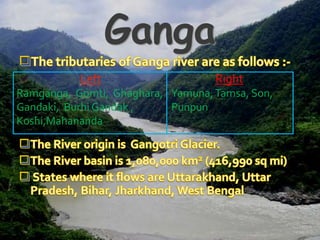
Left
Ramganga, Gomti, Ghaghara,
Gandaki, Burhi Gandak ,
Koshi,Mahananda
Right
Yamuna,Tamsa, Son,
Punpun

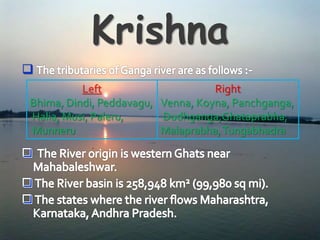
Left
Bhima, Dindi, Peddavagu,
Halia, Musi, Paleru,
Munneru
Right
Venna, Koyna, Panchganga,
Dudhganga,Ghataprabha,
Malaprabha,Tungabhadra
Eastern coastal plains
Indo-Gangetic Plain
The northern Plains also known as the Indo –
Gangetic Plain and the North Indian River Plain is a
large and fertile plain encompassing most of northern
and eastern India, the most populous parts
of Pakistan, parts of southern Nepal and virtually all
of Bangladesh. The region is named after the
Indus and the Ganges, the twin river systems that
drain it.
The plain's population density is very high due to the
fertile soil for farming.
The plains support one of the most populous areas
on Earth, being home to nearly 1 billion people (or
around 1/7 of the world's population) on 700,000 km²
Plateaus
of India
Deccan Plateau
The Deccan Plateau is a large plateau in India,
making up most of the southern part of the
country. It rises a hundred meters high in the
north, and more than a kilometer high in the
south, forming a raised triangle within the
familiar downward-pointing triangle of the Indian
subcontinent's coastline. It is located between
two mountain ranges: the Western Ghats form
its western boundary, and the Eastern Ghats its
eastern boundary. Each rises from their
respective nearby coastal plains and nearly
meet at the southern tip of India. It is separated
from the Gangetic plain to the north by
Chota Nagpur Plateau
 The Chota Nagpur Plateau is a plateau in
eastern India, which covers much of
Jharkhand state as well as adjacent parts
of Orissa, West Bengal, Bihar and Chhattisgarh.
The Indo-Gangetic plain lies to the north and
east of the plateau, and the basin of
the Mahanadi River lies to the south. The total
area of the Chota Plateau is approximately
65,000 square kilometers (25,000 sq mi). The
Chota Nagpur Plateau is a continental plateau -
an extensive area of land thrust above the
general land. The plateau has been formed by
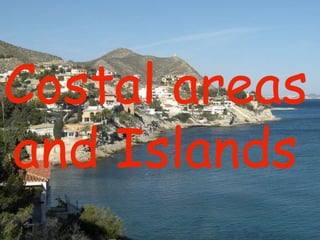
Costal areas
and Islands
The Eastern Coastal Plain is a wide
stretch of land lying between the Eastern
Ghats and the Bay of Bengal. It stretches
from Tamil Nadu in the south to West
Bengal in the east. The Western Coastal
Plain is a narrow strip of land sandwiched
between the Western Ghats and the
Arabian Sea, ranging from 50 to 100 km
(31 to 62 mi) in width.
The Lakshadweep and the Andaman and
Nicobar Islands are India's two major
island formations and are classified
as union territories. The Lakshadweep
Islands lie 200 to 300 km (120 to 190 mi)
off the coast of Kerala in the Arabian Sea
with an area of 32 km2 (12 sq mi). The
Andaman and Nicobar Islands are located
between 6° and 14° north latitude and 92°
and 94° east longitude.
Nikhil prajapat

Nikhil prajapat

  • 1.
  • 2.
    PHYSICAL FEATURES OF INDIA:  Mountains  Rivers  Plains of India  Plateaus of India  Coastal areas andMajor Islands of India
  • 8.
    Left Ramganga, Gomti, Ghaghara, Gandaki,Burhi Gandak , Koshi,Mahananda Right Yamuna,Tamsa, Son, Punpun
  • 10.
     Left Bhima, Dindi, Peddavagu, Halia,Musi, Paleru, Munneru Right Venna, Koyna, Panchganga, Dudhganga,Ghataprabha, Malaprabha,Tungabhadra
  • 12.
  • 13.
    Indo-Gangetic Plain The northernPlains also known as the Indo – Gangetic Plain and the North Indian River Plain is a large and fertile plain encompassing most of northern and eastern India, the most populous parts of Pakistan, parts of southern Nepal and virtually all of Bangladesh. The region is named after the Indus and the Ganges, the twin river systems that drain it. The plain's population density is very high due to the fertile soil for farming. The plains support one of the most populous areas on Earth, being home to nearly 1 billion people (or around 1/7 of the world's population) on 700,000 km²
  • 14.
  • 15.
    Deccan Plateau The DeccanPlateau is a large plateau in India, making up most of the southern part of the country. It rises a hundred meters high in the north, and more than a kilometer high in the south, forming a raised triangle within the familiar downward-pointing triangle of the Indian subcontinent's coastline. It is located between two mountain ranges: the Western Ghats form its western boundary, and the Eastern Ghats its eastern boundary. Each rises from their respective nearby coastal plains and nearly meet at the southern tip of India. It is separated from the Gangetic plain to the north by
  • 16.
    Chota Nagpur Plateau The Chota Nagpur Plateau is a plateau in eastern India, which covers much of Jharkhand state as well as adjacent parts of Orissa, West Bengal, Bihar and Chhattisgarh. The Indo-Gangetic plain lies to the north and east of the plateau, and the basin of the Mahanadi River lies to the south. The total area of the Chota Plateau is approximately 65,000 square kilometers (25,000 sq mi). The Chota Nagpur Plateau is a continental plateau - an extensive area of land thrust above the general land. The plateau has been formed by
  • 17.
  • 18.
    The Eastern CoastalPlain is a wide stretch of land lying between the Eastern Ghats and the Bay of Bengal. It stretches from Tamil Nadu in the south to West Bengal in the east. The Western Coastal Plain is a narrow strip of land sandwiched between the Western Ghats and the Arabian Sea, ranging from 50 to 100 km (31 to 62 mi) in width.
  • 19.
    The Lakshadweep andthe Andaman and Nicobar Islands are India's two major island formations and are classified as union territories. The Lakshadweep Islands lie 200 to 300 km (120 to 190 mi) off the coast of Kerala in the Arabian Sea with an area of 32 km2 (12 sq mi). The Andaman and Nicobar Islands are located between 6° and 14° north latitude and 92° and 94° east longitude.