NIKE
                  BY
          B.C.VENKATAGIRI
             MBA IST YEAR
               11HM08
   NATIONAL INSTITUTE OF TECHNOLGY
        KARNATAKA,SURATHKAL
Introduction
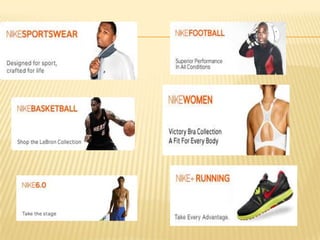
Nike operates within the sports footwear and apparel
market. Originally designing and producing running
shoes, their portfolio has broadened to include a wide
range of sports and leisure wear. This is all endorsed
by top sporting personalities.
VALUE CHAIN

 Nike’s Value chain provides a clear view of the
  extent of the global nature of the company.
  Nike’s headquarters are in America;
  however, virtually all of its production takes
  place outside of the United States.
 Nike’s value chain upstream begins with the
  materials used in the production of its products.
  Many of these materials used in production are
  available in the locations which the
  manufacturing takes place, but some
  specialised materials have to be imported to the
  manufacturing company.
Nike Branding

   Global brand
    Consumers are willing to pay a premium price for; as they
    imply credibility, high quality and up-to-date global trend.
   When companies are bought trade under their name.
   Moving into a new market with a brand that is already global
    you can reduce cost of introductory and follow-up marketing
    programs.
   Ensures customer loyalty and to widen portfolio.
   Concentrating on core products as Nike, allowing growth in
    new diverse markets
   significant scales of economy are achieved , this is in terms of
    brand development, packaging and manufacturing.
MARKETING STRATEGY

   Sports personalities have endorsed the Nike
    product, although with numerous different sports and
    countries targeted this has been costly. The amount
    each personality has received is considered high.
   This forces the competitors to market their products
    in the same way.
   Trends within the industry have increased the number
    of female consumers.
    With advertising Nike has targeted segments of the
    market, this costly. Nike should review their
    advertising policies.
4PS

   The athletic shoe industry is highly competitive as well as a
    demanding market where fierce competition, price conscience
    consumers, and constant changing market trends and fads have
    all been attributing factors in how a manufacturer responds.
   Highly focused brand includes Nike, Adidas, and Reebok, they
    target a precise market. However, there is evidence that a brand
    will widen its target market as it reaches a greater level of
    maturity. In the case of Nike, for example, there was a move into
    new sports areas away from the running heritage. Nike’s target
    audience has moved from more masculine towards female and
    Generation Y.
   Price is related to Product, through the characteristics of the
    brand, it’s packaging and overall image. People are buying into
    an ideal, not just the item. Consumers believe that there is a link
    between quality of a product and the price. Consumers question
    what they are getting for their money. Brand
    Management, customer awareness and loyalty, is directly
    linked to the price, therefore maintenance of the relationship
    between brand images; quality and price have to be consistent.
DISTRIBUTION AND RETAILERS

   Nike has a strong network of retailers in 200 coutries
    world wide through distributors, licensees and
    subsidiaries. Within the USA there are 18000 stores
    that retail nike products. These are well established
    channels.
   Nike made itself heavily dependant on one retailer
    Footlocker, representing 10% of their revenue. When
    Footlocker reduced their purchasing form Nike, it
    created a reduction in turnover in the short term.
    Organisations that are over dependant on one retailer
    are open to cash flow problems, if the retailer
    switches suppliers, reduces purchasing or ceases
    trading .
SUPPLY CHAIN

   Like every large IT undertaking, the team responsible
    for the implementation of Nike Supply Chain (NSC)
    began with a set of specific, stated goals:
   Enhancing Nike’s ability to respond to changing
    conditions;
   Reducing inventory and capital investment risk;
   Improving service to meet customer/consumer needs;
   Improving process, information and product quality;
    and
   Providing an efficient global supply chain with local
    implementation.
BCG MATRIX

 Nike is established within its
  markets, benefiting from economies of scale.
 This places them in the Cash Cows category
  on the Matrix.
 Cash cows market growth has slowed, and
  the products hold a fairly stable market
  share.

Nike MARKETING

  • 1.
    NIKE BY B.C.VENKATAGIRI MBA IST YEAR 11HM08 NATIONAL INSTITUTE OF TECHNOLGY KARNATAKA,SURATHKAL
  • 2.
    Introduction Nike operates withinthe sports footwear and apparel market. Originally designing and producing running shoes, their portfolio has broadened to include a wide range of sports and leisure wear. This is all endorsed by top sporting personalities.
  • 3.
    VALUE CHAIN  Nike’sValue chain provides a clear view of the extent of the global nature of the company. Nike’s headquarters are in America; however, virtually all of its production takes place outside of the United States.  Nike’s value chain upstream begins with the materials used in the production of its products. Many of these materials used in production are available in the locations which the manufacturing takes place, but some specialised materials have to be imported to the manufacturing company.
  • 4.
    Nike Branding  Global brand  Consumers are willing to pay a premium price for; as they imply credibility, high quality and up-to-date global trend.  When companies are bought trade under their name.  Moving into a new market with a brand that is already global you can reduce cost of introductory and follow-up marketing programs.  Ensures customer loyalty and to widen portfolio.  Concentrating on core products as Nike, allowing growth in new diverse markets  significant scales of economy are achieved , this is in terms of brand development, packaging and manufacturing.
  • 6.
    MARKETING STRATEGY  Sports personalities have endorsed the Nike product, although with numerous different sports and countries targeted this has been costly. The amount each personality has received is considered high.  This forces the competitors to market their products in the same way.  Trends within the industry have increased the number of female consumers.  With advertising Nike has targeted segments of the market, this costly. Nike should review their advertising policies.
  • 8.
    4PS  The athletic shoe industry is highly competitive as well as a demanding market where fierce competition, price conscience consumers, and constant changing market trends and fads have all been attributing factors in how a manufacturer responds.  Highly focused brand includes Nike, Adidas, and Reebok, they target a precise market. However, there is evidence that a brand will widen its target market as it reaches a greater level of maturity. In the case of Nike, for example, there was a move into new sports areas away from the running heritage. Nike’s target audience has moved from more masculine towards female and Generation Y.  Price is related to Product, through the characteristics of the brand, it’s packaging and overall image. People are buying into an ideal, not just the item. Consumers believe that there is a link between quality of a product and the price. Consumers question what they are getting for their money. Brand Management, customer awareness and loyalty, is directly linked to the price, therefore maintenance of the relationship between brand images; quality and price have to be consistent.
  • 10.
    DISTRIBUTION AND RETAILERS  Nike has a strong network of retailers in 200 coutries world wide through distributors, licensees and subsidiaries. Within the USA there are 18000 stores that retail nike products. These are well established channels.  Nike made itself heavily dependant on one retailer Footlocker, representing 10% of their revenue. When Footlocker reduced their purchasing form Nike, it created a reduction in turnover in the short term. Organisations that are over dependant on one retailer are open to cash flow problems, if the retailer switches suppliers, reduces purchasing or ceases trading .
  • 11.
    SUPPLY CHAIN  Like every large IT undertaking, the team responsible for the implementation of Nike Supply Chain (NSC) began with a set of specific, stated goals:  Enhancing Nike’s ability to respond to changing conditions;  Reducing inventory and capital investment risk;  Improving service to meet customer/consumer needs;  Improving process, information and product quality; and  Providing an efficient global supply chain with local implementation.
  • 12.
    BCG MATRIX  Nikeis established within its markets, benefiting from economies of scale.  This places them in the Cash Cows category on the Matrix.  Cash cows market growth has slowed, and the products hold a fairly stable market share.