USING A RISK FRAMEWORK
Applying the Common Network Asset Indices
Methodology in practice
April Hutchen, SEAMS
Sam Gibson, NIE Networks
Kyle Taylor, NIE Networks
2 nienetworks.co.uk
Background to the project
• The Common Asset Indices Methodology was developed by the GB DNOs, and
subsequently approved by OFGEM in early 2016
• NIE Networks were looking at different tools to support their RP6 Price Control
submission and Asset Investment Planning moving forward
• SEAMS started working with NIE Networks in November 2015 to support the RP6
submission
• This presentation will show how the CNAIM methodology has been used to support
NIE Networks regulatory submission
3 nienetworks.co.uk
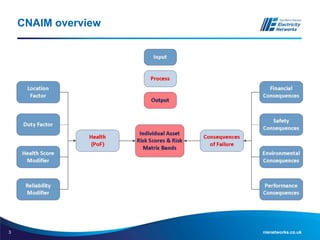
CNAIM overview
4 nienetworks.co.uk
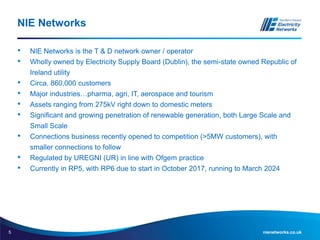
Criticality overview
Type Safety
Rating
Criticality
Index
Consequential
Cost
NetworkSafety EnvironmentalFinancial
Reference
Safety Cost
Safety Factor
Reference
Financial Cost
Financial
Factors
Reference
Environmental
Cost
Environmental
Factors
Reference
Network Cost
Network
Factor
Type Safety
Rating
Access Financial
Rating
Category
Financial Rating
Type
Environment
Rating
Size
Environment
Rating
Location
Environment
Rating
Customer
Sensitivity
Number of
Customers
Load
Type
Asset Register
Category
5 nienetworks.co.uk
NIE Networks
• NIE Networks is the T & D network owner / operator
• Wholly owned by Electricity Supply Board (Dublin), the semi-state owned Republic of
Ireland utility
• Circa. 860,000 customers
• Major industries…pharma, agri, IT, aerospace and tourism
• Assets ranging from 275kV right down to domestic meters
• Significant and growing penetration of renewable generation, both Large Scale and
Small Scale
• Connections business recently opened to competition (>5MW customers), with
smaller connections to follow
• Regulated by UREGNI (UR) in line with Ofgem practice
• Currently in RP5, with RP6 due to start in October 2017, running to March 2024
6 nienetworks.co.uk
Why use the Common Methodology at NIE?
• Standardised assessment of asset Health and Criticality
• Projection of future Health degradation
• Application of agreed, national, failure rates and costs, and costs of intervention
• NIE Networks observer to DNO Working Group
• Adopted by OFGEM in early 2016
• Monetises risk, both now and in the future
• Ranks assets within category by cost of risk
• Allocates Health and Criticality scores
• Used primarily as a regulatory reporting tool
• However, can we use the Common Methodology to produce investment proposals?
7 nienetworks.co.uk
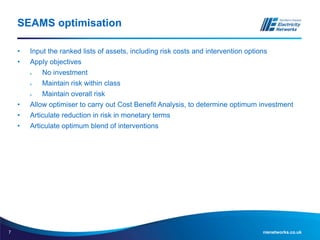
SEAMS optimisation
• Input the ranked lists of assets, including risk costs and intervention options
• Apply objectives
 No investment
 Maintain risk within class
 Maintain overall risk
• Allow optimiser to carry out Cost Benefit Analysis, to determine optimum investment
• Articulate reduction in risk in monetary terms
• Articulate optimum blend of interventions
8 nienetworks.co.uk
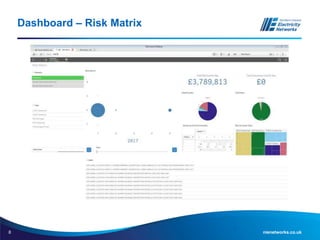
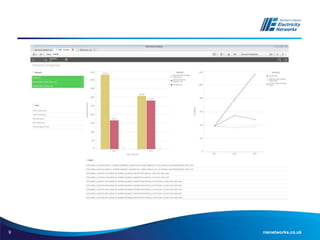
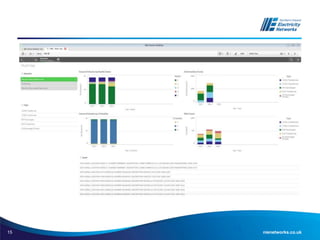
Dashboard – Risk Matrix
8
9 nienetworks.co.uk9
10 nienetworks.co.uk
Assessment of approach
• A standardised (so defendable) approach to assessing Health and Criticality
• Use of standardised failure rates and costs allows consistent ranking
• BUT ... not true to individual DNO specifics (eg. London / Belfast / Inverness?)
• Similarly, SEAMS optimisation can absorb standardised (i.e. CNAIM) interventions
• Develops an investment proposal based on agreed principles and costs
• BUT ... Investment is not based on DNO’s own costs
11 nienetworks.co.uk
So where next?
• Apply CNAIM to articulate Health and Criticality using standardised costs
• Apply CNAIM methodology principles, but with DNO specific costs, to articulate
actual Health and Criticality of own assets
• Apply SEAMS optimisation, again based on DNO specific costs, to develop a tailored
investment proposal (or series of proposals with varying objectives)
• Consider grouped assets
 Optimisation of switchboards, package substations
• Can approach be applied to other asset groups (outside of CNAIM)?
 Civils
 Control & Protection
12 nienetworks.co.uk
Benefits of Cross Asset Optimisation
• Asset level models – consider all potential interventions
• Capital replacements, operational interventions, inspections
• Enables the trading of investment decisions across asset classes
• NIE Networks models currently include 5 major asset classes and can be quickly
grown
• Allows ‘what if’ scenario analysis – minimise whole life cost or risk
 What is my optimal investment profile with a 5% budget reduction?
 What is the cost required to reduce my global risk profile by 10%?
 What is the impact of moving £500K from wooden poles to substations?
• Cross Asset Optimisation delivers a typical cost savings of 7 to 17%
13 nienetworks.co.uk
Conclusions & Recommendations
• The ability to model an asset base, providing a monetised view of risk
• Standardised, so defendable
• Methodical, data driven, objective, repeatable
• Step change in regulated industries where investment programmes are projected
over the medium to long term
• Data will never be perfect; start where you’re at!
• The environment can be built up – NIE Networks started with one asset class
14 nienetworks.co.uk
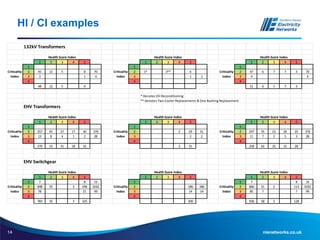
HI / CI examples
1 2 3 4 5 1 2 3 4 5 1 2 3 4 5
1 1 1
2 45 12 5 8 70 2 1* 3** 6 2 47 6 7 7 3 70
3 3 1 4 3 1 1 3 4 4
4 4 4
48 12 5 9 51 6 7 7 3
* Denotes Oil Reconditioning
** Denotes Two Cooler Replacements & One Bushing Replacement
1 2 3 4 5 1 2 3 4 5 1 2 3 4 5
1 1 1
2 257 45 27 17 30 376 2 2 29 31 2 247 55 23 26 25 376
3 13 8 4 1 2 28 3 2 2 3 11 7 2 5 3 28
4 4 4
270 53 31 18 32 2 31 258 62 25 31 28
1 2 3 4 5 1 2 3 4 5 1 2 3 4 5
1 7 8 15 1 1 7 8 15
2 698 35 3 296 1032 2 186 186 2 866 51 2 113 1032
3 78 21 99 3 14 14 3 85 7 7 99
4 4 4
783 35 3 325 200 958 58 2 128
Health Score Index Health Score Index
Criticality
Index
Criticality
Index
Criticality
Index
Criticality
Index
Criticality
Index
132kV Transformers
EHV Transformers
Health Score Index Health Score Index
Criticality
Index
Criticality
Index
Health Score Index
Criticality
Index
Health Score Index
Health Score Index Health Score Index
EHV Switchgear
Health Score Index
Criticality
Index
15 nienetworks.co.uk15

NIE Networks:Using a risk framework in practice

  • 1.
    USING A RISKFRAMEWORK Applying the Common Network Asset Indices Methodology in practice April Hutchen, SEAMS Sam Gibson, NIE Networks Kyle Taylor, NIE Networks
  • 2.
    2 nienetworks.co.uk Background tothe project • The Common Asset Indices Methodology was developed by the GB DNOs, and subsequently approved by OFGEM in early 2016 • NIE Networks were looking at different tools to support their RP6 Price Control submission and Asset Investment Planning moving forward • SEAMS started working with NIE Networks in November 2015 to support the RP6 submission • This presentation will show how the CNAIM methodology has been used to support NIE Networks regulatory submission
  • 3.
  • 4.
    4 nienetworks.co.uk Criticality overview TypeSafety Rating Criticality Index Consequential Cost NetworkSafety EnvironmentalFinancial Reference Safety Cost Safety Factor Reference Financial Cost Financial Factors Reference Environmental Cost Environmental Factors Reference Network Cost Network Factor Type Safety Rating Access Financial Rating Category Financial Rating Type Environment Rating Size Environment Rating Location Environment Rating Customer Sensitivity Number of Customers Load Type Asset Register Category
  • 5.
    5 nienetworks.co.uk NIE Networks •NIE Networks is the T & D network owner / operator • Wholly owned by Electricity Supply Board (Dublin), the semi-state owned Republic of Ireland utility • Circa. 860,000 customers • Major industries…pharma, agri, IT, aerospace and tourism • Assets ranging from 275kV right down to domestic meters • Significant and growing penetration of renewable generation, both Large Scale and Small Scale • Connections business recently opened to competition (>5MW customers), with smaller connections to follow • Regulated by UREGNI (UR) in line with Ofgem practice • Currently in RP5, with RP6 due to start in October 2017, running to March 2024
  • 6.
    6 nienetworks.co.uk Why usethe Common Methodology at NIE? • Standardised assessment of asset Health and Criticality • Projection of future Health degradation • Application of agreed, national, failure rates and costs, and costs of intervention • NIE Networks observer to DNO Working Group • Adopted by OFGEM in early 2016 • Monetises risk, both now and in the future • Ranks assets within category by cost of risk • Allocates Health and Criticality scores • Used primarily as a regulatory reporting tool • However, can we use the Common Methodology to produce investment proposals?
  • 7.
    7 nienetworks.co.uk SEAMS optimisation •Input the ranked lists of assets, including risk costs and intervention options • Apply objectives  No investment  Maintain risk within class  Maintain overall risk • Allow optimiser to carry out Cost Benefit Analysis, to determine optimum investment • Articulate reduction in risk in monetary terms • Articulate optimum blend of interventions
  • 8.
  • 9.
  • 10.
    10 nienetworks.co.uk Assessment ofapproach • A standardised (so defendable) approach to assessing Health and Criticality • Use of standardised failure rates and costs allows consistent ranking • BUT ... not true to individual DNO specifics (eg. London / Belfast / Inverness?) • Similarly, SEAMS optimisation can absorb standardised (i.e. CNAIM) interventions • Develops an investment proposal based on agreed principles and costs • BUT ... Investment is not based on DNO’s own costs
  • 11.
    11 nienetworks.co.uk So wherenext? • Apply CNAIM to articulate Health and Criticality using standardised costs • Apply CNAIM methodology principles, but with DNO specific costs, to articulate actual Health and Criticality of own assets • Apply SEAMS optimisation, again based on DNO specific costs, to develop a tailored investment proposal (or series of proposals with varying objectives) • Consider grouped assets  Optimisation of switchboards, package substations • Can approach be applied to other asset groups (outside of CNAIM)?  Civils  Control & Protection
  • 12.
    12 nienetworks.co.uk Benefits ofCross Asset Optimisation • Asset level models – consider all potential interventions • Capital replacements, operational interventions, inspections • Enables the trading of investment decisions across asset classes • NIE Networks models currently include 5 major asset classes and can be quickly grown • Allows ‘what if’ scenario analysis – minimise whole life cost or risk  What is my optimal investment profile with a 5% budget reduction?  What is the cost required to reduce my global risk profile by 10%?  What is the impact of moving £500K from wooden poles to substations? • Cross Asset Optimisation delivers a typical cost savings of 7 to 17%
  • 13.
    13 nienetworks.co.uk Conclusions &Recommendations • The ability to model an asset base, providing a monetised view of risk • Standardised, so defendable • Methodical, data driven, objective, repeatable • Step change in regulated industries where investment programmes are projected over the medium to long term • Data will never be perfect; start where you’re at! • The environment can be built up – NIE Networks started with one asset class
  • 14.
    14 nienetworks.co.uk HI /CI examples 1 2 3 4 5 1 2 3 4 5 1 2 3 4 5 1 1 1 2 45 12 5 8 70 2 1* 3** 6 2 47 6 7 7 3 70 3 3 1 4 3 1 1 3 4 4 4 4 4 48 12 5 9 51 6 7 7 3 * Denotes Oil Reconditioning ** Denotes Two Cooler Replacements & One Bushing Replacement 1 2 3 4 5 1 2 3 4 5 1 2 3 4 5 1 1 1 2 257 45 27 17 30 376 2 2 29 31 2 247 55 23 26 25 376 3 13 8 4 1 2 28 3 2 2 3 11 7 2 5 3 28 4 4 4 270 53 31 18 32 2 31 258 62 25 31 28 1 2 3 4 5 1 2 3 4 5 1 2 3 4 5 1 7 8 15 1 1 7 8 15 2 698 35 3 296 1032 2 186 186 2 866 51 2 113 1032 3 78 21 99 3 14 14 3 85 7 7 99 4 4 4 783 35 3 325 200 958 58 2 128 Health Score Index Health Score Index Criticality Index Criticality Index Criticality Index Criticality Index Criticality Index 132kV Transformers EHV Transformers Health Score Index Health Score Index Criticality Index Criticality Index Health Score Index Criticality Index Health Score Index Health Score Index Health Score Index EHV Switchgear Health Score Index Criticality Index
  • 15.