Nicotine
Presented by:
Ashfaq Afridi
Nicotine
•Class: CNS Stimulant
•Legal drug
•Schedule: Schedule II drug
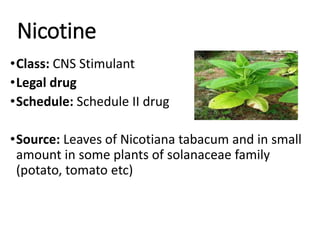
•Source: Leaves of Nicotiana tabacum and in small
amount in some plants of solanaceae family
(potato, tomato etc)
Effects on body
•Stimulation
•Relaxation
•Enhance Memory
•Alertness
•Calmness
•Reduce Appetite
•Weight lose
•CVS diseases
•Tachycardia
•Increased B.P
•Peptic ulcer
•Bronchospasm
Dependence
•Physical dependence: As nicotine belongs to
schedule II, it causes high physical dependence
•Psychological dependence: Nicotine causes high
psychological dependence
Tolerance
•Dose needs to be increased to produce the
same effects due to internalization or down
regulation of nicotinic receptors.
Withdrawal Effects
•As nicotine causes high dependence, when it is
stopped or dose is reduced, following withdrawal
symptoms appear:
1. Intense craving for nicotine
2. Nausea & intestinal cramps
3. Headaches
4. Insomnia
5. Sweating
6. Anxiety
7. Reduced concentration
•Depression
•Tingling in hands & feet
•Irritability
Nicotine withdrawal treatment
•Nicotine gums
•Skin patches
•Sprays & inhalers
•Non-nicotine prescription medications such
as Zyban or Chantix
•Lobeline
•E-Cigarettes
Interesting facts
•On May 17, 1988, the U.S. Surgeon General
warned that nicotine is as addictive as heroin
and cocaine.
•According to the CDC, during 2011 tobacco
killed 11 times more Americans than all
illegal drugs combined
•Girls mostly use nicotine to lose weight and
reduce appetite
References
•https://www.healthline.com/health/smoking
/nicotine-withdrawal
•Gender, Women, and the Tobacco Epidemic
by WHO
Nicotine.pptx

Nicotine.pptx