Newborn Screening
Katherine (Kati) Anderson, MD, FAAP, FACMG
May 9, 2023
1
Learning Objectives
By the end of this session, attendees will be able to:
• Identify and explain the modalities, purpose and targets for newborn
screening testing
• Identify situations in which it may be more appropriate to proceed to
diagnostic testing in addition to/instead of newborn screening
• Develop a framework of resources for additional information to provide
families and other providers in cases of abnormal newborn screens
2
Discussion Questions
• What should a primary care provider’s first step
be if they receive a call about an abnormal
newborn screen?
• Are there situations where you should skip a
portion of the newborn screening process and go
straight to diagnostic testing?
• What is the most important information to share
with families when transmitting abnormal
newborn screening results?
First, a plea…
• Please do not refer to the newborn screening
bloodspot card as the “PKU Test”
– The whole team starts to do this when they hear it
– It confuses parents
– It confuses providers
– It is not accurate
Key Points
• Newborn screening programs are state-specific
– National Recommended Uniform Screening Panel
exists but not mandated
• Opt-out testing
• Goal to identify newborns at risk of treatable
disorders who appear normal at birth.
• Traditionally focused on disorders with effective
early treatment
• Testing is NOT diagnostic
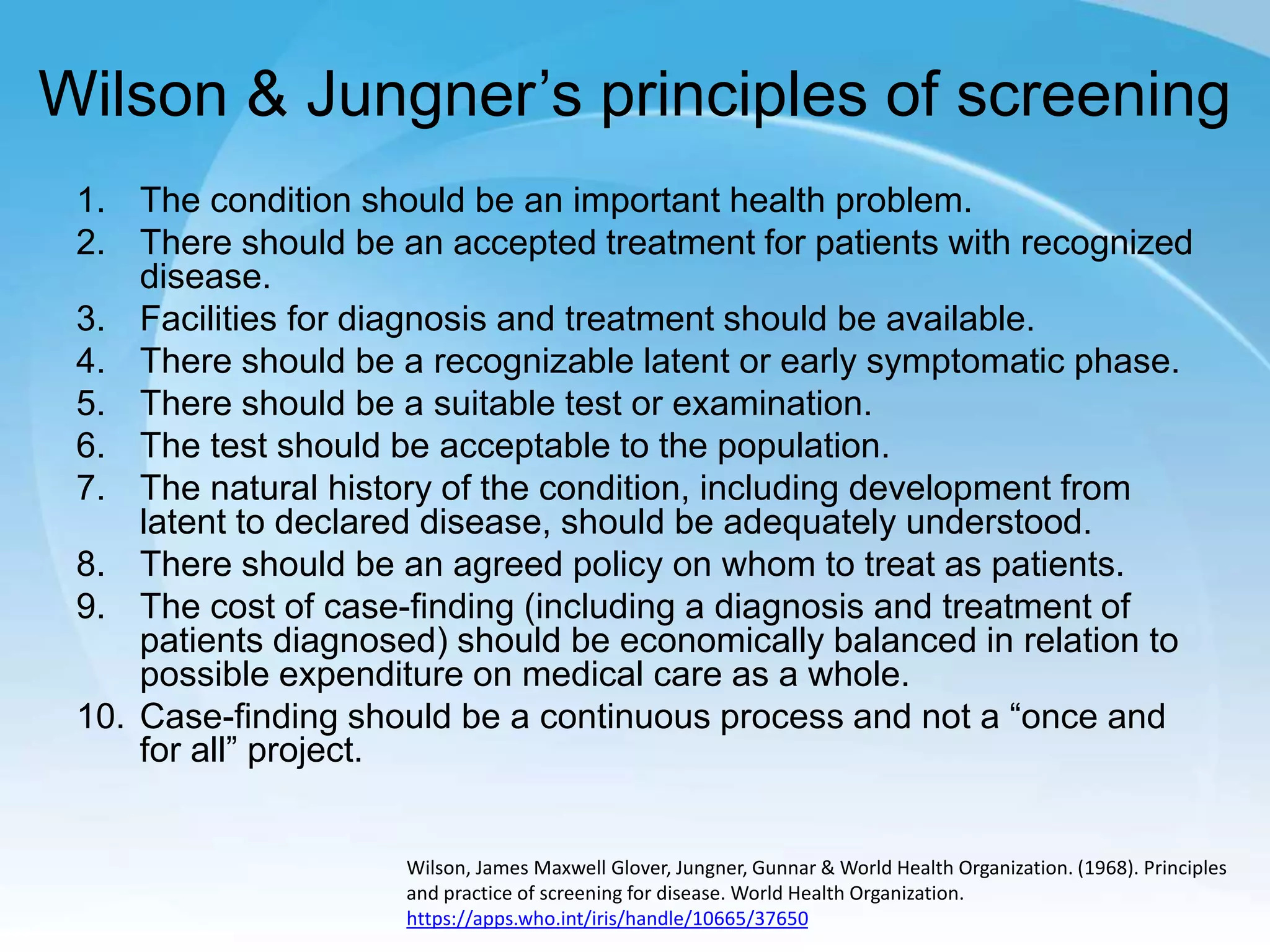
1. The condition should be an important health problem.
2. There should be an accepted treatment for patients with recognized
disease.
3. Facilities for diagnosis and treatment should be available.
4. There should be a recognizable latent or early symptomatic phase.
5. There should be a suitable test or examination.
6. The test should be acceptable to the population.
7. The natural history of the condition, including development from
latent to declared disease, should be adequately understood.
8. There should be an agreed policy on whom to treat as patients.
9. The cost of case-finding (including a diagnosis and treatment of
patients diagnosed) should be economically balanced in relation to
possible expenditure on medical care as a whole.
10. Case-finding should be a continuous process and not a “once and
for all” project.
Wilson & Jungner’s principles of screening
Wilson, James Maxwell Glover, Jungner, Gunnar & World Health Organization. (1968). Principles
and practice of screening for disease. World Health Organization.
https://apps.who.int/iris/handle/10665/37650
Minimum Criteria for Condition Inclusion
• Can be identified 24 to 48 hours after birth,
and cannot usually be detected clinically
• Has a test that is specific and sensitive for the
condition.
• Early detection, timely intervention, and
effective treatment offer proven benefit
NBS Components
• Hearing screen
• Critical Congenital Cardiac Disease screening
• Dried bloodspot (DBS)
Hearing
• Congenital hearing loss affects 1:300 infants
• Screening technologies differ amongst states
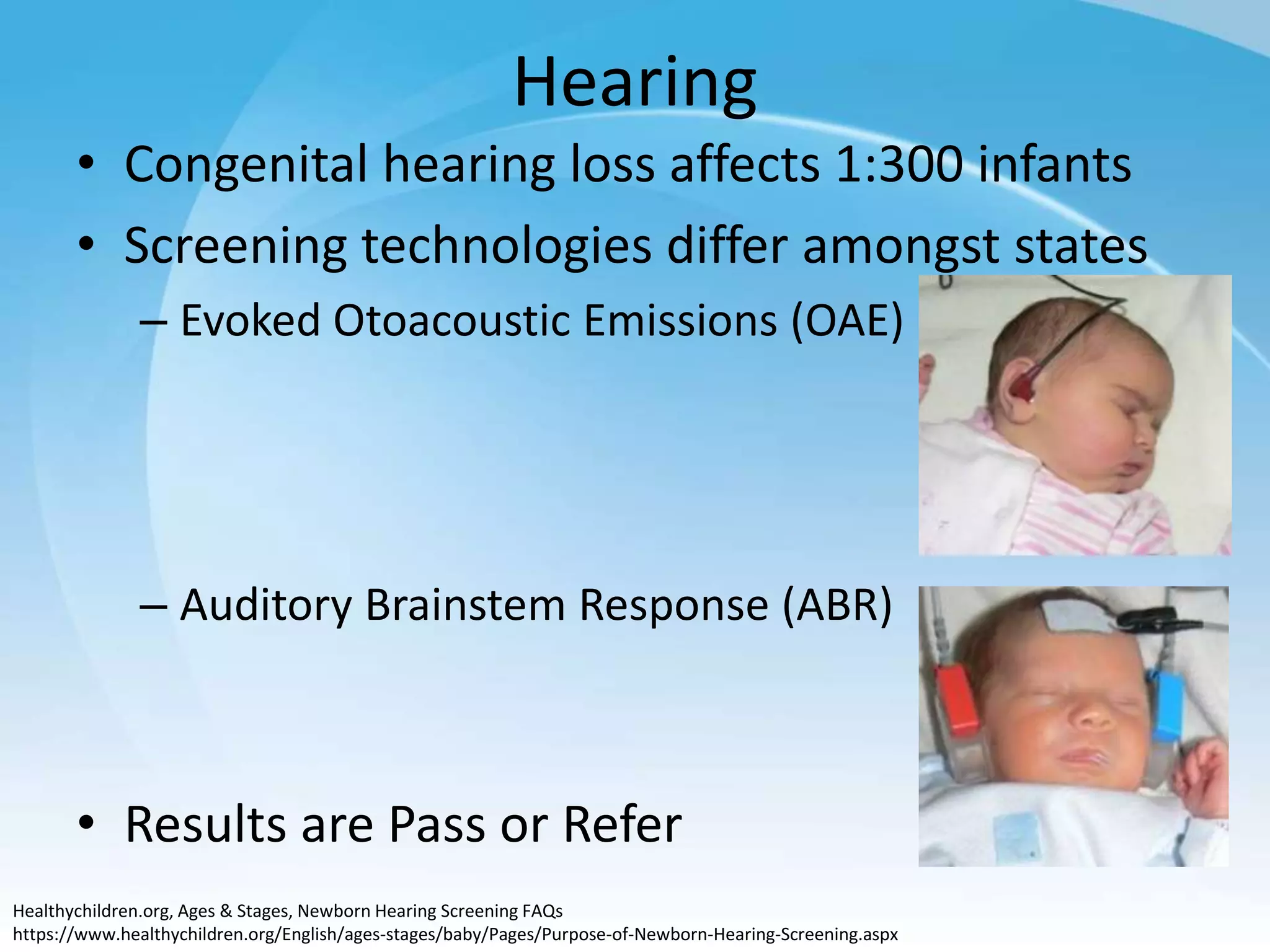
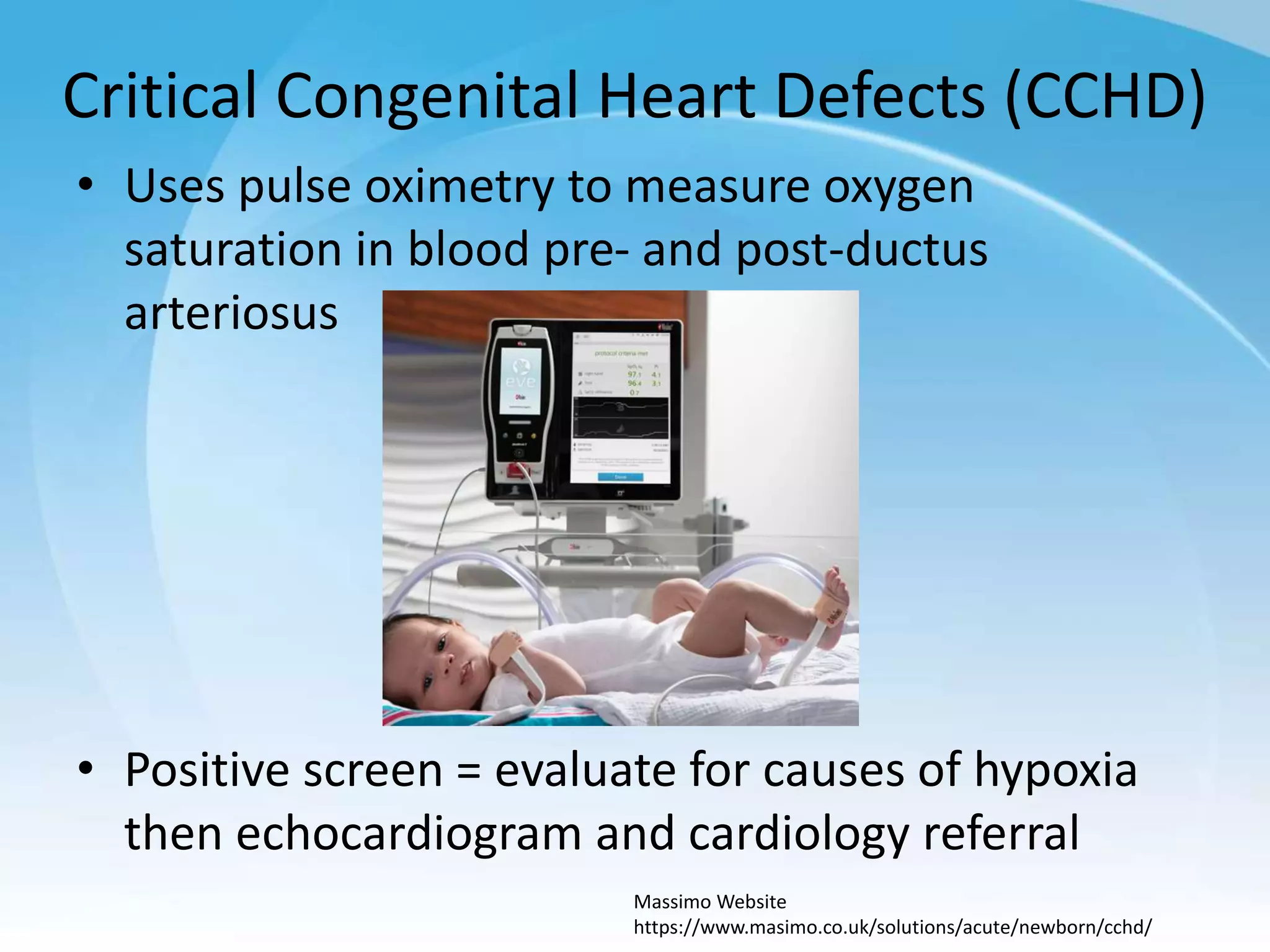
– Evoked Otoacoustic Emissions (OAE)
– Auditory Brainstem Response (ABR)
• Results are Pass or Refer
Healthychildren.org, Ages & Stages, Newborn Hearing Screening FAQs
https://www.healthychildren.org/English/ages-stages/baby/Pages/Purpose-of-Newborn-Hearing-Screening.aspx
When to consider further
hearing assessments?
(in addition to newborn nursery screening)
• Family history of permanent childhood
hearing loss in first degree relative
• Physical differences of the head, face, ears or
neck
• In utero infections
Photos courtesy of Dr. John Carey
Critical Congenital Heart Defects (CCHD)
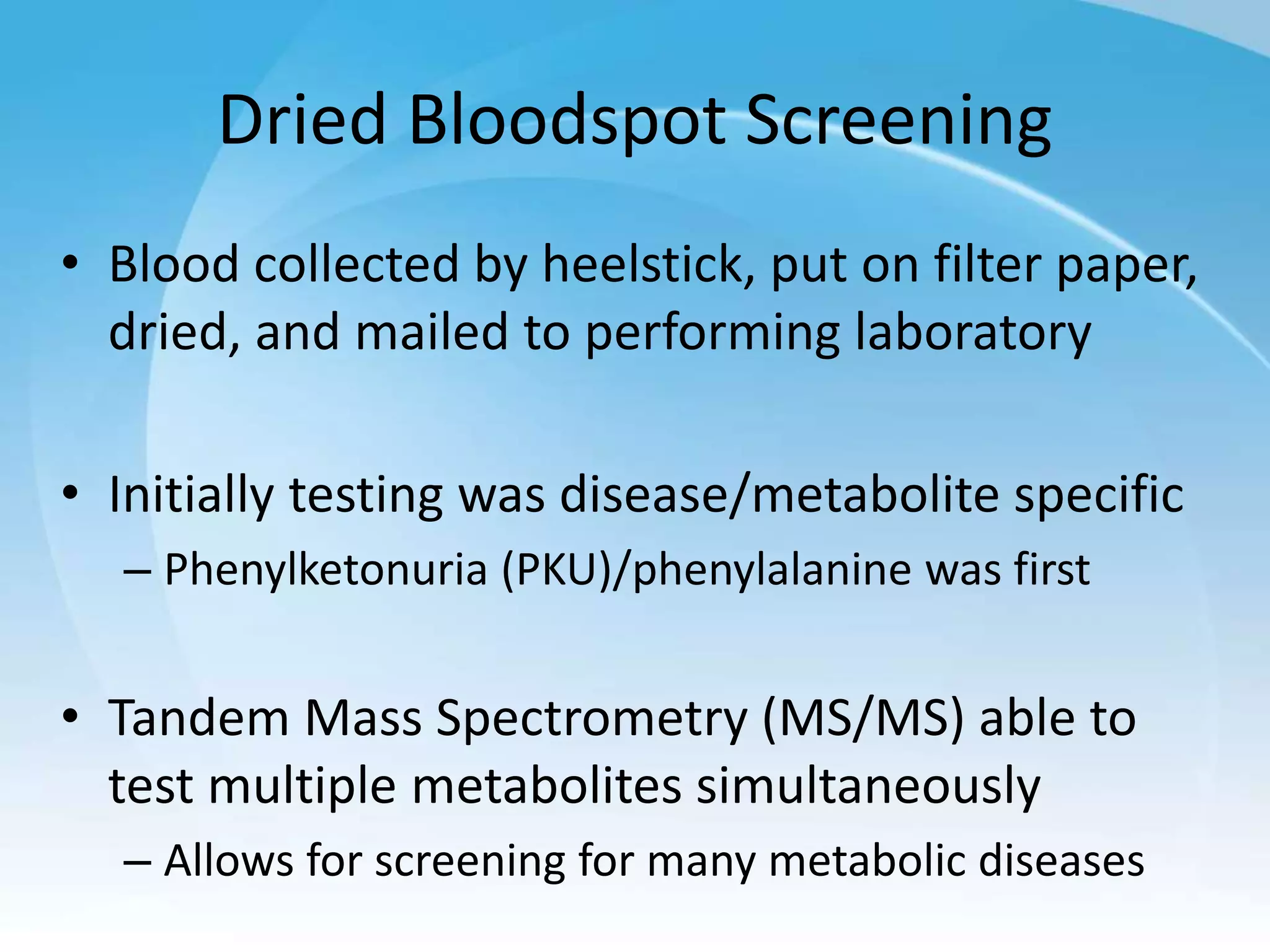
• Uses pulse oximetry to measure oxygen
saturation in blood pre- and post-ductus
arteriosus
• Positive screen = evaluate for causes of hypoxia
then echocardiogram and cardiology referral
Massimo Website
https://www.masimo.co.uk/solutions/acute/newborn/cchd/
When to consider cardiology referral/
echocardiogram regardless of screen result?
• High concern for syndromic diagnosis
associated with cardiac defect
• Prenatal ultrasound findings concerning for
cardiac defect
• Murmur or cyanosis on physical examination
Dried Bloodspot Screening
• Blood collected by heelstick, put on filter paper,
dried, and mailed to performing laboratory
• Initially testing was disease/metabolite specific
– Phenylketonuria (PKU)/phenylalanine was first
• Tandem Mass Spectrometry (MS/MS) able to
test multiple metabolites simultaneously
– Allows for screening for many metabolic diseases
Basic Testing Methods
• ELISA (Enzyme-linked immunosorbent assay)
• IEF (Isoelectric focusing)
• HPLC (High-performance liquid
chromatography)
• Colorimetric Assay
• Tandem Mass Spectrometry (MS/MS)
• DNA
Factors that Affect NBS Results
• Age at collection
• Prematurity
• Medications/Diet
• Maternal conditions
• Collection method
• Ambient temperature/humidity
• Time in transit to lab
Conditions Screened For:
• Cystic fibrosis (CF)
• Hemoglobinopathies
– Sickle cell disease, thalassemia,
HbC, HbD, HbE, HbSC, HbSD,
HbSE, Hb Traits
• Congenital Adrenal Hyperplasia
– 21-hydroxylase deficiency
– 11-hydroxylase deficiency
• Congenital hypothyroidism
• Galactosemia
• Biotinidase deficiency
• Amino Acid Disorders
– Phenylketonuria, tyrosinemia,
MSUD, Homocystinuria
• Urea Cycle disorders
– Citrullinemia, Argininosuccinic
aciduria
• Fatty Acid Oxidation Defects
– MCADD, LCHADD, CUD, CPT-I
Deficiency, CPT-II Deficiency,
VLCADD
• Organic Acid Defects
– Glutaric aciduria Type 1,
methylmalonic acidemia,
propionic acidemia
• Severe Combined
Immunodeficiency (SCID)
• Spinal Muscular Atrophy
• Pompe Disease
• Mucopolysaccharidosis Type I
• X-Linked Adrenoleukodystrophy
• Spinal Muscular Atrophy
• Mucopolysaccharidosis Type II
• Guanidinoacetate
methyltransferase deficiency
DBS Process
• Hospital or home provider collects blood
sample
• Sent to Newborn Screening Laboratory
• Received and processed in laboratory, then
sample punched, tested and analyzed
Results sent to PCP
NBS Program calls
PCP with results
Case 1
• Dr Smith is called about Baby C, a 6-day-old
female infant who had an abnormal newborn
screen for cystic fibrosis.
– Uncomplicated pregnancy and delivery
– C had been seen at 3 days of life and appeared
healthy at that time.
– No family history
• What next?
Cystic Fibrosis
• NBS tests for immunoreactive trypsinogen
(IRT)
– If level is above the cut-off, most states reflex to
DNA testing of CFTR
• If one or more mutations are identified, infant
to be referred for sweat testing
Case 2
• Newborn screening lab calls to review an
abnormal newborn screen for galactosemia
– Baby last seen 2 days ago for well newborn check,
due to have repeat bilirubin level today and
weight check next week
• Now . . . .
Medical Home Portal
• https://www.medicalhomeportal.org/diagnos
es-and-conditions
• Written and reviewed materials for numerous
conditions.
Galactosemia
• DBS Target is laboratory-specific
– Galactose
– GALT activity
• Treatment: Immediate start of galactose-free
formula (e.g. soy)
– Before galactose is removed from diet, infants are
at risk of fatal gram-negative sepsis and/or liver
disease
– No breastfeeding
• Classic Galactosemia vs variant sub-types
Case 3
• Friday at 3pm the covering person for your
state’s NBS program calls with an elevated C8.
– They can’t get a hold of the metabolic provider
and your page goes unanswered.
• The information sheet faxed from newborn
screening suggests a possible risk of Medium
Chain Acyl-Dehydrogenase Deficiency
(MCADD)
– Which you have a vague memory of…
New England Consortium
of Metabolic Programs
• https://www.newenglandconsortium.org/
• Provides guidelines for emergency
management of metabolic conditions
– For use as a stop-gap while waiting for metabolic
provider input
Fatty Acid Oxidation Defects
• Defect in enzyme/process required
for breakdown of fats
• First step in management/treatment
is to avoid prolonged fasting
– Thus avoiding the need to utilize fatty
acid oxidation
• Detected on newborn screening
through acylcarnitine analysis via
tandem mass spectrometry
Fatty acid
oxidation defects
– MCAD
(medium-chain acyl-
CoA-dehydrogenase)
– LCHAD/TFP
(long-chain acyl-
CoAdehydrogenase/
trifunctional protein
deficiency)
– VLCAD
(very long-chain acyl-
CoA-dehydrogenase)
– CUD
(carnitine uptake def.;
primary carnitine def.)
– CPT-I deficiency
(carnitine
palmitoyltransferase-1)
– CPT-II deficiency
(carnitine
palmitoyltransferase-2)
Future Directions for Newborn
Screening?
Genomic Newborn Screening
• Proposed as the future of newborn screening
– Could definitively diagnose
• Controversial
– Might identify untreatable/adult onset conditions
– Adds complexity
– Potential benefits also exist
Resources and References
• ACMG ACT Sheets and Algorithms
– https://www.acmg.net/ACMG/Medical-Genetics-Practice-
Resources/ACT_Sheets_and_Algorithms.aspx
• New England Consortium of Metabolic Programs (NECMP)
– https://www.newenglandconsortium.org/
• Acute Illness Protocols from the NECMP
– https://www.newenglandconsortium.org/acute-illness
• Medical Home Portal
– https://www.medicalhomeportal.org/
32

Newborn Screening - May 9, 2023

  • 1.
    Newborn Screening Katherine (Kati)Anderson, MD, FAAP, FACMG May 9, 2023 1
  • 2.
    Learning Objectives By theend of this session, attendees will be able to: • Identify and explain the modalities, purpose and targets for newborn screening testing • Identify situations in which it may be more appropriate to proceed to diagnostic testing in addition to/instead of newborn screening • Develop a framework of resources for additional information to provide families and other providers in cases of abnormal newborn screens 2
  • 3.
    Discussion Questions • Whatshould a primary care provider’s first step be if they receive a call about an abnormal newborn screen? • Are there situations where you should skip a portion of the newborn screening process and go straight to diagnostic testing? • What is the most important information to share with families when transmitting abnormal newborn screening results?
  • 4.
    First, a plea… •Please do not refer to the newborn screening bloodspot card as the “PKU Test” – The whole team starts to do this when they hear it – It confuses parents – It confuses providers – It is not accurate
  • 5.
    Key Points • Newbornscreening programs are state-specific – National Recommended Uniform Screening Panel exists but not mandated • Opt-out testing • Goal to identify newborns at risk of treatable disorders who appear normal at birth. • Traditionally focused on disorders with effective early treatment • Testing is NOT diagnostic
  • 6.
    1. The conditionshould be an important health problem. 2. There should be an accepted treatment for patients with recognized disease. 3. Facilities for diagnosis and treatment should be available. 4. There should be a recognizable latent or early symptomatic phase. 5. There should be a suitable test or examination. 6. The test should be acceptable to the population. 7. The natural history of the condition, including development from latent to declared disease, should be adequately understood. 8. There should be an agreed policy on whom to treat as patients. 9. The cost of case-finding (including a diagnosis and treatment of patients diagnosed) should be economically balanced in relation to possible expenditure on medical care as a whole. 10. Case-finding should be a continuous process and not a “once and for all” project. Wilson & Jungner’s principles of screening Wilson, James Maxwell Glover, Jungner, Gunnar & World Health Organization. (1968). Principles and practice of screening for disease. World Health Organization. https://apps.who.int/iris/handle/10665/37650
  • 7.
    Minimum Criteria forCondition Inclusion • Can be identified 24 to 48 hours after birth, and cannot usually be detected clinically • Has a test that is specific and sensitive for the condition. • Early detection, timely intervention, and effective treatment offer proven benefit
  • 8.
    NBS Components • Hearingscreen • Critical Congenital Cardiac Disease screening • Dried bloodspot (DBS)
  • 9.
    Hearing • Congenital hearingloss affects 1:300 infants • Screening technologies differ amongst states – Evoked Otoacoustic Emissions (OAE) – Auditory Brainstem Response (ABR) • Results are Pass or Refer Healthychildren.org, Ages & Stages, Newborn Hearing Screening FAQs https://www.healthychildren.org/English/ages-stages/baby/Pages/Purpose-of-Newborn-Hearing-Screening.aspx
  • 10.
    When to considerfurther hearing assessments? (in addition to newborn nursery screening) • Family history of permanent childhood hearing loss in first degree relative • Physical differences of the head, face, ears or neck • In utero infections
  • 11.
    Photos courtesy ofDr. John Carey
  • 12.
    Critical Congenital HeartDefects (CCHD) • Uses pulse oximetry to measure oxygen saturation in blood pre- and post-ductus arteriosus • Positive screen = evaluate for causes of hypoxia then echocardiogram and cardiology referral Massimo Website https://www.masimo.co.uk/solutions/acute/newborn/cchd/
  • 13.
    When to considercardiology referral/ echocardiogram regardless of screen result? • High concern for syndromic diagnosis associated with cardiac defect • Prenatal ultrasound findings concerning for cardiac defect • Murmur or cyanosis on physical examination
  • 14.
    Dried Bloodspot Screening •Blood collected by heelstick, put on filter paper, dried, and mailed to performing laboratory • Initially testing was disease/metabolite specific – Phenylketonuria (PKU)/phenylalanine was first • Tandem Mass Spectrometry (MS/MS) able to test multiple metabolites simultaneously – Allows for screening for many metabolic diseases
  • 15.
    Basic Testing Methods •ELISA (Enzyme-linked immunosorbent assay) • IEF (Isoelectric focusing) • HPLC (High-performance liquid chromatography) • Colorimetric Assay • Tandem Mass Spectrometry (MS/MS) • DNA
  • 16.
    Factors that AffectNBS Results • Age at collection • Prematurity • Medications/Diet • Maternal conditions • Collection method • Ambient temperature/humidity • Time in transit to lab
  • 17.
    Conditions Screened For: •Cystic fibrosis (CF) • Hemoglobinopathies – Sickle cell disease, thalassemia, HbC, HbD, HbE, HbSC, HbSD, HbSE, Hb Traits • Congenital Adrenal Hyperplasia – 21-hydroxylase deficiency – 11-hydroxylase deficiency • Congenital hypothyroidism • Galactosemia • Biotinidase deficiency • Amino Acid Disorders – Phenylketonuria, tyrosinemia, MSUD, Homocystinuria • Urea Cycle disorders – Citrullinemia, Argininosuccinic aciduria • Fatty Acid Oxidation Defects – MCADD, LCHADD, CUD, CPT-I Deficiency, CPT-II Deficiency, VLCADD • Organic Acid Defects – Glutaric aciduria Type 1, methylmalonic acidemia, propionic acidemia • Severe Combined Immunodeficiency (SCID) • Spinal Muscular Atrophy • Pompe Disease • Mucopolysaccharidosis Type I • X-Linked Adrenoleukodystrophy • Spinal Muscular Atrophy • Mucopolysaccharidosis Type II • Guanidinoacetate methyltransferase deficiency
  • 18.
    DBS Process • Hospitalor home provider collects blood sample • Sent to Newborn Screening Laboratory • Received and processed in laboratory, then sample punched, tested and analyzed Results sent to PCP NBS Program calls PCP with results
  • 20.
    Case 1 • DrSmith is called about Baby C, a 6-day-old female infant who had an abnormal newborn screen for cystic fibrosis. – Uncomplicated pregnancy and delivery – C had been seen at 3 days of life and appeared healthy at that time. – No family history • What next?
  • 21.
    Cystic Fibrosis • NBStests for immunoreactive trypsinogen (IRT) – If level is above the cut-off, most states reflex to DNA testing of CFTR • If one or more mutations are identified, infant to be referred for sweat testing
  • 22.
    Case 2 • Newbornscreening lab calls to review an abnormal newborn screen for galactosemia – Baby last seen 2 days ago for well newborn check, due to have repeat bilirubin level today and weight check next week • Now . . . .
  • 23.
    Medical Home Portal •https://www.medicalhomeportal.org/diagnos es-and-conditions • Written and reviewed materials for numerous conditions.
  • 25.
    Galactosemia • DBS Targetis laboratory-specific – Galactose – GALT activity • Treatment: Immediate start of galactose-free formula (e.g. soy) – Before galactose is removed from diet, infants are at risk of fatal gram-negative sepsis and/or liver disease – No breastfeeding • Classic Galactosemia vs variant sub-types
  • 26.
    Case 3 • Fridayat 3pm the covering person for your state’s NBS program calls with an elevated C8. – They can’t get a hold of the metabolic provider and your page goes unanswered. • The information sheet faxed from newborn screening suggests a possible risk of Medium Chain Acyl-Dehydrogenase Deficiency (MCADD) – Which you have a vague memory of…
  • 27.
    New England Consortium ofMetabolic Programs • https://www.newenglandconsortium.org/ • Provides guidelines for emergency management of metabolic conditions – For use as a stop-gap while waiting for metabolic provider input
  • 29.
    Fatty Acid OxidationDefects • Defect in enzyme/process required for breakdown of fats • First step in management/treatment is to avoid prolonged fasting – Thus avoiding the need to utilize fatty acid oxidation • Detected on newborn screening through acylcarnitine analysis via tandem mass spectrometry Fatty acid oxidation defects – MCAD (medium-chain acyl- CoA-dehydrogenase) – LCHAD/TFP (long-chain acyl- CoAdehydrogenase/ trifunctional protein deficiency) – VLCAD (very long-chain acyl- CoA-dehydrogenase) – CUD (carnitine uptake def.; primary carnitine def.) – CPT-I deficiency (carnitine palmitoyltransferase-1) – CPT-II deficiency (carnitine palmitoyltransferase-2)
  • 30.
    Future Directions forNewborn Screening?
  • 31.
    Genomic Newborn Screening •Proposed as the future of newborn screening – Could definitively diagnose • Controversial – Might identify untreatable/adult onset conditions – Adds complexity – Potential benefits also exist
  • 32.
    Resources and References •ACMG ACT Sheets and Algorithms – https://www.acmg.net/ACMG/Medical-Genetics-Practice- Resources/ACT_Sheets_and_Algorithms.aspx • New England Consortium of Metabolic Programs (NECMP) – https://www.newenglandconsortium.org/ • Acute Illness Protocols from the NECMP – https://www.newenglandconsortium.org/acute-illness • Medical Home Portal – https://www.medicalhomeportal.org/ 32

Editor's Notes

  • #5 PKU was the first condition screened for, but was quickly followed by several others. Now with more than 50 conditions possible, referring to the test based on one condition causes global problems.
  • #6 Some states are managed/mandated by legislation, others by administrative rule Disorders/Testing methods/analytes may differ between states Some states do two screens Charges vary amongst states E.g. NY does not charge, Vermont charges with delivery bundle, Utah cost as of 2018 was $115 Advisory committee oversees the RUSP (secretary’s advisory committee on Heritable Disorders in NB and Children) Disorders chosen based on Evidence that supports net benefit Ability to screen Availability of treatment Refusal for religious reasons Written authorization typically not required More common to require written opt-out There may be no indication of disease until irreversible harm occurs Irreversible harm includes brain damage and can result in death.
  • #7 Basic Criteria Serious condition with reasonable frequency Clinical diagnosis difficult NBS test can be done rapidly with high sensitivity and specificity Cost effective Treatment is available Natural history of the disorder is known
  • #8 Babies appear healthy First panel recommended in 2006 Identified 29 conditions to consider as “mandatory” Another 25 secondary targets also could be found with screening technology Formally adopted in 2010 5 Fatty acid oxidation disorders 9 Organic acidopathies 6 Amino acidopathies/urea cycle disorders 3 hemoglobinopathies As of 2009, only 10 states were screening for all 29 conditions Even now, states are screening for at least 31 conditions
  • #9 3 in 1,000 NBs will have hearing loss 1 in 500 will have CCHD 1 in 600 will have disorder able to be identified on DBS
  • #10 There are some genetic conditions ABR measures the brain wave response to sounds OAE measures the ear’s response to sound Can be impacted by fluid in ear Complete hearing tests for those that fail should be complete by 3 months of age Interventional services for babies with hearing loss should begin before 6 months of age good evidence that children who start before that time do better with interpersonal communication, school performance, interacting with other children Interventional services can be: meeting/working with teams dedicated to deaf/hearing impaired children, beginning communication education, getting a hearing aid, family support groups CMV testing is indicated in all children who fail hearing testing Some states mandate this
  • #11 Hearing loss attributable to ear infections would not be considered a risk factor Physical differences: cleft lip/palate, ear pits/tags (bilateral) Ototoxic medications in neonatal period Concern for syndromic condition A/W hearing loss Prolonged NICU stay/prematurity hyperbilirubinemia
  • #13 Meant to detect: Tetralogy of Fallot, Total Anomalous Pulmonary Venous Return, Transposition of the Great Arteries, Tricuspid Atresia, Truncus Arteriosus, Hypoplastic Left Heart Syndrome, and Pulmonary Atresia Left obstructive heart lesions less likely to be identified Ideally done between 24 and 48 hours False positive 10x higher before 24 hours Secondary targets Hemoglobinopathy Hypothermia Infection, including sepsis Lung disease (congenital or acquired) Non-critical congenital heart defect Persistent pulmonary hypertension Other hypoxic conditions not otherwise specified
  • #14 Syndromic dx example Down syndrome/T21
  • #15 1960s PKU 1970s Sickle cell (SS) disease (SCD), other S-allele associated conditions, Congenital hypothyroidism (CH) 1972, NationalSickle Cell Disease Control Act establishes SCD research centers 1980s Galactosemia (GAL), maple syrup urine disease (MSUD) congenital adrenal hyperplasia (CAH) Biotinidase deficiency (BIO) 1990s No uniform approach to screened conditions DBS Samples kept for varying lengths of time (state dependent)
  • #16 ELISA uses antibodies and color to ID substances IEF – separates molecules based on charge differences on gel HPLC - measures presence of abnml compounds CA – reagents have measurable color change if analyte is present MS/MS – ion fragmentation process measuring metabolites
  • #17 Too young (less than 24 hours) will need to be repeated Too old, cut offs not delineated for particular age TPN, abx, steroids, transfusion Maternal Diseases Identified Through NBS • Primary carnitine deficiency • 3-Methylcrotonyl-CoA carboxylase deficiency (3-methylcrotonylglycinuria) • Glutaric acidemia type I • 3-Methylglutaconyl-CoA hydratase deficiency (3-methylglutaconic aciduria type I) • Methylmalonic acidemia (vitamin B12 deficiency) • MCAD deficiency
  • #18 NB: A positive newborn screen does not = diagnosis Act as if it is worst case scenario Maternal testing may be needed Need confirmatory testing: DNA most common Functional DNA analysis now most common Proposed conditions Fabry disease Krabbe disease Gaucher disease Congenital CMV Duchenne Muscular Dystrophy
  • #19 Medical Home Parents look to pediatric health care providers for guidance and information Pediatric provider may only see a patient with one of these conditions once or twice during their career Important to know how to respond to abnormal/out of range results, how to discuss with parents and provide some anticipatory guidance •NSP contacts medical home Discuss results with medical home Follow-up and/or additional testing recommended Letter, results and educational material faxed to medical home •Answer questions from providers and family Education material and follow-up with family as needed
  • #22 IRT is a chemical made by the pancreas in small amounts but is elevated in cases of pancreatic injury/insufficiency False positives can be caused by stressful delivery/premature birth Often family gets genetic counseling at sweat test
  • #26 Galactose measurement allows for identification of variant galactosemias (which can be much more rare depending on population) Can be normal even in classical galactosemia depending on newborn feeding (or not) thus the transition to GALT measurement GALT activity only identifies classical galactosemia Classic galactosemia = GALT deficiency Variant galactosemias = GALK deficiency, GALE deficiency\
  • #30 As you may (or may not) recall from early medical school, fatty acid oxidation only occurs during fasting. Pre-NBS 4% mortality in first 72 hours of life 30–50% of mortality during 1st acute episode Near zero morbidity with NBS
  • #32 Increased need for education and consent, risks of loss of autonomy of the child, genetic discrimination, decreased uptake of tNBS programs, the burden of variants of uncertain significance (VUS) and of diseases with decreased penetrance, cost and storage, and privacy of data Benefits: ability to screen for more diseases, provide children access to preventative health care measures, and increase the health of the entire family There was parental support for expanding NBS to untreatable disorders but less interest in identifying genetic risk factors for disease Downie L, Halliday J, Lewis S, Amor DJ. Principles of Genomic Newborn Screening Programs: A Systematic Review. JAMA Netw Open. 2021;4(7):e2114336. doi:10.1001/jamanetworkopen.2021.14336