BY…
SHARIYAM ALI
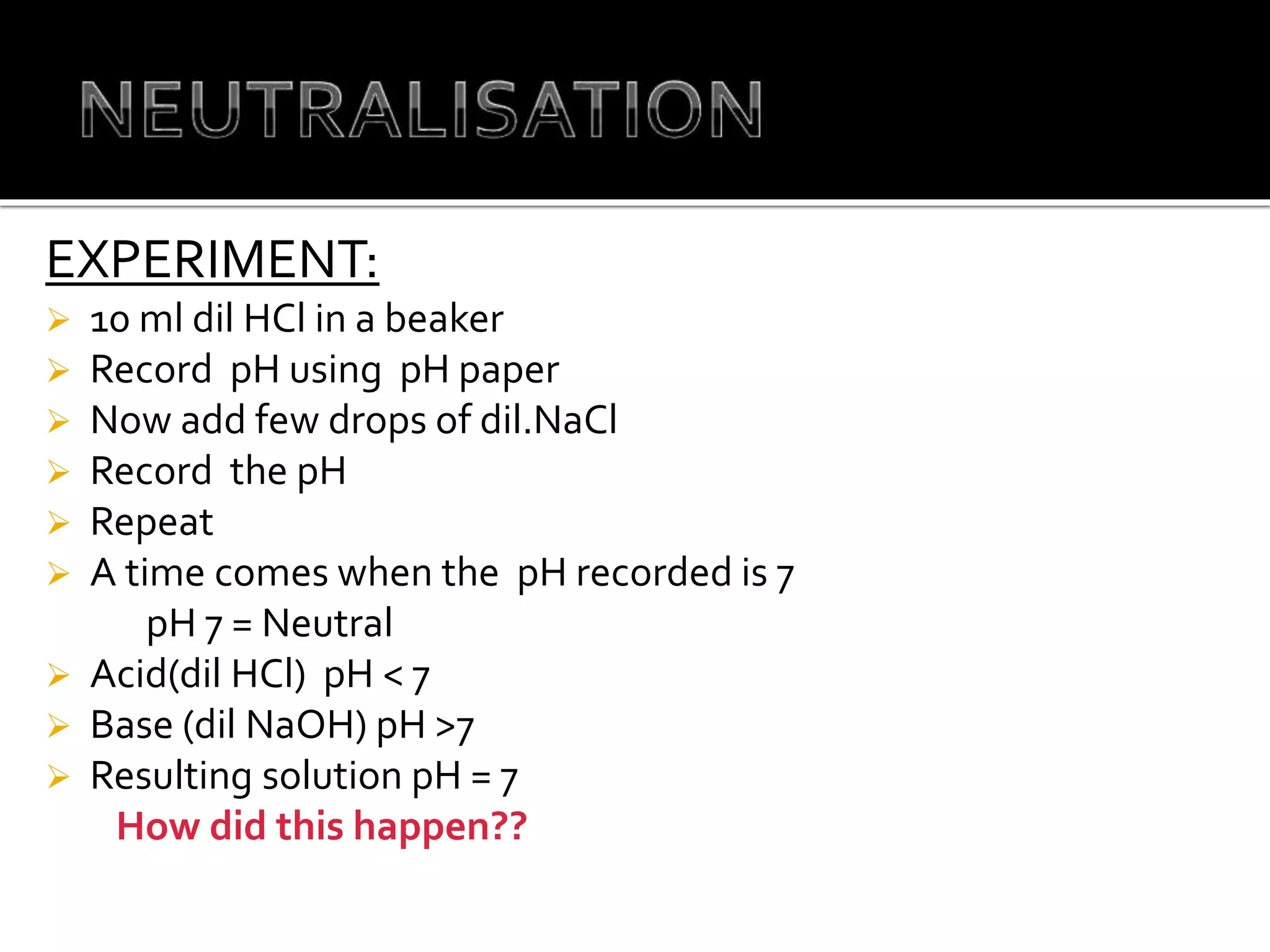
EXPERIMENT:
 10 ml dil HCl in a beaker
 Record pH using pH paper
 Now add few drops of dil.NaCl
 Record the pH
 Repeat
 A time comes when the pH recorded is 7
pH 7 = Neutral
 Acid(dil HCl) pH < 7
 Base (dil NaOH) pH >7
 Resulting solution pH = 7
How did this happen??
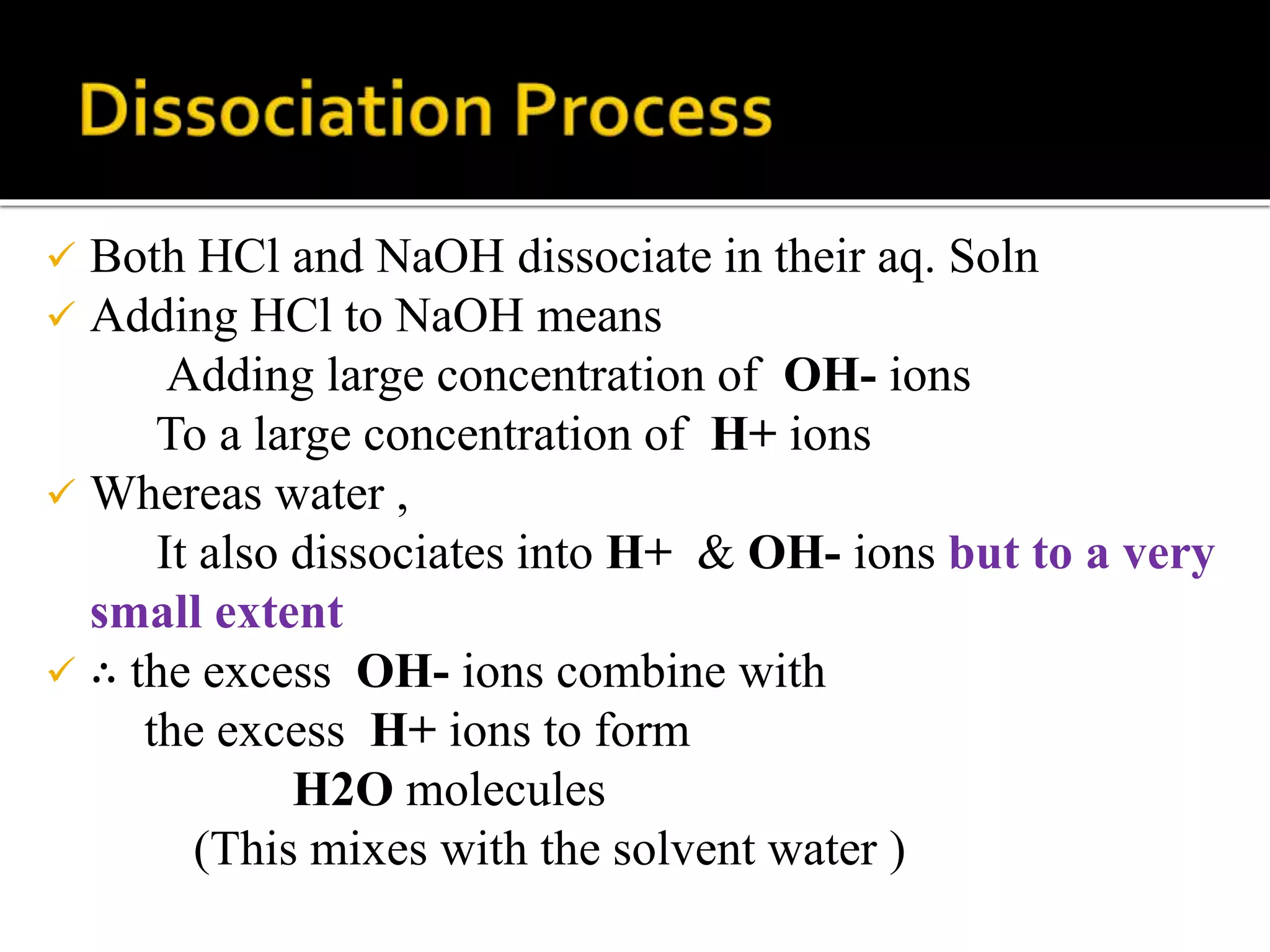
 Both HCl and NaOH dissociate in their aq. Soln
 Adding HCl to NaOH means
Adding large concentration of OH- ions
To a large concentration of H+ ions
 Whereas water ,
It also dissociates into H+ & OH- ions but to a very
small extent
 ∴ the excess OH- ions combine with
the excess H+ ions to form
H2O molecules
(This mixes with the solvent water )
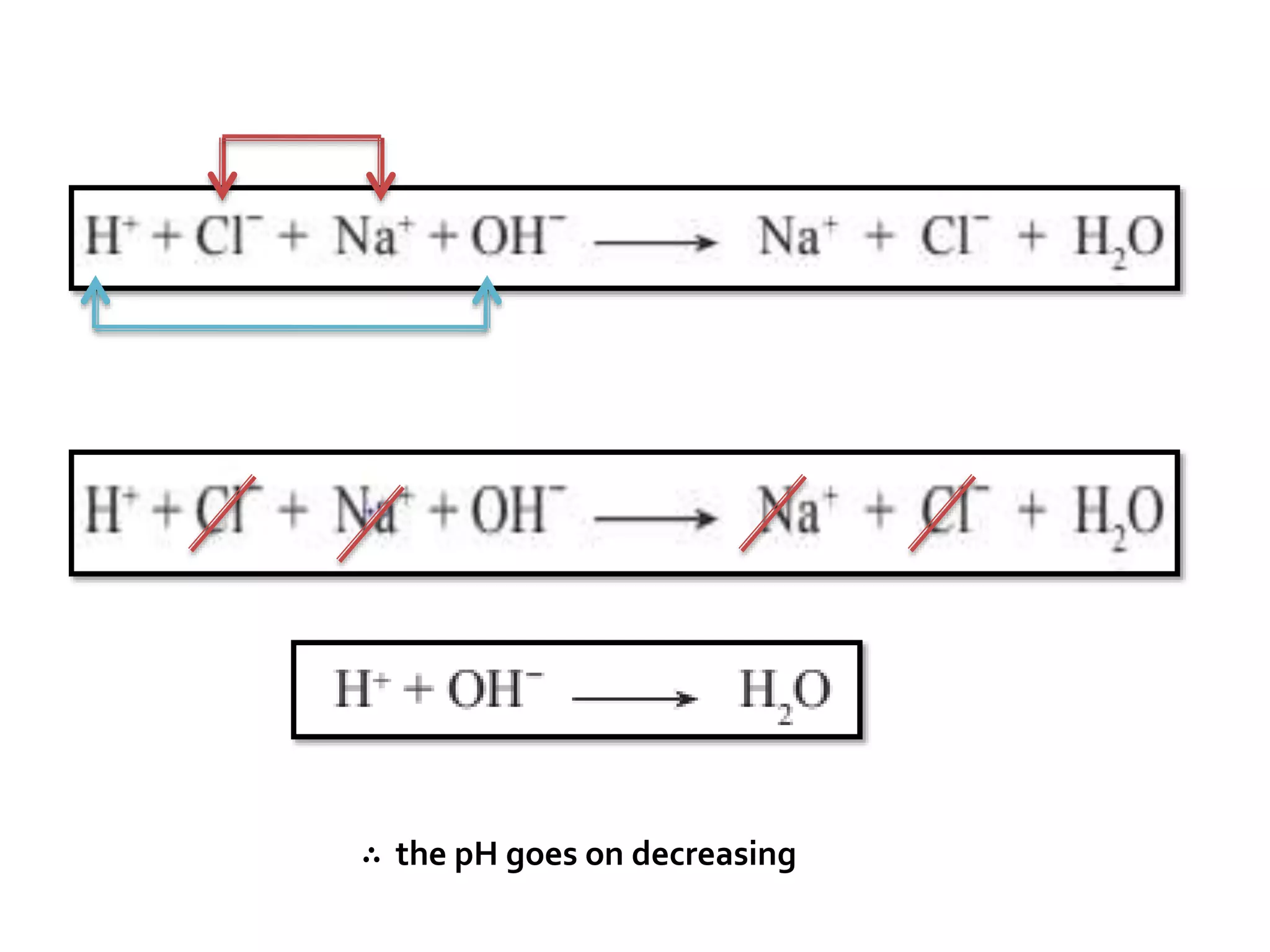
∴ the pH goes on decreasing
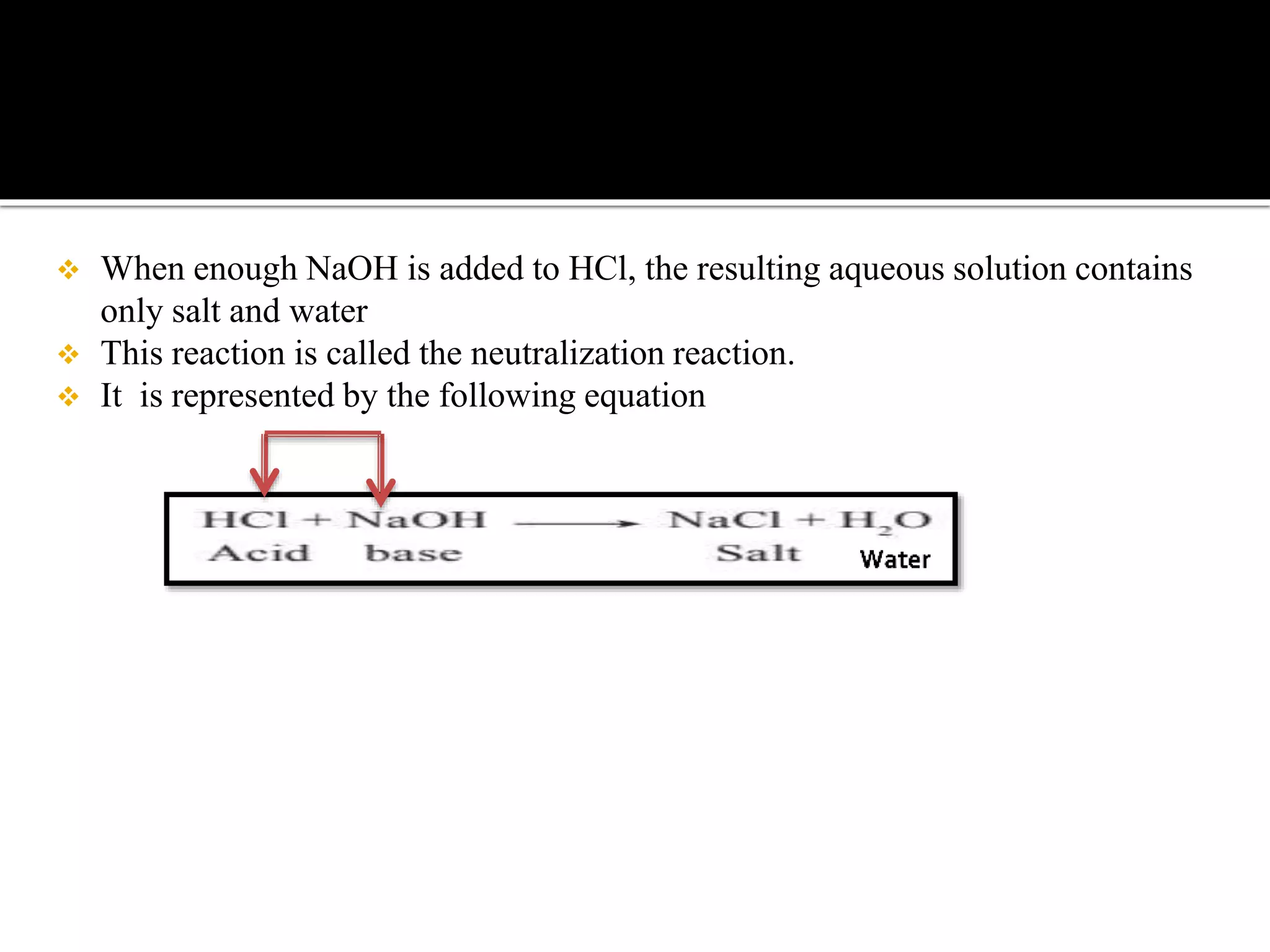
 When enough NaOH is added to HCl, the resulting aqueous solution contains
only salt and water
 This reaction is called the neutralization reaction.
 It is represented by the following equation
Types of salts : acidic, basic and neutral salts
• Salts are formed by the reaction between acids
and bases.(neutralization reaction)
• The resulting salts are not always neutral.
• Because,
• Strong Acid+ Strong Base Neutral Salt(pH 7)
• Strong Acid + Weak Base Acidic Salt (pH<7)
• Weak Acid + Strong Basic Basic Salt (pH<7)
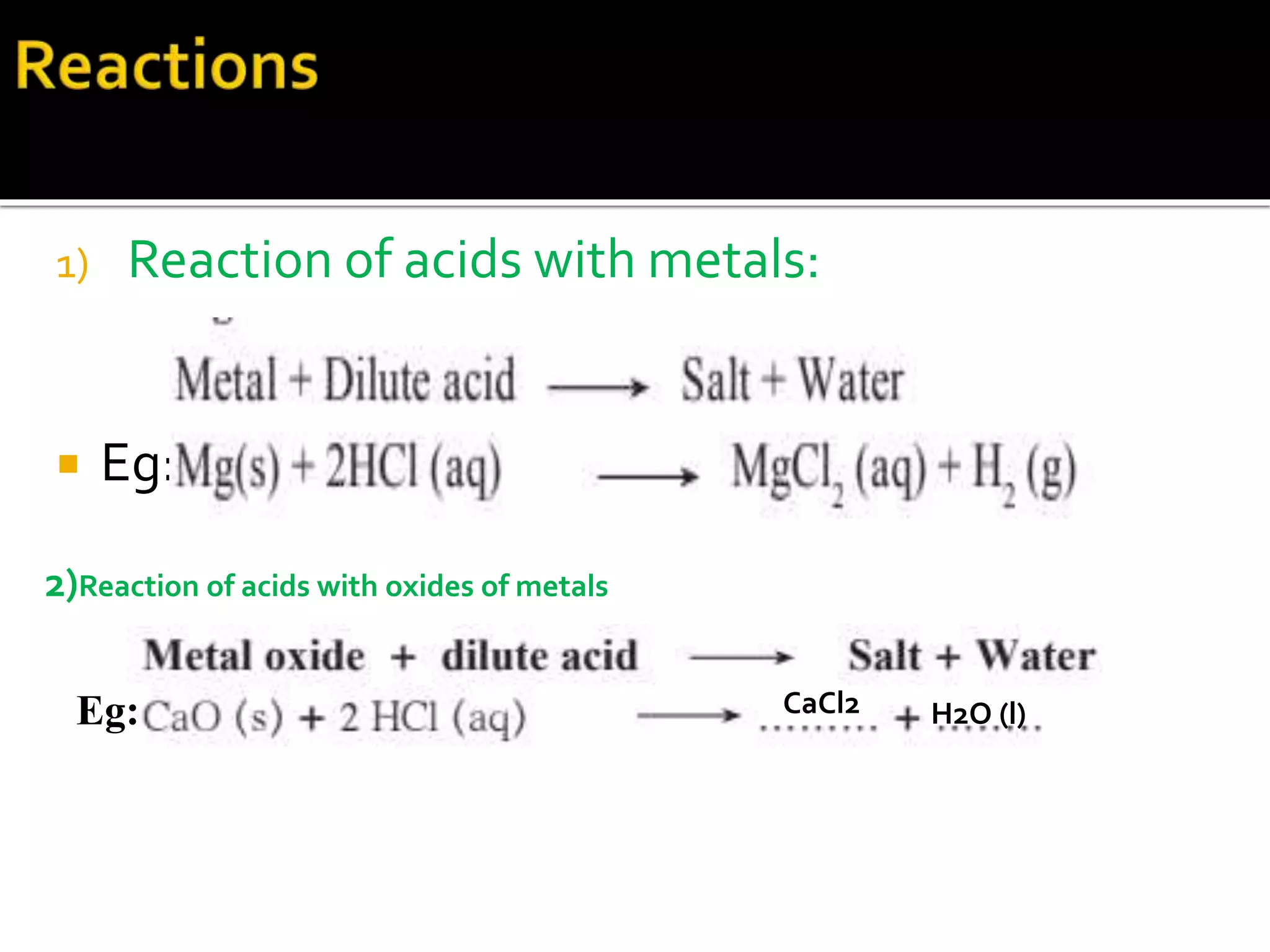
1) Reaction of acids with metals:
 Eg:
2)Reaction of acids with oxides of metals
CaCl2 H2O (l)Eg:
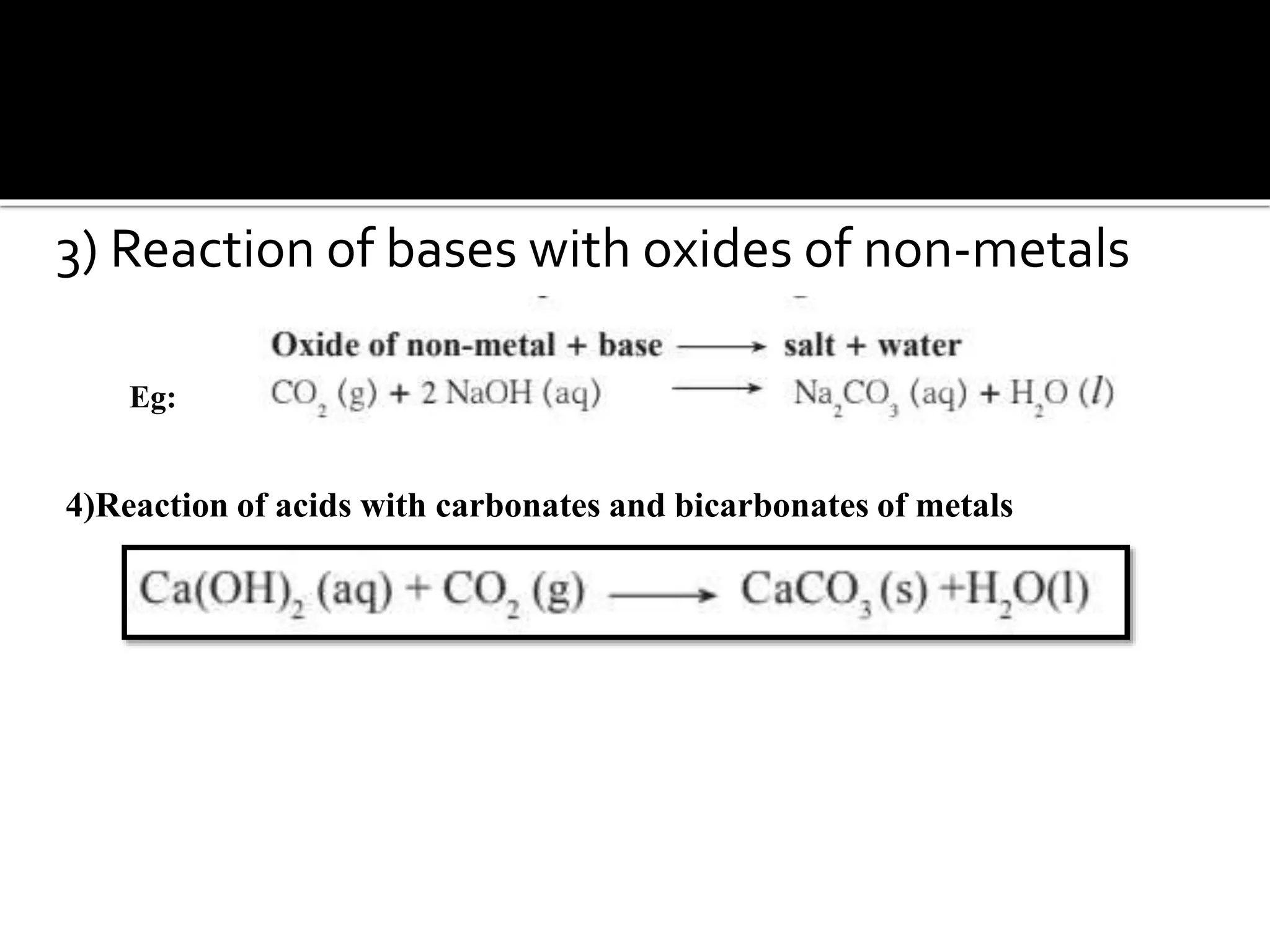
3) Reaction of bases with oxides of non-metals
Eg:
4)Reaction of acids with carbonates and bicarbonates of metals
Neutralisation || Acids, Bases and Salts

Neutralisation || Acids, Bases and Salts

  • 1.
  • 2.
    EXPERIMENT:  10 mldil HCl in a beaker  Record pH using pH paper  Now add few drops of dil.NaCl  Record the pH  Repeat  A time comes when the pH recorded is 7 pH 7 = Neutral  Acid(dil HCl) pH < 7  Base (dil NaOH) pH >7  Resulting solution pH = 7 How did this happen??
  • 3.
     Both HCland NaOH dissociate in their aq. Soln  Adding HCl to NaOH means Adding large concentration of OH- ions To a large concentration of H+ ions  Whereas water , It also dissociates into H+ & OH- ions but to a very small extent  ∴ the excess OH- ions combine with the excess H+ ions to form H2O molecules (This mixes with the solvent water )
  • 4.
    ∴ the pHgoes on decreasing
  • 5.
     When enoughNaOH is added to HCl, the resulting aqueous solution contains only salt and water  This reaction is called the neutralization reaction.  It is represented by the following equation
  • 6.
    Types of salts: acidic, basic and neutral salts • Salts are formed by the reaction between acids and bases.(neutralization reaction) • The resulting salts are not always neutral. • Because, • Strong Acid+ Strong Base Neutral Salt(pH 7) • Strong Acid + Weak Base Acidic Salt (pH<7) • Weak Acid + Strong Basic Basic Salt (pH<7)
  • 7.
    1) Reaction ofacids with metals:  Eg: 2)Reaction of acids with oxides of metals CaCl2 H2O (l)Eg:
  • 8.
    3) Reaction ofbases with oxides of non-metals Eg: 4)Reaction of acids with carbonates and bicarbonates of metals