Networking and Go:
an epic journey
software engineer @DigitalOcean
networking team
loves nature and cats
@snehainguva
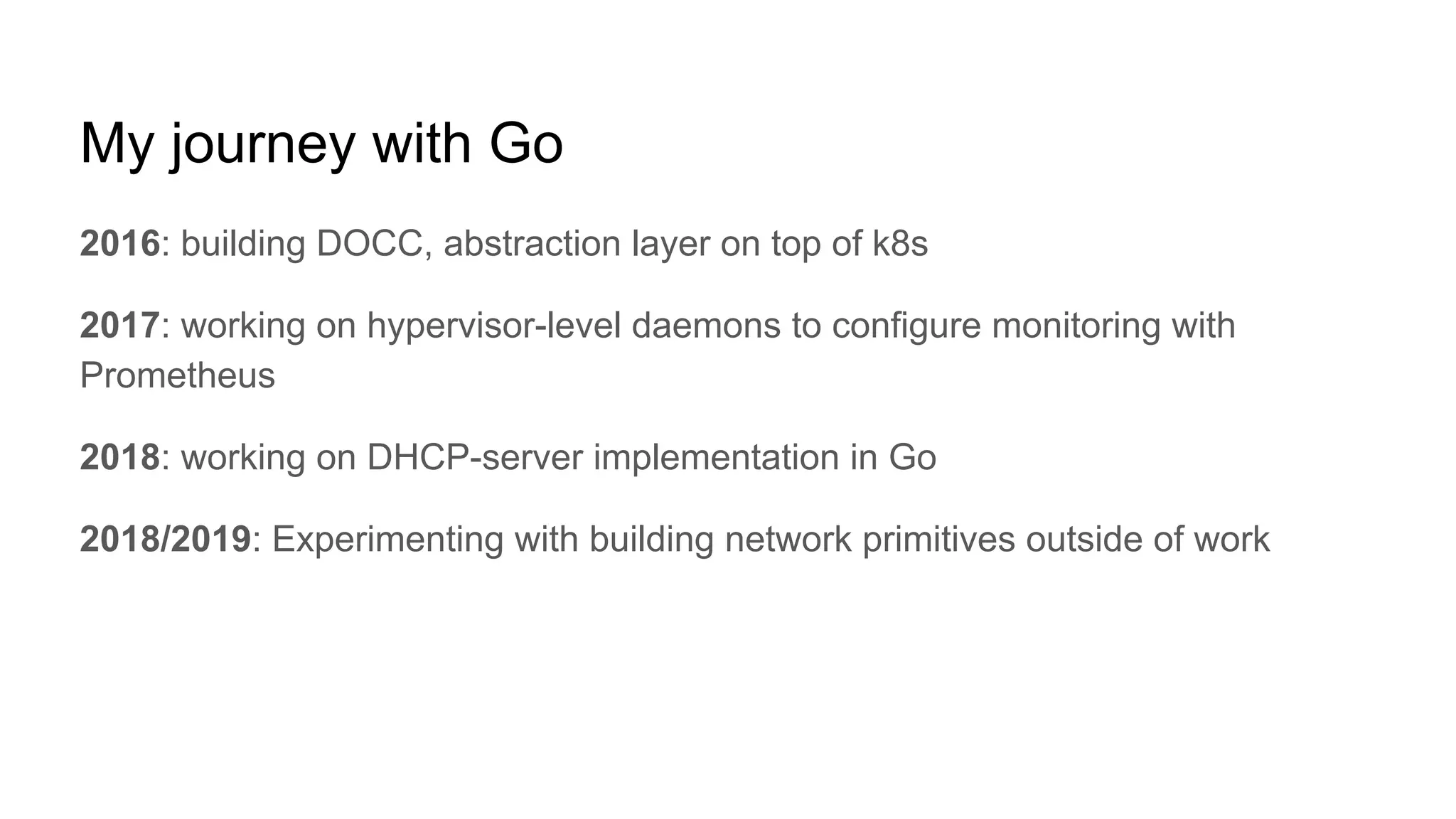
My journey with Go
2016: building DOCC, abstraction layer on top of k8s
2017: working on hypervisor-level daemons to configure monitoring with
Prometheus
2018: working on DHCP-server implementation in Go
2018/2019: Experimenting with building network primitives outside of work
Why use Go to build networking services?
And how?
The Plan
● Why use go? ★
● Networking Review
● Layer 4+ Services
● Layer 2+ Services
● Conclusion
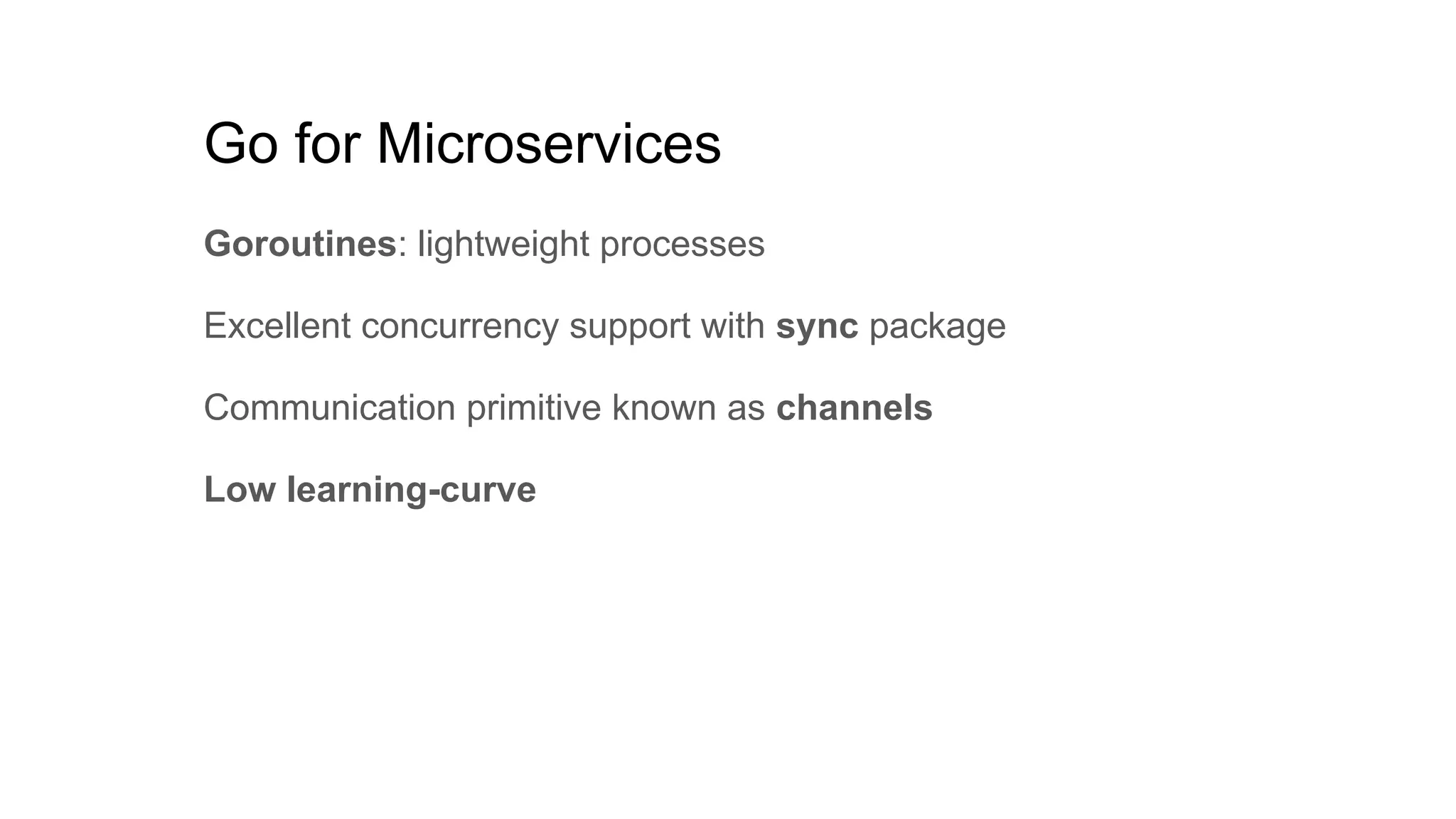
Go for Microservices
Goroutines: lightweight processes
Excellent concurrency support with sync package
Communication primitive known as channels
Low learning-curve
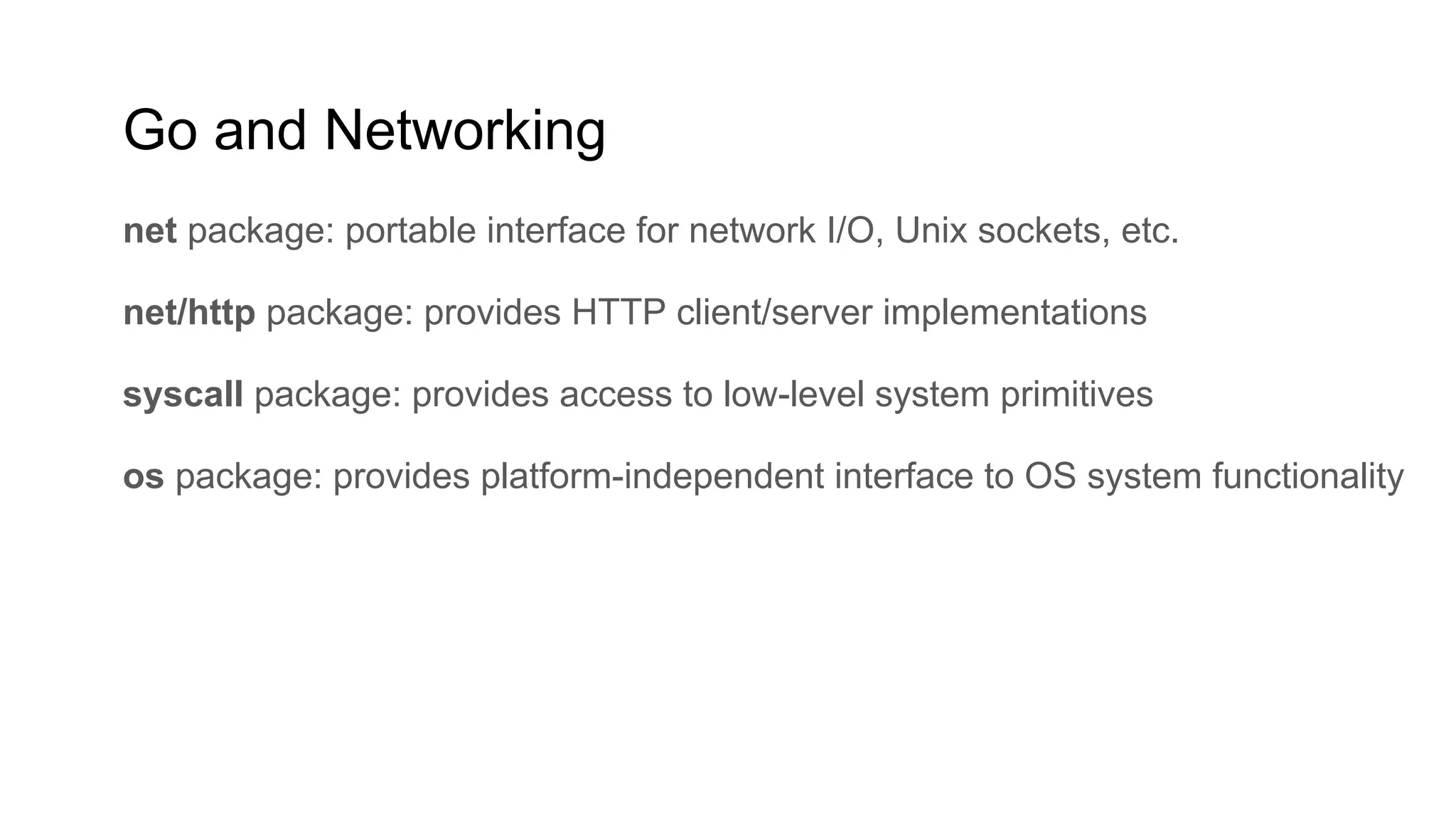
Go and Networking
net package: portable interface for network I/O, Unix sockets, etc.
net/http package: provides HTTP client/server implementations
syscall package: provides access to low-level system primitives
os package: provides platform-independent interface to OS system functionality
The Plan
● Why use go?
● Networking Review ★
● Layer 4+ Services
● Layer 2+ Services
● Conclusion
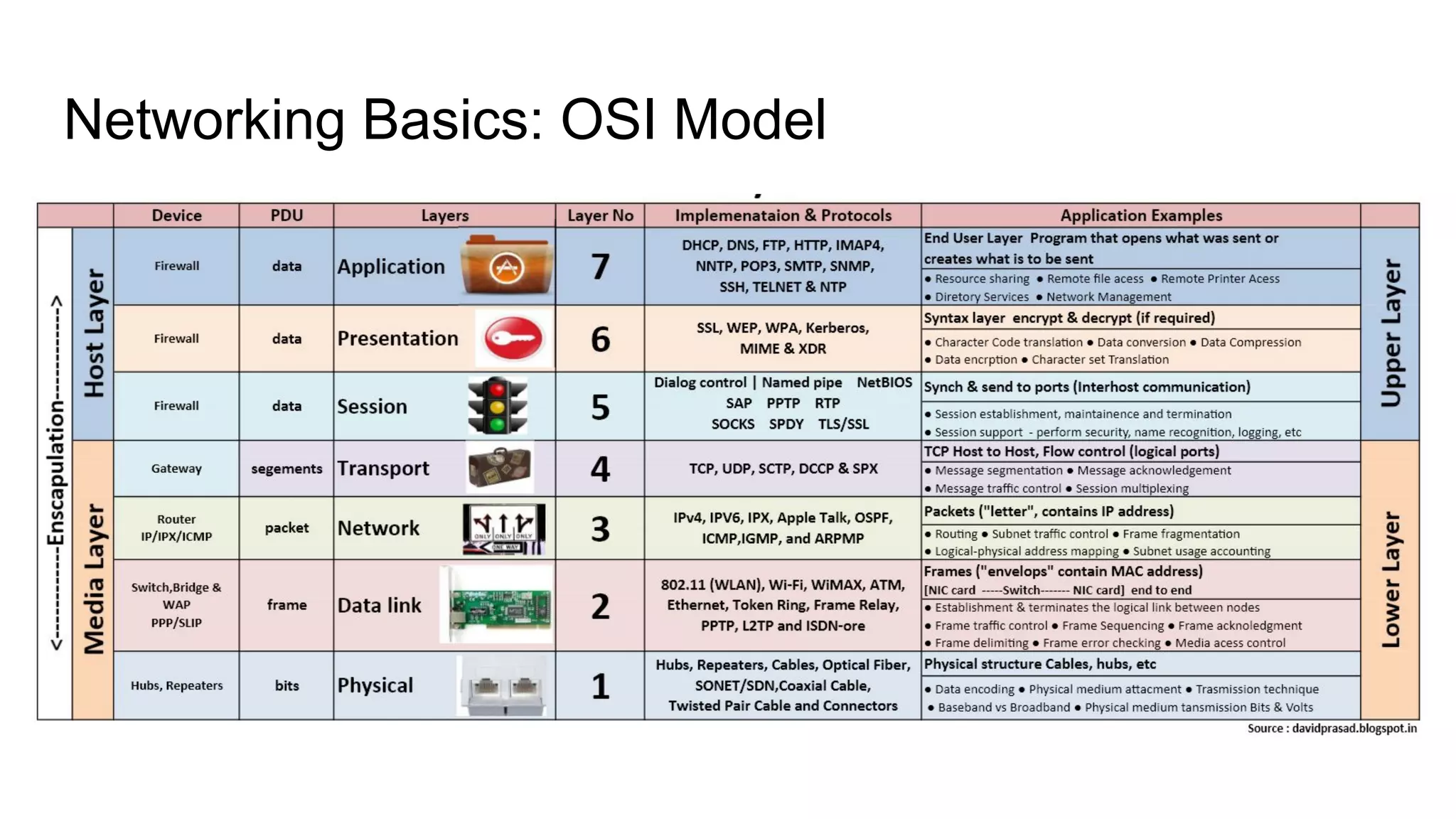
Networking Basics: OSI Model
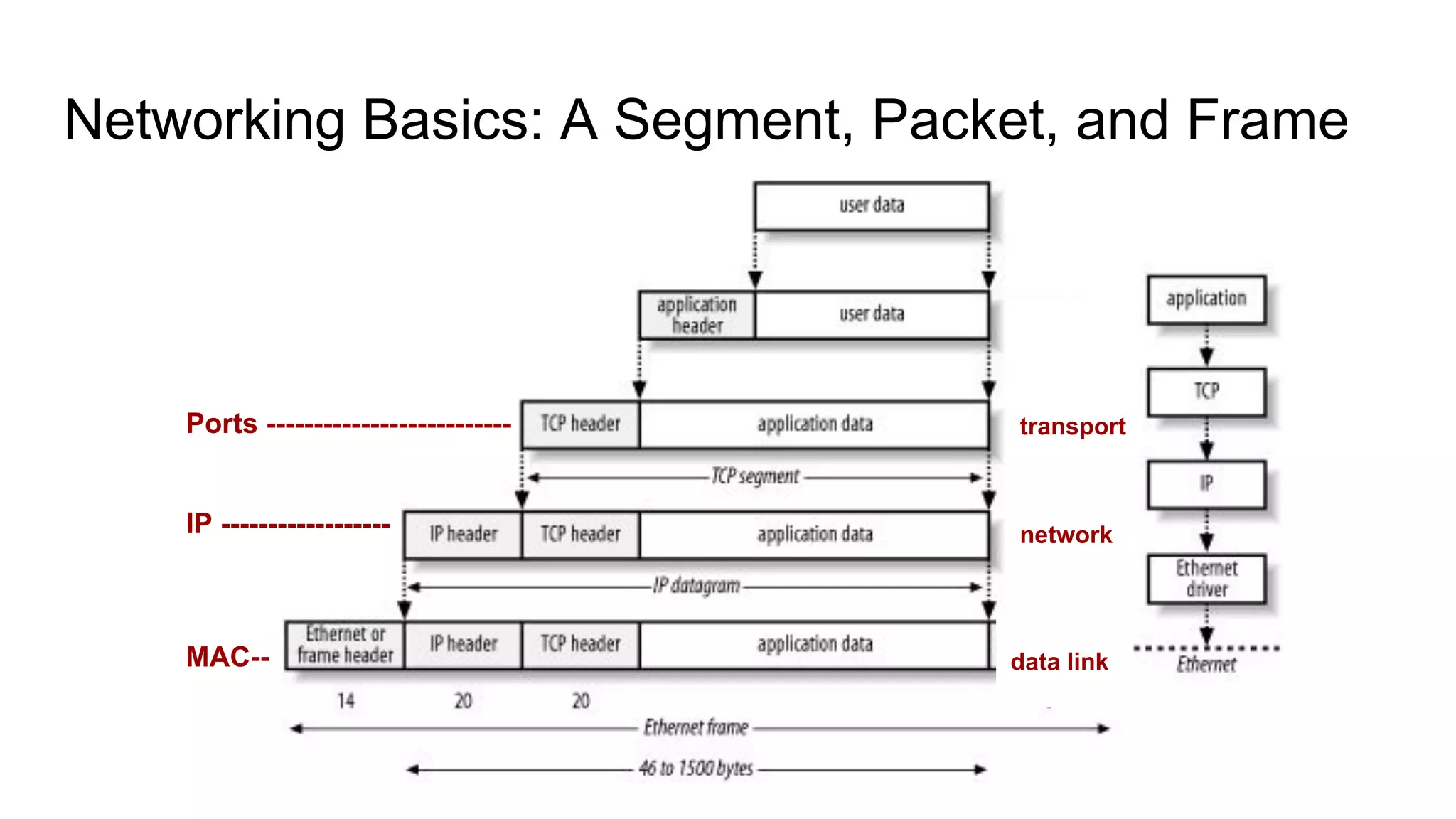
Networking Basics: A Segment, Packet, and Frame
Ports --------------------------
IP ------------------
MAC--
network
transport
data link
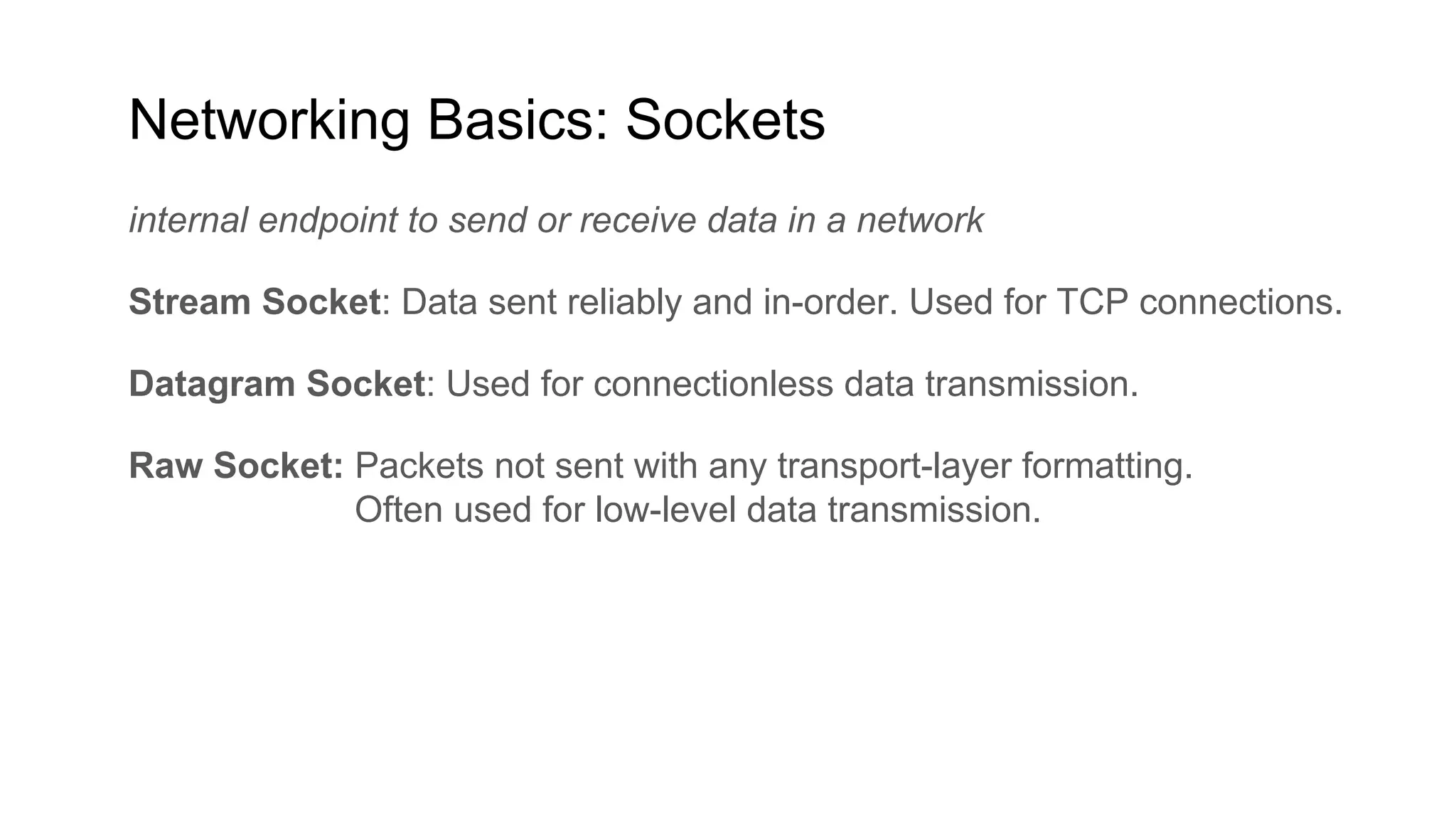
Networking Basics: Sockets
internal endpoint to send or receive data in a network
Stream Socket: Data sent reliably and in-order. Used for TCP connections.
Datagram Socket: Used for connectionless data transmission.
Raw Socket: Packets not sent with any transport-layer formatting.
Often used for low-level data transmission.
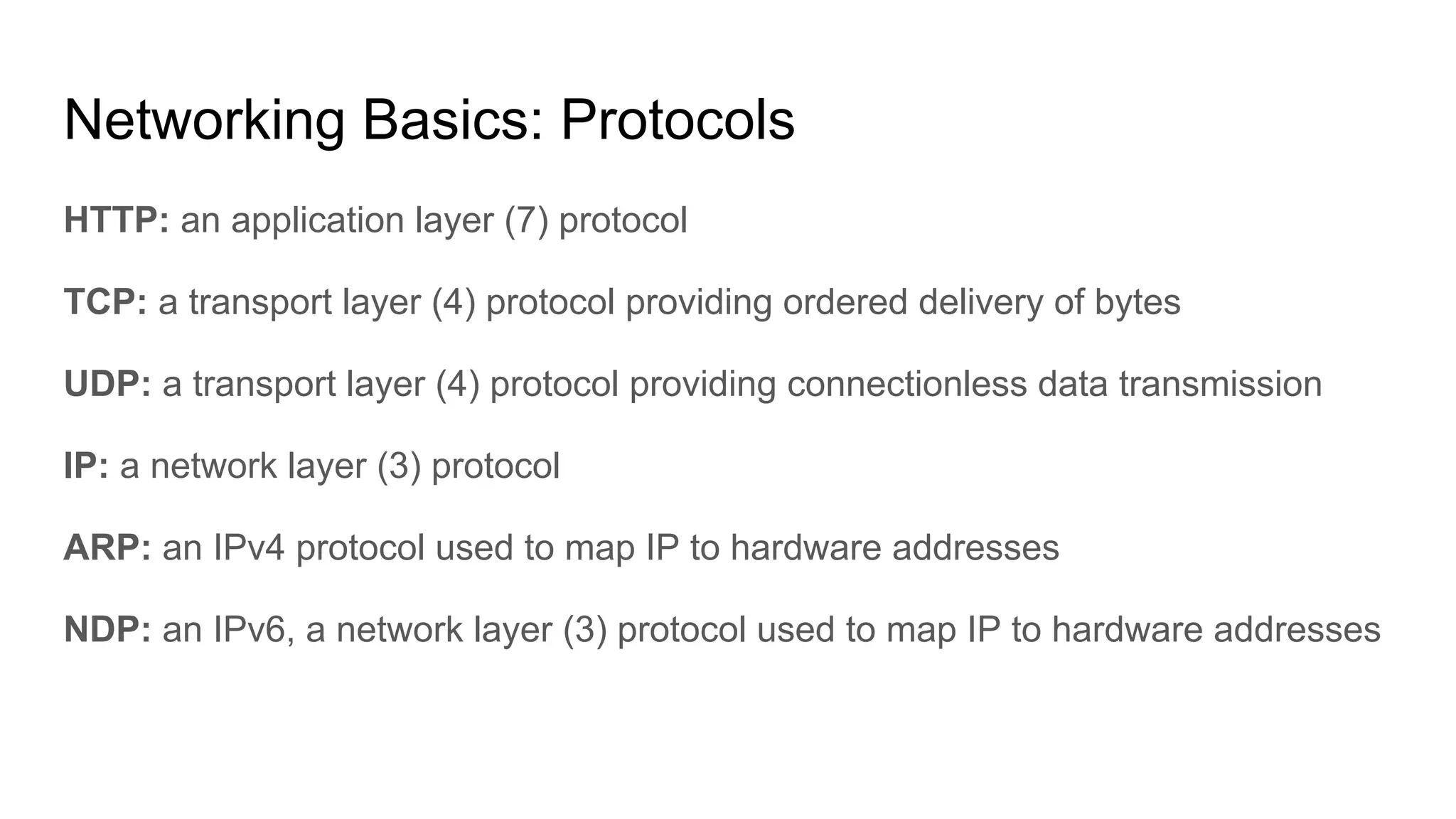
Networking Basics: Protocols
HTTP: an application layer (7) protocol
TCP: a transport layer (4) protocol providing ordered delivery of bytes
UDP: a transport layer (4) protocol providing connectionless data transmission
IP: a network layer (3) protocol
ARP: an IPv4 protocol used to map IP to hardware addresses
NDP: an IPv6, a network layer (3) protocol used to map IP to hardware addresses
The Plan
● Why use go?
● Networking Review
● Layer 4+ Services ★
● Layer 2+ Services
● Conclusion
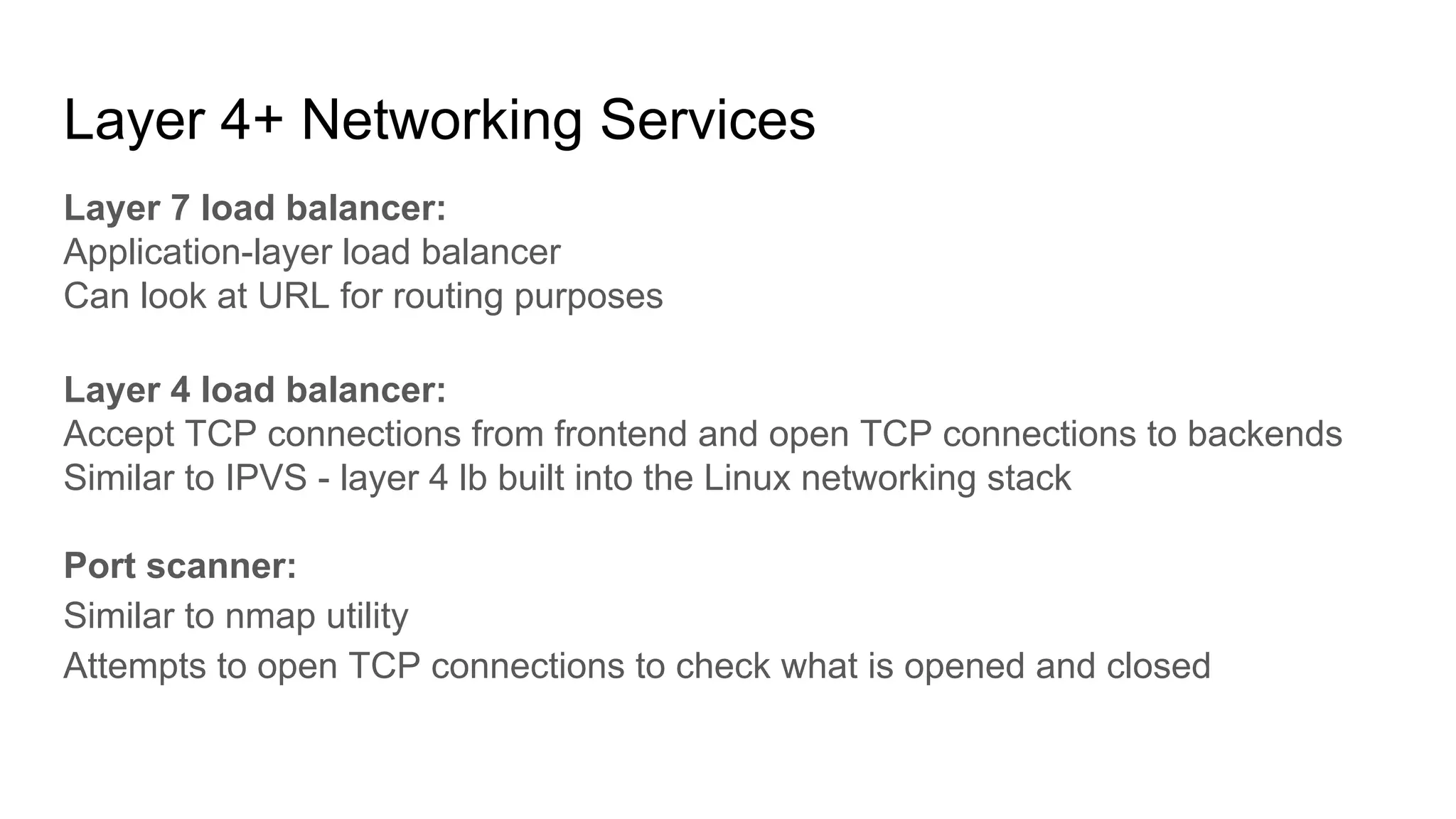
Layer 4+ Networking Services
Layer 7 load balancer:
Application-layer load balancer
Can look at URL for routing purposes
Layer 4 load balancer:
Accept TCP connections from frontend and open TCP connections to backends
Similar to IPVS - layer 4 lb built into the Linux networking stack
Port scanner:
Similar to nmap utility
Attempts to open TCP connections to check what is opened and closed
Layer 7 Load Balancer
// HTTP handler and server.
http.HandleFunc("/", func(w http.ResponseWriter, r *http.Request) {
// Randomly select from list of backends.
n := rand.Intn(len(backends))
r.URL.Host = backends[n]
r.URL.Scheme = "https"
req, err := http.NewRequest(r.Method, r.URL.String(), r.Body)
if err != nil {
// TODO(sneha): fix how this returns later.
http.Error(w, "cannot process request", http.StatusBadGateway)
return
}
...
←-http handler is listening for
requests
←- create new http request to
backends
Layer 4 Proxy
func handleConn(clientConn net.Conn) {
n := rand.Intn(len(backends))
backendConn, err := net.Dial("tcp", backends[n])
if err != nil {
log.Printf("error opening backend conn %s: %v", backends[n], err)
return
}
var g run.Group
{
g.Add(func() error {
return copy(clientConn, backendConn)
}, func(error) {
clientConn.Close() // TODO(sneha): handle errors here
backendConn.Close()
})
}
{
g.Add(func() error {
return copy(backendConn, clientConn)
}, func(error) {
backendConn.Close()
clientConn.Close() // TODO(sneha): handle errors here
})
}
...
←------read from TCP streaming socket opened client-side
←------ open TCP streaming socket to one of the backends
←--- use runGroups to run routines to copy data bidirectionally
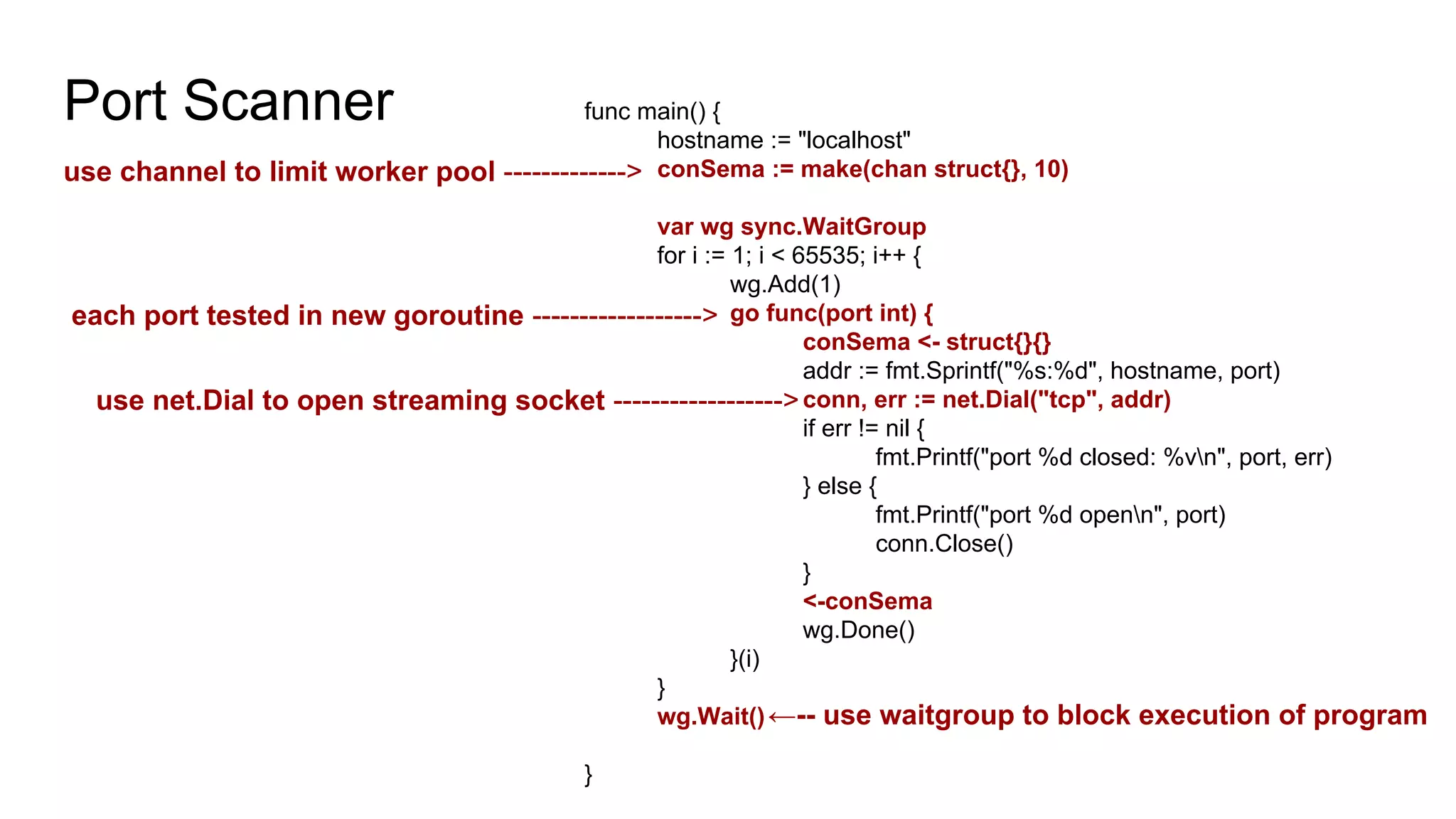
Port Scanner func main() {
hostname := "localhost"
conSema := make(chan struct{}, 10)
var wg sync.WaitGroup
for i := 1; i < 65535; i++ {
wg.Add(1)
go func(port int) {
conSema <- struct{}{}
addr := fmt.Sprintf("%s:%d", hostname, port)
conn, err := net.Dial("tcp", addr)
if err != nil {
fmt.Printf("port %d closed: %vn", port, err)
} else {
fmt.Printf("port %d openn", port)
conn.Close()
}
<-conSema
wg.Done()
}(i)
}
wg.Wait()
}
use channel to limit worker pool ------------->
←-- use waitgroup to block execution of program
use net.Dial to open streaming socket ------------------>
each port tested in new goroutine ------------------>
The Plan
● Why use go?
● Networking Review
● Layer 4+ Services
● Layer 2+ Services ★
● Conclusion
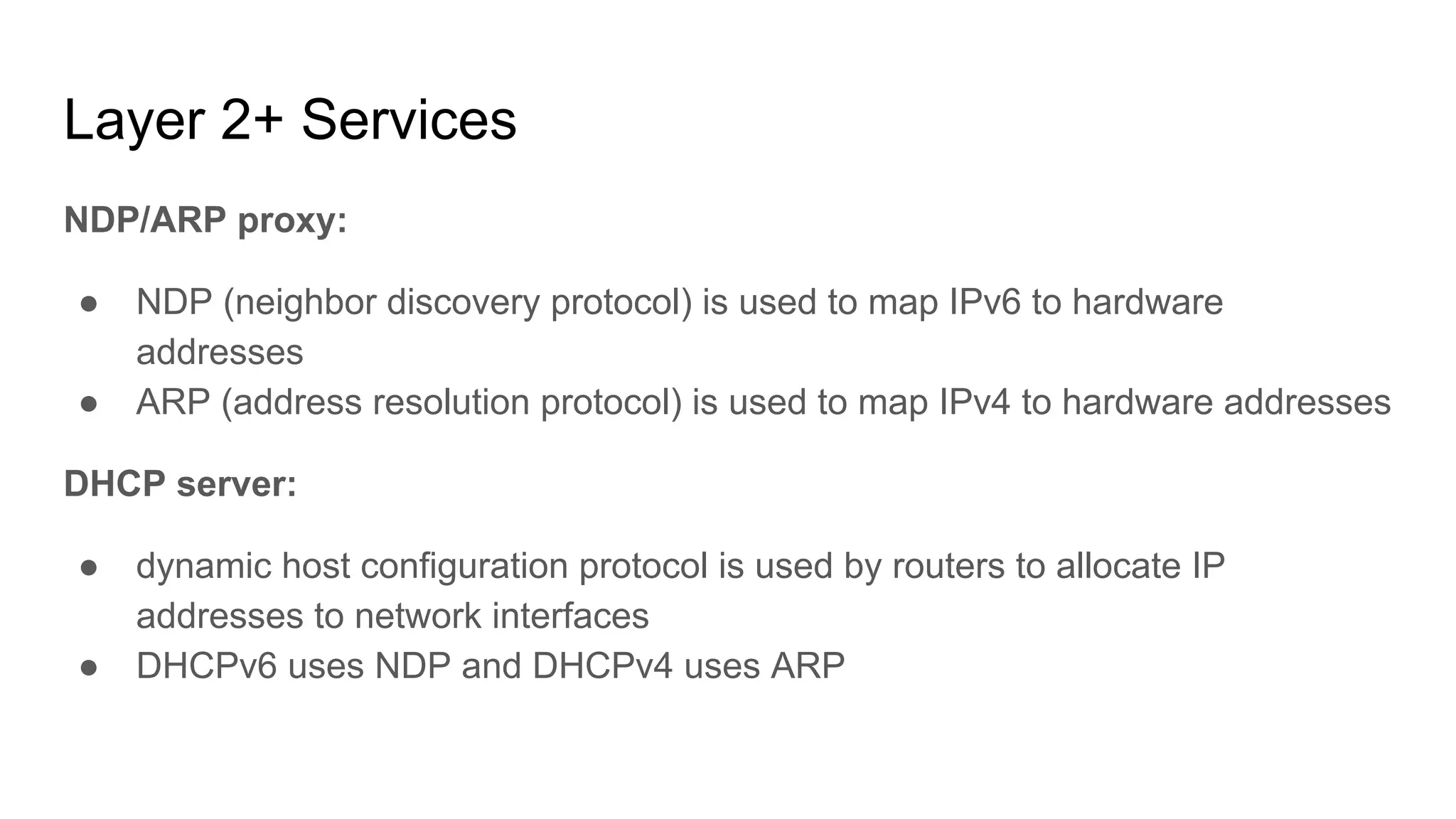
Layer 2+ Services
NDP/ARP proxy:
● NDP (neighbor discovery protocol) is used to map IPv6 to hardware
addresses
● ARP (address resolution protocol) is used to map IPv4 to hardware addresses
DHCP server:
● dynamic host configuration protocol is used by routers to allocate IP
addresses to network interfaces
● DHCPv6 uses NDP and DHCPv4 uses ARP
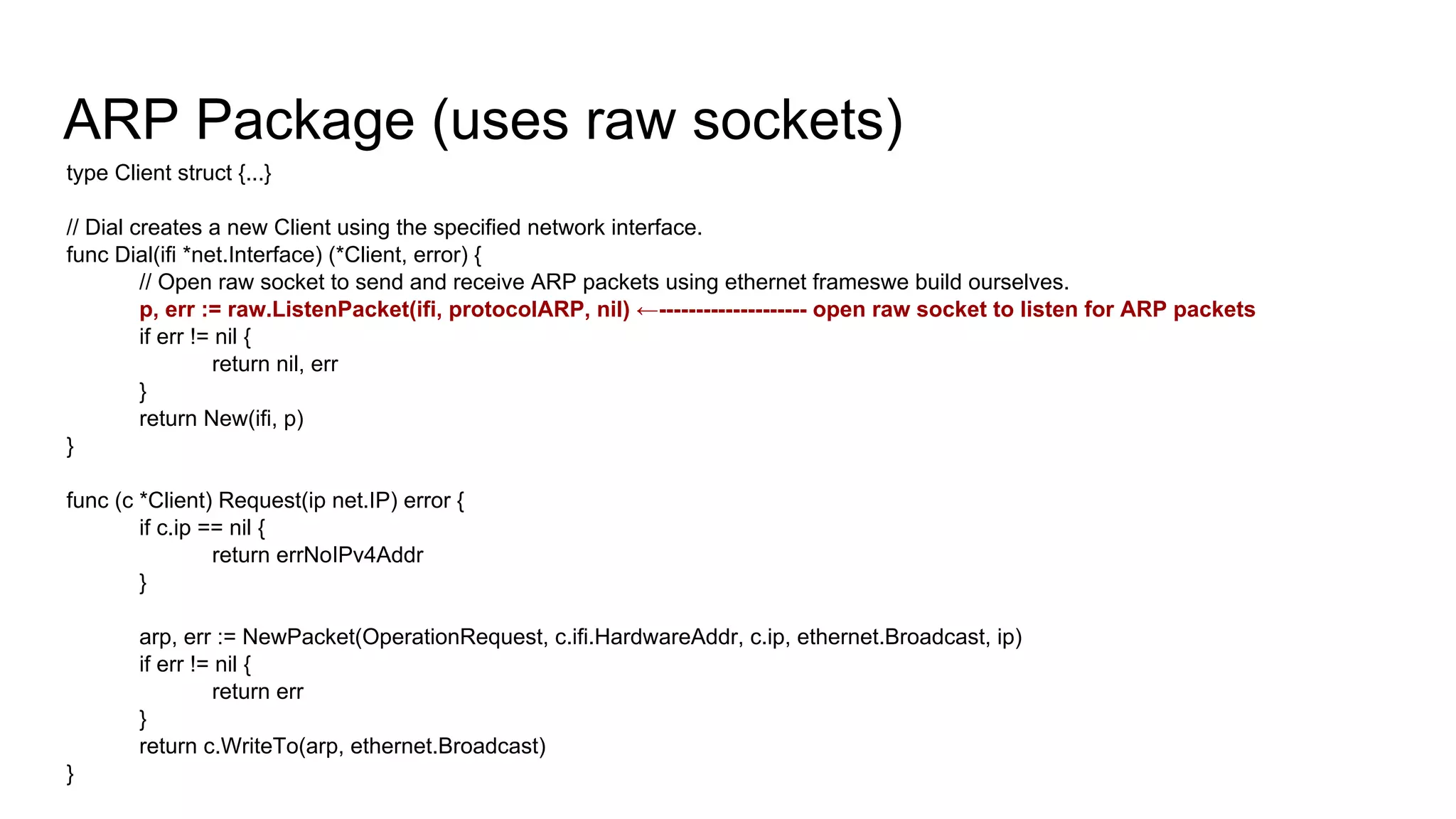
ARP Package (uses raw sockets)
type Client struct {...}
// Dial creates a new Client using the specified network interface.
func Dial(ifi *net.Interface) (*Client, error) {
// Open raw socket to send and receive ARP packets using ethernet frameswe build ourselves.
p, err := raw.ListenPacket(ifi, protocolARP, nil) ←-------------------- open raw socket to listen for ARP packets
if err != nil {
return nil, err
}
return New(ifi, p)
}
func (c *Client) Request(ip net.IP) error {
if c.ip == nil {
return errNoIPv4Addr
}
arp, err := NewPacket(OperationRequest, c.ifi.HardwareAddr, c.ip, ethernet.Broadcast, ip)
if err != nil {
return err
}
return c.WriteTo(arp, ethernet.Broadcast)
}
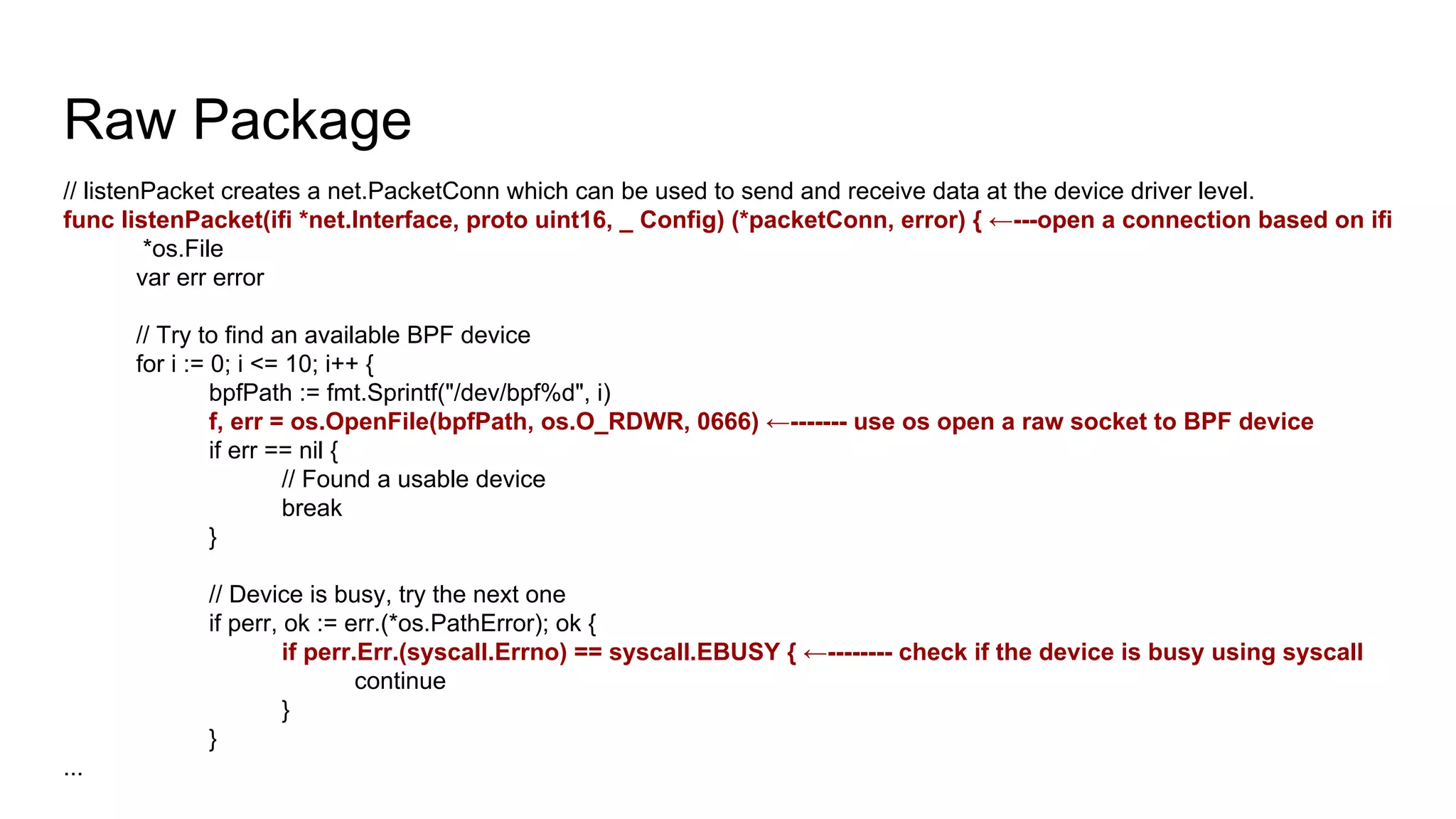
Raw Package
// listenPacket creates a net.PacketConn which can be used to send and receive data at the device driver level.
func listenPacket(ifi *net.Interface, proto uint16, _ Config) (*packetConn, error) { ←---open a connection based on ifi
*os.File
var err error
// Try to find an available BPF device
for i := 0; i <= 10; i++ {
bpfPath := fmt.Sprintf("/dev/bpf%d", i)
f, err = os.OpenFile(bpfPath, os.O_RDWR, 0666) ←------- use os open a raw socket to BPF device
if err == nil {
// Found a usable device
break
}
// Device is busy, try the next one
if perr, ok := err.(*os.PathError); ok {
if perr.Err.(syscall.Errno) == syscall.EBUSY { ←-------- check if the device is busy using syscall
continue
}
}
...
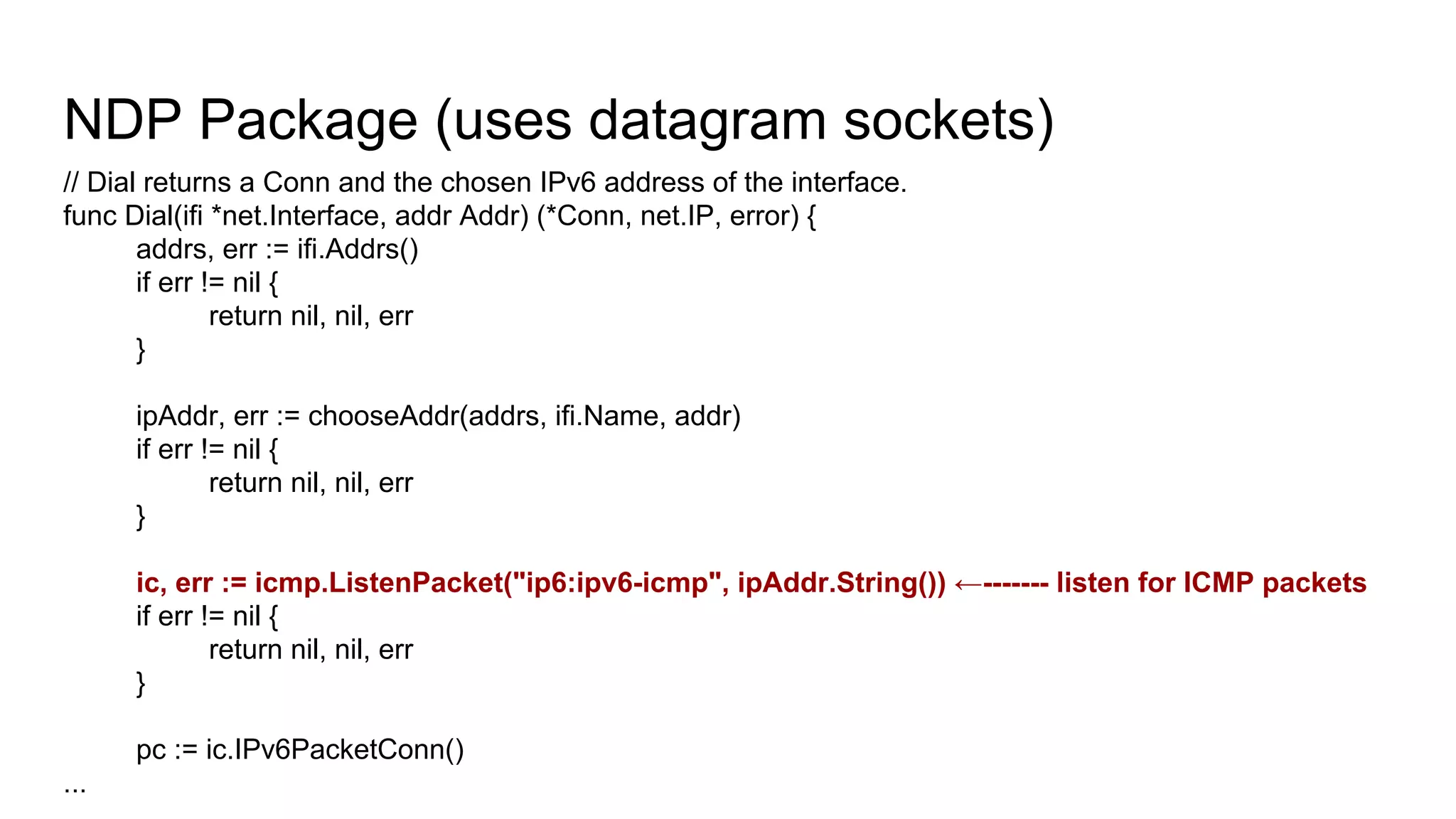
NDP Package (uses datagram sockets)
// Dial returns a Conn and the chosen IPv6 address of the interface.
func Dial(ifi *net.Interface, addr Addr) (*Conn, net.IP, error) {
addrs, err := ifi.Addrs()
if err != nil {
return nil, nil, err
}
ipAddr, err := chooseAddr(addrs, ifi.Name, addr)
if err != nil {
return nil, nil, err
}
ic, err := icmp.ListenPacket("ip6:ipv6-icmp", ipAddr.String()) ←------- listen for ICMP packets
if err != nil {
return nil, nil, err
}
pc := ic.IPv6PacketConn()
...
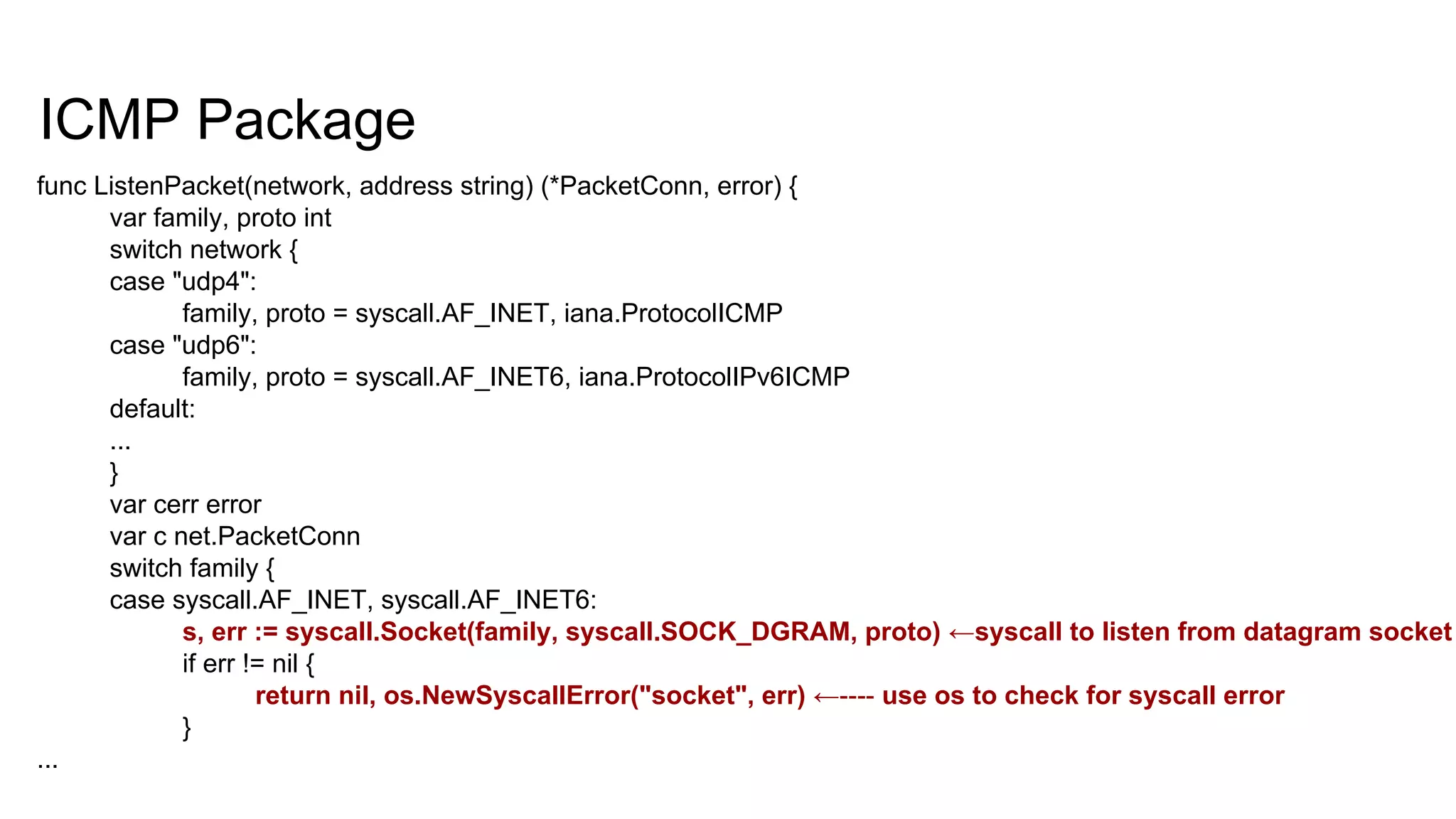
ICMP Package
func ListenPacket(network, address string) (*PacketConn, error) {
var family, proto int
switch network {
case "udp4":
family, proto = syscall.AF_INET, iana.ProtocolICMP
case "udp6":
family, proto = syscall.AF_INET6, iana.ProtocolIPv6ICMP
default:
...
}
var cerr error
var c net.PacketConn
switch family {
case syscall.AF_INET, syscall.AF_INET6:
s, err := syscall.Socket(family, syscall.SOCK_DGRAM, proto) ←syscall to listen from datagram socket
if err != nil {
return nil, os.NewSyscallError("socket", err) ←---- use os to check for syscall error
}
...
The Plan
● Why use go?
● Networking Review
● Layer 4+ Services
● Layer 2+ Services
● Conclusion ★
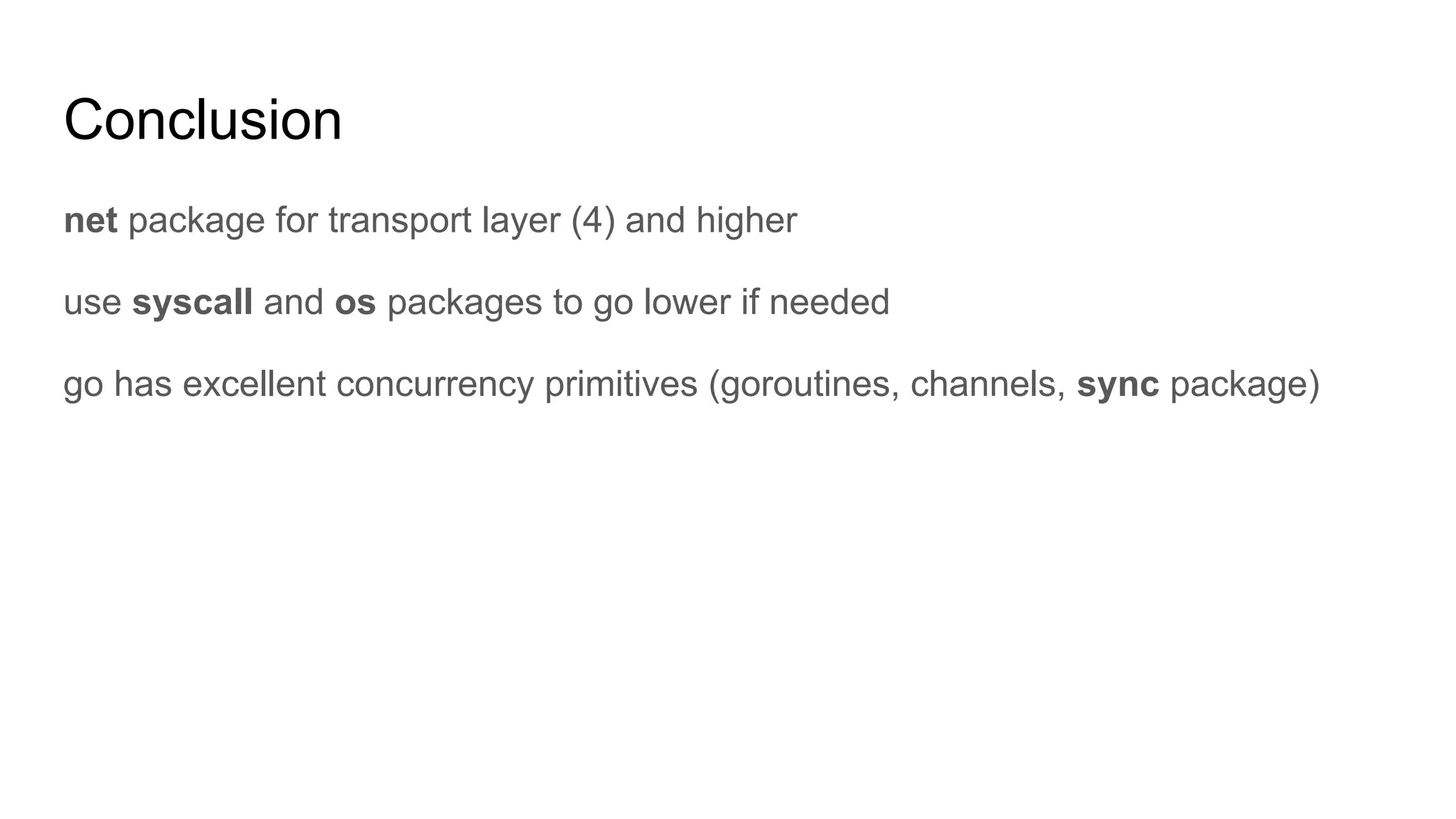
Conclusion
net package for transport layer (4) and higher
use syscall and os packages to go lower if needed
go has excellent concurrency primitives (goroutines, channels, sync package)
A special thanks
Matt Layher (@mdlayher)
Julius Volz (@juliusvolz)
Networking Pillar at DigitalOcean
Links
Port scanner: https://github.com/si74/portscanner
Layer 7 Load balancer: https://github.com/si74/layer7lb
Layer 4 Load balancer: https://github.com/si74/tcpproxy
Raw Package: https://github.com/mdlayher/raw
ARP Package: https://github.com/mdlayher/arp
NDP Package: https://github.com/mdlayher/NDP

Networking and Go: An Epic Journey

  • 1.
  • 2.
    software engineer @DigitalOcean networkingteam loves nature and cats @snehainguva
  • 3.
    My journey withGo 2016: building DOCC, abstraction layer on top of k8s 2017: working on hypervisor-level daemons to configure monitoring with Prometheus 2018: working on DHCP-server implementation in Go 2018/2019: Experimenting with building network primitives outside of work
  • 4.
    Why use Goto build networking services? And how?
  • 5.
    The Plan ● Whyuse go? ★ ● Networking Review ● Layer 4+ Services ● Layer 2+ Services ● Conclusion
  • 6.
    Go for Microservices Goroutines:lightweight processes Excellent concurrency support with sync package Communication primitive known as channels Low learning-curve
  • 7.
    Go and Networking netpackage: portable interface for network I/O, Unix sockets, etc. net/http package: provides HTTP client/server implementations syscall package: provides access to low-level system primitives os package: provides platform-independent interface to OS system functionality
  • 8.
    The Plan ● Whyuse go? ● Networking Review ★ ● Layer 4+ Services ● Layer 2+ Services ● Conclusion
  • 9.
  • 10.
    Networking Basics: ASegment, Packet, and Frame Ports -------------------------- IP ------------------ MAC-- network transport data link
  • 11.
    Networking Basics: Sockets internalendpoint to send or receive data in a network Stream Socket: Data sent reliably and in-order. Used for TCP connections. Datagram Socket: Used for connectionless data transmission. Raw Socket: Packets not sent with any transport-layer formatting. Often used for low-level data transmission.
  • 12.
    Networking Basics: Protocols HTTP:an application layer (7) protocol TCP: a transport layer (4) protocol providing ordered delivery of bytes UDP: a transport layer (4) protocol providing connectionless data transmission IP: a network layer (3) protocol ARP: an IPv4 protocol used to map IP to hardware addresses NDP: an IPv6, a network layer (3) protocol used to map IP to hardware addresses
  • 13.
    The Plan ● Whyuse go? ● Networking Review ● Layer 4+ Services ★ ● Layer 2+ Services ● Conclusion
  • 14.
    Layer 4+ NetworkingServices Layer 7 load balancer: Application-layer load balancer Can look at URL for routing purposes Layer 4 load balancer: Accept TCP connections from frontend and open TCP connections to backends Similar to IPVS - layer 4 lb built into the Linux networking stack Port scanner: Similar to nmap utility Attempts to open TCP connections to check what is opened and closed
  • 15.
    Layer 7 LoadBalancer // HTTP handler and server. http.HandleFunc("/", func(w http.ResponseWriter, r *http.Request) { // Randomly select from list of backends. n := rand.Intn(len(backends)) r.URL.Host = backends[n] r.URL.Scheme = "https" req, err := http.NewRequest(r.Method, r.URL.String(), r.Body) if err != nil { // TODO(sneha): fix how this returns later. http.Error(w, "cannot process request", http.StatusBadGateway) return } ... ←-http handler is listening for requests ←- create new http request to backends
  • 16.
    Layer 4 Proxy funchandleConn(clientConn net.Conn) { n := rand.Intn(len(backends)) backendConn, err := net.Dial("tcp", backends[n]) if err != nil { log.Printf("error opening backend conn %s: %v", backends[n], err) return } var g run.Group { g.Add(func() error { return copy(clientConn, backendConn) }, func(error) { clientConn.Close() // TODO(sneha): handle errors here backendConn.Close() }) } { g.Add(func() error { return copy(backendConn, clientConn) }, func(error) { backendConn.Close() clientConn.Close() // TODO(sneha): handle errors here }) } ... ←------read from TCP streaming socket opened client-side ←------ open TCP streaming socket to one of the backends ←--- use runGroups to run routines to copy data bidirectionally
  • 17.
    Port Scanner funcmain() { hostname := "localhost" conSema := make(chan struct{}, 10) var wg sync.WaitGroup for i := 1; i < 65535; i++ { wg.Add(1) go func(port int) { conSema <- struct{}{} addr := fmt.Sprintf("%s:%d", hostname, port) conn, err := net.Dial("tcp", addr) if err != nil { fmt.Printf("port %d closed: %vn", port, err) } else { fmt.Printf("port %d openn", port) conn.Close() } <-conSema wg.Done() }(i) } wg.Wait() } use channel to limit worker pool -------------> ←-- use waitgroup to block execution of program use net.Dial to open streaming socket ------------------> each port tested in new goroutine ------------------>
  • 18.
    The Plan ● Whyuse go? ● Networking Review ● Layer 4+ Services ● Layer 2+ Services ★ ● Conclusion
  • 19.
    Layer 2+ Services NDP/ARPproxy: ● NDP (neighbor discovery protocol) is used to map IPv6 to hardware addresses ● ARP (address resolution protocol) is used to map IPv4 to hardware addresses DHCP server: ● dynamic host configuration protocol is used by routers to allocate IP addresses to network interfaces ● DHCPv6 uses NDP and DHCPv4 uses ARP
  • 20.
    ARP Package (usesraw sockets) type Client struct {...} // Dial creates a new Client using the specified network interface. func Dial(ifi *net.Interface) (*Client, error) { // Open raw socket to send and receive ARP packets using ethernet frameswe build ourselves. p, err := raw.ListenPacket(ifi, protocolARP, nil) ←-------------------- open raw socket to listen for ARP packets if err != nil { return nil, err } return New(ifi, p) } func (c *Client) Request(ip net.IP) error { if c.ip == nil { return errNoIPv4Addr } arp, err := NewPacket(OperationRequest, c.ifi.HardwareAddr, c.ip, ethernet.Broadcast, ip) if err != nil { return err } return c.WriteTo(arp, ethernet.Broadcast) }
  • 21.
    Raw Package // listenPacketcreates a net.PacketConn which can be used to send and receive data at the device driver level. func listenPacket(ifi *net.Interface, proto uint16, _ Config) (*packetConn, error) { ←---open a connection based on ifi *os.File var err error // Try to find an available BPF device for i := 0; i <= 10; i++ { bpfPath := fmt.Sprintf("/dev/bpf%d", i) f, err = os.OpenFile(bpfPath, os.O_RDWR, 0666) ←------- use os open a raw socket to BPF device if err == nil { // Found a usable device break } // Device is busy, try the next one if perr, ok := err.(*os.PathError); ok { if perr.Err.(syscall.Errno) == syscall.EBUSY { ←-------- check if the device is busy using syscall continue } } ...
  • 22.
    NDP Package (usesdatagram sockets) // Dial returns a Conn and the chosen IPv6 address of the interface. func Dial(ifi *net.Interface, addr Addr) (*Conn, net.IP, error) { addrs, err := ifi.Addrs() if err != nil { return nil, nil, err } ipAddr, err := chooseAddr(addrs, ifi.Name, addr) if err != nil { return nil, nil, err } ic, err := icmp.ListenPacket("ip6:ipv6-icmp", ipAddr.String()) ←------- listen for ICMP packets if err != nil { return nil, nil, err } pc := ic.IPv6PacketConn() ...
  • 23.
    ICMP Package func ListenPacket(network,address string) (*PacketConn, error) { var family, proto int switch network { case "udp4": family, proto = syscall.AF_INET, iana.ProtocolICMP case "udp6": family, proto = syscall.AF_INET6, iana.ProtocolIPv6ICMP default: ... } var cerr error var c net.PacketConn switch family { case syscall.AF_INET, syscall.AF_INET6: s, err := syscall.Socket(family, syscall.SOCK_DGRAM, proto) ←syscall to listen from datagram socket if err != nil { return nil, os.NewSyscallError("socket", err) ←---- use os to check for syscall error } ...
  • 24.
    The Plan ● Whyuse go? ● Networking Review ● Layer 4+ Services ● Layer 2+ Services ● Conclusion ★
  • 25.
    Conclusion net package fortransport layer (4) and higher use syscall and os packages to go lower if needed go has excellent concurrency primitives (goroutines, channels, sync package)
  • 26.
    A special thanks MattLayher (@mdlayher) Julius Volz (@juliusvolz) Networking Pillar at DigitalOcean
  • 27.
    Links Port scanner: https://github.com/si74/portscanner Layer7 Load balancer: https://github.com/si74/layer7lb Layer 4 Load balancer: https://github.com/si74/tcpproxy Raw Package: https://github.com/mdlayher/raw ARP Package: https://github.com/mdlayher/arp NDP Package: https://github.com/mdlayher/NDP