Shaping ReadeRs’ identity:
Choice
Access
Response
Donalyn Miller
Teri S. Lesesne
“Becoming a reader and a writer has as much
to do with assuming an identity as a reader and
a writer as it does with acquiring a set of
predetermined cognitive skills.”
(Serafini, 2013)
“Texts and the literate practices that
accompany them may not only reflect the
self, but may also produce the self.”
(Davies, 1989)
Our Reading Lives
How we develop a
reading identity
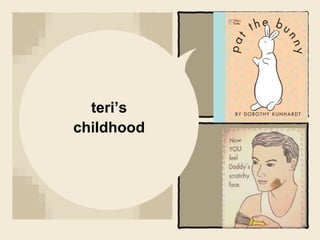
teri’s
childhood
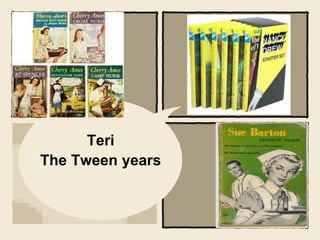
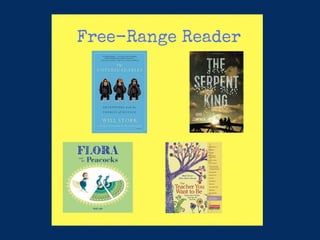
Teri
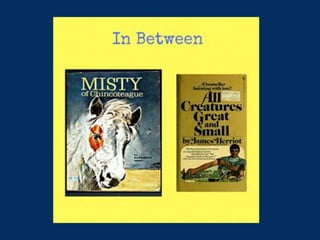
The Tween years
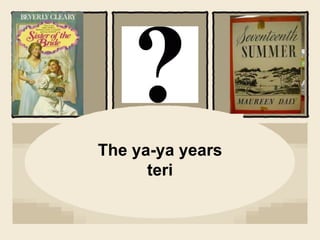
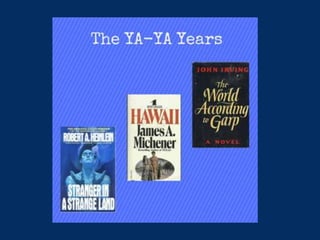
The ya-ya years
teri
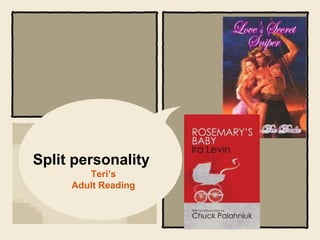
Split personality
Teri’s
Adult Reading
Your Turn
What books and reading experiences form your reading
autobiography?
Share your reading autobiography with a partner.
What do you notice about your partner’s list?
Select one book from your reading autobiography.
Write about this book’s personal importance to you or a
memory connected to this book.
What does this reveal about you as a reader?
an educator?
a parent?
a person?
Your Reading
Autobiography
• So, what are the highlights of your reading
life?
• What are the low points?
• Titles, series, authors, books you recall
strongly?
• People in your life you connect to certain
books?
○ Can use shelfies
● Collect them, analyze them for commonalities
● Identify kids who are already engaged readers
and those who are not, yet.
Identity
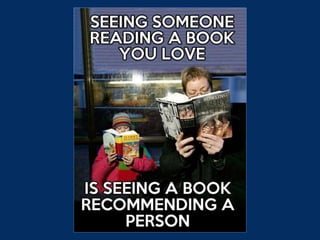
How do we demonstrate our love of
reading to our kids?
Brainstorm with others.
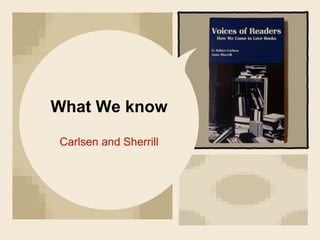
What We know
Carlsen and Sherrill
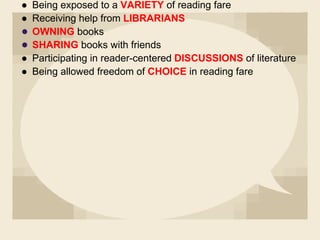
● Being exposed to a VARIETY of reading fare
● Receiving help from LIBRARIANS
● OWNING books
● SHARING books with friends
● Participating in reader-centered DISCUSSIONS of literature
● Being allowed freedom of CHOICE in reading fare
• Time
• Role models at home and school
• Access to books
• Choice of reading materials
• Diversity
Factors Affecting Reading
identity
Home
School
Reading in the Edges
time
• Physical
• Intellectual
• Emotional
• Moral
Access
.
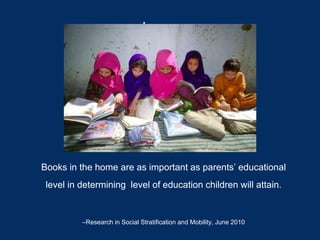
Books in the home are as important as parents’ educational
level in determining level of education children will attain.
–Research in Social Stratification and Mobility, June 2010
Access to a full-time school librarian
increases students' test scores,
closes the achievement gap, and
improves writing skills.
(Lance, 2012)
Students read 50-60% more in
classrooms with adequate libraries.
(Allington, 2007; Morrow, 2003; Neuman, 1999)
Classroom Library Checklist
What would you look for when evaluating a
classroom library to determine if it was
adequate?
Diversity
Currency
Organization
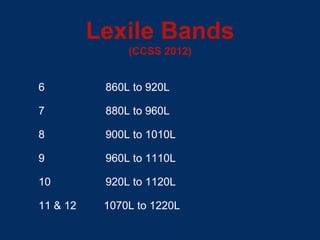
Lexile Bands
(CCSS 2012)
6 860L to 920L
7 880L to 960L
8 900L to 1010L
9 960L to 1110L
10 920L to 1120L
11 & 12 1070L to 1220L
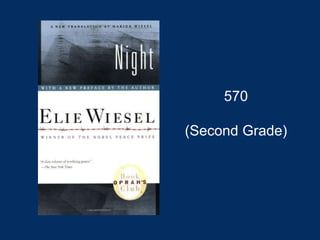
570
(Second Grade)
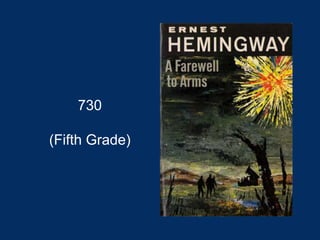
730
(Fifth Grade)
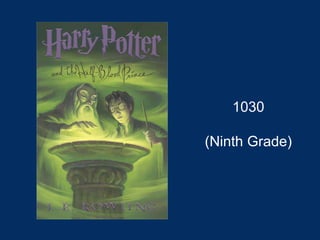
1030
(Ninth Grade)
Limitations of Lexile
Informational Nonfiction
Graphic Novels
Picture Books
Poetry
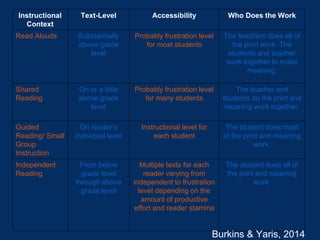
Instructional
Context
Text-Level Accessibility Who Does the Work
Read Alouds Substantially
above grade
level
Probably frustration level
for most students
The teachers does all of
the print work. The
students and teacher
work together to make
meaning.
Shared
Reading
On or a little
above grade
level
Probably frustration level
for many students
The teacher and
students do the print and
meaning work together.
Guided
Reading/ Small
Group
Instruction
On reader’s
individual level
Instructional level for
each student
The student does most
of the print and meaning
work.
Independent
Reading
From below
grade level
through above
grade level
Multiple texts for each
reader varying from
independent to frustration
level depending on the
amount of productive
effort and reader stamina
The student does all of
the print and meaning
work.
Burkins & Yaris, 2014
• How current is the collection?
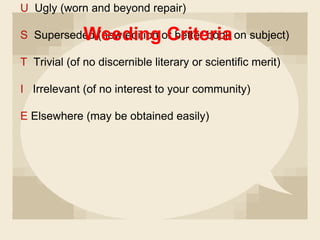
Currency
U Ugly (worn and beyond repair)
S Superseded (new edition or better book on subject)
T Trivial (of no discernible literary or scientific merit)
I Irrelevant (of no interest to your community)
E Elsewhere (may be obtained easily)
Weeding Criteria
• Children’s use
Organization
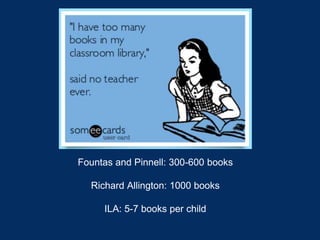
Fountas and Pinnell: 300-600 books
Richard Allington: 1000 books
ILA: 5-7 books per child
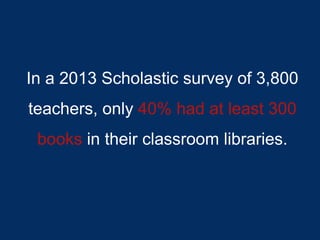
In a 2013 Scholastic survey of 3,800
teachers, only 40% had at least 300
books in their classroom libraries.
• Balancing academic and
personal reading goals
choice
Books!
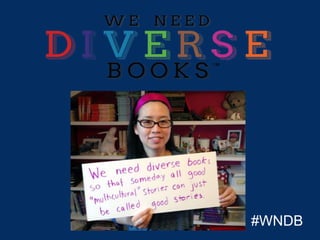
Diversity
(more than a hashtag)
#WNDB
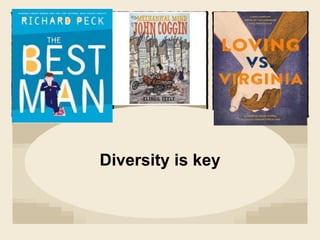
Diversity is key
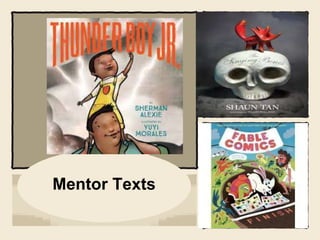
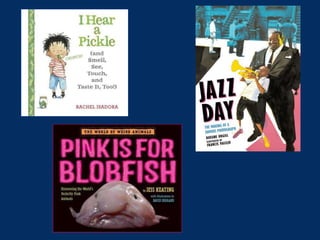
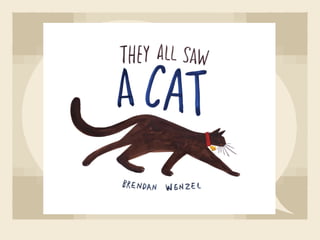
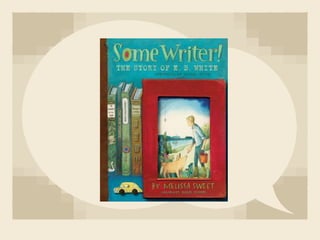
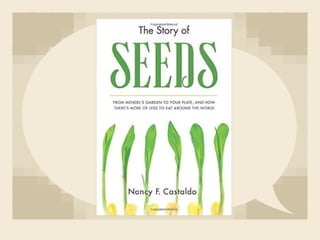
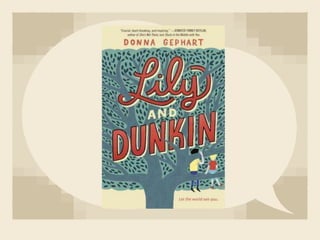
Mentor Texts
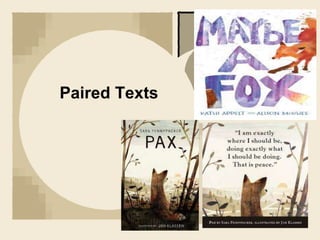
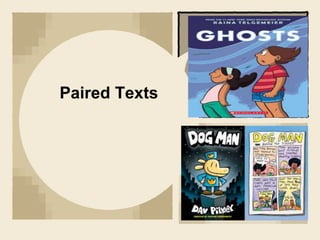
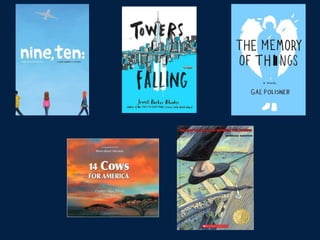
Paired Texts
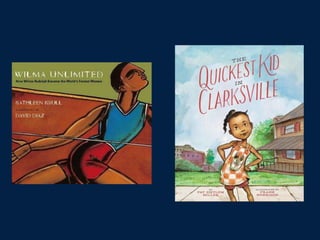
Paired Texts
Nerd camp 16
Nerd camp 16
Nerd camp 16
Nerd camp 16
Nerd camp 16
Nerd camp 16
Nerd camp 16
Nerd camp 16
Nerd camp 16
Nerd camp 16
Nerd camp 16
Nerd camp 16
Nerd camp 16
Nerd camp 16
Nerd camp 16
Nerd camp 16
Nerd camp 16

Nerd camp 16