Nephrotic syndrome
4th year Block 2
Prof. Nadeem Nusrat
Faculty of Pathology
FRPMC
At the end of session the student will have an
idea of
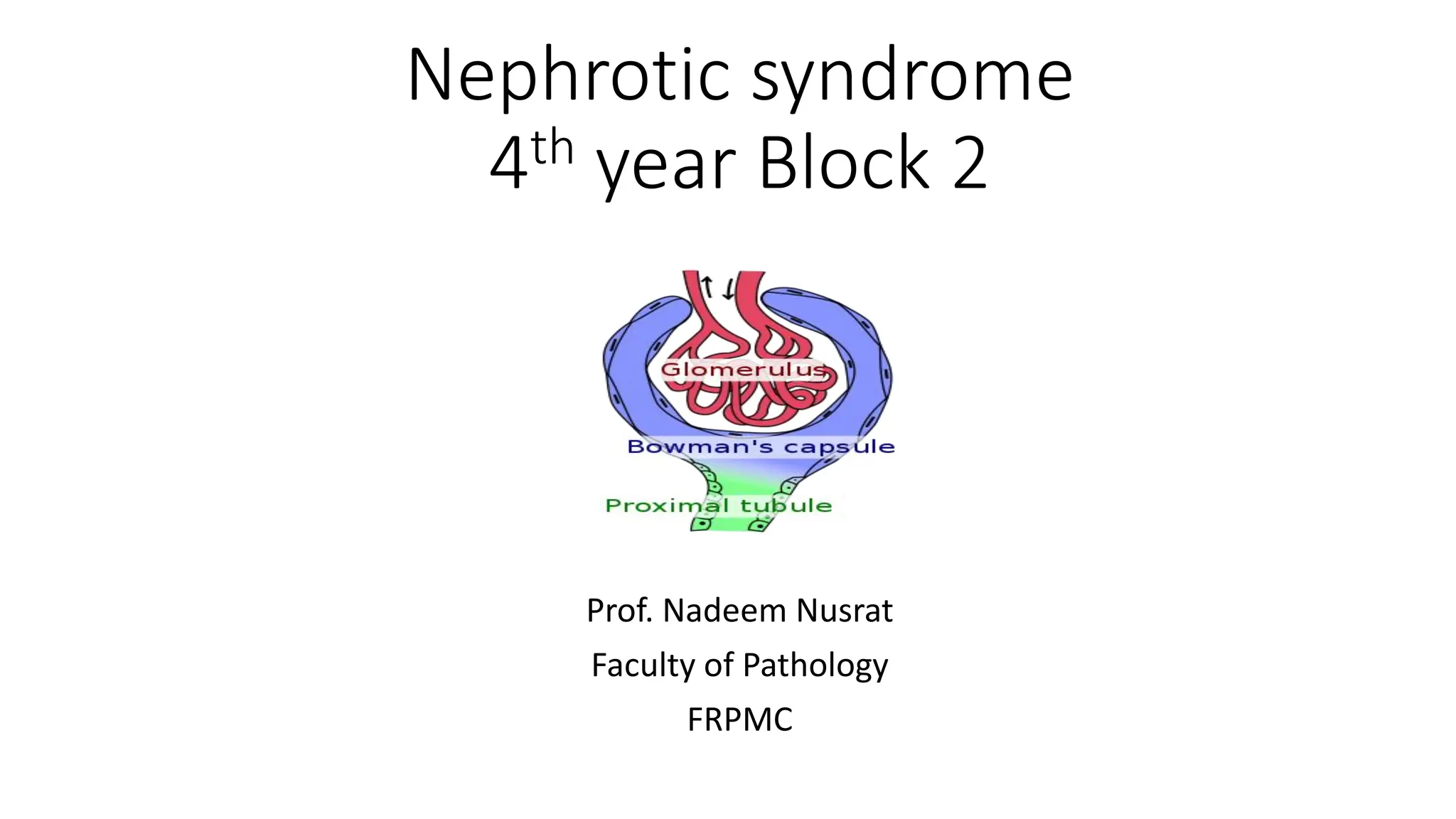
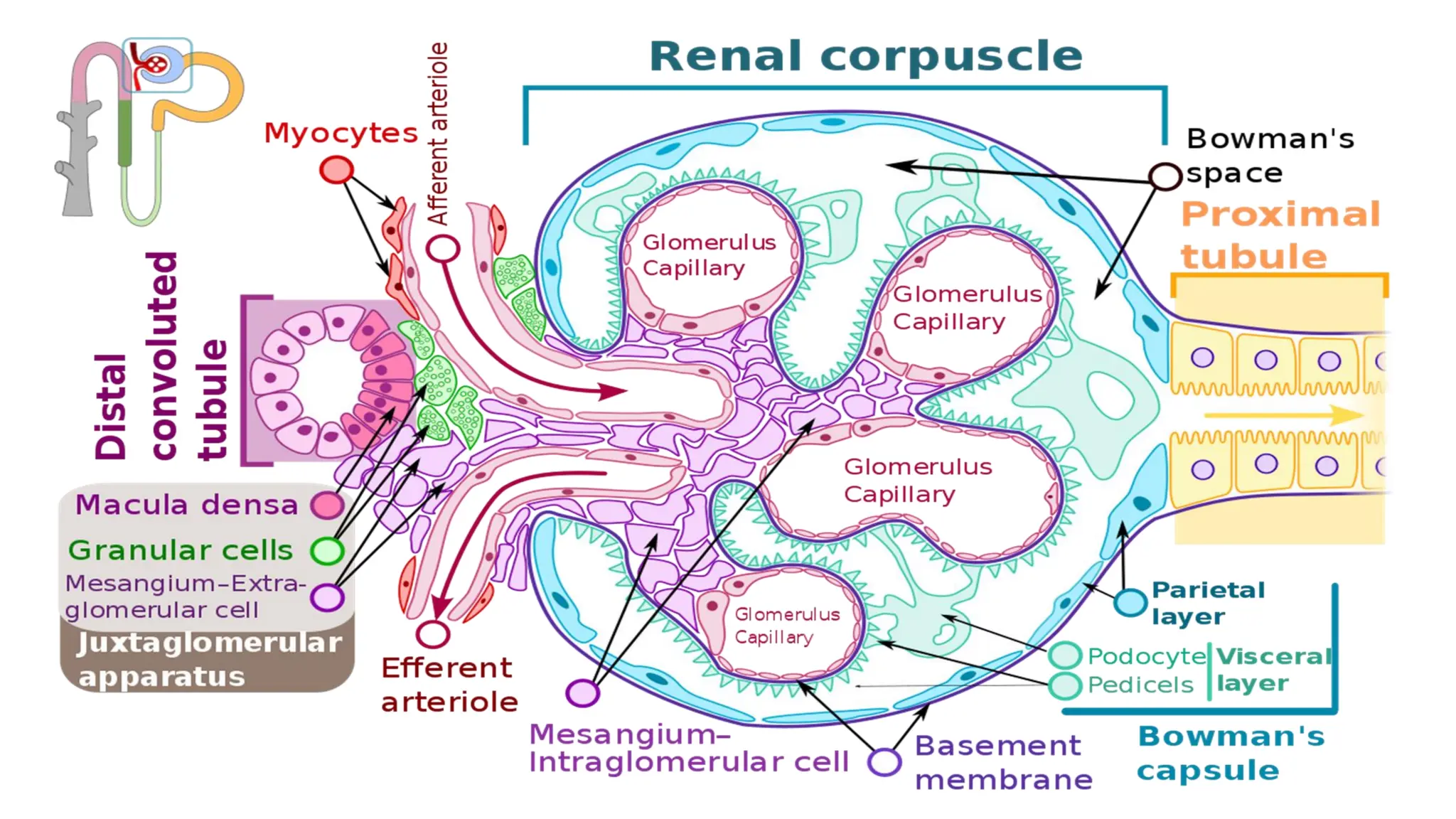
• The structure of glomerulus
• Damage inflicted to glomeruli
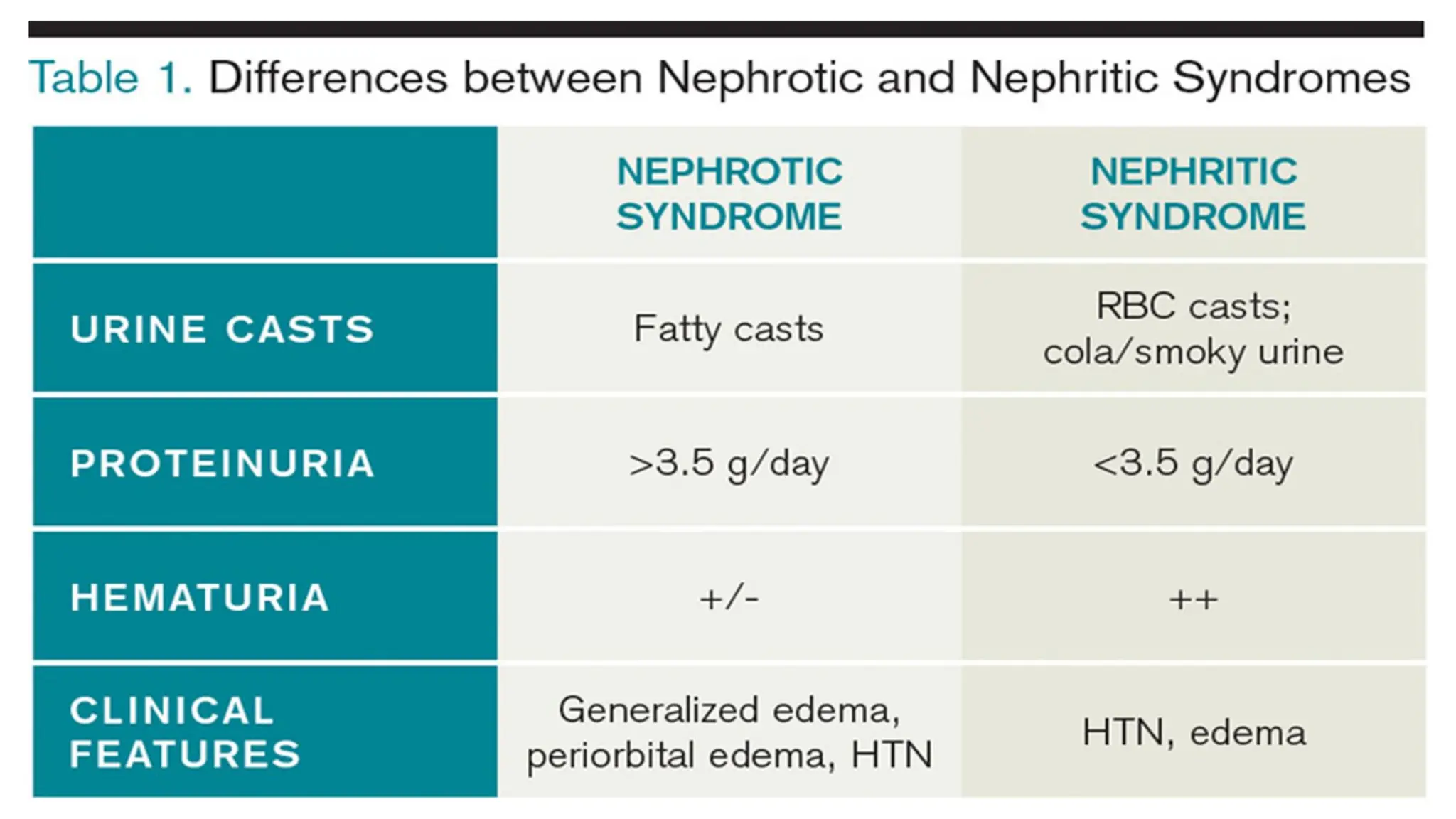
• Difference between Nephrotic and Nephritic syndrome
• Various causes of Nephrotic syndrome
• Pathogenesis of Nephrotic syndrome
Nephrotic syndrome
• It is glomerular disease characterized by
1. Massive proteinuria: > 3.5 gms in 24 hrs ( less in children)
2. Hypoalbuminemia: < 3 gm/dl plasma albumin level
3. Generalized edema
4. Hyperlipidemia and lipiduria
Causes Approximate Prevalence
Primary Glomerular disease Children Adults
1 Membranous nephropathy 3 30
2 Minimal change disease 75 8
3 Focal segmental glomerulosclerosis 10 35
4 Membranoproliferative GN & dense deposit disease 10 10
5 Others: IgA nephropathy, focal, pure mesangial 2 17
Systemic diseases
1 Diabetes Mellitus
2 Amyloidosis
3 SLE
4 Drugs: NSAIDs, Penicillamine, heroin
5 Infections: Malaria, Syphilis, Hepatitis B & C
6 Malignant disease: Carcinoma, Lymphoma
Causes of Nephrotic Syndrome
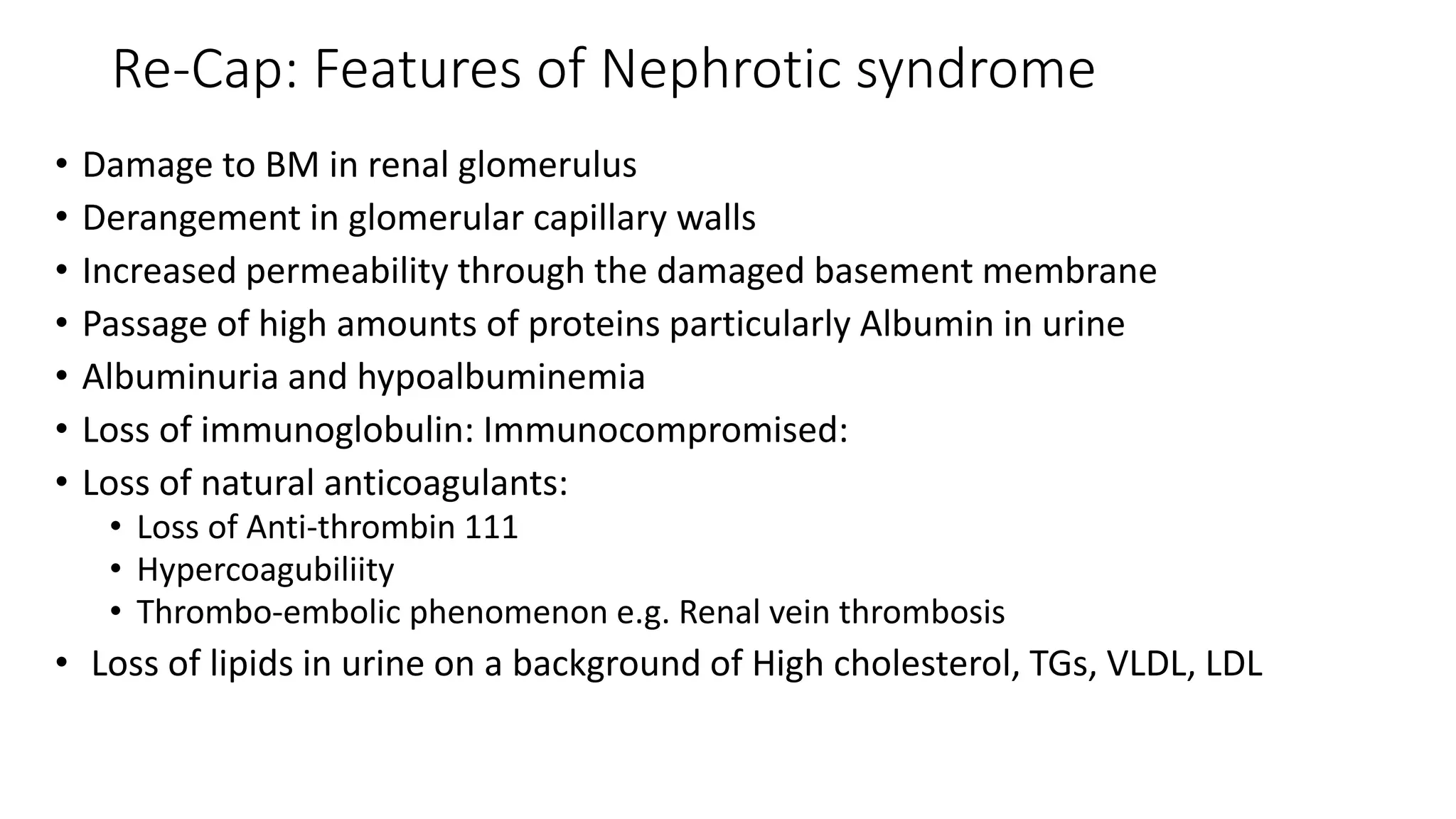
Re-Cap: Features of Nephrotic syndrome
• Damage to BM in renal glomerulus
• Derangement in glomerular capillary walls
• Increased permeability through the damaged basement membrane
• Passage of high amounts of proteins particularly Albumin in urine
• Albuminuria and hypoalbuminemia
• Loss of immunoglobulin: Immunocompromised:
• Loss of natural anticoagulants:
• Loss of Anti-thrombin 111
• Hypercoagubiliity
• Thrombo-embolic phenomenon e.g. Renal vein thrombosis
• Loss of lipids in urine on a background of High cholesterol, TGs, VLDL, LDL
• Children: Most important cause of Nephrotic syndrome
• By primary renal lesions
• Minimal change disease
• Membranous nephropathy
• Focal segmental GN
• Adults: Most important cause of Nephrotic syndrome
• Diabetes Mellitus
• Amyloidosis
• SLE
Minimal change disease
• Most important cause of Nephrotic syndrome in children
• Occurs mostly in children with a peak incidence: age 2-6 years
• Usually idiopathic may be associated with Hodgkin lymphoma
• Sometimes follows a respiratory infection or routine immunization
• Some immune dysfunction occurs
• Elaboration of factors that damage podocytes
• Diffuse effacement of foot processes of podocytes in glomeruli
Normal
Morphology of Minimal change disease
• Normal glomeruli on H & E stains: Lipid may be seen in proximal tubule cells
• Effacement of foot processes on Electron microscopy
• No immune complex deposits
• Negative immunofluorescence
• Damage is mediated by cytokines and T cells
• Selective proteinuria (loss of albumin but not Immunoglobulins)
• Excellent response to steroids
Focal segmental Glomerulosclerosis
• Most common causes of Nephrotic syndrome in African Americans
• Usually idiopathic
• May be associated with HIV, Heroin use & Sickle cell disease
• Focal & segmental sclerosis on H &E stains( only some parts of glomeruli)
• Effacement of foot processes on Electron microscopy
• No immune complex deposits, negative immunofluorescence
• Poor response to steroids
• May progress to chronic renal failure
Membranous nephropathy
• Most common cause in adults (Caucasians)
• Usually idiopathic
• May be associated with Hepatitis B or C, SLE, Solid tumors or drugs
• Thick glomerular basement membrane on H&E
• Sub-epithelial Granular immune complex deposition
• Spike and doom appearance on Electron microscopy
• Poor response to steroids
• Progresses to Chronic renal failure
Diabetes mellitus
• Hyaline arteriosclerosis: Non enzymatic glycosylation of basement
membrane
• Efferent glomerular arteriole effected more than afferent resulting in
• High filtration pressure leading to
• Microalbuminuria
• Eventually progresses to chronic renal failure, characterized by
• Sclerosis of mesangium with formation of Kimmelstiel-Wilson nodules
• ACE inhibitors slows the progress
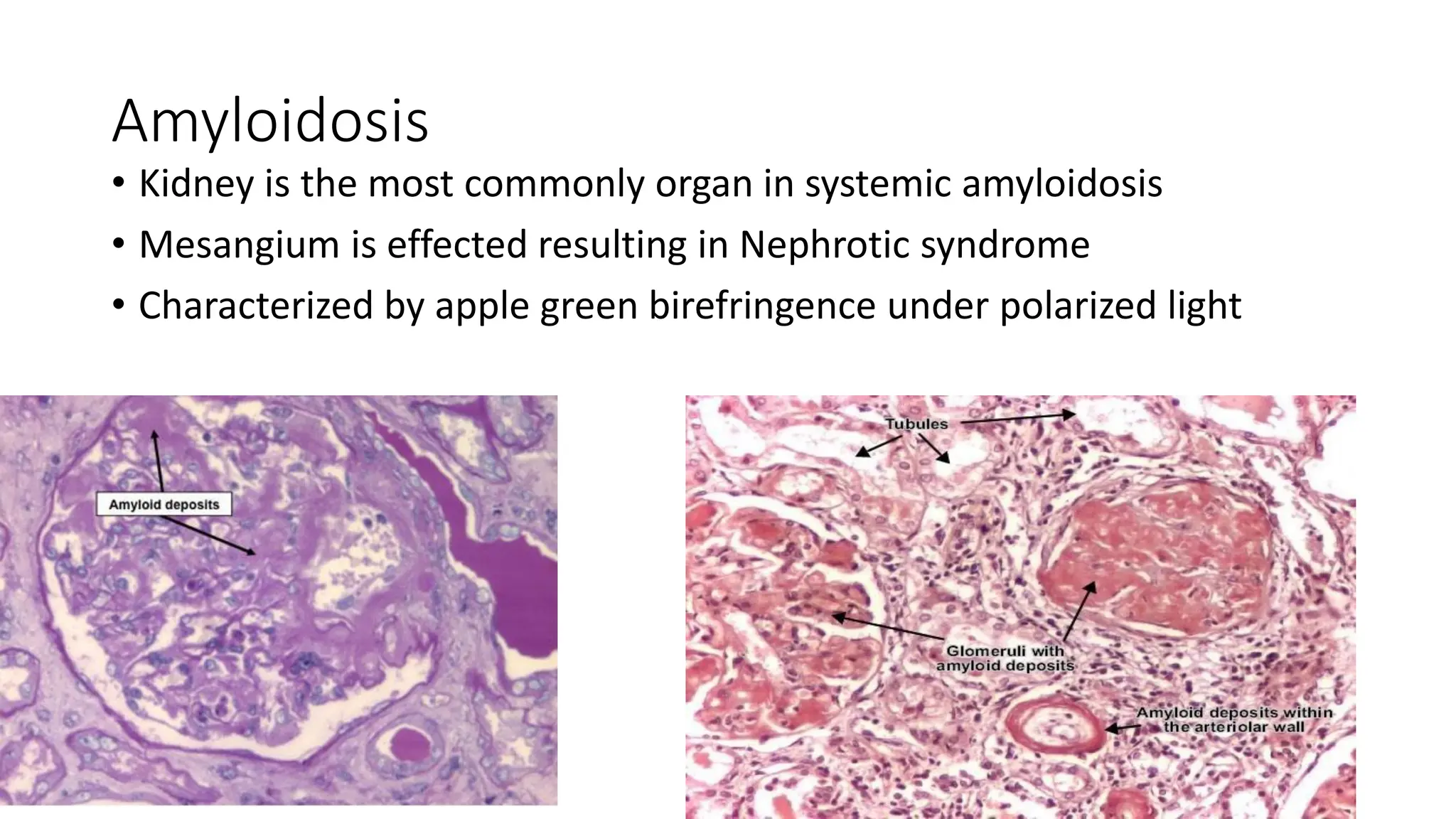
Amyloidosis
• Kidney is the most commonly organ in systemic amyloidosis
• Mesangium is effected resulting in Nephrotic syndrome
• Characterized by apple green birefringence under polarized light
Thanks

Nephrotic syndrome Kidney Pathology Robbins

  • 1.
    Nephrotic syndrome 4th yearBlock 2 Prof. Nadeem Nusrat Faculty of Pathology FRPMC
  • 2.
    At the endof session the student will have an idea of • The structure of glomerulus • Damage inflicted to glomeruli • Difference between Nephrotic and Nephritic syndrome • Various causes of Nephrotic syndrome • Pathogenesis of Nephrotic syndrome
  • 5.
    Nephrotic syndrome • Itis glomerular disease characterized by 1. Massive proteinuria: > 3.5 gms in 24 hrs ( less in children) 2. Hypoalbuminemia: < 3 gm/dl plasma albumin level 3. Generalized edema 4. Hyperlipidemia and lipiduria
  • 7.
    Causes Approximate Prevalence PrimaryGlomerular disease Children Adults 1 Membranous nephropathy 3 30 2 Minimal change disease 75 8 3 Focal segmental glomerulosclerosis 10 35 4 Membranoproliferative GN & dense deposit disease 10 10 5 Others: IgA nephropathy, focal, pure mesangial 2 17 Systemic diseases 1 Diabetes Mellitus 2 Amyloidosis 3 SLE 4 Drugs: NSAIDs, Penicillamine, heroin 5 Infections: Malaria, Syphilis, Hepatitis B & C 6 Malignant disease: Carcinoma, Lymphoma Causes of Nephrotic Syndrome
  • 8.
    Re-Cap: Features ofNephrotic syndrome • Damage to BM in renal glomerulus • Derangement in glomerular capillary walls • Increased permeability through the damaged basement membrane • Passage of high amounts of proteins particularly Albumin in urine • Albuminuria and hypoalbuminemia • Loss of immunoglobulin: Immunocompromised: • Loss of natural anticoagulants: • Loss of Anti-thrombin 111 • Hypercoagubiliity • Thrombo-embolic phenomenon e.g. Renal vein thrombosis • Loss of lipids in urine on a background of High cholesterol, TGs, VLDL, LDL
  • 9.
    • Children: Mostimportant cause of Nephrotic syndrome • By primary renal lesions • Minimal change disease • Membranous nephropathy • Focal segmental GN • Adults: Most important cause of Nephrotic syndrome • Diabetes Mellitus • Amyloidosis • SLE
  • 11.
    Minimal change disease •Most important cause of Nephrotic syndrome in children • Occurs mostly in children with a peak incidence: age 2-6 years • Usually idiopathic may be associated with Hodgkin lymphoma • Sometimes follows a respiratory infection or routine immunization • Some immune dysfunction occurs • Elaboration of factors that damage podocytes • Diffuse effacement of foot processes of podocytes in glomeruli
  • 12.
  • 13.
    Morphology of Minimalchange disease • Normal glomeruli on H & E stains: Lipid may be seen in proximal tubule cells • Effacement of foot processes on Electron microscopy • No immune complex deposits • Negative immunofluorescence • Damage is mediated by cytokines and T cells • Selective proteinuria (loss of albumin but not Immunoglobulins) • Excellent response to steroids
  • 14.
    Focal segmental Glomerulosclerosis •Most common causes of Nephrotic syndrome in African Americans • Usually idiopathic • May be associated with HIV, Heroin use & Sickle cell disease • Focal & segmental sclerosis on H &E stains( only some parts of glomeruli) • Effacement of foot processes on Electron microscopy • No immune complex deposits, negative immunofluorescence • Poor response to steroids • May progress to chronic renal failure
  • 15.
    Membranous nephropathy • Mostcommon cause in adults (Caucasians) • Usually idiopathic • May be associated with Hepatitis B or C, SLE, Solid tumors or drugs • Thick glomerular basement membrane on H&E • Sub-epithelial Granular immune complex deposition • Spike and doom appearance on Electron microscopy • Poor response to steroids • Progresses to Chronic renal failure
  • 17.
    Diabetes mellitus • Hyalinearteriosclerosis: Non enzymatic glycosylation of basement membrane • Efferent glomerular arteriole effected more than afferent resulting in • High filtration pressure leading to • Microalbuminuria • Eventually progresses to chronic renal failure, characterized by • Sclerosis of mesangium with formation of Kimmelstiel-Wilson nodules • ACE inhibitors slows the progress
  • 19.
    Amyloidosis • Kidney isthe most commonly organ in systemic amyloidosis • Mesangium is effected resulting in Nephrotic syndrome • Characterized by apple green birefringence under polarized light
  • 20.