Helping Massachusetts Municipalities Create a Greener Energy Future


           Stretch Code Informational
                    Session
                  Sept. 21, 2011

                          Greg Krantz
                        ICF International
Topics

   IECC 2009 Overview

   What is the Stretch Code?

   Discussion and Q&A
Energy Codes in MA are changing
   New base energy code in July 2010 (IECC 2009)
       Roughly 10-15% more efficient than IECC 2006
                10-
       Next I-Code 1/1/2013-Designed to be 30% better
             I-     1/1/2013-
            New phase of outcome-based Energy Codes
                          outcome-

   Stretch Code appendix 115.AA
                  pp
       Approx 15-20% more energy
                 15-
        efficient than the base code
        (IECC 2009/AHRAE 90.1 2007)
   Commercial bldgs. ASHRAE 90.1-2007 remains
                  g          90.1-
ASHRAE 90.1 = Energy Standard for Buildings Except Low‐Rise Residential Buildings
IECC = International Energy Conservation Code – of International Codes Council (ICC)
IECC and ASHRAE Codes
      ICC & ASHRAE develop model building codes
       and standards for the US.

      ICC: publishes IECC energy code
          3 year cycle IECC 2006, IECC 2009
                             2006

      ASHRAE: publishes 90.1 standard
          3 year cycle 90.1-2007, 90.1-2010
                        90.1-      90.1-
IECC = International Energy Conservation Code – of International Codes Council (ICC)
ASHRAE = American Society of Heating, Refrigerating and Air-Conditioning Engineers
IECC 2009 and the MA 8th
                Edition
   IECC 2009 and the Stretch Appendi
               nd             Appendix
    115.AA Codes address energy only

   MA 8th Edition will address all codes
    (structural, plumbing, etc.)
    (structural plumbing etc )
What’s Changed Since IECC 2006?
    What s

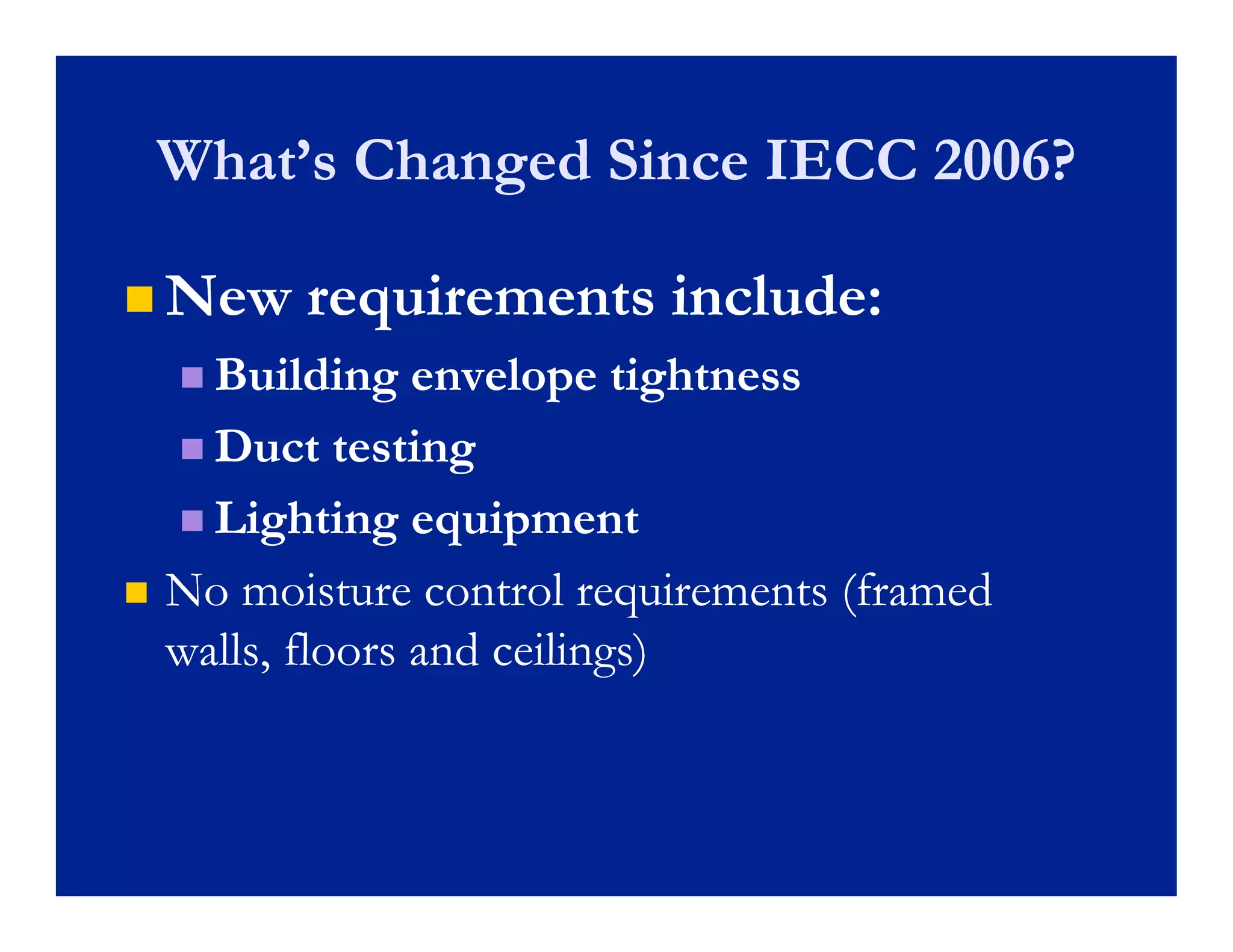
 New     requirements include:
     Building   envelope tightness
     Duct testing

     Lighting equipment
         g     g q p
   No moisture control requirements (framed
    walls,
    walls floors and ceilings)
STRETCH ENERGY CODE
   APPENDIX 115.AA
Why an Optional Stretch Code?
   Growing desire to reduce costs, reduce
                                costs
    dependency on imported fuels, and address
    climate change
   Several towns and cities asked for the ability to
    adopt stronger building codes
   BBRS developed one alternative code that is
    consistent across the state
        i              h
What does the Stretch Code Apply
                   to?
   Residential                  Commercial
                                  (5,000-
                                  (5,000-100,000 sq/ft)
     New  Construction
                                   New  Construction
     Additions
                                   Additions
     Home Renovations
   Historic Home Exemption      Renovations Exempt
Residential New Construction
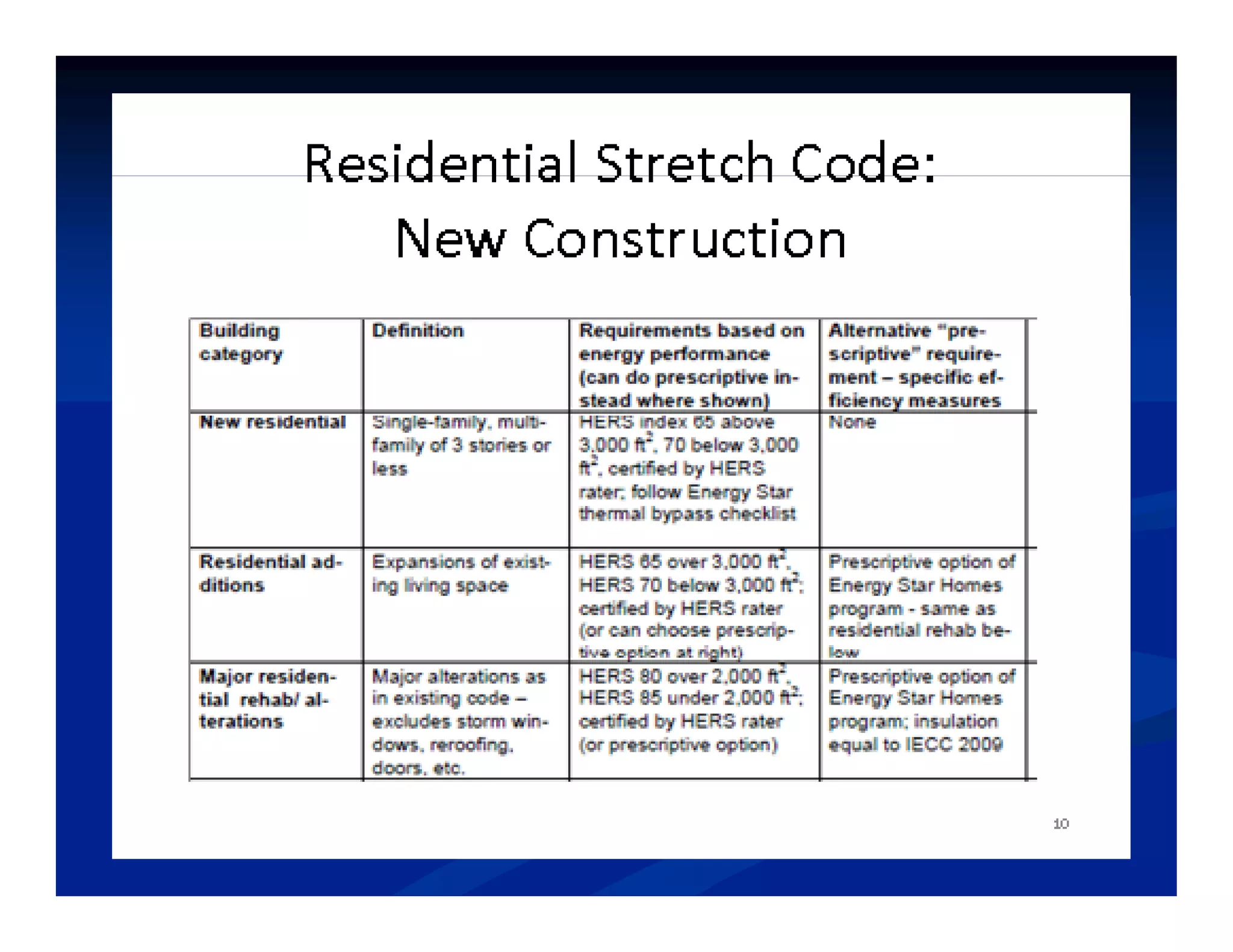
Performance Path
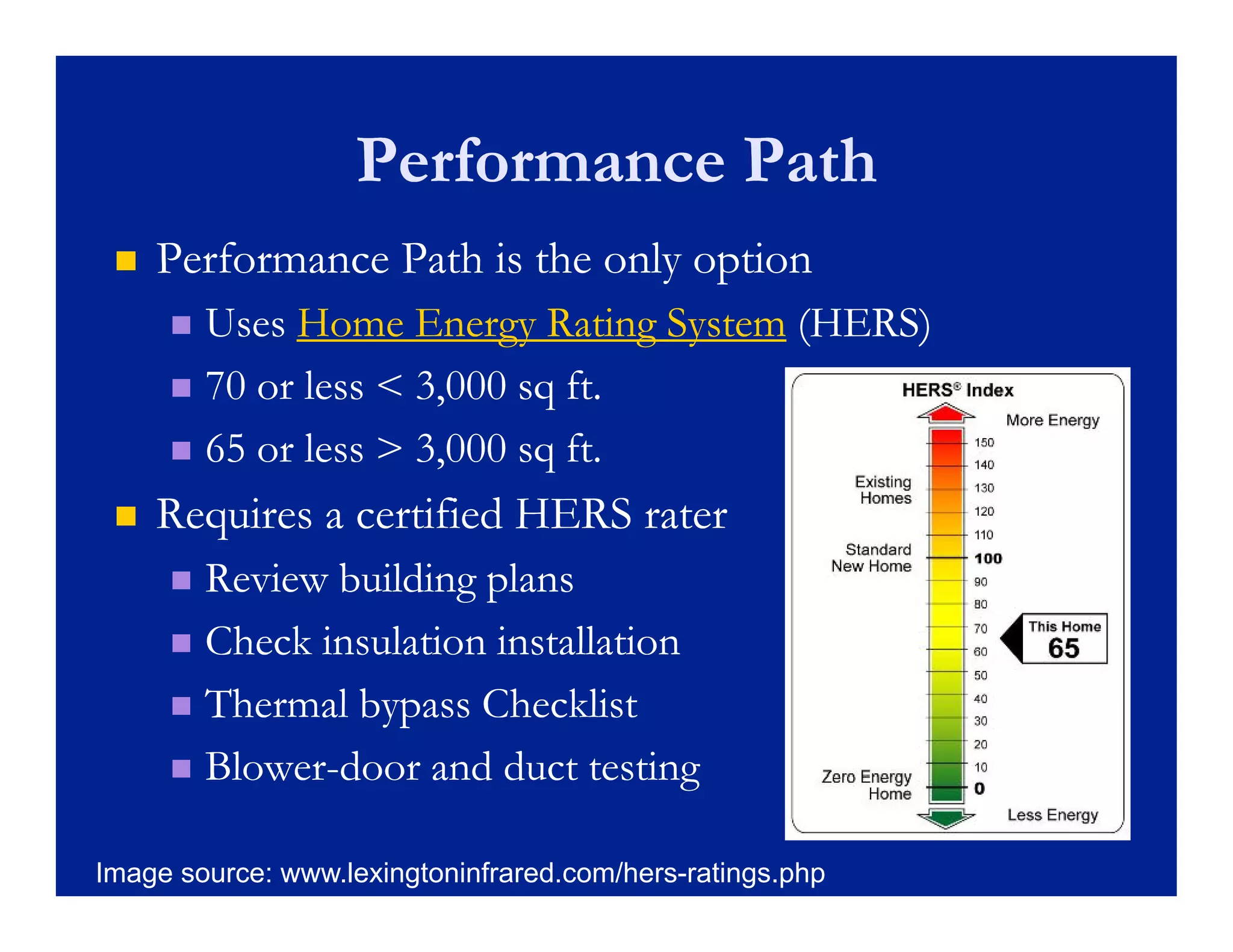
    Performance Path is the only option
      Uses Home Energy Rating System (HERS)
      70 or less < 3,000 sq ft.

      65 or less > 3,000 sq ft.

    Requires a certified HERS rater
       q
      Review building plans
      Check insulation installation

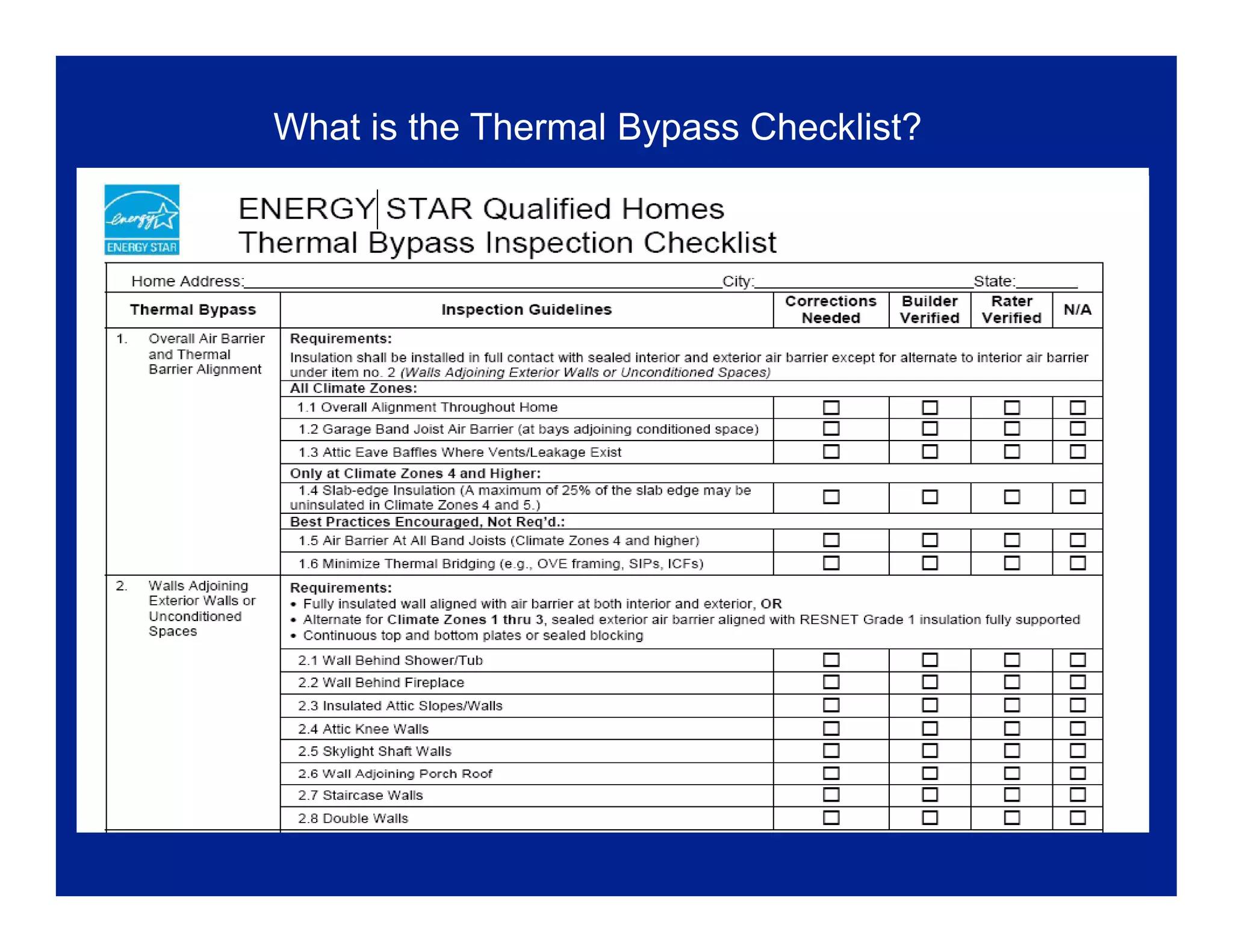
      Thermal bypass Checklist

      Blower-door and duct testing
       Blower-

Image source: www.lexingtoninfrared.com/hers-ratings.php
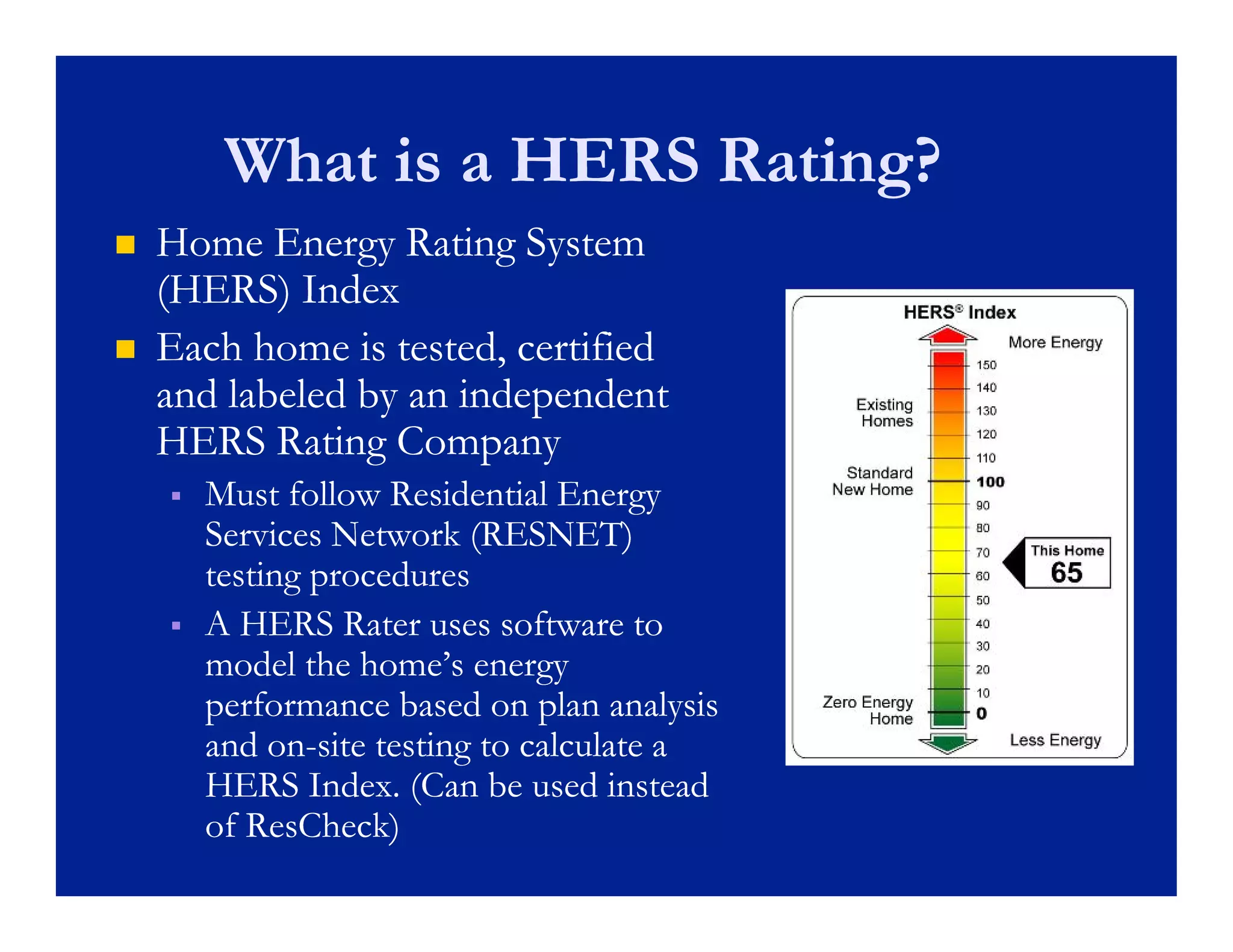
What is a HERS Rating?
   Home Energy Rating System
    (HERS) Index
   Each home is tested, certified
    and labeled by an independent
                 y        p
    HERS Rating Company
       Must follow Residential Energy
        Services Network (RESNET)
        testing procedures
       A HERS Rater uses software to
        model the h
            d l h home’s energy
                         ’
        performance based on plan analysis
        and on-site testing to calculate a
             on-
        HERS I d (C b used i
                Index. (Can be     d instead
                                           d
        of ResCheck)
What is the Thermal Bypass Checklist?
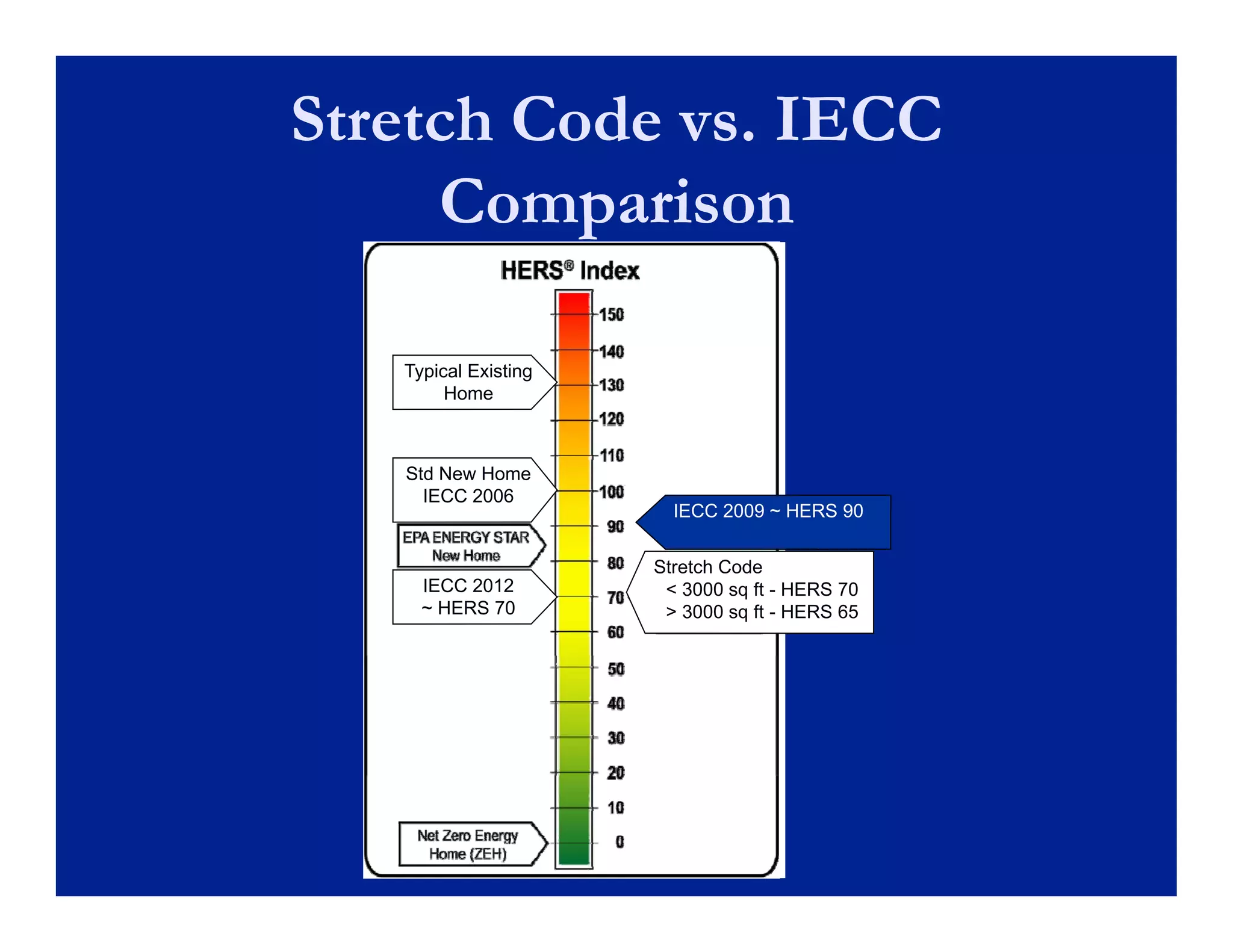
Stretch Code vs. IECC
     Comparison

   Typical Existing
        Home


   Std New Home
     IECC 2006


     IECC 2012
     ~ HERS 70
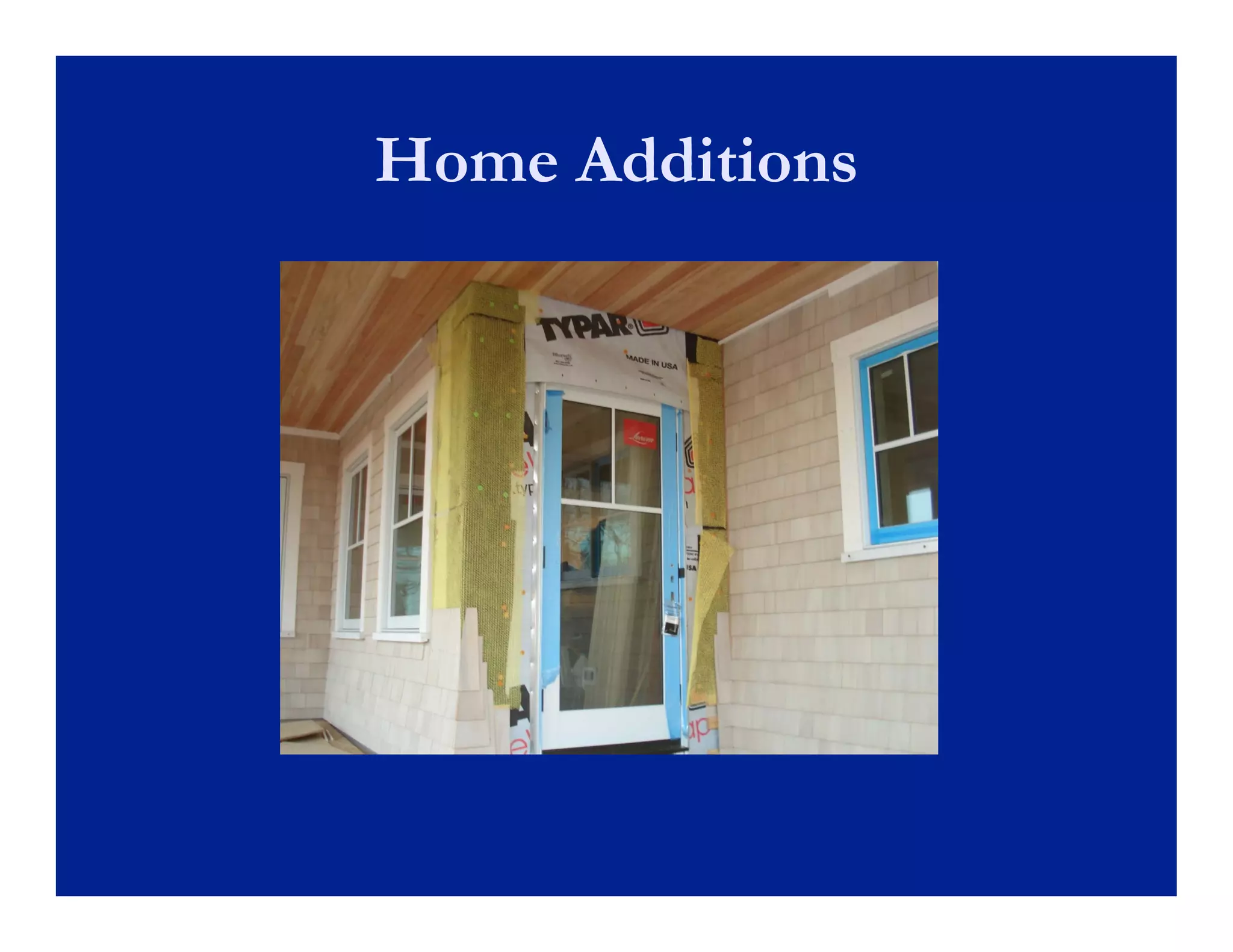
Home Additions
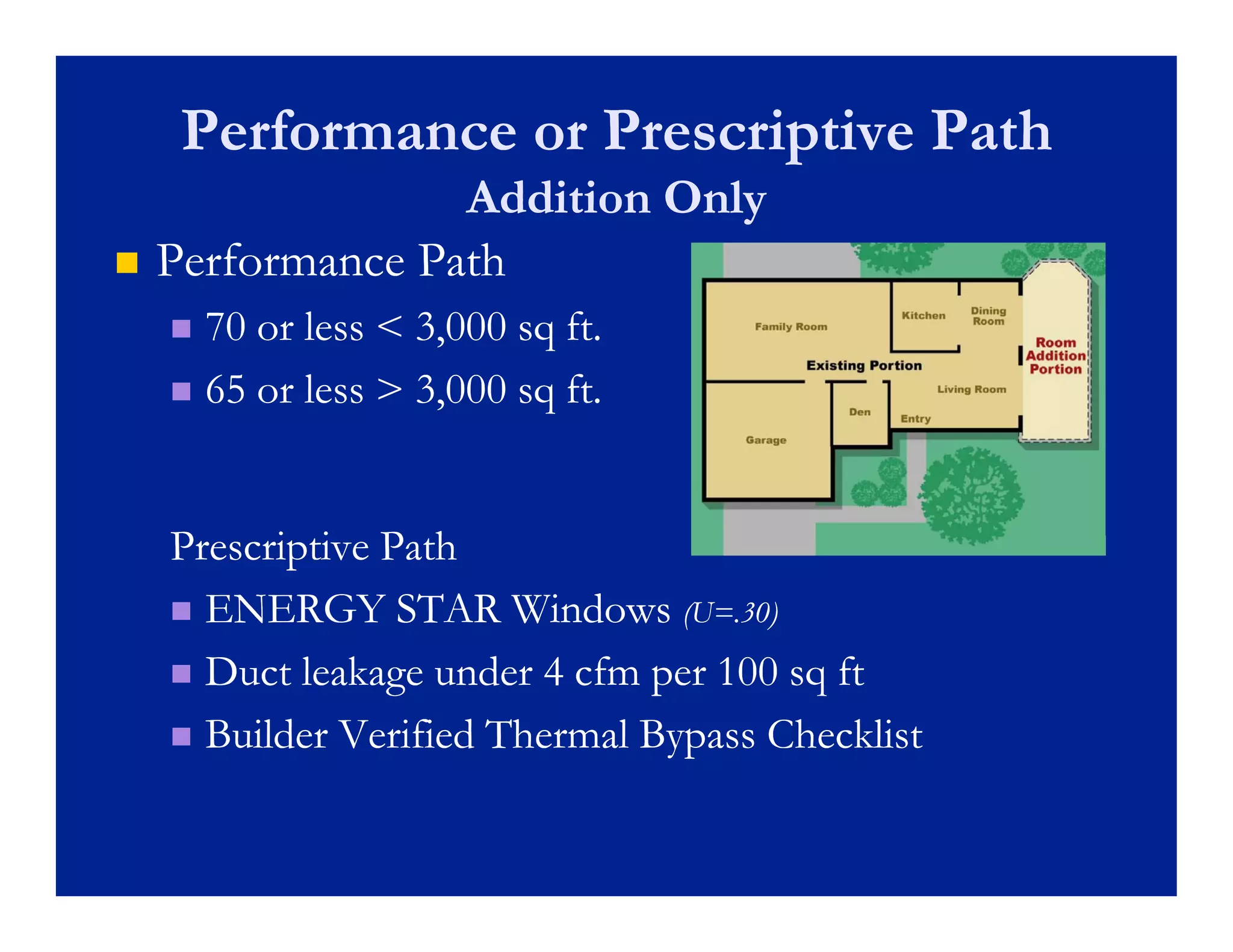
Performance or Prescriptive Path
                  Addition Only
   Performance Path
     70 or less < 3,000 sq ft.
     65 or less > 3,000 sq ft.


    Prescriptive Path
    P     i i P h
     ENERGY STAR Windows (U=.30)

     Duct leakage under 4 cfm per 100 sq ft

     Builder Verified Thermal Bypass Checklist
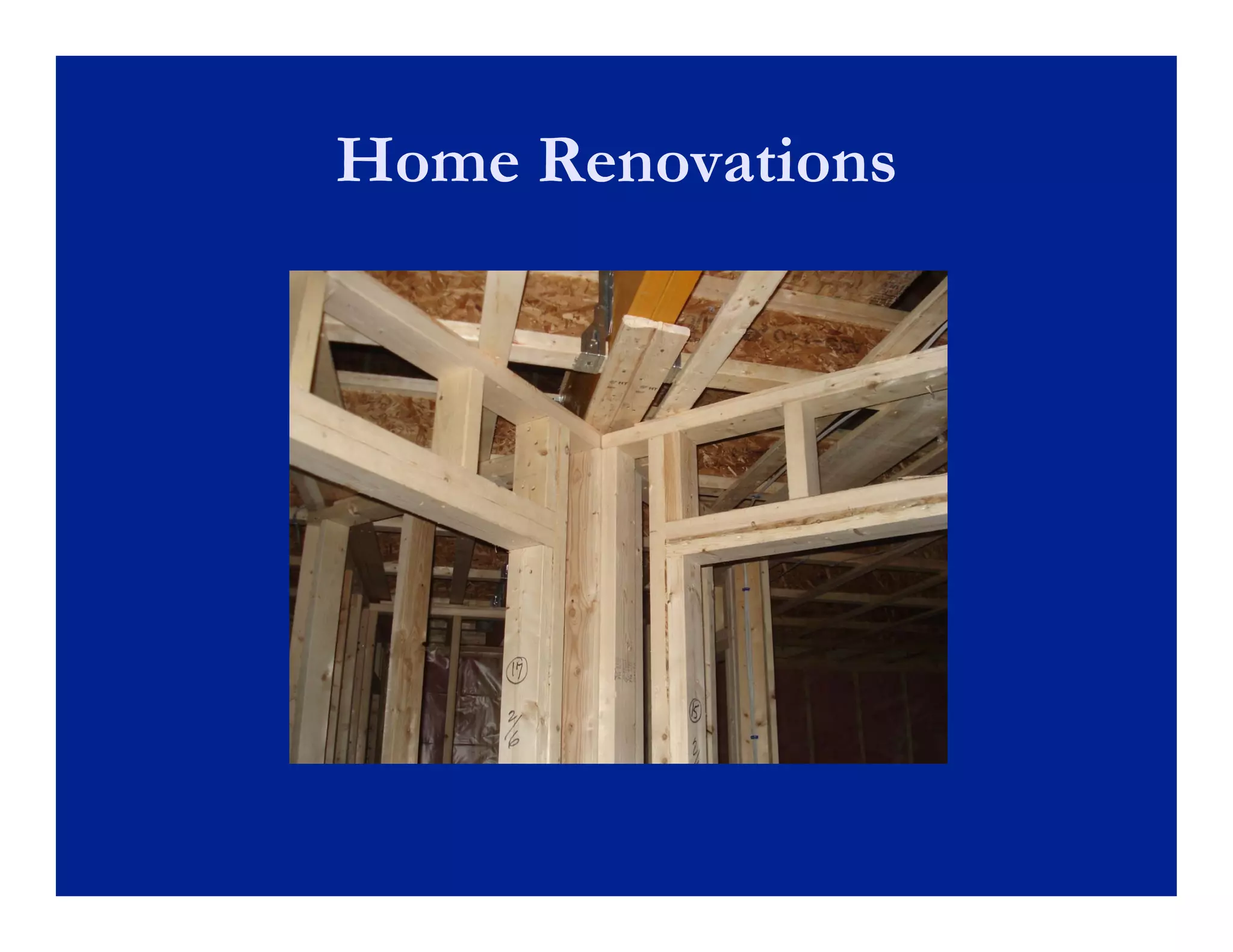
Home Renovations
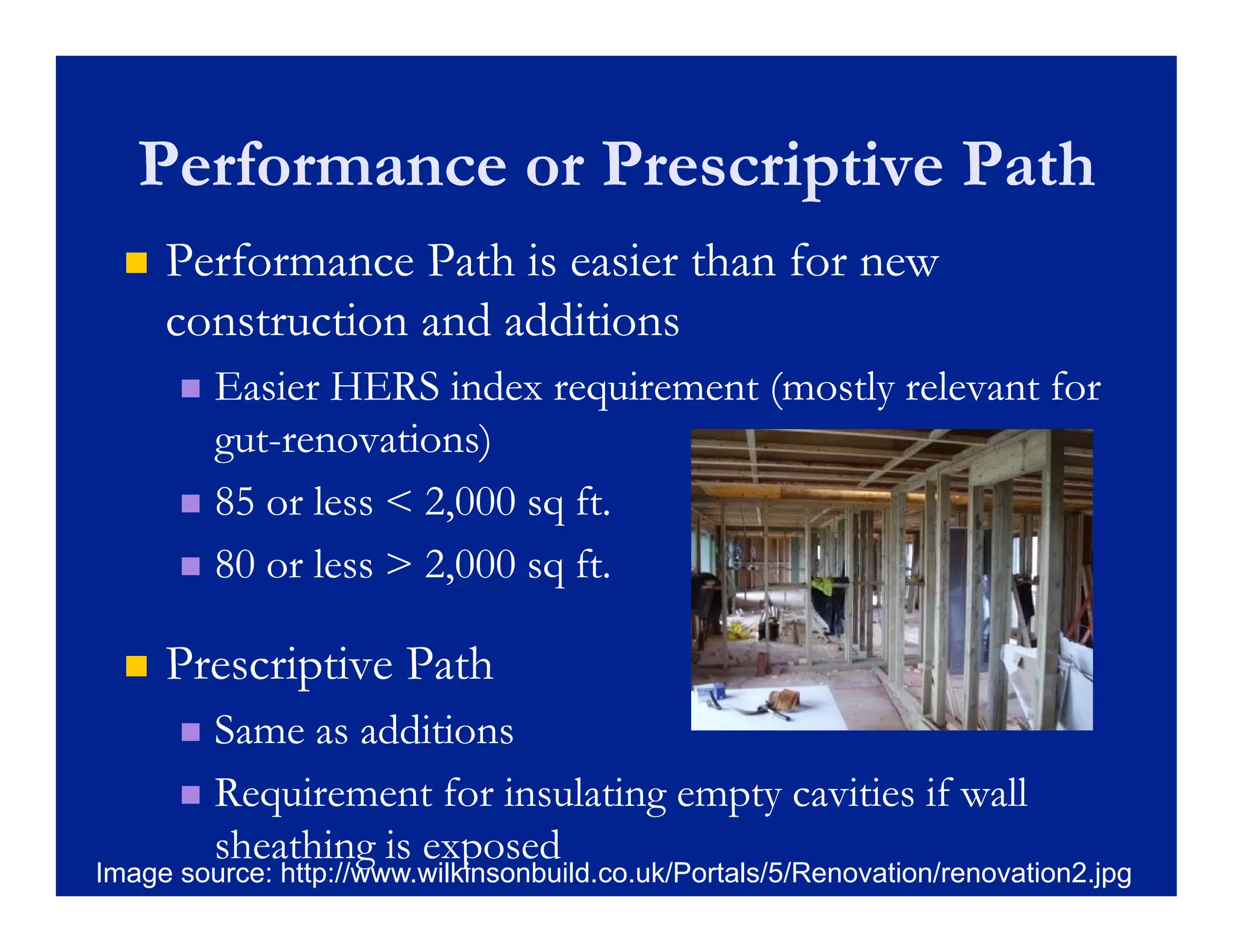
Performance or Prescriptive Path
     Performance Path is easier than for new
      construction and additions
       Easier HERS index requirement (mostly relevant for
        gut-
        gut-renovations)
       85 or less < 2,000 sq ft.

       80 or less > 2,000 sq ft.


     Prescriptive Path
      P     i ti P th
       Same as additions
       Requirement for insulating empty cavities if wall
        sheathing is exposed
Image source: http://www.wilkinsonbuild.co.uk/Portals/5/Renovation/renovation2.jpg
Stretch Code and ENERGY STAR
    The Stretch appendix almost puts the current
     ENERGY STAR H    Homes program i  into code
                                              d
    ENERGY STAR is a proven cost-effective
                                 cost-
     program
         Approx 30% in 2010 of new homes in MA
    Builder incentives/rebates
         Incentives up to $8000,
         Rebates on appliances,
         heating and cooling, lighting, etc.
    Builder training and materials
    Subsidized HERS raters
         Third party verification
COMMERCIAL STRETCH CODE
Commercial ‘Stretch’ Appendix
            Stretch
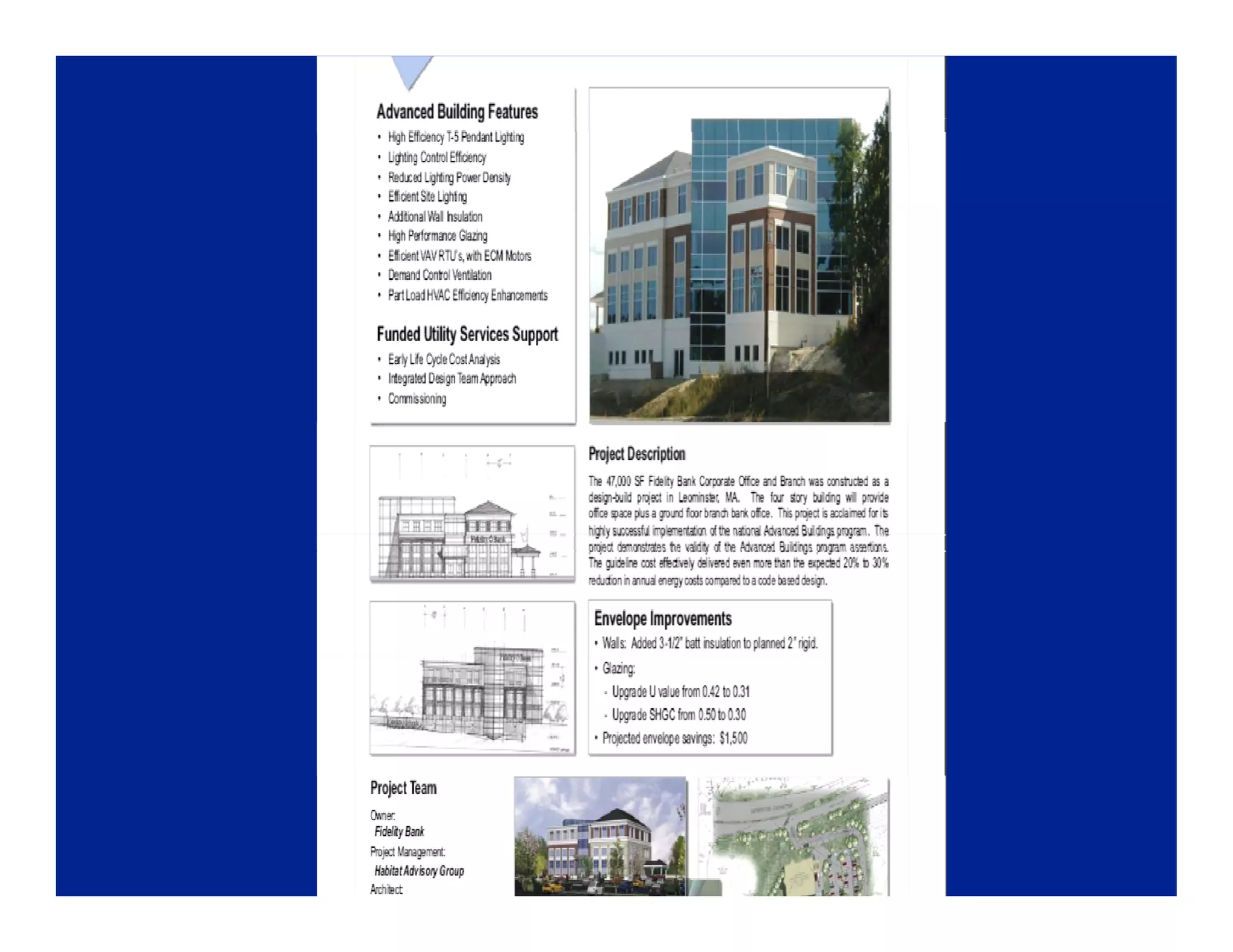
   Addresses the construction of new commercial
    buildings and additions over 5,000 ft2

   Two Options (depending on size)
    •   Performance option - 20% below Code
    •   Prescriptive option for most building types
         5,000 - 100,000 ft2
Compliance
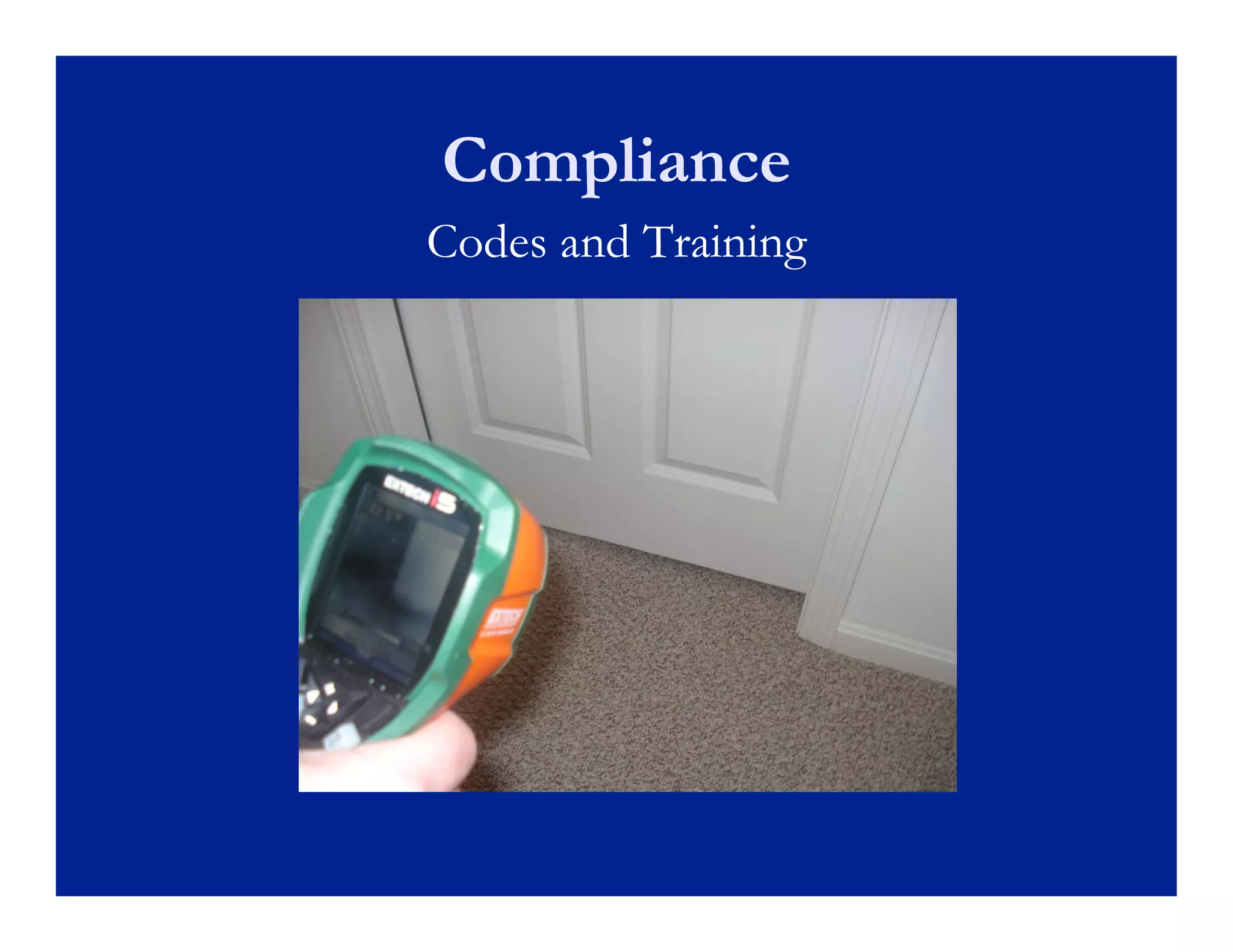
Codes and Training
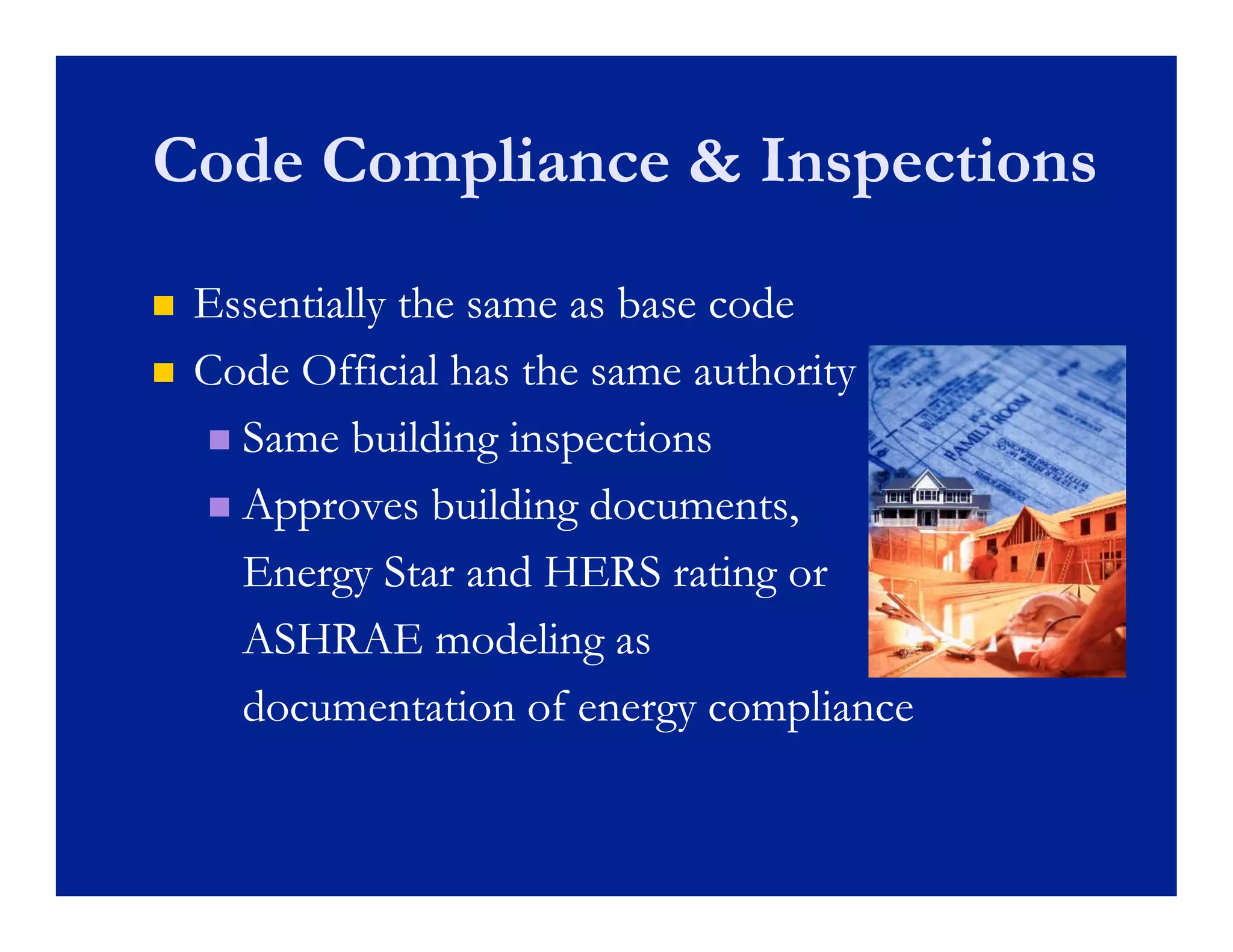
Code Compliance & Inspections
   Essentially the same as base code
    E    ti ll th           b      d
   Code Official has the same authority
     Same building inspections

     Approves building documents,

      Energy Star and HERS rating or
      ASHRAE modeling as  g
      documentation of energy compliance
Training on new energy codes
   Covering both the IECC 2009 & Stretch code
   Provided free to all Code Officials
         d d               d
       Includes IECC code book and Stretch appendix
   Provided at cost to building professionals
   Register online: www.cetonline.org/Events/events.php
       Separate Commercial and Residential sessions
   Energy star homes training available for free:
        www.energystarhomes.com/
   Utilities offer commercial ‘Core Performance’ energy
    training
       i i
Stretch Code
Case Studies
Questions?

Needham stretch code overview 09-21-11

  • 1.
    Helping Massachusetts MunicipalitiesCreate a Greener Energy Future Stretch Code Informational Session Sept. 21, 2011 Greg Krantz ICF International
  • 2.
    Topics  IECC 2009 Overview  What is the Stretch Code?  Discussion and Q&A
  • 3.
    Energy Codes inMA are changing  New base energy code in July 2010 (IECC 2009)  Roughly 10-15% more efficient than IECC 2006 10-  Next I-Code 1/1/2013-Designed to be 30% better I- 1/1/2013-  New phase of outcome-based Energy Codes outcome-  Stretch Code appendix 115.AA pp  Approx 15-20% more energy 15- efficient than the base code (IECC 2009/AHRAE 90.1 2007)  Commercial bldgs. ASHRAE 90.1-2007 remains g 90.1- ASHRAE 90.1 = Energy Standard for Buildings Except Low‐Rise Residential Buildings IECC = International Energy Conservation Code – of International Codes Council (ICC)
  • 4.
    IECC and ASHRAECodes  ICC & ASHRAE develop model building codes and standards for the US.  ICC: publishes IECC energy code  3 year cycle IECC 2006, IECC 2009 2006  ASHRAE: publishes 90.1 standard  3 year cycle 90.1-2007, 90.1-2010 90.1- 90.1- IECC = International Energy Conservation Code – of International Codes Council (ICC) ASHRAE = American Society of Heating, Refrigerating and Air-Conditioning Engineers
  • 5.
    IECC 2009 andthe MA 8th Edition  IECC 2009 and the Stretch Appendi nd Appendix 115.AA Codes address energy only  MA 8th Edition will address all codes (structural, plumbing, etc.) (structural plumbing etc )
  • 6.
    What’s Changed SinceIECC 2006? What s  New requirements include:  Building envelope tightness  Duct testing  Lighting equipment g g q p  No moisture control requirements (framed walls, walls floors and ceilings)
  • 7.
    STRETCH ENERGY CODE APPENDIX 115.AA
  • 9.
    Why an OptionalStretch Code?  Growing desire to reduce costs, reduce costs dependency on imported fuels, and address climate change  Several towns and cities asked for the ability to adopt stronger building codes  BBRS developed one alternative code that is consistent across the state i h
  • 10.
    What does theStretch Code Apply to?  Residential  Commercial (5,000- (5,000-100,000 sq/ft)  New Construction  New Construction  Additions  Additions  Home Renovations  Historic Home Exemption  Renovations Exempt
  • 12.
  • 13.
    Performance Path  Performance Path is the only option  Uses Home Energy Rating System (HERS)  70 or less < 3,000 sq ft.  65 or less > 3,000 sq ft.  Requires a certified HERS rater q  Review building plans  Check insulation installation  Thermal bypass Checklist  Blower-door and duct testing Blower- Image source: www.lexingtoninfrared.com/hers-ratings.php
  • 14.
    What is aHERS Rating?  Home Energy Rating System (HERS) Index  Each home is tested, certified and labeled by an independent y p HERS Rating Company  Must follow Residential Energy Services Network (RESNET) testing procedures  A HERS Rater uses software to model the h d l h home’s energy ’ performance based on plan analysis and on-site testing to calculate a on- HERS I d (C b used i Index. (Can be d instead d of ResCheck)
  • 15.
    What is theThermal Bypass Checklist?
  • 16.
    Stretch Code vs.IECC Comparison Typical Existing Home Std New Home IECC 2006 IECC 2012 ~ HERS 70
  • 17.
  • 18.
    Performance or PrescriptivePath Addition Only  Performance Path  70 or less < 3,000 sq ft.  65 or less > 3,000 sq ft. Prescriptive Path P i i P h  ENERGY STAR Windows (U=.30)  Duct leakage under 4 cfm per 100 sq ft  Builder Verified Thermal Bypass Checklist
  • 19.
  • 20.
    Performance or PrescriptivePath  Performance Path is easier than for new construction and additions  Easier HERS index requirement (mostly relevant for gut- gut-renovations)  85 or less < 2,000 sq ft.  80 or less > 2,000 sq ft.  Prescriptive Path P i ti P th  Same as additions  Requirement for insulating empty cavities if wall sheathing is exposed Image source: http://www.wilkinsonbuild.co.uk/Portals/5/Renovation/renovation2.jpg
  • 21.
    Stretch Code andENERGY STAR  The Stretch appendix almost puts the current ENERGY STAR H Homes program i into code d  ENERGY STAR is a proven cost-effective cost- program  Approx 30% in 2010 of new homes in MA  Builder incentives/rebates  Incentives up to $8000,  Rebates on appliances, heating and cooling, lighting, etc.  Builder training and materials  Subsidized HERS raters  Third party verification
  • 22.
  • 23.
    Commercial ‘Stretch’ Appendix Stretch  Addresses the construction of new commercial buildings and additions over 5,000 ft2  Two Options (depending on size) • Performance option - 20% below Code • Prescriptive option for most building types 5,000 - 100,000 ft2
  • 26.
  • 27.
    Code Compliance &Inspections  Essentially the same as base code E ti ll th b d  Code Official has the same authority  Same building inspections  Approves building documents, Energy Star and HERS rating or ASHRAE modeling as g documentation of energy compliance
  • 28.
    Training on newenergy codes  Covering both the IECC 2009 & Stretch code  Provided free to all Code Officials d d d  Includes IECC code book and Stretch appendix  Provided at cost to building professionals  Register online: www.cetonline.org/Events/events.php  Separate Commercial and Residential sessions  Energy star homes training available for free: www.energystarhomes.com/  Utilities offer commercial ‘Core Performance’ energy training i i
  • 29.
  • 34.