Learning Objectives:
• Tocompare the properties of metal and non metal oxides, and give examples
of each
Learning outcomes:
• Will be able
• - To describe the properties of different types of oxides, including some
examples of their chemical reactions.
Metal and Non-Metal Oxides
3.
Learning Objectives:
To comparethe properties of metal and non metal oxides, and give examples of each
Learning outcomes:
To describe the properties of different types of oxides, including some examples of their chemical reactions.
Starter:
• Name any oxides that you know of. Write their answers in two columns,
based on whether those are metallic or non-metallic oxides,.
• What is common between those oxides.
Learning Objectives:
To comparethe properties of metal and non metal oxides, and give examples of each
Learning outcomes:
To describe the properties of different types of oxides, including some examples of their chemical reactions.
Task 1:
• Do research on
• Different types of oxides
• Properties of different types of oxides
• Examples of types of oxides
• Type of bonding in different types of oxides.
3-Metal and non metal oxides.pdf
EXTENSION: Identify the type of bonding in peroxides and superoxide's. On the basis of their structures
determine the oxidation number of oxygen in compounds containing peroxides and superoxide's.
6.
Learning Objectives:
To comparethe properties of metal and non metal oxides, and give examples of each
Learning outcomes:
To describe the properties of different types of oxides, including some examples of their chemical reactions.
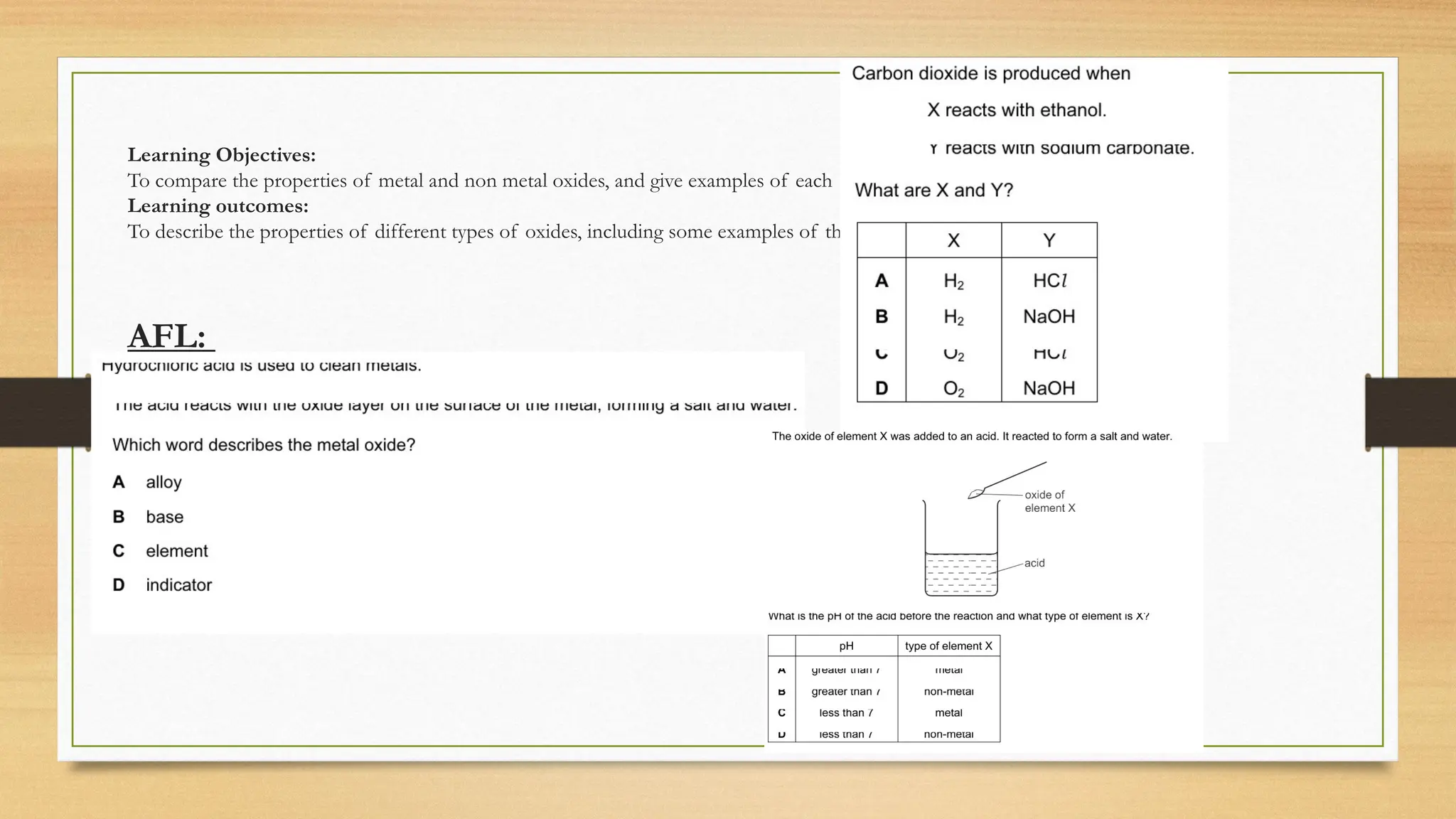
AFL:
Learning Objectives:
To comparethe properties of metal and non metal oxides, and give examples of each
Learning outcomes:
To describe the properties of different types of oxides, including some examples of their chemical reactions.
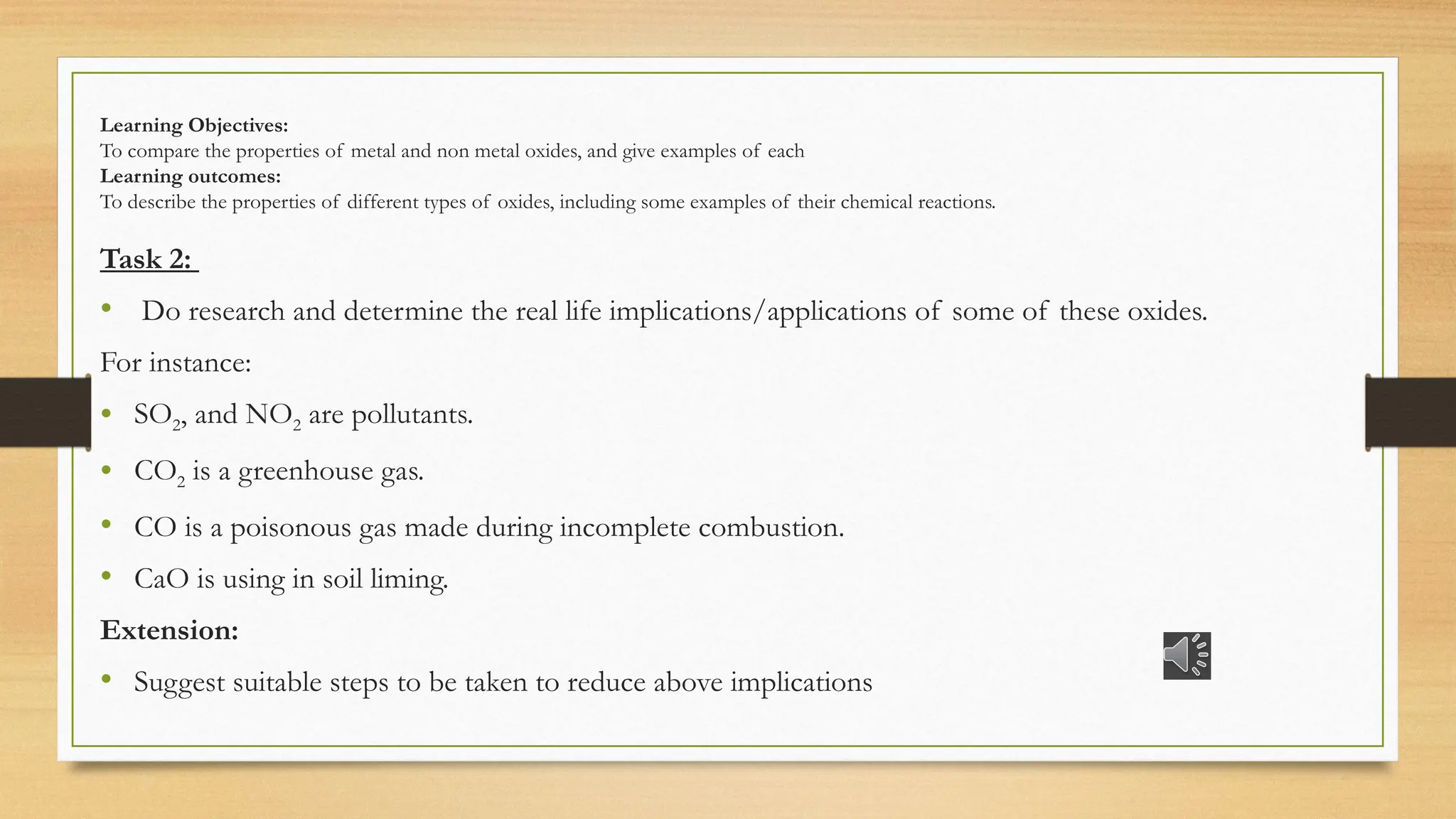
Task 2:
• Do research and determine the real life implications/applications of some of these oxides.
For instance:
• SO2, and NO2 are pollutants.
• CO2 is a greenhouse gas.
• CO is a poisonous gas made during incomplete combustion.
• CaO is using in soil liming.
Extension:
• Suggest suitable steps to be taken to reduce above implications
9.
Learning Objectives:
To comparethe properties of metal and non metal oxides, and give examples of each
Learning outcomes:
To describe the properties of different types of oxides, including some examples of their chemical reactions.
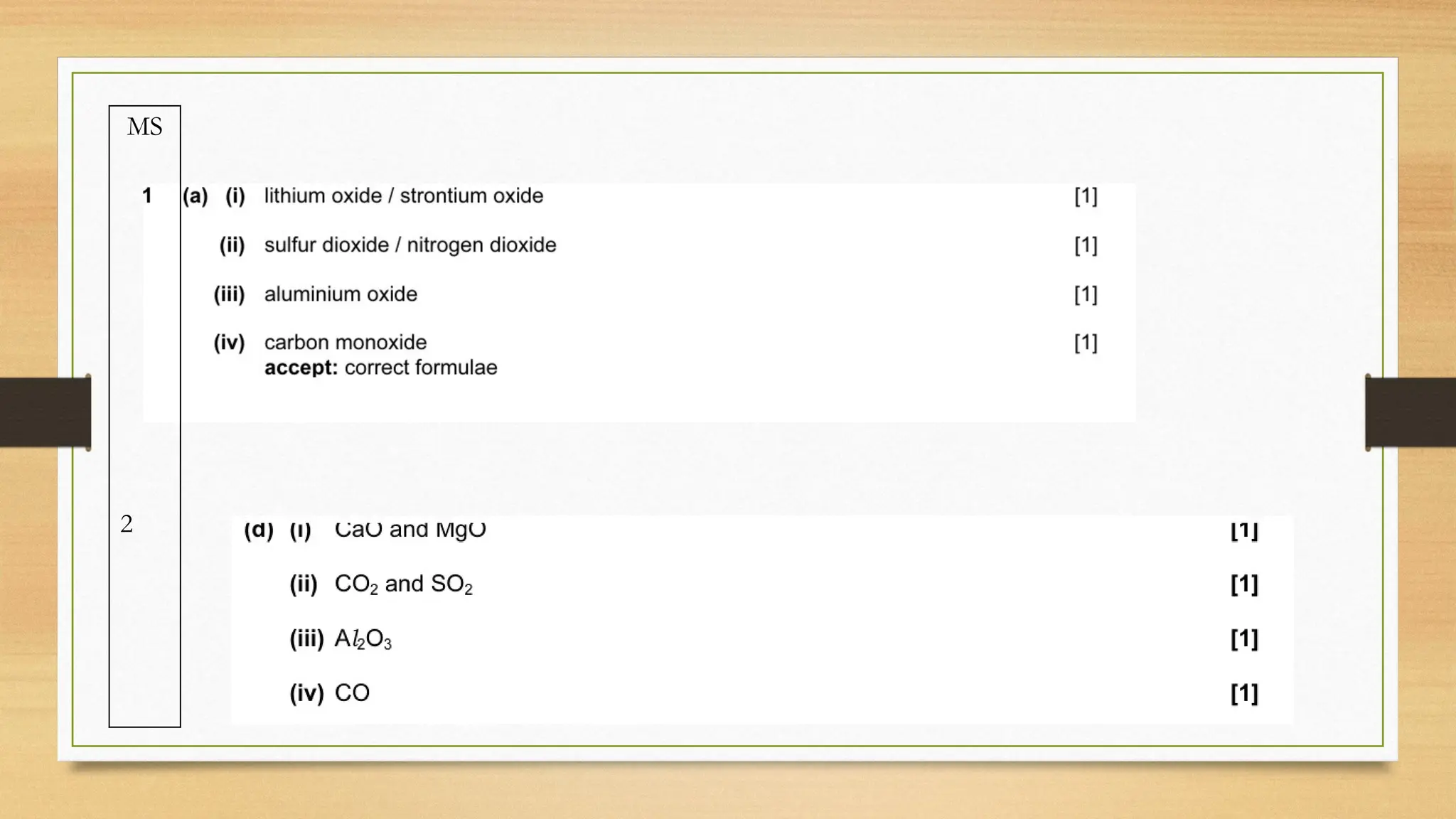
Plenary:
Document







![METALS_AND_NON-METALSNNNNNNNNNNNNNNNNNNNNNNNNNNNNNNNNN.ppt[1].pptx](https://cdn.slidesharecdn.com/ss_thumbnails/metalsandnon-metals-241026072917-aa264081-thumbnail.jpg?width=640&height=640&fit=bounds)
![METALS_AND_NOGGGGGGGGGGGGGGGGGGGFYHWTR5ASIUN-METALS.ppt[1].pptx](https://cdn.slidesharecdn.com/ss_thumbnails/metalsandnon-metals-241026073706-97d8f32e-thumbnail.jpg?width=640&height=640&fit=bounds)


