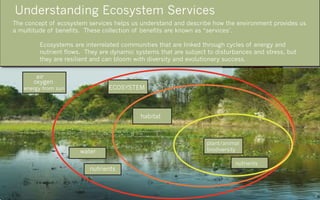
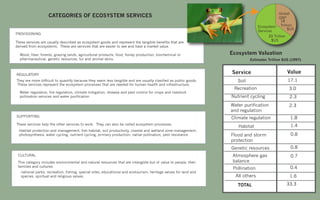
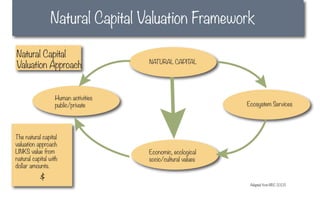
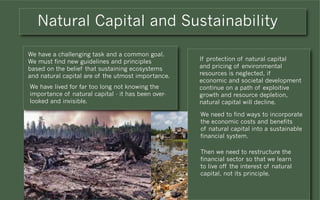


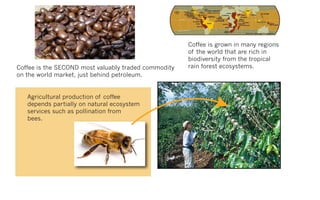
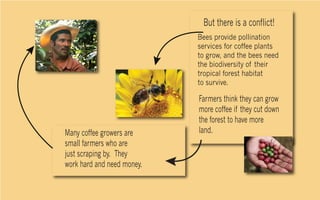
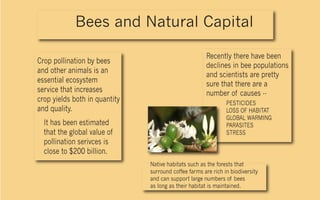
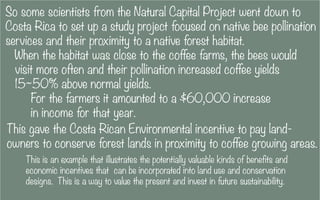
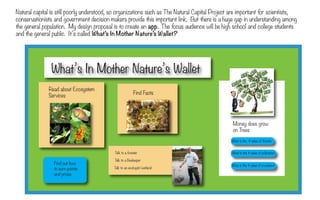

Natural capital refers to the world's stocks of natural assets which include geology, soil, air, water and all living things. They provide valuable ecosystem services like food production, water purification, recreation and cultural services. Assigning economic value to natural capital helps incorporate environmental costs and benefits into decision making. For example, a study in Costa Rica found native forest habitats near coffee farms supported more pollinating bees, increasing coffee yields by 15-50% and farmer income by $60,000. This example shows how valuing natural capital can inform land use and conservation policies to promote sustainability.


