Native Americans
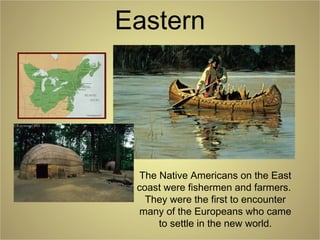
Eastern
The Native Americans on the East
coast were fishermen and farmers.
They were the first to encounter
many of the Europeans who came
to settle in the new world.
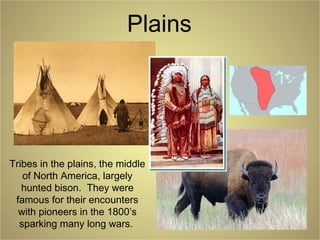
Plains
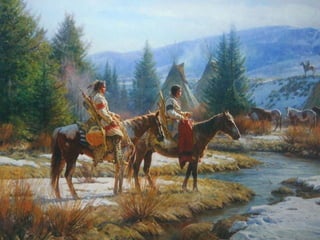
Tribes in the plains, the middle
of North America, largely
hunted bison. They were
famous for their encounters
with pioneers in the 1800’s
sparking many long wars.
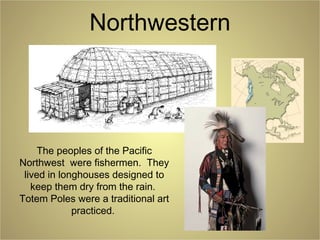
Northwestern
The peoples of the Pacific
Northwest were fishermen. They
lived in longhouses designed to
keep them dry from the rain.
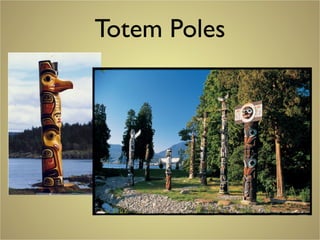
Totem Poles were a traditional art
practiced.
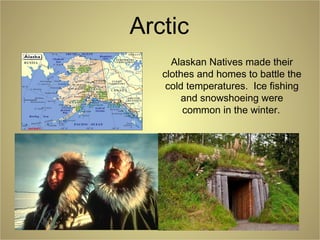
Arctic
Alaskan Natives made their
clothes and homes to battle the
cold temperatures. Ice fishing
and snowshoeing were
common in the winter.
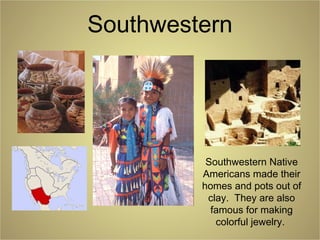
Southwestern
Southwestern Native
Americans made their
homes and pots out of
clay. They are also
famous for making
colorful jewelry.
Houses
• Different tribes had different houses
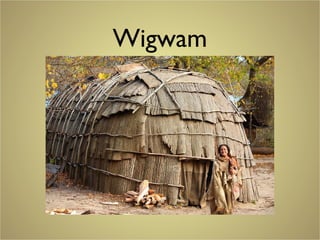
• Some tribes lived in houses made of wood
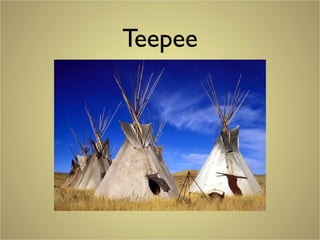
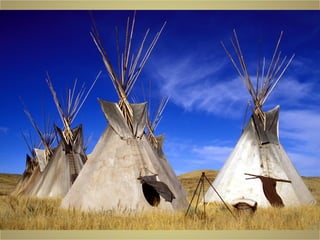
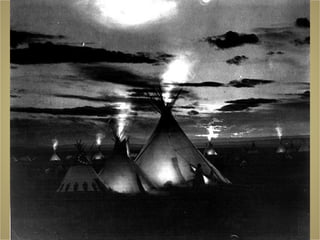
• Other tribes lived in houses made of buffalo
skin so they could move when they needed
to hunt
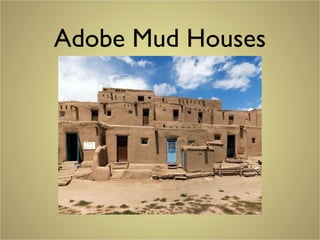
• Others made houses made of mud bricks
Adobe Mud Houses
Teepee
Wigwam
Beliefs and Values
•Strong connection to nature - using resources
from Mother Earth in moderation
•Respect for elders
•Code of Ethics
•Land is not property to be owned by one, but
a resource to be shared with all.
All things share the same breath - the beast, the tree, the man, the
air shares its spirit with all the life it supports.
Chief Seattle
Totem Poles
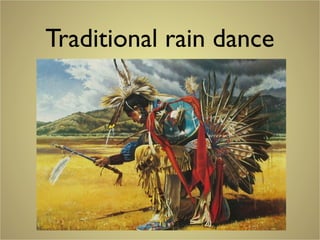
Traditional rain dance
Dream Catchers
• Dream catchers catch
bad dreams in the web,
and let good dreams
pass through the
center
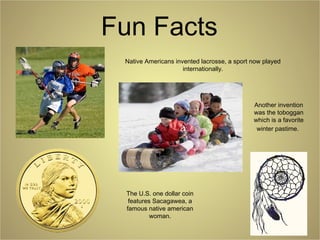
Fun Facts
Native Americans invented lacrosse, a sport now played
internationally.
Another invention
was the toboggan
which is a favorite
winter pastime.
The U.S. one dollar coin
features Sacagawea, a
famous native american
woman.
Native American
Reservations
• Now, there are areas of the United States
that are reserved only for Native Americans
• They make their own laws and govern
themselves.
• Native Americans are citizens of the US and
many live in the general population.
Native AmericanNative American
ConflictConflict
& Assimilation& Assimilation
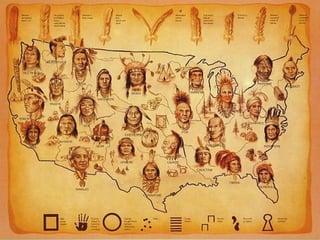
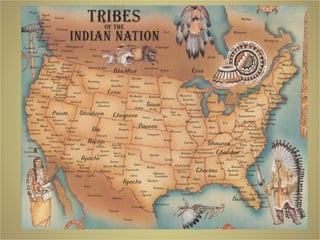
North America was not just a vast empty plain
before Europeans arrived, there were native tribes
from coast to coast.
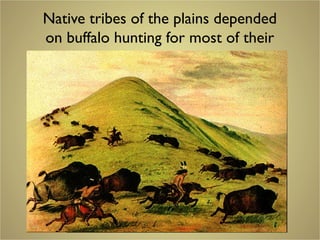
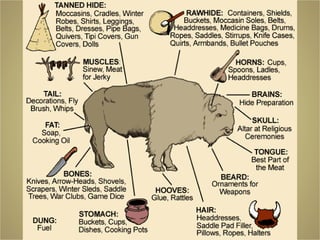
Native tribes of the plains depended
on buffalo hunting for most of their
needs
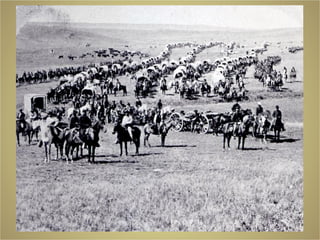
During the
greatWestern
migration,
thousands of
settlers set out
across the
plains
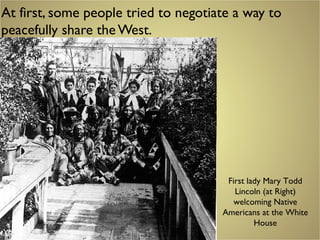
At first, some people tried to negotiate a way to
peacefully share theWest.
First lady Mary Todd
Lincoln (at Right)
welcoming Native
Americans at the White
House
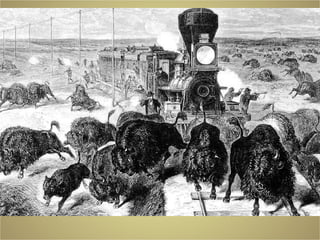
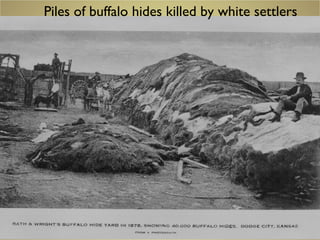
But others were hostile to Native Americans and
efforts were made to systematically kill off the
buffalo, the source of their livelihood.
Piles of buffalo hides killed by white settlers
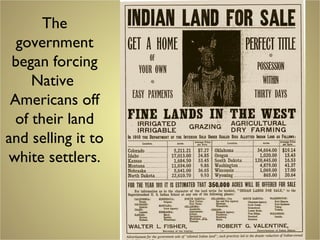
The
government
began forcing
Native
Americans off
of their land
and selling it to
white settlers.
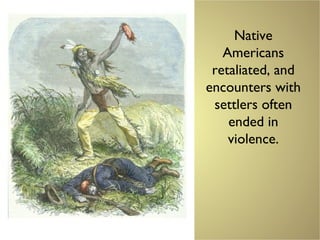
Native
Americans
retaliated, and
encounters with
settlers often
ended in
violence.
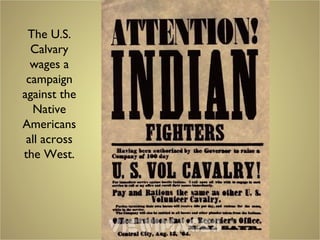
The U.S.
Calvary
wages a
campaign
against the
Native
Americans
all across
the West.
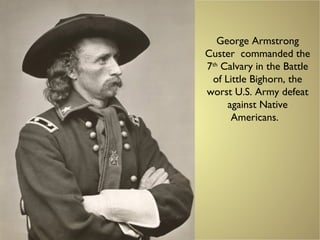
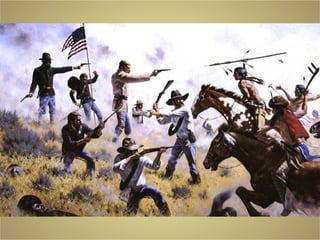
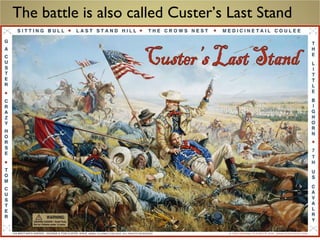
George Armstrong
Custer commanded the
7th
Calvary in the Battle
of Little Bighorn, the
worst U.S. Army defeat
against Native
Americans.
The battle is also called Custer’s Last Stand
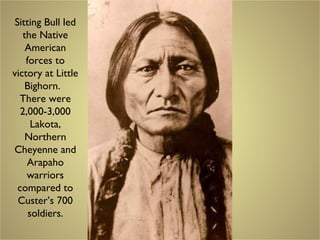
Sitting Bull led
the Native
American
forces to
victory at Little
Bighorn.
There were
2,000-3,000
Lakota,
Northern
Cheyenne and
Arapaho
warriors
compared to
Custer’s 700
soldiers.
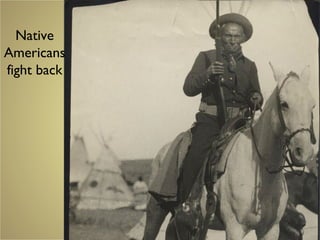
Native
Americans
fight back
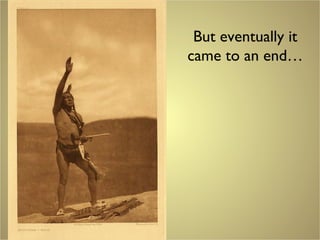
But eventually it
came to an end…
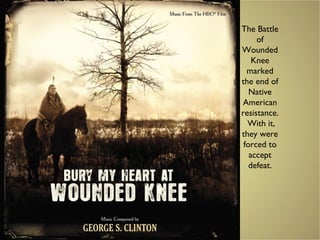
The Battle
of
Wounded
Knee
marked
the end of
Native
American
resistance.
With it,
they were
forced to
accept
defeat.
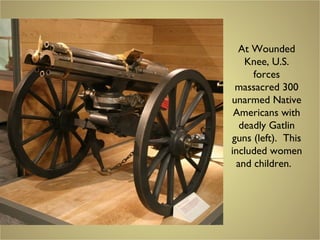
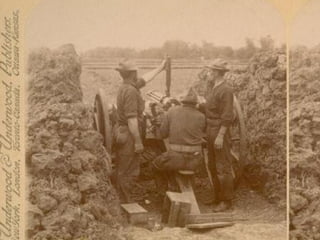
At Wounded
Knee, U.S.
forces
massacred 300
unarmed Native
Americans with
deadly Gatlin
guns (left). This
included women
and children.
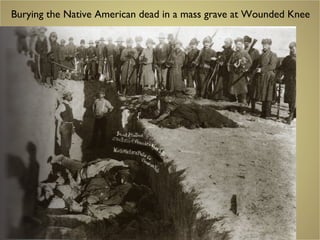
Burying the Native American dead in a mass grave at Wounded Knee
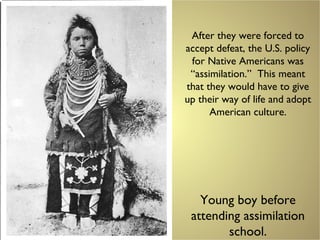
After they were forced to
accept defeat, the U.S. policy
for Native Americans was
“assimilation.” This meant
that they would have to give
up their way of life and adopt
American culture.
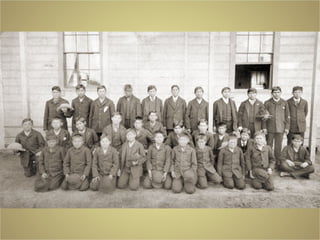
Young boy before
attending assimilation
school.
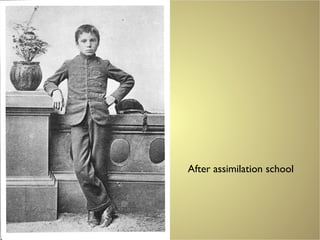
After assimilation school
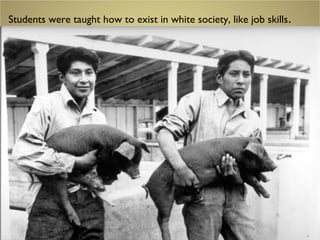
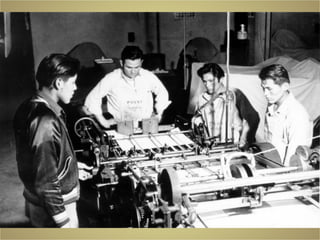
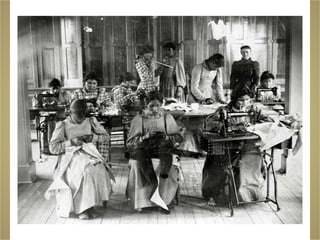
Students were taught how to exist in white society, like job skills.
They were taught
Christianity…
The Bible translated to
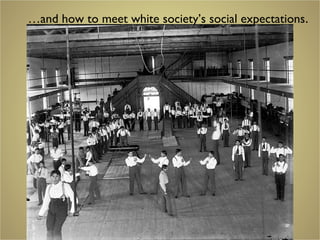
…and how to meet white society’s social expectations.
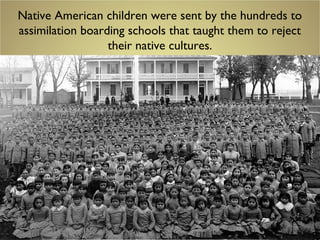
Native American children were sent by the hundreds to
assimilation boarding schools that taught them to reject
their native cultures.
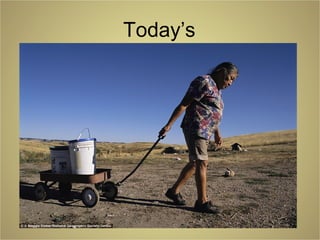
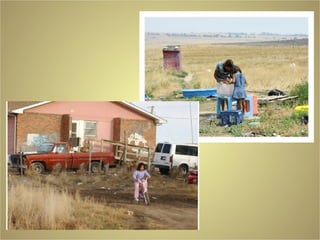
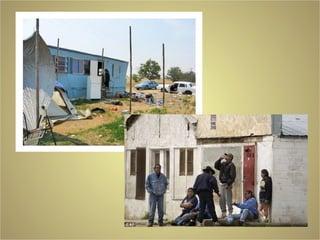
Today’s
Struggles
Nativeamericans 150815224648 lva1 app6891

Nativeamericans 150815224648 lva1 app6891

Editor's Notes

  • #2 Native Americans are the indigenous peoples of North America.
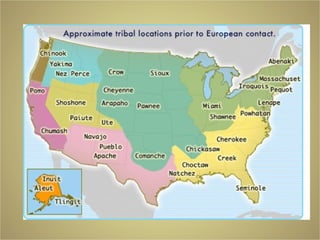
  • #3 Native Americans lived in six different regions. There were hundreds of different tribes, each with linguistic and cultural differences.
  • #4 These Indians lived in forests and their food, shelter, clothing and weapons came from the forests around them. They built their homes (rectangular homes called longhouses) and canoes from wood.
  • #5 The Plains Indians lived on the Great Plains of North America. Some tribes were nomadic, which meant that they moved from place to play following herds of buffalo. Other tribes were semi-sedentary. They lived in villages, hunted buffalo and raised crops. Much of their clothes and homes were made from bison skins. They were known for their equestrian skills and they used to horse to follow buffalo herds and for hunting.
  • #6 The Northwest Coastal Indians were maritime people who derived their livelihood from the sea. They knew the ocean and its resources and caught enough fish during the summer to feed themselves for the whole winter. Some tribes hunted whales. They usually lived along the coast during the summer months and moved to a more protected area for the winter. They used wood to build their homes, canoes and totem poles.
  • #7 The Arctic Indians lived in a very cold climate. They hunted whale and sea lions and used whale bones for weapons such as spears and knives. They wore parkas, gloves and boots made from caribou hides.
  • #8 Tribes in the Southwest built their homes high on the side of cliffs to protect themselves from the enemy. Farming was their main occupation and they planted their crops on the tops of mesas (big, flat rocks). They made many beautiful pieces of art including pottery made out of clay, baskets and Kachina dolls.
  • #20 Each cultural group used the natural resources in its region to meet its needs. How is this demonstrated in the different types of homes built and transportation methods used by culture groups?