. ::   .r...,
                                                                                    ,,-r n     r      ! !               :,      *
!                                                                                   i.l tI    > ir    fd{lut            i' ': :
                                                                                         !ti-I1 r  /!
                                                                                         l" i      l-


I
I
I
i
                                           ffq'NERALS


    Minerals:
                         l"

    1. naturallY occurrtng
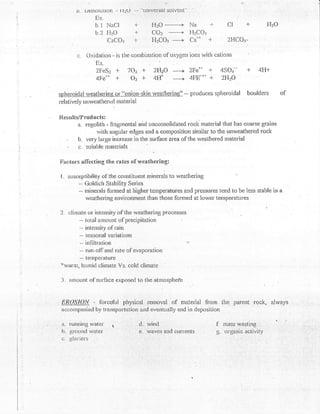
    2. homogenuous,solid :
    3. cornPositicn                                 not fixed)
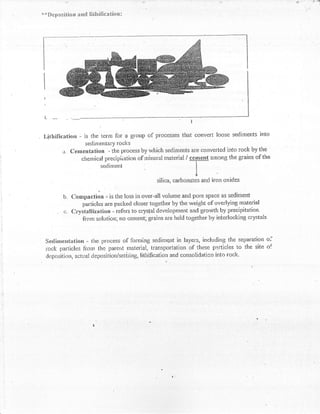
           a. chenric':'l (clefinite but.generally
           b. PtrYsica
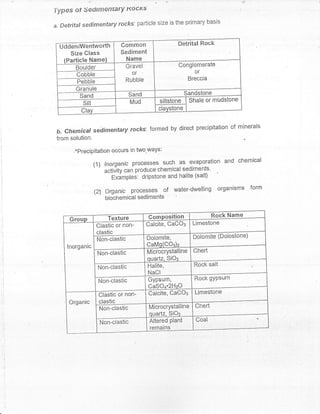
    4, orderecl aiorni.c ?fl'?rrlerl€fltprrrcersses
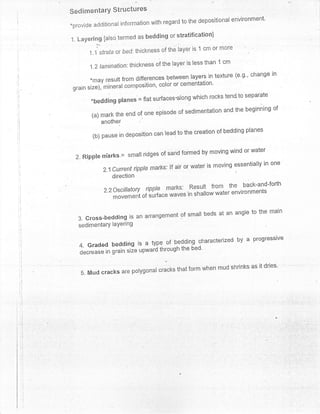
    s. .trtrrrt f :'rme'l oy ill(lrganic
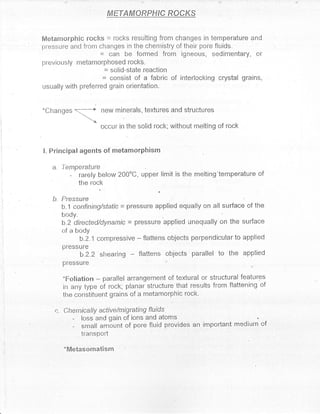
                                                          sr"tbstances
    Mi neral oi   rls - natttri:liy occurri n g 4]1ryThgf

                                             witrtout crYstalline structure

     *Tire orderly p.arterns ihat aton:s of elements assume
                                                            in a rr''ineral is called iis
     crystallin u- stru cture
                                                                            br-rt different
     * Polymorplrs r ntinerals lra"ing the same composition/elernents
      crystalli;',e struc:t r]'es
                                  I


      examPles:

                                                                              ir.-arcasite                      -;
                                                         -* -    Pvt'tqano
                                                                         -- -l
                                                                                                            .
                                                                                                                     I
                                                                Calcite atrd -.-,ragonite .---__
                                                                               -^^^nrla                              I


      *Alias es:
      1. Caiclte - islan'l sPa;
      2. FYrite - 1os1'1i cl'rld
       3. Quart;. - ice cnilstals

       Georgius tgr:cola (Georg Bar'rer)
                                          D",f.q           Metallica- , ..,,,,' ,,, , ,i, ,, .                   ,


       Optical Fic';:e*ies;

        2- dotrble refrtl;tion
                              ':---
                                                                  rr a sroup oi' crvstai
                                      rrerar oytlrald unngu*rg"3,; consists
        fff:1":',oJ11J':1,.                                        to the'"j"ll::::,^oj
                    t,,,,"r, Tii';i':*n'.f,-nuuu the same relation physical properttes
                                                '               an*
                         s':rintlettv ancl cltsPti' ,-th* same chemical
because ;:[l are ui ;.erlain   bY Iike   atoms in the same geom€
                         af'ang€'Tlent
                         ex. pr,smatic
                             cubic                      '
     *Nicolas steno - pointed out that the angles between correspo.nding faces on
              of a nrine:tai [quartz] are always the same
     "rfttuft de I'Lsle
     * Rome
                                                                               of
     *Law of consta*cy of Interfacial Angles - angles between equivalent faces
     crystals of the .ru"l* substance, measured
                                                  at the same temperature are
     constant.

     2. crystal habit -   e.iternal shaPe
              ex. botrYoidar, iihrous, grar"uiar

     3: color -      i': ti:e brightr'.ess or Carl"ness of a mineral :r-,- -^-.-{-r'..
                                                                           spe -trum
     _.          -   resurl of ilie ieflection of light within the visible

               a. idroch,om:tic - ex. rruscovite         (white or c.olorless), azurite (azure blue),
                                         '   rnalachite (green): sulfur (yellow)
               b'. allochr:matic - ex'       quartz
                                                                                                        I
         4. streak' is the color qiven by a pulverized mineral
               eX'a.hernatite:streak=reddish.brown/indianred
     |                                 : color = red to black
                     b      lir'ronite : streak = Yq'llow
                                       : color = bl''-,wn

                                               right that is reflected frcm I re surface of a
         5. luster - qual:':, 3nd intensity of
                         lnir,eral
                     -    can be lrouPed into:
                                                              'r

                            a metailic - luster "rf untarnished rnetal; the usual characteristic' of
                                            dark and opaque rninerals
                                            ex. nylite, golcl
                             h. non-metallic - ir,utatl"rizes the colored nrir erals , ,
                                                                                          l    :,


                                   , b. i resit'rous - appearance of resin   .


                                     b.; vitrer-rus - glass
                                   u.s ouiil"urt'i:
                                   b.4 adamantiire - diamond
                                   b.5 silkY - silklike
                                   b.i pearly - iridescent pearl-like lusJer..,
                                       'grenJv
                                   u.z         -rpp"ars to be covered wiil. thin layer of oil


!


i


I

I
I
I

I


x&
A*


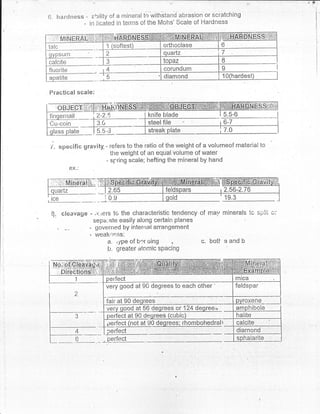
6. lrarciness - abiliiy of a rninerill       to-withstand abrasion or scratching
                  -   in .licated in ternrs of the Mohs' Scale of Hardness


calcite                                                                         q
fluorite                     14
                            -r5                     diamond                     1   hardest

Practical scale:


CLr-coin


 r;, specific gravity. - refers to the ratio of the weight of a volumeof material to
                         the weight of an eclual volume of waier
                       - spr:ing scale; hefting the mineral by hand
           ex.:


                              | 2.65                 feld                       2.56-2.76
                                                      old                       19.3

 q. cleavage -,i:iers to the characteristic tendency.of mat,minerals tc spiii. c:'
                          sepa:'ate easily along certain planes
                      -    govenred by interrial arrangement
                      _ weak,:lssl
                           a. .ype of brr cring                       c. boti a and b
                           b. greater alomic sPacing


                                rfect
                              very good at 9C degrees to each other'                 feldspar

                              fair at 90 dectrees                                        I9,n9-.--.--i
                                          at 56.dsgleeg     !r   124 degree.-        amohibole
                                  e
                               Perleei-oei-ell A Oegrees; rhomboh
                               perfect _                                             diamond
                               nerft':ct                                             sphalarite
             'r
             v
                             'F
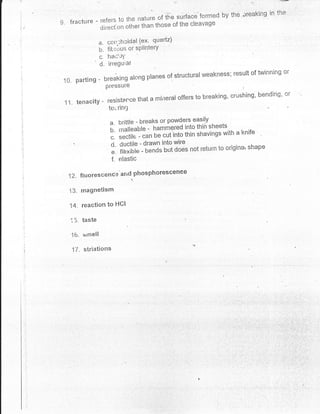
formed by the ''rreaking            in the:
g. fracture - refers to the nature.of ir''"ofsurr"ce
                                                  cleavage
              oir""i'"n other than those the
                               '
                                               -i-
                                             quartz)
                       a' cort:hcidal (ex'
                       b ri;'i;;;i'itint"'Y
                   ' c' irregu'ar
                        hai;'liY
                     d'
                                                - ^r ^r'"^{rrral rnta:               ruintiing   or-

 l0.parting-breakingalongp|anesofstructuralweakness;resultoftt
                         pressure
                                                                                                 nr
 ll.tenacity-resistarcethatamiiteralofferstobreaking'crushing'bendirig'
                          tei ring
                                                             eas.ilY
                           a. brittle - breaks or powders          ,


                           n' tnuiiuuble - hammered       into thin sheets
                                                                         with a knife
                           c. sectile - can be cut'into thin shavings
     '                     cl' 'Cttctile - drawn into wire                        shape
                              ;;ilL       - n*nos but does not return to origina'
                           ". elastic
                           f.
   12. fluorescence' artdt.
                            phosphorescenee

   4'I         magnetism

   14. reaction to HCI

   ', 5.       taste

    16. srnell

    1'l    .   striations
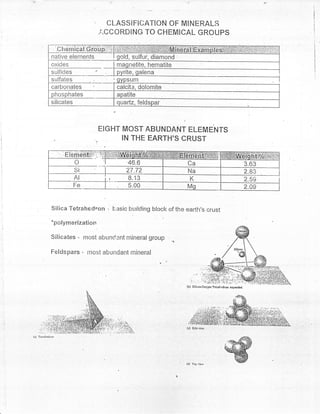
.      CI.ASSIFICATION OF MINERALIE
                                     .I-CCORDING TO CHEMICAL GROUPS


              native elements             old, sulfur, diamond
              oxides                     maqnetite, hematite
              sulfides                     rite, qalena
              sulfates
              carbonates                 calcite. dolomite
               hclsphates                apatite
              silicates                   uartz, feld    l-


                                     EIGHT MOST ABUNDANT ELEMENTS
                                           IN THE EARTH'S CRUST


                                                                                                               3.63
                                            27.72                                                              2.83
                                             B.13                                                              2.59
                                             5X0


              silica Tetrahedron . basic burlding block of the earth's crust
              *polyrnerization

              Silicates   - most abunCant   mineral   group r
              Feldspars    -   rnost abundant mineral


                                                                 (bl   Silicon.Oxygen   Tctraledron cxpandcd


(rl   Teuahcdron


                                                                 (d) Top view
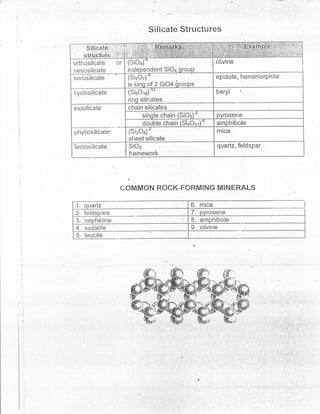
Silicate Structures


orthosilcate      or   (sio4)
nesosilicate           independent SiOq grou
sorosilicate           (Si2Oz)                             epidote, hemimorphite
                       lir.king of 2 SiO4
cyclosilicate          (si6o16):                           beryl   ,


                       rinq silicates
irrosilicate           chain silicates
                              sinqle chain (Si               roxene
                              double chain SjaOrr          amphibole
phyllosilicate'        (si2o5)-
                       sheet silicate
lectosilicate                                              quartz, feldspar
                           framework


                       t

                   COMMO}{ ROCK-FORMING                    MI   NERALS

'1. quarlz                                     6.   mica                           I
                                                                                   I


2. feldspars
3. nephelilg                                        amphibole
4. sodalite                                    9.   olivine
5. leucite
4.1   lGNDOus R(Juri"u '
 ,l
'Definitions:                                                                       t ut mrnerals'
                                                                                      ^r
                                                niaterials whiclr maybe conposeo
              . -*.. cfrnred, r:onsolidated                                                  l
irlocirs - r1:ltursuv ::il;;i.;;r, glass or a cornbination of these'
                   rocx
oiganic ttiatter,                                                                                 of
                                                                               and solidification
                            "ig7lf$" fire) - fgrrned by direct crystaUiztrtion
 Iglteorts roclcs:fLatin
 nlilgttt'
                                                                  Magntu


  - "l{llr,acled nrixttrrd'

  E l,s gi   il ile;tuilssleri$ii
      - rnol:ih
                    t*.,?f,                                                      sases
       -'1,:,                     ,lTilo",',u*d r:l:?:51
                                                                   tlissslvecl
                                                                      ii
                                                                                          '          the upPer rnantle
                                                                                        cnist: or in rhe upper
                                                                                                               rnar    due to
                                        Jtltrtr partial *ati'ie            't'qti'wer
       ' forr:retl n' o "*uti
         ';;i;;,';'ic
   -                         iieat,anrl/ot decreasT:.[:Tlfapped                                 the earth's cnrst
                                                                                    lruithrn
                                     on tho earth's surla(
       -;.;,i;;'l.placecl
       -;;,;;n.,,. cltnmbers                                                     K,'
         *,*;r{:L::::f;j::,t',# l,"f,f'Na'
       - S(Oi - PnllclPat                                      -r ^:
                                                uirlo*tv and explosive characteristics
       - <rjssalvecr  gases ;;;ii;:;riiu,*",r
                                   6i]0'- 1200'C
       - rilnfie t"nt1t"*tit"J'
                 ',f                  SOz
        - ,]"rir, L'I20-,:aPor, COr,
        - Xlrvn


        Lli.'ir.r-,j:,Pgg
                                            " 50% Si0z
        n. tltsnltic Inagmfl                . 't:900-12C0"C
                                                highlY fluid
                                               eolr6Y, sloa
         l"t. Grnnitic nraEitna
                                             ' T: lower than B00oC
                                             - highlY viscous


             l.Ld.tiri,--nn{erysldliag'lstr . of change"
                                   '-o;j-"'tiy series -c^L^n
             i:'.i.aciion $eries =
                   '
              J- ,1".',-tts Reactiorr Series                                                   .,i.   ,
                                                                                             .,                      is graduallY
                                                                      "    r in whish the'earlier fornred inrler$s rnrgma'fbr
                                                                                 ';;'i                               i'
                                                            i;'   :'il:r:';   il;       #'oi;"'    r'm          trre
                                                                                                              "''t
              :; n   ll; t'the mineral
                             -*:i'iil1:       :,   :   Tf
               , tt,rti.*.   in
ex.: plagioclase (Ca-rich torl(rich)
    f.)iscontinuous Reaction Series : reactiorr in which an early crystallized mineral reacts
                                                                                         to form
    with the remaining licluid which constantly. changes its conrposition during cooling
    ancther mineral
    ex..               'i
i,,,,       Enstatite               +             +
                                           Forsterite           Melt
            2 Mg SiOr                       MgzSiOa            SiOz


    Magmatic ;lifferentiation : a general piocess in which the original magma with its full
    .ung. of cornponent elements is separated into rocks of different mineral composition
    a. fractionation
    b, filter o:essing
.   c. assimilation of the wall rock
     d. magnra-mixing

     Morlqresl-af.tnsglqa
     a. external.forces - sqrteezing of rnagma chamber and causs filter pressing
     b. internal forees - gur **punsion; stoping (magma move along fractures until they engulf
     the ho$ rock)

     tgnerrus  rocks              ,

      - 80% of the mass of the earth's crust
      - Genetically classified into
    rr''|    a. plutonio: intrusivb
            li, volcanie =  extrusive                                          I
             c. liypabyssal

     - Mineralo$ically:
             a, felsic - large proportions of K-feldspar and Na-plagiocl456 + quartz
            b. mafic - Ca-plagioclase, large hmounts of{endrnagnesian mlrerals but little
                           quartz or K-feldspar
             c. ultramafic - composed entirely offerromagnesiatt rninerals with minor amounts
                            of feldsPars
     - Major textures
            Textirre            Dcscription                          Inte'rpretation
      Phaneritic            grains visible to the   relatively slow cooling
                            naked eve
      Aphanitic             grains not visible to   relatively fast cooling
                            the naked eye _  _
      Forphyritic           some grans coarse,      two cooling rates
                            others line
                            (phenocryst,
                            sioundmass/matrix)
no minerals fonled
                                                           r id s"tft; co4llg witElgSie eg
                                                           9X


Most Abundant lgneous Rocks
                                  #-

             Intrusive                 Extrusive
                                                    feiric r" ck[ K.ftiltdMptfiioclase, qtr arte,
                                                                                                    less
              Granite                   Rhyolite
                                                    amountp of biotite or ampbibqle-.
                                                                                           -.
                                                                                           .


              Diorite
                                       'Andesite
                                                    ffie(30-50%                       anorthite),
                                                       a,rnphibole,,      (quartz may be present in
                                                                       gqoi*.
         "t'Gali,bro-                  '   Basalt
                                                       amounts of olivine


    s.trapes       brrfiirtiilve rock bcdies
                                                      of its size or shape
"   Flutoir ='any llass of intntsive rrrck regardless
    a. batholiths
    b. :tcsks
        c, dikes
        d. sills
                                               I

        e. lacolith
        f.   tupolith

                                                            (mining): gold district
        imflb rlancb:' r.retaliic and non-metallic minerals
    '
    L.
              '  : -"
             :- i' ('   '


                                                        5.1 Yolungoes ''
                                                            !-

         ro!r:n:io :       a vdni which connects a reservciir     of maguu in the deptlis of tlie earlh's crust
         with the surface of the earth
                        :
                     ejc"ts lava, fragmentaVpyrociastic rocks and
                                                                  gases
                        :
                     cons (volcanic edifice)

         A. Lava
              nffiu that h1S reached the surface of the earth
            different compositions ancl temperatures iesulted
                                                                  into lavas with a rango of physical
         -
         properry (i.e., r'iscosity) and fcafules.
                  a.. paloeho* riua -:t:glly fluid, T = 1000"c;
                                                                 thin; smooth, biilciwy, ropy suilace
                  b. aa l.vr - fi'-il;          iini.'guq $low moving; seu*rh neters thick;rough'
                            ':'        "ibtlu$;
                               jugg*d, sPinose                                              '
                  c.  pittorv-,ta.iu1"-Iffii;pted under water or ice; (toothpaste-like)
I  .f
a ,l          ll.   F!'rqginstic materials

                                         blown-out from a volcanic                                  vent under pressure or
              -:il:,:m#*'ffffiT$rrue**,smagma
                                                     the
              raoidlv expanding gases present in
                                                    plsstic state
              - rr*tpoi.d eitfiei+n in solid or
                                                               of the fragments
              - classification in telTns of sizes and shapes                         -
                                                                           older lavas
                                                                                                r
                       a, blocks - > 64 mm; pieces of crustal layers or
                                                                               the congealing of blebs tllj:d                ..'j:a
                       b. bombs - > i4mm; spindle/spherical masses from
                                             Iava
                                              b"l bowdung
                                         ' "i b'z breadcrust
                                              b'3 armored
               ,0             c. lapilli -2-64 mrn;
                                                    saccretionary lapilli

                              4 ash-<2mm
                                                            glass)
               +*r-     Pu,nice, scori&, obsidian (volcanic

               T:
        .;,                                                              of pyroclastic rocks and lava
              ..:,ts,   domppsite/strntevolcnnoes: altemntingla-yers
                                                                               Mont Pelpt'Krakatau
                           ex.. Mt. ttu.ii, V.r,,nius, Stromboli' Etnq Mayon'

                                                                : a higtrly hh?{ gas 'charged with incandescent
                         i'    nuee srdente (glowine cloud)
                               ,rt porti"ie, ,oitrut i, i"g"*ii*r u *ouile ernulsio--n
                                                                                       ydtidense enough to maintain

                                 lntact with surface                    '

                               r.ldera - co.llapsed  volcano (ex' Taaf,Laguna Bay)
                                                                           .;r   .:ir
                                                                                comPo$ed of solidified lava flows;
                    b.   Shield ".olcailoes - broad, gently sloping.v-;rcantjes
                                              rarelY stePPer than,f:dtigrees '
                             ex. Mauna Loa                             '
                                                                  ':                    ,   a
                    'il. Cindur      cones - volcano that is constructed
                                                                         of loose fragmentilpyroclastics;slopes
                                             about 30-33 degrees
                                ex. Parictrtin


                                                               BELT
                    -    PACTF'IC RING.OF FIRE/CIRCIJM-PACTTTC


                        Type of Volcanic Eruptions:                    -rr --^,.-|.^.rri.onh,erl gases
                                                                                                 .,cq.eq
                              *. influencealfnir"ority of the magma aitd a{nourlf oi dissolved              
                                - .iolencs"     ,*pii*   i, ,rtuit io ,rr" o*gree of fragmentation and the
                                     distance
                                                    "'r.n
                                                                                           quiet liberation of gases
                        a. Fflaw*iian - ubundant outpouring of lava flows; lava fountains;
and scoria
    b. Stnoxnholinn - milil, explosive eruption of pasty, incandescent bombs
ql,           accompanied by a white vapor cloud; discrete explosions

    c. vutrcaninn - btsw-out of solidified       cnrsts (over the crater); acbompanied by a great
-        -                                                                           lava'flows may
             ;;;iifl.wei      shaped eruption cloud containing an abundanco of ash;
              issue


    d. Flininn - eruption of extrerne    violence; gas-blast eruption; eruption cloud resembles an
                                                                           spreading out); huge'
              Italian stone pinetree (shooting upward of the column then
              sustained eruPtion column

          Felean - extreme explosiveness; nuee ardente

          Phneatic'

     g    F.trreatomagmntic                     l


     h.   Uliru-Ptiniatr - excessive emission of       ash resulting   to negative landforms
                                              lLE


    n*Vqlpgnlg-Hazards                (

                                                    c. lava flows                     e. caldera collapse
     a. ieplua fall
                                                    d. lahars                         f. tsunami
     b.    pyroclastic fhll

     lrnportnnt: geothermal          energY (ex. Makban, Bacman,        Tiwi)


         s[rMM3'nY


                                           lava fottntains
:,t,il,i .. j,::,
                                                       r.   i.:r:
                                                       .il..l_,'1
                                                                                     ffi
                                                                                     ffi                    i+:ir
                                                                                                            :ri,'i
                                                                                                            .i;i


    b9&
    o'ir 5
      L)-rr
      #6p
                                                                    !

                                                                    I
                                                                                              !Ii:r;';i
                                                                        i                     '?.ii:li','

iiii-ig' b
tj;iEln
    Z .E
i.i.'i1.1                Y
                                                                            I


iili$[

                                                                                     6
                                                                                     0,
                                                                                     (s
                                                                                     E

                                                                                         E
                                                                                    'z


                         I   {}::r
                         l'i':i;
                             l:i+.i

                               :::    olii
                               :i .E r,


            l:..ir. 'i
            tr.'..:+i


                                                                                o
                                                                                =
                                                                                d            0)
                                                                                o)
                                                                                         o   .c.

                                                                                         6@

                                                                                '7
                                                                                         -rao
                                                                                q
                                                                                                                            LY:t

                                                                                                                     !i:t
,i                                  iii


                            wil,AT'r{rcntruc nivn ER,osnoN


iVE,:X'I.!!Eit,lNi- is the physical disintegtation arfci r,hernical decontposition by ivhich
rocks iire changed upon exposure to "agents" at or near the earth's surface, with little or
no lranspo;t of loosened or altercd Inateriai
       *- agents - hydrosllhere, a-tmosphere, biospher-e

.4. l4cch*nical Weathering           - is the breakdown. of rccks into smaller fiagnents by
vat'ious ph1151"'1 stresses
                                      - ::tictly a lthysicul pl'oces:; willxnt a change in chemical
c1tilP)r'iliott

   fr4   erhilnicaN Weath ering Frocesscs

           a. ice wedging/ttost wedging
           b. salt crystal gror,vth
           L:. slrceting/unloading - releasc of confining p:ressure
                     exfoliation - fonnation of cprved sheets of rock by release of pressure
           d. anirnals and plants
           e. tlrermal expansion and contraction - seasonal/daiiy temperature changes


tr]. Chenrical Wcattering'- is the process"by rvhich chenrical reactions transform rocks
and nrinerals into ne;, shemicat cornbinations that are stable under conditions prevaillng at
or near the earth"s sur{-ace
                lioie: more ef-fectittc itt x'armer clintcle:i - lrcat increase,s tlw xtte of ma:;t
                       reucf irnts

    Chcnricnl Wcatherinq Proccsses

           a. Flydrolysis - H' or Otf of     the water   anAffinUe ions of the rninerals
                   Ex. I(-ibldspar

                   2l(Alsi?o8 +  2tt2co3 -F                                9FI20
                   Ortlroclase Carbonic Acid                               Water


            Al2iii205(ot-t),r -l-             4l-I4sio4 J- ?tc +                      2{-ICo3'
              Kaolinite                       Silicic Acid Potassium Ion           Bicarbondte l.on
                       {,


                                              :--*ffi
.         ,1;'


         l). ulSSOllltl0n -   Fr2U   -- --Llnlversat solvent
                 Ex.
                 b.l NaCl            T            HzO                     Na      -F       CI      1-         FLO
                 b.2   FITO                       COz
                                                    -,----+               HzCOr
                       CaCOr         T            FizCOr ------+          Caun    F        2HCO:-

         c.   Oxidation * is the cornbiration of oxygen ioris ivith cations
                 Ex.
                 2FeSz    +    7O:r +             zHzO
                                                     F 2Fe'-' +                          4SOt' +         4F-t+
                 4Fe'*    -t-    oz {-            4# -_|4FErr'r + 2H?O

gl&qlar dalrygolbstlqg or "onion-skin weathering" -- produces                          spheroidal boulders          of
relat ively untveathertd material


X{.esults/f roducts:
        a. regolirlr - fragincntal and uncor.rsoiidated rocl< material that has coarse grains
                  rvith angular edges and a composition sinrilar to the unweathered rock
     "  b. very large increase in the surface area of the v/eathered rnatedal
     ,   f,,. soluble rnaterials

Xlilr:tons afT'ccting the nntes o{'      weathering:

I.   susceplibility ot'the consl-ituertt roirrurals to rveatltering
         - Goldich Stability Series
         -- nrinerals forrned at liigher temperatures and pressures tend to be less stable in
            uveathering environment than those formed at lower temperatures

2.   climale or intensity of the weathering processes
         -- total amount of precipitation
         - intensity ol'rain
         -- sr:asonal variations
          -- infiltration                                            -r

          -- run-ofl'and rate of evaporation
          -- teulperature
''r'wnnn,
           hunrirlclimate Vs. coid clirnaLe

 -J. amount ol'srrrface exposecl to the atmosphefe


 f,i?0$'/Ory    -   forcehrl physical removal                  of   material frorn ihe parent rock, alwa.gs
 acconrparried by transportat.ion and eventually end in deposition

 a. running vrater                       d.  'ivind                                    f- mass wasting:'  :

 b. grouncl water                        €.'waves' ald currents                        g. oigarric activi'
 c. glaciers
'"
     n
           Dcpositio n itrtti [ix.hit'icatiorl   :


     I


     I
     l--


     Lithifliq:ation           - is the term for p group of processes tlrat conrreft     loose sediments into
                                 sedirlen.rarr/ rocks
                  u.        C1:me6talion - the process by which sediments are convefted ilt<i roclr by the
                               cliemical precipiiation of rnineral material / cqment among the grains of the
                                        sediment                                I

                                                                               +
                                                               silic.r, carbonates and irolt oxides

                  t{                        is tlie loss in over-allvolunie and pore space as sedinrent
                  t-,   .   Ccrnpactittn   =
                                particles are packed closer together by the weiglt of, overlying rnaterial
                            Cry:;tallization - refers to crystal developmelit and growth by precipitation
                                fi'om solution; no cement; grains are held together by inierloclcing crystals


         Ser{inrept:ltion - tlre process of fornring sedinqnt in layers, including ttre separation oi
         rocli partioles fit'lnr the palerrt Inaterial, transportation of these pa.rticles to the site o.l
         deposirir:n, actual cleposition/setiiing, litlrification and consolidaticn into rock,
'.


                              SEDIMEhITARY ROCKS

SedimentarY Rocks:

-   Latin woi-d, sedimentum = "settling"

-    formed from consolidation       of
                                     materials        from pre-existing rocks, from
precipitation and from secretion of organisms'


Sediments - finely divided matter consisting of mineral grains and
                                                                       organic
                                                     processes,.transported by
matter derived from pre-existing rocks and from life
and deposited from alr, water or ice'

                  - origin:

                 (1) weathering and erosion of pre-existing rocks
                 izi cnemical prebipitation from solution
                 (3) secretion of organisms


    Ocean = ultimate destination


    Partlcie size classification for sediments

                               [dden-Wentworth                  Common
                                   Size Glass   .            Sedimenf Narne
                                  Particle Name
                                                                    Gravel
                                                                      or
                                                                    Rubble


           1116-2
         1/256-1/16


     Two Maior Textures of Sedimentary Rocks
     .


                                                                     and particles
         1.   clastic [Greek k/asfos, "broken"] = discrete fragments
                                                                     crystal pattern'   '
         2.   non-clastic texture = minerals forming an interlocking


                                                                                            .
Iypes of Sedlrrient'ary Kocr(s
a. Detrital sedimentary       rocks'.particle size is the primary basis


  UOOenlWentworth             Common                   Detrital Rock
     Size Class               Sediment
   (Particle Namq)-            Name
        Boulder                 Gravel                  Conglomerate
                                                                UI
        Cobble
                                Rubble                        Breccia
        Pebble
        Granule
         Sand                    Sand                    Sandstone
           sitt                  Mud           siltstone Shale or mUdstone
           Clay                                clavstone


                                                      precipitation of minerals
 b. chemical      sedimentary rocks: formed by direct
 from solution.
        *Precipitation occurs in two.ways:

                  (1)lnorganicprocessessuchasevaporationandchemica|
                        actirTity can produce chemical sediments'
                         -
                          iximprei:      dripstone and halite (salt)

                  (2)   Organic processes        of   water-dwelling organisms form
                        biochemical sediments


                       Texture             Composltton                  Rock Name
      Group
                  Clastic or non-         calclte, u?uu3       Limestone
                  clastic
                  Non-clastic             Dolomite,        Dolomite (Dolostone)
     lnorganic                            CaMq(COs)z
                   Non-clastic            MicrocrYstalline Chert
                                          quartz, SiOz
                                          Halite,          Rock salt
                   Non-clastic
                                          NaCl
                                          Gypoum,          RocK gYPsum
                   Non-clastic
                                          CaSOo'2HzO
                   Clastic or non-        Calciie, CaCOg Limestone
      Organic      clastic
                   Non-clastic             MicrocrYstalline     Chert
                                           ouartz, SiOz
                   Torc6sttc               Altered Plant        Coal
                                           remains
-..

SedimentarY $tnuctu res
                                                                environment'
*provide additional information with regard to the depositional

                   ':rmed as bedding or stratificationl
1, l-aYering [also t(
         :l
                                           layer is 1 cm or more
       1.1 strataor bed: thickness of tftu

       l.2taminafion:thicknessofthelayerislessthanlcm
                                                               (e.g., change in
        *may result from differences,Qetween |ayers in texture
                                  color or cementation'
 grain sizei'ti*iui tomposition'
        -beddingptanes.=flatsurfaces.alongwhichrockstendtoseparate
                                                            and the beginning of
                      e end of one episode of sedimentation
            another

        (b)pauseindepositioncanleadtothecreationofbeddingplanes


  2'Ripp|emarks.=smatlridgesofsandformedbymovingwindorwater
            2,lCurrentripp|emardE:lfairorwaterismovingessentiallyinone
                direction

             2.2oscillatoryripplemarks:Resu|tfromtheback-and-forth
                movementofsurface*.u"'inshal|owwaterenvironments


   3'Cross.beddingisanarrangementofsmallbedsatanangletothemain
   sedimentarY laYering

                                                            by       a   Progressive
   4. Graded bedding is a     tYPe of bedding characterized
                                 through the bed'
   decrease in grain size upwaid


    5'Mudcracksarepolygonul",.u.k,thatformwhenmudshrinksasiidries'
fiNETAMOffiFffiC RCCKS


    Metarnorphic rocks = rocks resutting from changes in temperature and
    pressLtr'e ancl frotr changes in the chemistry of tlreir poi'e fluids.
                          = can be formed from igneous, sedimentary, or
    previor-rsly nretanrorphosed rockb.
                          = solid-state .reaction
                              = consist of a fabric of     irrterlocl<ing crystal grains,
    usually with preferred grain orientation.


    *Changes                  new minerals, textures and structures
                  -,,.t.*
                       -')
                              occur in the solid rock; witltout melting of rock


    I. Principal agents of metamonphisrn

       a. lentperature
              -    rarely below 200oC, upper limit is ihe melting'temperature of
                   tlte tock

       b. Pressurc
i
l

           b.1 confiping/static = pressLr-e applied equrally on all surface of tlre

           BT5r"r,      ecl/dynamic    -   pressLrre applied unequally on the surface
           of a body
                 b.2.1 compressive         -   flattens objects perpendicular to applied
           pfessLl[e
                    b.2.2 shearing flattens objects parallel to tlre applied
           pressLlre

           *Fcrliation   parallel arrangement of textural or structrrral features
                          -
           in apy type of rock; planar structure that results from flattening of
           tlre constituent grains of a metamorphic rock'

        c. Chentically active/migrating         f/uids
               -    loss and gain of ions and atoms
               -    snrall arnir-rnt of pore fluid provides an inrportant medir-rrn of
                    transPotl

           'Mletasornatisln

Nat sci minerals part1

  • 1.
    . :: .r..., ,,-r n r ! ! :, * ! i.l tI > ir fd{lut i' ': : !ti-I1 r /! l" i l- I I I i ffq'NERALS Minerals: l" 1. naturallY occurrtng 2. homogenuous,solid : 3. cornPositicn not fixed) a. chenric':'l (clefinite but.generally b. PtrYsica 4, orderecl aiorni.c ?fl'?rrlerl€fltprrrcersses s. .trtrrrt f :'rme'l oy ill(lrganic sr"tbstances Mi neral oi rls - natttri:liy occurri n g 4]1ryThgf witrtout crYstalline structure *Tire orderly p.arterns ihat aton:s of elements assume in a rr''ineral is called iis crystallin u- stru cture br-rt different * Polymorplrs r ntinerals lra"ing the same composition/elernents crystalli;',e struc:t r]'es I examPles: ir.-arcasite -; -* - Pvt'tqano -- -l . I Calcite atrd -.-,ragonite .---__ -^^^nrla I *Alias es: 1. Caiclte - islan'l sPa; 2. FYrite - 1os1'1i cl'rld 3. Quart;. - ice cnilstals Georgius tgr:cola (Georg Bar'rer) D",f.q Metallica- , ..,,,,' ,,, , ,i, ,, . , Optical Fic';:e*ies; 2- dotrble refrtl;tion ':--- rr a sroup oi' crvstai rrerar oytlrald unngu*rg"3,; consists fff:1":',oJ11J':1,. to the'"j"ll::::,^oj t,,,,"r, Tii';i':*n'.f,-nuuu the same relation physical properttes ' an* s':rintlettv ancl cltsPti' ,-th* same chemical
  • 2.
    because ;:[l areui ;.erlain bY Iike atoms in the same geom€ af'ang€'Tlent ex. pr,smatic cubic ' *Nicolas steno - pointed out that the angles between correspo.nding faces on of a nrine:tai [quartz] are always the same "rfttuft de I'Lsle * Rome of *Law of consta*cy of Interfacial Angles - angles between equivalent faces crystals of the .ru"l* substance, measured at the same temperature are constant. 2. crystal habit - e.iternal shaPe ex. botrYoidar, iihrous, grar"uiar 3: color - i': ti:e brightr'.ess or Carl"ness of a mineral :r-,- -^-.-{-r'.. spe -trum _. - resurl of ilie ieflection of light within the visible a. idroch,om:tic - ex. rruscovite (white or c.olorless), azurite (azure blue), ' rnalachite (green): sulfur (yellow) b'. allochr:matic - ex' quartz I 4. streak' is the color qiven by a pulverized mineral eX'a.hernatite:streak=reddish.brown/indianred | : color = red to black b lir'ronite : streak = Yq'llow : color = bl''-,wn right that is reflected frcm I re surface of a 5. luster - qual:':, 3nd intensity of lnir,eral - can be lrouPed into: 'r a metailic - luster "rf untarnished rnetal; the usual characteristic' of dark and opaque rninerals ex. nylite, golcl h. non-metallic - ir,utatl"rizes the colored nrir erals , , l :, , b. i resit'rous - appearance of resin . b.; vitrer-rus - glass u.s ouiil"urt'i: b.4 adamantiire - diamond b.5 silkY - silklike b.i pearly - iridescent pearl-like lusJer.., 'grenJv u.z -rpp"ars to be covered wiil. thin layer of oil ! i I I I I I x&
  • 3.
    A* 6. lrarciness -abiliiy of a rninerill to-withstand abrasion or scratching - in .licated in ternrs of the Mohs' Scale of Hardness calcite q fluorite 14 -r5 diamond 1 hardest Practical scale: CLr-coin r;, specific gravity. - refers to the ratio of the weight of a volumeof material to the weight of an eclual volume of waier - spr:ing scale; hefting the mineral by hand ex.: | 2.65 feld 2.56-2.76 old 19.3 q. cleavage -,i:iers to the characteristic tendency.of mat,minerals tc spiii. c:' sepa:'ate easily along certain planes - govenred by interrial arrangement _ weak,:lssl a. .ype of brr cring c. boti a and b b. greater alomic sPacing rfect very good at 9C degrees to each other' feldspar fair at 90 dectrees I9,n9-.--.--i at 56.dsgleeg !r 124 degree.- amohibole e Perleei-oei-ell A Oegrees; rhomboh perfect _ diamond nerft':ct sphalarite 'r v 'F
  • 4.
    formed by the''rreaking in the: g. fracture - refers to the nature.of ir''"ofsurr"ce cleavage oir""i'"n other than those the ' -i- quartz) a' cort:hcidal (ex' b ri;'i;;;i'itint"'Y ' c' irregu'ar hai;'liY d' - ^r ^r'"^{rrral rnta: ruintiing or- l0.parting-breakingalongp|anesofstructuralweakness;resultoftt pressure nr ll.tenacity-resistarcethatamiiteralofferstobreaking'crushing'bendirig' tei ring eas.ilY a. brittle - breaks or powders , n' tnuiiuuble - hammered into thin sheets with a knife c. sectile - can be cut'into thin shavings ' cl' 'Cttctile - drawn into wire shape ;;ilL - n*nos but does not return to origina' ". elastic f. 12. fluorescence' artdt. phosphorescenee 4'I magnetism 14. reaction to HCI ', 5. taste 16. srnell 1'l . striations
  • 5.
    . CI.ASSIFICATION OF MINERALIE .I-CCORDING TO CHEMICAL GROUPS native elements old, sulfur, diamond oxides maqnetite, hematite sulfides rite, qalena sulfates carbonates calcite. dolomite hclsphates apatite silicates uartz, feld l- EIGHT MOST ABUNDANT ELEMENTS IN THE EARTH'S CRUST 3.63 27.72 2.83 B.13 2.59 5X0 silica Tetrahedron . basic burlding block of the earth's crust *polyrnerization Silicates - most abunCant mineral group r Feldspars - rnost abundant mineral (bl Silicon.Oxygen Tctraledron cxpandcd (rl Teuahcdron (d) Top view
  • 6.
    Silicate Structures orthosilcate or (sio4) nesosilicate independent SiOq grou sorosilicate (Si2Oz) epidote, hemimorphite lir.king of 2 SiO4 cyclosilicate (si6o16): beryl , rinq silicates irrosilicate chain silicates sinqle chain (Si roxene double chain SjaOrr amphibole phyllosilicate' (si2o5)- sheet silicate lectosilicate quartz, feldspar framework t COMMO}{ ROCK-FORMING MI NERALS '1. quarlz 6. mica I I 2. feldspars 3. nephelilg amphibole 4. sodalite 9. olivine 5. leucite
  • 7.
    4.1 lGNDOus R(Juri"u ' ,l 'Definitions: t ut mrnerals' ^r niaterials whiclr maybe conposeo . -*.. cfrnred, r:onsolidated l irlocirs - r1:ltursuv ::il;;i.;;r, glass or a cornbination of these' rocx oiganic ttiatter, of and solidification "ig7lf$" fire) - fgrrned by direct crystaUiztrtion Iglteorts roclcs:fLatin nlilgttt' Magntu - "l{llr,acled nrixttrrd' E l,s gi il ile;tuilssleri$ii - rnol:ih t*.,?f, sases -'1,:, ,lTilo",',u*d r:l:?:51 tlissslvecl ii ' the upPer rnantle cnist: or in rhe upper rnar due to Jtltrtr partial *ati'ie 't'qti'wer ' forr:retl n' o "*uti ';;i;;,';'ic - iieat,anrl/ot decreasT:.[:Tlfapped the earth's cnrst lruithrn on tho earth's surla( -;.;,i;;'l.placecl -;;,;;n.,,. cltnmbers K,' *,*;r{:L::::f;j::,t',# l,"f,f'Na' - S(Oi - PnllclPat -r ^: uirlo*tv and explosive characteristics - <rjssalvecr gases ;;;ii;:;riiu,*",r 6i]0'- 1200'C - rilnfie t"nt1t"*tit"J' ',f SOz - ,]"rir, L'I20-,:aPor, COr, - Xlrvn Lli.'ir.r-,j:,Pgg " 50% Si0z n. tltsnltic Inagmfl . 't:900-12C0"C highlY fluid eolr6Y, sloa l"t. Grnnitic nraEitna ' T: lower than B00oC - highlY viscous l.Ld.tiri,--nn{erysldliag'lstr . of change" '-o;j-"'tiy series -c^L^n i:'.i.aciion $eries = ' J- ,1".',-tts Reactiorr Series .,i. , ., is graduallY " r in whish the'earlier fornred inrler$s rnrgma'fbr ';;'i i' i;' :'il:r:'; il; #'oi;"' r'm trre "''t :; n ll; t'the mineral -*:i'iil1: :, : Tf , tt,rti.*. in
  • 8.
    ex.: plagioclase (Ca-richtorl(rich) f.)iscontinuous Reaction Series : reactiorr in which an early crystallized mineral reacts to form with the remaining licluid which constantly. changes its conrposition during cooling ancther mineral ex.. 'i i,,,, Enstatite + + Forsterite Melt 2 Mg SiOr MgzSiOa SiOz Magmatic ;lifferentiation : a general piocess in which the original magma with its full .ung. of cornponent elements is separated into rocks of different mineral composition a. fractionation b, filter o:essing . c. assimilation of the wall rock d. magnra-mixing Morlqresl-af.tnsglqa a. external.forces - sqrteezing of rnagma chamber and causs filter pressing b. internal forees - gur **punsion; stoping (magma move along fractures until they engulf the ho$ rock) tgnerrus rocks , - 80% of the mass of the earth's crust - Genetically classified into rr''| a. plutonio: intrusivb li, volcanie = extrusive I c. liypabyssal - Mineralo$ically: a, felsic - large proportions of K-feldspar and Na-plagiocl456 + quartz b. mafic - Ca-plagioclase, large hmounts of{endrnagnesian mlrerals but little quartz or K-feldspar c. ultramafic - composed entirely offerromagnesiatt rninerals with minor amounts of feldsPars - Major textures Textirre Dcscription Inte'rpretation Phaneritic grains visible to the relatively slow cooling naked eve Aphanitic grains not visible to relatively fast cooling the naked eye _ _ Forphyritic some grans coarse, two cooling rates others line (phenocryst, sioundmass/matrix)
  • 9.
    no minerals fonled r id s"tft; co4llg witElgSie eg 9X Most Abundant lgneous Rocks #- Intrusive Extrusive feiric r" ck[ K.ftiltdMptfiioclase, qtr arte, less Granite Rhyolite amountp of biotite or ampbibqle-. -. . Diorite 'Andesite ffie(30-50% anorthite), a,rnphibole,, (quartz may be present in gqoi*. "t'Gali,bro- ' Basalt amounts of olivine s.trapes brrfiirtiilve rock bcdies of its size or shape " Flutoir ='any llass of intntsive rrrck regardless a. batholiths b. :tcsks c, dikes d. sills I e. lacolith f. tupolith (mining): gold district imflb rlancb:' r.retaliic and non-metallic minerals ' L. ' : -" :- i' (' ' 5.1 Yolungoes '' !- ro!r:n:io : a vdni which connects a reservciir of maguu in the deptlis of tlie earlh's crust with the surface of the earth : ejc"ts lava, fragmentaVpyrociastic rocks and gases : cons (volcanic edifice) A. Lava nffiu that h1S reached the surface of the earth different compositions ancl temperatures iesulted into lavas with a rango of physical - properry (i.e., r'iscosity) and fcafules. a.. paloeho* riua -:t:glly fluid, T = 1000"c; thin; smooth, biilciwy, ropy suilace b. aa l.vr - fi'-il; iini.'guq $low moving; seu*rh neters thick;rough' ':' "ibtlu$; jugg*d, sPinose ' c. pittorv-,ta.iu1"-Iffii;pted under water or ice; (toothpaste-like)
  • 10.
    I .f a,l ll. F!'rqginstic materials blown-out from a volcanic vent under pressure or -:il:,:m#*'ffffiT$rrue**,smagma the raoidlv expanding gases present in plsstic state - rr*tpoi.d eitfiei+n in solid or of the fragments - classification in telTns of sizes and shapes - older lavas r a, blocks - > 64 mm; pieces of crustal layers or the congealing of blebs tllj:d ..'j:a b. bombs - > i4mm; spindle/spherical masses from Iava b"l bowdung ' "i b'z breadcrust b'3 armored ,0 c. lapilli -2-64 mrn; saccretionary lapilli 4 ash-<2mm glass) +*r- Pu,nice, scori&, obsidian (volcanic T: .;, of pyroclastic rocks and lava ..:,ts, domppsite/strntevolcnnoes: altemntingla-yers Mont Pelpt'Krakatau ex.. Mt. ttu.ii, V.r,,nius, Stromboli' Etnq Mayon' : a higtrly hh?{ gas 'charged with incandescent i' nuee srdente (glowine cloud) ,rt porti"ie, ,oitrut i, i"g"*ii*r u *ouile ernulsio--n ydtidense enough to maintain lntact with surface ' r.ldera - co.llapsed volcano (ex' Taaf,Laguna Bay) .;r .:ir comPo$ed of solidified lava flows; b. Shield ".olcailoes - broad, gently sloping.v-;rcantjes rarelY stePPer than,f:dtigrees ' ex. Mauna Loa ' ': , a 'il. Cindur cones - volcano that is constructed of loose fragmentilpyroclastics;slopes about 30-33 degrees ex. Parictrtin BELT - PACTF'IC RING.OF FIRE/CIRCIJM-PACTTTC Type of Volcanic Eruptions: -rr --^,.-|.^.rri.onh,erl gases .,cq.eq *. influencealfnir"ority of the magma aitd a{nourlf oi dissolved - .iolencs" ,*pii* i, ,rtuit io ,rr" o*gree of fragmentation and the distance "'r.n quiet liberation of gases a. Fflaw*iian - ubundant outpouring of lava flows; lava fountains;
  • 11.
    and scoria b. Stnoxnholinn - milil, explosive eruption of pasty, incandescent bombs ql, accompanied by a white vapor cloud; discrete explosions c. vutrcaninn - btsw-out of solidified cnrsts (over the crater); acbompanied by a great - - lava'flows may ;;;iifl.wei shaped eruption cloud containing an abundanco of ash; issue d. Flininn - eruption of extrerne violence; gas-blast eruption; eruption cloud resembles an spreading out); huge' Italian stone pinetree (shooting upward of the column then sustained eruPtion column Felean - extreme explosiveness; nuee ardente Phneatic' g F.trreatomagmntic l h. Uliru-Ptiniatr - excessive emission of ash resulting to negative landforms lLE n*Vqlpgnlg-Hazards ( c. lava flows e. caldera collapse a. ieplua fall d. lahars f. tsunami b. pyroclastic fhll lrnportnnt: geothermal energY (ex. Makban, Bacman, Tiwi) s[rMM3'nY lava fottntains
  • 12.
    :,t,il,i .. j,::, r. i.:r: .il..l_,'1 ffi ffi i+:ir :ri,'i .i;i b9& o'ir 5 L)-rr #6p ! I !Ii:r;';i i '?.ii:li',' iiii-ig' b tj;iEln Z .E i.i.'i1.1 Y I iili$[ 6 0, (s E E 'z I {}::r l'i':i; l:i+.i ::: olii :i .E r, l:..ir. 'i tr.'..:+i o = d 0) o) o .c. 6@ '7 -rao q LY:t !i:t
  • 13.
    ,i iii wil,AT'r{rcntruc nivn ER,osnoN iVE,:X'I.!!Eit,lNi- is the physical disintegtation arfci r,hernical decontposition by ivhich rocks iire changed upon exposure to "agents" at or near the earth's surface, with little or no lranspo;t of loosened or altercd Inateriai *- agents - hydrosllhere, a-tmosphere, biospher-e .4. l4cch*nical Weathering - is the breakdown. of rccks into smaller fiagnents by vat'ious ph1151"'1 stresses - ::tictly a lthysicul pl'oces:; willxnt a change in chemical c1tilP)r'iliott fr4 erhilnicaN Weath ering Frocesscs a. ice wedging/ttost wedging b. salt crystal gror,vth L:. slrceting/unloading - releasc of confining p:ressure exfoliation - fonnation of cprved sheets of rock by release of pressure d. anirnals and plants e. tlrermal expansion and contraction - seasonal/daiiy temperature changes tr]. Chenrical Wcattering'- is the process"by rvhich chenrical reactions transform rocks and nrinerals into ne;, shemicat cornbinations that are stable under conditions prevaillng at or near the earth"s sur{-ace lioie: more ef-fectittc itt x'armer clintcle:i - lrcat increase,s tlw xtte of ma:;t reucf irnts Chcnricnl Wcatherinq Proccsses a. Flydrolysis - H' or Otf of the water anAffinUe ions of the rninerals Ex. I(-ibldspar 2l(Alsi?o8 + 2tt2co3 -F 9FI20 Ortlroclase Carbonic Acid Water Al2iii205(ot-t),r -l- 4l-I4sio4 J- ?tc + 2{-ICo3' Kaolinite Silicic Acid Potassium Ion Bicarbondte l.on {, :--*ffi
  • 14.
    . ,1;' l). ulSSOllltl0n - Fr2U -- --Llnlversat solvent Ex. b.l NaCl T HzO Na -F CI 1- FLO b.2 FITO COz -,----+ HzCOr CaCOr T FizCOr ------+ Caun F 2HCO:- c. Oxidation * is the cornbiration of oxygen ioris ivith cations Ex. 2FeSz + 7O:r + zHzO F 2Fe'-' + 4SOt' + 4F-t+ 4Fe'* -t- oz {- 4# -_|4FErr'r + 2H?O gl&qlar dalrygolbstlqg or "onion-skin weathering" -- produces spheroidal boulders of relat ively untveathertd material X{.esults/f roducts: a. regolirlr - fragincntal and uncor.rsoiidated rocl< material that has coarse grains rvith angular edges and a composition sinrilar to the unweathered rock " b. very large increase in the surface area of the v/eathered rnatedal , f,,. soluble rnaterials Xlilr:tons afT'ccting the nntes o{' weathering: I. susceplibility ot'the consl-ituertt roirrurals to rveatltering - Goldich Stability Series -- nrinerals forrned at liigher temperatures and pressures tend to be less stable in uveathering environment than those formed at lower temperatures 2. climale or intensity of the weathering processes -- total amount of precipitation - intensity ol'rain -- sr:asonal variations -- infiltration -r -- run-ofl'and rate of evaporation -- teulperature ''r'wnnn, hunrirlclimate Vs. coid clirnaLe -J. amount ol'srrrface exposecl to the atmosphefe f,i?0$'/Ory - forcehrl physical removal of material frorn ihe parent rock, alwa.gs acconrparried by transportat.ion and eventually end in deposition a. running vrater d. 'ivind f- mass wasting:' : b. grouncl water €.'waves' ald currents g. oigarric activi' c. glaciers
  • 15.
    '" n Dcpositio n itrtti [ix.hit'icatiorl : I I l-- Lithifliq:ation - is the term for p group of processes tlrat conrreft loose sediments into sedirlen.rarr/ rocks u. C1:me6talion - the process by which sediments are convefted ilt<i roclr by the cliemical precipiiation of rnineral material / cqment among the grains of the sediment I + silic.r, carbonates and irolt oxides t{ is tlie loss in over-allvolunie and pore space as sedinrent t-, . Ccrnpactittn = particles are packed closer together by the weiglt of, overlying rnaterial Cry:;tallization - refers to crystal developmelit and growth by precipitation fi'om solution; no cement; grains are held together by inierloclcing crystals Ser{inrept:ltion - tlre process of fornring sedinqnt in layers, including ttre separation oi rocli partioles fit'lnr the palerrt Inaterial, transportation of these pa.rticles to the site o.l deposirir:n, actual cleposition/setiiing, litlrification and consolidaticn into rock,
  • 16.
    '. SEDIMEhITARY ROCKS SedimentarY Rocks: - Latin woi-d, sedimentum = "settling" - formed from consolidation of materials from pre-existing rocks, from precipitation and from secretion of organisms' Sediments - finely divided matter consisting of mineral grains and organic processes,.transported by matter derived from pre-existing rocks and from life and deposited from alr, water or ice' - origin: (1) weathering and erosion of pre-existing rocks izi cnemical prebipitation from solution (3) secretion of organisms Ocean = ultimate destination Partlcie size classification for sediments [dden-Wentworth Common Size Glass . Sedimenf Narne Particle Name Gravel or Rubble 1116-2 1/256-1/16 Two Maior Textures of Sedimentary Rocks . and particles 1. clastic [Greek k/asfos, "broken"] = discrete fragments crystal pattern' ' 2. non-clastic texture = minerals forming an interlocking .
  • 17.
    Iypes of Sedlrrient'aryKocr(s a. Detrital sedimentary rocks'.particle size is the primary basis UOOenlWentworth Common Detrital Rock Size Class Sediment (Particle Namq)- Name Boulder Gravel Conglomerate UI Cobble Rubble Breccia Pebble Granule Sand Sand Sandstone sitt Mud siltstone Shale or mUdstone Clay clavstone precipitation of minerals b. chemical sedimentary rocks: formed by direct from solution. *Precipitation occurs in two.ways: (1)lnorganicprocessessuchasevaporationandchemica| actirTity can produce chemical sediments' - iximprei: dripstone and halite (salt) (2) Organic processes of water-dwelling organisms form biochemical sediments Texture Composltton Rock Name Group Clastic or non- calclte, u?uu3 Limestone clastic Non-clastic Dolomite, Dolomite (Dolostone) lnorganic CaMq(COs)z Non-clastic MicrocrYstalline Chert quartz, SiOz Halite, Rock salt Non-clastic NaCl Gypoum, RocK gYPsum Non-clastic CaSOo'2HzO Clastic or non- Calciie, CaCOg Limestone Organic clastic Non-clastic MicrocrYstalline Chert ouartz, SiOz Torc6sttc Altered Plant Coal remains
  • 18.
    -.. SedimentarY $tnuctu res environment' *provide additional information with regard to the depositional ':rmed as bedding or stratificationl 1, l-aYering [also t( :l layer is 1 cm or more 1.1 strataor bed: thickness of tftu l.2taminafion:thicknessofthelayerislessthanlcm (e.g., change in *may result from differences,Qetween |ayers in texture color or cementation' grain sizei'ti*iui tomposition' -beddingptanes.=flatsurfaces.alongwhichrockstendtoseparate and the beginning of e end of one episode of sedimentation another (b)pauseindepositioncanleadtothecreationofbeddingplanes 2'Ripp|emarks.=smatlridgesofsandformedbymovingwindorwater 2,lCurrentripp|emardE:lfairorwaterismovingessentiallyinone direction 2.2oscillatoryripplemarks:Resu|tfromtheback-and-forth movementofsurface*.u"'inshal|owwaterenvironments 3'Cross.beddingisanarrangementofsmallbedsatanangletothemain sedimentarY laYering by a Progressive 4. Graded bedding is a tYPe of bedding characterized through the bed' decrease in grain size upwaid 5'Mudcracksarepolygonul",.u.k,thatformwhenmudshrinksasiidries'
  • 19.
    fiNETAMOffiFffiC RCCKS Metarnorphic rocks = rocks resutting from changes in temperature and pressLtr'e ancl frotr changes in the chemistry of tlreir poi'e fluids. = can be formed from igneous, sedimentary, or previor-rsly nretanrorphosed rockb. = solid-state .reaction = consist of a fabric of irrterlocl<ing crystal grains, usually with preferred grain orientation. *Changes new minerals, textures and structures -,,.t.* -') occur in the solid rock; witltout melting of rock I. Principal agents of metamonphisrn a. lentperature - rarely below 200oC, upper limit is ihe melting'temperature of tlte tock b. Pressurc i l b.1 confiping/static = pressLr-e applied equrally on all surface of tlre BT5r"r, ecl/dynamic - pressLrre applied unequally on the surface of a body b.2.1 compressive - flattens objects perpendicular to applied pfessLl[e b.2.2 shearing flattens objects parallel to tlre applied pressLlre *Fcrliation parallel arrangement of textural or structrrral features - in apy type of rock; planar structure that results from flattening of tlre constituent grains of a metamorphic rock' c. Chentically active/migrating f/uids - loss and gain of ions and atoms - snrall arnir-rnt of pore fluid provides an inrportant medir-rrn of transPotl 'Mletasornatisln