Definition
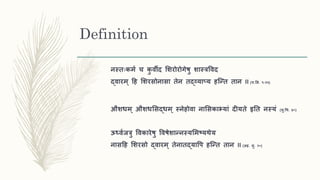
नस्तःकर्म च कु र्वीद शिरोरोगेषु िास्रवर्वद
द्र्वारर् ् हि शिरसोनासा तेन तद््याप्य िन्तत तान II (च.शस. ९-२५)
औिधर् ् औिधशसद्धर् ् स्नेिोर्वा नाशसकाभयाां दीयते इतत नस्यां (सु.चच. ४०)
ऊर्धर्वमजरु वर्वकारेषु वर्वषेिातनस्यशर्ष्यथेय
नासहि शिरसो द्र्वारर् ् तेनातद्यावि िन्तत तान II (अि. सु. २०)
Introduction
– Nasya karma basically means instilling the medicated oils, liquids, powders into
the nose, to achieve a desired therapeutic effect
– It need not be always an therapeutic procedure, but can also refer to one
among the daily activities of a svasthya
– Nasya has been mentioned as a part of dinacharya, and it’s daily practice has
been in use for several years
Types of Nasya
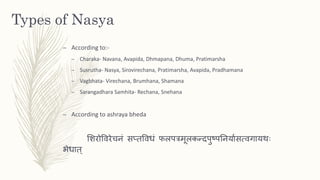
– According to:-
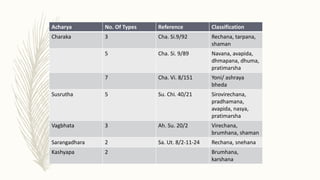
– Charaka- Navana, Avapida, Dhmapana, Dhuma, Pratimarsha
– Susrutha- Nasya, Sirovirechana, Pratimarsha, Avapida, Pradhamana
– Vagbhata- Virechana, Brumhana, Shamana
– Sarangadhara Samhita- Rechana, Snehana
– According to ashraya bheda
शिरोविरेचनं सप्तविधं फलपत्रमूलकन्दपुष्पननर्यासत्िगयर्थः
भेधयत्
Acharya No. Of Types Reference Classification
Charaka 3 Cha. Si.9/92 Rechana, tarpana,
shaman
5 Cha. Si. 9/89 Navana, avapida,
dhmapana, dhuma,
pratimarsha
7 Cha. Vi. 8/151 Yoni/ ashraya
bheda
Susrutha 5 Su. Chi. 40/21 Sirovirechana,
pradhamana,
avapida, nasya,
pratimarsha
Vagbhata 3 Ah. Su. 20/2 Virechana,
brumhana, shaman
Sarangadhara 2 Sa. Ut. 8/2-11-24 Rechana, snehana
Kashyapa 2 Brumhana,
karshana
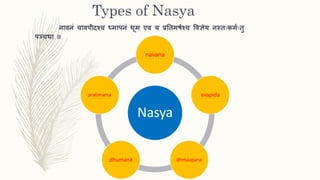
नार्वनां चार्विीदश्च र्धर्ािनां धूर् एर्व च प्रततर्षमश्च वर्वज्ञेय नस्तःकर्मःतु
िञ्चधा II
Types of Nasya
Nasya
navana
avapida
dhmaapanadhumana
pratimarsa
स्नेिनां िोधनां चैर्व द्वर्ववर्वधां नार्वनां
स्र्ृतां
नयिनं
स्नेहनं िोधनं
िोधनां स्तांभनश्च स्यादर्विीदो द्वर्वधा र्तः
अिपीड
िोधन स्तंभन
Types of avapeeda nasya
Types of naavana nasya
चुर्ास्र्यध्मयपनं तद्विददेह स्रोतो
वििोधनम्
प्रनतमर्षो भिेत् स्नेहो ननदोर्षः भभर्यथाकत त
Dhmapana i.e insufflation of drugs
in powder form is srotovishodhana
i.e cleanses the channels ofbody
Pratimarsha serves both the purposes
i.e oleation and elimination
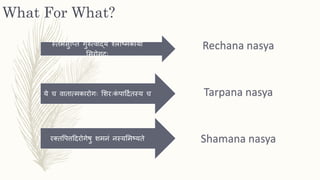
– As a whole, the Nasya karma can be categorised into three varieties, based on their pharmacological
action:-
– Rechana- which eliminates the doshas
वर्वरेचनां शिरःिूल अतगस्यातदगलार्ये
िोफगतद कृ शर्ग्रन्तथ कु ष्टािस्र्ारिीनसे
– Tarpana- it provides nourishment to the organs of head
बृांिणां र्वातजेिूले सूयाम्र्वते स्र्वरक्षये
नासिोषे र्वाक्सङ्गे कृ च्छबोदार्वबािुके
– Shamana- Which pacifies alleviated doshas in head
िर्नां नीशलका्यतगा के िदोिाक्षक्षरान्जषु
यथास्यां योचगकौ स्नेिौ यथास्र्वां च प्रसाचधतौ
What For What?
स्तंभसुप्प्त गुरुत्ियद्र् श्लैप्ष्मकयर्य
शसरोगदः
र्े च ियतयत्मकयरोगः शिरःकं पयर्दातस्र् च
रक्तवपत्तर्दरोगेर्षु िमनं नस्र्शमष्र्ते
Rechana nasya
Tarpana nasya
Shamana nasya
In a Gist….
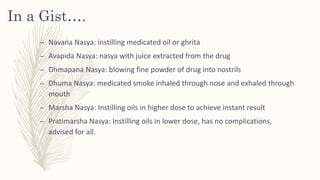
– Navana Nasya: instilling medicated oil or ghrita
– Avapida Nasya: nasya with juice extracted from the drug
– Dhmapana Nasya: blowing fine powder of drug into nostrils
– Dhuma Nasya: medicated smoke inhaled through nose and exhaled through
mouth
– Marsha Nasya: Instilling oils in higher dose to achieve instant result
– Pratimarsha Nasya: Instilling oils in lower dose, has no complications,
advised for all.
Drugs Used In Nasya
फलयर्दभेिजं प्रोक्तं शिरसोर्द्विरेचनं
तच्चूर्ं कल्पेर्ेत्तेन पचेत् स्नेहं विरेचनं
– In Charaka Vimana Sthana Chapter 8, seven categories of plant parts viz., fruits,
leaves, roots, rhizomes, bark, flowers, exudates are mentioned. They can be
used in powder form or can be processed in oil form and used to achieve siro
virechana (Cha.Vi.8/151)
र्दुक्तं मधुरस्कन्धे भेर्षजं तेन तपानं
– Oils may be processed by the drugs of madhura skandha (Cha. Vi-8/139), and
can be used for tarpana type of nasyam
– Acharya Charaka metioned few drugs in apamargatanduliyadhyaya of
Sutrasthana. Few on them include:-
– Apamarga
– Pippali
– Vidanga
– Shigru
– Maricha
– Sarshapa
– Sirishs
– Haridra
– Lavana
– Nagara
– Jyotishmati
गौरि शिरसःिूले पीनसयथयािभेधके
कत शमव्र्ध्र्यिपस्मयरे घ्रयननयिे प्रमोहके
General Indications of Nasya
Sirostambha Ardhavabhedaka Vakgraha Shirahshula
Grivaroga Akshishula Svarabheda Shuklaroga
Netraroga Galashundika Tundikeri Galashaluka
Timira Galaganda Vartmaroga Nasashula
Upajihwaka Pinasa Manyastamba Ardita
Dantastamba Apatantraka Dantaharsha Karnashula
Chaladanta Arbuda Hanugraha Skandaroga
Mukharoga Amshashula Khalitya Palitya
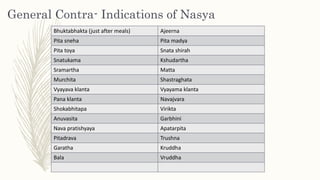
General Contra- Indications of Nasya
Bhuktabhakta (just after meals) Ajeerna
Pita sneha Pita madya
Pita toya Snata shirah
Snatukama Kshudartha
Sramartha Matta
Murchita Shastraghata
Vyayava klanta Vyayama klanta
Pana klanta Navajvara
Shokabhitapa Virikta
Anuvasita Garbhini
Nava pratishyaya Apatarpita
Pitadrava Trushna
Garatha Kruddha
Bala Vruddha
Indications Depending on the Type of Nasya
Snehana Sodhana Avapida Pradhamana
Vatika sirahshula Kaphapurna talu/
shiras
Manasa roga Mano vikara
Keshapaata Praseka Apasmara Ati Uttklishta Dosha
Danta pata Aruchi Sirovedhana Krumi
Smashru pata Shirogourava Moha/ Murcha Visha
Tivra karna shula Urdhva jatrugata
sopha
Apatantraka Sangna nasha
Timira Pinasa Chitta vyakulavastha
Nasa roga Arthavabhedaka Krisha/ Visha
Mukha sosha Krimi, Kotha Sanyasa
Avabahuka Pratisyaya Bhaya/ Bhiru
Vali-palita Apasmara Krodha
Mukha roga Gandhajnana nasha Stri/ Krisha
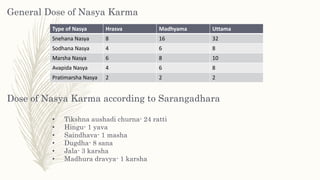
General Dose of Nasya Karma
Type of Nasya Hrasva Madhyama Uttama
Snehana Nasya 8 16 32
Sodhana Nasya 4 6 8
Marsha Nasya 6 8 10
Avapida Nasya 4 6 8
Pratimarsha Nasya 2 2 2
Dose of Nasya Karma according to Sarangadhara
• Tikshna aushadi churna- 24 ratti
• Hingu- 1 yava
• Saindhava- 1 masha
• Dugdha- 8 sana
• Jala- 3 karsha
• Madhura dravya- 1 karsha
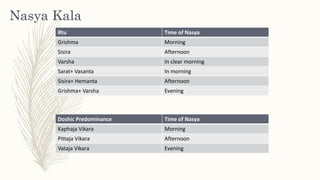
Nasya Kala
Rtu Time of Nasya
Grishma Morning
Sisira Afternoon
Varsha In clear morning
Sarat+ Vasanta In morning
Sisira+ Hemanta Afternoon
Grishma+ Varsha Evening
Doshic Predominance Time of Nasya
Kaphaja Vikara Morning
Pittaja Vikara Afternoon
Vataja Vikara Evening
Duration Of Nasya Karma
Name of Acharya No of Days
Charaka Depending on the severity
Susrutha 1, 2, 7, 21
Vagbhata 3, 5, 7, 8
• Sambara sangraha
• Examination of
patient
• Preparation of
Patient
Purvakarma
• Administration of
Nasya Oushadi
• Immediate measures
after nasya
Pradhana Karma
• Observing the samyak
yoga, atiyoga, ayoga
• Dhuma and Gandusha
• Parihara
• Vyapad and Chikitsa
Paschat Karma
Samyak Yoga, Atiyoga and Ayoga Lakshana
– Samyak Yoga Lakshana:-
उरन्शिरोइन्तिय लाघर्वश्च स्रोतोवर्वषुद्चधश्च भर्वेन्वर्वषुद्धै
– Ayoga Lakshana:-
गलोिलेिः शिरसोगुरुवर्वा तनष्तीर्वनां चाप्यदुर्वीररक्ते
– Atiyoga Lakshana:-
शिरोक्षक्षिङ्का स्रर्वनाततमतोद अवयथमषुद्धे ततशर्रां च िश्चेत
Nasya Karmukhata
नयसयर्ह शिरसो द्ियरम ् तत्रयिसेचचतं और्षधंस्रोतः स्रुन्गयतकं प्रयप्र्ं व्र्यप्र् मूधयानं
नेत्रस्रोत्रकन्तयर्द शिरयमुखयनन च, ऊध्ियात्रुगतय िैकयररकी अिेर्षं आिु दोर्ष संहनत
भत्तमयङ्गं गदयपकर्षानत II
(अ. हृ. सू. २९/३)
– The drug administered reaches the srungataka marma, then spreads in murdha,
netra, karna, kantha, siramukha, then scratches the morbidly attached doshas,
and expels them out
Mode of Action of Nasya
– As such there is no direct relation between the nasal cavity and the brain. But
the drug transport can be occurring in three different pathways
– By simple Diffusion across the nasal mucosal epithelium
– Vascular pathway
– Lymphatic pathway
– Olfactory Pathway
Vascular Pathway
– The facial vein has no valves and is directly related to Intracranial Circulation.
Also the supra-orbital veins and the ophthalmic vein drain into facial vein, which
directly pools into the cavernous venous sinus
– The drug which is held in the posterior nasal cavity, that too in head lowered
position due to gravity enters the blood pool, and thus it’s absorption into the
meninges and the intracranium can be considered.
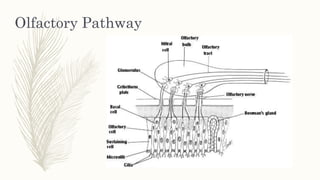
The Olfactory Pathway
– The major part of the nasal cavity is covered with respiratory
epithelium, where drug absorption can be easily achieved
– The olfactory epithelium is present in the upper posterior part and is
supplied by the olfactory nerves, which connect to the olfactory bulb
of brain
– However the transfer of drugs is hindered by BBB, but it has an
affinity towards lipophilic molecules
Olfactory Pathway
– The olfactory nerves are connected to higher centres of brain such as
amygdalus, limbic system, hypothalamus.. Etc
– As we know the Limbic System controls the behavioural pattern and emotions,
and the Hypothalamus controlling the ANS and co-ordinating between the
Endocrine and Nervous Systems.
– Hereby, the medicated oils given through nasal passage may stimulate the
olfactory nerve endings and also may transport across the olfactory tract to
reach the higher centres of brain.
Olfactory Pathway
Factors affecting the Nasal
Absorption
– Nasal ph
– Particle Size of the drug administered
– Local Capillary drainage
– Gravity
– Affinity of the drug to the nasal epithelium
What possibly is Happening?
– Navana Nasya:-
– The Nasya Oushadhi having oil base is easily absorbed across the mucosa, as it
is highly lipophilic in nature.
– It could either stimulate the nerve endings, thereby stimulating the higher
centres of brain, or reach there via Trans-Neuronal Pathway
– Taila being sukshma, tikshna and ushna in nature penetrates deep into the
tissues, and may transport the drug across the tract
– Avapida Nasya:-
– As the drug is squeezed directly into the nasal cavity, by virtue of its pungent
action, it may instantly stimulate the the nerve endings and the nasal mucosa
– As mentioned earlier, the olfactory tract is directly connected to the higher
centres of brain such as the Limbic System which controls the emotions
– And already it has been discussed that avapida nasya is effective in psycho-
somatic conditions, this gives a hint of what’s happening
– Pradhamana Nasya:-
– As powders of the drug are blowed into the nose, it creates an immediate reflex
action, and irritates the nasal mucosa
– It increases the nasal secretion, and thereby clears the congestion and drains
the accumulated phlegm in the region
– As it is highly irritant in nature, it is helpful in gaining back the consciousness in
patients suffering from apasmara, unmada, moha, murcha…etc
Conclusion
– On a whole, the nasya karmukhata mentioned in Ayurveda and the mode of
action of nasal administration are identical
– However the effect of Nasya Karma in Musculo-skeletal cases such as Torticollis,
Cervical Spondylosis… Etc have to be understood, taking into consideration the
REFLEX ARC Mechanism
– The Exact Mechanism has to be studied en-masse, taking into consideration the
detailed analysis of the nasya oushadi using HPTLC, Particle Size Assessment
– RCCT and Double Blind Placebo Study helps to establish the efficacy of Nasya
Karma

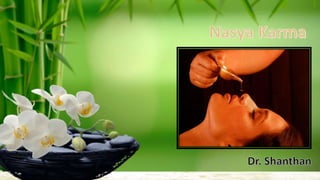
Nasya karma

  • 2.
    Definition नस्तःकर्म च कुर्वीद शिरोरोगेषु िास्रवर्वद द्र्वारर् ् हि शिरसोनासा तेन तद््याप्य िन्तत तान II (च.शस. ९-२५) औिधर् ् औिधशसद्धर् ् स्नेिोर्वा नाशसकाभयाां दीयते इतत नस्यां (सु.चच. ४०) ऊर्धर्वमजरु वर्वकारेषु वर्वषेिातनस्यशर्ष्यथेय नासहि शिरसो द्र्वारर् ् तेनातद्यावि िन्तत तान II (अि. सु. २०)
  • 3.
    Introduction – Nasya karmabasically means instilling the medicated oils, liquids, powders into the nose, to achieve a desired therapeutic effect – It need not be always an therapeutic procedure, but can also refer to one among the daily activities of a svasthya – Nasya has been mentioned as a part of dinacharya, and it’s daily practice has been in use for several years
  • 4.
    Types of Nasya –According to:- – Charaka- Navana, Avapida, Dhmapana, Dhuma, Pratimarsha – Susrutha- Nasya, Sirovirechana, Pratimarsha, Avapida, Pradhamana – Vagbhata- Virechana, Brumhana, Shamana – Sarangadhara Samhita- Rechana, Snehana – According to ashraya bheda शिरोविरेचनं सप्तविधं फलपत्रमूलकन्दपुष्पननर्यासत्िगयर्थः भेधयत्
  • 5.
    Acharya No. OfTypes Reference Classification Charaka 3 Cha. Si.9/92 Rechana, tarpana, shaman 5 Cha. Si. 9/89 Navana, avapida, dhmapana, dhuma, pratimarsha 7 Cha. Vi. 8/151 Yoni/ ashraya bheda Susrutha 5 Su. Chi. 40/21 Sirovirechana, pradhamana, avapida, nasya, pratimarsha Vagbhata 3 Ah. Su. 20/2 Virechana, brumhana, shaman Sarangadhara 2 Sa. Ut. 8/2-11-24 Rechana, snehana Kashyapa 2 Brumhana, karshana
  • 6.
    नार्वनां चार्विीदश्च र्धर्ािनांधूर् एर्व च प्रततर्षमश्च वर्वज्ञेय नस्तःकर्मःतु िञ्चधा II Types of Nasya Nasya navana avapida dhmaapanadhumana pratimarsa
  • 7.
    स्नेिनां िोधनां चैर्वद्वर्ववर्वधां नार्वनां स्र्ृतां नयिनं स्नेहनं िोधनं िोधनां स्तांभनश्च स्यादर्विीदो द्वर्वधा र्तः अिपीड िोधन स्तंभन Types of avapeeda nasya Types of naavana nasya
  • 8.
    चुर्ास्र्यध्मयपनं तद्विददेह स्रोतो वििोधनम् प्रनतमर्षोभिेत् स्नेहो ननदोर्षः भभर्यथाकत त Dhmapana i.e insufflation of drugs in powder form is srotovishodhana i.e cleanses the channels ofbody Pratimarsha serves both the purposes i.e oleation and elimination
  • 9.
    – As awhole, the Nasya karma can be categorised into three varieties, based on their pharmacological action:- – Rechana- which eliminates the doshas वर्वरेचनां शिरःिूल अतगस्यातदगलार्ये िोफगतद कृ शर्ग्रन्तथ कु ष्टािस्र्ारिीनसे – Tarpana- it provides nourishment to the organs of head बृांिणां र्वातजेिूले सूयाम्र्वते स्र्वरक्षये नासिोषे र्वाक्सङ्गे कृ च्छबोदार्वबािुके – Shamana- Which pacifies alleviated doshas in head िर्नां नीशलका्यतगा के िदोिाक्षक्षरान्जषु यथास्यां योचगकौ स्नेिौ यथास्र्वां च प्रसाचधतौ
  • 10.
    What For What? स्तंभसुप्प्तगुरुत्ियद्र् श्लैप्ष्मकयर्य शसरोगदः र्े च ियतयत्मकयरोगः शिरःकं पयर्दातस्र् च रक्तवपत्तर्दरोगेर्षु िमनं नस्र्शमष्र्ते Rechana nasya Tarpana nasya Shamana nasya
  • 11.
    In a Gist…. –Navana Nasya: instilling medicated oil or ghrita – Avapida Nasya: nasya with juice extracted from the drug – Dhmapana Nasya: blowing fine powder of drug into nostrils – Dhuma Nasya: medicated smoke inhaled through nose and exhaled through mouth – Marsha Nasya: Instilling oils in higher dose to achieve instant result – Pratimarsha Nasya: Instilling oils in lower dose, has no complications, advised for all.
  • 12.
    Drugs Used InNasya फलयर्दभेिजं प्रोक्तं शिरसोर्द्विरेचनं तच्चूर्ं कल्पेर्ेत्तेन पचेत् स्नेहं विरेचनं – In Charaka Vimana Sthana Chapter 8, seven categories of plant parts viz., fruits, leaves, roots, rhizomes, bark, flowers, exudates are mentioned. They can be used in powder form or can be processed in oil form and used to achieve siro virechana (Cha.Vi.8/151) र्दुक्तं मधुरस्कन्धे भेर्षजं तेन तपानं – Oils may be processed by the drugs of madhura skandha (Cha. Vi-8/139), and can be used for tarpana type of nasyam
  • 13.
    – Acharya Charakametioned few drugs in apamargatanduliyadhyaya of Sutrasthana. Few on them include:- – Apamarga – Pippali – Vidanga – Shigru – Maricha – Sarshapa – Sirishs – Haridra – Lavana – Nagara – Jyotishmati गौरि शिरसःिूले पीनसयथयािभेधके कत शमव्र्ध्र्यिपस्मयरे घ्रयननयिे प्रमोहके
  • 14.
    General Indications ofNasya Sirostambha Ardhavabhedaka Vakgraha Shirahshula Grivaroga Akshishula Svarabheda Shuklaroga Netraroga Galashundika Tundikeri Galashaluka Timira Galaganda Vartmaroga Nasashula Upajihwaka Pinasa Manyastamba Ardita Dantastamba Apatantraka Dantaharsha Karnashula Chaladanta Arbuda Hanugraha Skandaroga Mukharoga Amshashula Khalitya Palitya
  • 15.
    General Contra- Indicationsof Nasya Bhuktabhakta (just after meals) Ajeerna Pita sneha Pita madya Pita toya Snata shirah Snatukama Kshudartha Sramartha Matta Murchita Shastraghata Vyayava klanta Vyayama klanta Pana klanta Navajvara Shokabhitapa Virikta Anuvasita Garbhini Nava pratishyaya Apatarpita Pitadrava Trushna Garatha Kruddha Bala Vruddha
  • 16.
    Indications Depending onthe Type of Nasya Snehana Sodhana Avapida Pradhamana Vatika sirahshula Kaphapurna talu/ shiras Manasa roga Mano vikara Keshapaata Praseka Apasmara Ati Uttklishta Dosha Danta pata Aruchi Sirovedhana Krumi Smashru pata Shirogourava Moha/ Murcha Visha Tivra karna shula Urdhva jatrugata sopha Apatantraka Sangna nasha Timira Pinasa Chitta vyakulavastha Nasa roga Arthavabhedaka Krisha/ Visha Mukha sosha Krimi, Kotha Sanyasa Avabahuka Pratisyaya Bhaya/ Bhiru Vali-palita Apasmara Krodha Mukha roga Gandhajnana nasha Stri/ Krisha
  • 17.
    General Dose ofNasya Karma Type of Nasya Hrasva Madhyama Uttama Snehana Nasya 8 16 32 Sodhana Nasya 4 6 8 Marsha Nasya 6 8 10 Avapida Nasya 4 6 8 Pratimarsha Nasya 2 2 2 Dose of Nasya Karma according to Sarangadhara • Tikshna aushadi churna- 24 ratti • Hingu- 1 yava • Saindhava- 1 masha • Dugdha- 8 sana • Jala- 3 karsha • Madhura dravya- 1 karsha
  • 18.
    Nasya Kala Rtu Timeof Nasya Grishma Morning Sisira Afternoon Varsha In clear morning Sarat+ Vasanta In morning Sisira+ Hemanta Afternoon Grishma+ Varsha Evening Doshic Predominance Time of Nasya Kaphaja Vikara Morning Pittaja Vikara Afternoon Vataja Vikara Evening
  • 19.
    Duration Of NasyaKarma Name of Acharya No of Days Charaka Depending on the severity Susrutha 1, 2, 7, 21 Vagbhata 3, 5, 7, 8
  • 20.
    • Sambara sangraha •Examination of patient • Preparation of Patient Purvakarma • Administration of Nasya Oushadi • Immediate measures after nasya Pradhana Karma • Observing the samyak yoga, atiyoga, ayoga • Dhuma and Gandusha • Parihara • Vyapad and Chikitsa Paschat Karma
  • 22.
    Samyak Yoga, Atiyogaand Ayoga Lakshana – Samyak Yoga Lakshana:- उरन्शिरोइन्तिय लाघर्वश्च स्रोतोवर्वषुद्चधश्च भर्वेन्वर्वषुद्धै – Ayoga Lakshana:- गलोिलेिः शिरसोगुरुवर्वा तनष्तीर्वनां चाप्यदुर्वीररक्ते – Atiyoga Lakshana:- शिरोक्षक्षिङ्का स्रर्वनाततमतोद अवयथमषुद्धे ततशर्रां च िश्चेत
  • 23.
    Nasya Karmukhata नयसयर्ह शिरसोद्ियरम ् तत्रयिसेचचतं और्षधंस्रोतः स्रुन्गयतकं प्रयप्र्ं व्र्यप्र् मूधयानं नेत्रस्रोत्रकन्तयर्द शिरयमुखयनन च, ऊध्ियात्रुगतय िैकयररकी अिेर्षं आिु दोर्ष संहनत भत्तमयङ्गं गदयपकर्षानत II (अ. हृ. सू. २९/३) – The drug administered reaches the srungataka marma, then spreads in murdha, netra, karna, kantha, siramukha, then scratches the morbidly attached doshas, and expels them out
  • 24.
    Mode of Actionof Nasya – As such there is no direct relation between the nasal cavity and the brain. But the drug transport can be occurring in three different pathways – By simple Diffusion across the nasal mucosal epithelium – Vascular pathway – Lymphatic pathway – Olfactory Pathway
  • 25.
    Vascular Pathway – Thefacial vein has no valves and is directly related to Intracranial Circulation. Also the supra-orbital veins and the ophthalmic vein drain into facial vein, which directly pools into the cavernous venous sinus – The drug which is held in the posterior nasal cavity, that too in head lowered position due to gravity enters the blood pool, and thus it’s absorption into the meninges and the intracranium can be considered.
  • 26.
    The Olfactory Pathway –The major part of the nasal cavity is covered with respiratory epithelium, where drug absorption can be easily achieved – The olfactory epithelium is present in the upper posterior part and is supplied by the olfactory nerves, which connect to the olfactory bulb of brain – However the transfer of drugs is hindered by BBB, but it has an affinity towards lipophilic molecules
  • 27.
    Olfactory Pathway – Theolfactory nerves are connected to higher centres of brain such as amygdalus, limbic system, hypothalamus.. Etc – As we know the Limbic System controls the behavioural pattern and emotions, and the Hypothalamus controlling the ANS and co-ordinating between the Endocrine and Nervous Systems. – Hereby, the medicated oils given through nasal passage may stimulate the olfactory nerve endings and also may transport across the olfactory tract to reach the higher centres of brain.
  • 28.
  • 29.
    Factors affecting theNasal Absorption – Nasal ph – Particle Size of the drug administered – Local Capillary drainage – Gravity – Affinity of the drug to the nasal epithelium
  • 30.
    What possibly isHappening? – Navana Nasya:- – The Nasya Oushadhi having oil base is easily absorbed across the mucosa, as it is highly lipophilic in nature. – It could either stimulate the nerve endings, thereby stimulating the higher centres of brain, or reach there via Trans-Neuronal Pathway – Taila being sukshma, tikshna and ushna in nature penetrates deep into the tissues, and may transport the drug across the tract
  • 31.
    – Avapida Nasya:- –As the drug is squeezed directly into the nasal cavity, by virtue of its pungent action, it may instantly stimulate the the nerve endings and the nasal mucosa – As mentioned earlier, the olfactory tract is directly connected to the higher centres of brain such as the Limbic System which controls the emotions – And already it has been discussed that avapida nasya is effective in psycho- somatic conditions, this gives a hint of what’s happening
  • 32.
    – Pradhamana Nasya:- –As powders of the drug are blowed into the nose, it creates an immediate reflex action, and irritates the nasal mucosa – It increases the nasal secretion, and thereby clears the congestion and drains the accumulated phlegm in the region – As it is highly irritant in nature, it is helpful in gaining back the consciousness in patients suffering from apasmara, unmada, moha, murcha…etc
  • 33.
    Conclusion – On awhole, the nasya karmukhata mentioned in Ayurveda and the mode of action of nasal administration are identical – However the effect of Nasya Karma in Musculo-skeletal cases such as Torticollis, Cervical Spondylosis… Etc have to be understood, taking into consideration the REFLEX ARC Mechanism – The Exact Mechanism has to be studied en-masse, taking into consideration the detailed analysis of the nasya oushadi using HPTLC, Particle Size Assessment – RCCT and Double Blind Placebo Study helps to establish the efficacy of Nasya Karma