Download to read offline
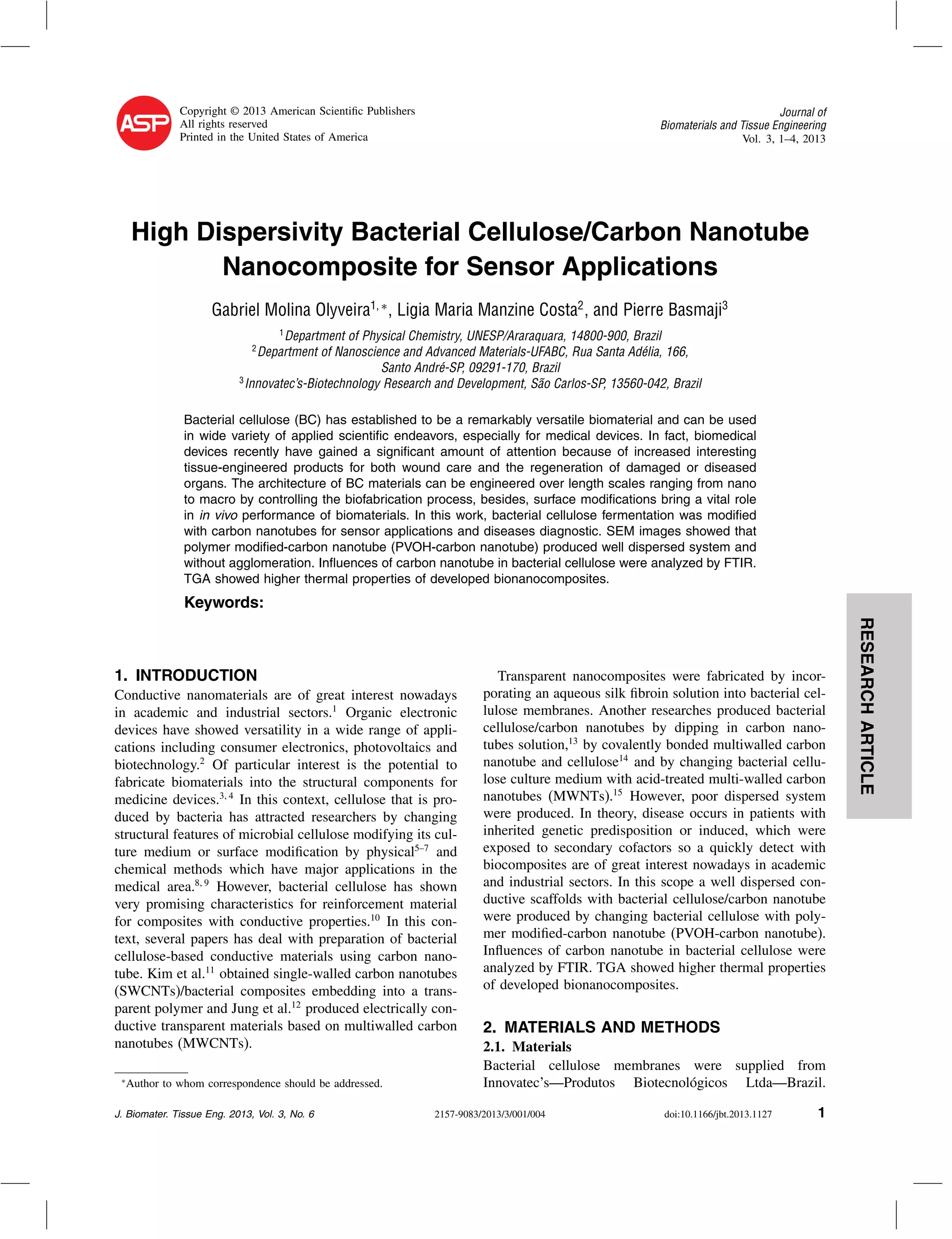
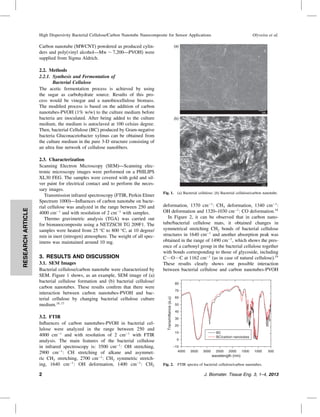
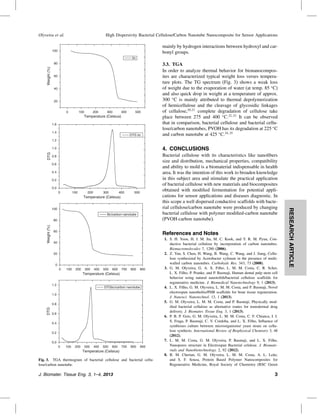

This document summarizes research on developing a bacterial cellulose/carbon nanotube nanocomposite for sensor applications. Scanning electron microscopy images showed the polymer-modified carbon nanotubes were well dispersed within the bacterial cellulose without agglomeration. Fourier transform infrared spectroscopy analysis indicated interactions between the carbon nanotubes and bacterial cellulose through hydrogen bonding of hydroxyl and carbonyl groups. Thermogravimetric analysis found the bacterial cellulose/carbon nanotube nanocomposite had higher thermal properties compared to bacterial cellulose alone. The nanocomposite aims to provide a well-dispersed conductive scaffold for potential use in quickly detecting diseases.


