Simple Steps to
NABH Accreditation
Dr. Lallu Joseph
Quality Manager & Assoc. GS, CMC Vellore
Secretary General, CAHO
Unnecessary, Expensive, Intrusion into
autonomy, Waste of time, Who are they
to tell us?
Source: 2002. IHI. Leape WHO calls patient safety an endemic concern
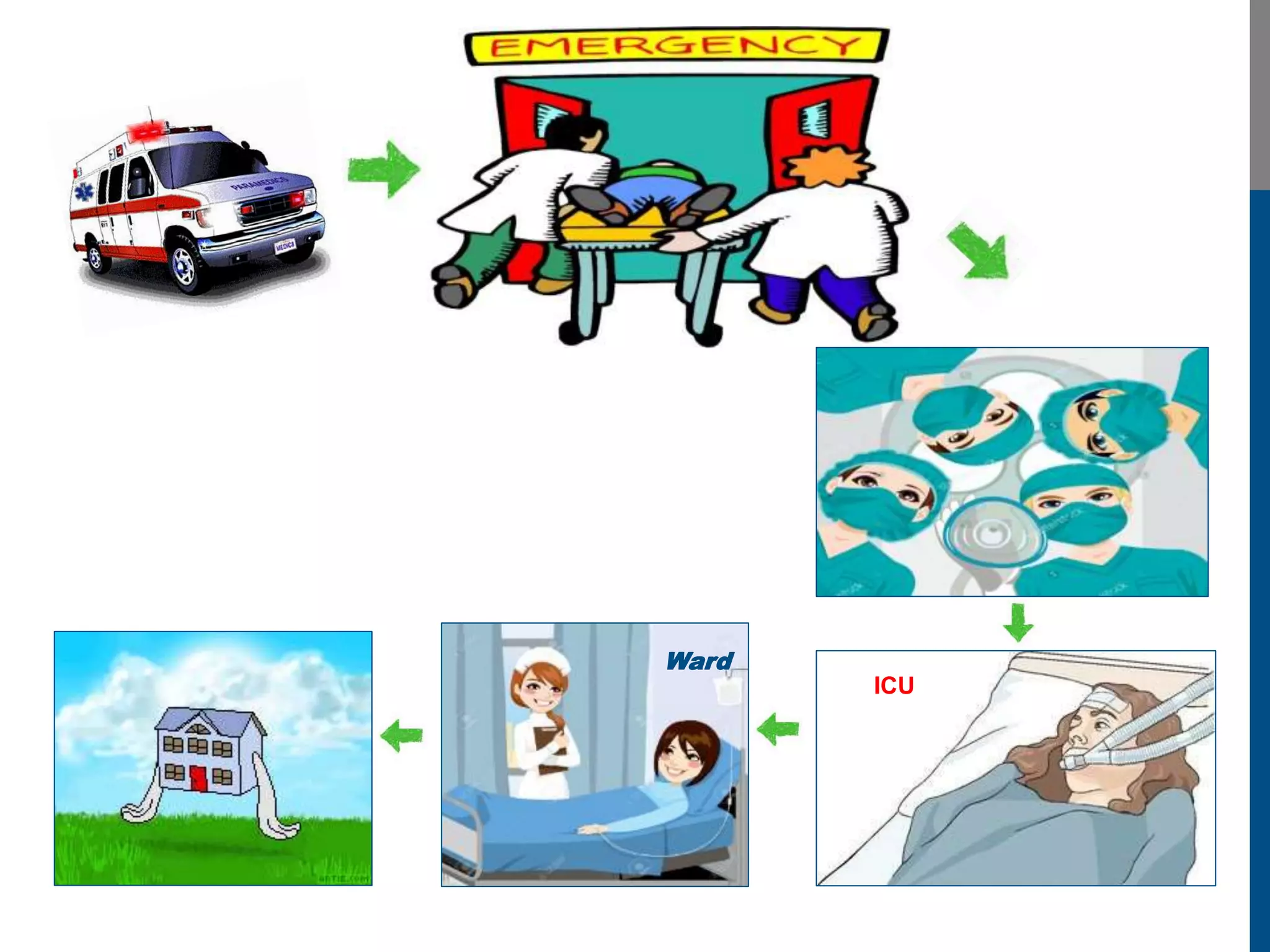
ICU
Ward
Patient Safety ?????
We can all agree the practice of medicine was simple,
maybe relatively ineffective but safe.
TODAY…..The practice of Medicine
IS HIGHLY COMPLEX but effective
Way Forward…
Accreditation
• Best possible tool for achieving quality and patient safety.
• Accreditation is a process in which certification of
competency, authority, or credibility is presented to an
organization.
• A self-assessment and external peer assessment process
used by healthcare organizations to accurately assess their
level of performance in relation to established standards and
then to implement ways to continuously improve it.
Focus of Accreditation Standards
• Patient Safety
• Staff and employee safety
• Environment and community safety
• Information Education and Communication
• Measurement of Performance
• Organized around important functions
A doctor’s tool kit for
quality care and patient
safety…
Simple measures saves

lives…..
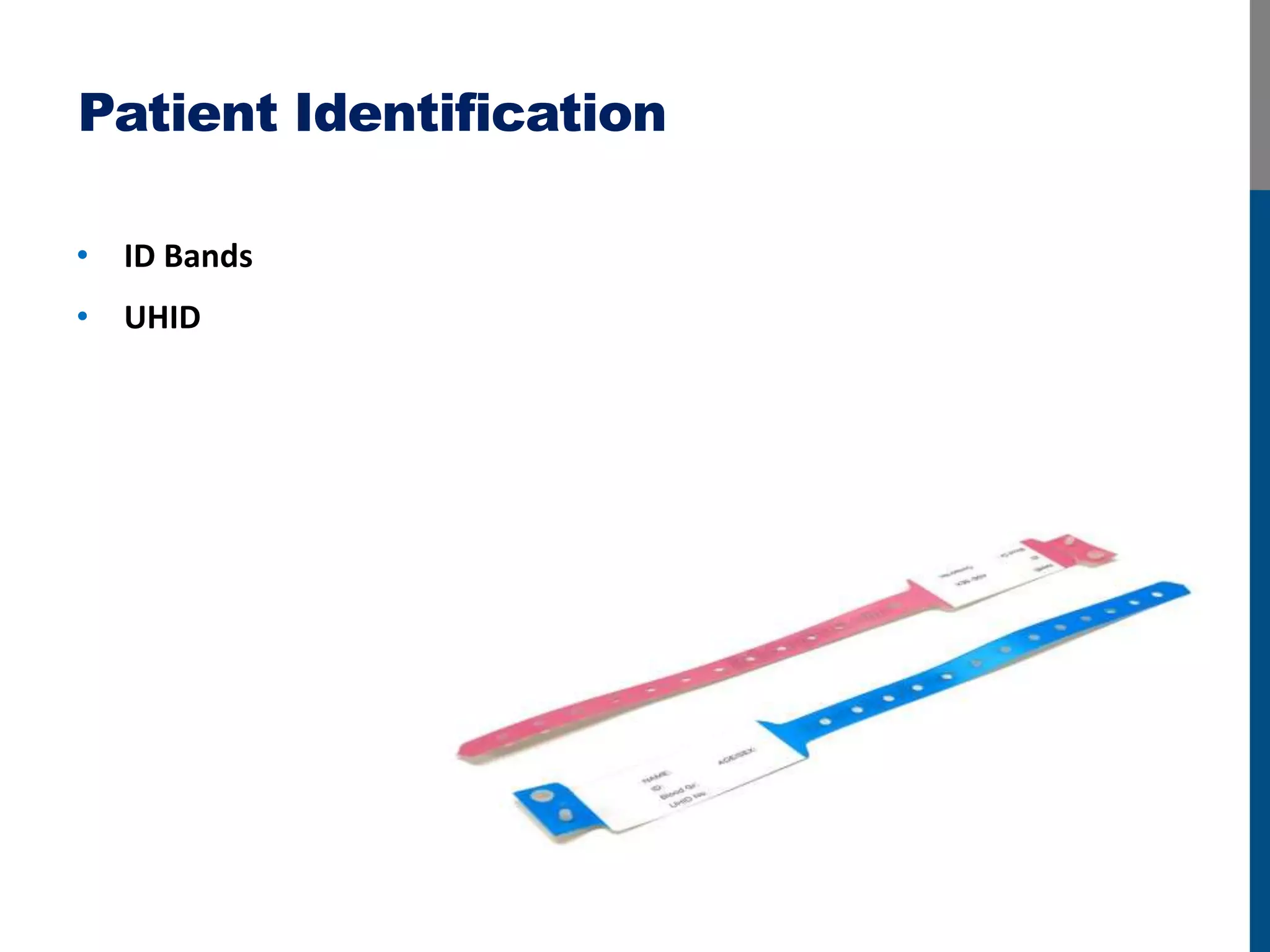
Patient Identification
• ID Bands
• UHID
Use of WHO Surgical Safety Checklist
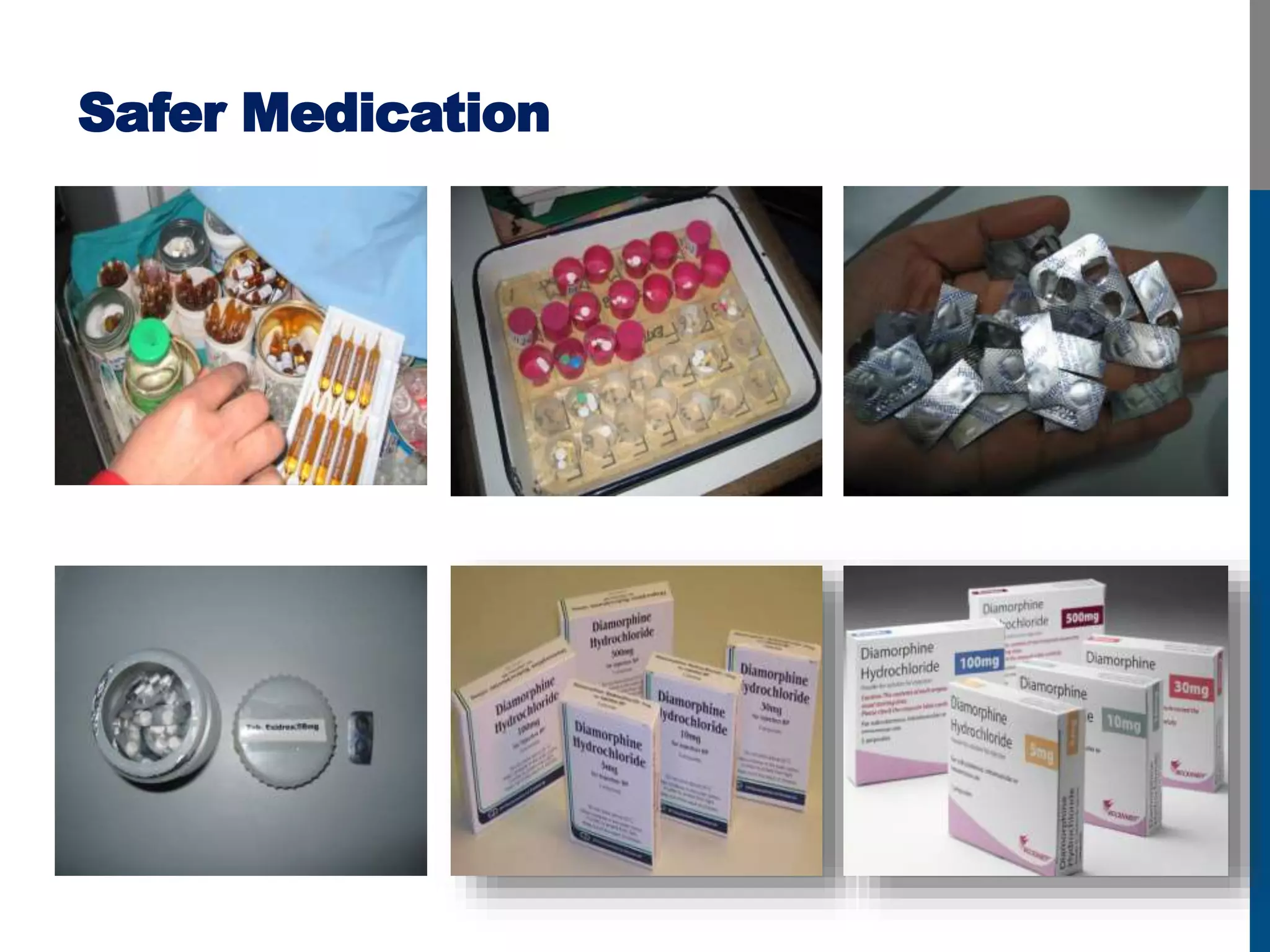
Safer Medication
NATIONAL ACCREDITATION BOARD FOR
HOSPITALS AND
HEALTHCARE PROVIDERS (NABH)
NABH is a Constituent Board of
Quality Council of India
(QCI)
HCO and SHCO
 Health Care Organization (HCO) - More than 50 beds
 Small Health Care Organization (SHCO) - Up to 50 beds
• Entry level accreditation – HCO & SHCO
• Full accreditation – HCO & SHCO
NABH Standards
NABH Standards
Entry Level Full Certification
SHCO
(1st Edn.)
HCO
(1st Edn.)
SHCO
(2nd Edn.)
HCO
(5th Edn.)
Chapters 10 10 10 10
Standards 41 45 61 100
Objective Elements 149 167 289 651
Challenges in implementation
• Lack of awareness of standards
• Fear of the unknown
• Fear of exposing their vulnerabilities
• Old infrastructure and licenses
• Manpower requirement
• Standard Operating Procedures and Manuals
• Training of all categories of staff
• Inadequate resources
MANTRA
DO IT YOURSELF
DO NOT DELEGATE
1. Strong Management Commitment
• Top management should actively involve
• Prepare the strategy for implementation
• Responsibility for implementation should lie with the top
management
2. Quality Coordinator
Choose the right person
3. Quality Team
Multi-disciplinary Team
4. Training on the Standards
• Attend in-depth training program on NABH Standards
• Nominate three members atleast to attend the program – doctor,
nurse and administrator
• Understand the intent of every objective element
5. Form Committees
 Multidisciplinary team for NABH implementation
 Form Committees
• Quality Committee
• Safety Committee
• Infection Control
• Pharmacy
• Transfusion
 Form sub-committees depending on issues
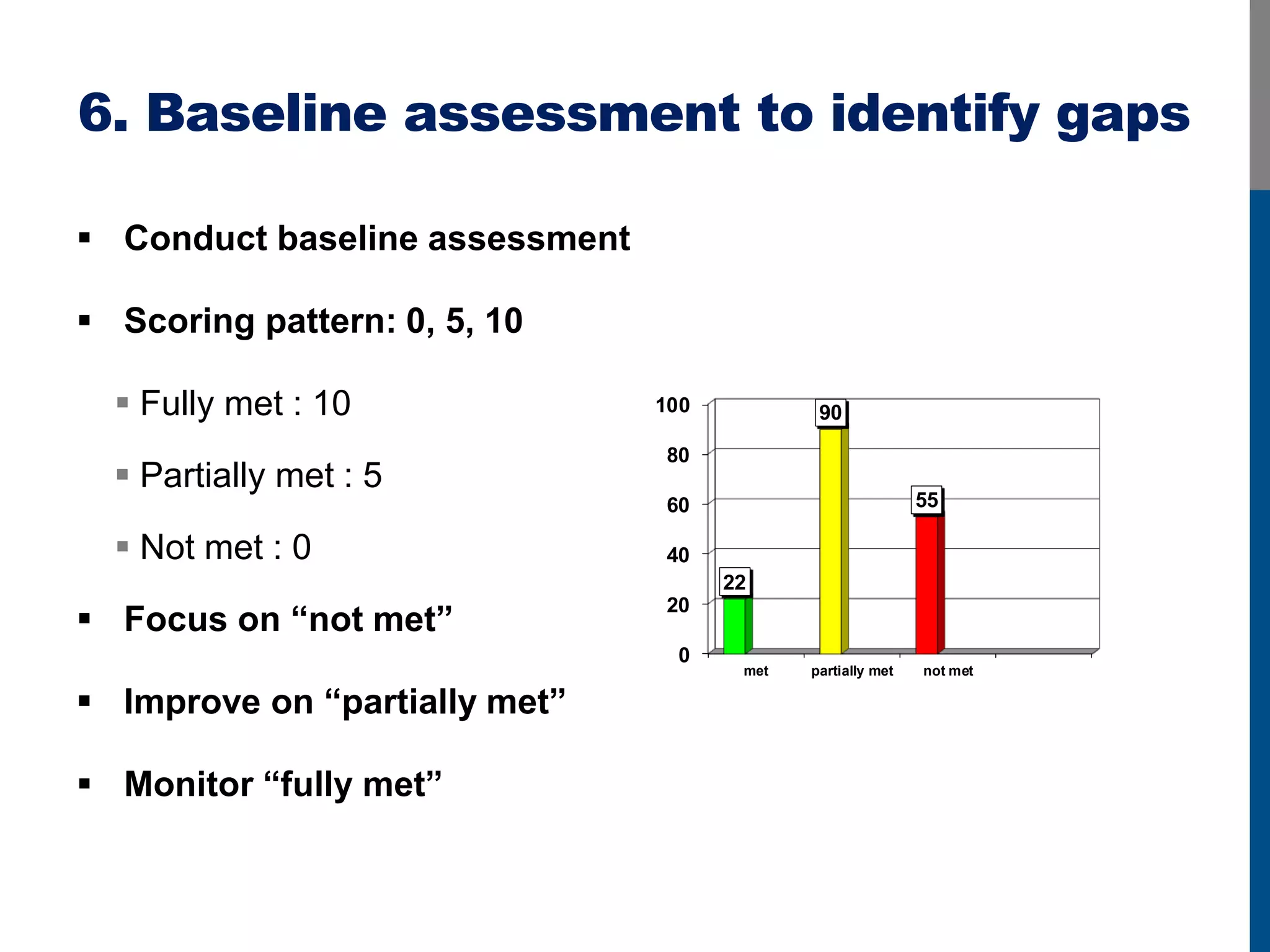
6. Baseline assessment to identify gaps
 Conduct baseline assessment
 Scoring pattern: 0, 5, 10
 Fully met : 10
 Partially met : 5
 Not met : 0
 Focus on “not met”
 Improve on “partially met”
 Monitor “fully met”
0
20
40
60
80
100
met partially met not met
22
90
55
7. Assign Responsibilities
8. Ensure Involvement of Staff
 Identify Key Personnel in each area
 These individuals can be made as quality champions
 Train on the requirements of their areas
9. Prepare Implementation Checklist
10. Statutory and legal requirements
 Identify which are the relevant licenses to be obtained/renewed
 Hospital Registration
 Biomedical Waste authorization, Air, Water Consent
 AERB licenses
 Pharmacy licenses
 Blood bank licenses
 PC PNDT
 MTP
 Transplant licenses (if applicable)
 Identify what are the requirements to be fulfilled as per
prevailing laws
 Assign responsibilities
11. Identify Infrastructural requirements
 Adequacy of fire detection, alarms and fire fighting systems
 Patient and material flow in CSSD and OT
 Special provisions like baby care room, play room,
handicapped toilet as per the scope of the hospital
 Adequacy of equipments as per scope
 Prepare the plan for addressing them
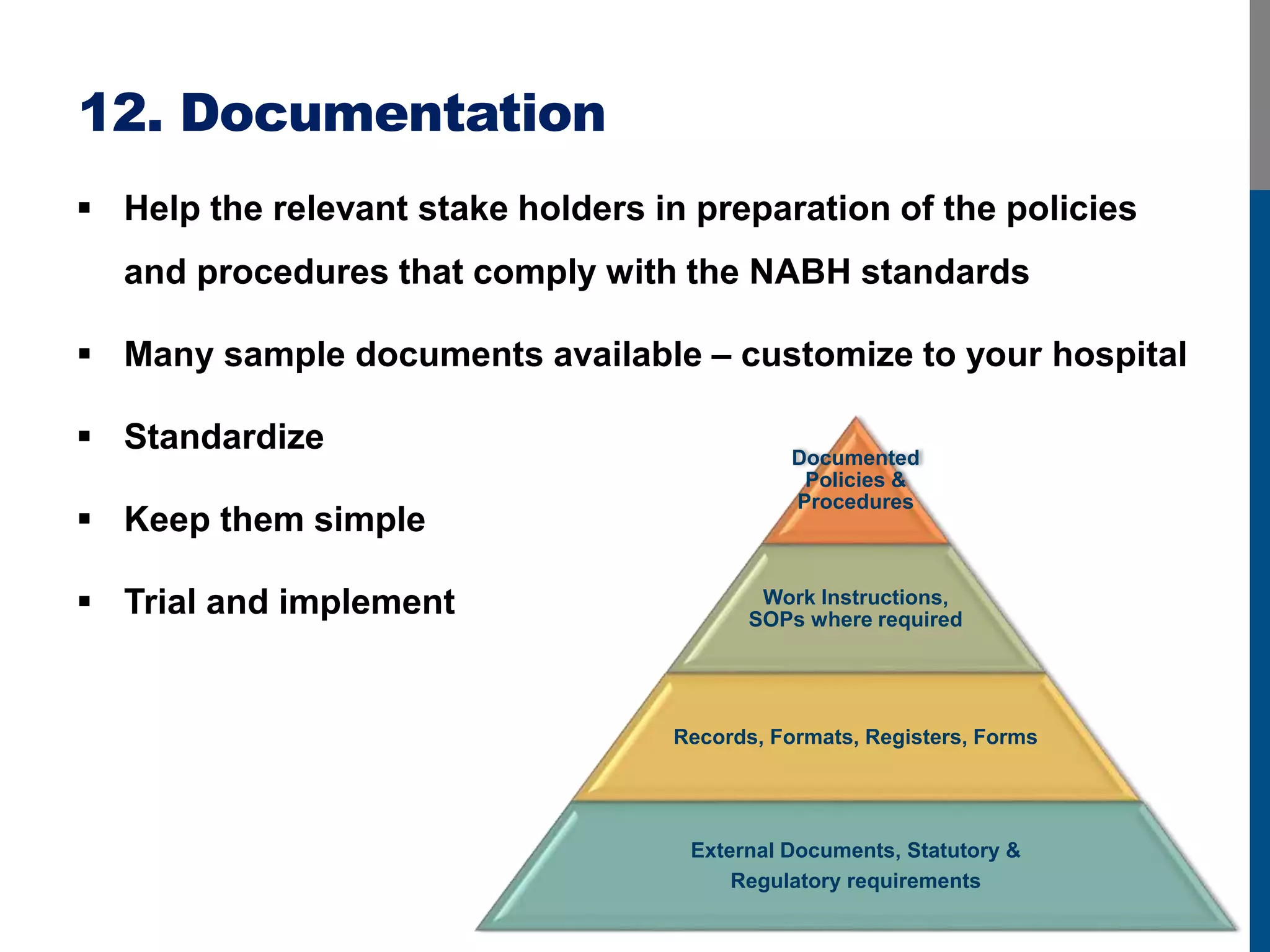
12. Documentation
 Help the relevant stake holders in preparation of the policies
and procedures that comply with the NABH standards
 Many sample documents available – customize to your hospital
 Standardize
 Keep them simple
 Trial and implement
Documented
Policies &
Procedures
Work Instructions,
SOPs where required
Records, Formats, Registers, Forms
External Documents, Statutory &
Regulatory requirements
13. Training
 Prepare the Training Matrix and Training Calendar
 Identify and implement training requirements
 Identify Faculty
 Plan training calendar, roll out training
 Interact / educate the end users regarding the same
Including doctors
Train, Train, Train
14. Initiate Audits
CHART DOCUMENTATION AUDITS
STAKEHOLDERS
QUALITY TEAM
15. Continuous Follow up
By Quality Manager
Quality Team
Committees
Documented
Presented to the Top Management
Follow up, Follow up, Follow up
16. Capture Indicators
 Start capturing basic and relevant indicators
 Explain the indicators and their relevance to the stakeholders
 Involve the stakeholders and analyze the data
17. Keep updating the champions and all staff
 Continuous update to all staff on overall progress- through
meetings, newsletters etc.
 Keep them engaged
 Update the departments and stakeholders on the levels of
compliances
 Celebrate successes
18. Do an internal assessment/ invited
external assessment
0
10
20
30
40
50
60
met partially met not met
36
51
13
Submit Your
Application
Points to Remember
 Every Non-Compliance is an opportunity for improvement
 Accept NCs and improve on them
 Do not close NCs for the sake of closure
 Never get disheartened - Change in culture/ practice takes
years
 Always remain positive – “Never give up”
 Continue to learn
 Establish the system for continuous monitoring and
sustainability
Systems awareness and systems design
are important for health professionals,
but are not enough. They are enabling
mechanisms only.
It is the ethical dimension of individuals
that is essential to a system’s success.
Ultimately, the secret of quality is love.
You have to love your patient…., you
have to love your profession, you have
to love your God.
If you have love, you can then work
backward to monitor and improve the
system.
Avedis Donabedian

Simple steps to NABH Accreditation

  • 1.
    Simple Steps to NABHAccreditation Dr. Lallu Joseph Quality Manager & Assoc. GS, CMC Vellore Secretary General, CAHO
  • 2.
    Unnecessary, Expensive, Intrusioninto autonomy, Waste of time, Who are they to tell us?
  • 3.
    Source: 2002. IHI.Leape WHO calls patient safety an endemic concern
  • 4.
  • 5.
  • 6.
    We can allagree the practice of medicine was simple, maybe relatively ineffective but safe. TODAY…..The practice of Medicine IS HIGHLY COMPLEX but effective Way Forward…
  • 7.
    Accreditation • Best possibletool for achieving quality and patient safety. • Accreditation is a process in which certification of competency, authority, or credibility is presented to an organization. • A self-assessment and external peer assessment process used by healthcare organizations to accurately assess their level of performance in relation to established standards and then to implement ways to continuously improve it.
  • 8.
    Focus of AccreditationStandards • Patient Safety • Staff and employee safety • Environment and community safety • Information Education and Communication • Measurement of Performance • Organized around important functions
  • 9.
    A doctor’s toolkit for quality care and patient safety… Simple measures saves lives…..
  • 10.
  • 11.
    Use of WHOSurgical Safety Checklist
  • 12.
  • 13.
    NATIONAL ACCREDITATION BOARDFOR HOSPITALS AND HEALTHCARE PROVIDERS (NABH) NABH is a Constituent Board of Quality Council of India (QCI)
  • 14.
    HCO and SHCO Health Care Organization (HCO) - More than 50 beds  Small Health Care Organization (SHCO) - Up to 50 beds • Entry level accreditation – HCO & SHCO • Full accreditation – HCO & SHCO
  • 15.
    NABH Standards NABH Standards EntryLevel Full Certification SHCO (1st Edn.) HCO (1st Edn.) SHCO (2nd Edn.) HCO (5th Edn.) Chapters 10 10 10 10 Standards 41 45 61 100 Objective Elements 149 167 289 651
  • 16.
    Challenges in implementation •Lack of awareness of standards • Fear of the unknown • Fear of exposing their vulnerabilities • Old infrastructure and licenses • Manpower requirement • Standard Operating Procedures and Manuals • Training of all categories of staff • Inadequate resources
  • 17.
  • 18.
    1. Strong ManagementCommitment • Top management should actively involve • Prepare the strategy for implementation • Responsibility for implementation should lie with the top management
  • 19.
  • 20.
  • 21.
    4. Training onthe Standards • Attend in-depth training program on NABH Standards • Nominate three members atleast to attend the program – doctor, nurse and administrator • Understand the intent of every objective element
  • 22.
    5. Form Committees Multidisciplinary team for NABH implementation  Form Committees • Quality Committee • Safety Committee • Infection Control • Pharmacy • Transfusion  Form sub-committees depending on issues
  • 23.
    6. Baseline assessmentto identify gaps  Conduct baseline assessment  Scoring pattern: 0, 5, 10  Fully met : 10  Partially met : 5  Not met : 0  Focus on “not met”  Improve on “partially met”  Monitor “fully met” 0 20 40 60 80 100 met partially met not met 22 90 55
  • 24.
  • 25.
    8. Ensure Involvementof Staff  Identify Key Personnel in each area  These individuals can be made as quality champions  Train on the requirements of their areas
  • 26.
  • 27.
    10. Statutory andlegal requirements  Identify which are the relevant licenses to be obtained/renewed  Hospital Registration  Biomedical Waste authorization, Air, Water Consent  AERB licenses  Pharmacy licenses  Blood bank licenses  PC PNDT  MTP  Transplant licenses (if applicable)  Identify what are the requirements to be fulfilled as per prevailing laws  Assign responsibilities
  • 28.
    11. Identify Infrastructuralrequirements  Adequacy of fire detection, alarms and fire fighting systems  Patient and material flow in CSSD and OT  Special provisions like baby care room, play room, handicapped toilet as per the scope of the hospital  Adequacy of equipments as per scope  Prepare the plan for addressing them
  • 29.
    12. Documentation  Helpthe relevant stake holders in preparation of the policies and procedures that comply with the NABH standards  Many sample documents available – customize to your hospital  Standardize  Keep them simple  Trial and implement Documented Policies & Procedures Work Instructions, SOPs where required Records, Formats, Registers, Forms External Documents, Statutory & Regulatory requirements
  • 30.
    13. Training  Preparethe Training Matrix and Training Calendar  Identify and implement training requirements  Identify Faculty  Plan training calendar, roll out training  Interact / educate the end users regarding the same Including doctors Train, Train, Train
  • 31.
    14. Initiate Audits CHARTDOCUMENTATION AUDITS STAKEHOLDERS QUALITY TEAM
  • 32.
    15. Continuous Followup By Quality Manager Quality Team Committees Documented Presented to the Top Management Follow up, Follow up, Follow up
  • 33.
    16. Capture Indicators Start capturing basic and relevant indicators  Explain the indicators and their relevance to the stakeholders  Involve the stakeholders and analyze the data
  • 34.
    17. Keep updatingthe champions and all staff  Continuous update to all staff on overall progress- through meetings, newsletters etc.  Keep them engaged  Update the departments and stakeholders on the levels of compliances  Celebrate successes
  • 35.
    18. Do aninternal assessment/ invited external assessment 0 10 20 30 40 50 60 met partially met not met 36 51 13
  • 36.
  • 37.
    Points to Remember Every Non-Compliance is an opportunity for improvement  Accept NCs and improve on them  Do not close NCs for the sake of closure  Never get disheartened - Change in culture/ practice takes years  Always remain positive – “Never give up”  Continue to learn  Establish the system for continuous monitoring and sustainability
  • 39.
    Systems awareness andsystems design are important for health professionals, but are not enough. They are enabling mechanisms only. It is the ethical dimension of individuals that is essential to a system’s success. Ultimately, the secret of quality is love. You have to love your patient…., you have to love your profession, you have to love your God. If you have love, you can then work backward to monitor and improve the system. Avedis Donabedian