Order of Operations By: Lora Mauro Grade 7
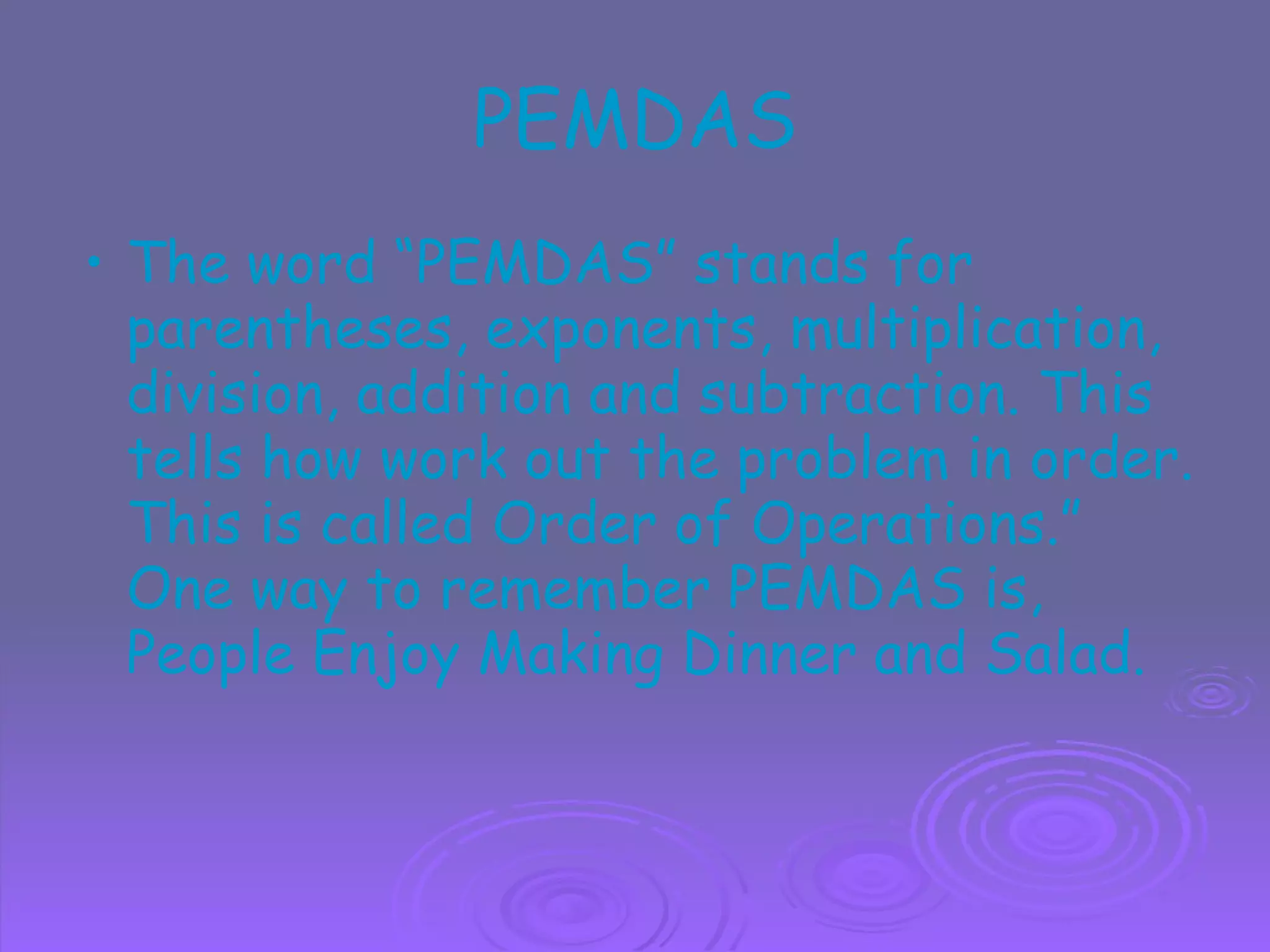
PEMDAS The word “PEMDAS” stands for parentheses, exponents, multiplication, division, addition and subtraction. This tells how work out the problem in order. This is called Order of Operations.” One way to remember PEMDAS is, People Enjoy Making Dinner and Salad.
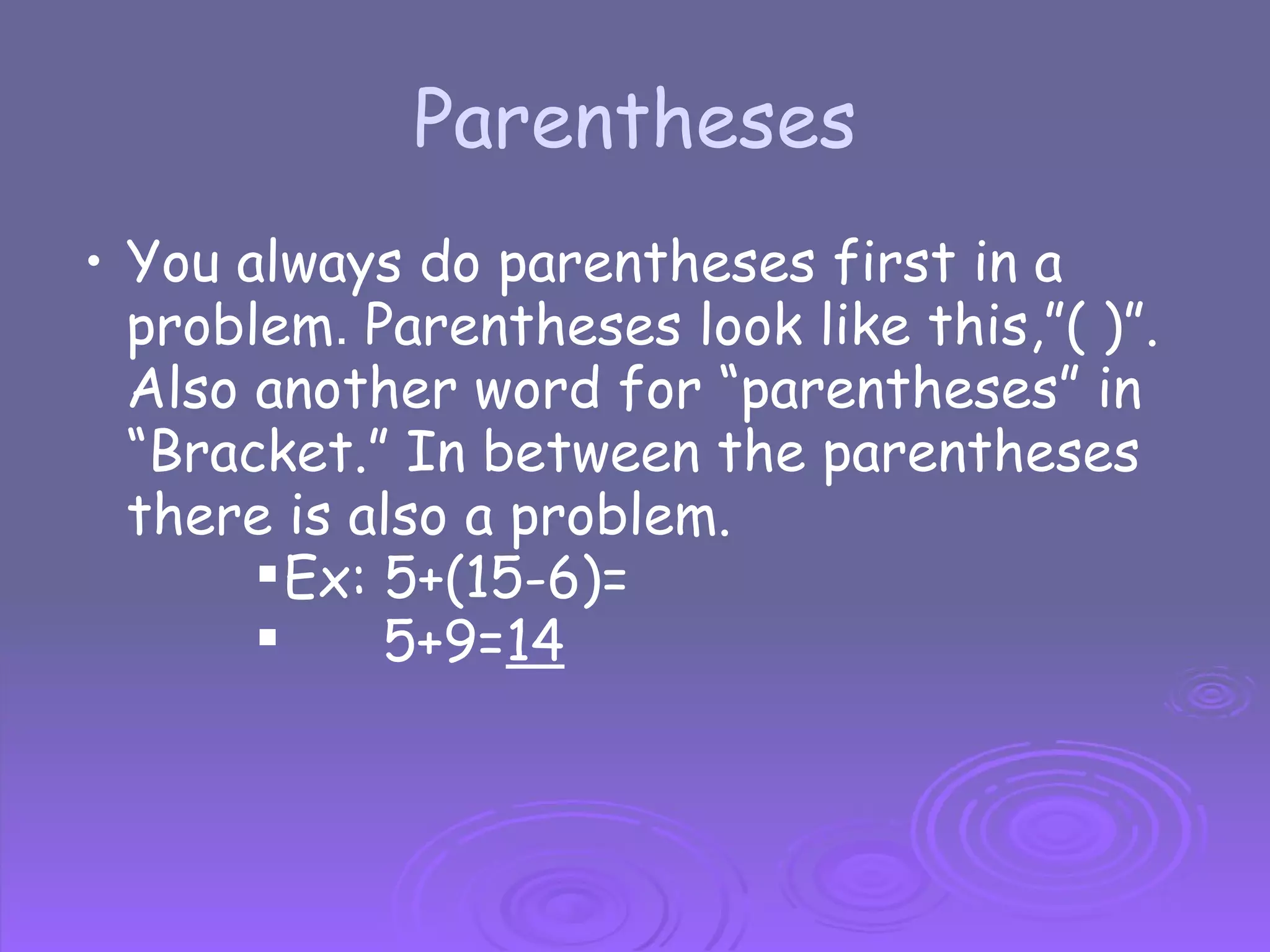
Parentheses You always do parentheses first in a problem .  Parentheses look like this,”( )”. Also another word for “parentheses” in “Bracket.” In between the parentheses there is also a problem. Ex: 5+(15-6)=         5+9= 14
Exponents Exponents are always the second in a problem.   It looks like a regular sized number with a smaller number at the top of it slightly to the right. That means you have to multiply the large number by the smaller number that amount of times.
Multiply Next you do the multiplication. The multiplication sign looks like this: x. You multiply the two numbers that are next to eachother. Ex: 5x5=25
Division Next is the division. The division sign looks like this: / or a line with   two dots above and below the line. It is easy to divide if you know your multiplication tables. Ex: 20/5=4
Addition   Next is addition. Adding is very simple. The addition sign looks like this: +. All you really need to do is add the numbers shown to you in the problem you are doing.                                Ex: 20+20=40
Subtraction   Last thing you do is subtraction. The subtraction sign looks like this: -. It is basically the opposite of addition. This is also very easy.                      Ex: 7-5=2
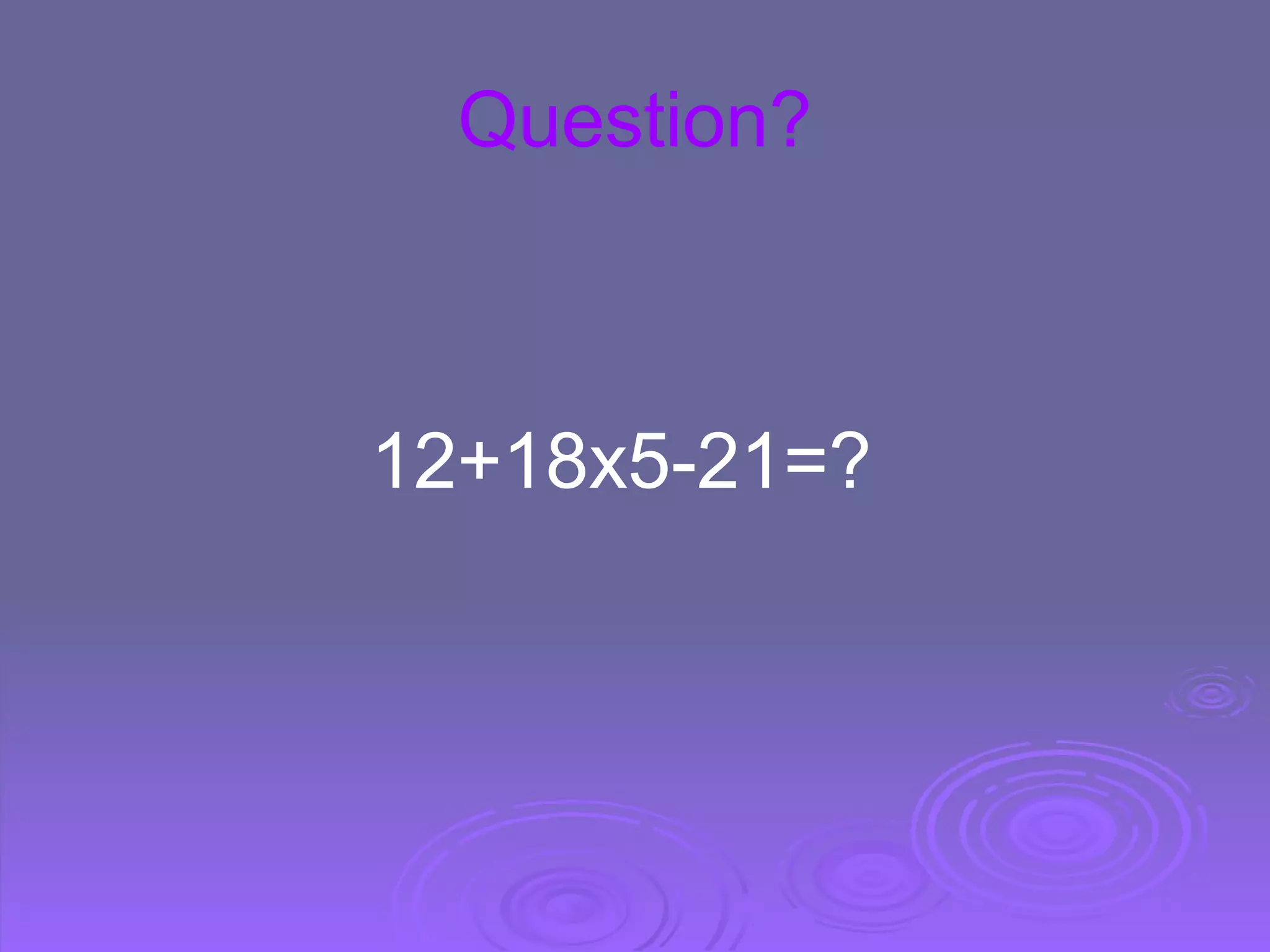
Question?                                 12+18x5-21=?  

Math Order odf Operations

  • 1.
    Order of OperationsBy: Lora Mauro Grade 7
  • 2.
    PEMDAS The word“PEMDAS” stands for parentheses, exponents, multiplication, division, addition and subtraction. This tells how work out the problem in order. This is called Order of Operations.” One way to remember PEMDAS is, People Enjoy Making Dinner and Salad.
  • 3.
    Parentheses You alwaysdo parentheses first in a problem . Parentheses look like this,”( )”. Also another word for “parentheses” in “Bracket.” In between the parentheses there is also a problem. Ex: 5+(15-6)=        5+9= 14
  • 4.
    Exponents Exponents arealways the second in a problem. It looks like a regular sized number with a smaller number at the top of it slightly to the right. That means you have to multiply the large number by the smaller number that amount of times.
  • 5.
    Multiply Next youdo the multiplication. The multiplication sign looks like this: x. You multiply the two numbers that are next to eachother. Ex: 5x5=25
  • 6.
    Division Next isthe division. The division sign looks like this: / or a line with two dots above and below the line. It is easy to divide if you know your multiplication tables. Ex: 20/5=4
  • 7.
    Addition   Nextis addition. Adding is very simple. The addition sign looks like this: +. All you really need to do is add the numbers shown to you in the problem you are doing.                              Ex: 20+20=40
  • 8.
    Subtraction   Lastthing you do is subtraction. The subtraction sign looks like this: -. It is basically the opposite of addition. This is also very easy.                      Ex: 7-5=2
  • 9.
    Question?                                12+18x5-21=?