Multi-stakeholder Working: Lessons from the Frontline Richard Calland
Conceptual Understanding of MSIs Mode of Governance: ie a decision-making forum about the rules of the game for a particular issue MSIs comprise a process-orientated, joint approach to benchmarking, rule-making and implementation
Rules/Lores of the (MSI) Game True joint decision-making power of the participating actors may not be certain…but: Deeper legitimacy for the role of non-state actors at the negotiation table Therefore, MSIs are a step beyond “mere” consultation: NGO stakeholders are active role-players -  they are at the table and in the game
MSI Typology* Purpose Drivers & Motive Status & Composition Arena of Intervention *This Typology is drawn from the work of Lucy Koechlin of the Basel Institute of Governance – with whom I am collaborating on a book chapter on MSIs.
Purpose Dialogue/forum Institution-building Rule-Setting Rule Implementation Rule Monitoring
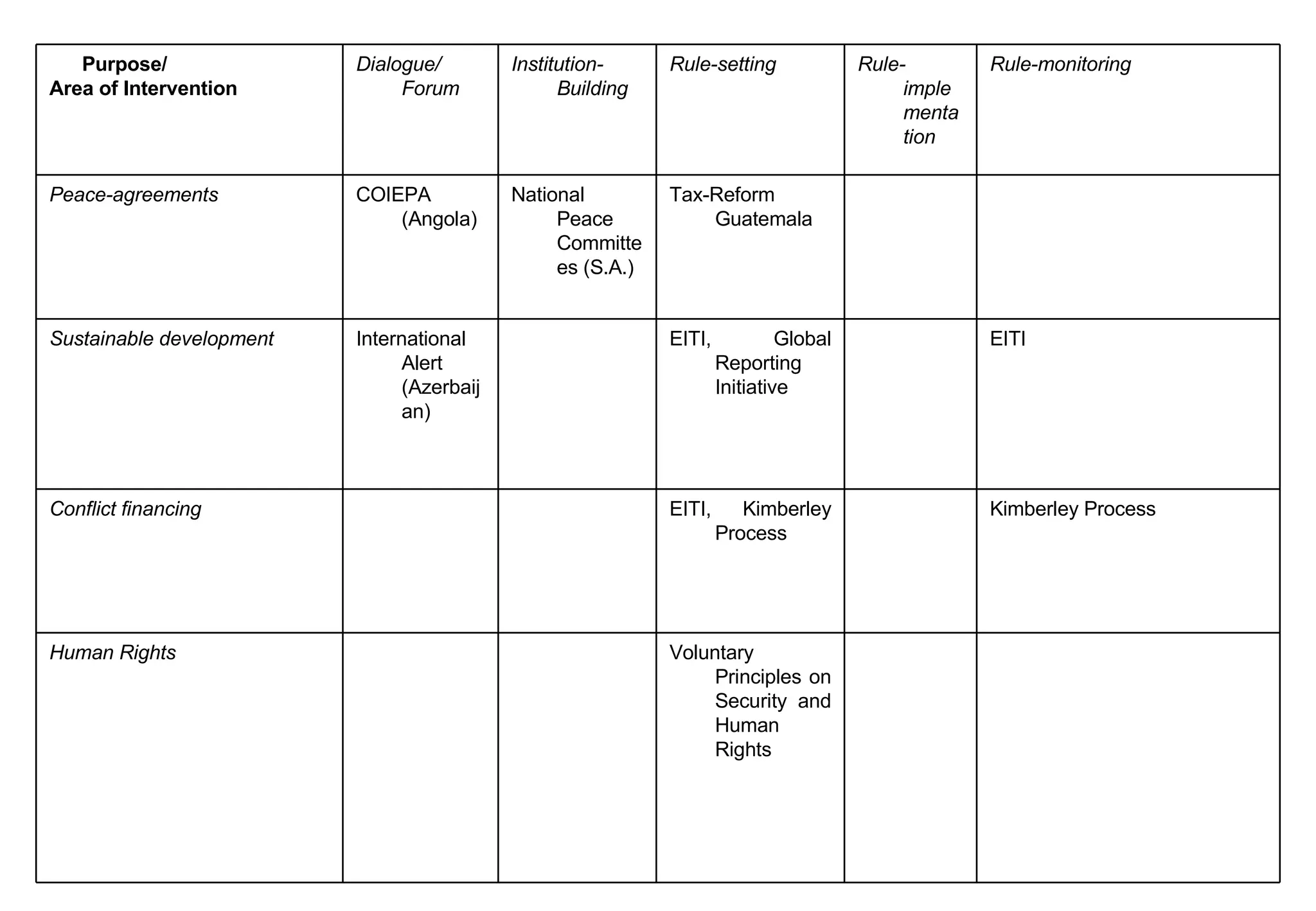
Purpose/ Area of Intervention Dialogue/ Forum Institution-Building Rule-setting Rule-implementation Rule-monitoring Peace-agreements COIEPA (Angola) National Peace Committees (S.A.) Tax-Reform Guatemala Sustainable development  International Alert (Azerbaijan) EITI, Global Reporting Initiative EITI Conflict financing EITI, Kimberley Process Kimberley Process Human Rights Voluntary Principles on Security and Human Rights
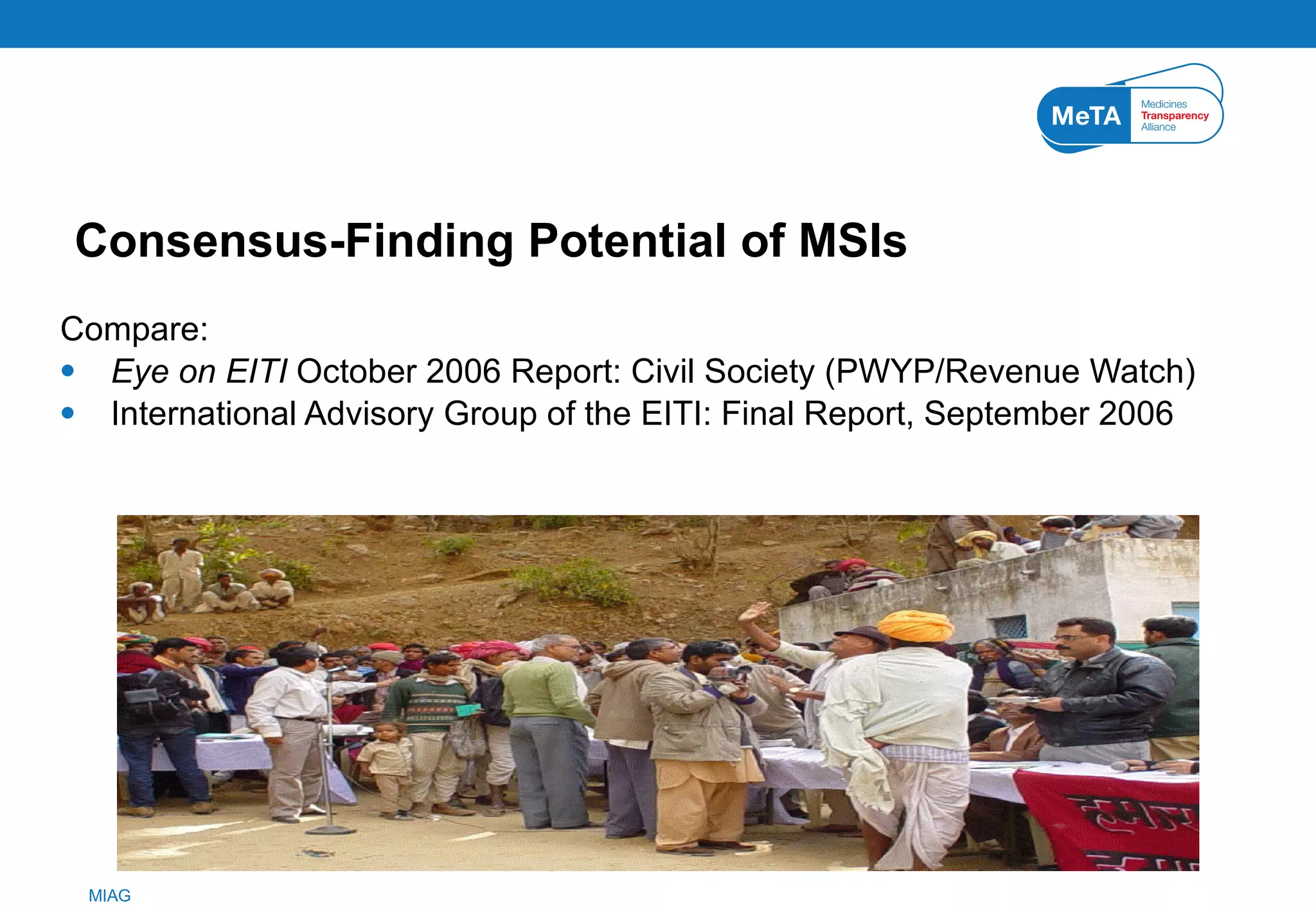
Consensus-Finding Potential of MSIs Compare:  Eye on EITI  October 2006 Report : Civil Society (PWYP/Revenue Watch) International Advisory Group of the EITI: Final Report, September 2006
… large degree of consensus: Real Implementation by Governments Validation by Companies (including disaggregation) Need to deepen the multi-stakeholder approach Deepen the sub-national system
Main Differences/Concerns: Incentives  Cheating – ‘bogus’ representation by corporations and especially host governments Particular stakeholders being marginalised Self-selection of CSO participants Some evidence of harassment  Co-option…and: Funding/resources Uneven information base
It’s all about TRUST…
And POWER!
… OR GOOD, CONSISTENT PROCESS &  CLARITY ABOUT OBJECTIVES AND THE RULES OF THE GAME ?
Other Issues/Challenges Differences in language and culture (individual and institutional) Each set of stakeholders has to learn a new lexicon in relation to the other And, to ignore the “parrot on the shoulder” So as to get past previous, often deeply ingrained, prejudices…
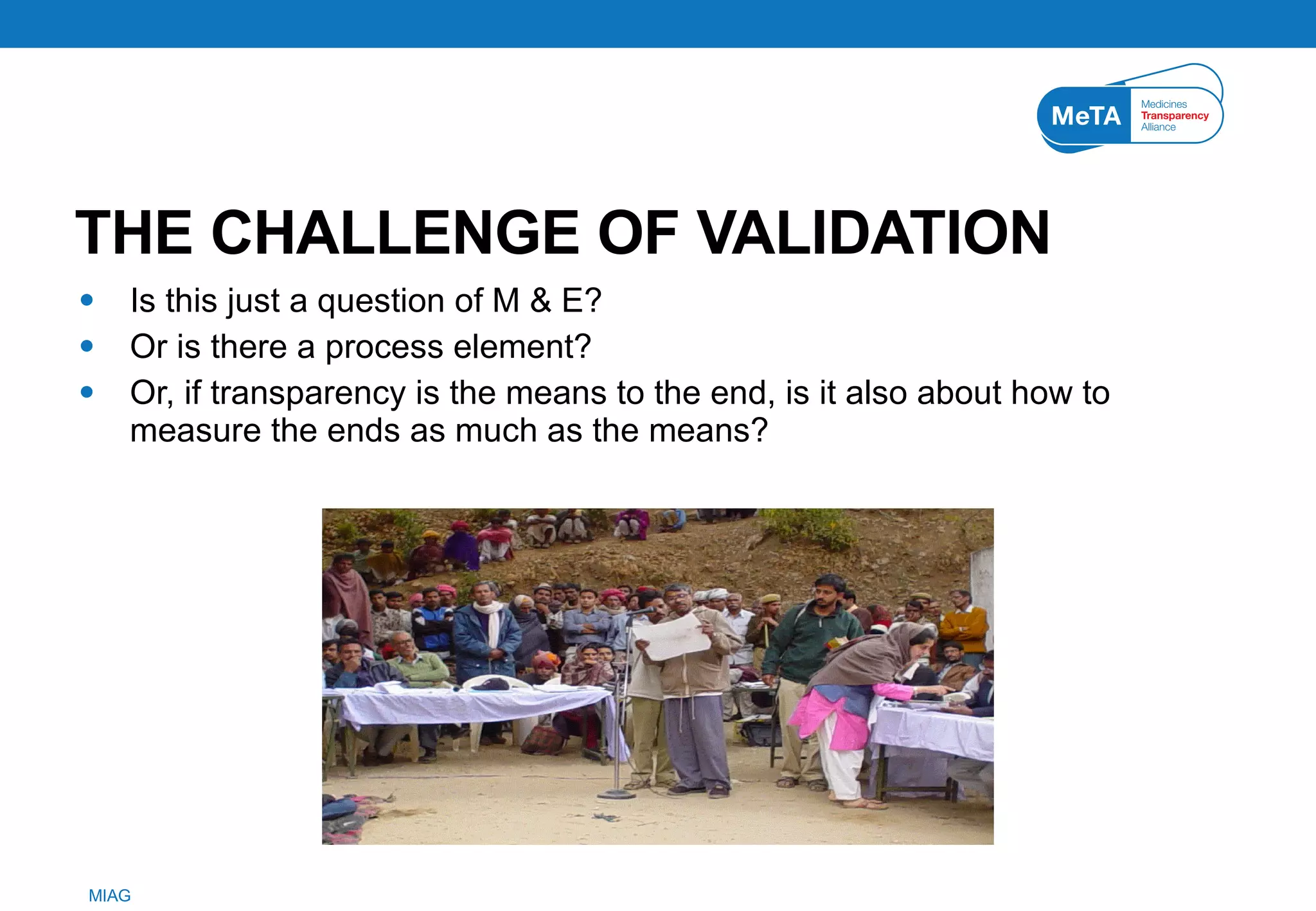
THE CHALLENGE OF VALIDATION Is this just a question of M & E?  Or is there a process element?  Or, if transparency is the means to the end, is it also about how to measure the ends as much as the means?

Multi-stakeholder working: lessons from the front line

  • 1.
    Multi-stakeholder Working: Lessonsfrom the Frontline Richard Calland
  • 2.
    Conceptual Understanding ofMSIs Mode of Governance: ie a decision-making forum about the rules of the game for a particular issue MSIs comprise a process-orientated, joint approach to benchmarking, rule-making and implementation
  • 3.
    Rules/Lores of the(MSI) Game True joint decision-making power of the participating actors may not be certain…but: Deeper legitimacy for the role of non-state actors at the negotiation table Therefore, MSIs are a step beyond “mere” consultation: NGO stakeholders are active role-players - they are at the table and in the game
  • 4.
    MSI Typology* PurposeDrivers & Motive Status & Composition Arena of Intervention *This Typology is drawn from the work of Lucy Koechlin of the Basel Institute of Governance – with whom I am collaborating on a book chapter on MSIs.
  • 5.
    Purpose Dialogue/forum Institution-buildingRule-Setting Rule Implementation Rule Monitoring
  • 6.
    Purpose/ Area ofIntervention Dialogue/ Forum Institution-Building Rule-setting Rule-implementation Rule-monitoring Peace-agreements COIEPA (Angola) National Peace Committees (S.A.) Tax-Reform Guatemala Sustainable development International Alert (Azerbaijan) EITI, Global Reporting Initiative EITI Conflict financing EITI, Kimberley Process Kimberley Process Human Rights Voluntary Principles on Security and Human Rights
  • 7.
    Consensus-Finding Potential ofMSIs Compare: Eye on EITI October 2006 Report : Civil Society (PWYP/Revenue Watch) International Advisory Group of the EITI: Final Report, September 2006
  • 8.
    … large degreeof consensus: Real Implementation by Governments Validation by Companies (including disaggregation) Need to deepen the multi-stakeholder approach Deepen the sub-national system
  • 9.
    Main Differences/Concerns: Incentives Cheating – ‘bogus’ representation by corporations and especially host governments Particular stakeholders being marginalised Self-selection of CSO participants Some evidence of harassment Co-option…and: Funding/resources Uneven information base
  • 10.
  • 11.
  • 12.
    … OR GOOD,CONSISTENT PROCESS & CLARITY ABOUT OBJECTIVES AND THE RULES OF THE GAME ?
  • 13.
    Other Issues/Challenges Differencesin language and culture (individual and institutional) Each set of stakeholders has to learn a new lexicon in relation to the other And, to ignore the “parrot on the shoulder” So as to get past previous, often deeply ingrained, prejudices…
  • 14.
    THE CHALLENGE OFVALIDATION Is this just a question of M & E? Or is there a process element? Or, if transparency is the means to the end, is it also about how to measure the ends as much as the means?