This document provides information about multiple choice tests:
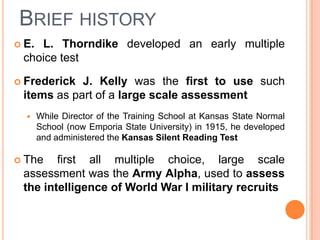
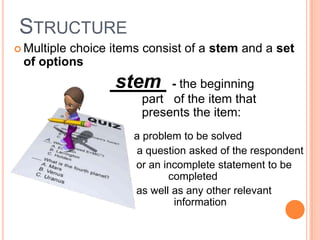
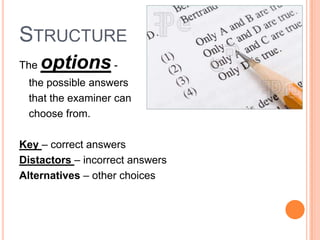
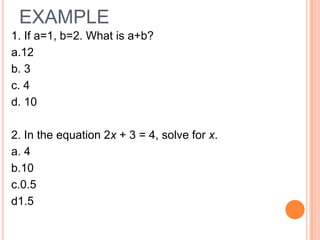
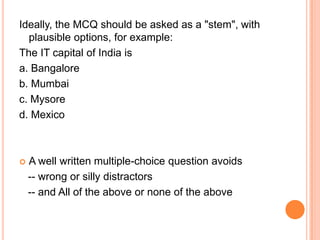
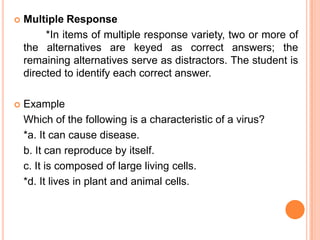
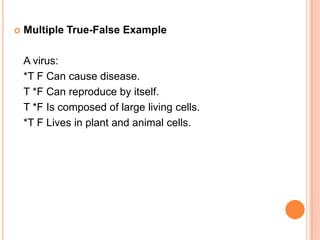
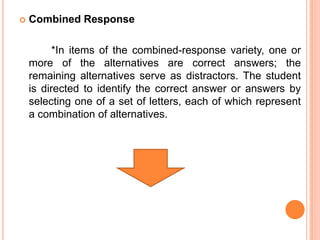
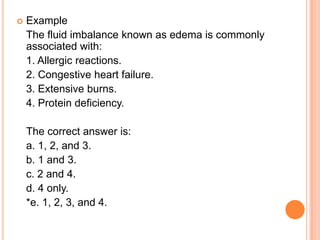
- Multiple choice tests consist of stems presenting a problem or incomplete statement, followed by a set of options from which the test taker must select the correct answer. They are commonly used for educational and other types of assessments.
- Advantages include the ability to test a wide range of material efficiently. Disadvantages are that they are best for testing lower-order thinking skills and may be ambiguous.
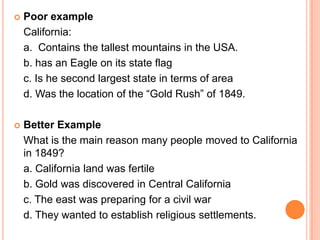
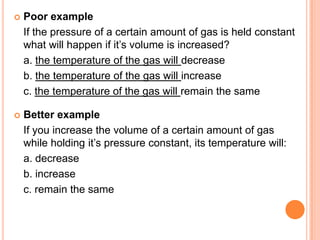
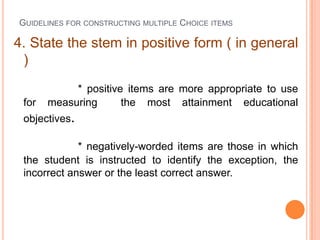
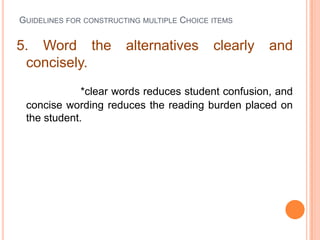
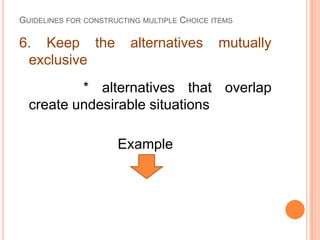
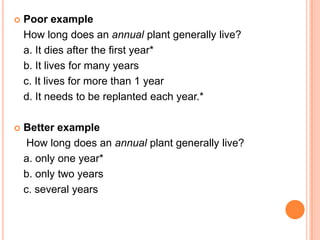
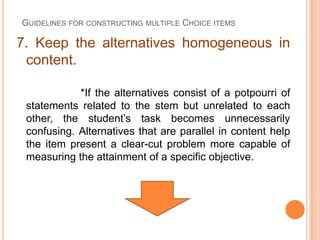
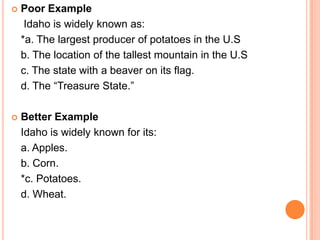
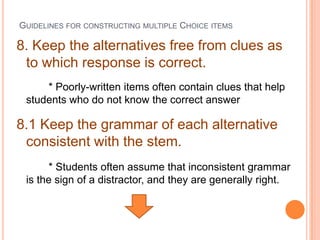
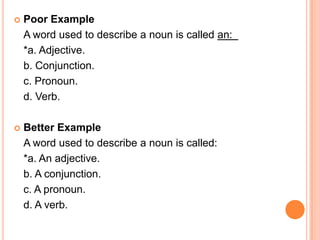
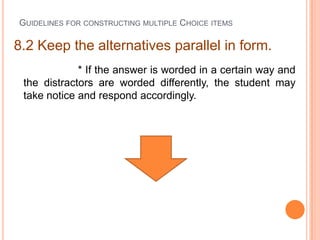
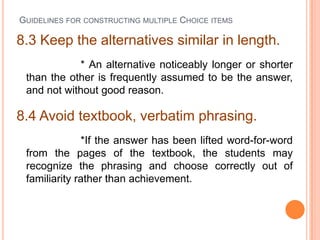
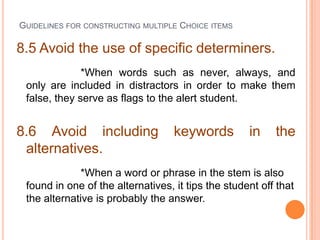
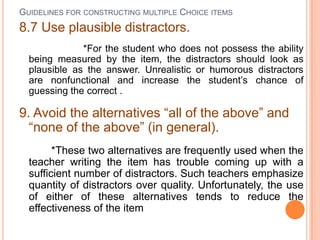
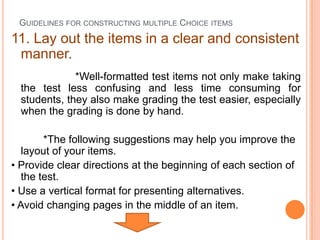
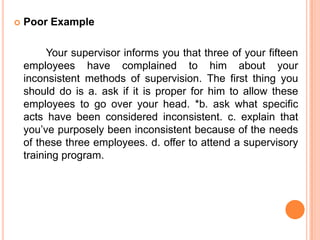
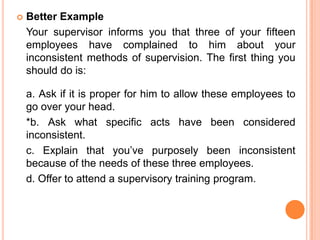
- Guidelines for constructing high-quality multiple choice questions include basing each item on a clear problem, including relevant information in the stem, stating stems positively, writing alternatives clearly and concisely, and making alternatives mutually exclusive.





![Ed103format3 complete summary.docx[1]](https://cdn.slidesharecdn.com/ss_thumbnails/ed103format3-completesummary-160311174209-thumbnail.jpg?width=640&height=640&fit=bounds)


