Lincoln Technical Institute Corporate officers:
 Dr. Benson, Vice President of Education
 Mr. Braxton, System Administrator
Lincoln Technical Institute Philadelphia Campus
 Dr. Stranix, Executive Director
 Mr. DiNicola, Academic Dean
 Mr. Martin, System Administrator
 The Need:
Solution Findings Lead Thinker
Commercialization
The solution to blogging in our school could
be enhanced if we installed Web 2.0.
The problem was
bridging the gap that
exists between theory
and practice in
the field of Web 2.0,
The intended
audience were
people who used
the World Wide
Web.
Robert Cailliau, Jean-François Abramatic and Tim
Berners-Lee at the 10th anniversary of the WWW
Consortium.
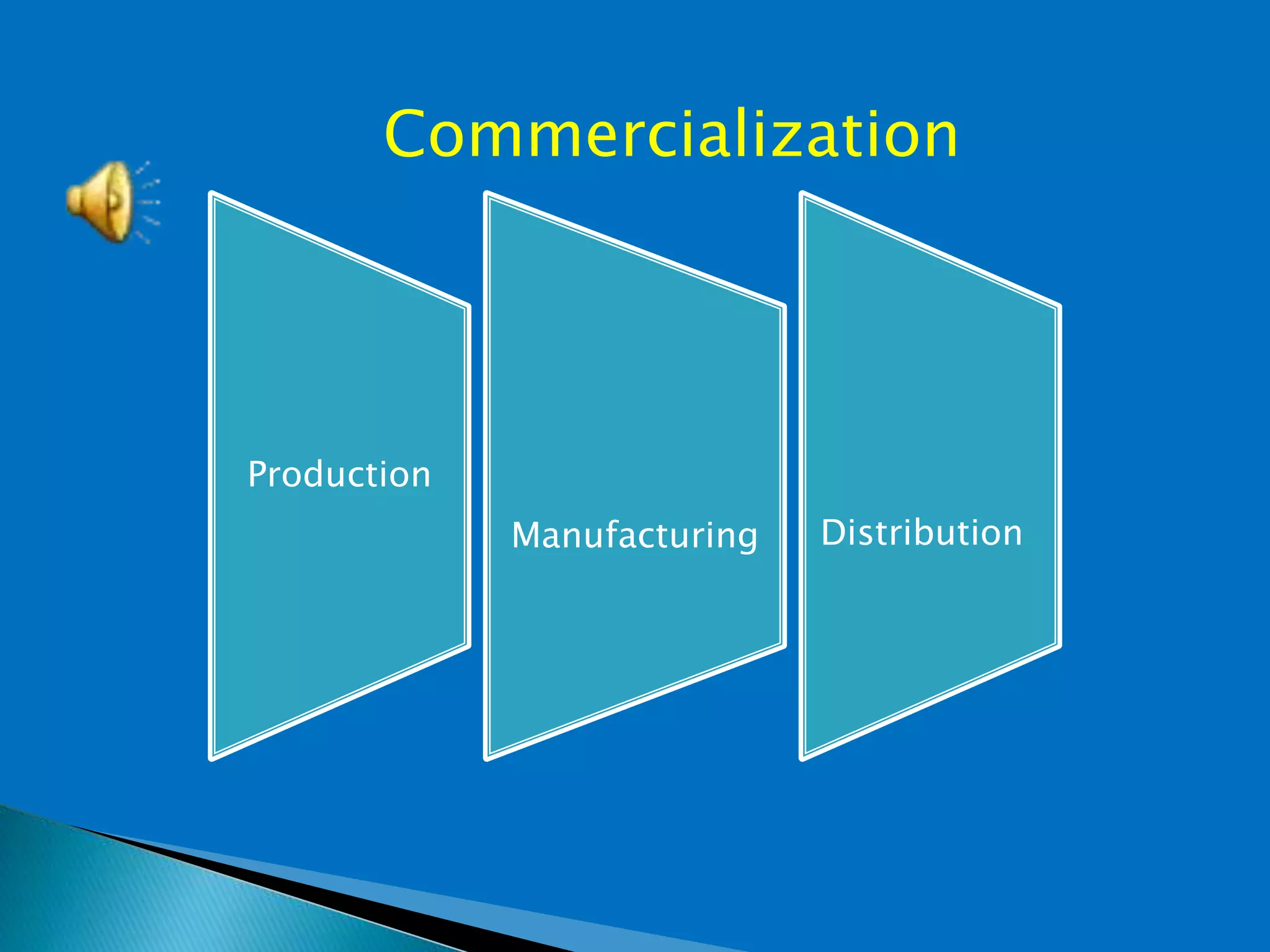
Commercialization
Production
Manufacturing Distribution
Time Line
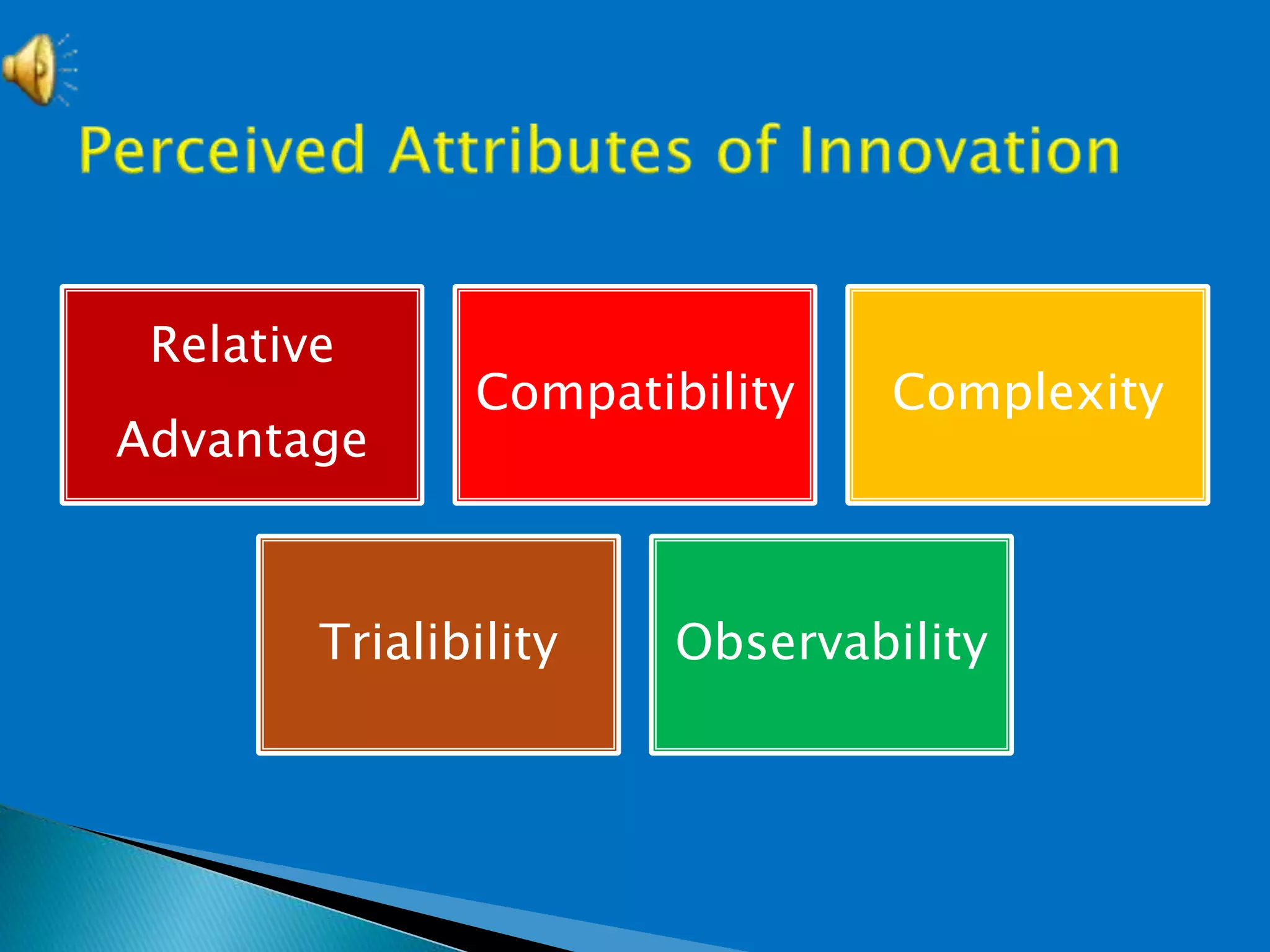
Relative
Advantage
Compatibility Complexity
Trialibility Observability
 The Urgent Need for Companies to Adapt to
Web 2.0
 Change Agents
Dr. Stranix, our Executive Director
of the Lincoln Technical Institute’s
Philadelphia Campus, is a positive change
agent. He is an educator, a graduate from
Walden University and understands the need
for social change.
Mr. DiNicola, the Academic Dean,
has also demonstrated support for
upgrading curricula and insuring that our
students receives the best education
possible. He has commented on the
enthusiasm he sees on a daily basis
whenever the students are blogging.
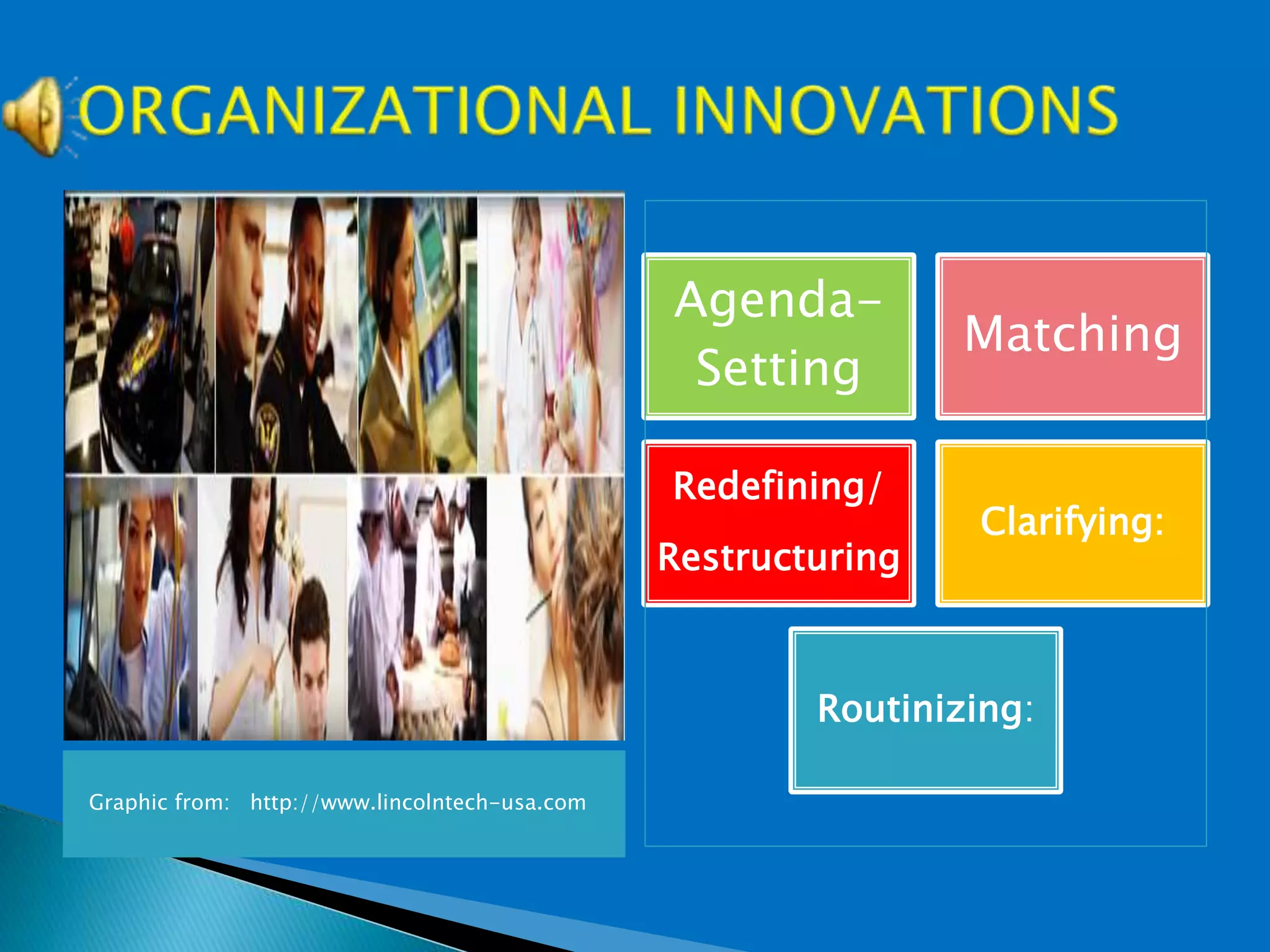
Graphic from: http://www.lincolntech-usa.com
Agenda-
Setting
Matching
Redefining/
Restructuring
Clarifying:
Routinizing:
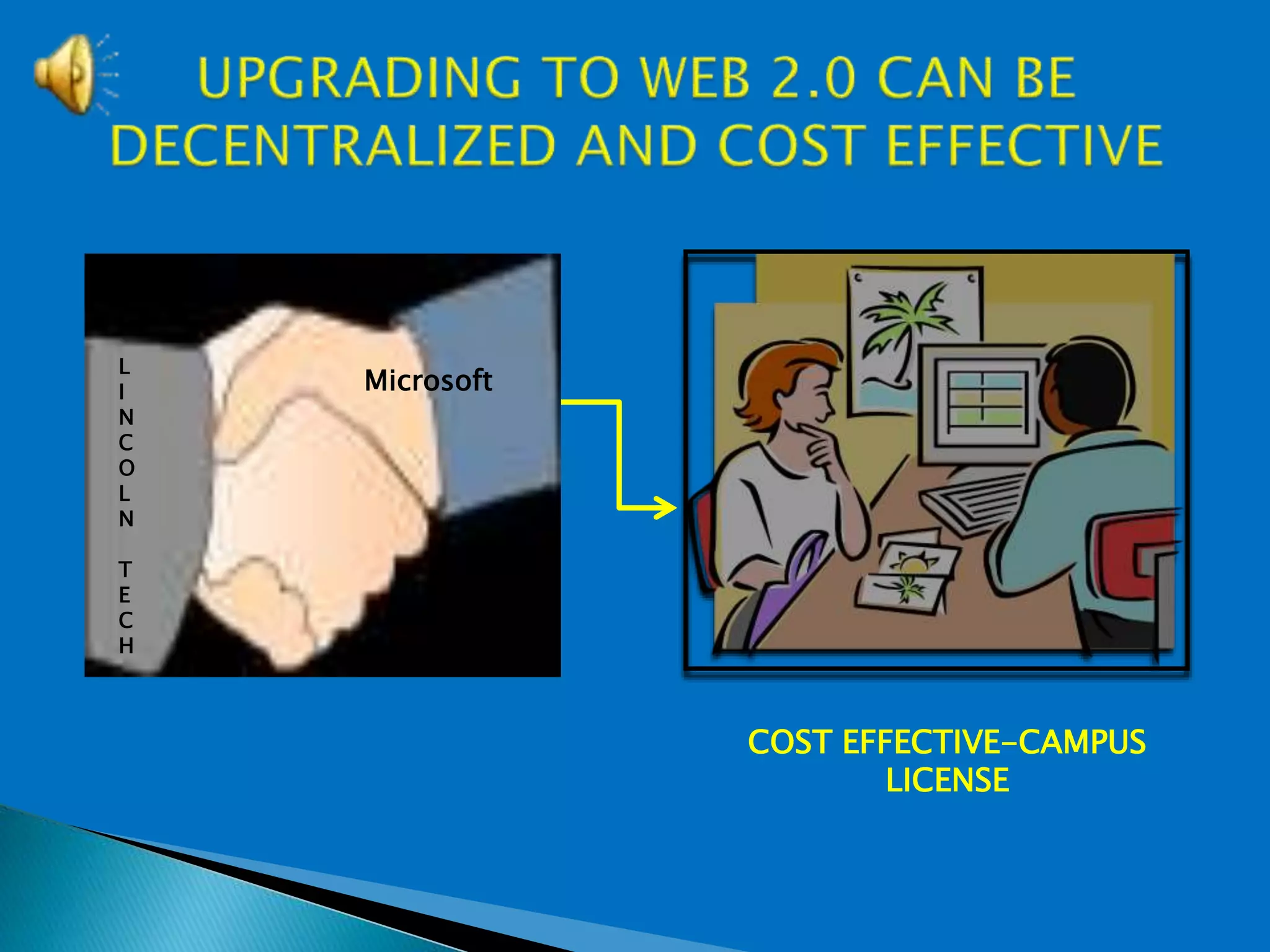
L
I
N
C
O
L
N
T
E
C
H
Microsoft
COST EFFECTIVE-CAMPUS
LICENSE
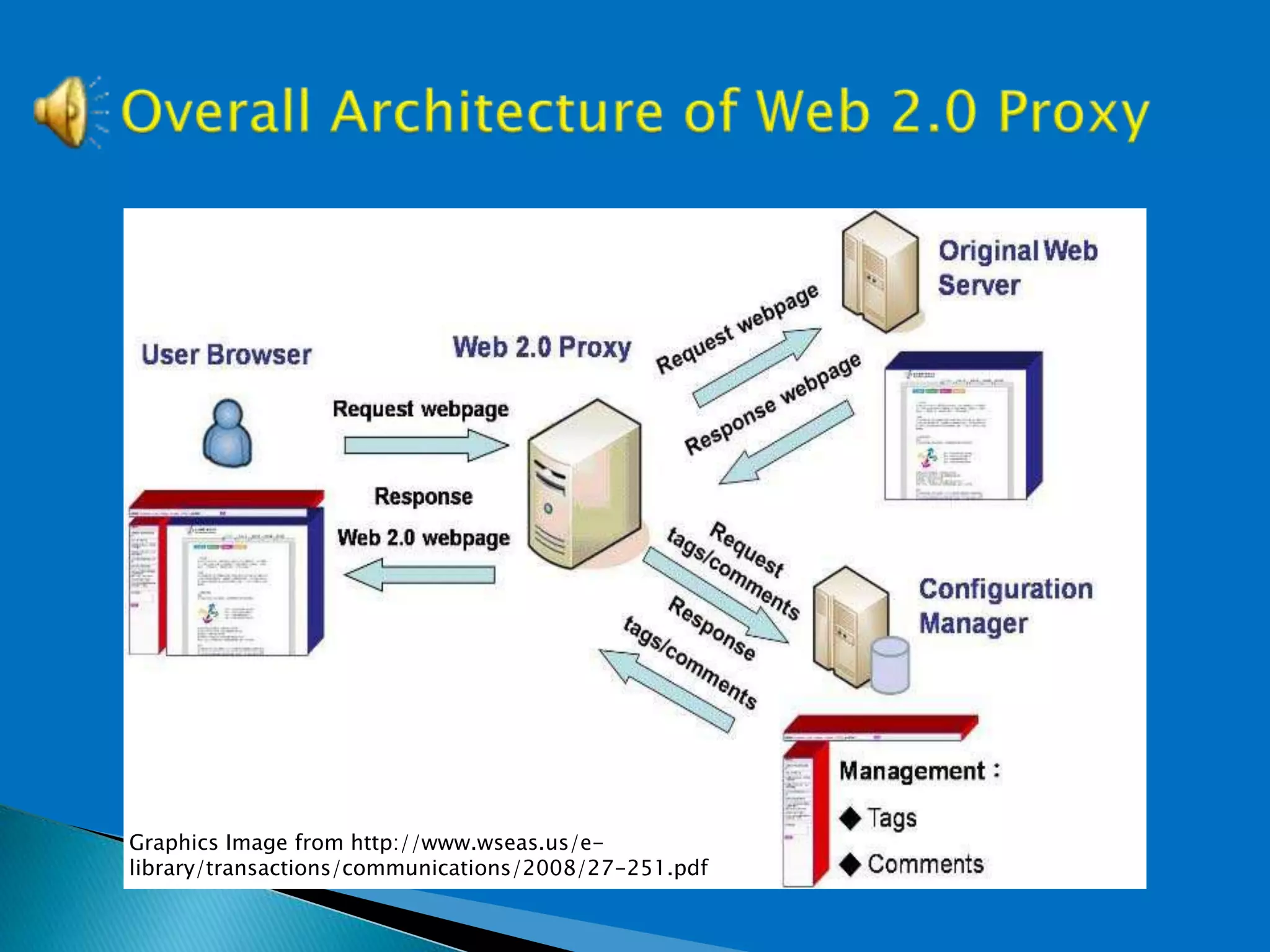
Graphics Image from http://www.wseas.us/e-
library/transactions/communications/2008/27-251.pdf
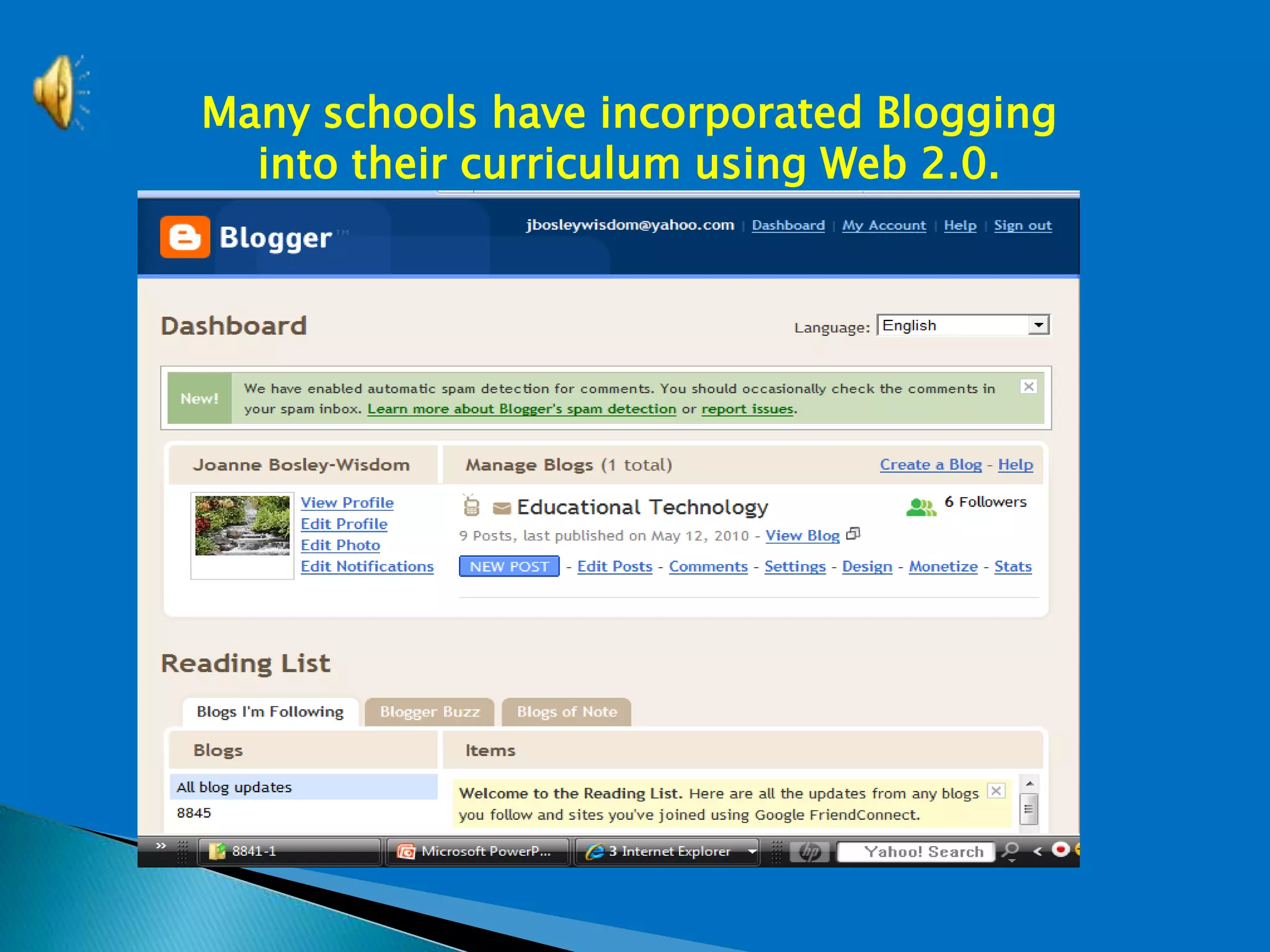
Many schools have incorporated Blogging
into their curriculum using Web 2.0.
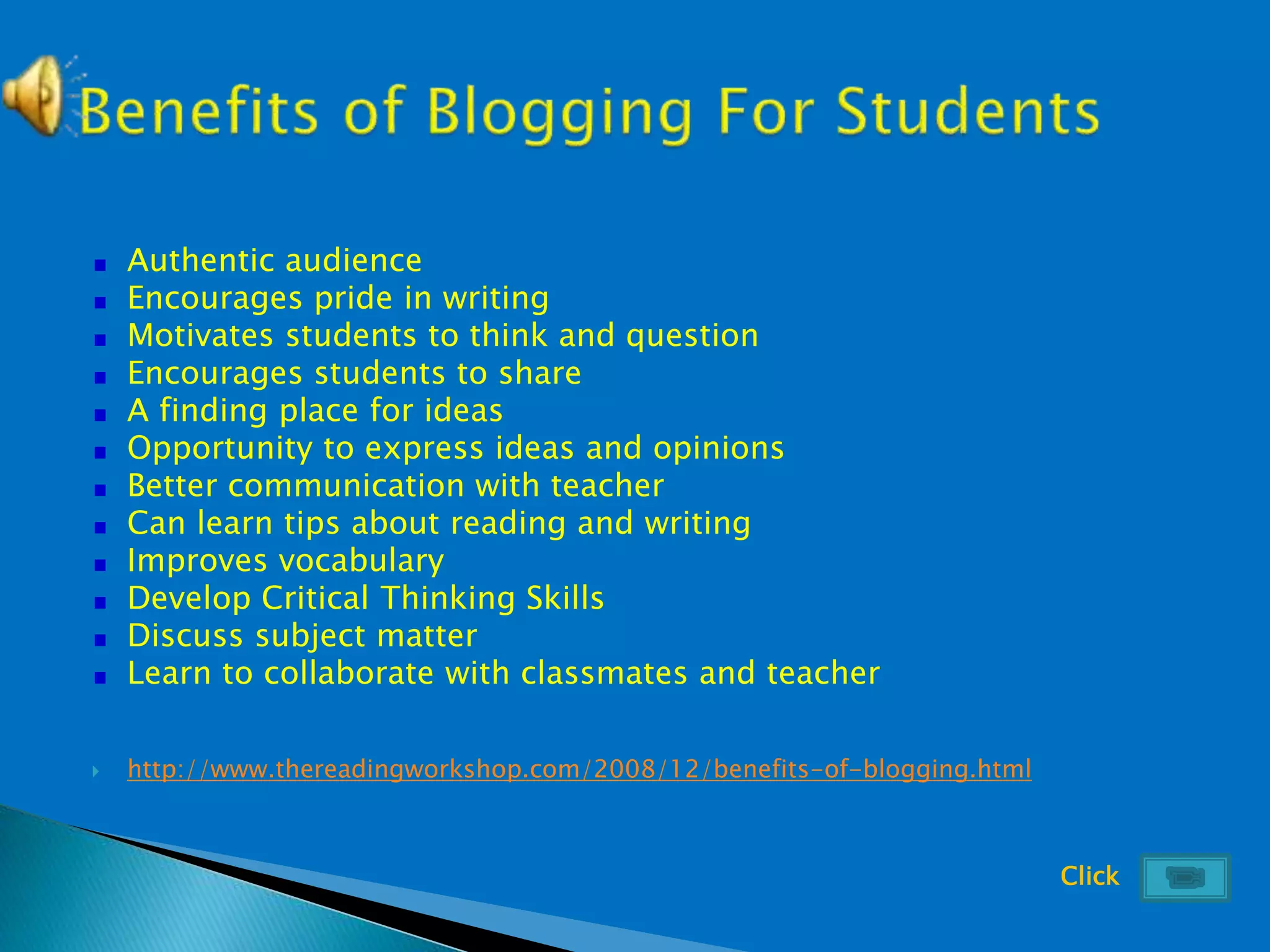
Authentic audience
Encourages pride in writing
Motivates students to think and question
Encourages students to share
A finding place for ideas
Opportunity to express ideas and opinions
Better communication with teacher
Can learn tips about reading and writing
Improves vocabulary
Develop Critical Thinking Skills
Discuss subject matter
Learn to collaborate with classmates and teacher
 http://www.thereadingworkshop.com/2008/12/benefits-of-blogging.html
Click
 Click to Play
http://www.youtube.com/v/7XMa91uf-so
WE HAVE COME TO THE END OF THE PRESENTATION
IF YOU HAVE ANY QUESTIONS, I WILL BE GLAD TO
ANSWER YOUR QUESTIONS
IF YOU WOULD LIKE A COPY OR TRANSCRIPT OF THIS
PRESENTATION, PLEASE LEAVE ME YOUR E-MAIL
ADDRESS, AND I WILL BE HAPPY TO SEND IT TO YOU
THANK YOU FOR COMING AND PLEASE ENJOY THE
LUNCHEON WE HAVE SET UP FOR YOU
HAVE A NICE DAY.
Joanne.wisdom@waldenu.edu

Multimedia presentation week 11 final assignment

Editor's Notes

  • #2 My presentation today will reflect the need for Web 2.O so that our students can blog effectively. It outlines the: Innovation –Development Process of Web 2.0. What problem or need exist Research and development Commercialization and diffusion & adoption Innovation—Decision Process. Adopter Categories and the S-Curve. Perceived Attributes of Innovation. Critical Mass and Change Agents. Organizational Innovations. The Benefits of Blogging
  • #3 As you know, our school is dedicated to educating and training students to achieve proficiency through a skills first curriculum. The mission of our school is to offer the best educational and training programs to enable graduates to take to the marketplace the highest possible level of job knowledge and skills enabling them to accomplish worthwhile career goals and realize self-esteem. To accomplish these objectives, Lincoln Technical Institute upholds a high standard of quality service and commitment (Lincoln Technical Institute, 2008, p. 5) As a technology expert, it is evident that technology, especially the Internet and the World Wide Web plays a crucial role in the educational aspiration of our students. The Internet and the World Wide Web also plays a profound role in the employment marketplace. Educators are finding that the Internet and educational social networking must be embedded into students’ curriculum. As a champion of technology, the question becomes how do we utilize social networking as a collaborative and a constructive tool to enhance our students learning process? Lincoln Technical Institute, (2008). Official School Catalog, 21, p 3-49.
  • #4 Blogging in our school could be enhanced if we installed Web 2.0. This tool would allow us to do social networking and enhance our students’ blogging ability. In my Administrative Office Procedure course, I have introduced my students to blogging. The objective was to get my students into collaborative learning. They are required to create a blog accounts, invite members, share course ideas, and upload websites pertaining to the subject.  Blog posting is a good way for our students to improve their grammar and writing skills. Blogging can be exciting and can include images, photos, links, video, audio, or simply text. The students seem to enjoy blogging. However, because we are using Web 1.0, the students are not able to successfully, collaborate, share, and post without irritating problems cause by Web 1.0.
  • #5 4
  • #6 Solution to the Problem: Adobe Flash - Adobe Flex - AIR & Microsoft Silverlight’s Web 2.0 Research Finding: During Kormanis & Spruit (2010) research, they encountered several analyses about Web 2.0, Social Computing and the technologies behind it. They also came across new developments in the area of Web 2.0 Technologies, such as the work of Mozilla Labs and the new services that were recently introduced by Google, Google Wave and the controversial Google Buzz. Lead Thinker: The term ‘Web 2.0’ was officially coined in 2004 by Dale Dougherty, a vice-president of O’Reilly Media Inc. (Kormanis & Spruit, 2010, p. 2). Kormanis, G. & Spruit, M. (2010). Bridging the gap between Web 2.0 technologies and social computing principles. Department of Information & Computer Sciences, Utrecht University. Retrieved, October 3, 2010 http://www.sites.google.com/a/spru.it/marco/files/ks2010ndt.pdf
  • #7 This research attempts to bridge the gap that exists between theory and practice in the field of Web 2.0, also referred to as Social Computing and the Internet services which are provided by the net (Kormanis & Spruit, 2010). Kormanis, G. & Spruit, M. (2010). Bridging the gap between Web 2.0 technologies and social computing principles. Department of Information & Computer Sciences, Utrecht University. Retrieved, October 3, 2010 http://www.sites.google.com/a/spru.it/marco/files/ks2010ndt.pdf
  • #8 Knowledge occurs when an individual is exposed to an innovation’s existence and gains an understanding of how it functions. Persuasion occurs when an individual forms a favorable attitude towards the innovation. Decision takes place when an individual engages in activities that lead to a choice to adopt the innovation. Implementation occurs when an individual puts a new idea into use. Confirmation takes place when an individual seeks reinforcement of an innovation-decision already made (Roger, 2003, p. 169). History of the World Wide Web - Wikipedia, the free encyclopedia http://en.wikipedia.org/wiki/History_of_the_World_Wide_Web Retrieved: October 6, 2010 Rogers, E. M. (2003). Diffusion of innovations (5th ed.). New York, NY: Free Press.
  • #9 Today, the Web and the Internet allow connectivity from literally everywhere on earth—even ships at sea and in outer space. History of the World Wide Web - Wikipedia, the free encyclopedia http://en.wikipedia.org/wiki/History_of_the_World_Wide_Web Retrieved: October 6, 2010
  • #10 Production, Manufacturing and Distributions: Adobe Flex is package for developing such applications and offers a separate IDE for developers to create their RIAs based on the Flash platform. AIR is another development of Adobe, which is a cross-operating system runtime that enables you to use your existing HTML/Ajax, Flex, or Flash web development skills and tools to build and deploy rich Internet applications to the desktop. Silverlight was developed by Microsoft and was officially released in 2007, as an alternative way to create multimedia applications for the web. It is “a cross-browser, cross-platform and cross-device browser plug-in that helps companies design, develop and deliver applications and experiences on the Web” (Kormanis & Spruit, 2010, p. 5). Kormanis, G. & Spruit, M. (2010). Bridging the gap between Web 2.0 technologies and social computing principles. Department of Information & Computer Sciences, Utrecht University. Retrieved, October 3, 2010 http://www.sites.google.com/a/spru.it/marco/files/ks2010ndt.pdf
  • #11 1980–1991: Development of the World Wide Web 1992–1995: Growth of the WWW Early browsers Web organization 1996–1998: Commercialization of the WWW 1999–2001: "Dot-com" boom and bust 2002–present: The Web becomes ubiquitous. History of the World Wide Web - Wikipedia, the free encyclopedia http://en.wikipedia.org/wiki/History_of_the_World_Wide_Web Retrieved: October 6, 2010
  • #12 Beginning in 2002, new ideas for sharing and exchanging content ad hoc, such as Weblogs and RSS, rapidly gained acceptance on the Web. This new model for information exchange, primarily featuring DIY user-edited and generated websites, was coined Web 2.0. The Web 2.0 boom saw many new service-oriented startups catering to a new, democratized Web. Some believe it will be followed by the full realization of a Semantic Web. This new era also begot social networking websites, such as MySpace and Facebook, which, though unpopular at first, very rapidly gained acceptance in becoming a major part of youth culture. History of the World Wide Web - Wikipedia, the free encyclopedia http://en.wikipedia.org/wiki/History_of_the_World_Wide_Web.com Retrieved: October 6, 2010
  • #13 Introduction of Web 2.0   Web 2.0 was introduced in 2004, it was realized that the Web was on the cusp of a new era, one that would finally let loose the power of network effects, setting off a surge of innovation and opportunity. To help usher in this new era, O’Reilly Media and CMP launched a conference that showcased the innovators who were driving it. When O’Reilly’s and Dale Dougherty came up with the term “Web 2.0” during a brainstorming session, they knew they had the name for the conference. What they didn’t know was that the industry would embrace the Web 2.0 meme and that it would come to represent the new Web (Mussler, 2006, p. 3).     Musser, J. (2006). Web 2.0 principles and best practices. O’Reilly Media Inc., p. 1-9. Retrieved Oct. 14, 2010, from   http://www.oreilly.com/catalog/web2report/chapter/web20_report_excerpt.pdf
  • #14 The real Web 2.0 opportunity is in the enterprise. The media is a wash these days with excitement about Web 2.0 and its potential to revolutionize consumers' online experiences. Indeed, Web technology has matured to the point that the cost of market entry, sales and marketing has declined substantially (Rangaswami, 2006, p. 1)   Rangaswami, M. R. (2006). Software’s dramatic revolution. New technologies, models and a thriving ecosystem will be critical to future industry success., p. 1. Retrieved Oct. 14, 2010, from http://www.sandhill.com/opinion/editorial.php?id=74 The real Web 2.0 opportunity is in the enterprise. The media is a wash these days with excitement about Web 2.0 and its potential to revolutionize consumers' online experiences. Indeed, Web technology has matured to the point that the cost of market entry, sales and marketing has declined substantially (Rangaswami, 2006, p. 1)   Rangaswami, M. R. (2006). Software’s dramatic revolution. New technologies, models and a thriving ecosystem will be critical to future industry success., p. 1. Retrieved Oct. 14, 2010, from http://www.sandhill.com/opinion/editorial.php?id=74
  • #15 Relative Advantage: Is the degree to which an innovation is perceived as better than the idea it supersedes.   Compatibility: Is the degree to which an innovation is perceived as consistent with the existing values, past experiences, and need s of potentials adopters.   Complexity: Is the degree to which an innovation is perceived as relatively difficult to understand and to use.   Trialabilty: Is the degree by which an innovation may be experimented with on a limited basis.   Observability: Is the degree to which the results of an innovation are visible to others.   Rogers, E.M. (2003). Diffusion of Innovations. New York, NY: Free Press.
  • #16 The Booz, Allen, and Hamilton research study done by, Eikelmann, Hajj, Hasbani, Marsch, Peterson, & Sabbagh (2007), entitled “The Urgent Need for Companies to Adapt to Web 2.0”; indicate that in the United States, 71 percent of users report that they frequently visit social media and found that Web 2.0 has already reached a critical mass (p. 5).   The Urgent Need for Companies to Adapt to Web 2.0     Eikelmann, S., Hajj J., Hasbani, G., Marsch, C., Peterson, M., & Sabbagh, K. (2007), The urgent need for companies to adapt to Web 2.0: New models of online consumer behavior demand changes in corporate strategy. Booz, Allen, and Hamilton, Inc. Retrieved October 28, 2010 from http://www.boozallen.com/.../The_Urgent_Need_for_Companies_to_Adapt_to_Web_2.0.pdf  
  • #17 The seven roles of a change agent in our organization can be utilized in the following ways (Roger, 2003, p.369-370): There is a need for change We have to establish an information exchange relationship We have to diagnose the problem We have to create an intent to change. We have to translate an intent into action To stabilize adoption and prevent discontinuance To achieve a terminal relationship Rogers, E. M. (2003). Diffusion of innovations (5th ed.). New York, NY: Free Press.
  • #18 Agenda-Setting: Our school problem is that many of our students are enrolled with basis learning deficits. Our educational need today is to be on the cutting edge of educational technology that will give our students a competitive edge in the employment marketplace (Roger, 2003, p.422). Matching: The upgrade to Web 2.0 as a new innovation can enable our students to blog and can be the technology innovation that helps to improve our students’ learning deficiencies, which translates into higher retention rate. As our students graduate with advance technology skills, this will enable them to accomplish rewarding career goals (Roger, 2003, p. 423). Redefining/Restructuring: The installation of Web 2.0 should be decentralized; our instructors will regard it as familiar and compatible, and hence find it easier to give meaning to this new innovation (Roger, 2003, p.424). Clarifying: As the instructors are encouraged to explore the many ways Web 2.0 enhances the Internet, and the benefits of our students being able to blog more efficiently; the reasons for the new innovation will become clearer to our instructors (Roger, 2003, p. 427). Routinizing: I recommend that instructors throughout our campus participate in professional development workshops where they can design and discuss ways to incorporate educational social networking that enhances their personalized curriculum. This will help the sustainability of using educational social networking, such as blogging, over time (Roger, 2003, p. 428). Rogers, E. M. (2003). Diffusion of Innovations, 5th Edition. Free Press, original edition.
  • #19 We can cut cost in the initial stages of adopting this new innovation by decentralization. We have a twenty years relationship with Microsoft. We use all Microsoft Server and Software Products. We could use a campus license with individual connections for students.
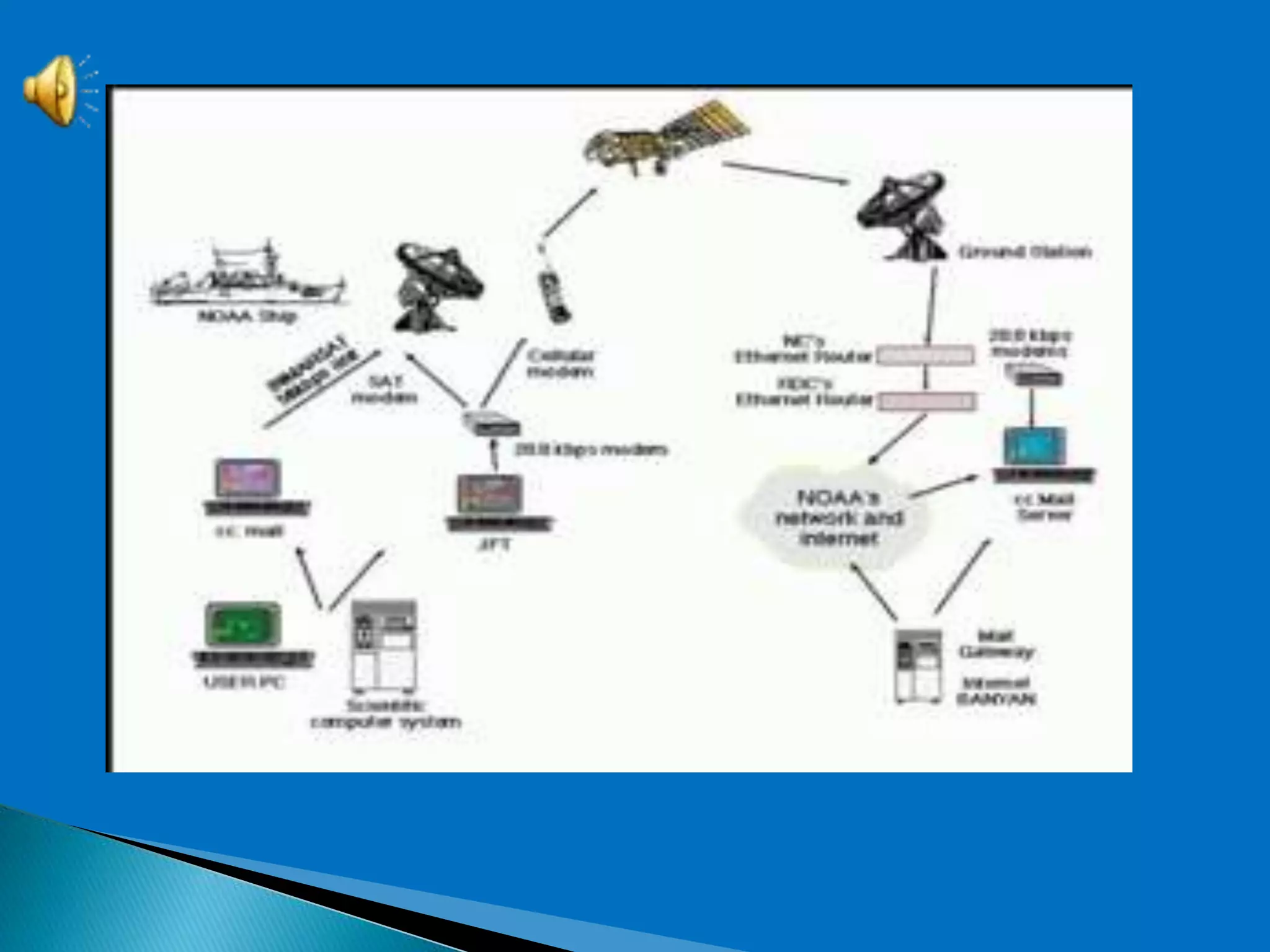
  • #20 While speaking with Mr. Martin, our school system administrator, he has informed me that an overall architecture for a Web 2.0 proxy would not be difficult to develop. Yung-Wei, K., Ming-Chih, H., Sheau-Ling, H., & Shyan-Ming, Y. (2008). Web 2.0 Proxy: Upgrading Websites from Web 1,.0 to Web 2.0. WSEAS TRANSACTIONS on COMMUNICATIONS, 7(5), 1-10. Retrieved Nov. 17, 2010, from http://www.wseas.us/e-library/transactions/communications/2008/27-251.pdf
  • #21 Most colleges, universities, proprietary schools and corporations have already in installed Web 2.0.
  • #22 Today’s students are utilizing Blogging, Twittering, and Wiki accounts in every aspect of their lives. The students in our school are all too familiar with these sites. As a champion of educational technology, I know it is in our best interest as a school to diffuse blogging using Web 2.0 into our curricula. This will aid in our students’ educational pursuit and secure a place for our graduates in today technology based marketplace.
  • #23 We all can be on the forefront of bringing the 21st century into Lincoln Technical Institute’s classrooms. http://www.thereadingworkshop.com/2008/12/benefits-of-blogging.html