A multimedia project for 8th-12th graders by:Naomi Vasquez-MontesThe Holocaust
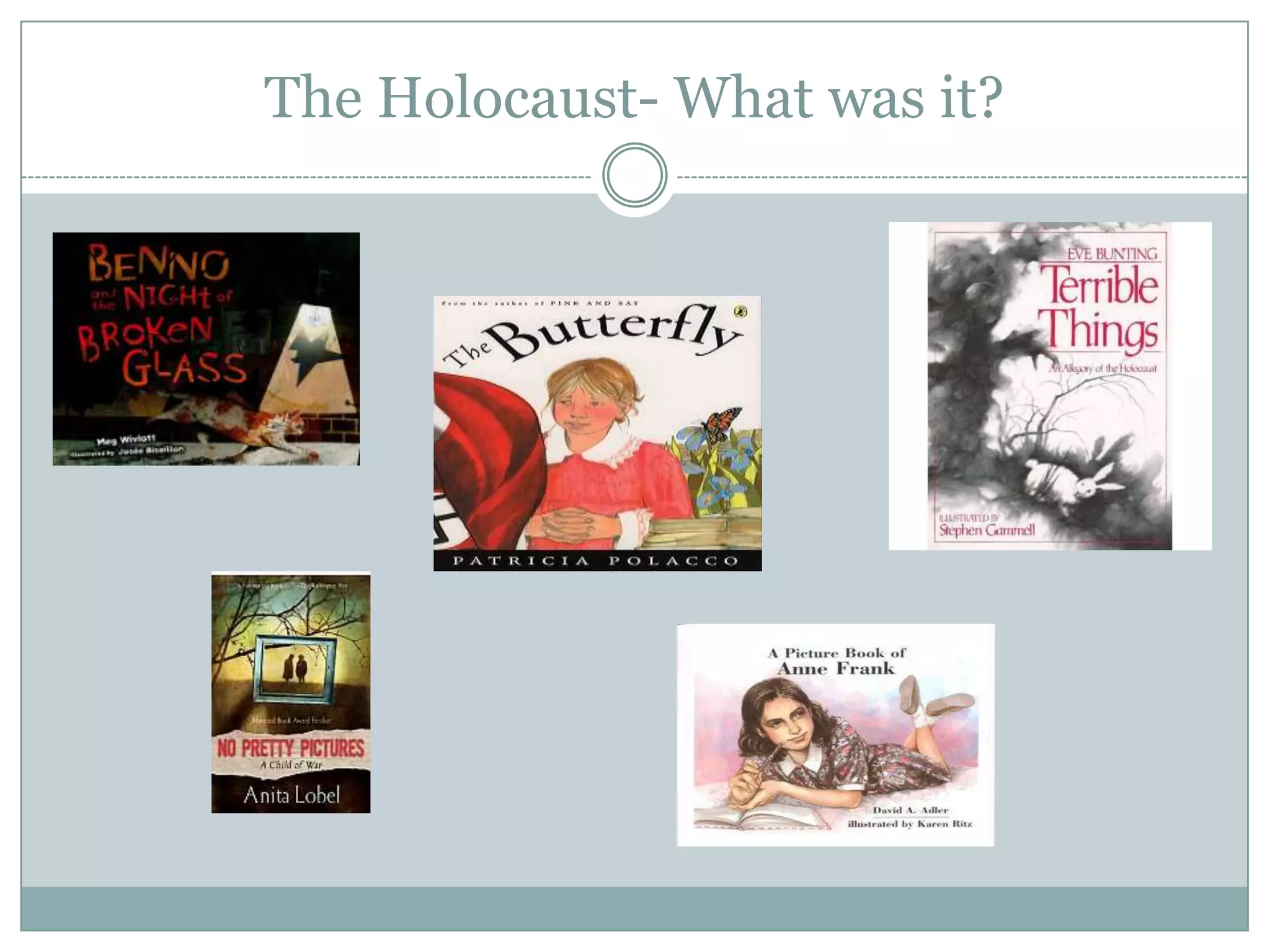
The Holocaust- What was it?
The HolocaustHow did it start? Let’s hear from one survivor:http://www.hopesite.ca/sympo/words.html
The HolocaustThe Holocaust was a period of time when six million Jews were systematically exterminated. They were not exterminated because of anything they had done, but because they became scapegoats for the German nation. Words began the propaganda that changed the lives of millions.  It all started with words.
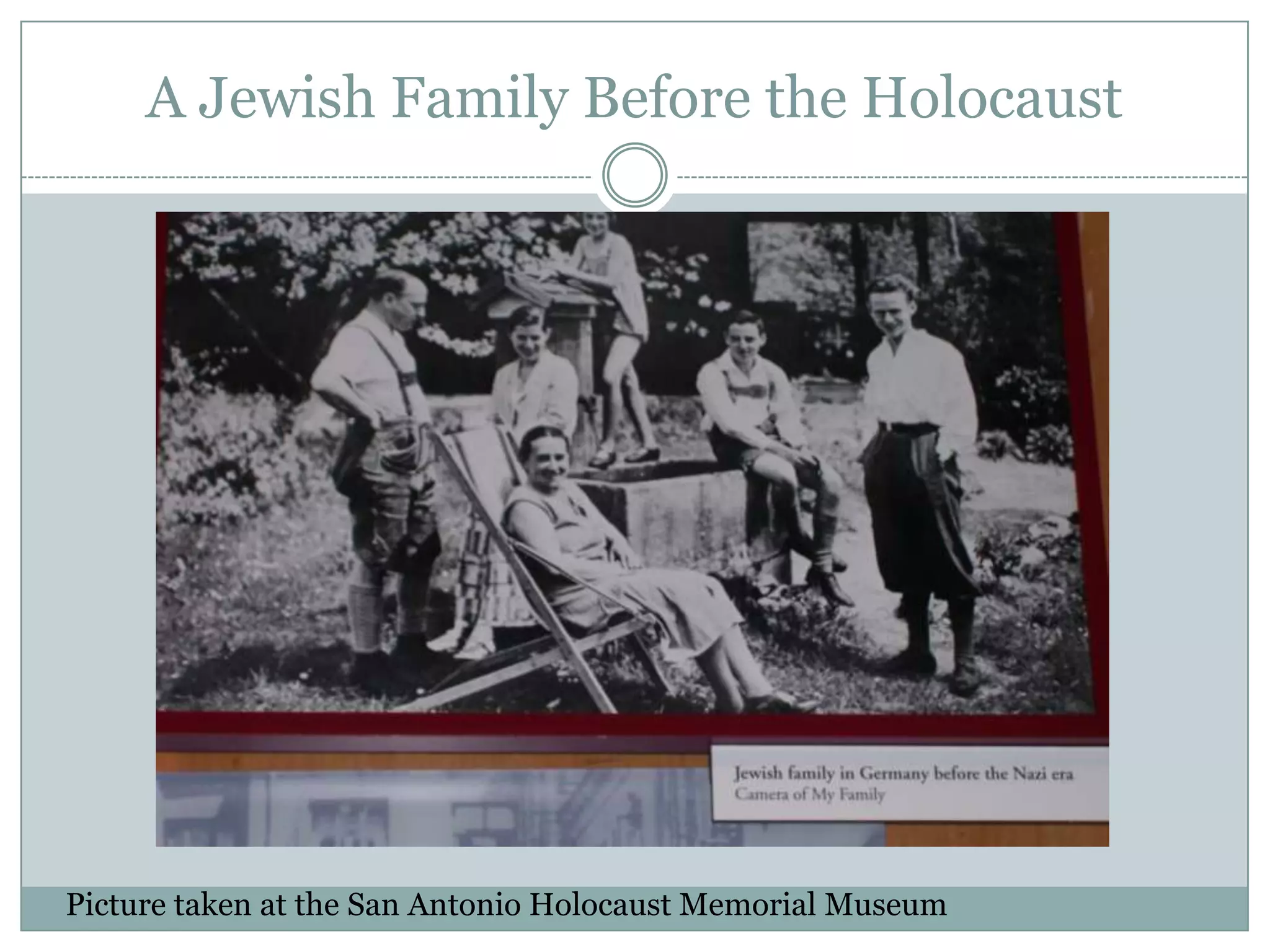
A Jewish Family Before the HolocaustPicture taken at the San Antonio Holocaust Memorial Museum
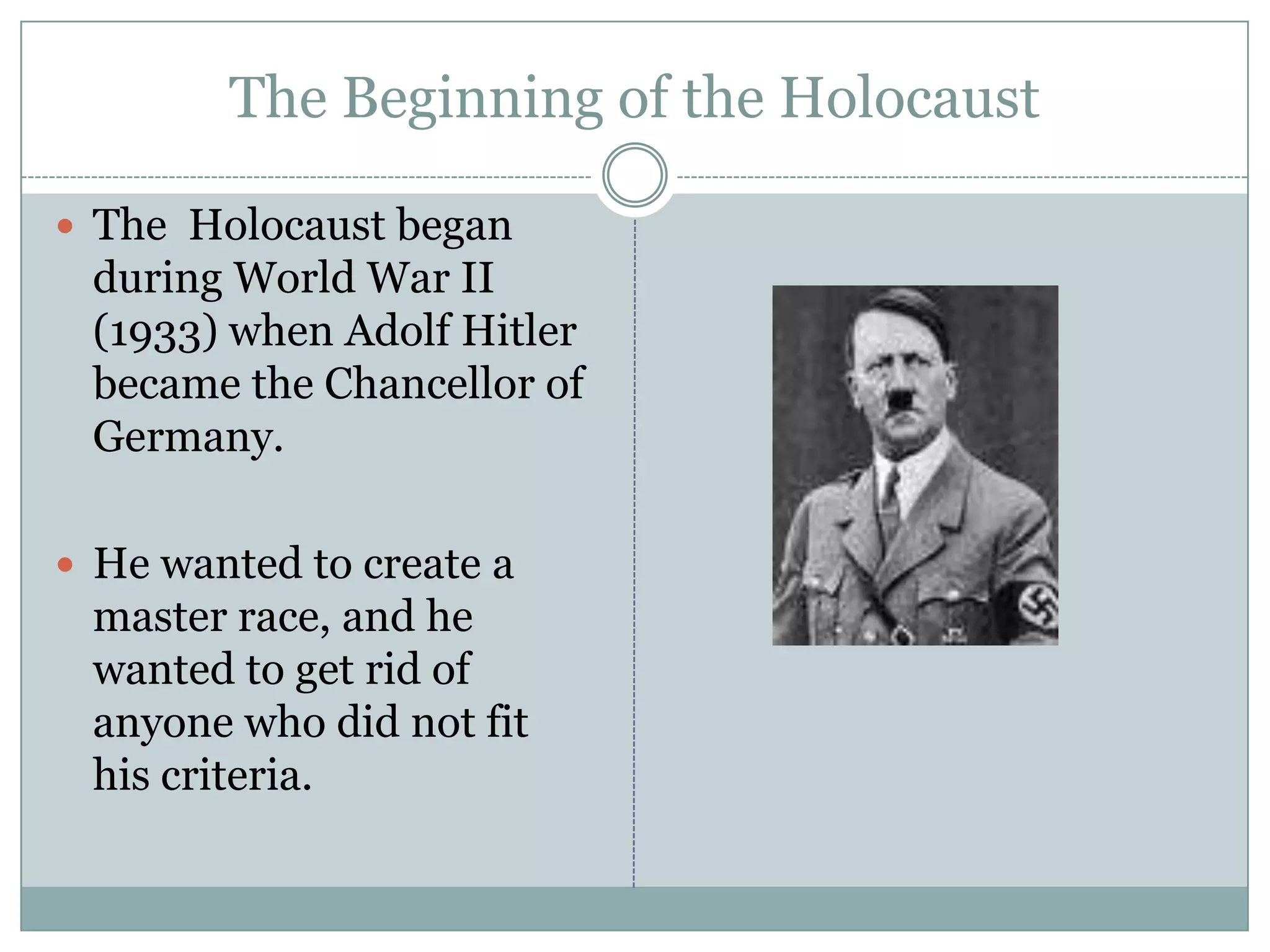
The Beginning of the Holocaust The  Holocaust began during World War II (1933) when Adolf Hitler became the Chancellor of Germany. He wanted to create a master race, and he wanted to get rid of anyone who did not fit his criteria.
A Master RaceGenocide- The systematic and planned extermination ofan entire national, racial, political, or ethnic group (American Heritage Dictionary).
The Beginning of the HolocaustHitler, a great orator,  had many loyal followers whoreadily joined the Nazi party to support his cause. Hereis a video clip of Hitler making a speech: http://www.youtube.com/watch?v=Vbduo4fHANAUsing words, not facts or data, Hitler convinced the Germans that the Jews were to blame for the deteriorating government, high unemployment rate, and general economic instability.
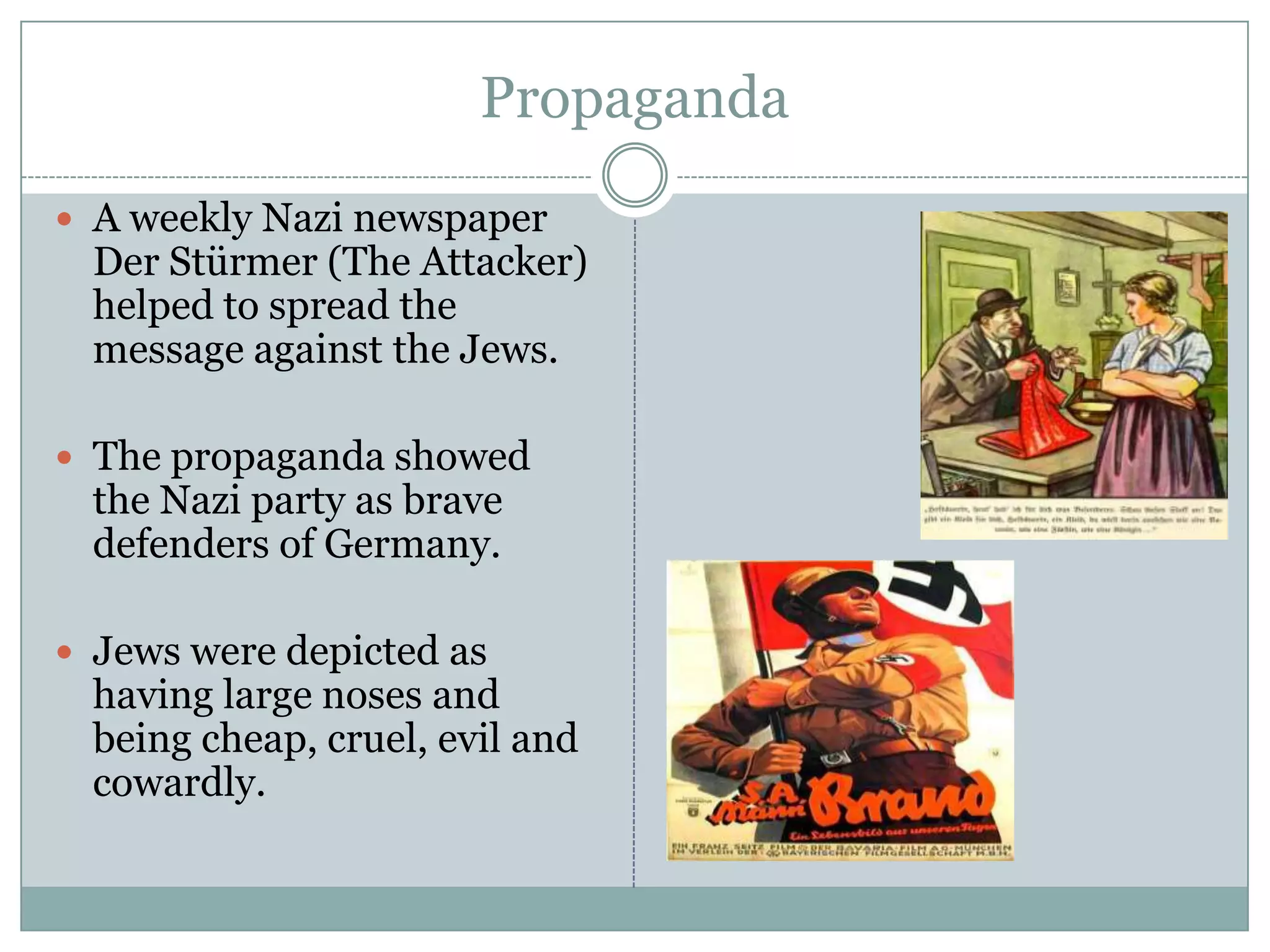
PropagandaA weekly Nazi newspaper DerStürmer (The Attacker) helped to spread the message against the Jews. The propaganda showed the Nazi party as brave defenders of Germany.Jews were depicted as having large noses and being cheap, cruel, evil and cowardly.
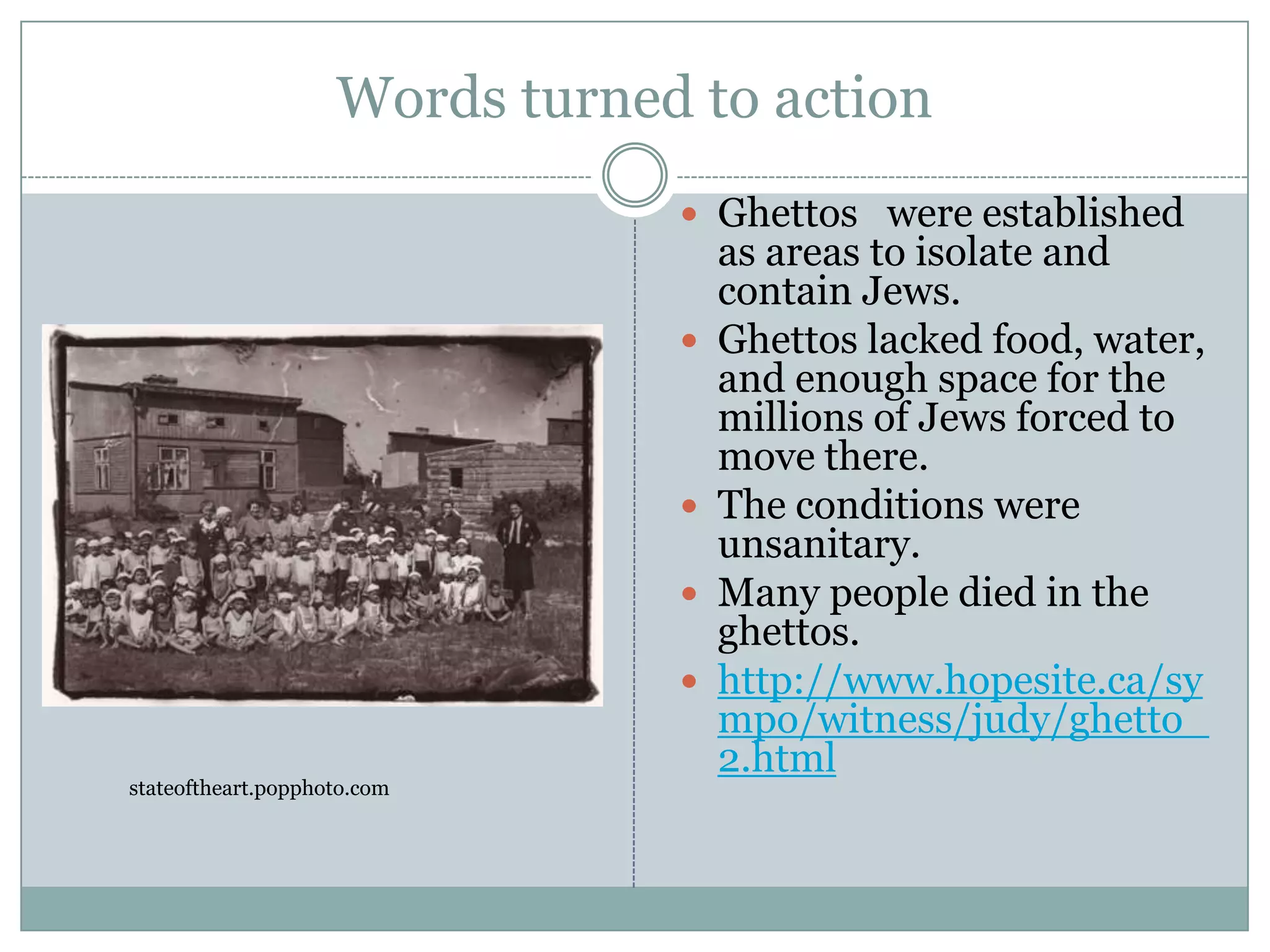
Words turned to actionGhettos   were established as areas to isolate and contain Jews. Ghettos lacked food, water, and enough space for the millions of Jews forced to move there. The conditions were unsanitary. Many people died in the ghettos.http://www.hopesite.ca/sympo/witness/judy/ghetto_2.htmlstateoftheart.popphoto.com
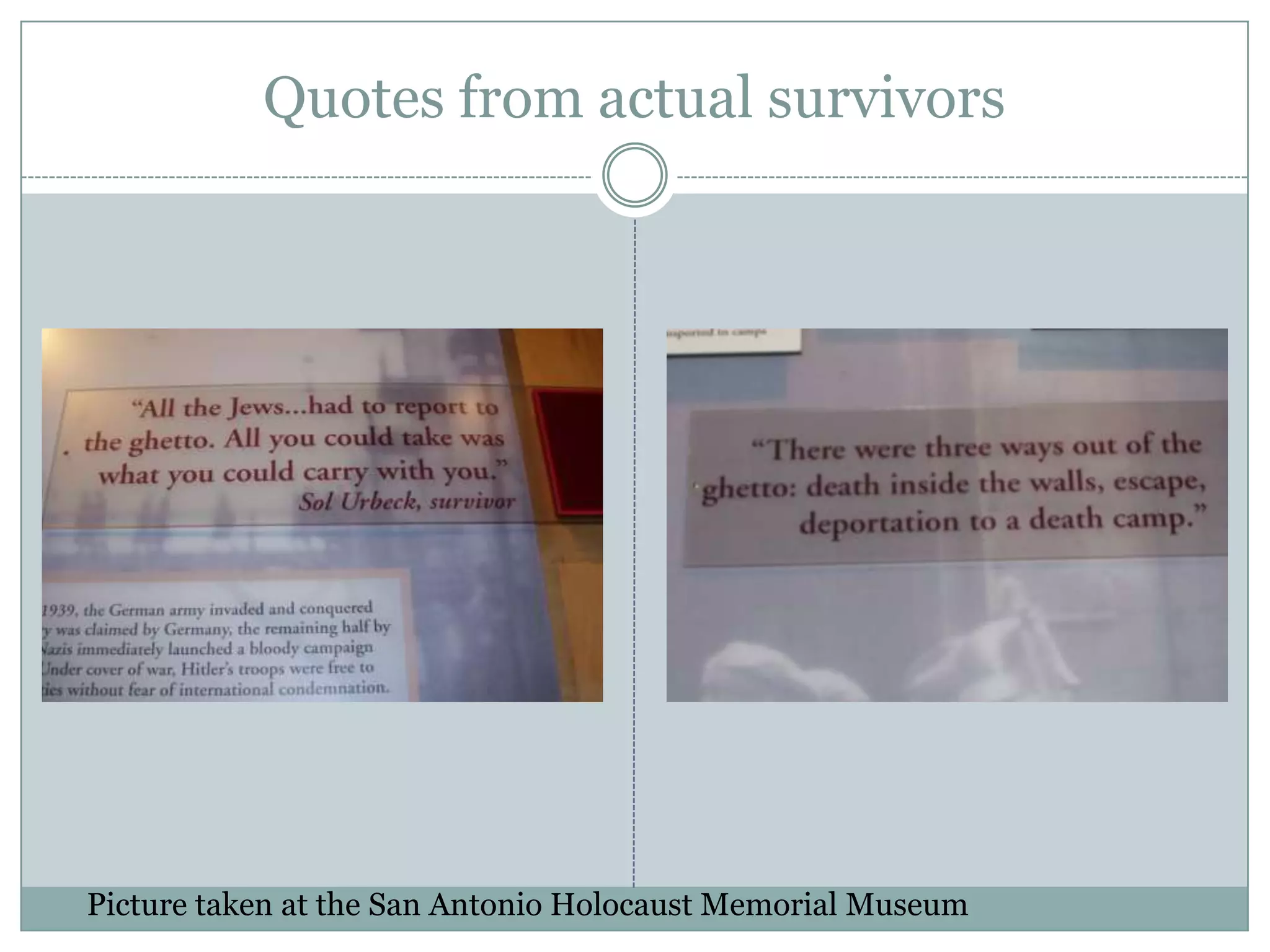
Quotes from actual survivorsPicture taken at the San Antonio Holocaust Memorial Museum
Then, it got worse. Nazis were able to use the crowded conditions in the ghettos as an excuse to move Jews to Concentration Camps.Initially, the Jews did not know that they were being moved to “death camps”.
MarchesJews were rounded up from towns and forced to march  to huge pits that had been dug previously by other Jews.They were forced to remove their clothing and then shot. Their bodies were buried in mass graves.It is estimated that 1.3 million Jews were killed in this manner.
Concentration CampsConcentration camps were located near railways so that Jews could easily be transported. Jews were taken to work camps and forced to do hard labor from dawn to dusk with little food or water.Other Jews were put into gas chambers and killed. Their bodies were then burned in crematoria, large ovens.   Pregnant women,  the elderly, and children were sent immediately to gas chambers because they could not work.
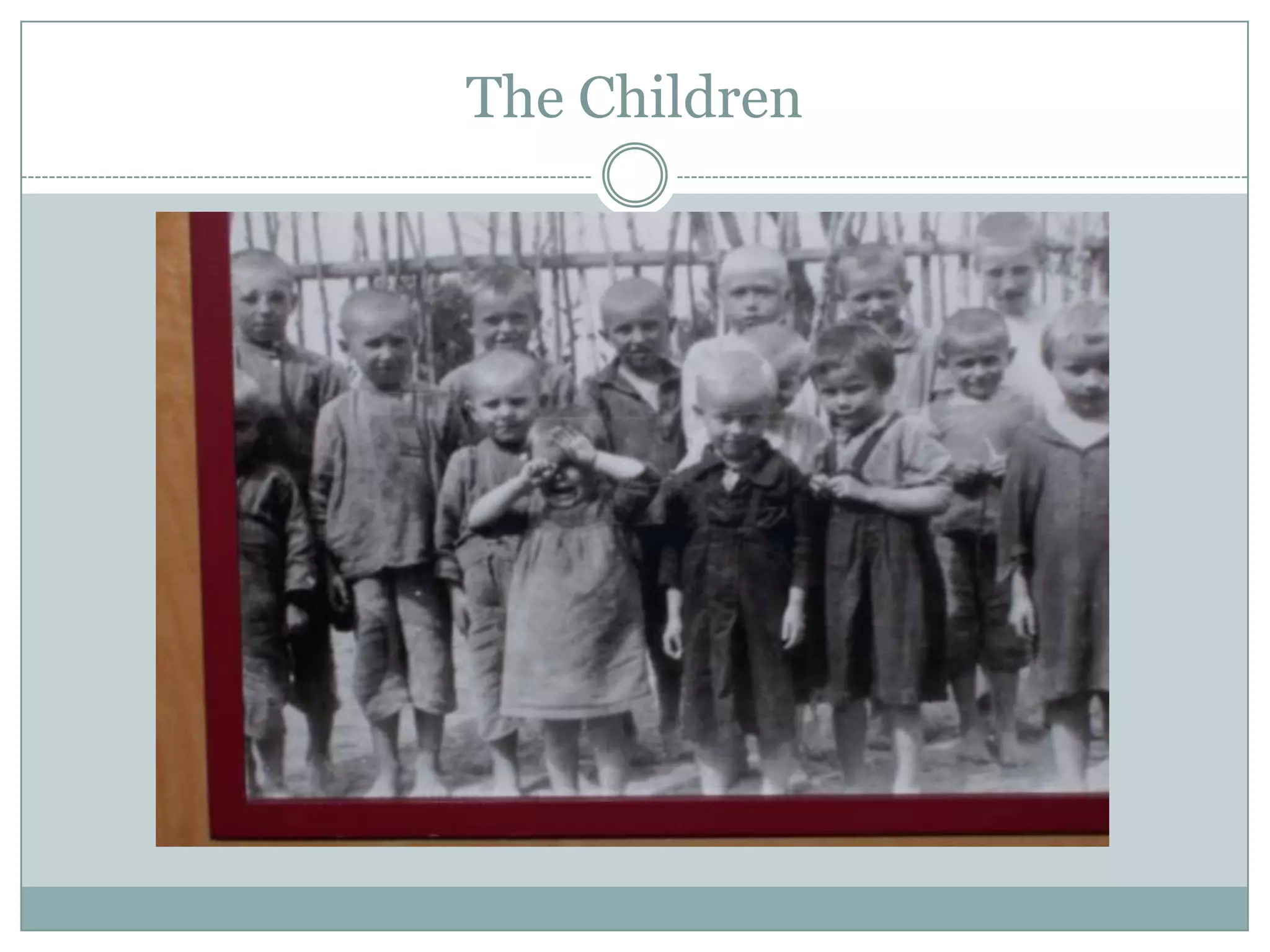
The Children
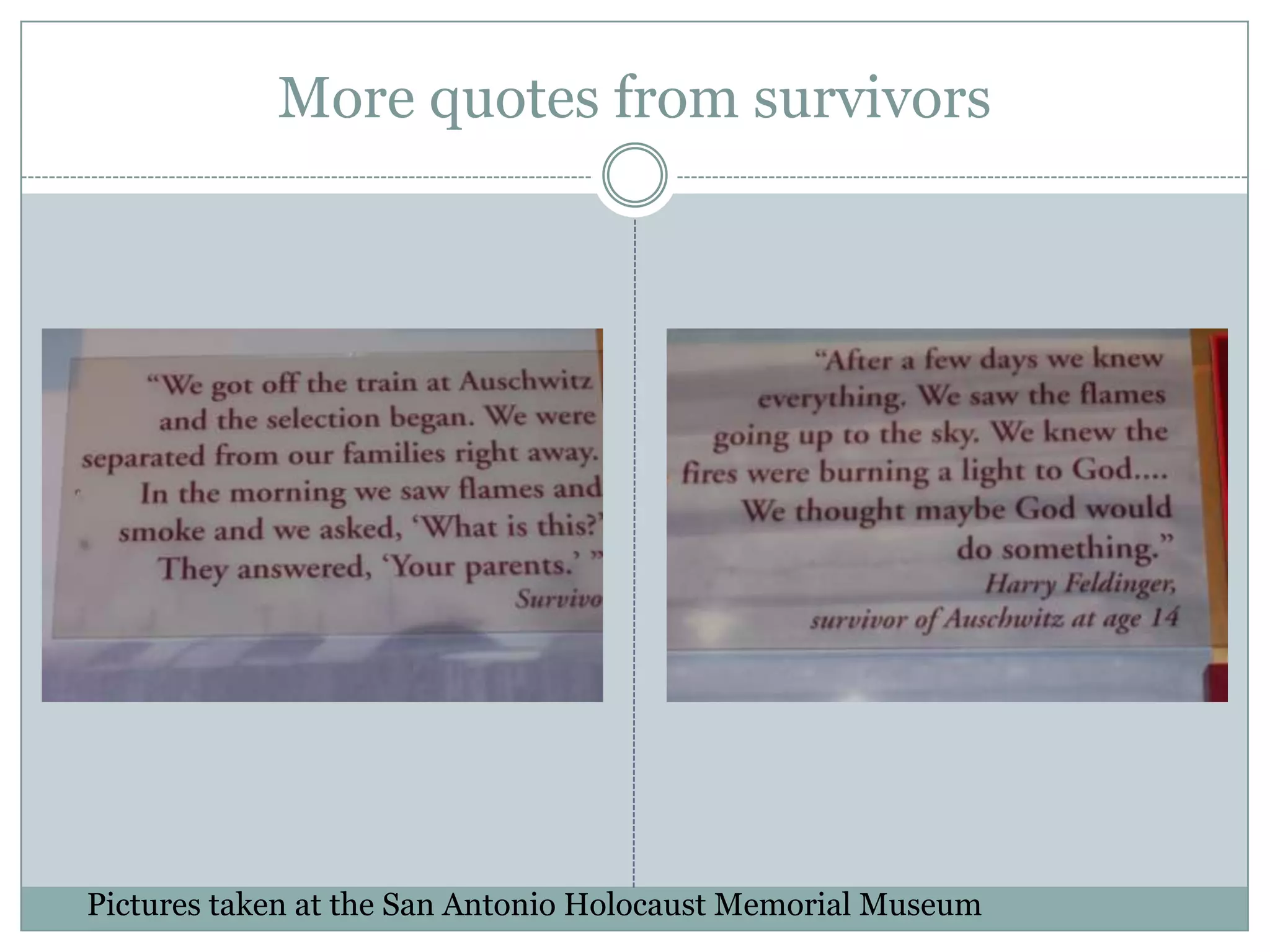
More quotes from survivorsPictures taken at the San Antonio Holocaust Memorial Museum
Virtual Tour of a Concentration Camphttp://en.auschwitz.org.pl/z/index.php?option=com_content&task=view&id=6&Itemid=8
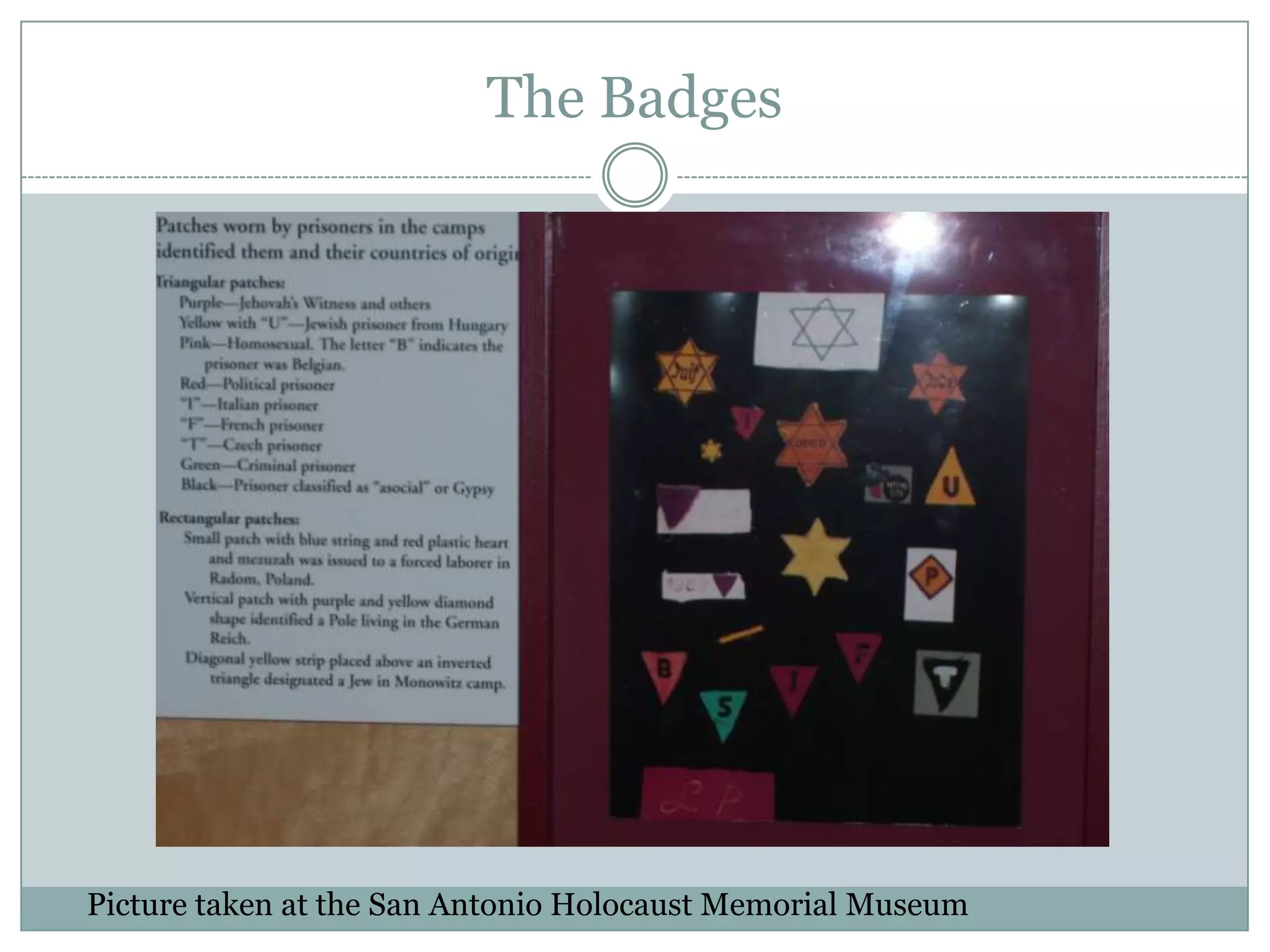
The Concentration Camp ExperienceHeads were shaved, even womenForced to remove clothing and shower with many other peopleIdentified by a badge as being Jewish, gypsy, homosexual, and other  identifiers Little food or waterA bucket was shared by many to be used as a toiletA number was tattooed on the forearmThe smell of burning bodies was always in the air
The BadgesPicture taken at the San Antonio Holocaust Memorial Museum
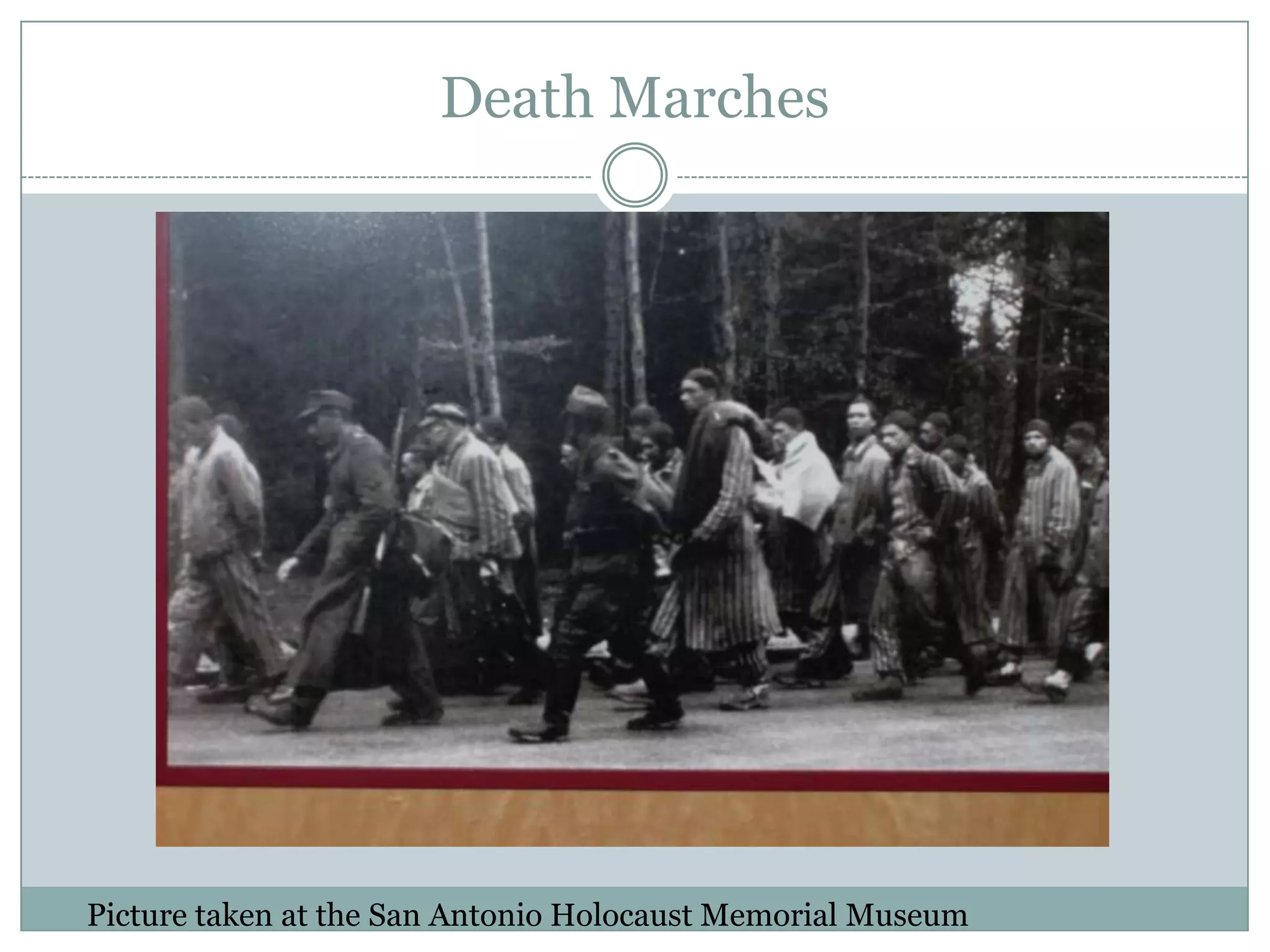
Death MarchesAs the war  came to a close, those who remained alive in concentration camps were forced to walk hundreds of miles. Many died or were shot along the way.About 250,000 Jews died during death marches.
Death MarchesPicture taken at the San Antonio Holocaust Memorial Museum
LiberationThe Jews were rescued from the concentration camps gradually by the Allied forces. Although they were free, the Jews were displaced.They had no homes to go to and many were still separated from their families. Many still feared for their lives and chose to move to other countries, such as Palestine, Israel, the U.S., and South America to rebuild their lives.
Going Homehttp://www.hopesite.ca/sympo/witness/david/going_home_15.htmlhttp://www.hopesite.ca/sympo/witness/judy/liberated_12.html
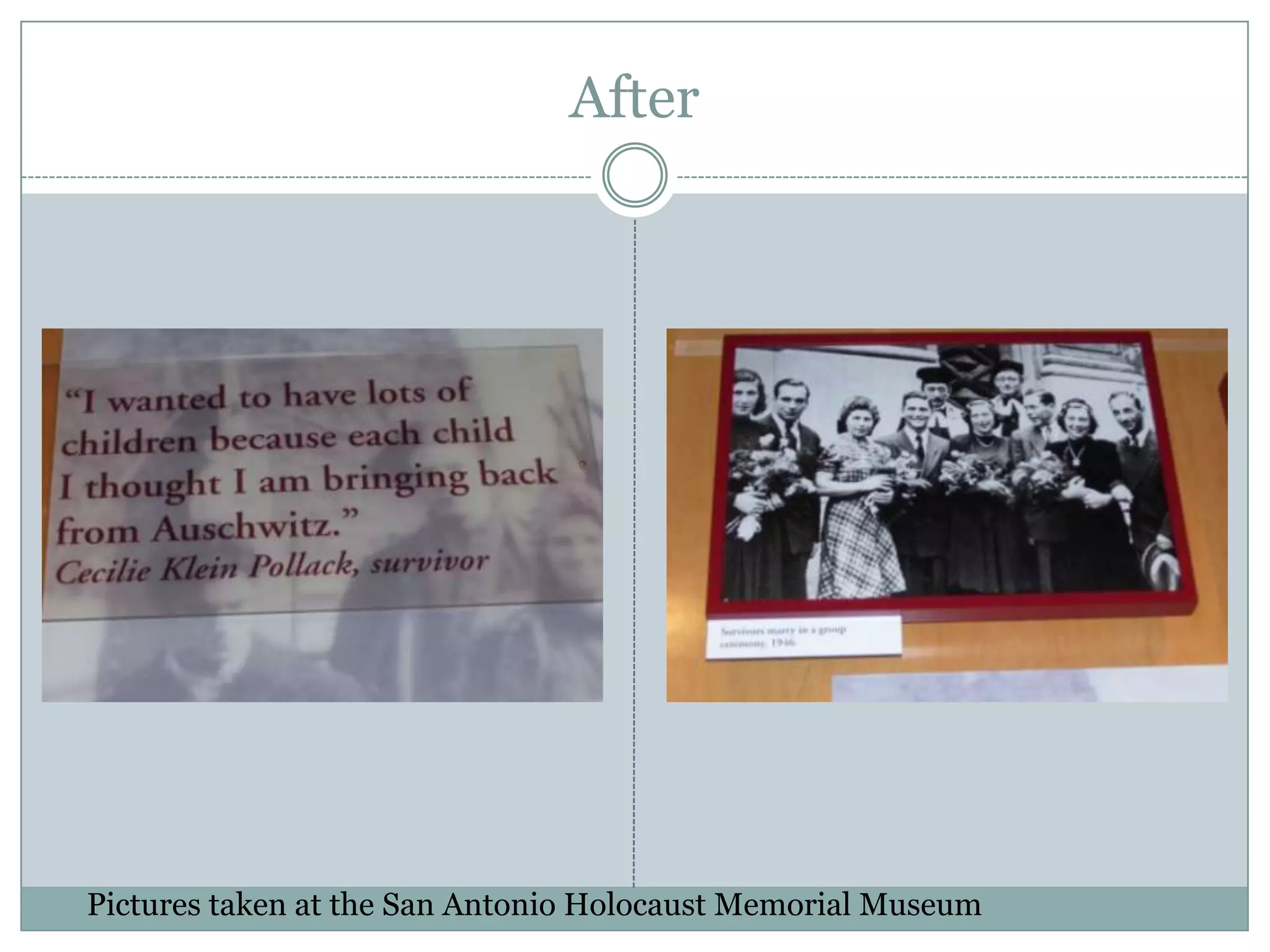
AfterPictures taken at the San Antonio Holocaust Memorial Museum
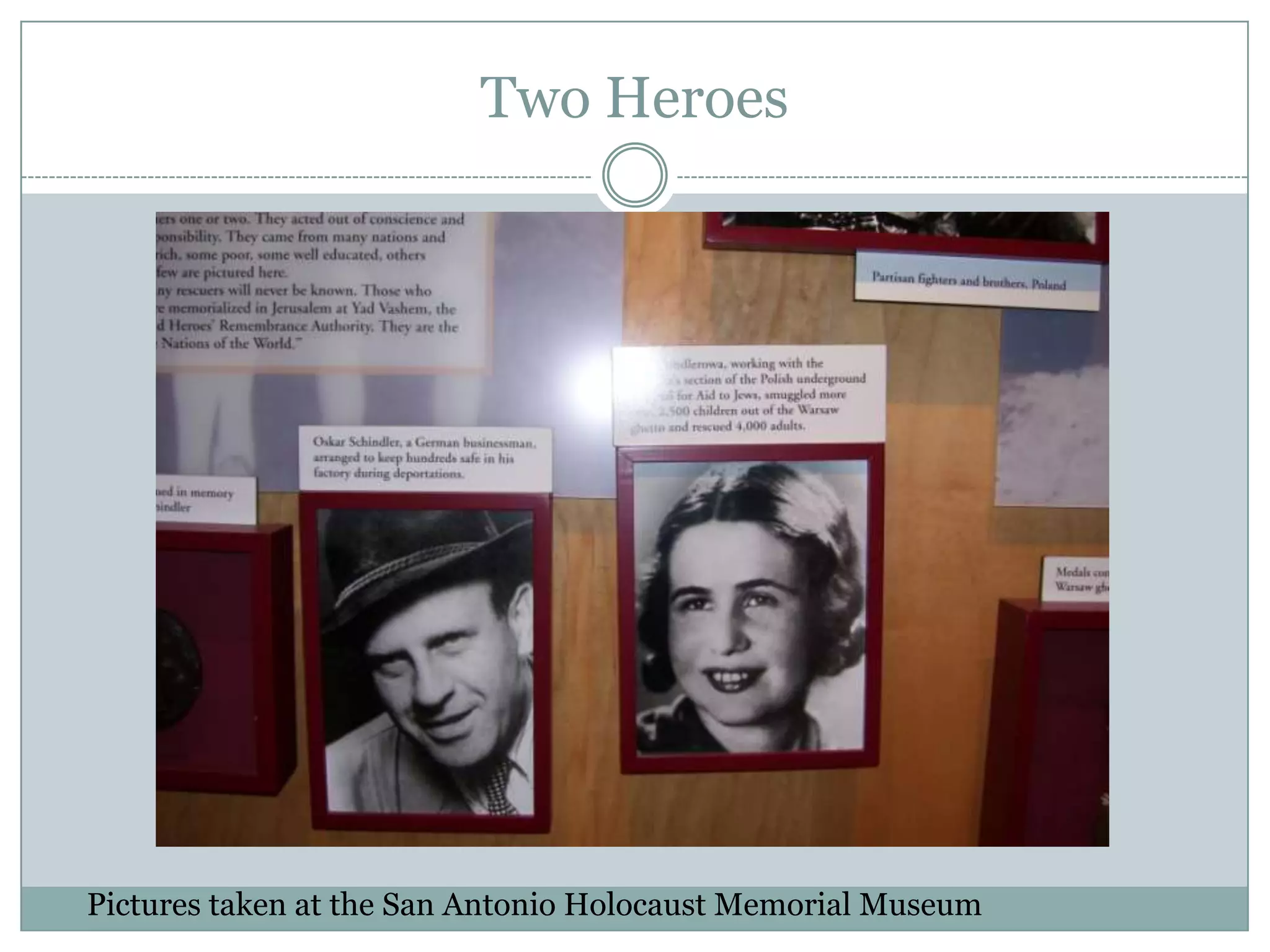
Did anyone try to help?There were many heroes during the Holocaust.They helped smuggle Jews to safer areas. Everything had to be done secretly or the rescuers faced persecution for helping the Jews.
Two HeroesPictures taken at the San Antonio Holocaust Memorial Museum
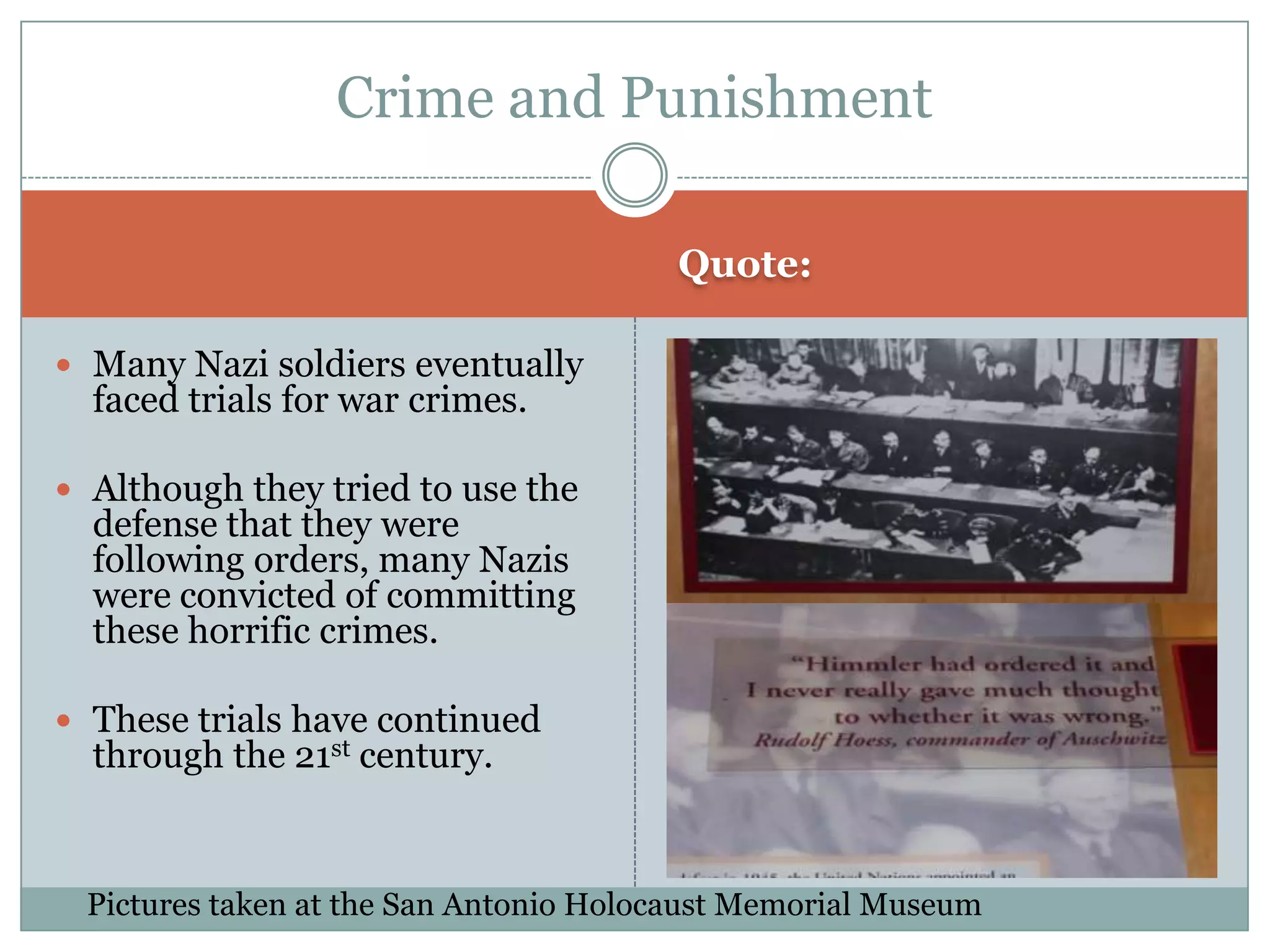
Quote: Many Nazi soldiers eventually faced trials for war crimes.  Although they tried to use the defense that they were following orders, many Nazis were convicted of committing these horrific crimes. These trials have continued through the 21st century.Crime and PunishmentPictures taken at the San Antonio Holocaust Memorial Museum
Now that you know, what will you do?It all started with words. The words we use can affect others in ways we never imagined. We can use our words to help others or to  harm them. What could have happened if people of the world would have protested against the treatment of the Jews? Could anything have changed? Silence can be deadly.
Select one of the Following Topics to Research:The Nazi PartyAdolf HitlerPropagandaGhettosConcentration CampsDeath MarchesResistance/ HeroesRescue and Liberation of the JewsWar crime trialsYour Turn
Sources: Holocaust Memorial Center: http://www.holocaustcenter.orgSurvivors’ Video Clipshttp://www.hopesite.ca/toc.htmlSan Antonio Holocaust Museum

Multimedia

  • 1.
    A multimedia projectfor 8th-12th graders by:Naomi Vasquez-MontesThe Holocaust
  • 2.
  • 3.
    The HolocaustHow didit start? Let’s hear from one survivor:http://www.hopesite.ca/sympo/words.html
  • 4.
    The HolocaustThe Holocaustwas a period of time when six million Jews were systematically exterminated. They were not exterminated because of anything they had done, but because they became scapegoats for the German nation. Words began the propaganda that changed the lives of millions. It all started with words.
  • 5.
    A Jewish FamilyBefore the HolocaustPicture taken at the San Antonio Holocaust Memorial Museum
  • 6.
    The Beginning ofthe Holocaust The Holocaust began during World War II (1933) when Adolf Hitler became the Chancellor of Germany. He wanted to create a master race, and he wanted to get rid of anyone who did not fit his criteria.
  • 7.
    A Master RaceGenocide-The systematic and planned extermination ofan entire national, racial, political, or ethnic group (American Heritage Dictionary).
  • 8.
    The Beginning ofthe HolocaustHitler, a great orator, had many loyal followers whoreadily joined the Nazi party to support his cause. Hereis a video clip of Hitler making a speech: http://www.youtube.com/watch?v=Vbduo4fHANAUsing words, not facts or data, Hitler convinced the Germans that the Jews were to blame for the deteriorating government, high unemployment rate, and general economic instability.
  • 9.
    PropagandaA weekly Nazinewspaper DerStürmer (The Attacker) helped to spread the message against the Jews. The propaganda showed the Nazi party as brave defenders of Germany.Jews were depicted as having large noses and being cheap, cruel, evil and cowardly.
  • 10.
    Words turned toactionGhettos were established as areas to isolate and contain Jews. Ghettos lacked food, water, and enough space for the millions of Jews forced to move there. The conditions were unsanitary. Many people died in the ghettos.http://www.hopesite.ca/sympo/witness/judy/ghetto_2.htmlstateoftheart.popphoto.com
  • 11.
    Quotes from actualsurvivorsPicture taken at the San Antonio Holocaust Memorial Museum
  • 12.
    Then, it gotworse. Nazis were able to use the crowded conditions in the ghettos as an excuse to move Jews to Concentration Camps.Initially, the Jews did not know that they were being moved to “death camps”.
  • 13.
    MarchesJews were roundedup from towns and forced to march to huge pits that had been dug previously by other Jews.They were forced to remove their clothing and then shot. Their bodies were buried in mass graves.It is estimated that 1.3 million Jews were killed in this manner.
  • 14.
    Concentration CampsConcentration campswere located near railways so that Jews could easily be transported. Jews were taken to work camps and forced to do hard labor from dawn to dusk with little food or water.Other Jews were put into gas chambers and killed. Their bodies were then burned in crematoria, large ovens. Pregnant women, the elderly, and children were sent immediately to gas chambers because they could not work.
  • 15.
  • 16.
    More quotes fromsurvivorsPictures taken at the San Antonio Holocaust Memorial Museum
  • 17.
    Virtual Tour ofa Concentration Camphttp://en.auschwitz.org.pl/z/index.php?option=com_content&task=view&id=6&Itemid=8
  • 18.
    The Concentration CampExperienceHeads were shaved, even womenForced to remove clothing and shower with many other peopleIdentified by a badge as being Jewish, gypsy, homosexual, and other identifiers Little food or waterA bucket was shared by many to be used as a toiletA number was tattooed on the forearmThe smell of burning bodies was always in the air
  • 19.
    The BadgesPicture takenat the San Antonio Holocaust Memorial Museum
  • 20.
    Death MarchesAs thewar came to a close, those who remained alive in concentration camps were forced to walk hundreds of miles. Many died or were shot along the way.About 250,000 Jews died during death marches.
  • 21.
    Death MarchesPicture takenat the San Antonio Holocaust Memorial Museum
  • 22.
    LiberationThe Jews wererescued from the concentration camps gradually by the Allied forces. Although they were free, the Jews were displaced.They had no homes to go to and many were still separated from their families. Many still feared for their lives and chose to move to other countries, such as Palestine, Israel, the U.S., and South America to rebuild their lives.
  • 23.
  • 24.
    AfterPictures taken atthe San Antonio Holocaust Memorial Museum
  • 25.
    Did anyone tryto help?There were many heroes during the Holocaust.They helped smuggle Jews to safer areas. Everything had to be done secretly or the rescuers faced persecution for helping the Jews.
  • 26.
    Two HeroesPictures takenat the San Antonio Holocaust Memorial Museum
  • 27.
    Quote: Many Nazisoldiers eventually faced trials for war crimes. Although they tried to use the defense that they were following orders, many Nazis were convicted of committing these horrific crimes. These trials have continued through the 21st century.Crime and PunishmentPictures taken at the San Antonio Holocaust Memorial Museum
  • 28.
    Now that youknow, what will you do?It all started with words. The words we use can affect others in ways we never imagined. We can use our words to help others or to harm them. What could have happened if people of the world would have protested against the treatment of the Jews? Could anything have changed? Silence can be deadly.
  • 29.
    Select one ofthe Following Topics to Research:The Nazi PartyAdolf HitlerPropagandaGhettosConcentration CampsDeath MarchesResistance/ HeroesRescue and Liberation of the JewsWar crime trialsYour Turn
  • 30.
    Sources: Holocaust MemorialCenter: http://www.holocaustcenter.orgSurvivors’ Video Clipshttp://www.hopesite.ca/toc.htmlSan Antonio Holocaust Museum

Editor's Notes

  • #2 This project will span many periods and will need to be broken down into segments dependent upon the amount of time given.
  • #3 Student groups will be given picture books. They will be given 7-10 minutes to read and discuss an individual story with their group. After the reading, the librarian will ask students to provide ideas they found in the stories that showed what happened during the Holocaust. The librarian or a student scribe will write the ideas on chart paper. These ideas can be referred to throughout the presentation.
  • #5 Discuss the meaning of the words exterminate and propaganda with students. In what contexts have they heard these words before?
  • #6 Discuss the normalcy of the family pictured.
  • #8 Discuss the meaning of the word with students. Discuss how the actions carried out were purposeful with the intent to wipe out an entire race of people.
  • #9 During the speech, the librarian should point out the large crowd that was listening to Hitler’s speech. Have students discuss what they thought about his speech,. What do they think when he said that planning was needed? How did he plan to cultivate and manage the situation?
  • #10 Discuss the concept of stereotypes with students. How did the Nazis use stereotypes to spread their message of hate?
  • #11 Before beginning this slide, relate the statement ‘Words turned to action” to students’ own lives. When have words resulted in actions in their lives?
  • #12 Have students discuss what they would take with them if they were suddenly forced from their homes.
  • #13 Discuss : How do you think the Jews felt when they were moved from the poor conditions of the ghettos? Do you think they may have felt relieved, as if they may be moving some where better?
  • #15 Talk to students about being separated from family and not knowing where they or their family members were being sent. What was the purpose of Jews being forced to work so hard? Talk to the students about how the Nazis wanted to break the Jews’ spirit by exhausting them and taking away their dignity and humanity.
  • #17 How do you think the Jews felt when they realized what was going on in the camps?
  • #18 This tour may take some time to navigate. There are notes about each area on the website.
  • #19 Discuss how this treatment would make the Jews feel. Why do you think they complied? Why didn’t they resist?
  • #20 Discuss the different groups that were targeted by the Nazis. Why do you think these particular groups were targeted? How were they different from the master race that Hitler envisioned?
  • #21 Discuss the general health of the Jewish people. Why would they be forced to walk so far? Why not let the prisoners go?
  • #23 What were some of the difficulties that would be faced by the freed Jews?
  • #25 Discuss with students how the Jews’ lives would be different thanbefore the Holocaust.
  • #27 Point out that there were many others who resisted the Nazis. Why would they risk their own personal safety to help others?
  • #28 Do you think soldiers who were “following orders” should have been found not guilty? Why or why not?
  • #29 Tell students that genocide still happens today in other countries. What can they do to help?
  • #30 Briefly explain each of the topics to students. They will work either independently or with others to do more in-depth research about one of the topics selected. They will create a display or presentation that can be shared with others.