Multi-Engine Principles of Flight
DEFINITION:
An aircraft that has two or more
engines which are located away
from the centreline of the aircraft
AIM:
To gain an understanding behind
the principles associated with
flying a multi-engine aircraft
under normal and emergency
situations
WHAT:
-Types of Multi-Engine aircraft
-Forces involved with multi-
engine aircraft
-Controlling an engine failure
-How the aircraft performs with
an engine failed
-Notes on Engine faliures
HOW:
-Flying Multi-Engine aircraft
-Handing emergency situations
safely and effectively
Cessna 337
Multi-Engine Principles of Flight
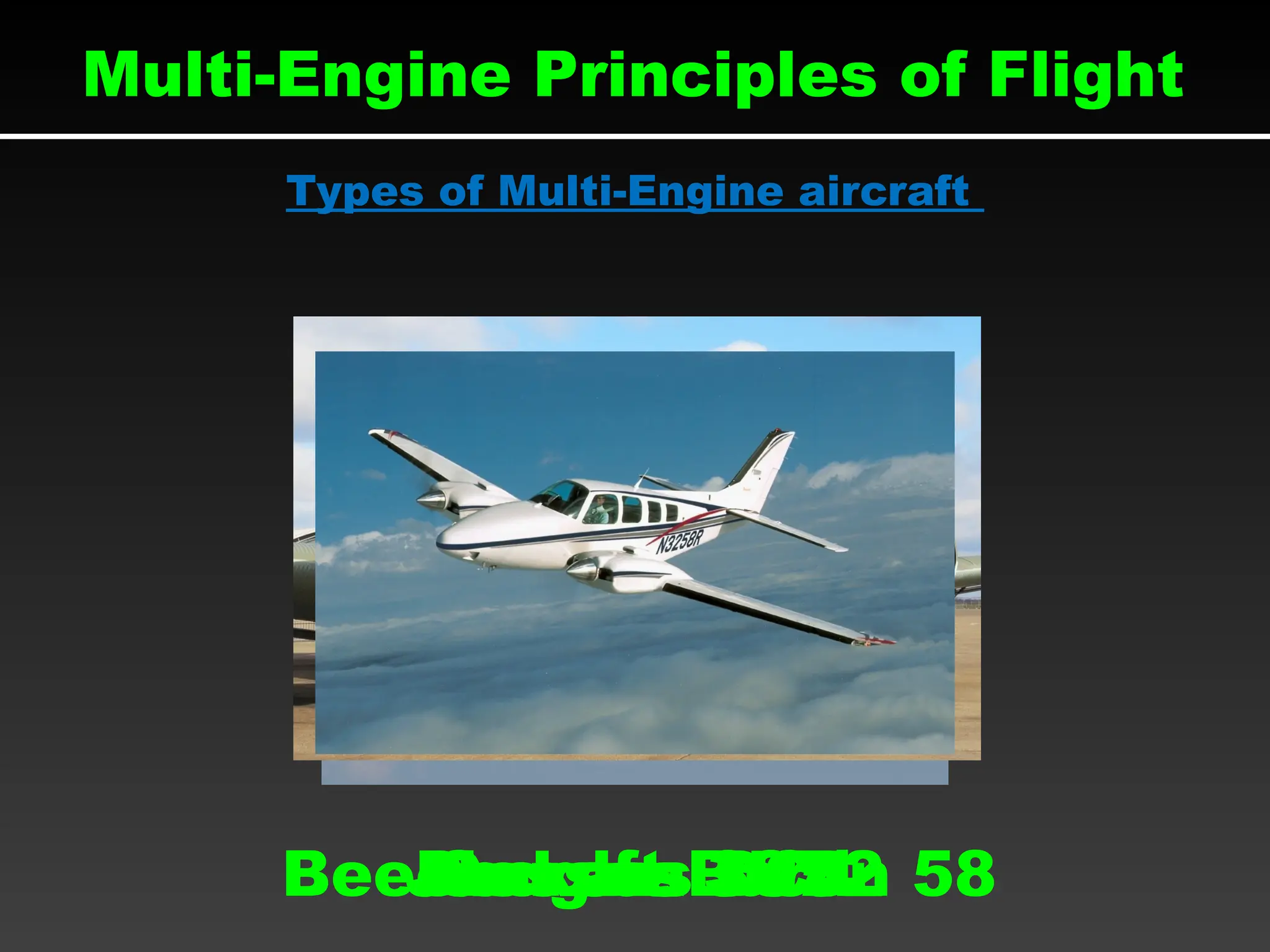
Types of Multi-Engine aircraft
Douglas DC4
Junkers JU52
Beechcraft Baron 58
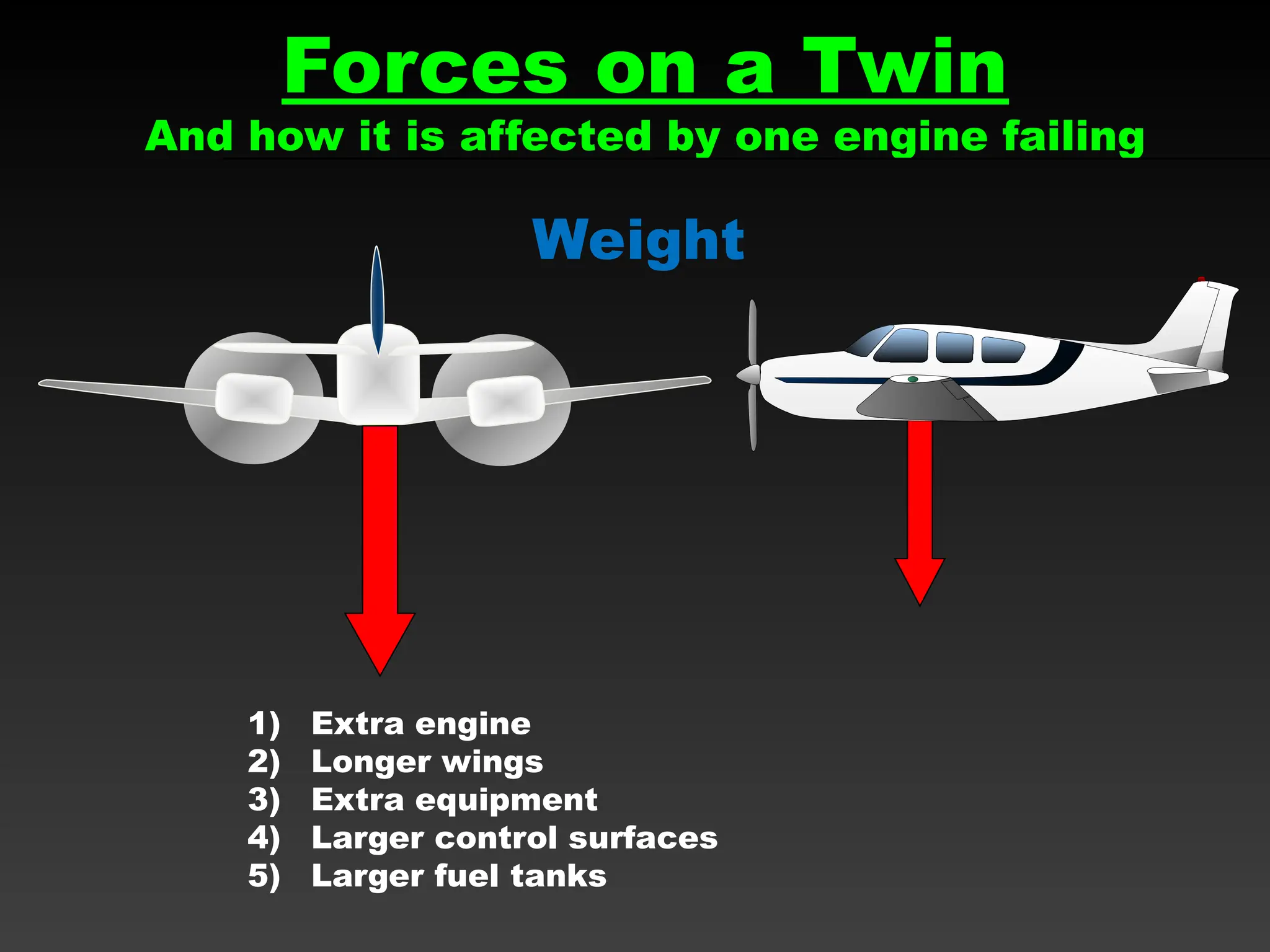
Forces on a Twin
And how it is affected by one engine failing
Weight
1) Extra engine
2) Longer wings
3) Extra equipment
4) Larger control surfaces
5) Larger fuel tanks
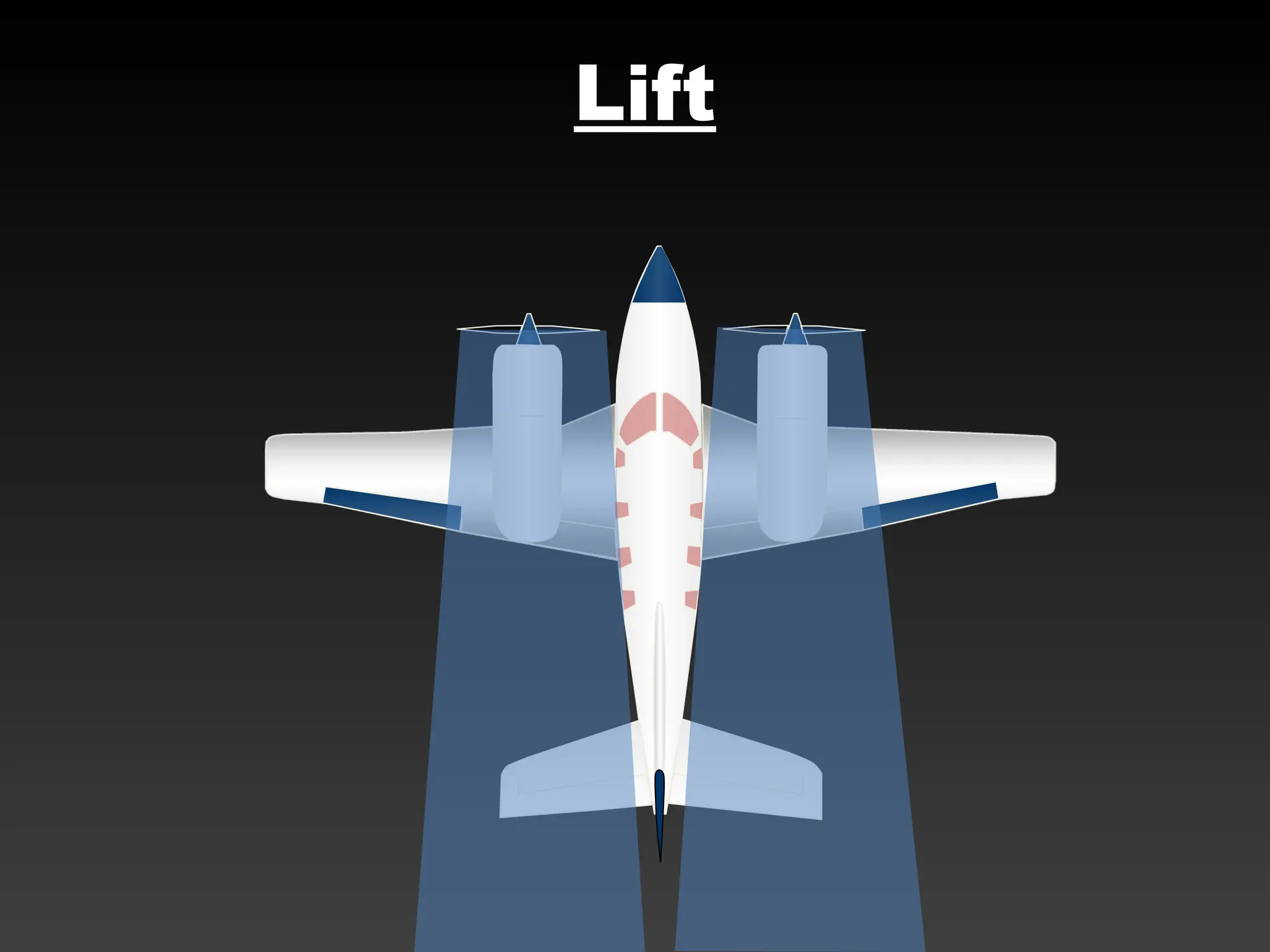
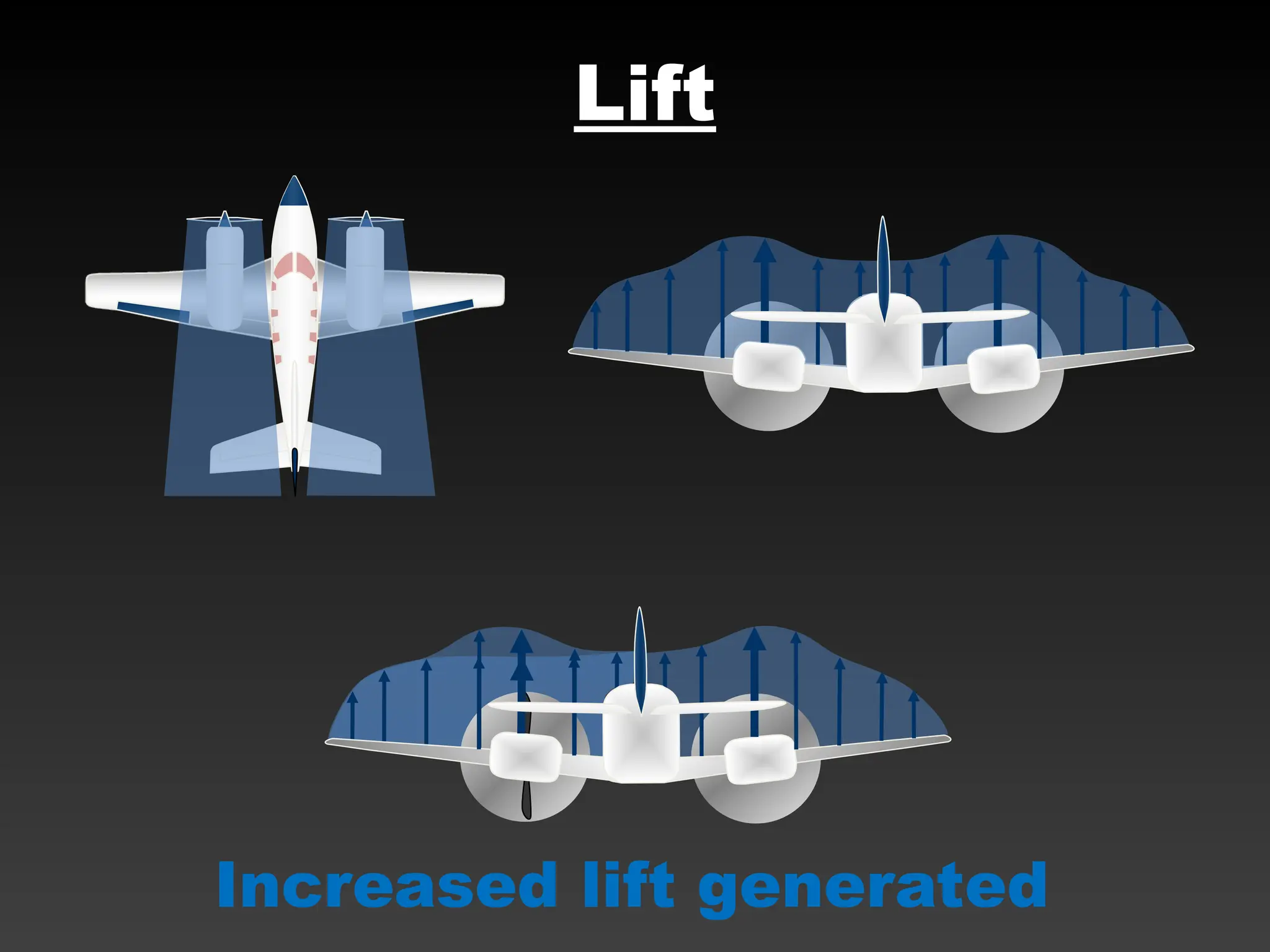
Lift
Increased lift generated
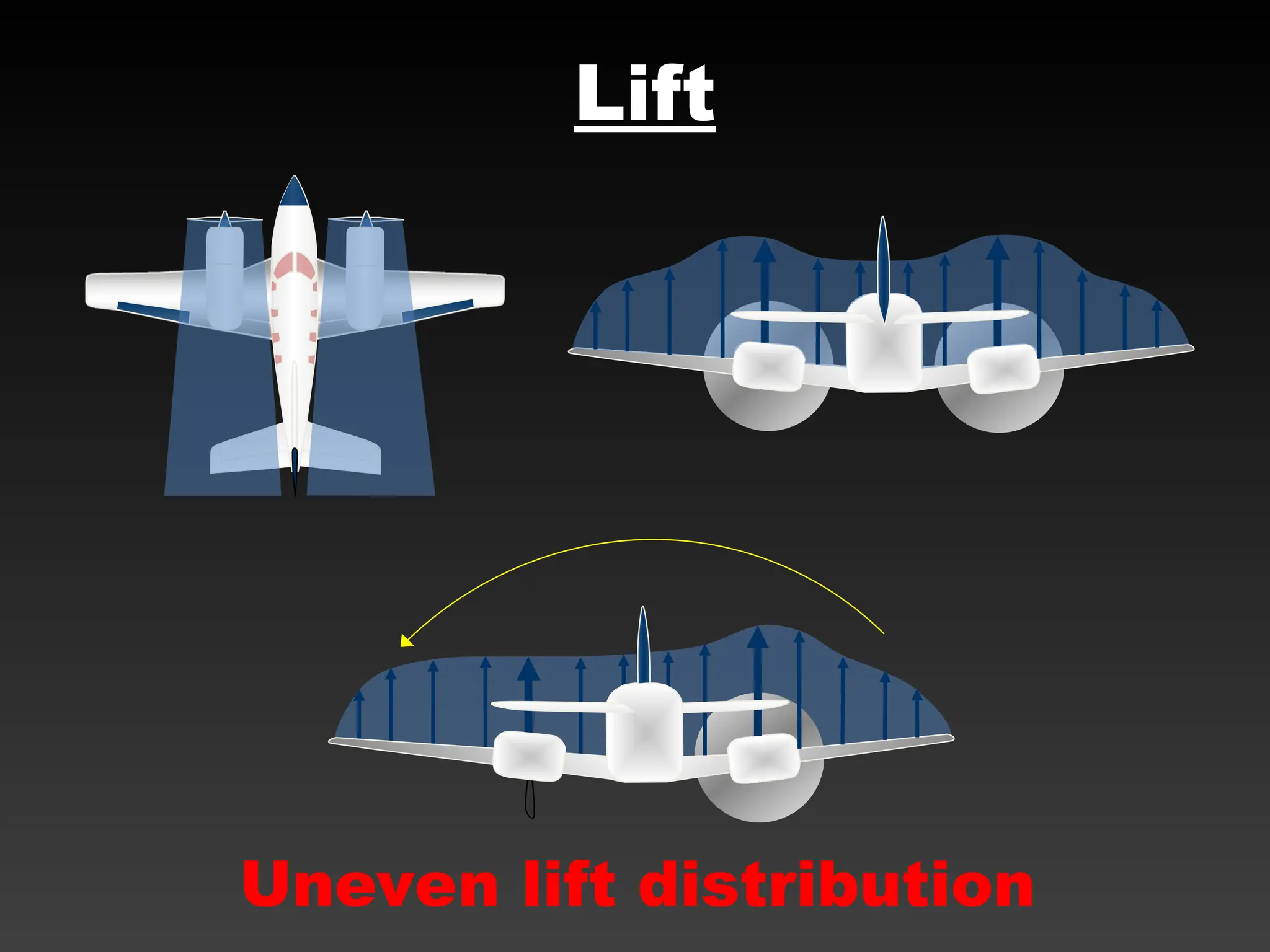
Lift
Uneven lift distribution
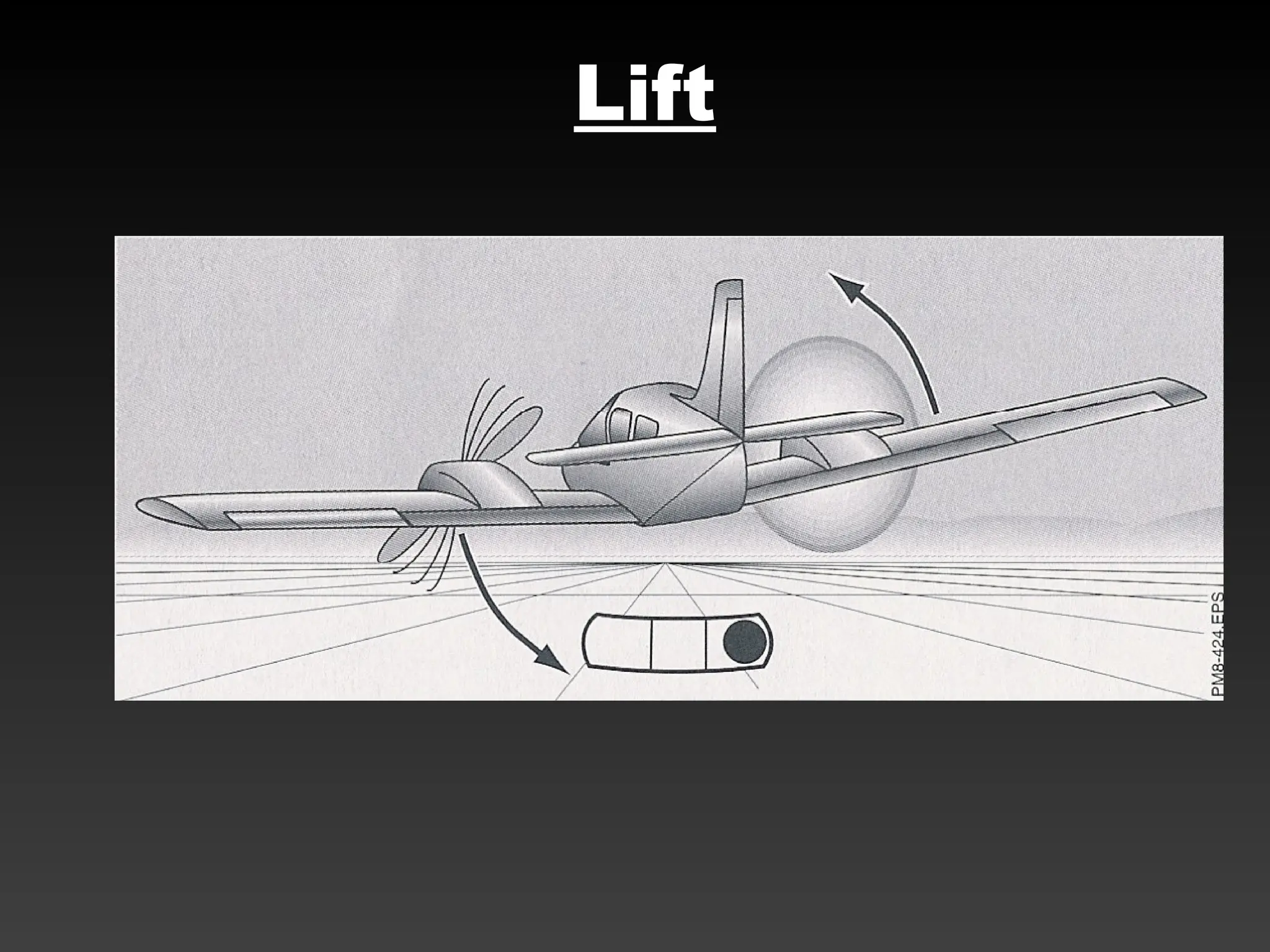
Lift
Lift
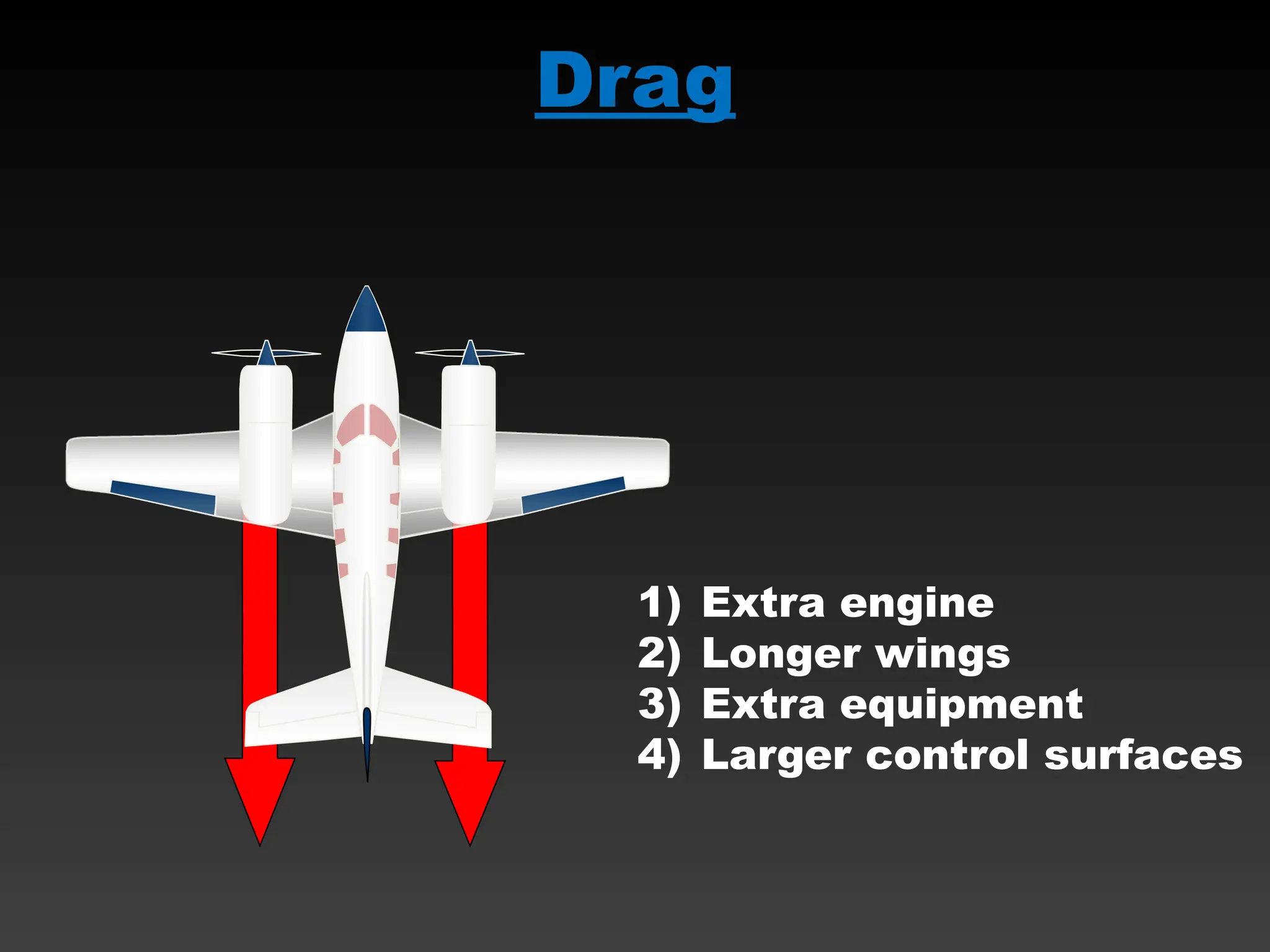
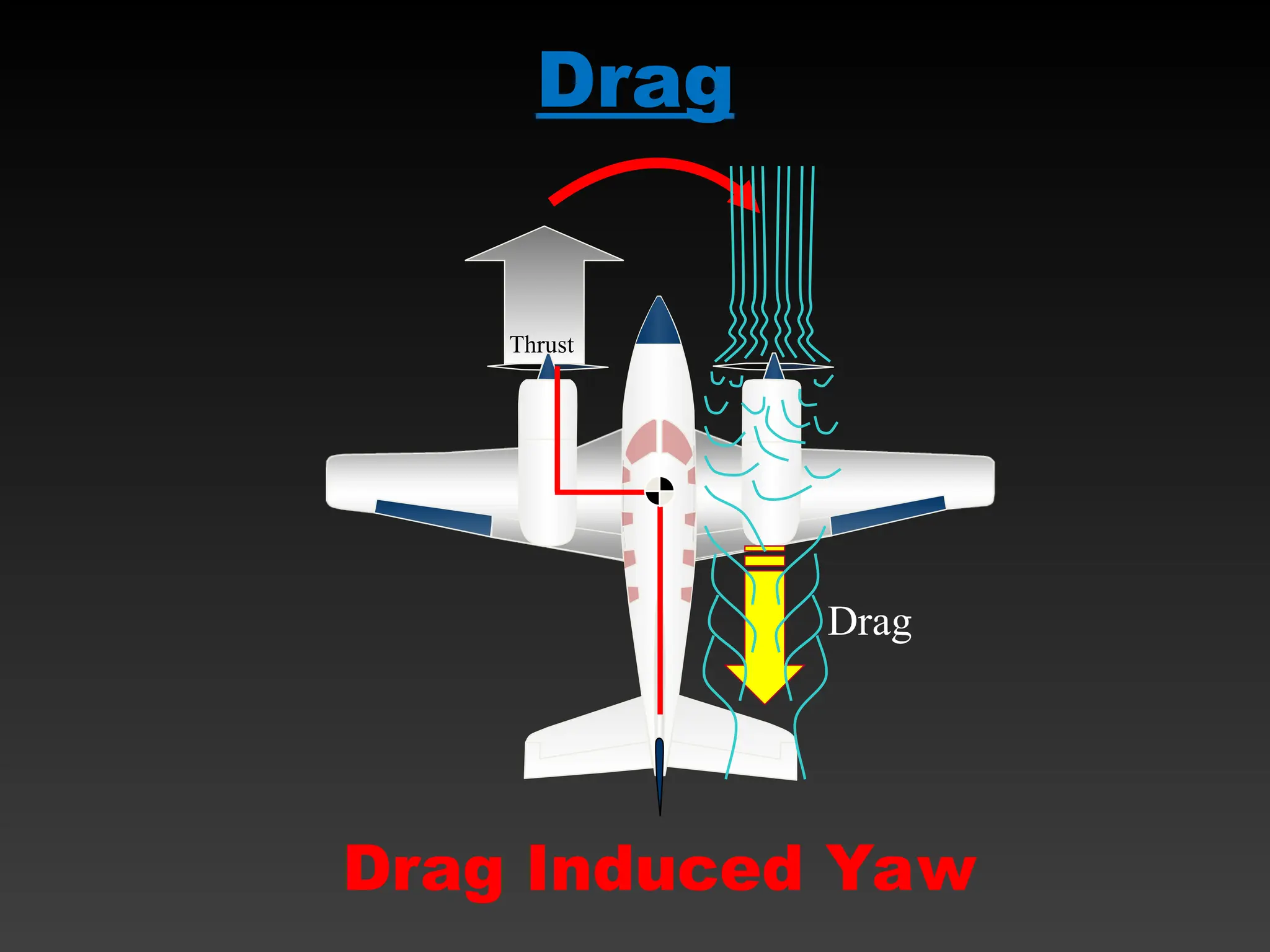
Drag
1) Extra engine
2) Longer wings
3) Extra equipment
4) Larger control surfaces
Thrust
Drag
Drag Induced Yaw
Drag
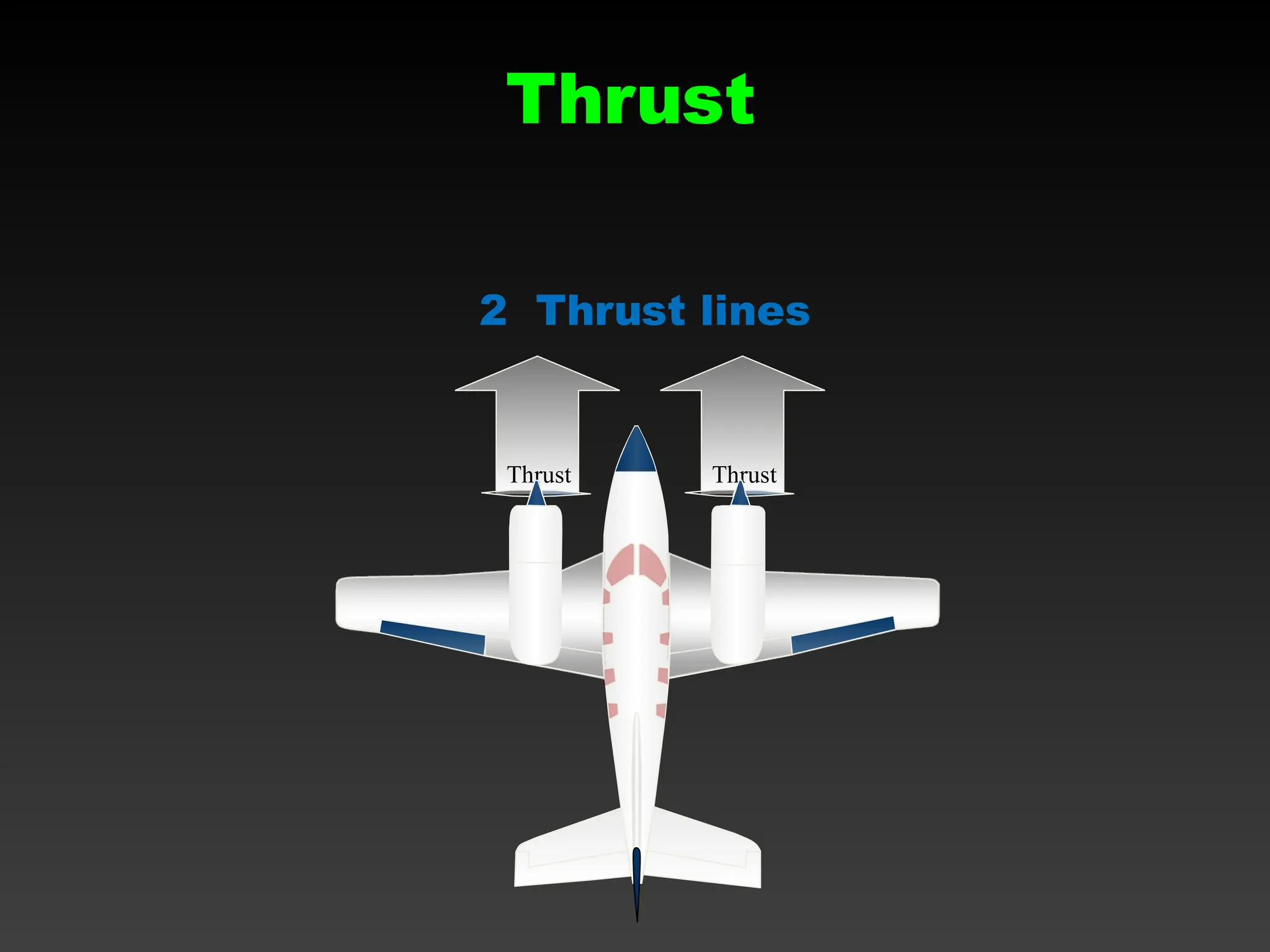
Thrust
Thrust
2 Thrust lines
Thrust
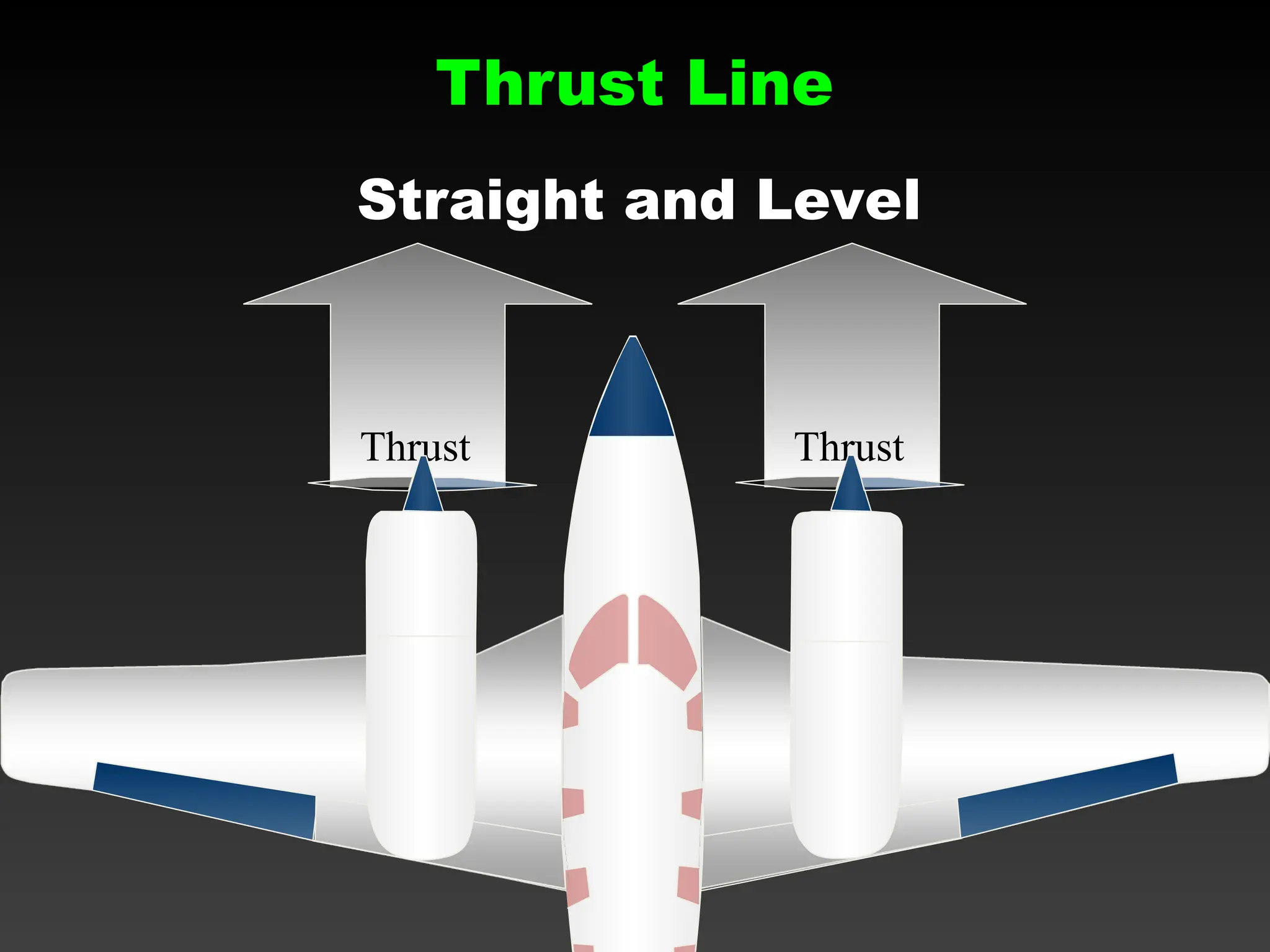
Thrust Line
Straight and Level
Thrust
Thrust
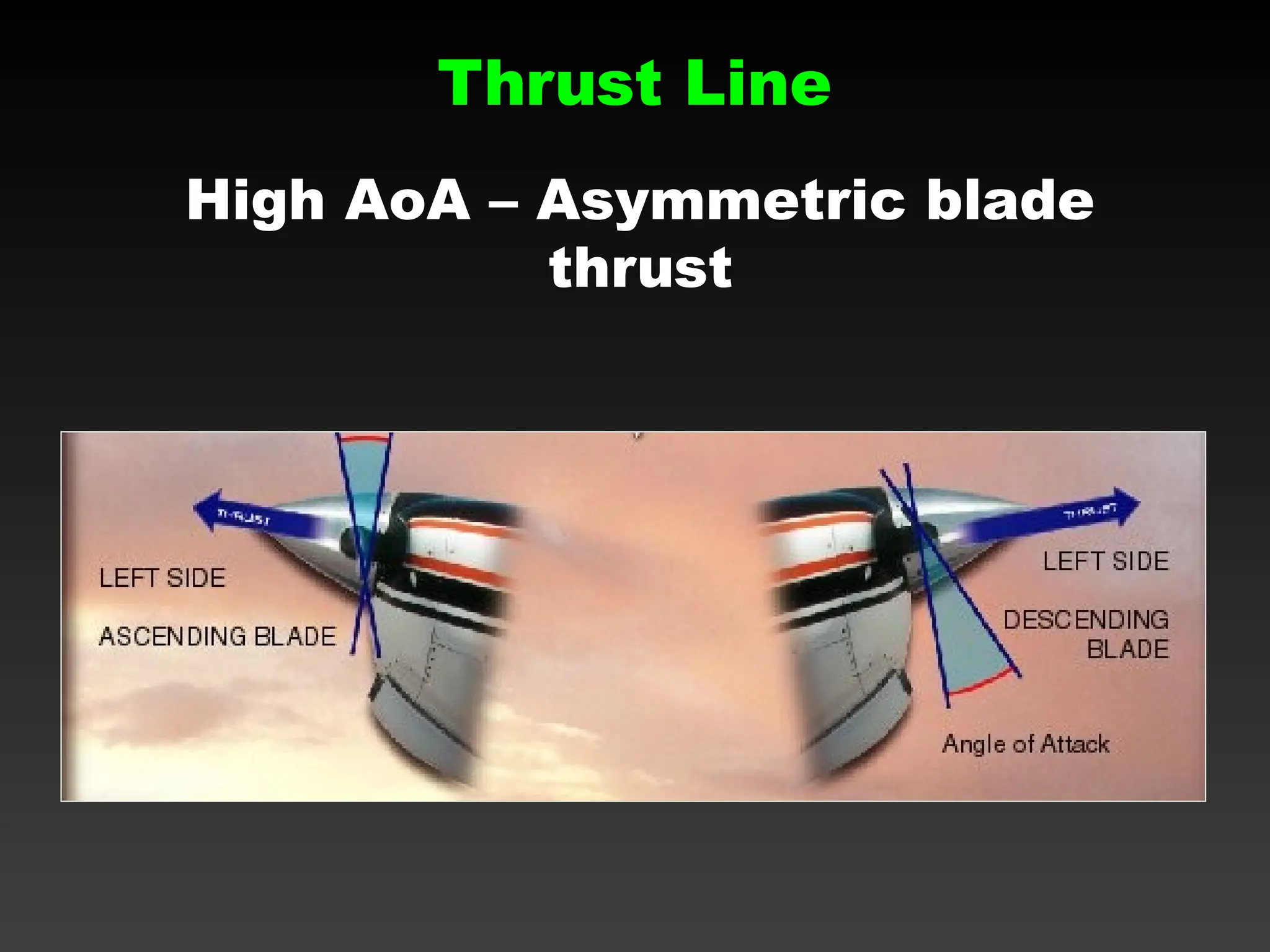
High AoA – Asymmetric blade
thrust
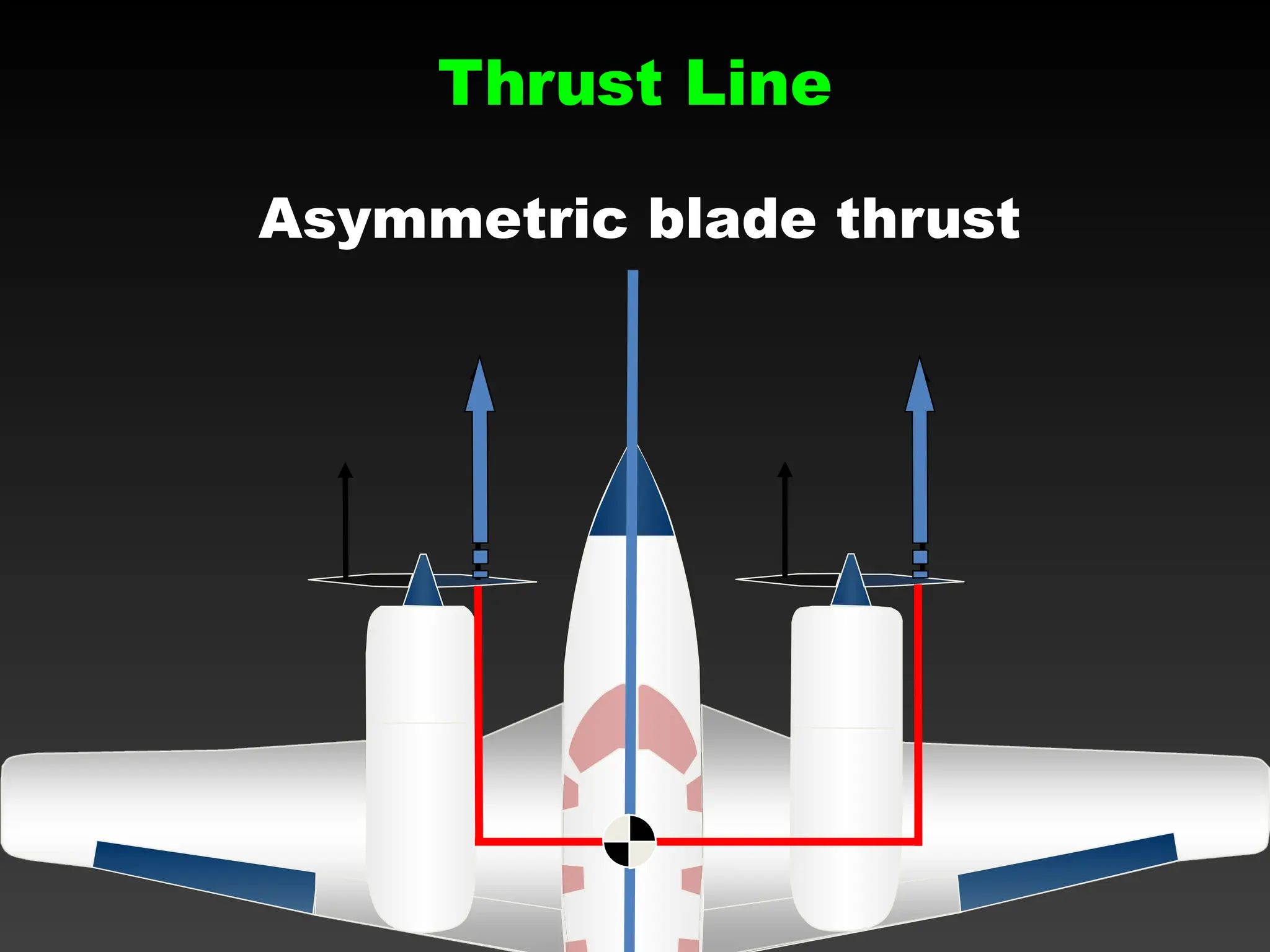
Thrust Line
Thrust Line
Asymmetric blade thrust
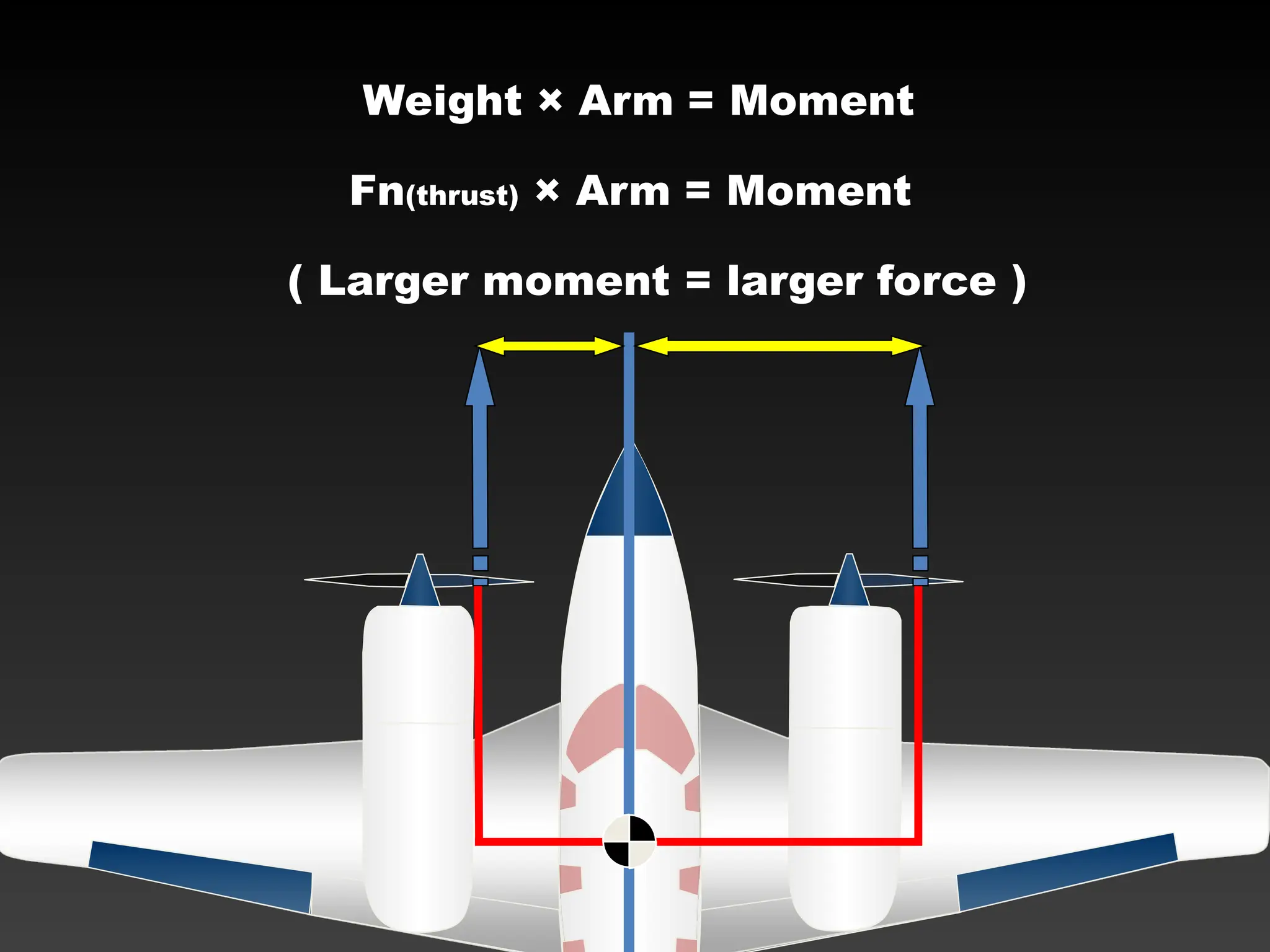
Weight × Arm = Moment
( Larger moment = larger force )
Fn(thrust) × Arm = Moment
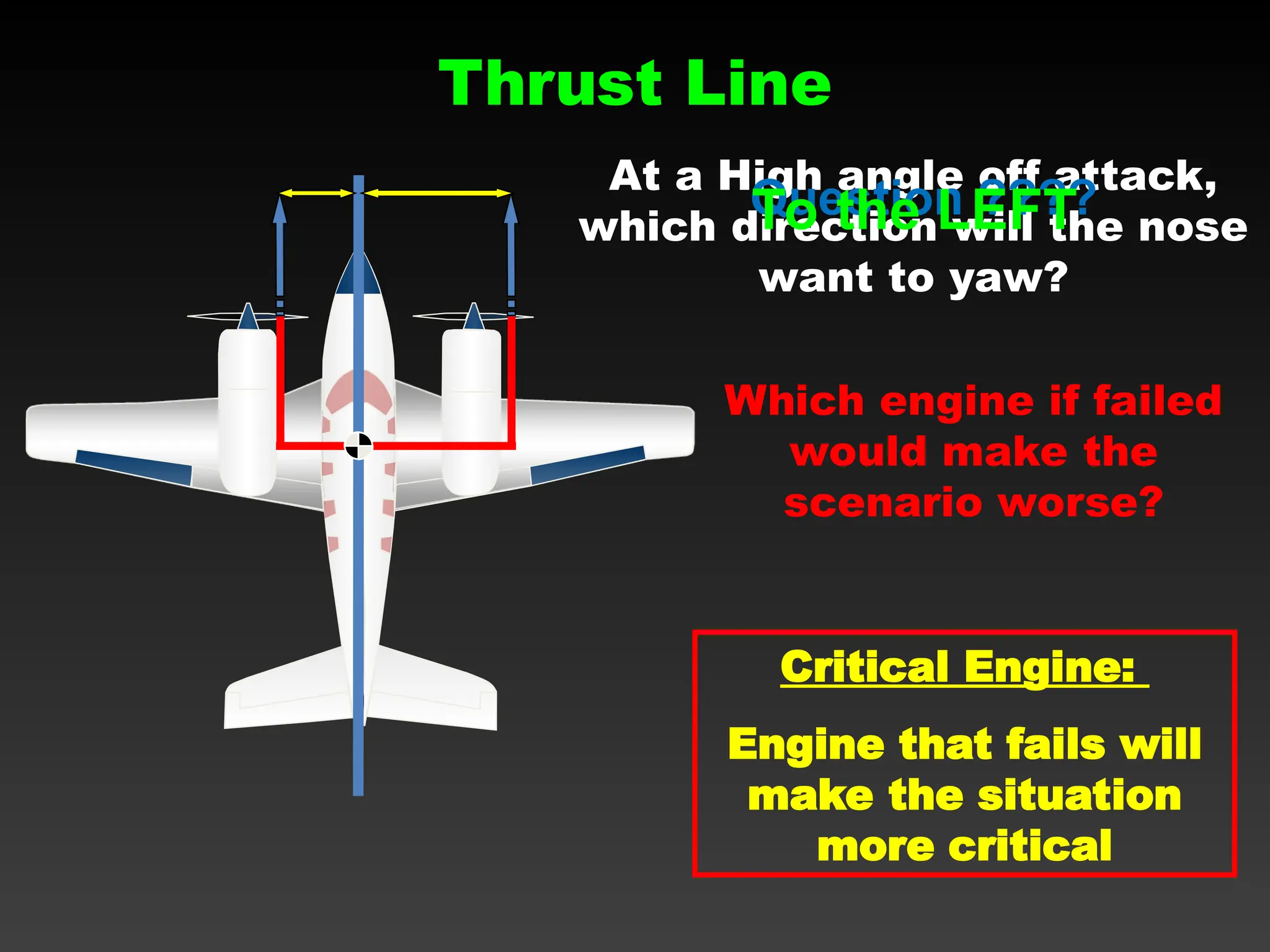
At a High angle off attack,
which direction will the nose
want to yaw?
Critical Engine:
Engine that fails will
make the situation
more critical
Which engine if failed
would make the
scenario worse?
Thrust Line
Question ????
To the LEFT
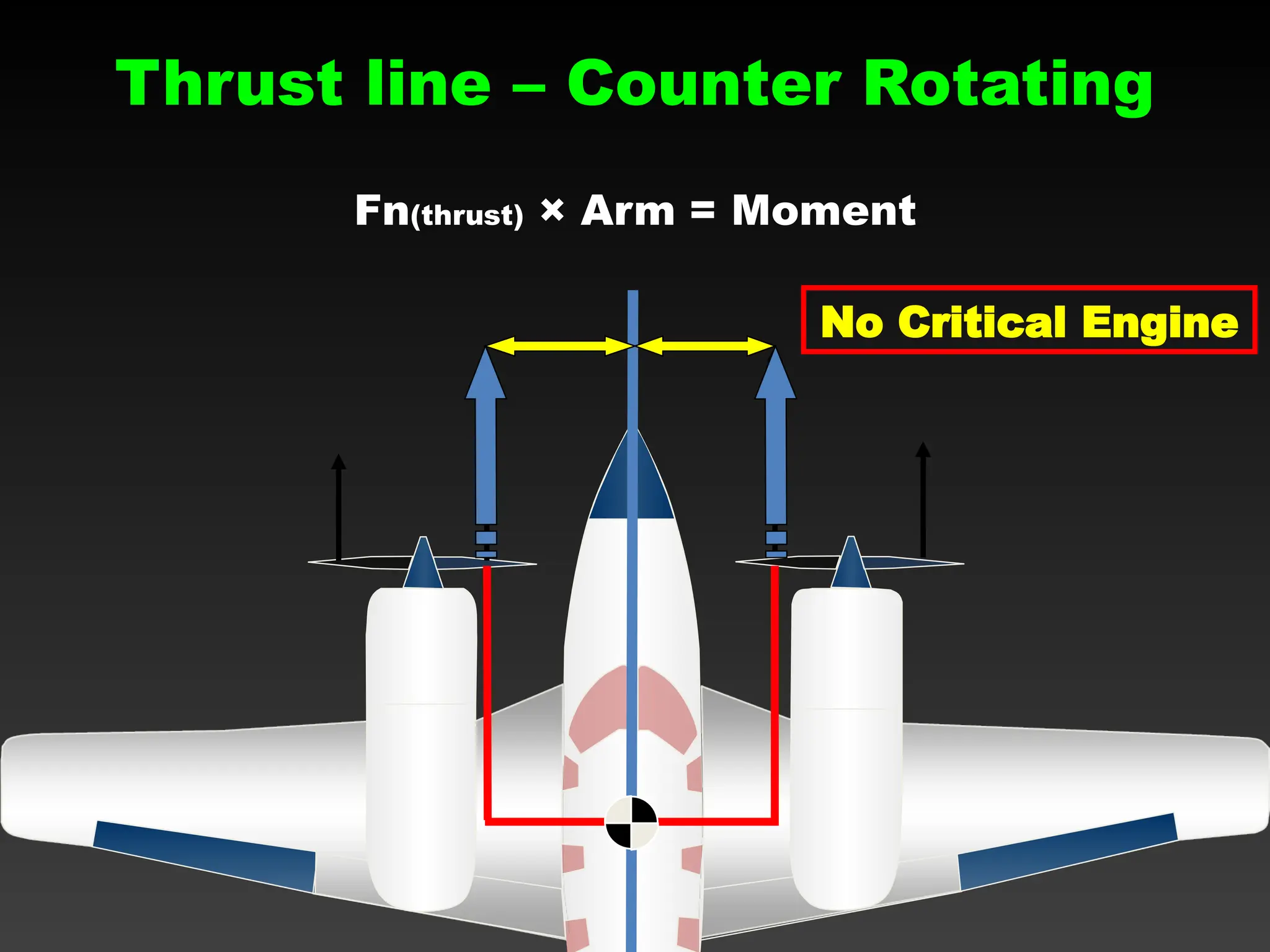
Thrust line – Counter Rotating
Fn(thrust) × Arm = Moment
No Critical Engine
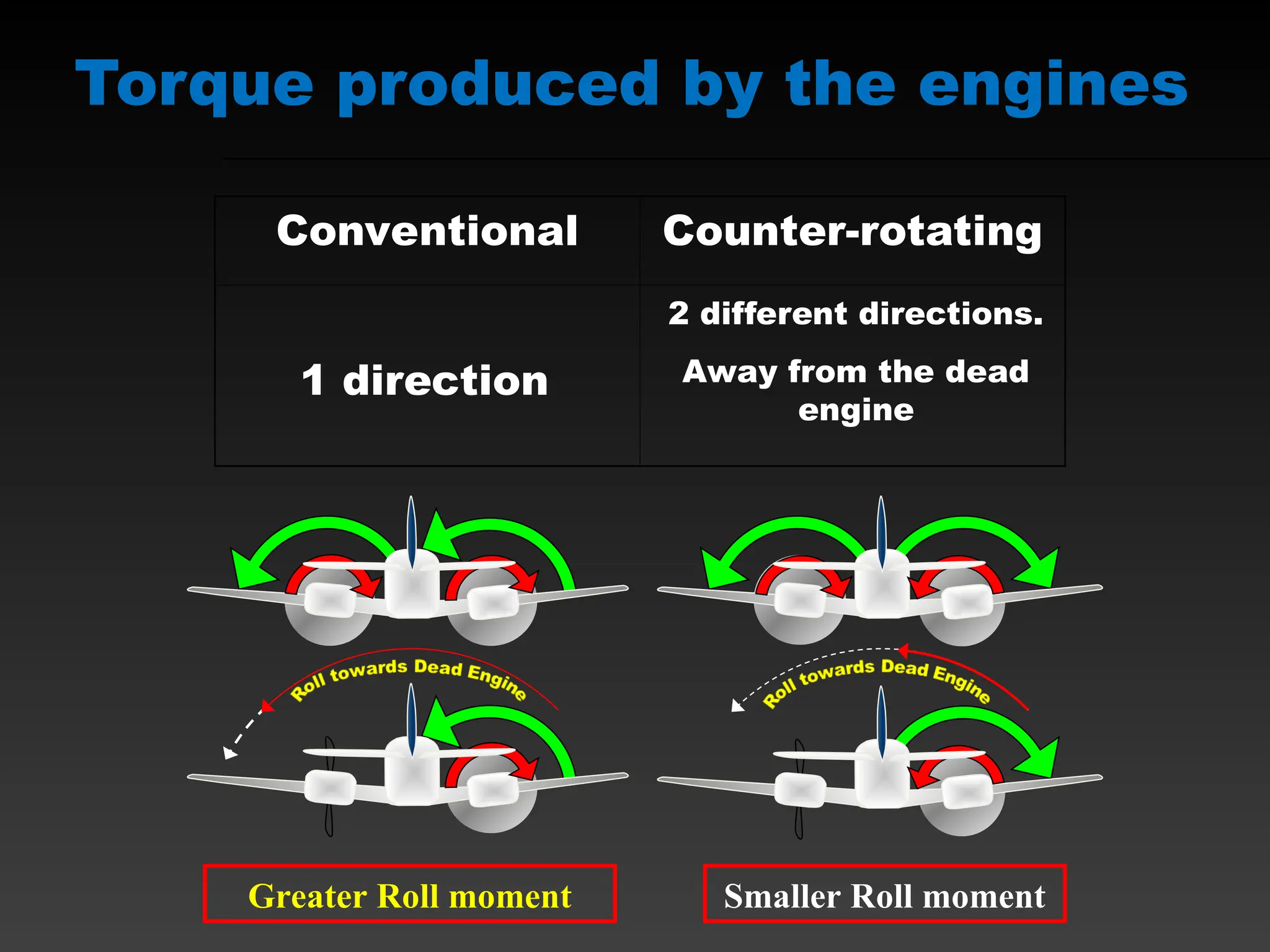
Torque produced by the engines
Conventional Counter-rotating
1 direction
2 different directions.
Away from the dead
engine
Greater Roll moment Smaller Roll moment
Lift
Weight
Drag
Thrust
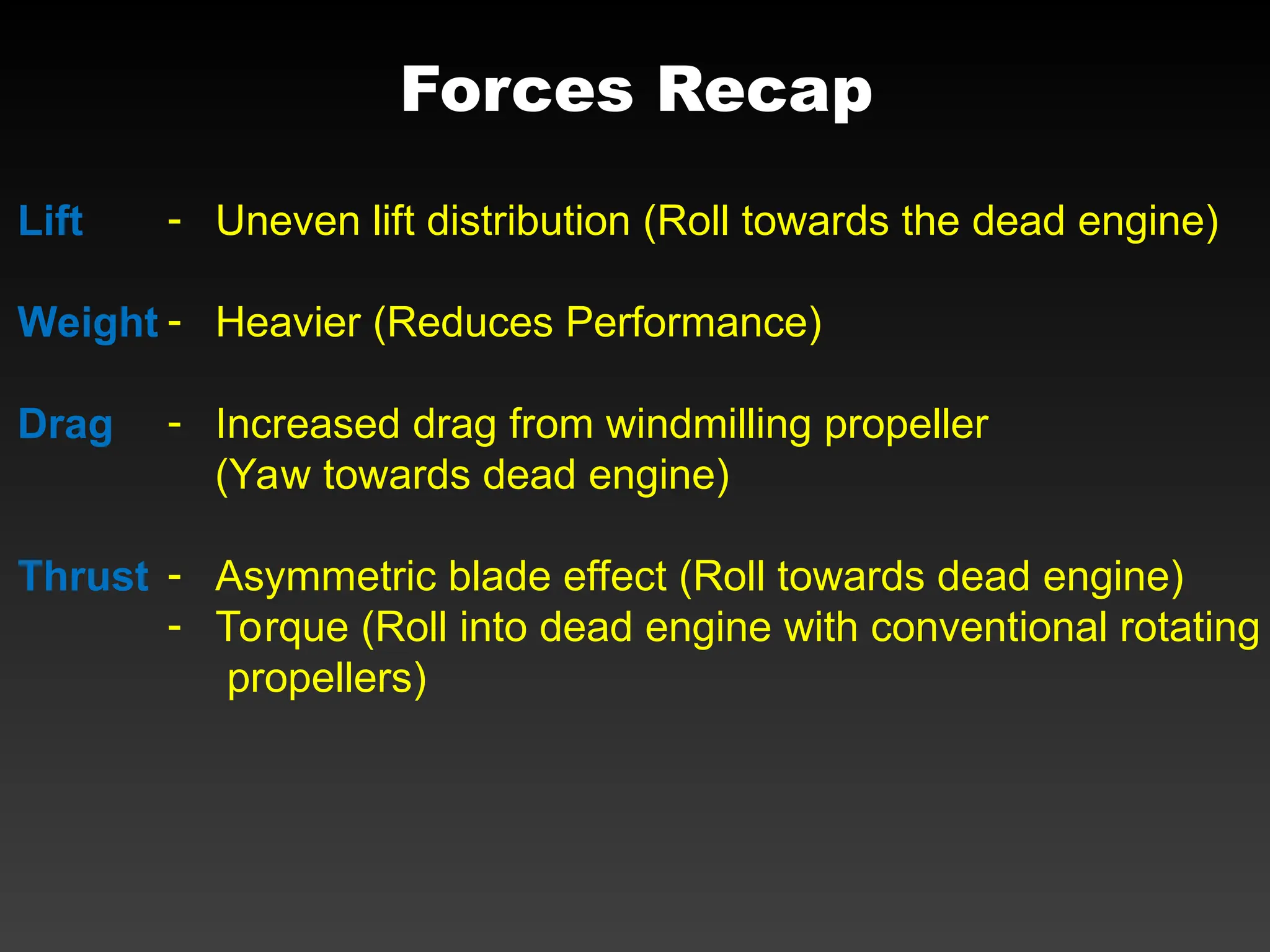
Forces Recap
- Uneven lift distribution (Roll towards the dead engine)
- Heavier (Reduces Performance)
- Increased drag from windmilling propeller
(Yaw towards dead engine)
- Asymmetric blade effect (Roll towards dead engine)
- Torque (Roll into dead engine with conventional rotating
propellers)
Break Time
Multi-Engine Principles of Flight
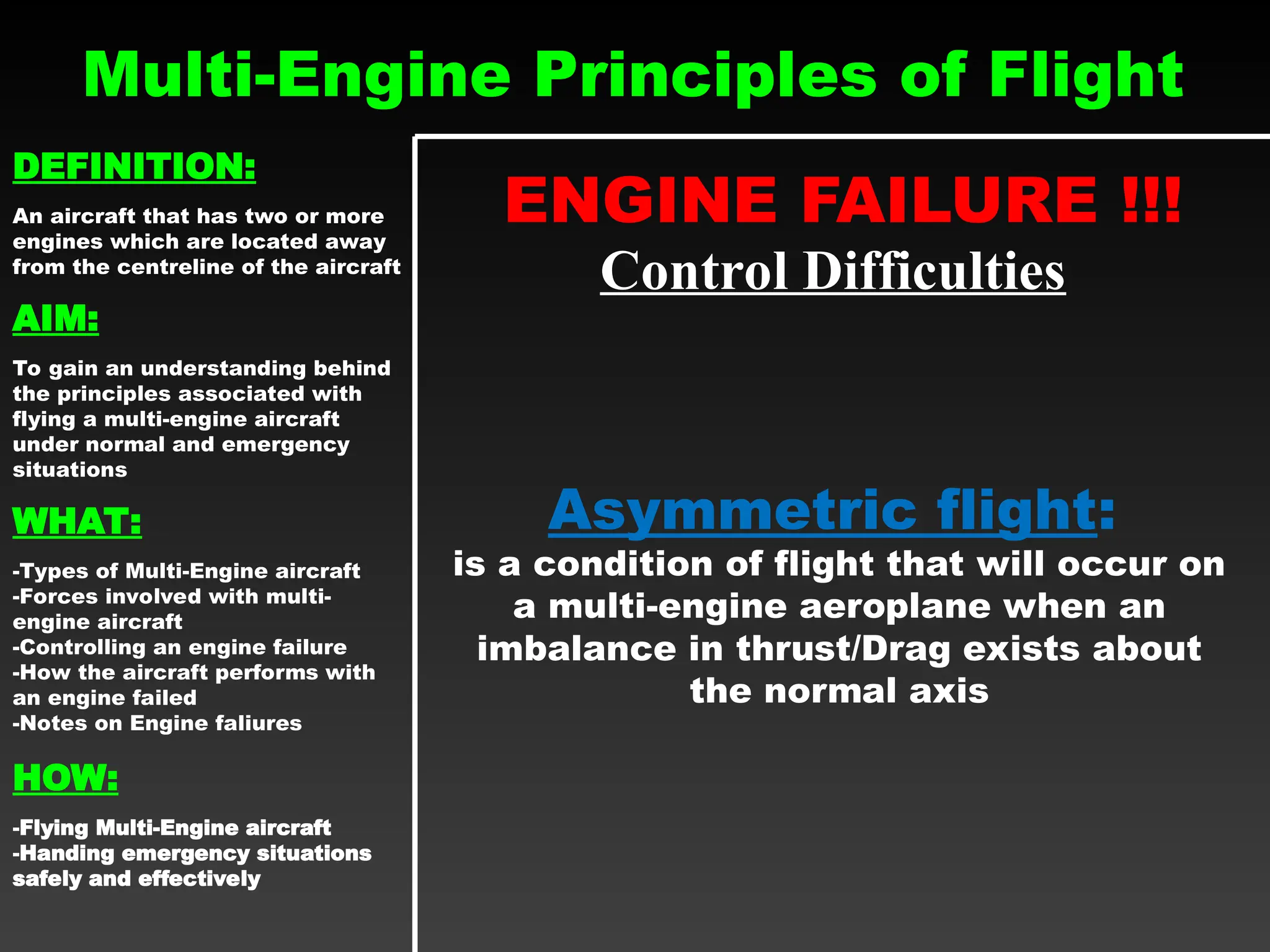
ENGINE FAILURE !!!
Control Difficulties
Asymmetric flight:
is a condition of flight that will occur on
a multi-engine aeroplane when an
imbalance in thrust/Drag exists about
the normal axis
DEFINITION:
An aircraft that has two or more
engines which are located away
from the centreline of the aircraft
AIM:
To gain an understanding behind
the principles associated with
flying a multi-engine aircraft
under normal and emergency
situations
WHAT:
-Types of Multi-Engine aircraft
-Forces involved with multi-
engine aircraft
-Controlling an engine failure
-How the aircraft performs with
an engine failed
-Notes on Engine faliures
HOW:
-Flying Multi-Engine aircraft
-Handing emergency situations
safely and effectively
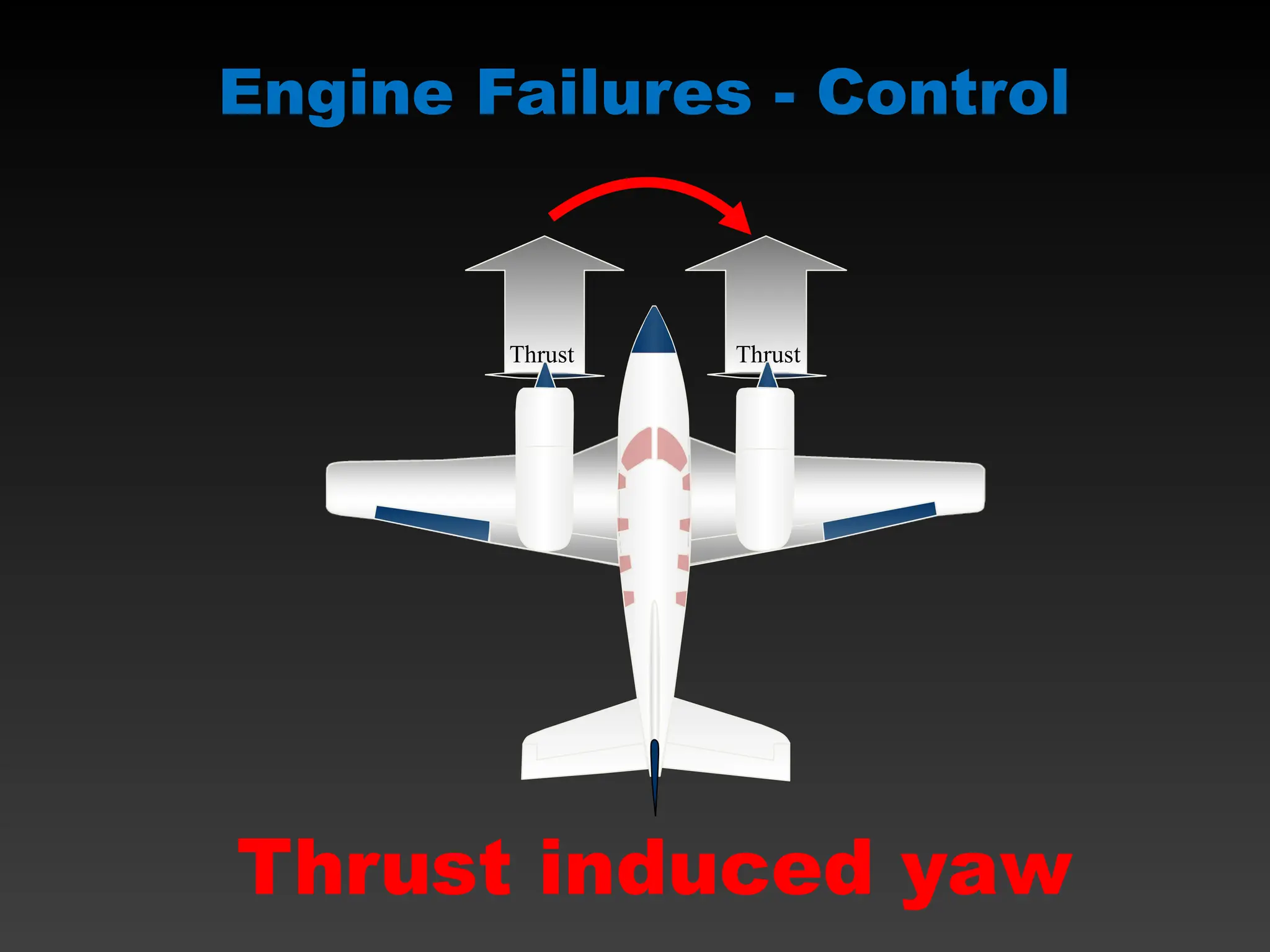
Engine Failures - Control
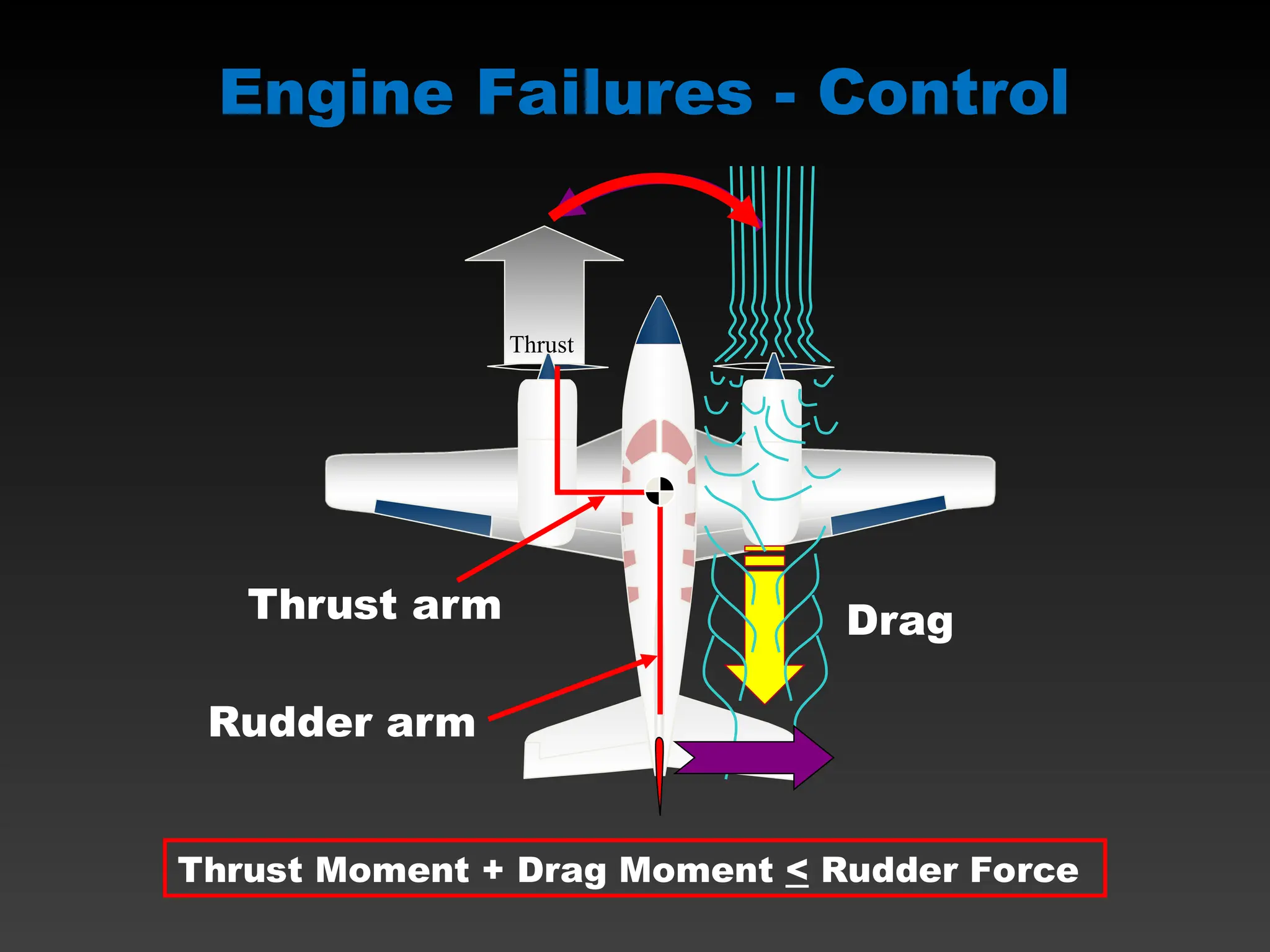
Thrust
Thrust
Thrust induced yaw
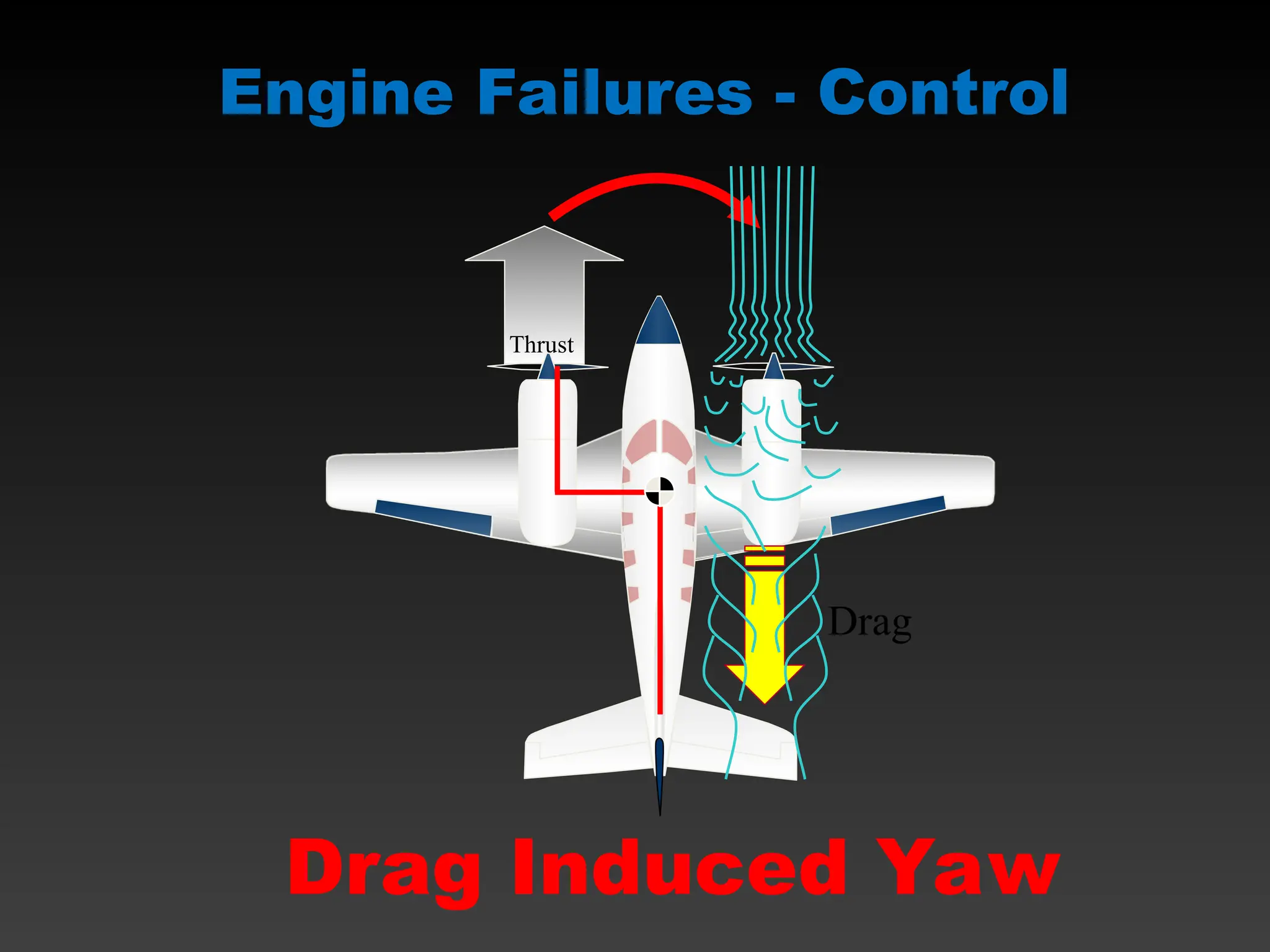
Thrust
Drag
Drag Induced Yaw
Engine Failures - Control
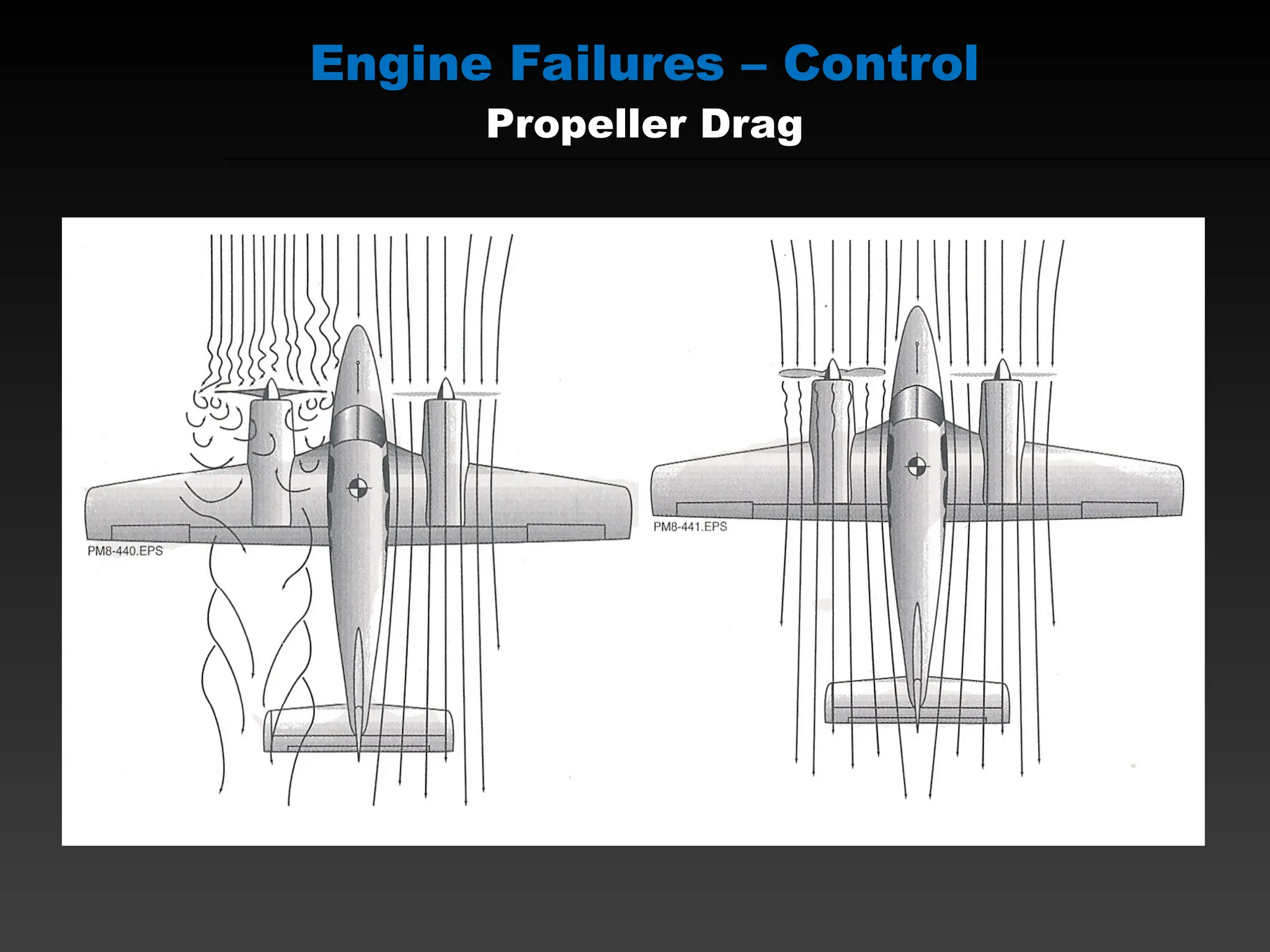
Engine Failures – Control
Propeller Drag
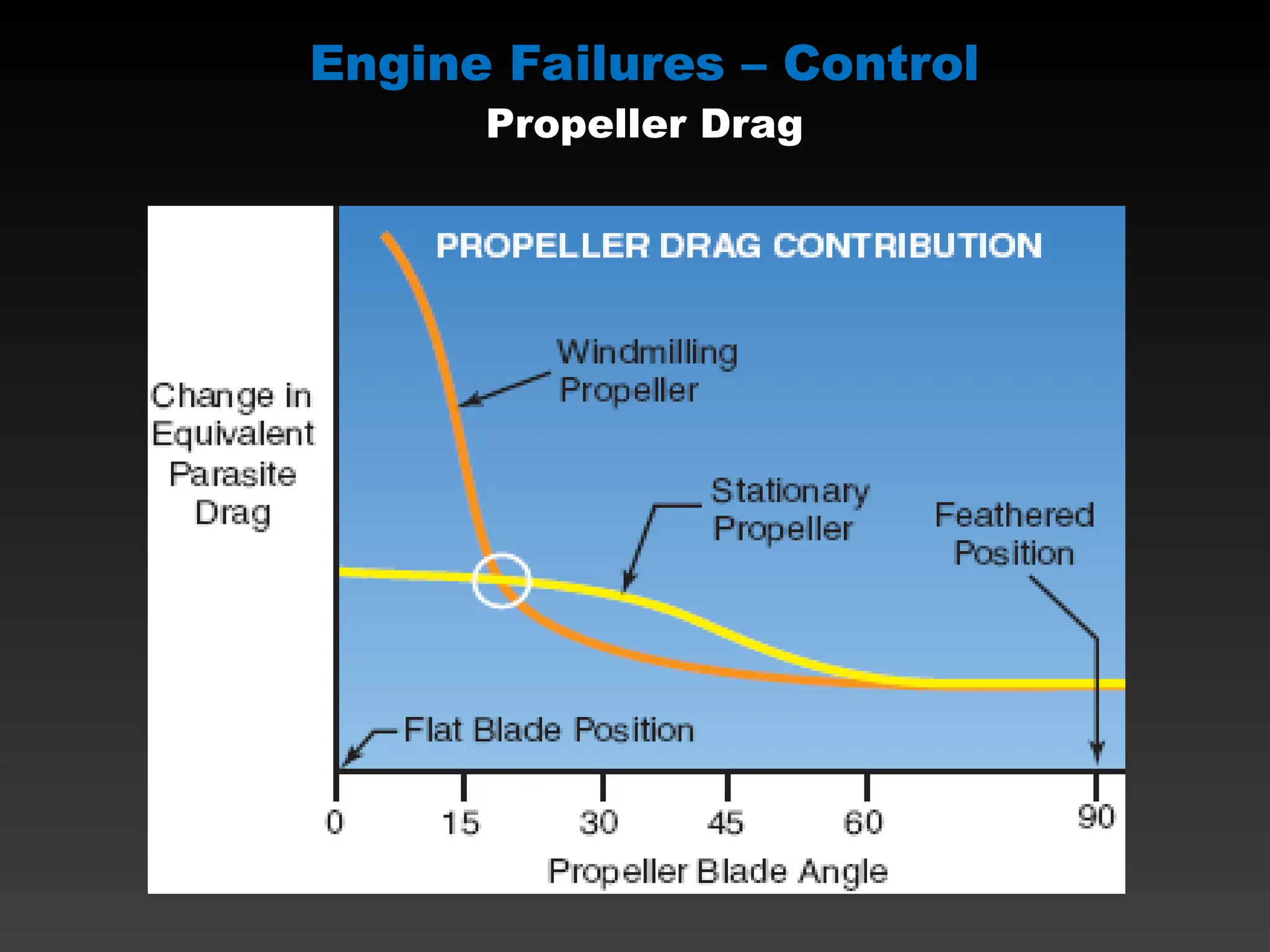
Engine Failures – Control
Propeller Drag
Thrust
Drag
Thrust arm
Rudder arm
Engine Failures - Control
Thrust Moment + Drag Moment < Rudder Force
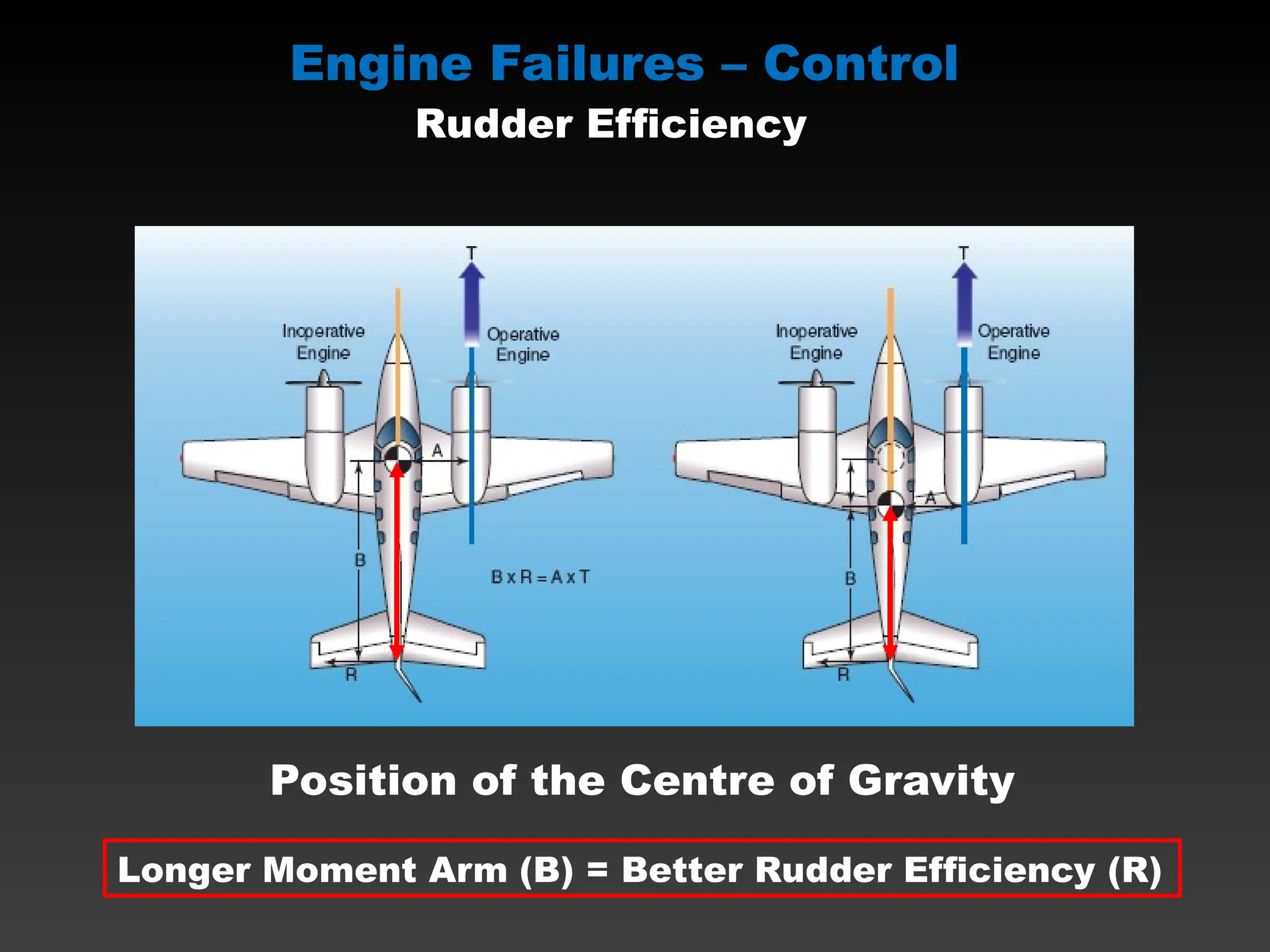
Longer Moment Arm (B) = Better Rudder Efficiency (R)
Position of the Centre of Gravity
Engine Failures – Control
Rudder Efficiency
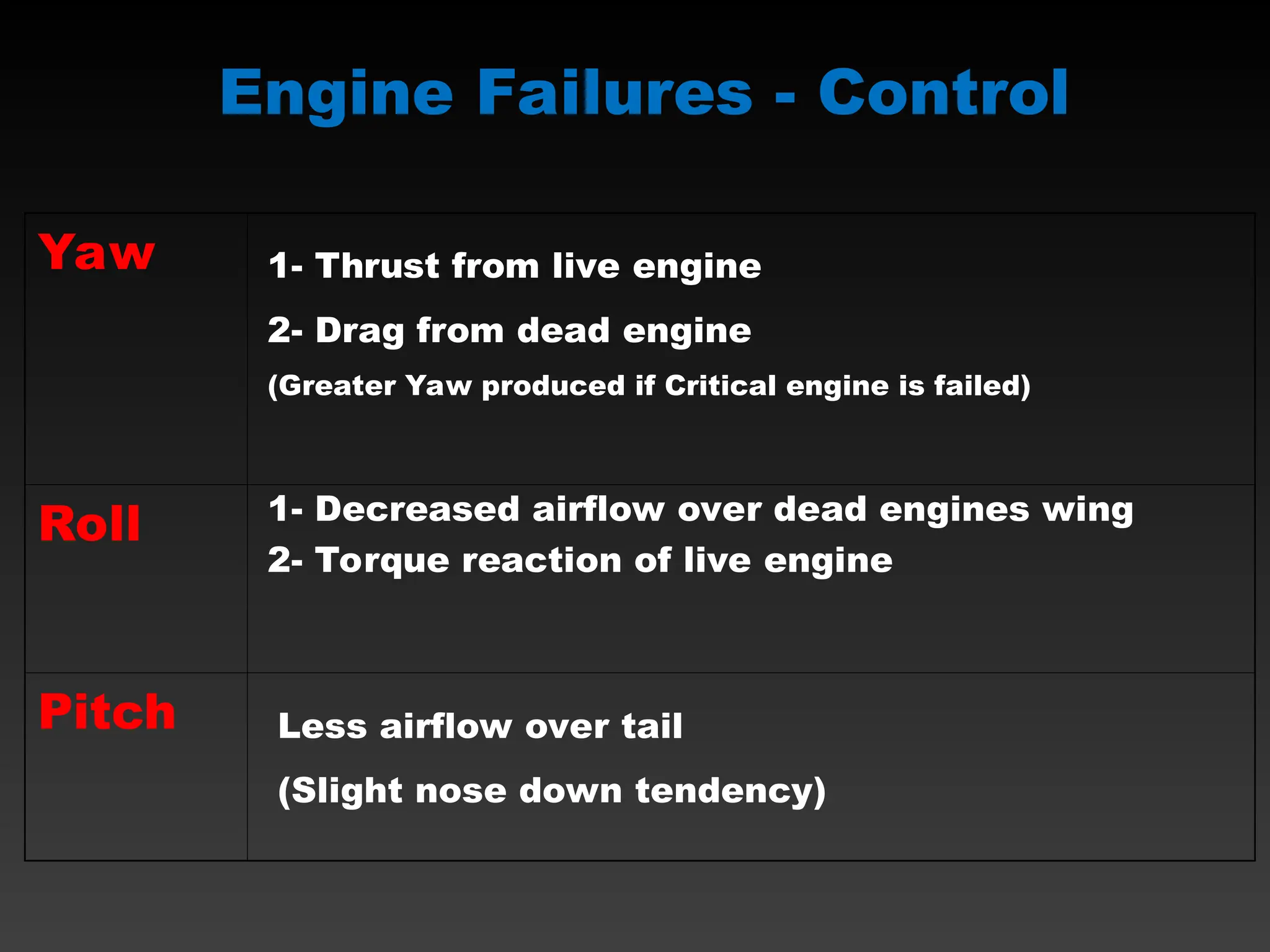
Yaw
Roll
Pitch
1- Thrust from live engine
2- Drag from dead engine
(Greater Yaw produced if Critical engine is failed)
1- Decreased airflow over dead engines wing
2- Torque reaction of live engine
Less airflow over tail
(Slight nose down tendency)
Engine Failures - Control
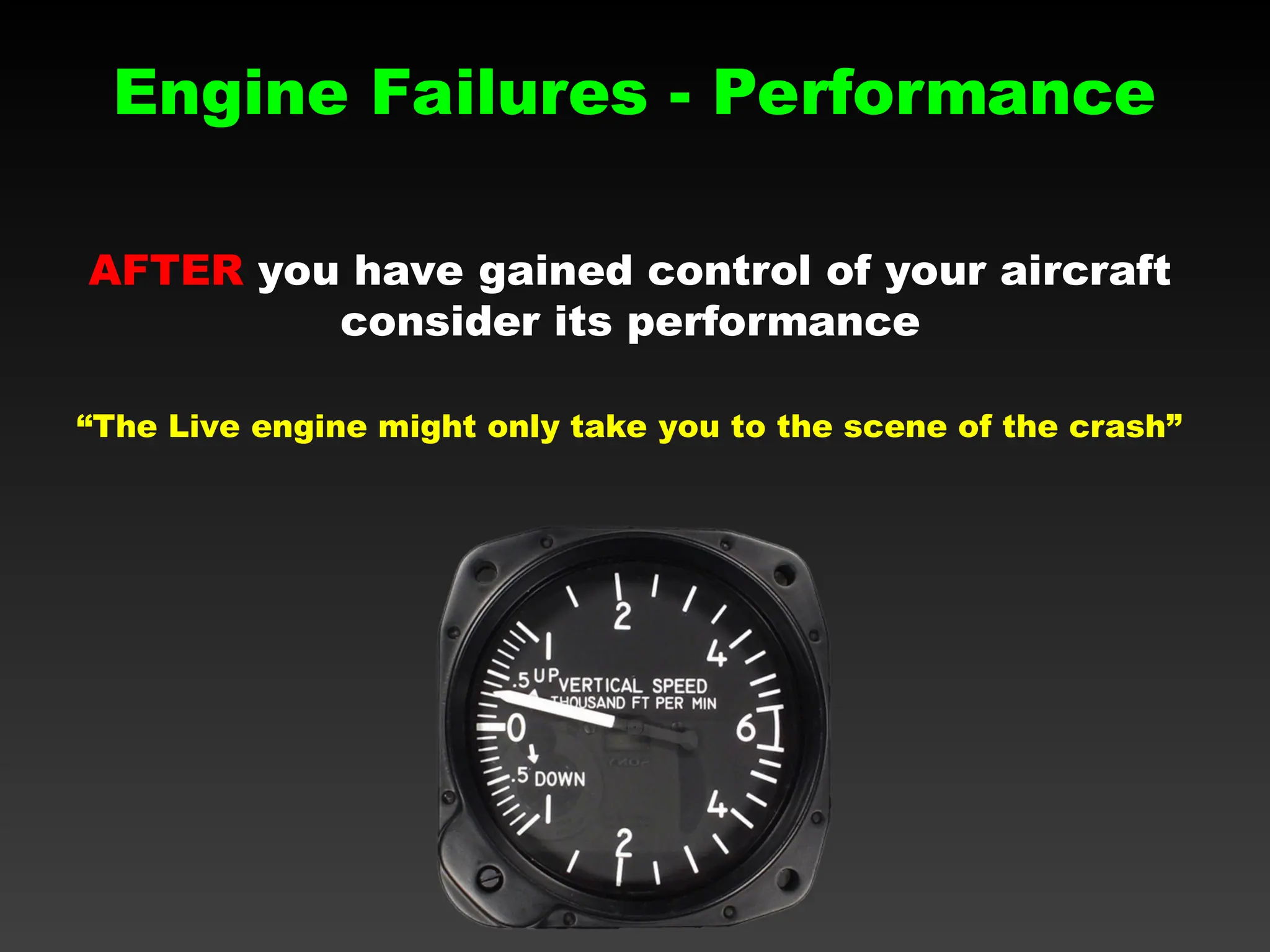
AFTER you have gained control of your aircraft
consider its performance
Engine Failures - Performance
“The Live engine might only take you to the scene of the crash”
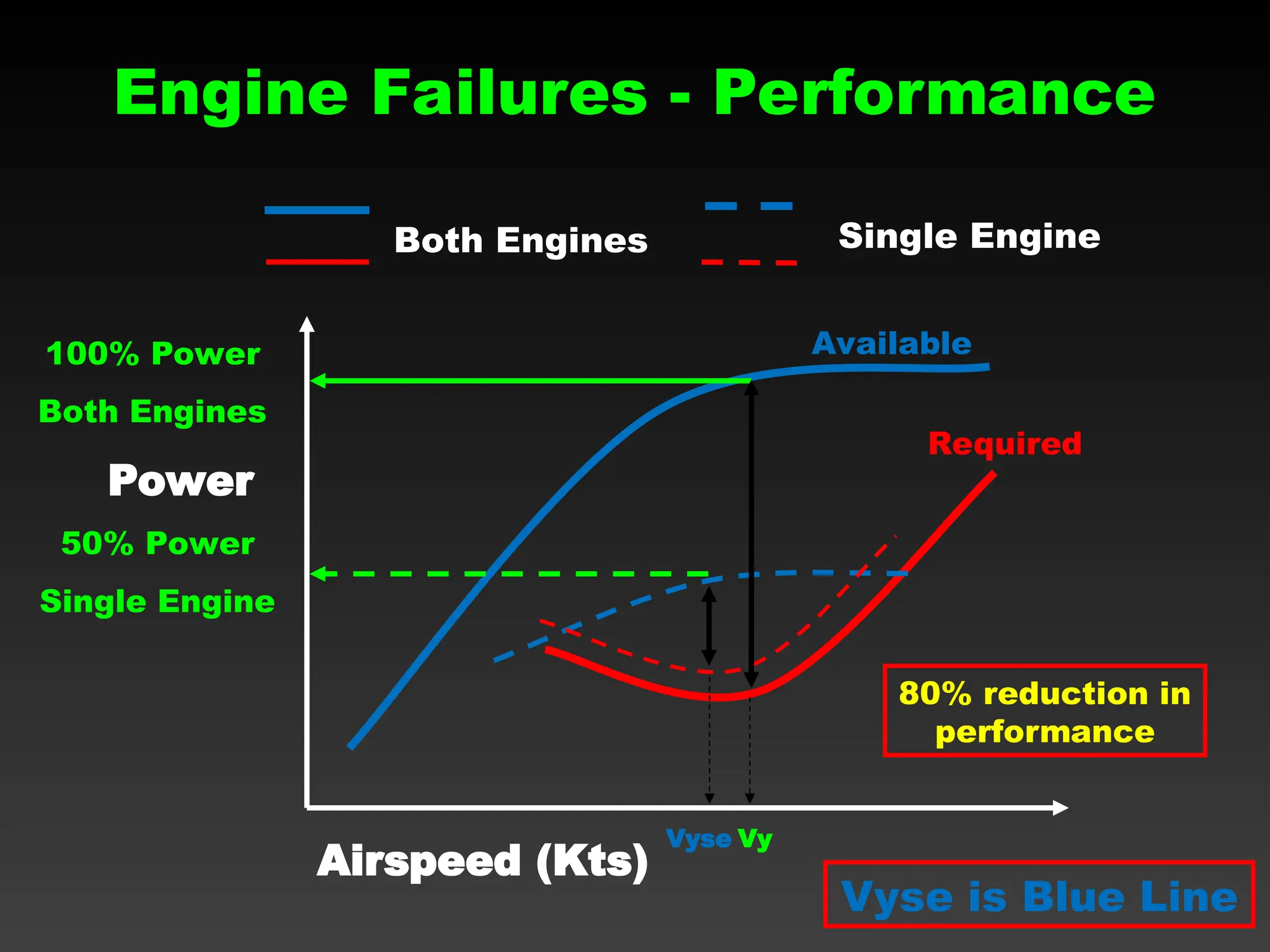
Power
Airspeed (Kts)
Available
Required
Both Engines Single Engine
100% Power
Both Engines
50% Power
Single Engine
Engine Failures - Performance
Vyse Vy
80% reduction in
performance
Vyse is Blue Line
Engine Failures - Performance
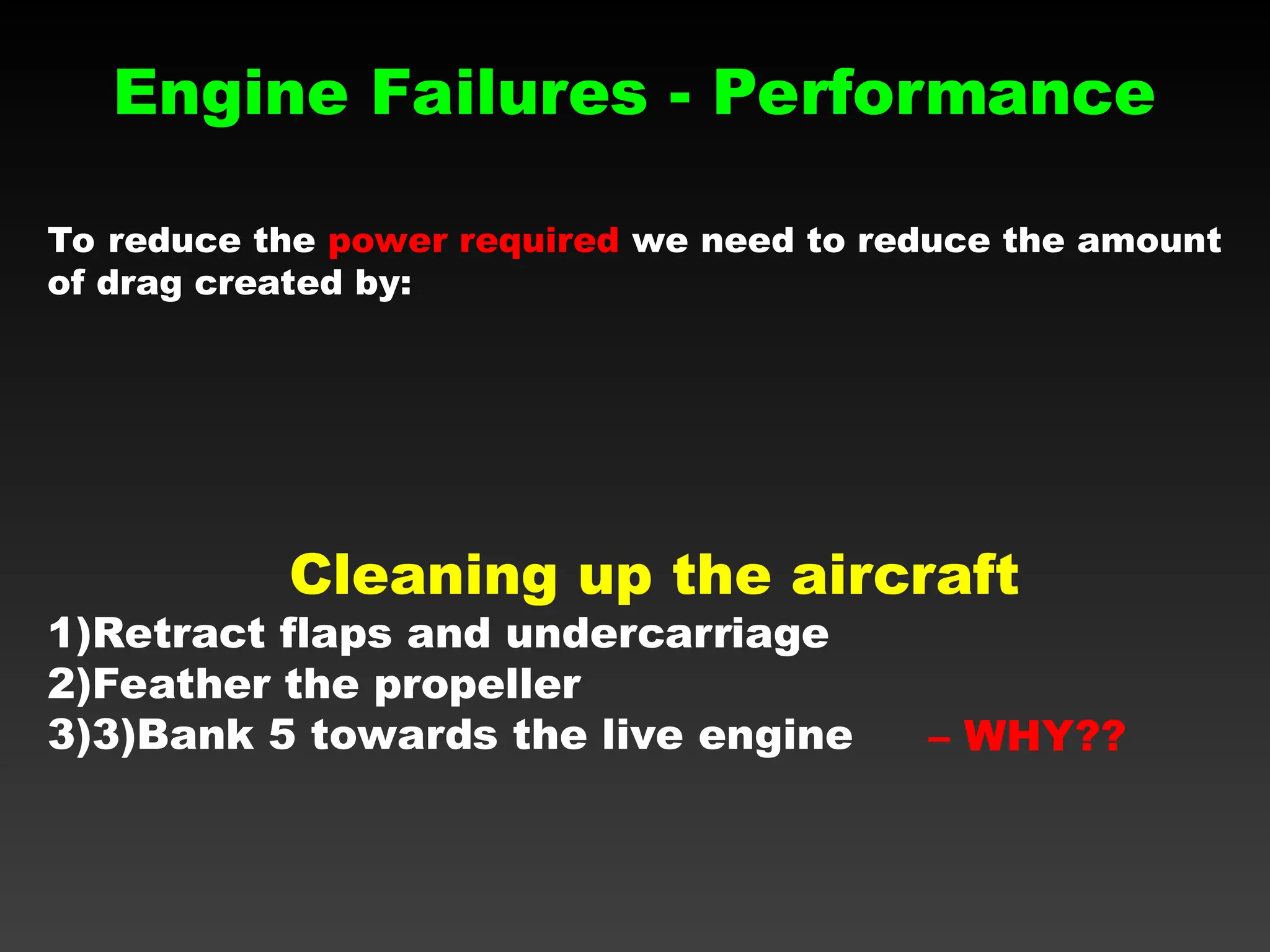
To reduce the power required we need to reduce the amount
of drag created by:
– WHY??
Cleaning up the aircraft
1)Retract flaps and undercarriage
2)Feather the propeller
3)3)Bank 5 towards the live engine
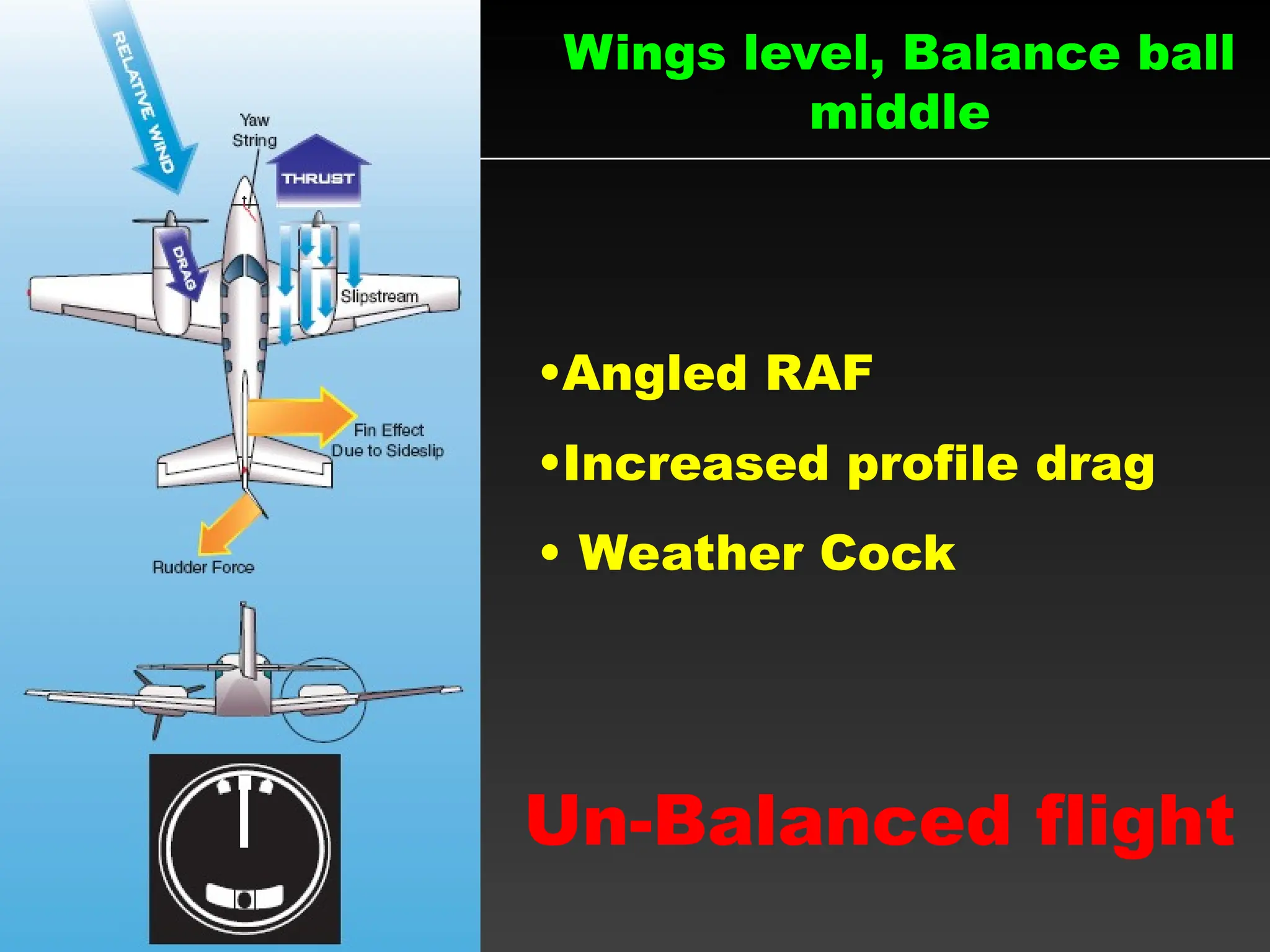
Wings level, Balance ball
middle
•Angled RAF
•Increased profile drag
• Weather Cock
Un-Balanced flight
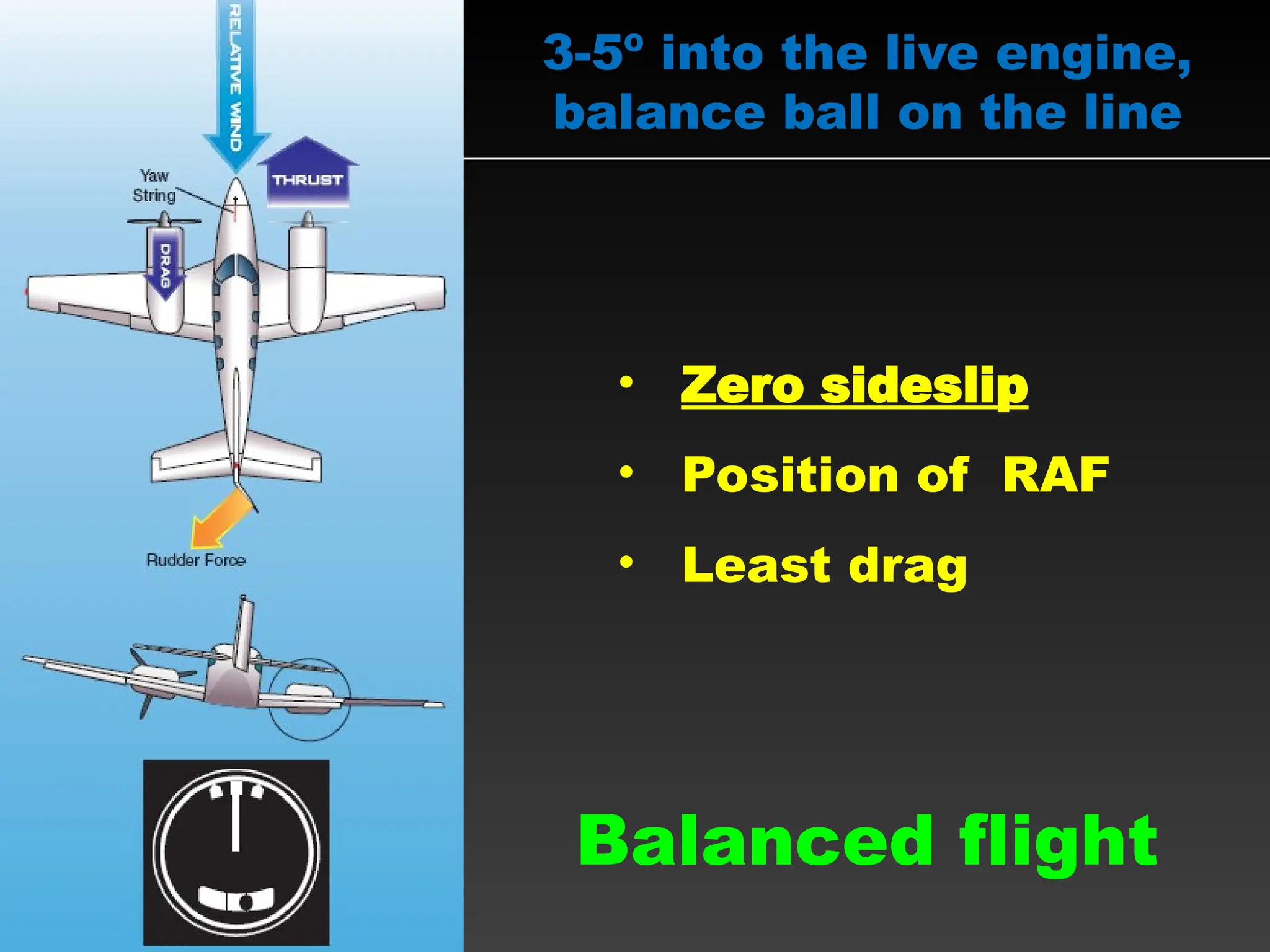
3-5º into the live engine,
balance ball on the line
• Zero sideslip
• Position of RAF
• Least drag
Balanced flight
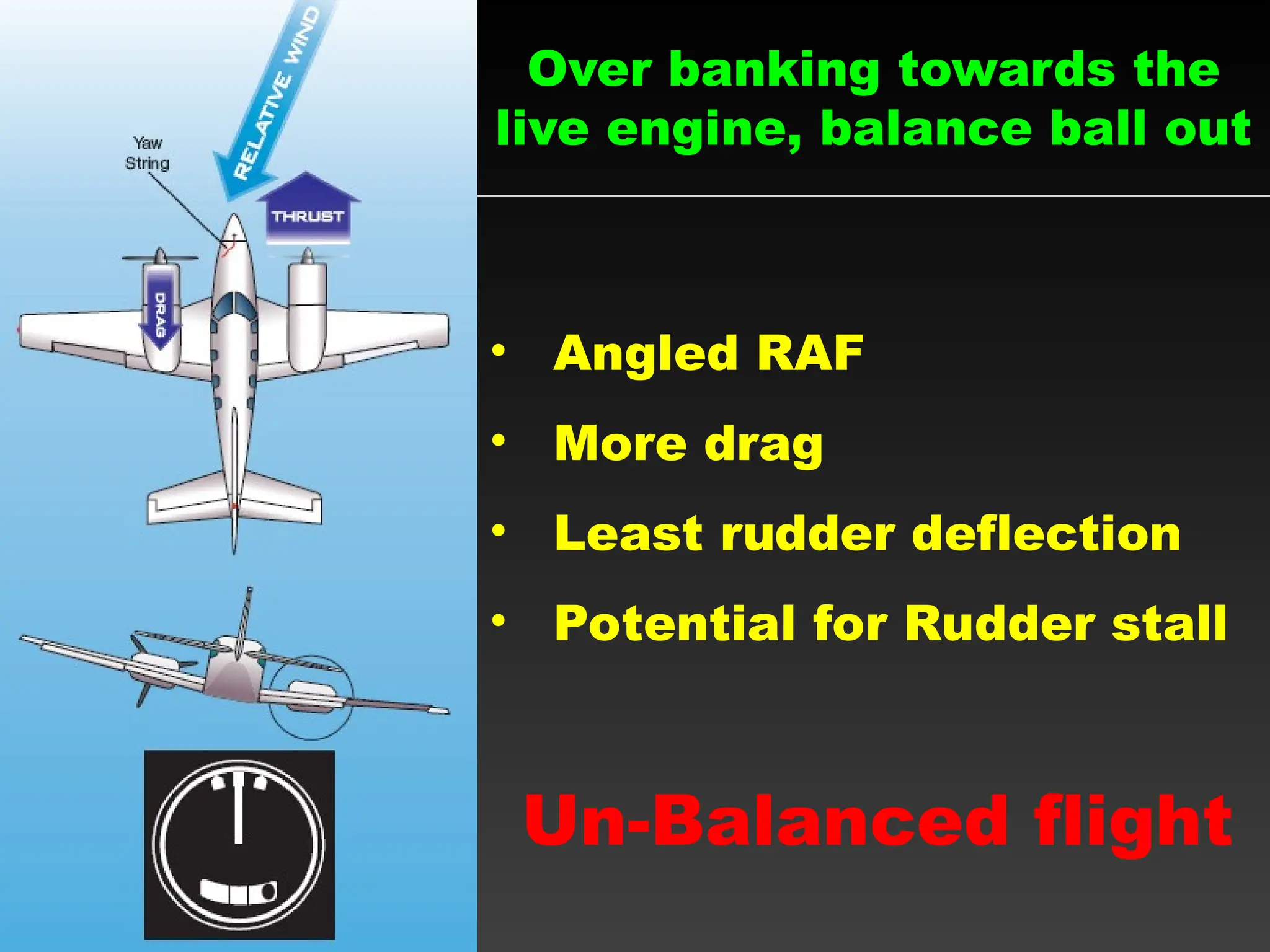
Over banking towards the
live engine, balance ball out
• Angled RAF
• More drag
• Least rudder deflection
• Potential for Rudder stall
Un-Balanced flight
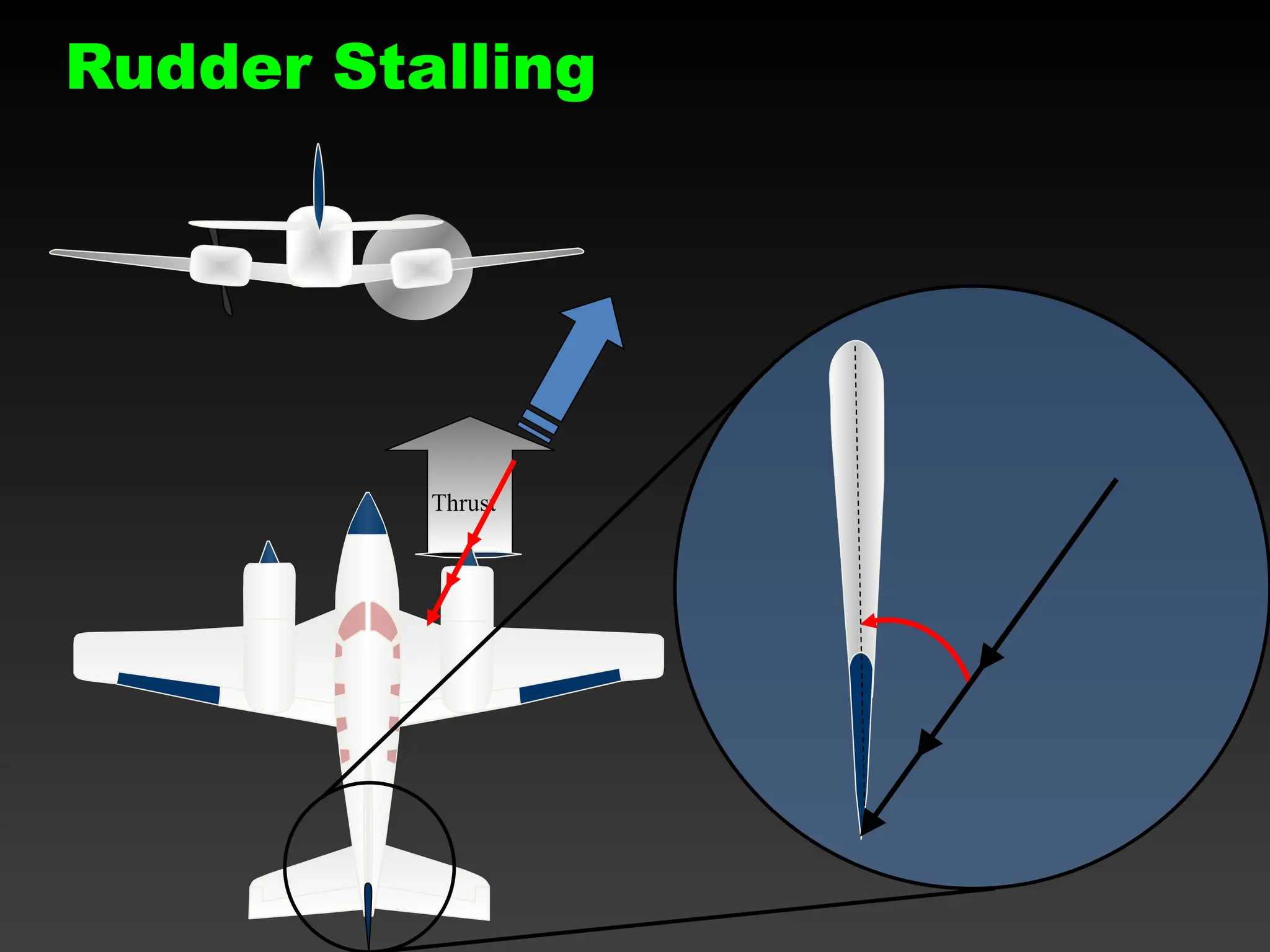
Thrust
Rudder Stalling
Air Exercise
Familiarization
Procedures- Checks & Actions
Prop Synchronizing
Steep Turns
Stalls - 4000’ AGL
Airmanship
Engine Management – Cowl flaps
VLE, VLO & VFE
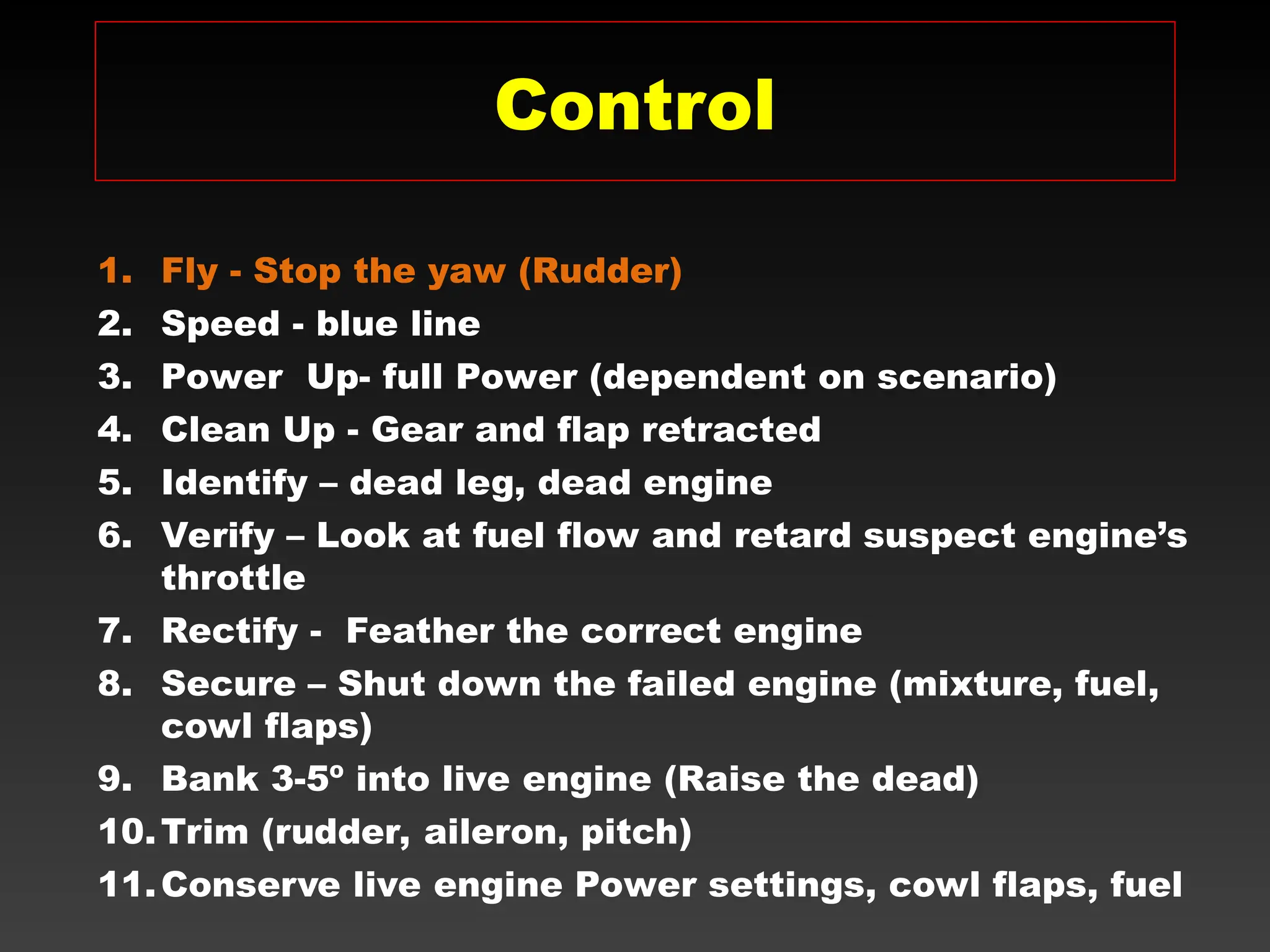
1. Fly - Stop the yaw (Rudder)
2. Speed - blue line
3. Power Up- full Power (dependent on scenario)
4. Clean Up - Gear and flap retracted
5. Identify – dead leg, dead engine
6. Verify – Look at fuel flow and retard suspect engine’s
throttle
7. Rectify - Feather the correct engine
8. Secure – Shut down the failed engine (mixture, fuel,
cowl flaps)
9. Bank 3-5º into live engine (Raise the dead)
10.Trim (rudder, aileron, pitch)
11.Conserve live engine Power settings, cowl flaps, fuel
Control
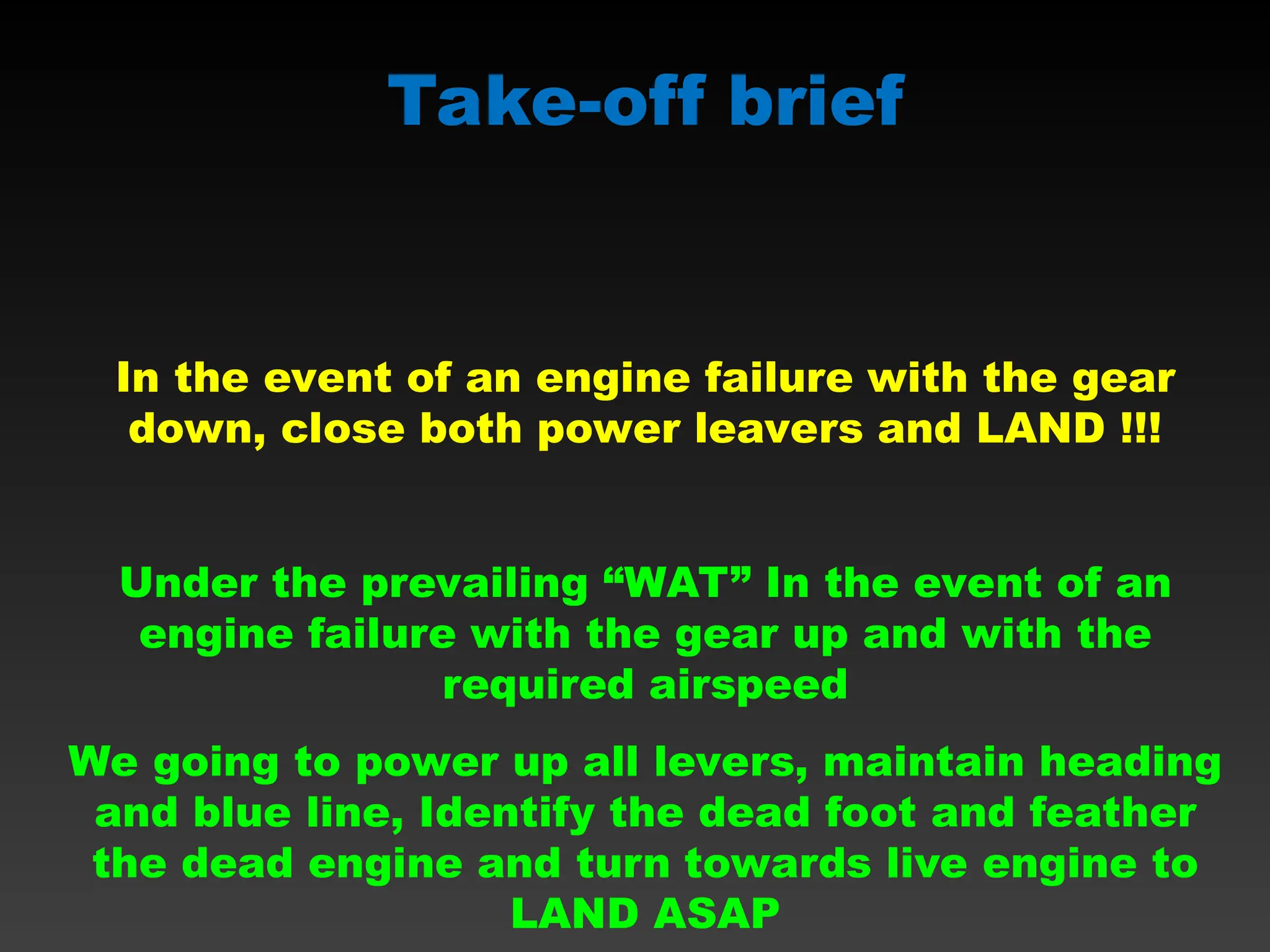
Take-off brief
In the event of an engine failure with the gear
down, close both power leavers and LAND !!!
Under the prevailing “WAT” In the event of an
engine failure with the gear up and with the
required airspeed
We going to power up all levers, maintain heading
and blue line, Identify the dead foot and feather
the dead engine and turn towards live engine to
LAND ASAP
THE END

Multi Engine princible of flight ppt aviation

  • 1.
    Multi-Engine Principles ofFlight DEFINITION: An aircraft that has two or more engines which are located away from the centreline of the aircraft AIM: To gain an understanding behind the principles associated with flying a multi-engine aircraft under normal and emergency situations WHAT: -Types of Multi-Engine aircraft -Forces involved with multi- engine aircraft -Controlling an engine failure -How the aircraft performs with an engine failed -Notes on Engine faliures HOW: -Flying Multi-Engine aircraft -Handing emergency situations safely and effectively
  • 2.
    Cessna 337 Multi-Engine Principlesof Flight Types of Multi-Engine aircraft Douglas DC4 Junkers JU52 Beechcraft Baron 58
  • 3.
    Forces on aTwin And how it is affected by one engine failing Weight 1) Extra engine 2) Longer wings 3) Extra equipment 4) Larger control surfaces 5) Larger fuel tanks
  • 4.
  • 5.
  • 6.
  • 7.
  • 8.
    Drag 1) Extra engine 2)Longer wings 3) Extra equipment 4) Larger control surfaces
  • 9.
  • 10.
  • 11.
    Thrust Line Straight andLevel Thrust Thrust
  • 12.
    High AoA –Asymmetric blade thrust Thrust Line
  • 13.
  • 14.
    Weight × Arm= Moment ( Larger moment = larger force ) Fn(thrust) × Arm = Moment
  • 15.
    At a Highangle off attack, which direction will the nose want to yaw? Critical Engine: Engine that fails will make the situation more critical Which engine if failed would make the scenario worse? Thrust Line Question ???? To the LEFT
  • 16.
    Thrust line –Counter Rotating Fn(thrust) × Arm = Moment No Critical Engine
  • 17.
    Torque produced bythe engines Conventional Counter-rotating 1 direction 2 different directions. Away from the dead engine Greater Roll moment Smaller Roll moment
  • 18.
    Lift Weight Drag Thrust Forces Recap - Unevenlift distribution (Roll towards the dead engine) - Heavier (Reduces Performance) - Increased drag from windmilling propeller (Yaw towards dead engine) - Asymmetric blade effect (Roll towards dead engine) - Torque (Roll into dead engine with conventional rotating propellers)
  • 19.
  • 20.
    Multi-Engine Principles ofFlight ENGINE FAILURE !!! Control Difficulties Asymmetric flight: is a condition of flight that will occur on a multi-engine aeroplane when an imbalance in thrust/Drag exists about the normal axis DEFINITION: An aircraft that has two or more engines which are located away from the centreline of the aircraft AIM: To gain an understanding behind the principles associated with flying a multi-engine aircraft under normal and emergency situations WHAT: -Types of Multi-Engine aircraft -Forces involved with multi- engine aircraft -Controlling an engine failure -How the aircraft performs with an engine failed -Notes on Engine faliures HOW: -Flying Multi-Engine aircraft -Handing emergency situations safely and effectively
  • 21.
    Engine Failures -Control Thrust Thrust Thrust induced yaw
  • 22.
  • 23.
    Engine Failures –Control Propeller Drag
  • 24.
    Engine Failures –Control Propeller Drag
  • 25.
    Thrust Drag Thrust arm Rudder arm EngineFailures - Control Thrust Moment + Drag Moment < Rudder Force
  • 26.
    Longer Moment Arm(B) = Better Rudder Efficiency (R) Position of the Centre of Gravity Engine Failures – Control Rudder Efficiency
  • 27.
    Yaw Roll Pitch 1- Thrust fromlive engine 2- Drag from dead engine (Greater Yaw produced if Critical engine is failed) 1- Decreased airflow over dead engines wing 2- Torque reaction of live engine Less airflow over tail (Slight nose down tendency) Engine Failures - Control
  • 28.
    AFTER you havegained control of your aircraft consider its performance Engine Failures - Performance “The Live engine might only take you to the scene of the crash”
  • 29.
    Power Airspeed (Kts) Available Required Both EnginesSingle Engine 100% Power Both Engines 50% Power Single Engine Engine Failures - Performance Vyse Vy 80% reduction in performance Vyse is Blue Line
  • 30.
    Engine Failures -Performance To reduce the power required we need to reduce the amount of drag created by: – WHY?? Cleaning up the aircraft 1)Retract flaps and undercarriage 2)Feather the propeller 3)3)Bank 5 towards the live engine
  • 31.
    Wings level, Balanceball middle •Angled RAF •Increased profile drag • Weather Cock Un-Balanced flight
  • 32.
    3-5º into thelive engine, balance ball on the line • Zero sideslip • Position of RAF • Least drag Balanced flight
  • 33.
    Over banking towardsthe live engine, balance ball out • Angled RAF • More drag • Least rudder deflection • Potential for Rudder stall Un-Balanced flight
  • 34.
  • 35.
    Air Exercise Familiarization Procedures- Checks& Actions Prop Synchronizing Steep Turns Stalls - 4000’ AGL Airmanship Engine Management – Cowl flaps VLE, VLO & VFE
  • 36.
    1. Fly -Stop the yaw (Rudder) 2. Speed - blue line 3. Power Up- full Power (dependent on scenario) 4. Clean Up - Gear and flap retracted 5. Identify – dead leg, dead engine 6. Verify – Look at fuel flow and retard suspect engine’s throttle 7. Rectify - Feather the correct engine 8. Secure – Shut down the failed engine (mixture, fuel, cowl flaps) 9. Bank 3-5º into live engine (Raise the dead) 10.Trim (rudder, aileron, pitch) 11.Conserve live engine Power settings, cowl flaps, fuel Control
  • 37.
    Take-off brief In theevent of an engine failure with the gear down, close both power leavers and LAND !!! Under the prevailing “WAT” In the event of an engine failure with the gear up and with the required airspeed We going to power up all levers, maintain heading and blue line, Identify the dead foot and feather the dead engine and turn towards live engine to LAND ASAP
  • 38.

Editor's Notes

  • #3 Look at how another engine affects the aircraft. Increase in airflow over the wings.

  • #5 Increase in drag
  • #6 Increase in drag
  • #7 Increase in drag
  • #12 P-factor
  • #13 Which way do the props turn from the cockpit
  • #15 Undesirable effect
  • #21 If reduce thrust on one of the engine. What will happen? Yaw.
  • #22 Thrust is not the only yaw force. Look at the drag created by the dead engine
  • #23 Wind milling prop creates the largest amount of drag
  • #24 Wind milling prop creates the largest amount of drag
  • #30 We need to reduce the amount of drag as possible to increase performance. We do this by banking the aircraft into the live engine.
  • #34 Angle of attack will be larger with RAF from the side. Rudder stall BAD. Larger weather cocking moment into dead engine. Results in higher VMCA.