Vmca
DEFINITION:
Minimum speed at which
directional control can be
maintained in the TAKE-OFF
configuration
AIM:
To gain an understanding behind
the principles associated with
loosing directional control of an
aircraft due to decreased control
effectiveness
WHAT:
-A/c Speeds
-VMCA defined
-Factors affecting VMCA
-VMCA vs Stall
-Pilot Actions
-Air exercise
HOW:
-Flying Multi-Engine aircraft
-Handing emergency situations
safely and effectively
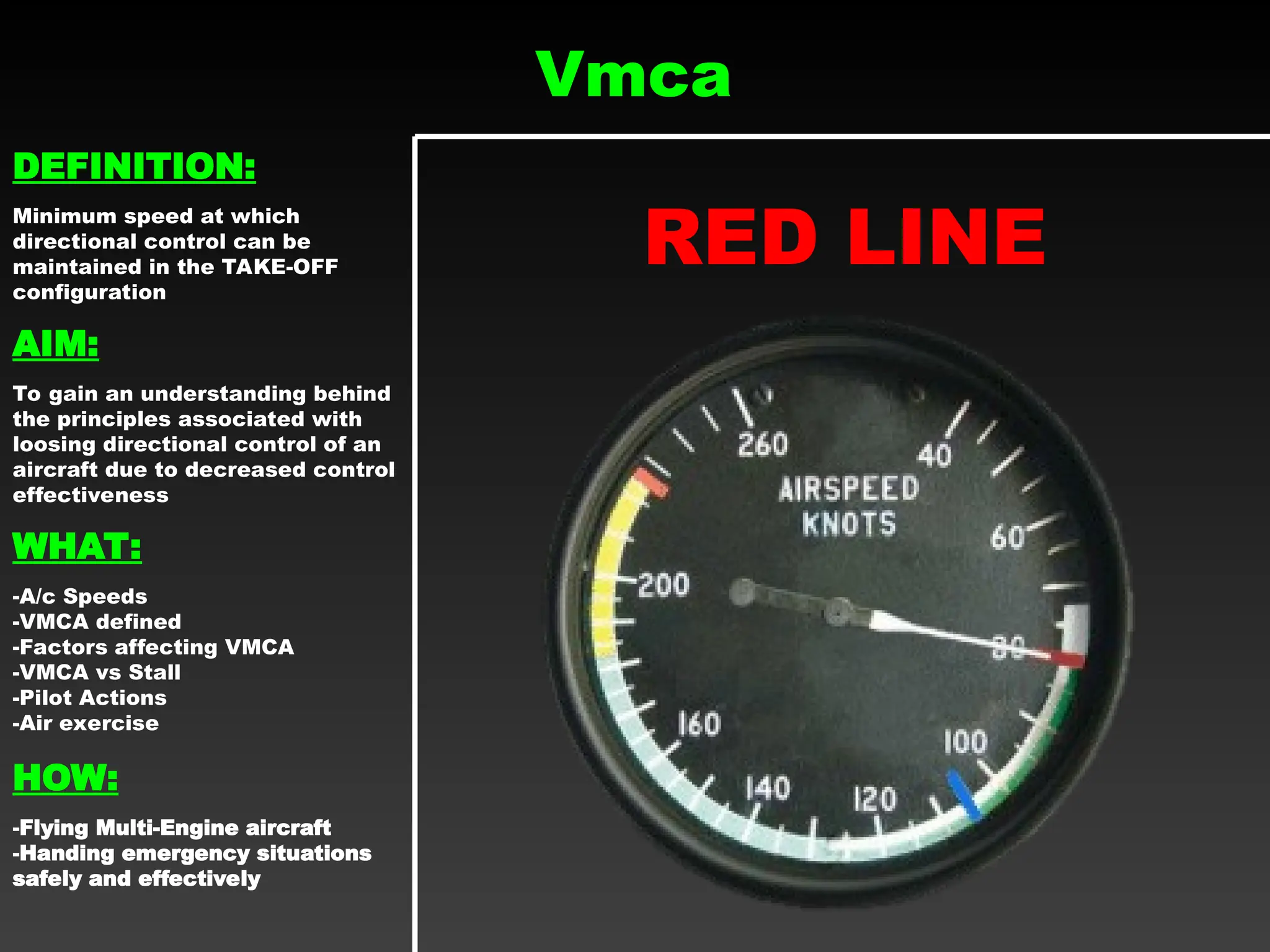
RED LINE
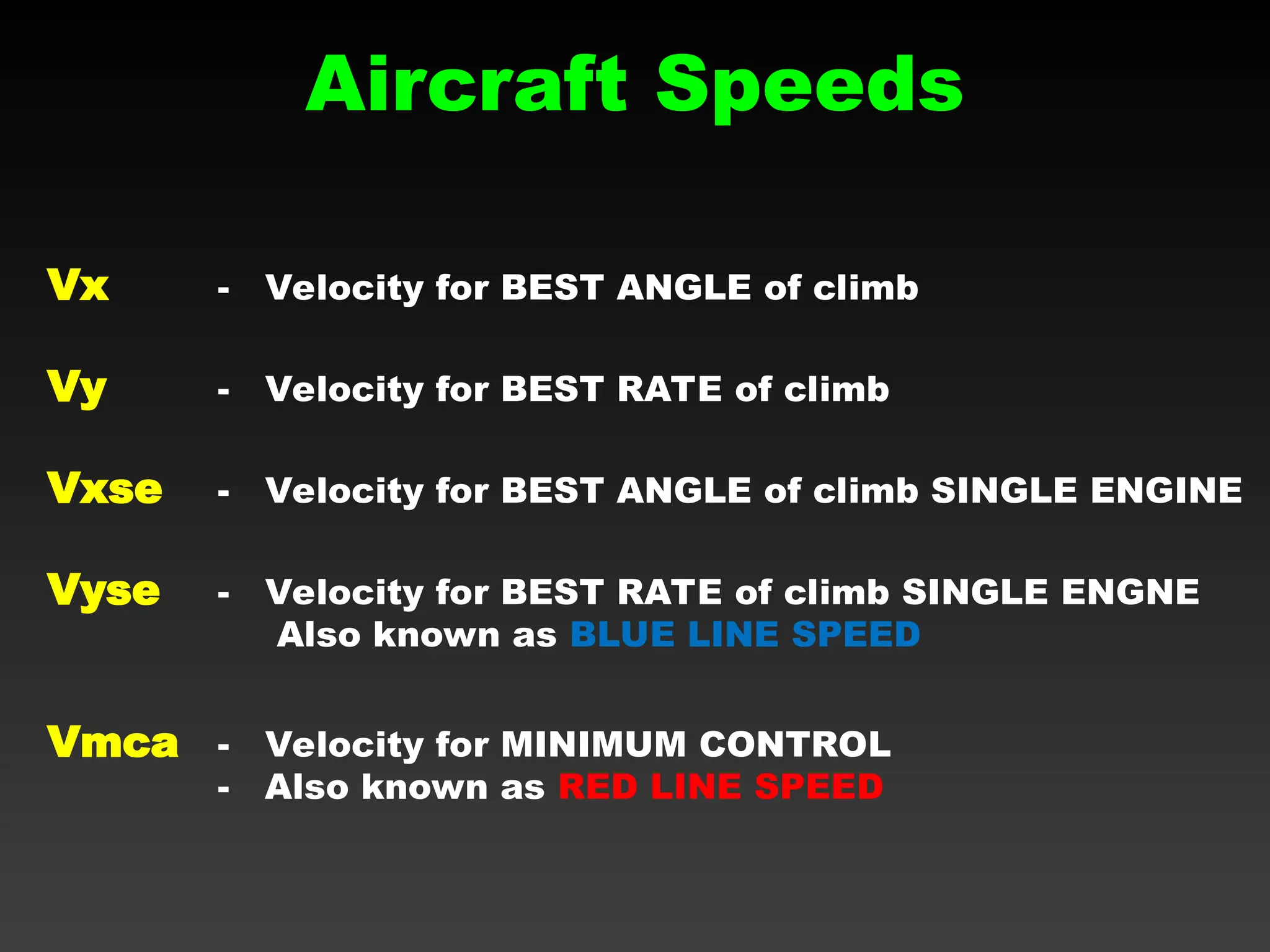
Aircraft Speeds
Vx
Vy
Vxse
Vyse
Vmca
- Velocity for BEST ANGLE of climb
- Velocity for BEST RATE of climb
- Velocity for BEST ANGLE of climb SINGLE ENGINE
- Velocity for BEST RATE of climb SINGLE ENGNE
Also known as BLUE LINE SPEED
- Velocity for MINIMUM CONTROL
- Also known as RED LINE SPEED
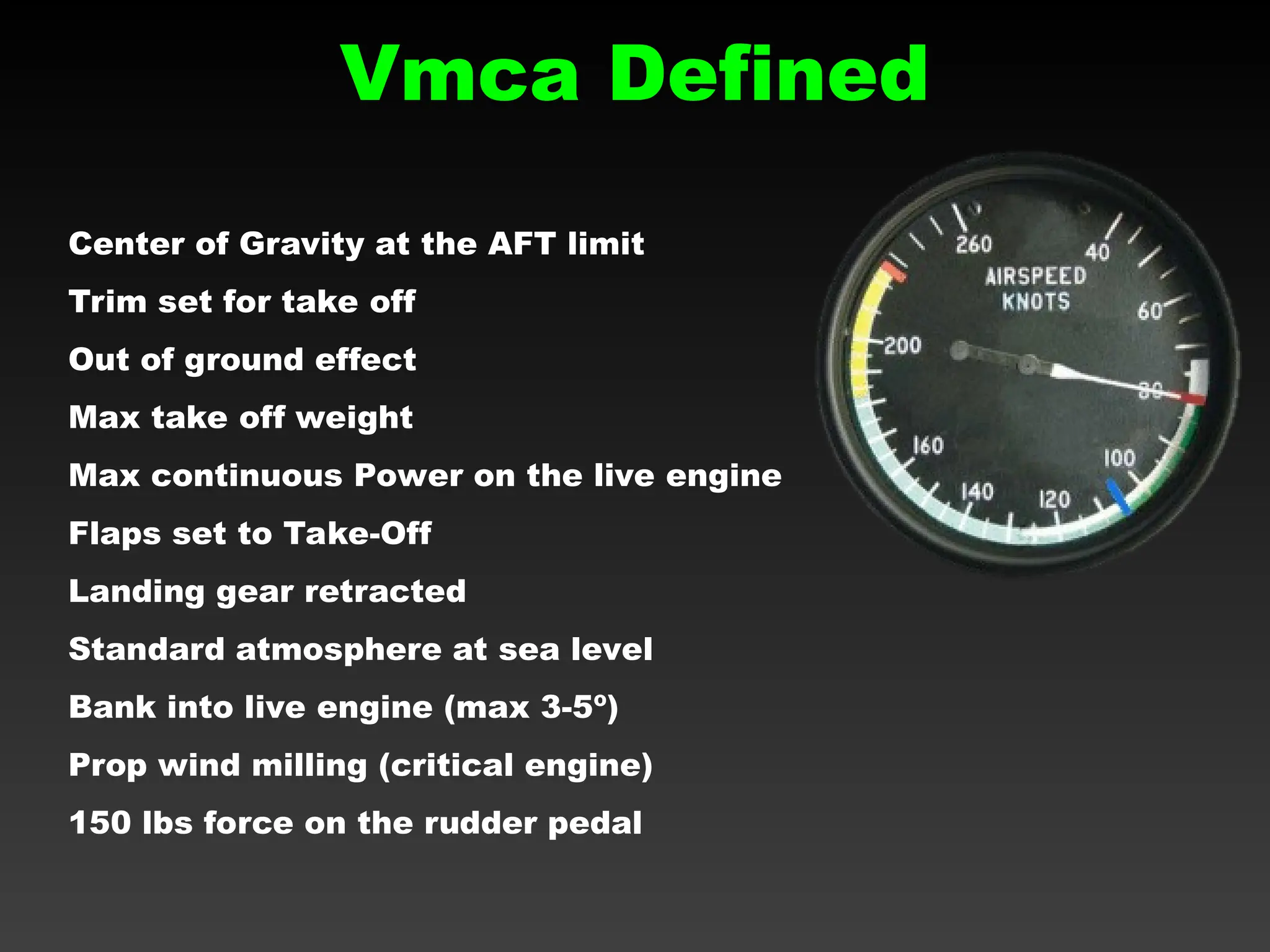
Center of Gravity at the AFT limit
Trim set for take off
Out of ground effect
Max take off weight
Max continuous Power on the live engine
Flaps set to Take-Off
Landing gear retracted
Standard atmosphere at sea level
Bank into live engine (max 3-5º)
Prop wind milling (critical engine)
150 lbs force on the rudder pedal
Vmca Defined
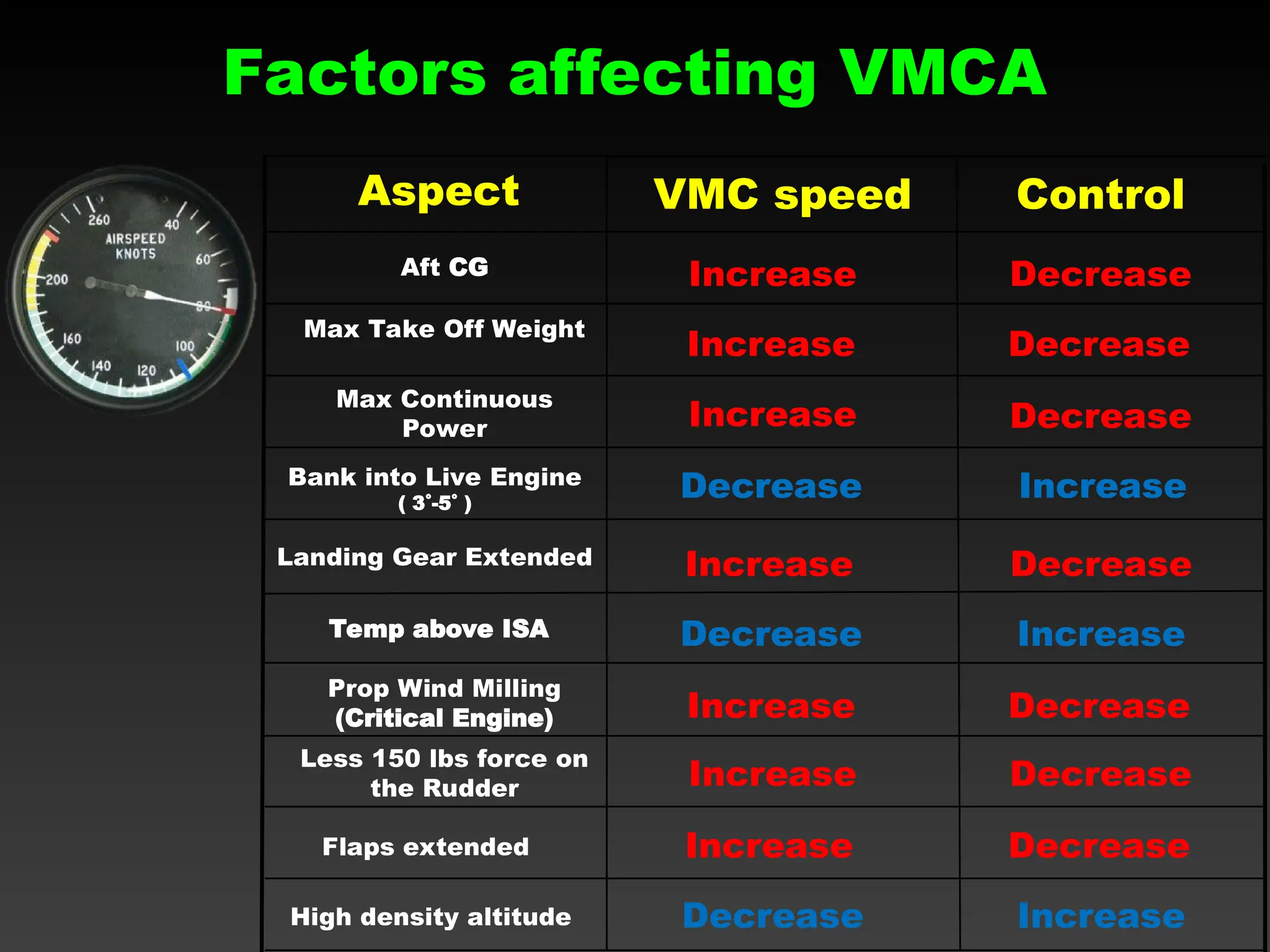
Factors affecting VMCA
Less 150 lbs force on
the Rudder
Prop Wind Milling
(Critical Engine)
Increase
Decrease
Bank into Live Engine
( 3˚-5˚ )
Temp above ISA
Decrease
Increase
Landing Gear Extended
Flaps extended
Decrease
Increase
Max Continuous
Power
Increase
Decrease
Max Take Off Weight
Decrease
Increase
Aft CG
Control
VMC speed
Aspect
Increase Decrease
Decrease
Increase Decrease
Increase
Increase Decrease
Increase Decrease
High density altitude
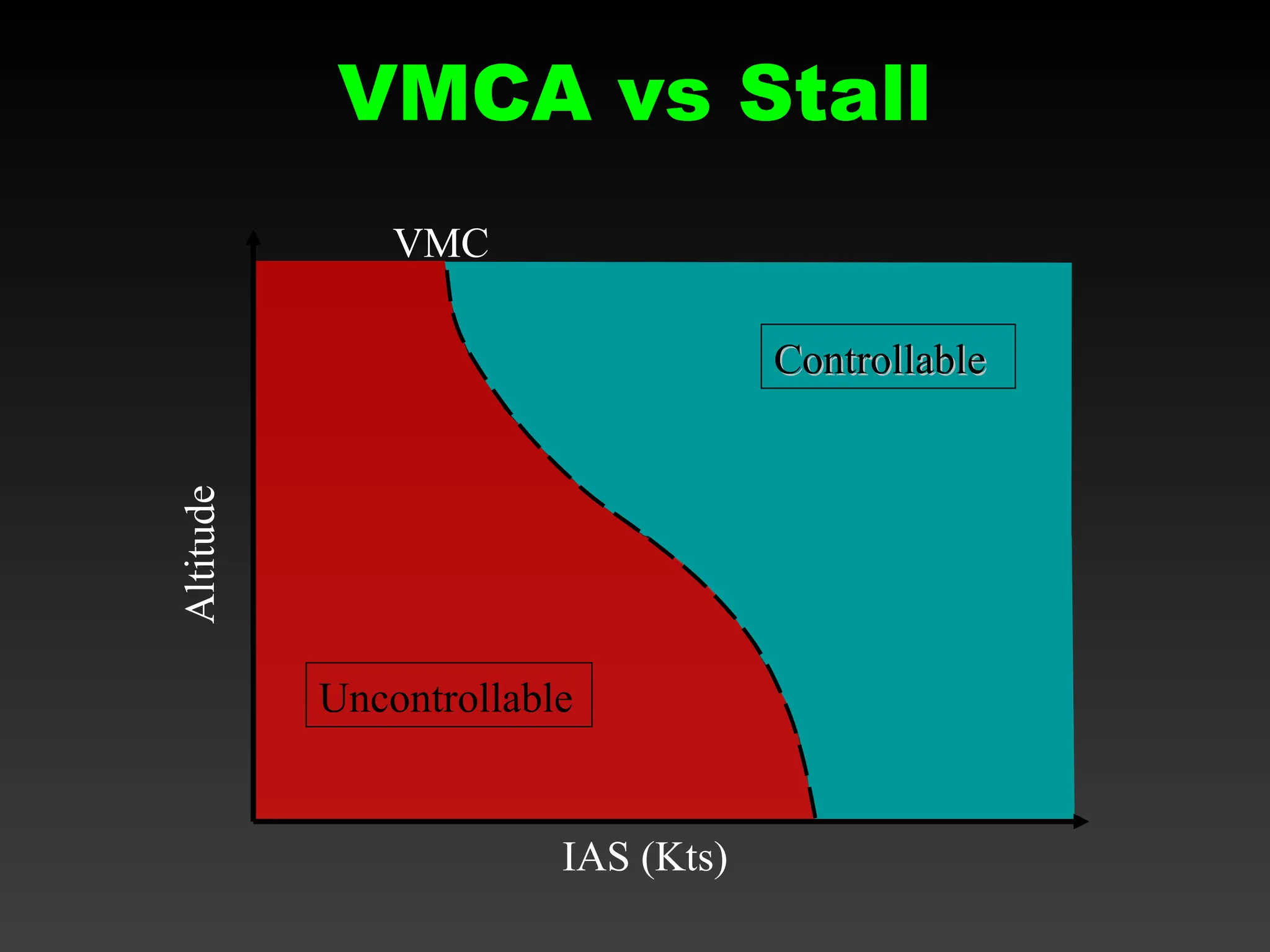
Altitude
IAS (Kts)
VMC
VMCA vs Stall
Controllable
Controllable
Uncontrollable
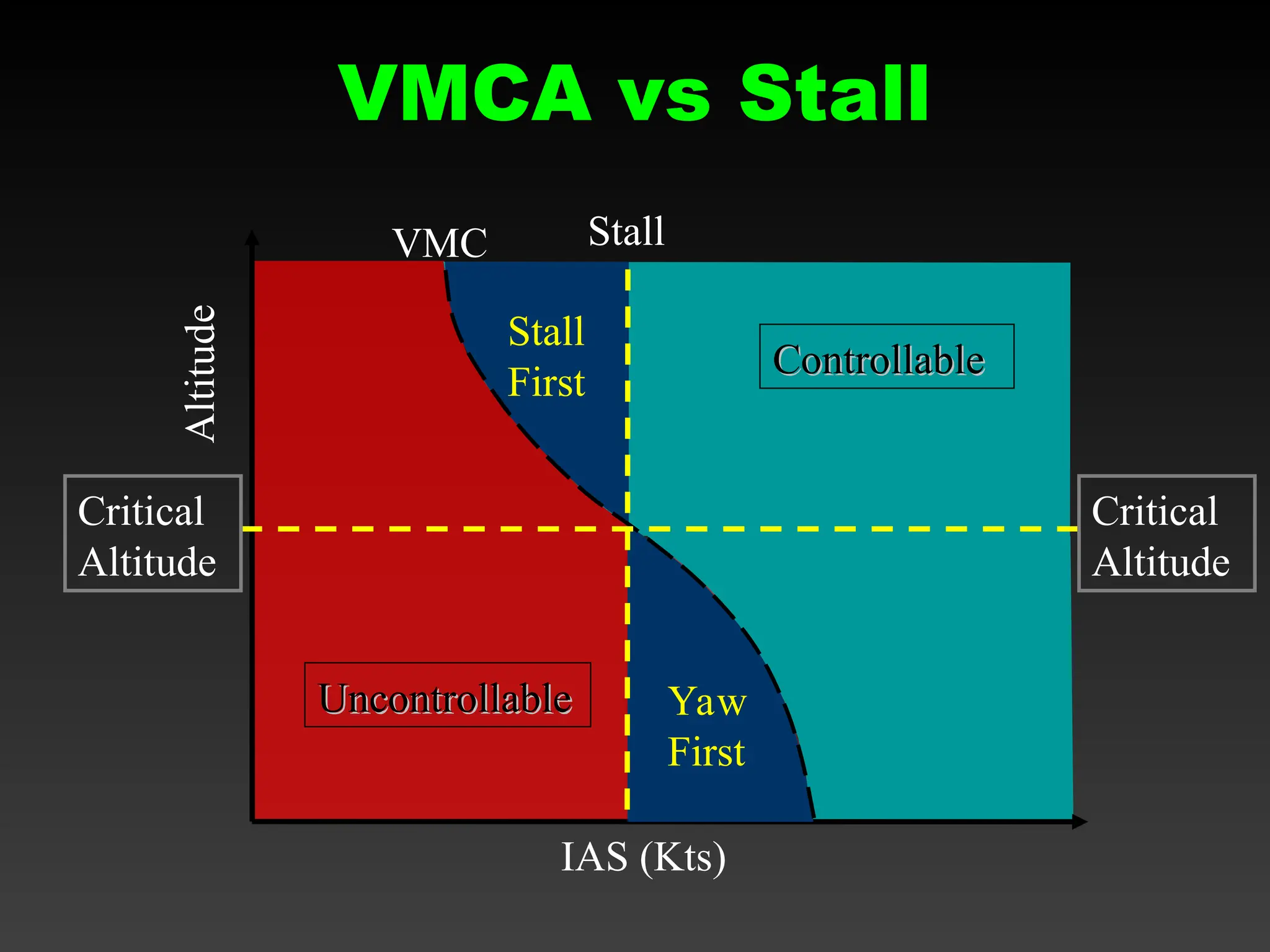
Altitude
IAS (Kts)
VMC
Controllable
Controllable
Uncontrollable
Uncontrollable
Stall
Critical
Altitude
Critical
Altitude
Stall
First
Yaw
First
VMCA vs Stall
Air Exercise
HASELL
Height - above 3000’ AGL
Aircraft - Flaps 10º
Safety & Security
Engine - Mixture full rich
- Cowl flaps open
Location
Lookout
- Slow the a/c down (High RPM set)
- Throttle idle on critical engine
- Maintain direction
- Full Power on live engine
- Slowly pitch the nose (1kt/sec)
Recovery must be done at any of the following
- Evidence of a stall (buffet or stall warning)
- Loss of directional control
Entry Procedures
Recovery Procedure
1. Reduce throttle of the live engine
(Directional control is restored) with Full rudder
deflection
2. Pitch the nose down, allow the speed to build
3. Obtain Blue Line and gently raise the nose
slowly apply full throttle on live engine
4. Maintain Blue Line
The End

Multi Engine VMCA.ppt vicual metrological conditions

  • 1.
    Vmca DEFINITION: Minimum speed atwhich directional control can be maintained in the TAKE-OFF configuration AIM: To gain an understanding behind the principles associated with loosing directional control of an aircraft due to decreased control effectiveness WHAT: -A/c Speeds -VMCA defined -Factors affecting VMCA -VMCA vs Stall -Pilot Actions -Air exercise HOW: -Flying Multi-Engine aircraft -Handing emergency situations safely and effectively RED LINE
  • 4.
    Aircraft Speeds Vx Vy Vxse Vyse Vmca - Velocityfor BEST ANGLE of climb - Velocity for BEST RATE of climb - Velocity for BEST ANGLE of climb SINGLE ENGINE - Velocity for BEST RATE of climb SINGLE ENGNE Also known as BLUE LINE SPEED - Velocity for MINIMUM CONTROL - Also known as RED LINE SPEED
  • 5.
    Center of Gravityat the AFT limit Trim set for take off Out of ground effect Max take off weight Max continuous Power on the live engine Flaps set to Take-Off Landing gear retracted Standard atmosphere at sea level Bank into live engine (max 3-5º) Prop wind milling (critical engine) 150 lbs force on the rudder pedal Vmca Defined
  • 6.
    Factors affecting VMCA Less150 lbs force on the Rudder Prop Wind Milling (Critical Engine) Increase Decrease Bank into Live Engine ( 3˚-5˚ ) Temp above ISA Decrease Increase Landing Gear Extended Flaps extended Decrease Increase Max Continuous Power Increase Decrease Max Take Off Weight Decrease Increase Aft CG Control VMC speed Aspect Increase Decrease Decrease Increase Decrease Increase Increase Decrease Increase Decrease High density altitude
  • 7.
    Altitude IAS (Kts) VMC VMCA vsStall Controllable Controllable Uncontrollable
  • 8.
  • 9.
    Air Exercise HASELL Height -above 3000’ AGL Aircraft - Flaps 10º Safety & Security Engine - Mixture full rich - Cowl flaps open Location Lookout
  • 10.
    - Slow thea/c down (High RPM set) - Throttle idle on critical engine - Maintain direction - Full Power on live engine - Slowly pitch the nose (1kt/sec) Recovery must be done at any of the following - Evidence of a stall (buffet or stall warning) - Loss of directional control Entry Procedures
  • 11.
    Recovery Procedure 1. Reducethrottle of the live engine (Directional control is restored) with Full rudder deflection 2. Pitch the nose down, allow the speed to build 3. Obtain Blue Line and gently raise the nose slowly apply full throttle on live engine 4. Maintain Blue Line
  • 12.

Editor's Notes

  • #7 Trying to maintain altitude by slowing the aircraft to the stall could be the downfall of the pilot. Situation above the blue line the aircraft will stall first and results in a spin rather than a yaw. There will be NO ability to recover the aircraft. The pilot wanting to maintain altitude must consider getting the aircraft to VYSE and then entering a descend at VYSE. Multi engine will get you faster to the scene of the accident.
  • #8 Trying to maintain altitude by slowing the aircraft to the stall could be the downfall of the pilot. Situation above the blue line the aircraft will stall first and results in a spin rather than a yaw. There will be NO ability to recover the aircraft. The pilot wanting to maintain altitude must consider getting the aircraft to VYSE and then entering a descend at VYSE. Multi engine will get you faster to the scene of the accident.