Movement competency
needed to participate
in physical activities
through the
development of
movement skills
Group 9
Developing Movement Skills for
Active Lifestyles
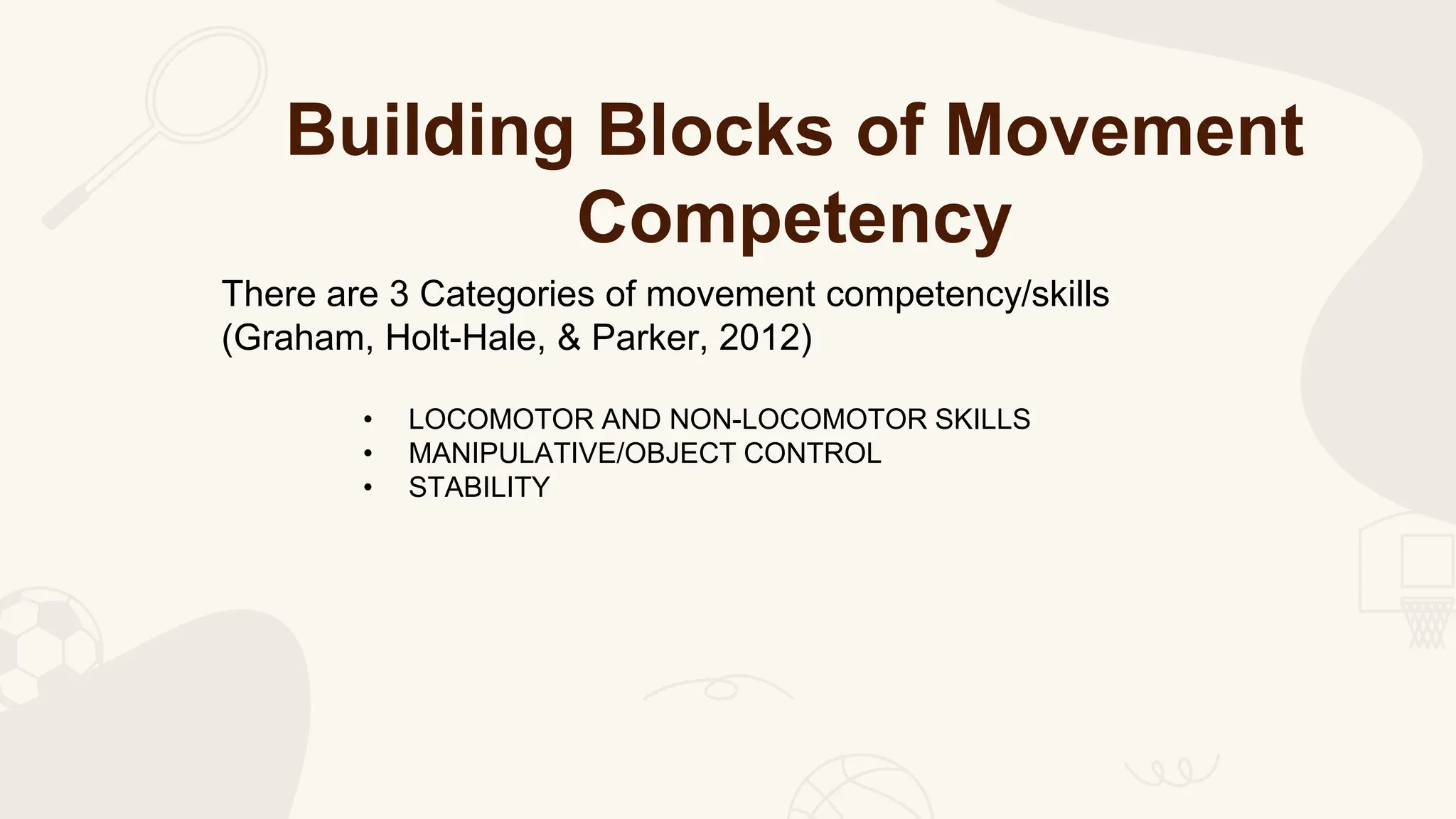
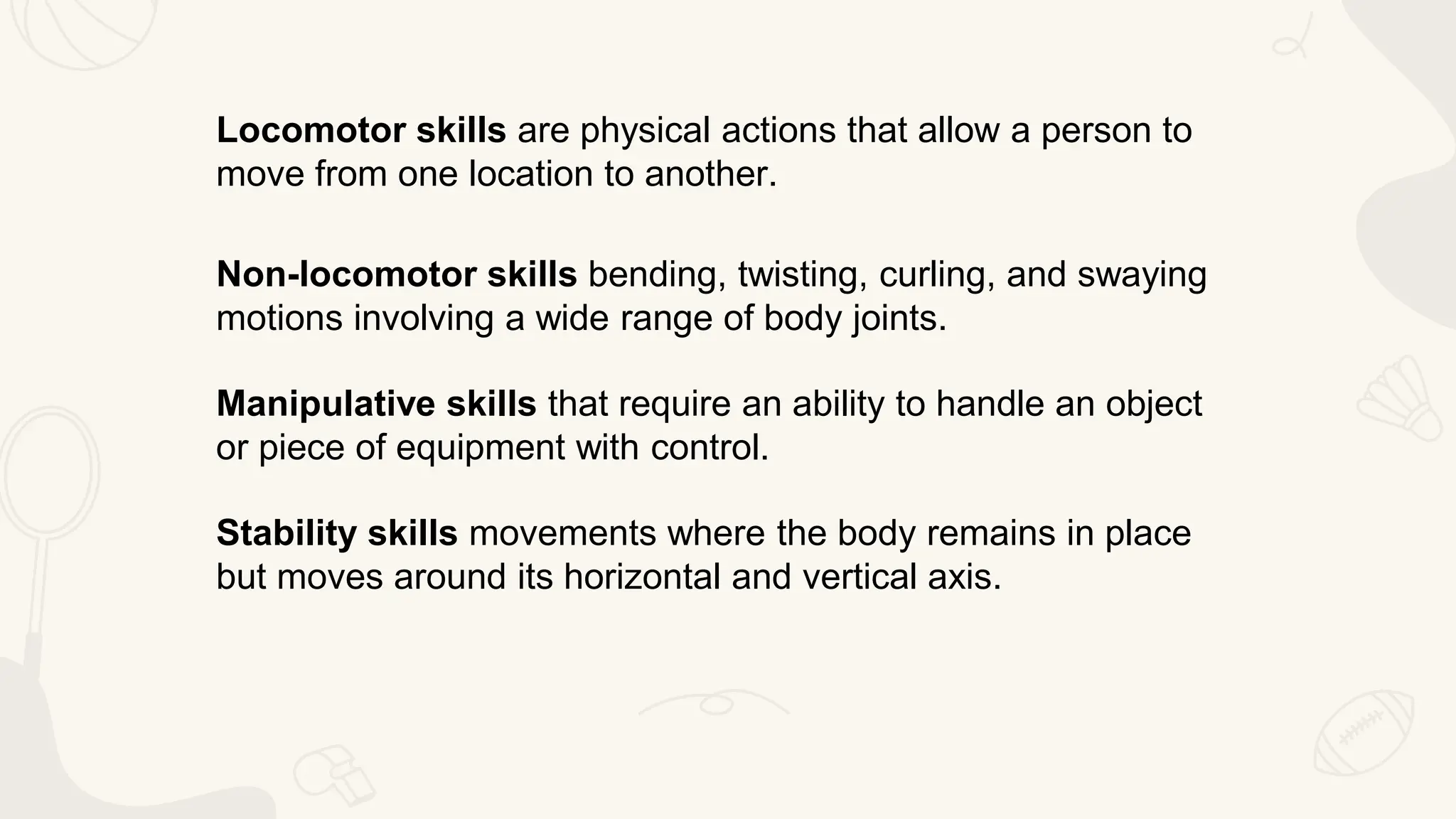
SWIMMING BIKING/CYCLING JUMPING ROPE RUNNING
What is Movement Competency?
Movement competency is simply being able to move
well in different situations. It’s about being able to move
smoothly, safely, and with control, whether you’re
playing sports, dancing, or just walking around.
Building Blocks of Movement
Competency
There are 3 Categories of movement competency/skills
(Graham, Holt-Hale, & Parker, 2012)
• LOCOMOTOR AND NON-LOCOMOTOR SKILLS
• MANIPULATIVE/OBJECT CONTROL
• STABILITY
Locomotor skills are physical actions that allow a person to
move from one location to another.
Non-locomotor skills bending, twisting, curling, and swaying
motions involving a wide range of body joints.
Manipulative skills that require an ability to handle an object
or piece of equipment with control.
Stability skills movements where the body remains in place
but moves around its horizontal and vertical axis.
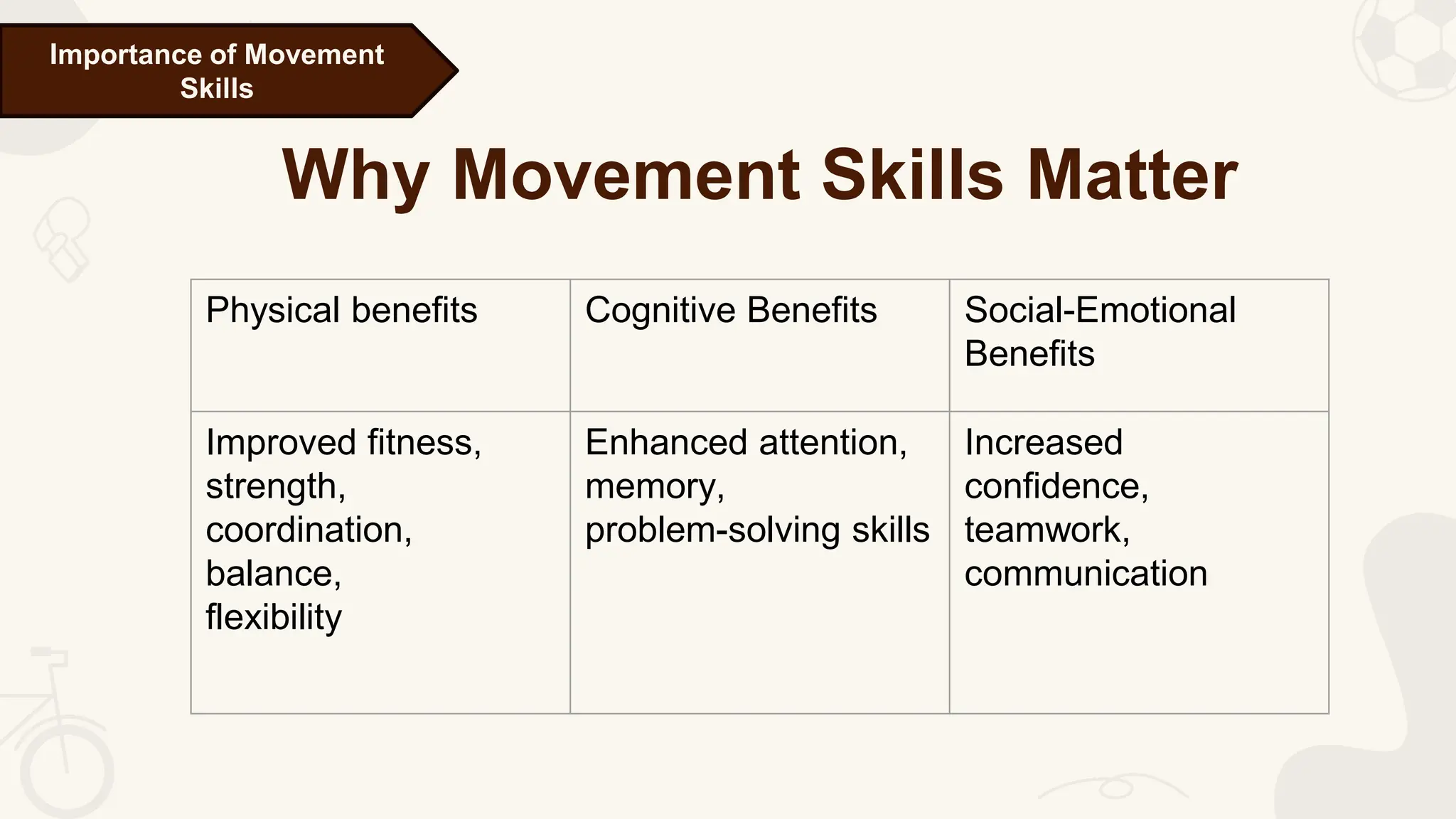
Why Movement Skills Matter
Importance of Movement
Skills
Physical benefits Cognitive Benefits Social-Emotional
Benefits
Improved fitness,
strength,
coordination,
balance,
flexibility
Enhanced attention,
memory,
problem-solving skills
Increased
confidence,
teamwork,
communication
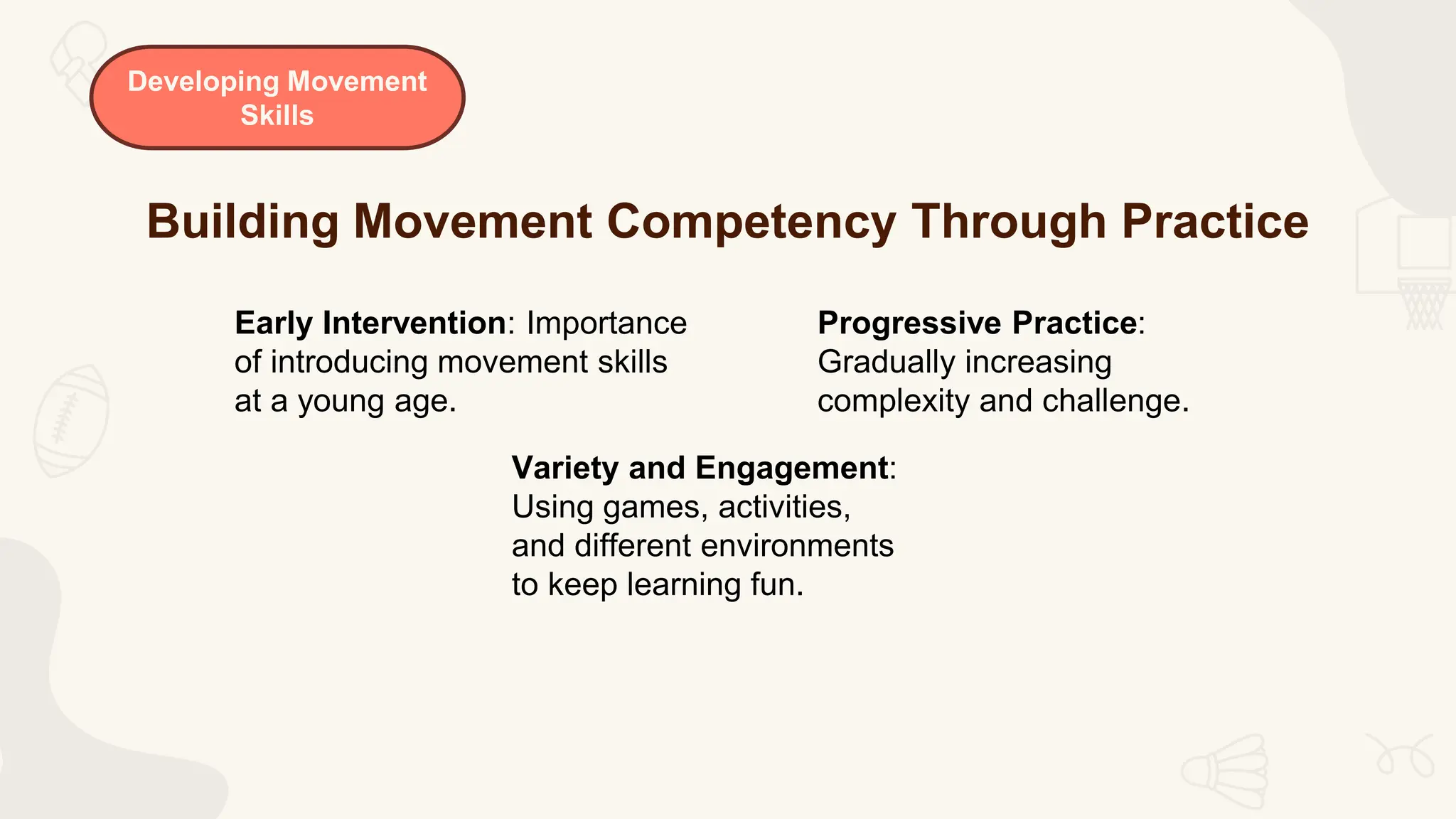
Building Movement Competency Through Practice
Developing Movement
Skills
Early Intervention: Importance
of introducing movement skills
at a young age.
Progressive Practice:
Gradually increasing
complexity and challenge.
Variety and Engagement:
Using games, activities,
and different environments
to keep learning fun.

Movement competency, physical activities

  • 1.
    Movement competency needed toparticipate in physical activities through the development of movement skills Group 9
  • 2.
    Developing Movement Skillsfor Active Lifestyles SWIMMING BIKING/CYCLING JUMPING ROPE RUNNING
  • 3.
    What is MovementCompetency? Movement competency is simply being able to move well in different situations. It’s about being able to move smoothly, safely, and with control, whether you’re playing sports, dancing, or just walking around.
  • 4.
    Building Blocks ofMovement Competency There are 3 Categories of movement competency/skills (Graham, Holt-Hale, & Parker, 2012) • LOCOMOTOR AND NON-LOCOMOTOR SKILLS • MANIPULATIVE/OBJECT CONTROL • STABILITY
  • 5.
    Locomotor skills arephysical actions that allow a person to move from one location to another. Non-locomotor skills bending, twisting, curling, and swaying motions involving a wide range of body joints. Manipulative skills that require an ability to handle an object or piece of equipment with control. Stability skills movements where the body remains in place but moves around its horizontal and vertical axis.
  • 6.
    Why Movement SkillsMatter Importance of Movement Skills Physical benefits Cognitive Benefits Social-Emotional Benefits Improved fitness, strength, coordination, balance, flexibility Enhanced attention, memory, problem-solving skills Increased confidence, teamwork, communication
  • 7.
    Building Movement CompetencyThrough Practice Developing Movement Skills Early Intervention: Importance of introducing movement skills at a young age. Progressive Practice: Gradually increasing complexity and challenge. Variety and Engagement: Using games, activities, and different environments to keep learning fun.