MOTORCYCLE
SAFETY TIPS
PROVIDED BY
THE LAW OFFICES OF VAN DORN, CURTISS & ROUSSEAU
TIP #1:
ALWAYS
WEAR A
HELMET
According to the IIHS, when compared to
not using protective head gear, helmets are
67% more effective at preventing brain
injury and 37% more effective at preventing
death in motorcycle accidents. In Vermont,
helmet use is mandatory if operating your
motorcycle on a highway, but in New
Hampshire, only those under the age of 18
are required to use a helmet.
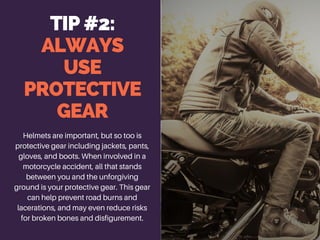
TIP #2:
ALWAYS
USE
PROTECTIVE
GEAR
Helmets are important, but so too is
protective gear including jackets, pants,
gloves, and boots. When involved in a
motorcycle accident, all that stands
between you and the unforgiving
ground is your protective gear. This gear
can help prevent road burns and
lacerations, and may even reduce risks
for broken bones and disfigurement.
TIP #3:
ALWAYS
PROTECT
YOUR FACE
In Vermont, a windshield or goggles
are required while operating a
motorcycle. Eyeglasses, goggles, or
a protective face shield are required
in New Hampshire. Eye protection
helps prevent debris from entering
the eyes and reduces rapid blinking,
which is your body’s natural
response to stronger winds. Both of
these things will reduce your risk of
losing control of your motorcycle.
TIP #4:
WATCH YOUR
SPEED Feelingthewindonyourfaceandenjoying
theopenroadcanencouragehigher
speeds,butmotorcyclistsshouldalways
followthespeedlimit.Excessivespeeds
canimpactreactiontimeandincreasethe
riskoflosingcontrolofyourmotorcycle.
TIP #5:
FOLLOW
TRAFFIC
SIGNS AND
SIGNALS
When operating a motorcycle, it
is important to obey traffic signs
and signals, including stop
signs, right-of-way signals, and
hazard signs. These things exist
to protect motorists from
unnecessary risks. Failure to
adhere to the rules of the road
can easily result in a serious or
fatal motorcycle accident.
TIP #6:
AVOID
ALCOHOL
Even one drink can impair your ability to
operate a motorcycle. Multiple drinks
absolutely will. According to the NHTSA,
motorcyclists with a BAC of .08 are
involved in nearly 30% of all fatal
motorcycle accidents. Risks for these
accidents increases threefold at night.
Alcohol impairs judgement, reaction time,
and common sense. It should be avoided
if you are operating a motorcycle.
TIP #7:
AVOID DRUGS
Like alcohol, drugs impair your
ability to properly operate a
motorcycle. Marijuana, which is
currently legal for medical use in
both Vermont and New
Hampshire, is chief among the
drugs that can increase risks for
motorcycle accidents, but other
drugs, including prescription
narcotics, pose just as large a
threat. If you are operating a
motorcycle, stay sober.
TIP #8:
MAINTAIN
YOUR
MOTORCYCLE
Motorcycle maintenance helps prevent
accidents caused by faulty brakes and
other equipment malfunction. It also
helps ensure all signals, lights, and
gauges are in proper working order.
Frequent tune-ups at home can help
you become more familiar with the
workings of your particular machine, but
taking your motorcycle to a professional
on occasion is a good idea as well. And
don’t forget to check the NHTSA’s Vin
Look Up to see if your motorcycle has
been involved in a recall.
TIP #9:
PREPARE
FOR BAD
WEATHER
When possible, avoid riding in the snow or
rain, or just after precipitation. Wet roads
make maneuvering difficult and increase
risks for a loss of control. Active rain and
snow can impact vision. If riding is
unavoidable, be gentle with the brakes and
throttle to avoid slipping. When riding in
the wind, be prepared for strong gusts to
nudge you around. Give yourself room in
your lane to prevent being blown into
another vehicle.
TIP #10:
DRIVE
DEFENSIVELY
A majority of motorcycle accidents are
caused by the drivers of cars. This means
that motorcyclists need to be extra
vigilant. Always be aware of your
surroundings, leave plenty of space
between you and other vehicles on the
road, and do not split lanes. Paying
attention, particularly in this age of
constant driver distraction, can help
prevent your causing an accident and
give you space to avoid one from being
caused by someone else.
CONTACT 
US
Even the safest of motorcyclists cannot
always avoid an accident. If you are injured
in a motorcycle accident or if a loved one
has been killed, please call the Orford, NH
office of Van Dorn, Curtiss & Rousseau
at (603) 353-4000 to schedule a free
consultation and learn how we can help.

Motorcycle safety tips

  • 1.
    MOTORCYCLE SAFETY TIPS PROVIDED BY THELAW OFFICES OF VAN DORN, CURTISS & ROUSSEAU
  • 2.
    TIP #1: ALWAYS WEAR A HELMET Accordingto the IIHS, when compared to not using protective head gear, helmets are 67% more effective at preventing brain injury and 37% more effective at preventing death in motorcycle accidents. In Vermont, helmet use is mandatory if operating your motorcycle on a highway, but in New Hampshire, only those under the age of 18 are required to use a helmet.
  • 3.
    TIP #2: ALWAYS USE PROTECTIVE GEAR Helmets areimportant, but so too is protective gear including jackets, pants, gloves, and boots. When involved in a motorcycle accident, all that stands between you and the unforgiving ground is your protective gear. This gear can help prevent road burns and lacerations, and may even reduce risks for broken bones and disfigurement.
  • 4.
    TIP #3: ALWAYS PROTECT YOUR FACE InVermont, a windshield or goggles are required while operating a motorcycle. Eyeglasses, goggles, or a protective face shield are required in New Hampshire. Eye protection helps prevent debris from entering the eyes and reduces rapid blinking, which is your body’s natural response to stronger winds. Both of these things will reduce your risk of losing control of your motorcycle.
  • 5.
    TIP #4: WATCH YOUR SPEEDFeelingthewindonyourfaceandenjoying theopenroadcanencouragehigher speeds,butmotorcyclistsshouldalways followthespeedlimit.Excessivespeeds canimpactreactiontimeandincreasethe riskoflosingcontrolofyourmotorcycle.
  • 6.
    TIP #5: FOLLOW TRAFFIC SIGNS AND SIGNALS Whenoperating a motorcycle, it is important to obey traffic signs and signals, including stop signs, right-of-way signals, and hazard signs. These things exist to protect motorists from unnecessary risks. Failure to adhere to the rules of the road can easily result in a serious or fatal motorcycle accident.
  • 7.
    TIP #6: AVOID ALCOHOL Even onedrink can impair your ability to operate a motorcycle. Multiple drinks absolutely will. According to the NHTSA, motorcyclists with a BAC of .08 are involved in nearly 30% of all fatal motorcycle accidents. Risks for these accidents increases threefold at night. Alcohol impairs judgement, reaction time, and common sense. It should be avoided if you are operating a motorcycle.
  • 8.
    TIP #7: AVOID DRUGS Likealcohol, drugs impair your ability to properly operate a motorcycle. Marijuana, which is currently legal for medical use in both Vermont and New Hampshire, is chief among the drugs that can increase risks for motorcycle accidents, but other drugs, including prescription narcotics, pose just as large a threat. If you are operating a motorcycle, stay sober.
  • 9.
    TIP #8: MAINTAIN YOUR MOTORCYCLE Motorcycle maintenancehelps prevent accidents caused by faulty brakes and other equipment malfunction. It also helps ensure all signals, lights, and gauges are in proper working order. Frequent tune-ups at home can help you become more familiar with the workings of your particular machine, but taking your motorcycle to a professional on occasion is a good idea as well. And don’t forget to check the NHTSA’s Vin Look Up to see if your motorcycle has been involved in a recall.
  • 10.
    TIP #9: PREPARE FOR BAD WEATHER Whenpossible, avoid riding in the snow or rain, or just after precipitation. Wet roads make maneuvering difficult and increase risks for a loss of control. Active rain and snow can impact vision. If riding is unavoidable, be gentle with the brakes and throttle to avoid slipping. When riding in the wind, be prepared for strong gusts to nudge you around. Give yourself room in your lane to prevent being blown into another vehicle.
  • 11.
    TIP #10: DRIVE DEFENSIVELY A majorityof motorcycle accidents are caused by the drivers of cars. This means that motorcyclists need to be extra vigilant. Always be aware of your surroundings, leave plenty of space between you and other vehicles on the road, and do not split lanes. Paying attention, particularly in this age of constant driver distraction, can help prevent your causing an accident and give you space to avoid one from being caused by someone else.
  • 12.
    CONTACT  US Even the safestof motorcyclists cannot always avoid an accident. If you are injured in a motorcycle accident or if a loved one has been killed, please call the Orford, NH office of Van Dorn, Curtiss & Rousseau at (603) 353-4000 to schedule a free consultation and learn how we can help.