®
DRIVER SAFETY
For use in conjunction with 5-Minute Safety Talk
Fleet Safety
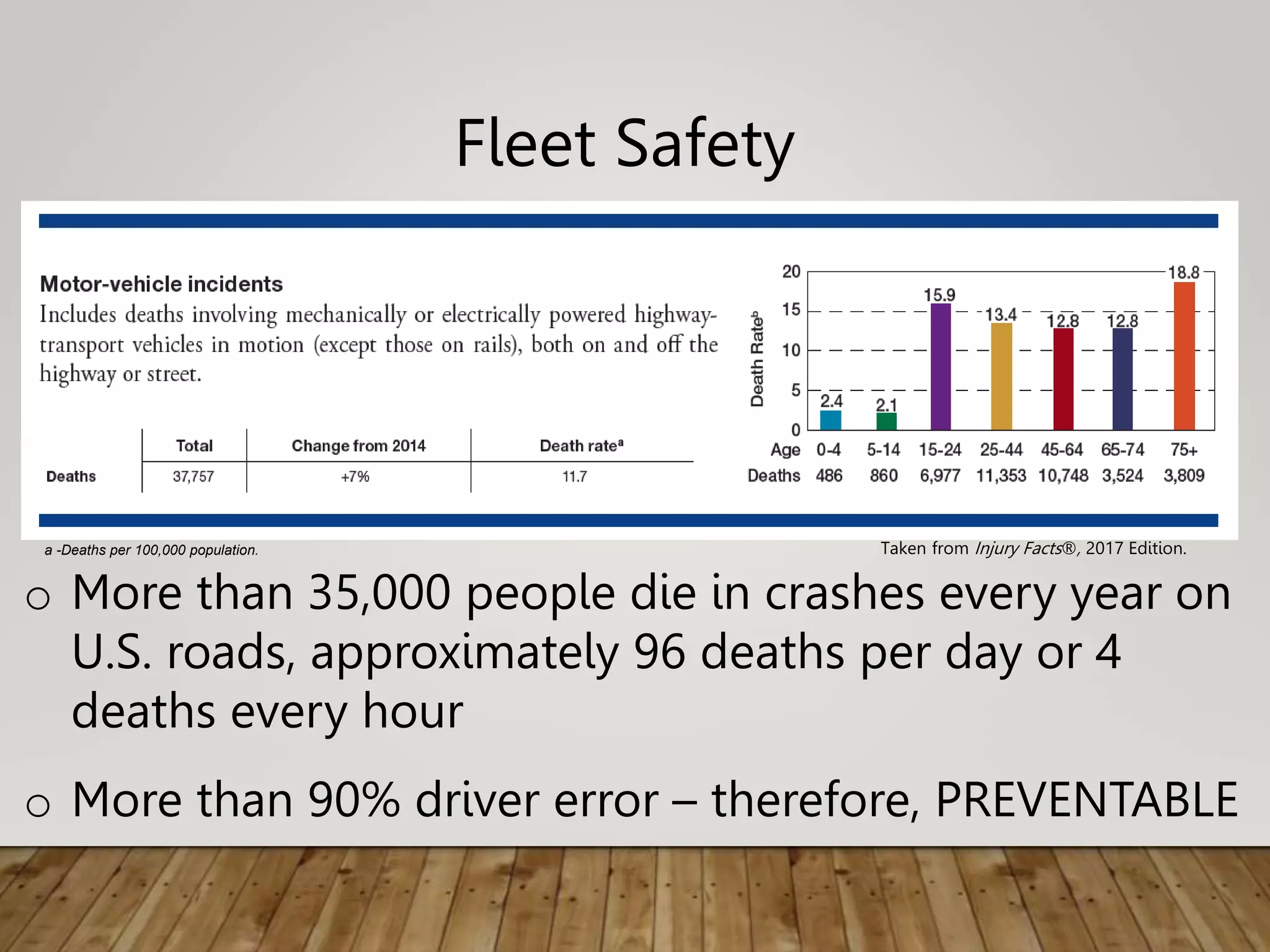
a -Deaths per 100,000 population. Taken from Injury Facts®, 2017 Edition.
o More than 35,000 people die in crashes every year on
U.S. roads, approximately 96 deaths per day or 4
deaths every hour
o More than 90% driver error – therefore, PREVENTABLE
Cost of
Injuries
$$$
Lost Work
Days
Impact on
Employee
& Family
Higher
Insurance
Premiums
Many employers use cell phone driving policies which ask
employees to:
 Program/start GPS equipment prior to starting vehicle or
pull over/park if changes need to be made
 Turn off smartphones or other devices before starting
vehicle
 Inform clients, associates and business partners that calls
will be
returned when they are not driving
 Pull over to a safe location and put vehicle in park if a call
must be made
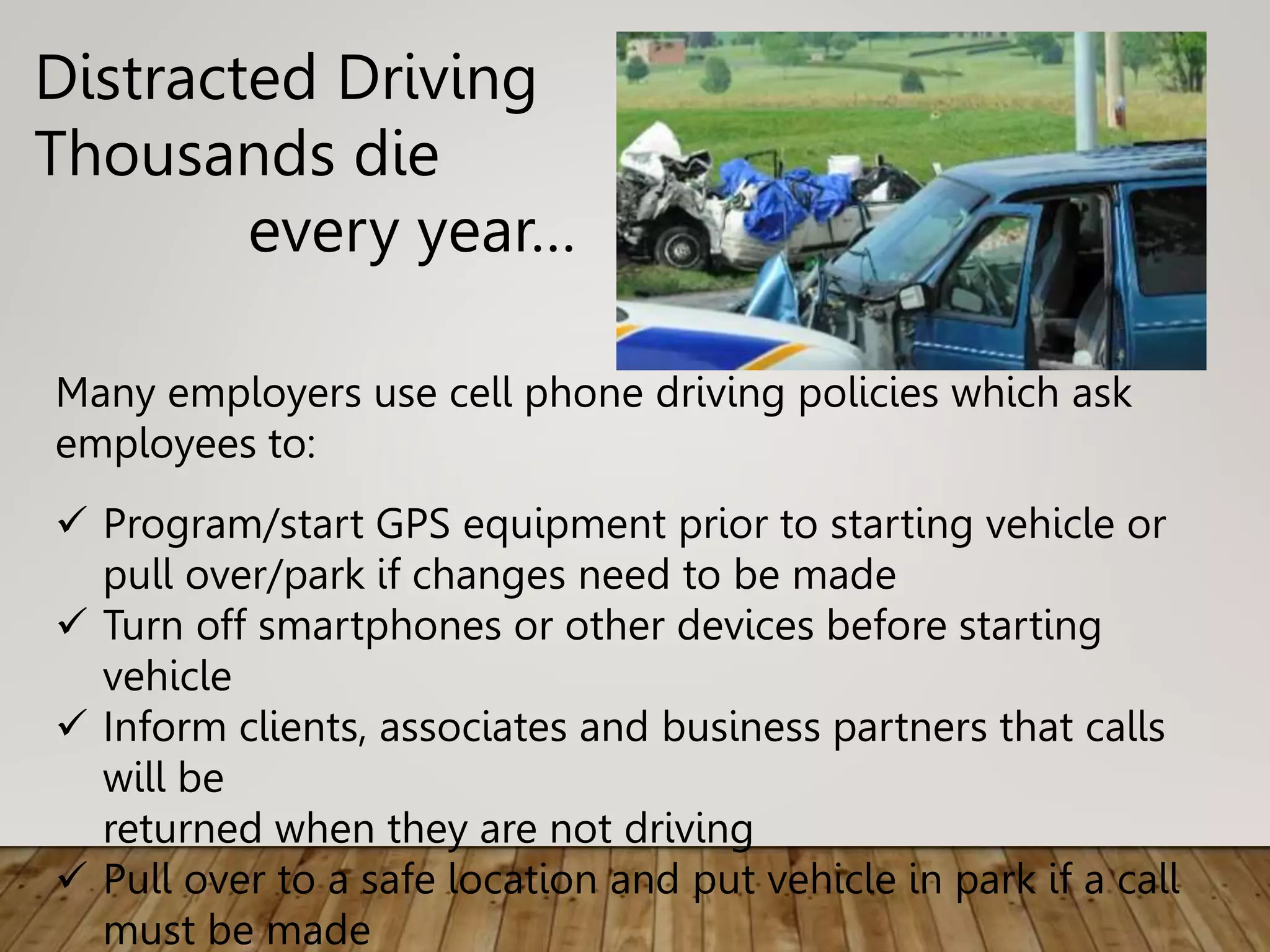
Distracted Driving
Thousands die
every year…
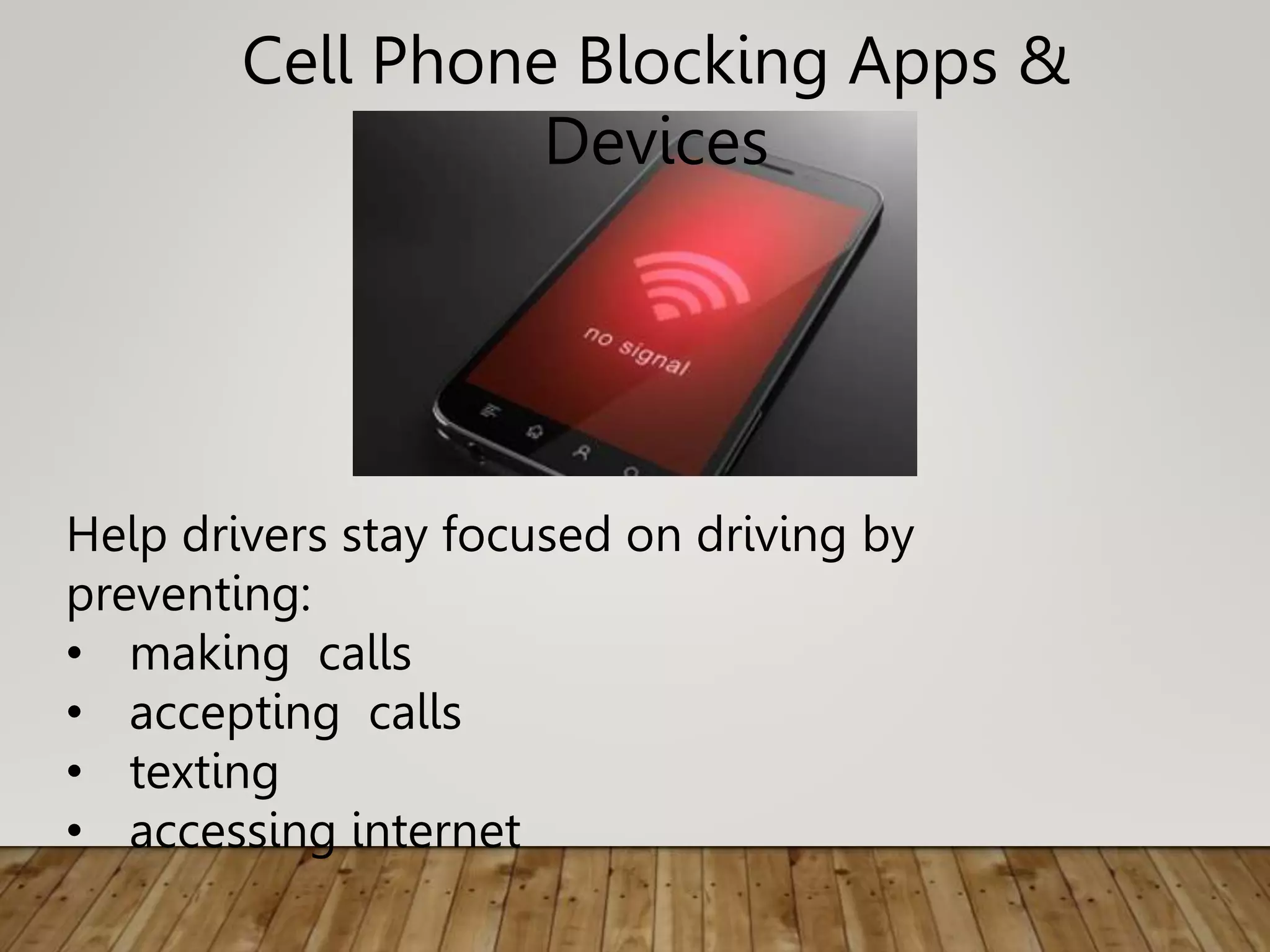
Help drivers stay focused on driving by
preventing:
• making calls
• accepting calls
• texting
• accessing internet
Cell Phone Blocking Apps &
Devices
Safe Driving Requires:
 Comprehension
 Concentration
 Coordination
 Quick reflexes
Drinking and drugs - including
marijuana -
affect all of these skills
Drunk and Drugged Driving
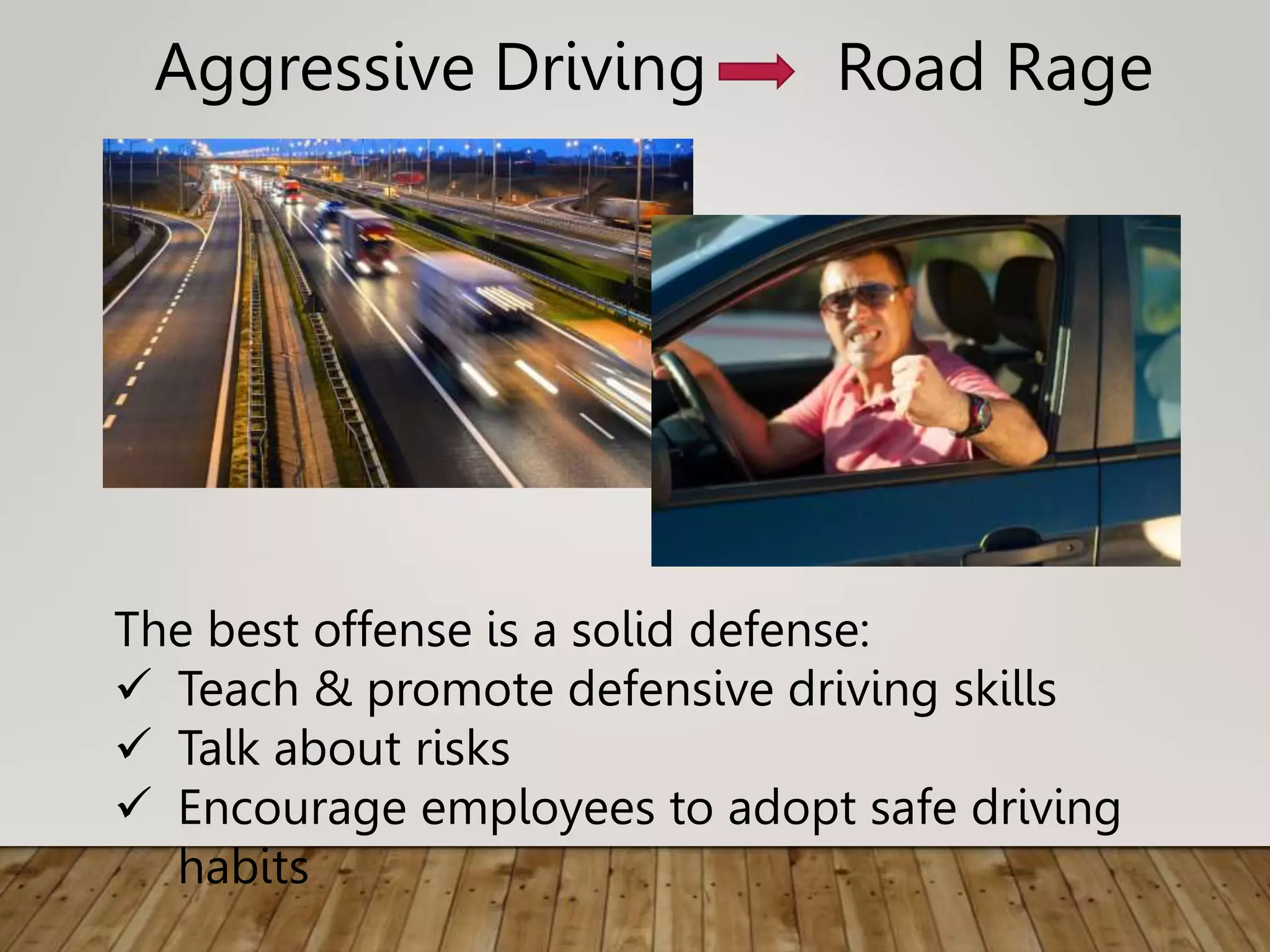
Aggressive Driving Road Rage
The best offense is a solid defense:
 Teach & promote defensive driving skills
 Talk about risks
 Encourage employees to adopt safe driving
habits
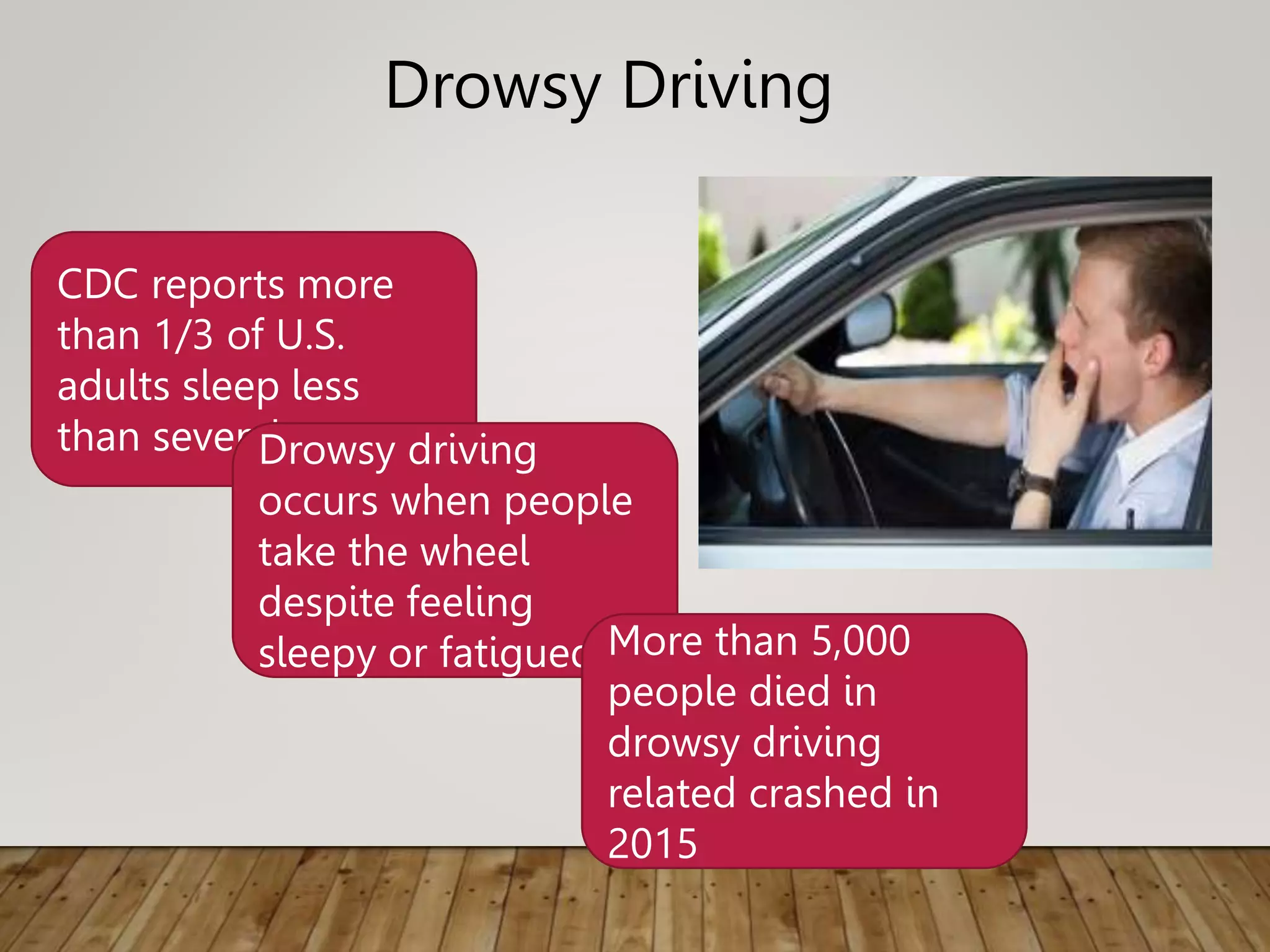
Drowsy Driving
CDC reports more
than 1/3 of U.S.
adults sleep less
than seven hours
Drowsy driving
occurs when people
take the wheel
despite feeling
sleepy or fatigued More than 5,000
people died in
drowsy driving
related crashed in
2015
Pull over
Schedule
travel
breaks
Drink a
caffeinated
beverage
Take a 20
minute
nap
If tired…
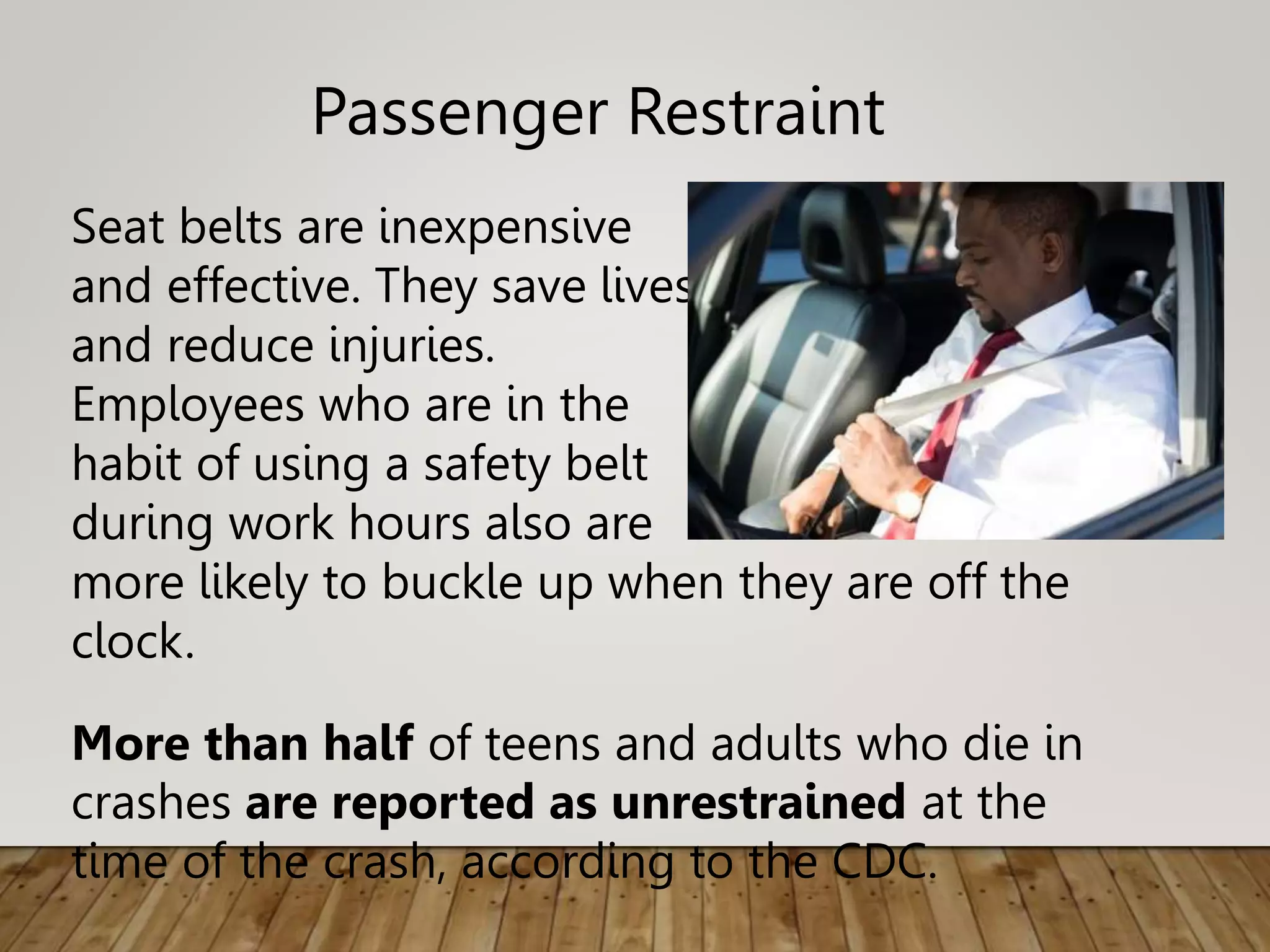
Seat belts are inexpensive
and effective. They save lives
and reduce injuries.
Employees who are in the
habit of using a safety belt
during work hours also are
more likely to buckle up when they are off the
clock.
More than half of teens and adults who die in
crashes are reported as unrestrained at the
time of the crash, according to the CDC.
Passenger Restraint
NETS, NHTSA & OSHA Report
Indicates:
• The average crash costs an employer more
than $16,000
• When a worker has an on-the-job crash that
results in an injury, the cost to their employer
jumps to more than $70,000
• Costs can exceed $500,000 when a fatality is
involved
DRIVING RULES AND
REGULATIONS
CAR CONDITION
IT IS YOUR RESPONSIBILITY TO CHECK THE FOLLOWING
ITEMS BEFORE DRIVING
• Back up lights
• Brakes
• Brake Lights
• Headlights
• Horn
• Steering
• Taillights
• Tires
• Turn Signals
• Windshield
• Snow and ice
STARTING A PARKED CAR
• You should check behind and in front of your car
before entering it.
• Check for things such as
• Debris
• Bicycles
• People
• Animals
DRIVING SIGNALS
• Drivers should always signal when
• Turning
• Changing lanes
• Stopping or slowing down
• Drivers should turn on their signal 100 feet before
turning. Making sure the turn signal is off after the
turn is important because it could mislead other
drivers
• The horn is a signal that could be used to warn and
communicate with other drivers
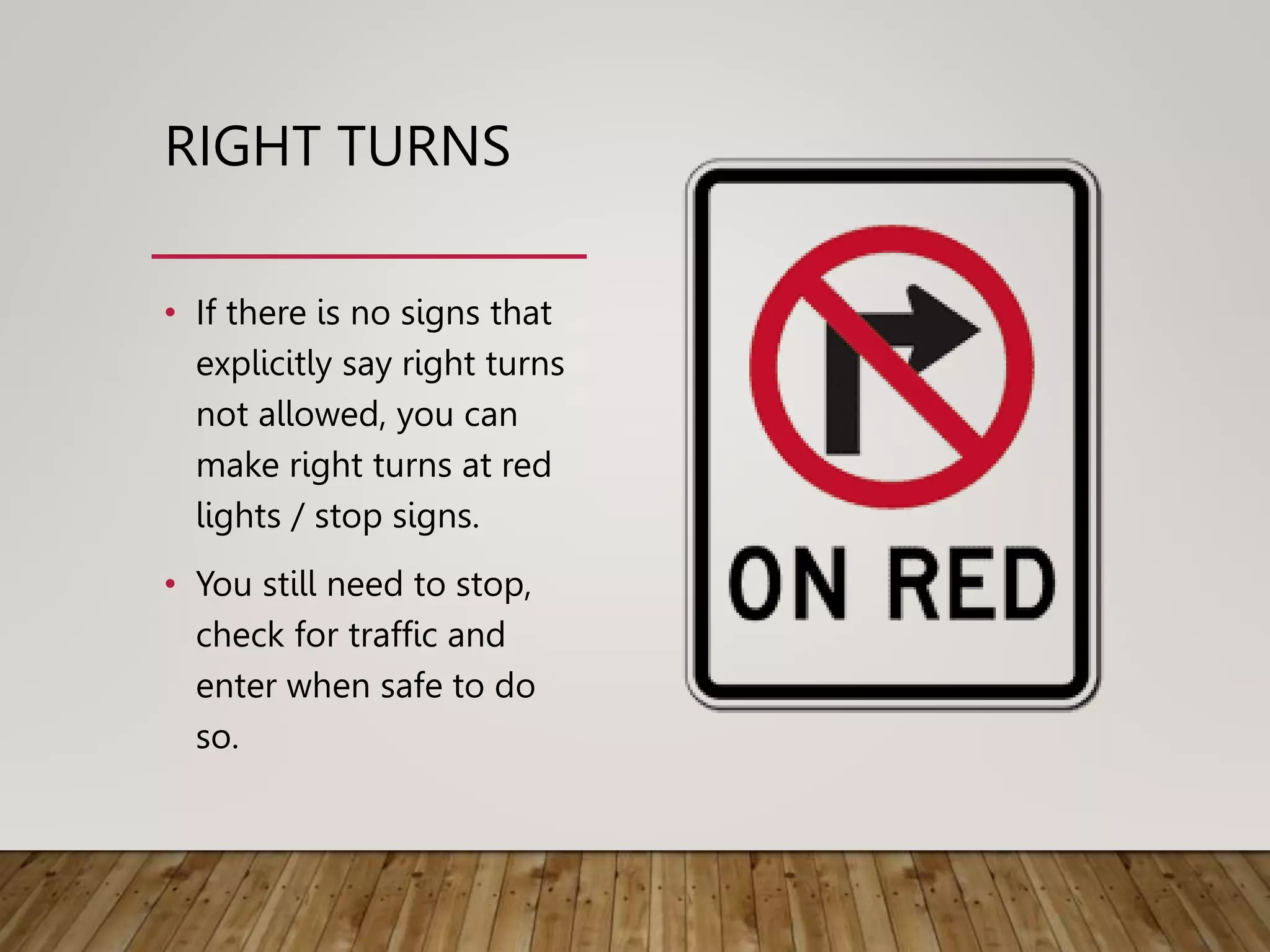
RIGHT TURNS
• If there is no signs that
explicitly say right turns
not allowed, you can
make right turns at red
lights / stop signs.
• You still need to stop,
check for traffic and
enter when safe to do
so.
YOU MUST STOP WHEN…
• An intersection with a stop sign. This means a full
stop, do not roll through even if there is no other cars.
• A red light
• When an officer is pulling you over
• When you come to a yield sign and there is oncoming
traffic
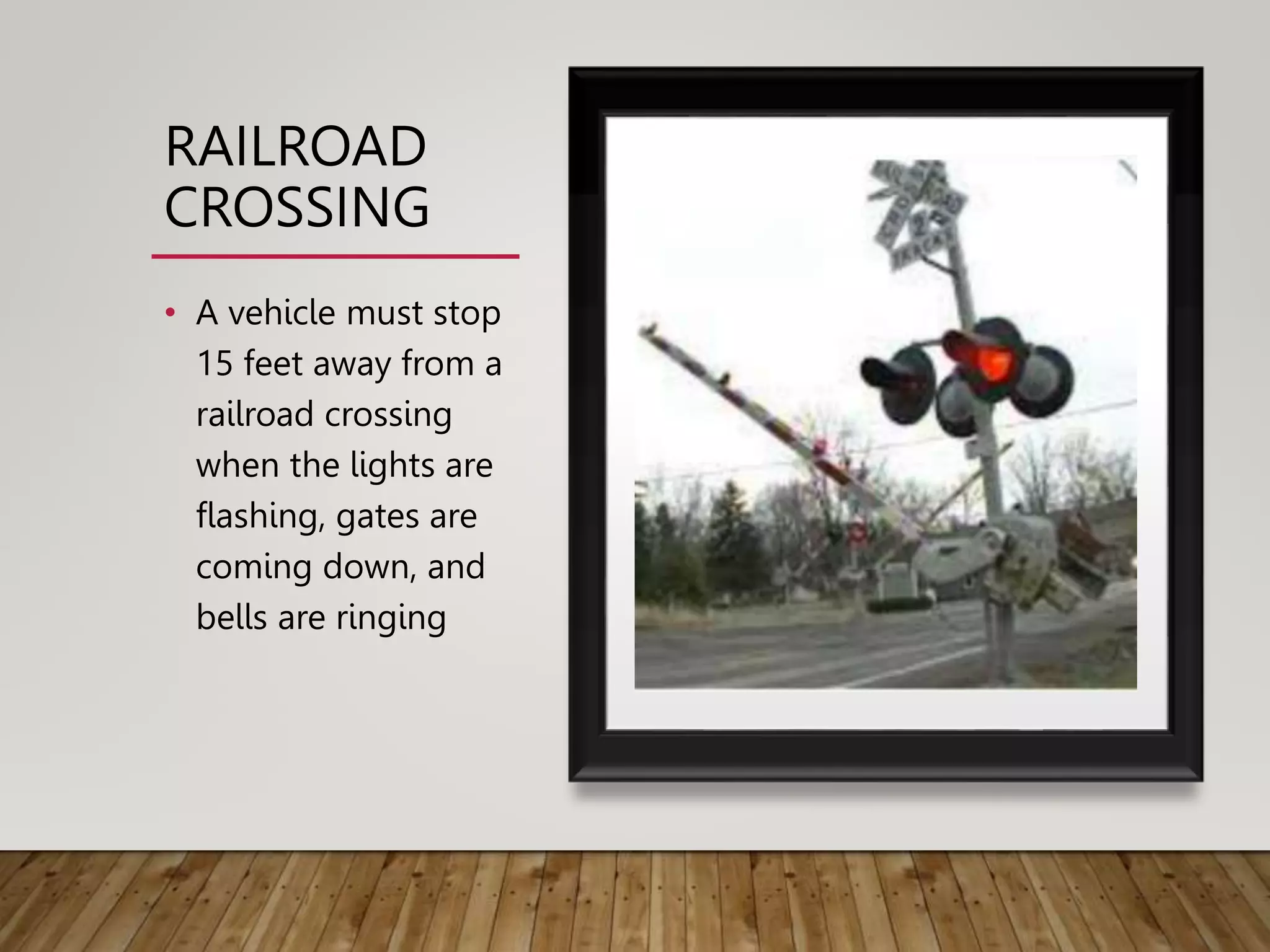
RAILROAD
CROSSING
• A vehicle must stop
15 feet away from a
railroad crossing
when the lights are
flashing, gates are
coming down, and
bells are ringing
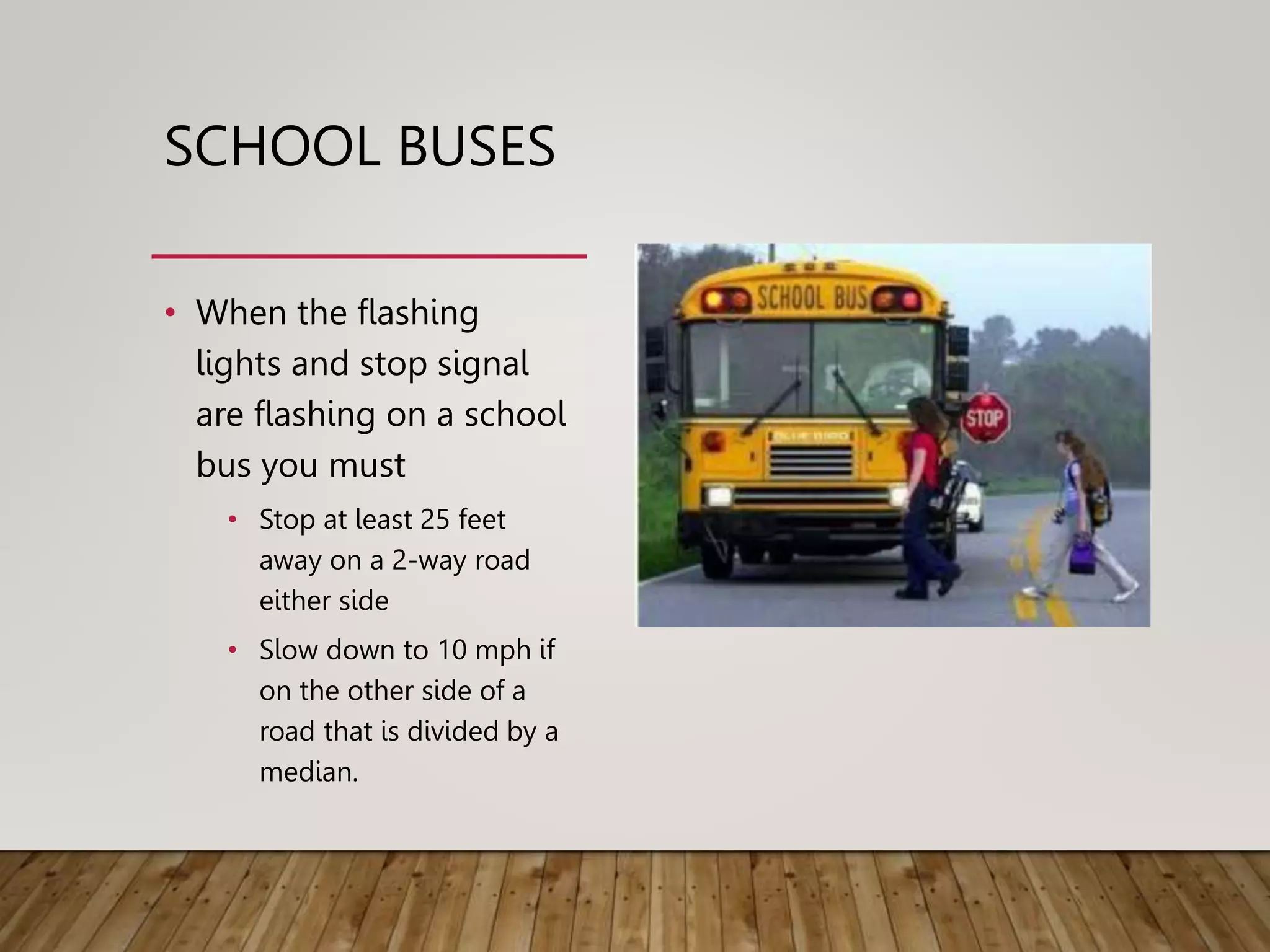
SCHOOL BUSES
• When the flashing
lights and stop signal
are flashing on a school
bus you must
• Stop at least 25 feet
away on a 2-way road
either side
• Slow down to 10 mph if
on the other side of a
road that is divided by a
median.
PARKING REGULATIONS
• Five places you CANNOT park are:
• On a crosswalk
• On a sidewalk
• Bus stop zone
• Fire zone/Fire Hydrant
• In an intersection
PARKING REGULATIONS
• You must be at least
• 10 feet from a fire hydrant
• 25 feet from a crosswalk
• 50 feet from a stop sign
• 20 feet from a fire station (same side)
• 75 feet from the curb opposite a fire station

Driver-Safety-presentation-(1).pptx

  • 1.
    ® DRIVER SAFETY For usein conjunction with 5-Minute Safety Talk
  • 2.
    Fleet Safety a -Deathsper 100,000 population. Taken from Injury Facts®, 2017 Edition. o More than 35,000 people die in crashes every year on U.S. roads, approximately 96 deaths per day or 4 deaths every hour o More than 90% driver error – therefore, PREVENTABLE
  • 3.
    Cost of Injuries $$$ Lost Work Days Impacton Employee & Family Higher Insurance Premiums
  • 4.
    Many employers usecell phone driving policies which ask employees to:  Program/start GPS equipment prior to starting vehicle or pull over/park if changes need to be made  Turn off smartphones or other devices before starting vehicle  Inform clients, associates and business partners that calls will be returned when they are not driving  Pull over to a safe location and put vehicle in park if a call must be made Distracted Driving Thousands die every year…
  • 5.
    Help drivers stayfocused on driving by preventing: • making calls • accepting calls • texting • accessing internet Cell Phone Blocking Apps & Devices
  • 6.
    Safe Driving Requires: Comprehension  Concentration  Coordination  Quick reflexes Drinking and drugs - including marijuana - affect all of these skills Drunk and Drugged Driving
  • 7.
    Aggressive Driving RoadRage The best offense is a solid defense:  Teach & promote defensive driving skills  Talk about risks  Encourage employees to adopt safe driving habits
  • 8.
    Drowsy Driving CDC reportsmore than 1/3 of U.S. adults sleep less than seven hours Drowsy driving occurs when people take the wheel despite feeling sleepy or fatigued More than 5,000 people died in drowsy driving related crashed in 2015
  • 9.
  • 10.
    Seat belts areinexpensive and effective. They save lives and reduce injuries. Employees who are in the habit of using a safety belt during work hours also are more likely to buckle up when they are off the clock. More than half of teens and adults who die in crashes are reported as unrestrained at the time of the crash, according to the CDC. Passenger Restraint
  • 11.
    NETS, NHTSA &OSHA Report Indicates: • The average crash costs an employer more than $16,000 • When a worker has an on-the-job crash that results in an injury, the cost to their employer jumps to more than $70,000 • Costs can exceed $500,000 when a fatality is involved
  • 12.
  • 13.
    CAR CONDITION IT ISYOUR RESPONSIBILITY TO CHECK THE FOLLOWING ITEMS BEFORE DRIVING • Back up lights • Brakes • Brake Lights • Headlights • Horn • Steering • Taillights • Tires • Turn Signals • Windshield • Snow and ice
  • 14.
    STARTING A PARKEDCAR • You should check behind and in front of your car before entering it. • Check for things such as • Debris • Bicycles • People • Animals
  • 15.
    DRIVING SIGNALS • Driversshould always signal when • Turning • Changing lanes • Stopping or slowing down • Drivers should turn on their signal 100 feet before turning. Making sure the turn signal is off after the turn is important because it could mislead other drivers • The horn is a signal that could be used to warn and communicate with other drivers
  • 16.
    RIGHT TURNS • Ifthere is no signs that explicitly say right turns not allowed, you can make right turns at red lights / stop signs. • You still need to stop, check for traffic and enter when safe to do so.
  • 17.
    YOU MUST STOPWHEN… • An intersection with a stop sign. This means a full stop, do not roll through even if there is no other cars. • A red light • When an officer is pulling you over • When you come to a yield sign and there is oncoming traffic
  • 18.
    RAILROAD CROSSING • A vehiclemust stop 15 feet away from a railroad crossing when the lights are flashing, gates are coming down, and bells are ringing
  • 19.
    SCHOOL BUSES • Whenthe flashing lights and stop signal are flashing on a school bus you must • Stop at least 25 feet away on a 2-way road either side • Slow down to 10 mph if on the other side of a road that is divided by a median.
  • 20.
    PARKING REGULATIONS • Fiveplaces you CANNOT park are: • On a crosswalk • On a sidewalk • Bus stop zone • Fire zone/Fire Hydrant • In an intersection
  • 21.
    PARKING REGULATIONS • Youmust be at least • 10 feet from a fire hydrant • 25 feet from a crosswalk • 50 feet from a stop sign • 20 feet from a fire station (same side) • 75 feet from the curb opposite a fire station

Editor's Notes

  • #2 Driver Safety
  • #3 More than 35,000 people die in crashes every year on U.S. roads. That comes to about 96 deaths every day – or four deaths every hour. Many of those deaths are the result of incidents that take place during the workday or during the commute to-and-from work. More than 90% of crashes are the result of driver error and, therefore, are preventable.
  • #4 Employers absorb the brunt of costs for injuries that occur both on and off the job through items such as lost work days and insurance premiums. Whether you manage a fleet of vehicles, oversee a mobile sales force or simply employ commuters, by implementing a driver safety program in the workplace, you can greatly reduce risks faced by your employees and their families while protecting your company’s bottom line.
  • #5 Thousands die every year in incidents involving smartphones and distractions from dashboard infotainment systems. Many employers have enacted cell phone driving policies. Typically, these policies ask employees to: • Program/start GPS equipment prior to starting the vehicle or pull over and park if changes need to be made • Turn off smartphones or other devices before starting the vehicle • Inform clients, associates and business partners that calls will be returned when they are not driving • Pull over to a safe location and put their vehicle in park if a call must be made
  • #6 Many drivers continue to use phones even when they are aware of the crash risk associated with distraction. Cell phone blocking apps and devices can help drivers stay focused on driving. They prevent drivers from making or accepting calls, texting or accessing the internet.
  • #7 Drunk and drugged driving One-third of traffic fatalities involve alcohol. Impairment begins with the first drink. Mental faculties such as judgment are the first to be diminished. This can make it difficult for a driver to reason and respond in an emergency situation. Taking over-the-counter or prescription medications can put drivers at risk, too. Safe driving requires comprehension, concentration, coordination and quick reflexes. Drugs (including marijuana) affect all of these skills.
  • #8 Aggressive driving Speeding is one of the three biggest contributing factors in fatalities on our nation’s roads. Aggressive driving behaviors also can include frequent and unnecessary lane changes, tailgating and running red or yellow lights. All of these behaviors can lead to road rage, which is a physical assault of a person or vehicle as a result of a traffic incident. Here, the best offense is a solid defense, as in teaching and promoting defensive driving skills. Talk to employees about risks. Encourage them to adopt safe driving habits.
  • #9 Drowsy driving The Centers for Disease Control and Prevention reports more than one-third of U.S. adults sleep less than seven hours a day. Drowsy driving occurs when people take the wheel despite experiencing feelings of sleepiness and fatigue. The consequences can be deadly. More than 5,000 people died in drowsy driving-related crashes in 2015.
  • #10 Remember, you are still your vehicle’s best safety feature. If you are tired, pull over. Three more ideas to share at your workplace: • Take a nap (20 minutes of sleep can alleviate feelings of drowsiness, at least temporarily) • Drink a caffeinated beverage (coffee or cola) • Schedule travel breaks
  • #11 Passenger restraint Seat belts are inexpensive and effective. They save lives and reduce injuries. Employees who are in the habit of using a safety belt during work hours also are more likely to buckle up when they are off the clock. More than half of teens and adults who die in crashes are reported as unrestrained at the time of the crash, according to the CDC.
  • #12 The Network of Employers for Traffic Safety, the National Highway Traffic Safety Administration and the Occupational Safety & Health Administration produced a report indicating the average crash costs an employer more than $16,000. Furthermore, when a worker has an on-the-job crash that results in an injury, the cost to their employer jumps to more than $70,000. Costs can exceed $500,000 when a fatality is involved, according to the report. Bottom line: No organization can afford to ignore traffic safety because of the impact on personnel and budget.