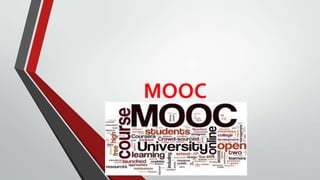
MOOC
CONTENT
• What is a MOOC
• History of MOOC
• Characteristics of MOOC
• Types of MOOCs
• Field of my interest of study
• Topics I would like to persue in future MOOC experience
What does MOOC stand for?

• M - Massive
• O - Open
• O - Online
• C - Course
What is a MOOC?

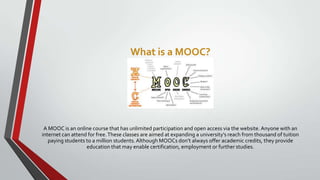
A MOOC is an online course that has unlimited participation and open access via the website. Anyone with an
internet can attend for free. These classes are aimed at expanding a university’s reach from thousand of tuition
paying students to a million students. Although MOOCs don’t always offer academic credits, they provide
education that may enable certification, employment or further studies.
Characteristics of a MOOC
• Allows content online delivery to any person who wants to take a course
• Free courses that are online
• Has no limit to attendance
• Has materials like videos, readings and problem sets that students can use
for them to learn effectively
History of MOOC

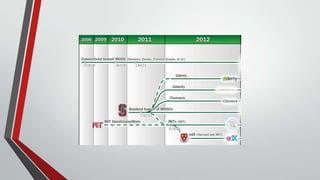
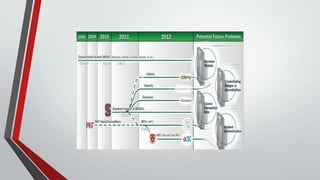
• First MOOC was offered in 2008 at the University of Manitoba
• Distributive nature of Stephen Downes and George Siemens
• CCKO8 course
• First MOOCs emerged from OER (Open Educational Resources) movement
• Term came up with Dave Cormier
Types of MOOCs
CMOOCs

Connectivist MOOC. This is a MOOC designed for connectivity learners built by George
Siemens.
XMOOC

Developed out of the OpenCourseWare and Open Educational Resources
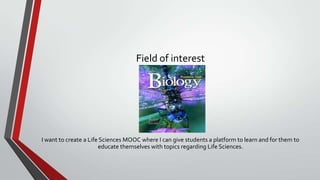
Field of interest

I want to create a Life Sciences MOOC where I can give students a platform to learn and for them to
educate themselves with topics regarding Life Sciences.
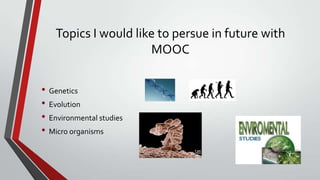
Topics I would like to persue in future with
MOOC
• Genetics
• Evolution
• Environmental studies
• Micro organisms

Mooc

  • 1.
  • 2.
    CONTENT • What isa MOOC • History of MOOC • Characteristics of MOOC • Types of MOOCs • Field of my interest of study • Topics I would like to persue in future MOOC experience
  • 3.
    What does MOOCstand for? • M - Massive • O - Open • O - Online • C - Course
  • 4.
    What is aMOOC? A MOOC is an online course that has unlimited participation and open access via the website. Anyone with an internet can attend for free. These classes are aimed at expanding a university’s reach from thousand of tuition paying students to a million students. Although MOOCs don’t always offer academic credits, they provide education that may enable certification, employment or further studies.
  • 5.
    Characteristics of aMOOC • Allows content online delivery to any person who wants to take a course • Free courses that are online • Has no limit to attendance • Has materials like videos, readings and problem sets that students can use for them to learn effectively
  • 6.
    History of MOOC •First MOOC was offered in 2008 at the University of Manitoba • Distributive nature of Stephen Downes and George Siemens • CCKO8 course • First MOOCs emerged from OER (Open Educational Resources) movement • Term came up with Dave Cormier
  • 7.
  • 8.
    CMOOCs Connectivist MOOC. Thisis a MOOC designed for connectivity learners built by George Siemens.
  • 10.
    XMOOC Developed out ofthe OpenCourseWare and Open Educational Resources
  • 12.
    Field of interest Iwant to create a Life Sciences MOOC where I can give students a platform to learn and for them to educate themselves with topics regarding Life Sciences.
  • 13.
    Topics I wouldlike to persue in future with MOOC • Genetics • Evolution • Environmental studies • Micro organisms