Download to read offline

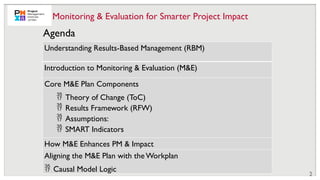
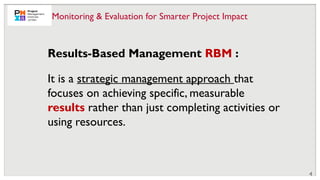
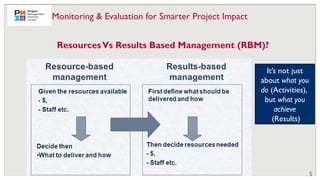
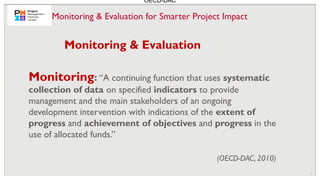
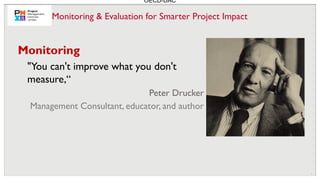
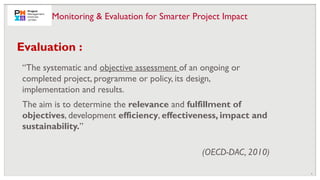
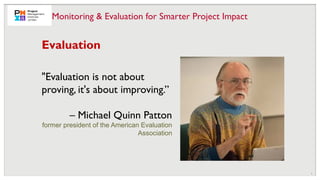
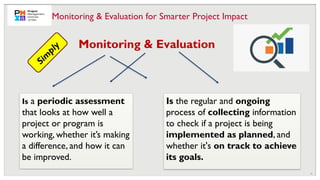
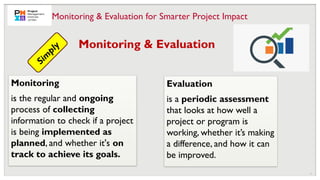
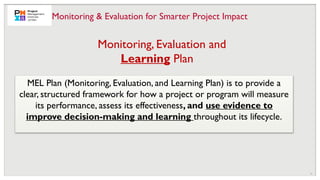
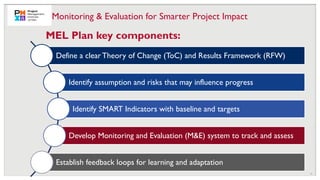
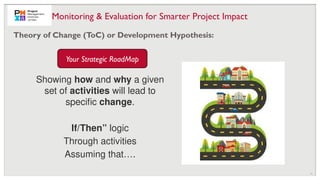
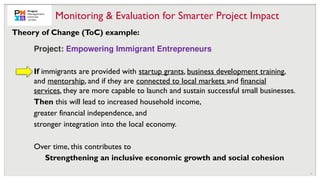
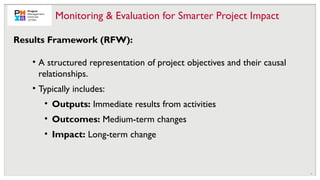
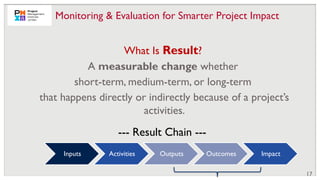
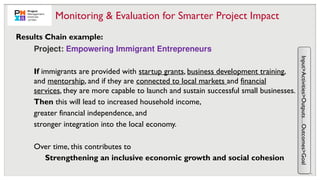
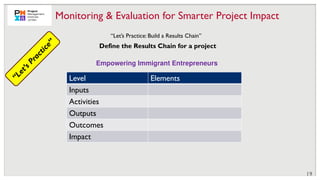
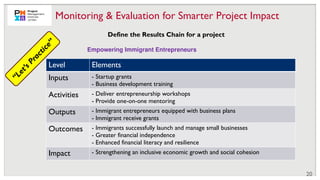
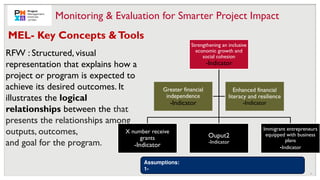
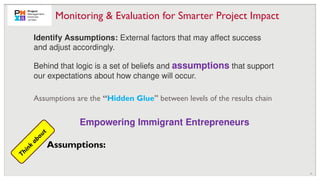
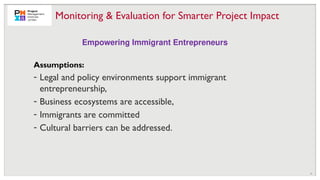
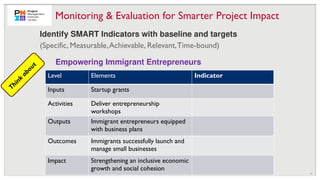
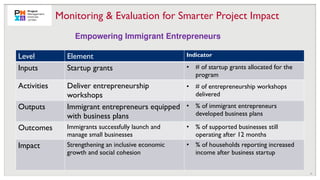
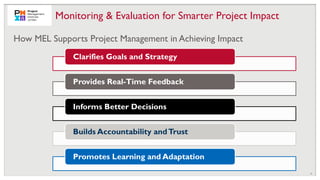
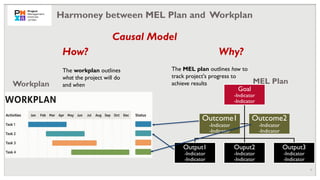
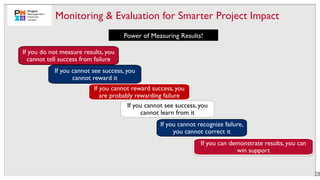
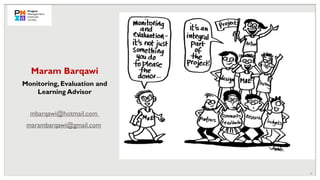

Summary of Objectives: Monitoring & Evaluation for Smarter Project Impact Introduce Results-Based Management (RBM): Emphasize shifting from tracking activities and resources to focusing on measurable results and meaningful change. Clarify Key M&E Concepts: Define Monitoring and Evaluation using OECD-DAC standards, highlighting their role in tracking progress, improving decision-making, and learning. Explain the MEL Plan: Outline the structure and purpose of a Monitoring, Evaluation, and Learning (MEL) Plan, emphasizing how it supports accountability, learning, and adaptive management. Develop Theories of Change and Results Frameworks: Demonstrate how to map out Theory of Change, define Results Chains, and build Results Frameworks (RFW) that show logical links between activities, outputs, outcomes, and impact. Introduce SMART Indicators: Guide participants in developing indicators that are Specific, Measurable, Achievable, Relevant, and Time-bound, with baselines and targets. Practice Application through Case Study: Use the example of a project on "Empowering Immigrant Entrepreneurs" to practice building results chains, identifying assumptions, and applying M&E tools. Promote Integration Between Workplan and MEL Plan: Reinforce the importance of aligning the project’s workplan (what and when) with the MEL plan (how and why), ensuring coherence and effective performance tracking. Highlight the Value of Measuring Results: Stress the role of M&E in identifying success, learning from challenges, and building support through evidence-based results.


![Almm monitoring and evaluation tools draft[1]acm](https://cdn.slidesharecdn.com/ss_thumbnails/almmmonitoringandevaluationtoolsdraft1acm-140417054101-phpapp01-thumbnail.jpg?width=640&height=640&fit=bounds)


