MODULE 6: PHILOSOPHY AND
PRACTICES IN PERSONAL
FINANCE
LESSON 2: MONEY MANAGEMENT CYCLE
MOST ESSENTIAL LEARNING COMPETENCIES
ILLUSTRATE THE MONEY
MANAGEMENT CYCLE AND GIVES
EXAMPLES OF SOUND PRACTICES IN
EARNING, SPENDING, SAVING AND
INVESTING MONEY.
WHAT I KNOW
ANSWER THE PRE-TEST
ON THE MODULE
MOTIVATION
NEEDS OR WANTS
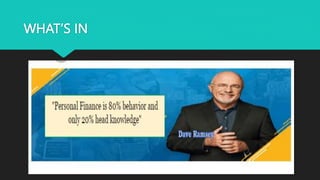
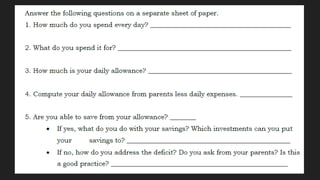
WHAT’S IN
WHAT’S NEW
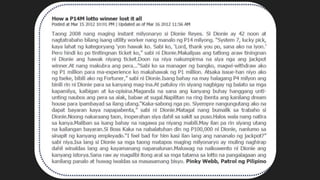
READ THE
STORY
QUESTION
WHAT LESSON DID YOU
LEARN FROM THE
ARTICLE?
WHAT IS IT
AREAS OF PERSONAL FINANCE
1.INCOME
2.SPENDING
3.SAVING
4.INVESTING
5.PROTECTION
1. INCOME
Refers to a source of cash inflow that an
individual receives and then uses to support
themselves and their family. It is the starting
point for our financial planning process.
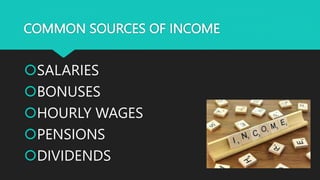
COMMON SOURCES OF INCOME
SALARIES
BONUSES
HOURLY WAGES
PENSIONS
DIVIDENDS
2. SPENDING
Includes all types of expenses an individual
incurs related to buying goods and services
or anything that is consumable(i.e., not an
investment). All spending fall into two
categories: CASH (paid for with cash on
hand) and CREDIT (paid for by borrowing
money).
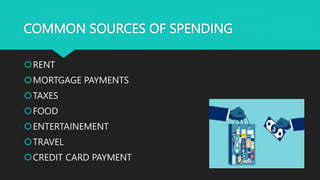
COMMON SOURCES OF SPENDING
RENT
MORTGAGE PAYMENTS
TAXES
FOOD
ENTERTAINEMENT
TRAVEL
CREDIT CARD PAYMENT
3. SAVING
Refers to excess cash that is retained for
future investing or spending. If there is a
surplus between what a person earns as
income and what they spend, the
difference can be directed towards savings
or investments.
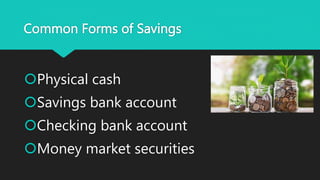
Common Forms of Savings
Physical cash
Savings bank account
Checking bank account
Money market securities
4. INVESTING
Relates to the purchase of assets that are
expected to generate a rate of return, with the
hope that over time the individual will receive
back more money than they originally invested.
Investing carries risk, and not all assets actually
end up producing a positive rate or return.
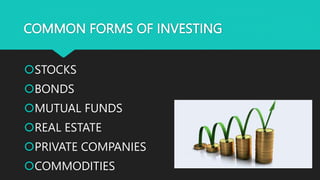
COMMON FORMS OF INVESTING
STOCKS
BONDS
MUTUAL FUNDS
REAL ESTATE
PRIVATE COMPANIES
COMMODITIES
INVESTING is the most complicated area of
personal finance and is one of the area where
people get the most professional advice. There
are vast differences in risk and reward between
different investments, and most people seek
help with this area of their financial plan.
5. PROTECTION
Personal protection refers to a
wide range of products that can
be used to guard against an
unforeseen and adverse event.
COMMON PROTECTION PRODUCTS
LIFE INSURANCE
HEALTH INSURANCE
ESTATE PLANNING
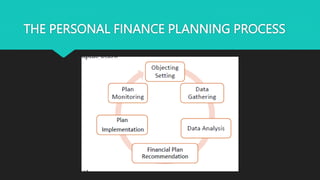
THE PERSONAL FINANCE PLANNING PROCESS
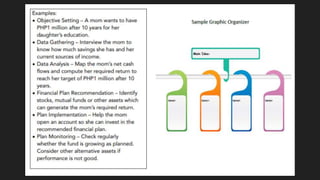
A. OBJECTIVE SETTING
Quantify monetary objectives with
definite time frame
Prioritize objectives
Examine these objectives with an
individual’s resources and limitations
B. DATA GATHERING
Use surveys, questionnaires and
interviews to gather quantitative and
qualitative information from the
individual
QUANTITATIVE-for assessing
financial status (i.e investments cash
flow, liabilities)
QUALITATIVE-to identify individual’s
goals and objectives, lifestyles, risk-
tolerance)
C. DATA ANALYSIS
Analyze the individual’s financial position and
cash flows
Review legal papers (i.e insurance policies, trust
agreements, wills, etc)
Evaluate objectives vis-à-vis the individual’s
resources and economic condition
D. FINANCIAL PLAN RECOMMENDATION
Propose financial products
At this point, the individual can
comment on the proposed solutions
E. PLAN IMPLEMENTATION
Assist the individual in the execution of the
recommended financial plan
Implementation may involve other entities so
assist the individual in dealing with the parties
involved in the execution of the financial plan.
F. PLAN MONITORING
Review the financial periodically to evaluate
changing market conditions (i.e economic
conditions, taxes, interests rates, etc.)
Evaluate the financial plan regularly to see if
it effectively meets the individual’s goals and
objectives.
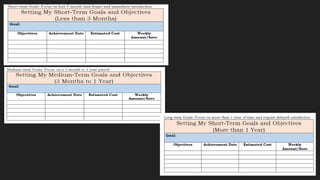
WHAT’S MORE (GROUP 1)
SHORT-TERM GOALS: FOCUS ON LESS-3 MONTH TIME
FRAME AND IMMEDIATE SATISFACTION
MEDIUM-TERM GOALS: FOCUS ON A 3-MONTH TO 1
YEAR PERIOD
LONG-TERM GOALS: FOCUS ON MORE THAN 1-YEAR
OF TIME AND REQUIRE DELAYED SATISFACTION
WHAT I HAVE LEARNED (GROUP 2)
Using a graphic organizer, illustrate the
money management cycle and give
examples of sound practices in earning,
spending, saving and investing money.
WHAT I CAN DO (GROUP 3)
SHOW ME THE MONEY: REACHING YOUR GOALS
Are you dreaming of buying a new gadget, visiting a
new place after quarantine or learning a language-----
but aren’t sure how to get there? The key to achieving
your financial goals is to break them down into
manageable steps. Fill in the circles to see how you can
start reaching one of your goals today.
ASSESSMENT
DIRECTION:
WRITE THE LETTER OF THE
CORRECT ANSWER ON YOUR
ANSWER SHEET
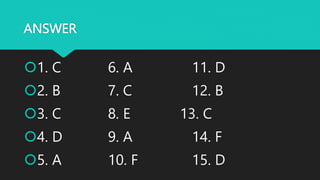
ANSWER
1. C 6. A 11. D
2. B 7. C 12. B
3. C 8. E 13. C
4. D 9. A 14. F
5. A 10. F 15. D
ADDITIONAL ACTIVITIES (ASSIGNMENT)
If you were to picture yourself 10 years from
now in a profession of your own choice, how
would your study of Personal Finance help
you contribute more to your field of
expertise
Write it on one whole sheet of paper
MONEY MANAGEMENT CYCLE.pptx

MONEY MANAGEMENT CYCLE.pptx

  • 1.
    MODULE 6: PHILOSOPHYAND PRACTICES IN PERSONAL FINANCE LESSON 2: MONEY MANAGEMENT CYCLE
  • 2.
    MOST ESSENTIAL LEARNINGCOMPETENCIES ILLUSTRATE THE MONEY MANAGEMENT CYCLE AND GIVES EXAMPLES OF SOUND PRACTICES IN EARNING, SPENDING, SAVING AND INVESTING MONEY.
  • 3.
    WHAT I KNOW ANSWERTHE PRE-TEST ON THE MODULE
  • 4.
  • 5.
  • 7.
  • 9.
    QUESTION WHAT LESSON DIDYOU LEARN FROM THE ARTICLE?
  • 10.
  • 11.
    AREAS OF PERSONALFINANCE 1.INCOME 2.SPENDING 3.SAVING 4.INVESTING 5.PROTECTION
  • 12.
    1. INCOME Refers toa source of cash inflow that an individual receives and then uses to support themselves and their family. It is the starting point for our financial planning process.
  • 13.
    COMMON SOURCES OFINCOME SALARIES BONUSES HOURLY WAGES PENSIONS DIVIDENDS
  • 14.
    2. SPENDING Includes alltypes of expenses an individual incurs related to buying goods and services or anything that is consumable(i.e., not an investment). All spending fall into two categories: CASH (paid for with cash on hand) and CREDIT (paid for by borrowing money).
  • 15.
    COMMON SOURCES OFSPENDING RENT MORTGAGE PAYMENTS TAXES FOOD ENTERTAINEMENT TRAVEL CREDIT CARD PAYMENT
  • 16.
    3. SAVING Refers toexcess cash that is retained for future investing or spending. If there is a surplus between what a person earns as income and what they spend, the difference can be directed towards savings or investments.
  • 17.
    Common Forms ofSavings Physical cash Savings bank account Checking bank account Money market securities
  • 18.
    4. INVESTING Relates tothe purchase of assets that are expected to generate a rate of return, with the hope that over time the individual will receive back more money than they originally invested. Investing carries risk, and not all assets actually end up producing a positive rate or return.
  • 19.
    COMMON FORMS OFINVESTING STOCKS BONDS MUTUAL FUNDS REAL ESTATE PRIVATE COMPANIES COMMODITIES
  • 20.
    INVESTING is themost complicated area of personal finance and is one of the area where people get the most professional advice. There are vast differences in risk and reward between different investments, and most people seek help with this area of their financial plan.
  • 21.
    5. PROTECTION Personal protectionrefers to a wide range of products that can be used to guard against an unforeseen and adverse event.
  • 22.
    COMMON PROTECTION PRODUCTS LIFEINSURANCE HEALTH INSURANCE ESTATE PLANNING
  • 23.
    THE PERSONAL FINANCEPLANNING PROCESS
  • 24.
    A. OBJECTIVE SETTING Quantifymonetary objectives with definite time frame Prioritize objectives Examine these objectives with an individual’s resources and limitations
  • 25.
    B. DATA GATHERING Usesurveys, questionnaires and interviews to gather quantitative and qualitative information from the individual
  • 26.
    QUANTITATIVE-for assessing financial status(i.e investments cash flow, liabilities) QUALITATIVE-to identify individual’s goals and objectives, lifestyles, risk- tolerance)
  • 27.
    C. DATA ANALYSIS Analyzethe individual’s financial position and cash flows Review legal papers (i.e insurance policies, trust agreements, wills, etc) Evaluate objectives vis-à-vis the individual’s resources and economic condition
  • 28.
    D. FINANCIAL PLANRECOMMENDATION Propose financial products At this point, the individual can comment on the proposed solutions
  • 29.
    E. PLAN IMPLEMENTATION Assistthe individual in the execution of the recommended financial plan Implementation may involve other entities so assist the individual in dealing with the parties involved in the execution of the financial plan.
  • 30.
    F. PLAN MONITORING Reviewthe financial periodically to evaluate changing market conditions (i.e economic conditions, taxes, interests rates, etc.) Evaluate the financial plan regularly to see if it effectively meets the individual’s goals and objectives.
  • 31.
    WHAT’S MORE (GROUP1) SHORT-TERM GOALS: FOCUS ON LESS-3 MONTH TIME FRAME AND IMMEDIATE SATISFACTION MEDIUM-TERM GOALS: FOCUS ON A 3-MONTH TO 1 YEAR PERIOD LONG-TERM GOALS: FOCUS ON MORE THAN 1-YEAR OF TIME AND REQUIRE DELAYED SATISFACTION
  • 33.
    WHAT I HAVELEARNED (GROUP 2) Using a graphic organizer, illustrate the money management cycle and give examples of sound practices in earning, spending, saving and investing money.
  • 35.
    WHAT I CANDO (GROUP 3) SHOW ME THE MONEY: REACHING YOUR GOALS Are you dreaming of buying a new gadget, visiting a new place after quarantine or learning a language----- but aren’t sure how to get there? The key to achieving your financial goals is to break them down into manageable steps. Fill in the circles to see how you can start reaching one of your goals today.
  • 37.
    ASSESSMENT DIRECTION: WRITE THE LETTEROF THE CORRECT ANSWER ON YOUR ANSWER SHEET
  • 38.
    ANSWER 1. C 6.A 11. D 2. B 7. C 12. B 3. C 8. E 13. C 4. D 9. A 14. F 5. A 10. F 15. D
  • 39.
    ADDITIONAL ACTIVITIES (ASSIGNMENT) Ifyou were to picture yourself 10 years from now in a profession of your own choice, how would your study of Personal Finance help you contribute more to your field of expertise Write it on one whole sheet of paper