

JAYAPRIYA .R
II M.Sc MICROBIOLOGY
SACRED HEART COLLEGE
TIRUPATTUR
Tempeh
Soy sause
Rice wine
Mycoprotein
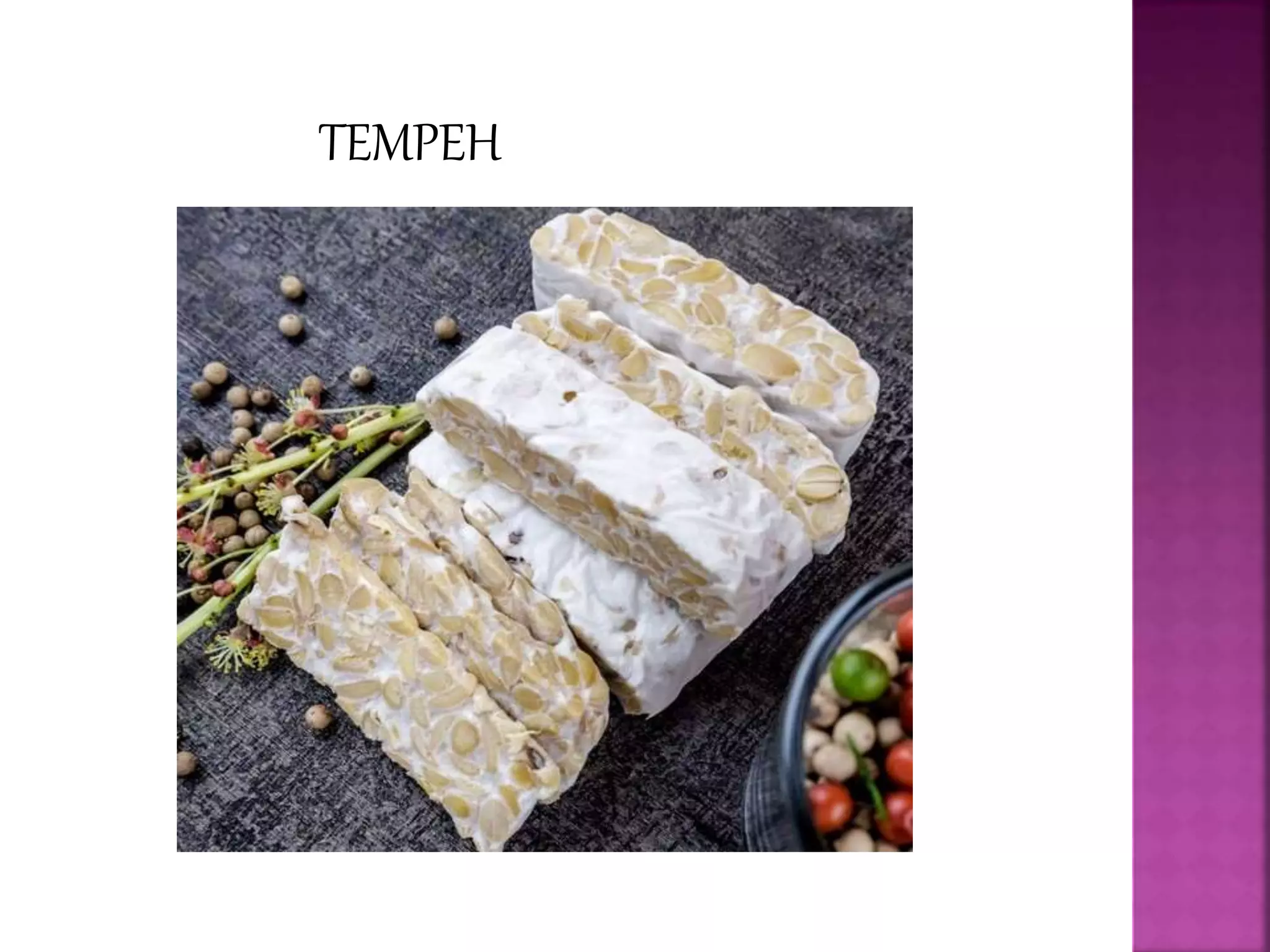
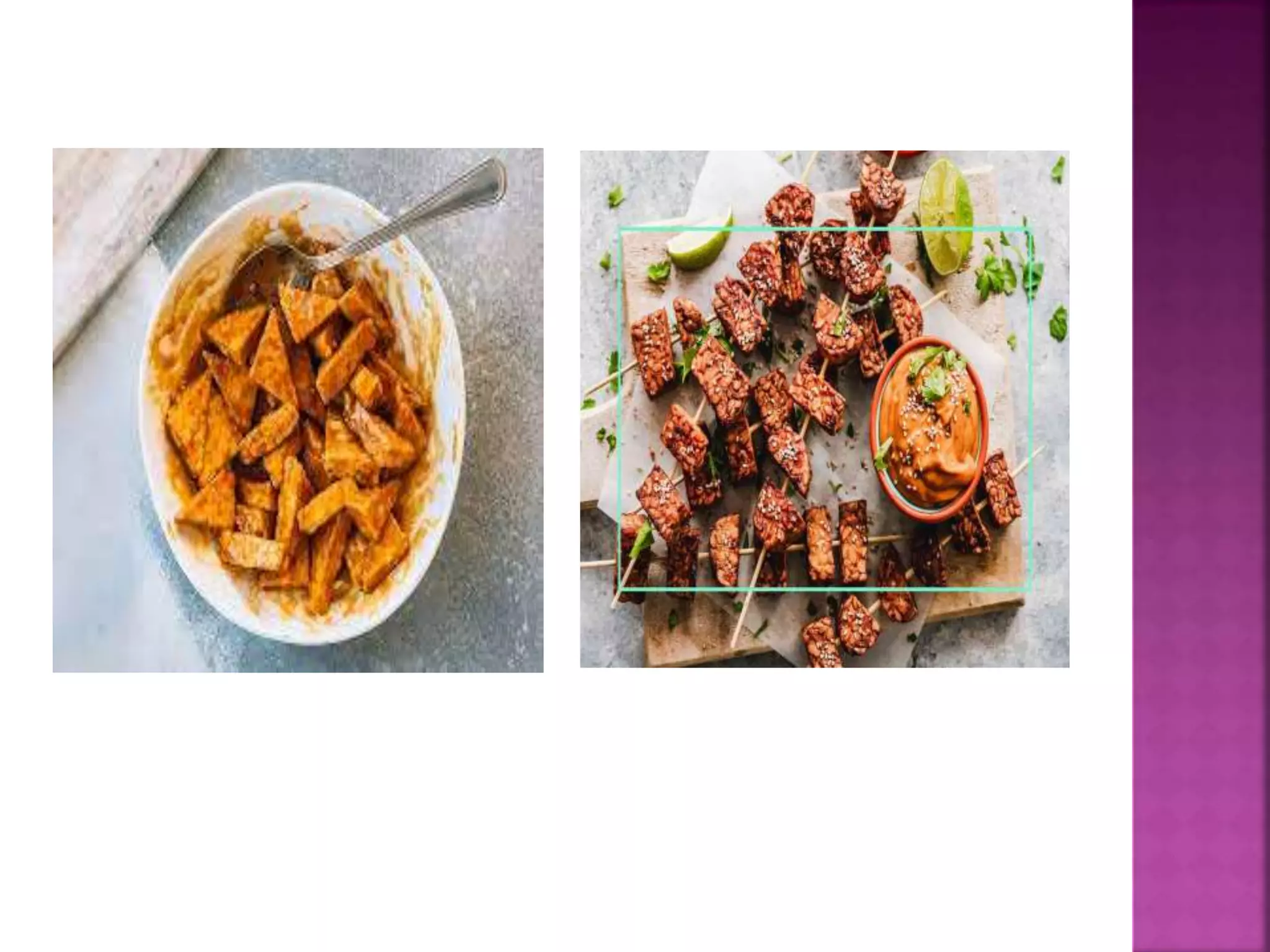
 Tempeh is a traditional mould-fermented food Originated
Indonesia over 800 years ago.
 It’s made from partially cooked soybeans and fermented
with a type of mold called rhizopus.
 It is high popularity around the world due to its excellent
culinary and nutritive properties.
 Tempeh has no cholesterol, and it’s a good way to get B
vitamins, fiber, iron, calcium, and other minerals.
 chemicals called phytoestrogens - cancer fighting and
antioxidant properties.
 Improve your cholesterol
 Lower your blood pressure
 Protect your heart
 Improve insulin resistance
 Lower inflammation
 Help relieve hot flashes from menopause
 Promote bone health
TEMPEH
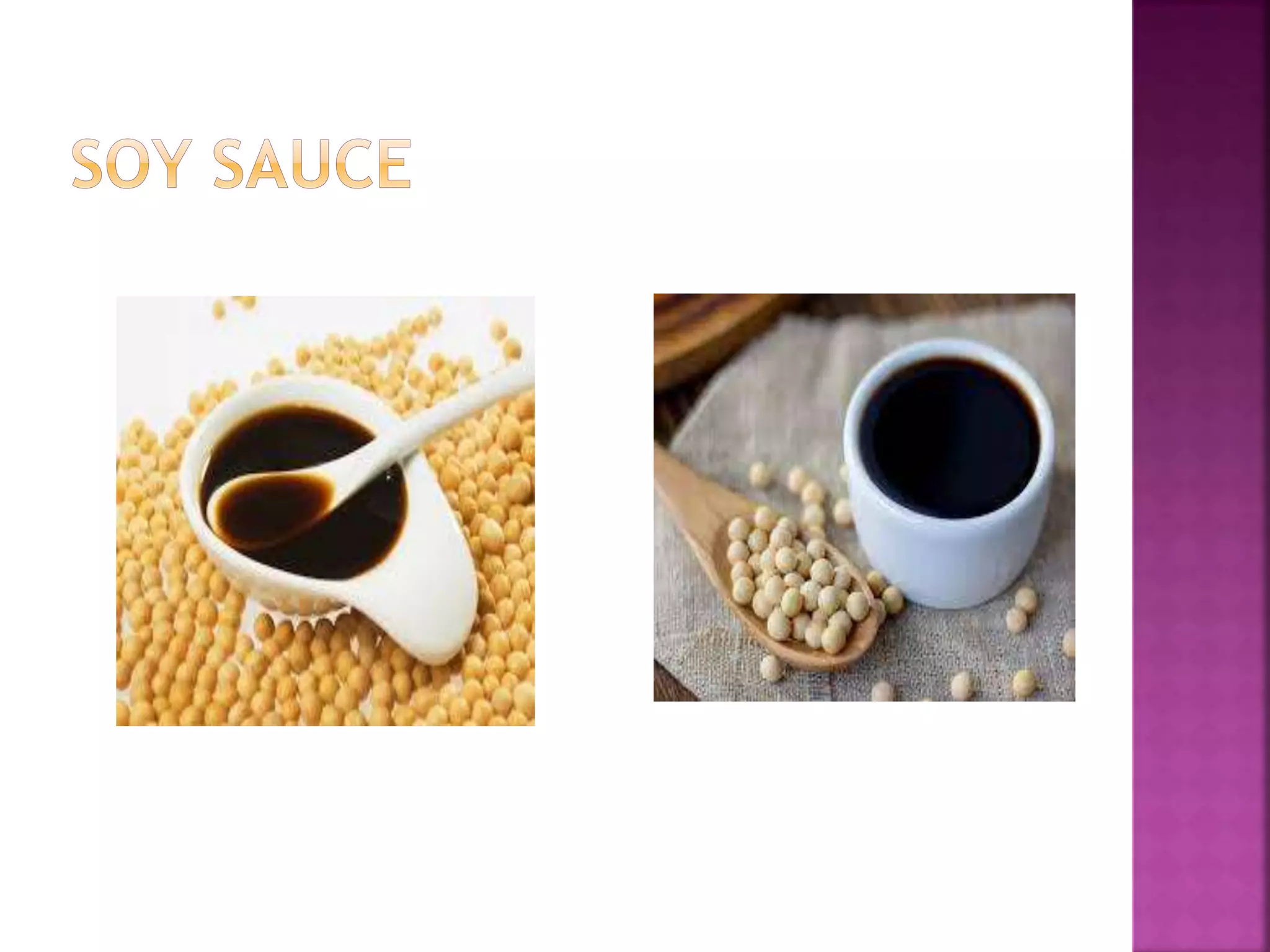
 Soy sauce is traditional condiment of Chinese origin and
largely used in East Asia to impart an appetizing flavor to
several cooked foods, as well as to help digestion.
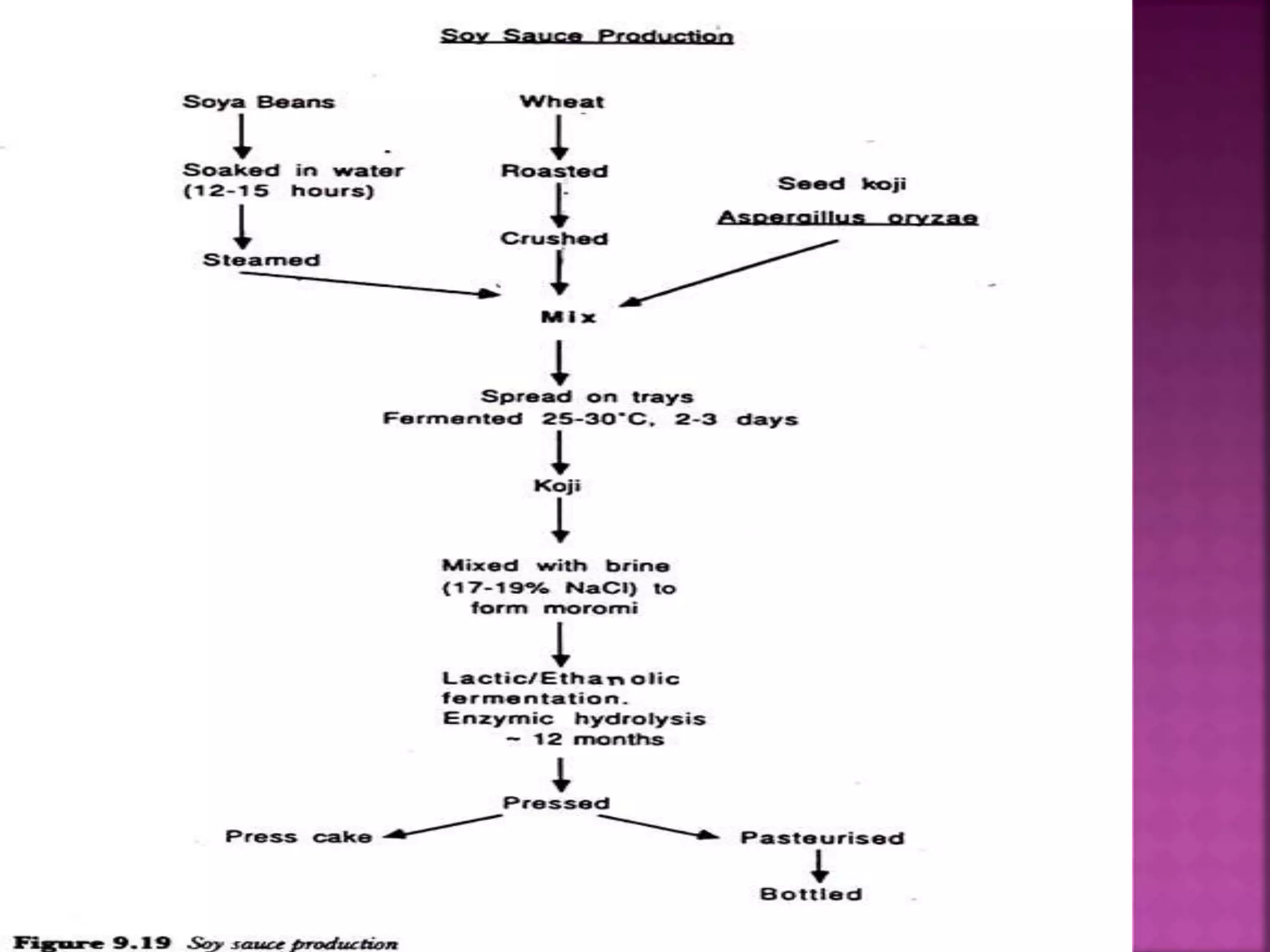
 Soy sauce is made from fermented paste of soybeans,
roasted grain, brine, and Aspergillus oryzae or Aspergillus
sojae mold.
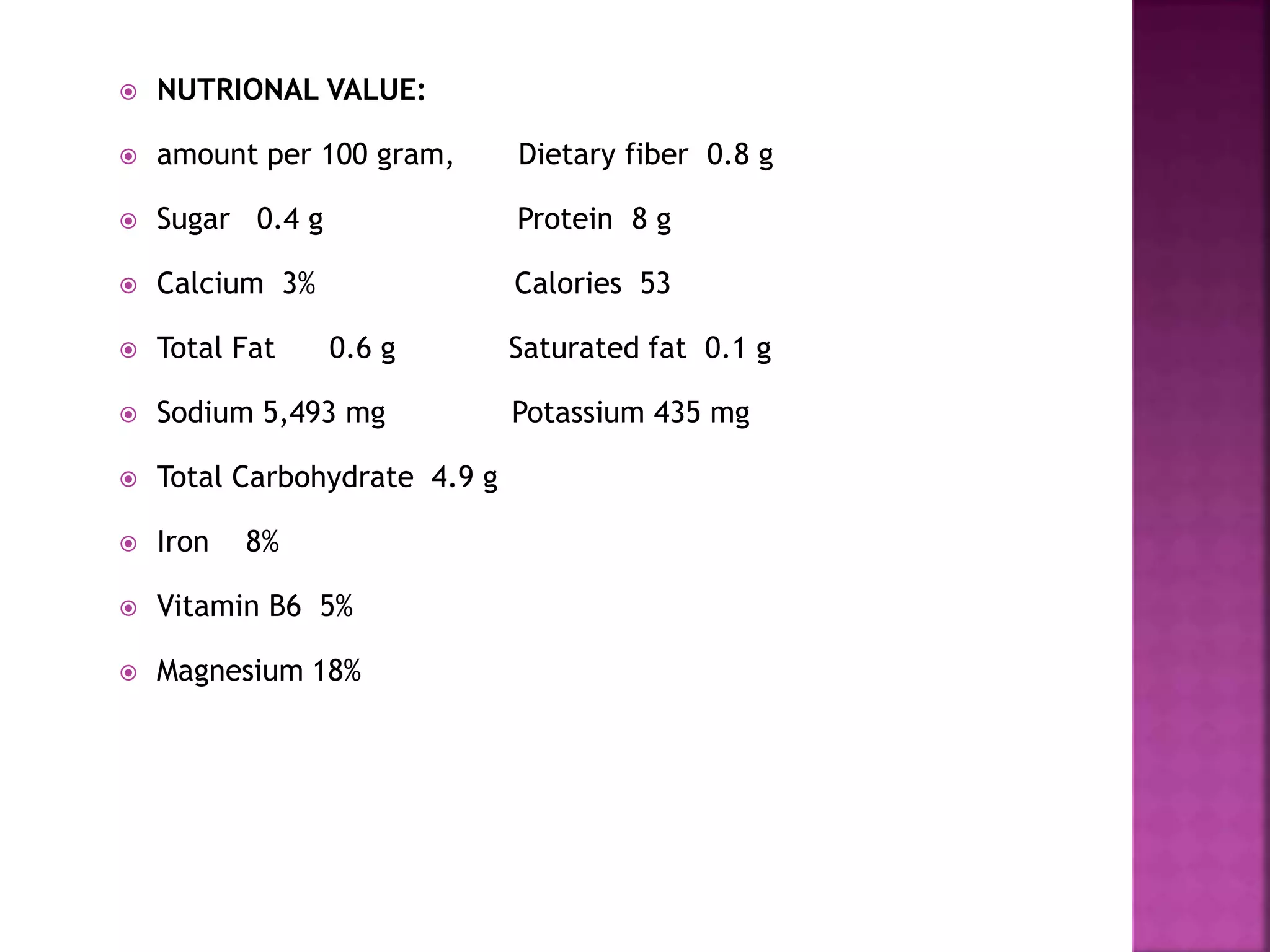
 NUTRIONAL VALUE:
 amount per 100 gram, Dietary fiber 0.8 g
 Sugar 0.4 g Protein 8 g
 Calcium 3% Calories 53
 Total Fat 0.6 g Saturated fat 0.1 g
 Sodium 5,493 mg Potassium 435 mg
 Total Carbohydrate 4.9 g
 Iron 8%
 Vitamin B6 5%
 Magnesium 18%
 In the brewing of the Japanese rice wine, sake, a koji
prepared on steamed rice is used.
 The mould used is the same species in soy sauce
production, Aspergillus oryzae the strains used in sake
production are particularly noted for their ability to
produce amylolytic enzymes.
 Rice wine is an alcoholic beverage fermented and distilled
from rice, traditionally consumed in East Asia, Southeast
Asia and South Asia.
 Rice wine is made by the fermentation of rice starch that
has been converted to sugars.
 Microbes are the source of the enzymes that convert the
starches to sugars.In the moromi stage, water is added
along with strains of the yeast Saccharomyces cerevisiae
for sake fermentation.
 During this stage amylolytic enzymes from the mould
continue to break down the starch in the rice to produce
fermentable sugars which are then converted to ethanol by
the yeast.
 At the end of fermentation which typically lasts for three
weeks, the product is settled, filtered and blended before being
pasteurized and bottled.
 HEALTH BENEFITS
 better blood circulation and enhanced body metabolism.
 Citric and lactic acids in rice wine help with food digestion.
increases the collagen in the skin - prevent wrinkling.
 Rice wine also appears to have natural sunscreen properties
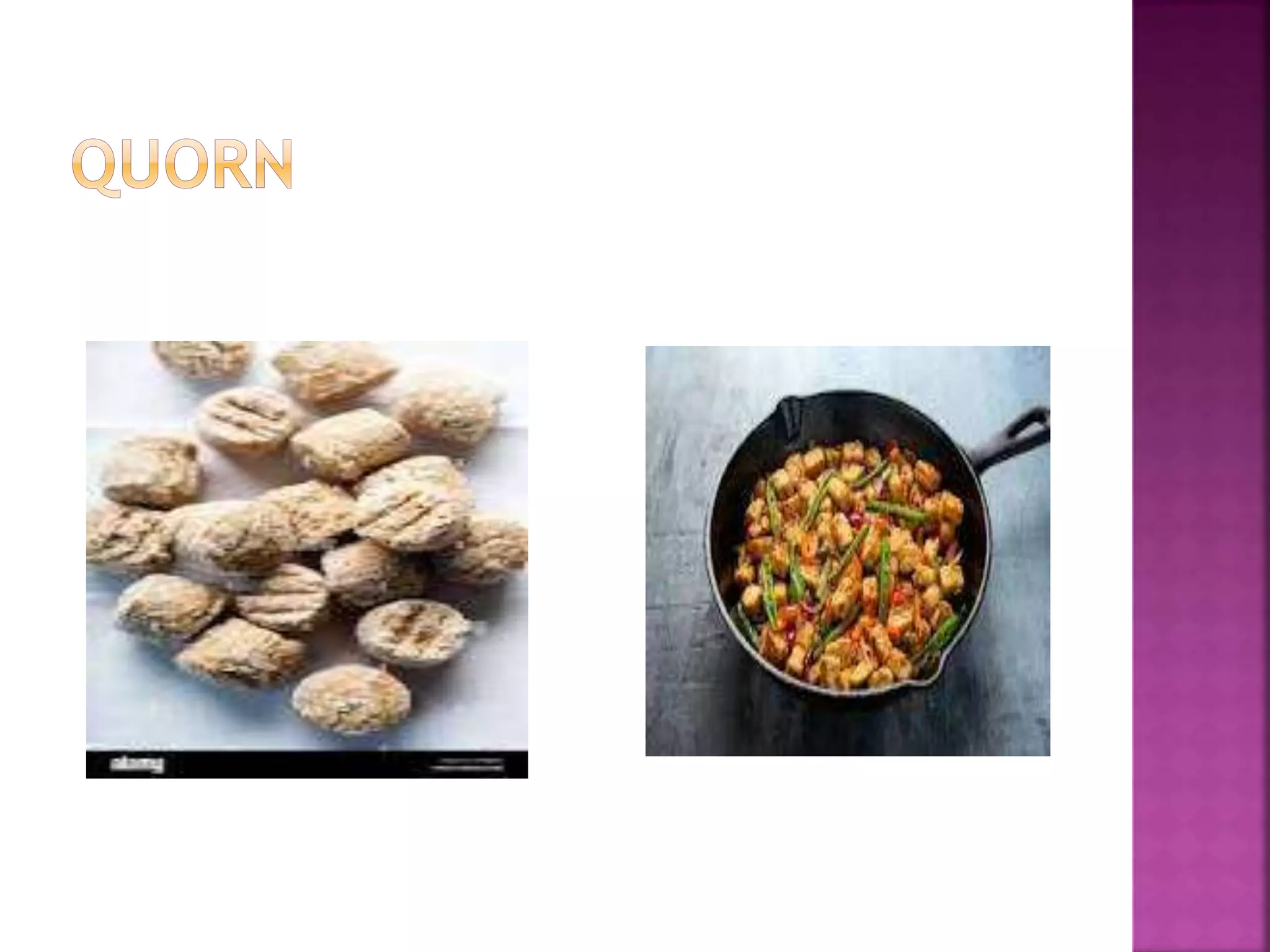
 Quorn is sold as both a cooking ingredient and as a
meat substitute used in a range of prepackaged
meals.
 All Quorn foods contain mycoprotein as an ingredient,
which is derived from the Fusarium venenatum
fungus. Quorn products, the fungus culture is dried
and mixed with egg albumen, which acts as a binder,
and then is adjusted in texture and pressed into
various forms.
 A vegan formulation also exists that uses potato
 Riboflavin,
 folate,
 phosphorous,
 zinc,
 choline and manganese.
 low in sodium
 free from cholesterol.
 Quorn mycoprotein is a nutritious, sustainable protein
source that can be consumed as part of a balanced diet.
MOLD FERMENTATION FOODS .pptx

MOLD FERMENTATION FOODS .pptx

  • 1.
    JAYAPRIYA .R II M.ScMICROBIOLOGY SACRED HEART COLLEGE TIRUPATTUR
  • 2.
  • 3.
     Tempeh isa traditional mould-fermented food Originated Indonesia over 800 years ago.  It’s made from partially cooked soybeans and fermented with a type of mold called rhizopus.  It is high popularity around the world due to its excellent culinary and nutritive properties.  Tempeh has no cholesterol, and it’s a good way to get B vitamins, fiber, iron, calcium, and other minerals.
  • 4.
     chemicals calledphytoestrogens - cancer fighting and antioxidant properties.  Improve your cholesterol  Lower your blood pressure  Protect your heart  Improve insulin resistance  Lower inflammation  Help relieve hot flashes from menopause  Promote bone health
  • 5.
  • 8.
     Soy sauceis traditional condiment of Chinese origin and largely used in East Asia to impart an appetizing flavor to several cooked foods, as well as to help digestion.  Soy sauce is made from fermented paste of soybeans, roasted grain, brine, and Aspergillus oryzae or Aspergillus sojae mold.
  • 10.
     NUTRIONAL VALUE: amount per 100 gram, Dietary fiber 0.8 g  Sugar 0.4 g Protein 8 g  Calcium 3% Calories 53  Total Fat 0.6 g Saturated fat 0.1 g  Sodium 5,493 mg Potassium 435 mg  Total Carbohydrate 4.9 g  Iron 8%  Vitamin B6 5%  Magnesium 18%
  • 12.
     In thebrewing of the Japanese rice wine, sake, a koji prepared on steamed rice is used.  The mould used is the same species in soy sauce production, Aspergillus oryzae the strains used in sake production are particularly noted for their ability to produce amylolytic enzymes.  Rice wine is an alcoholic beverage fermented and distilled from rice, traditionally consumed in East Asia, Southeast Asia and South Asia.
  • 13.
     Rice wineis made by the fermentation of rice starch that has been converted to sugars.  Microbes are the source of the enzymes that convert the starches to sugars.In the moromi stage, water is added along with strains of the yeast Saccharomyces cerevisiae for sake fermentation.  During this stage amylolytic enzymes from the mould continue to break down the starch in the rice to produce fermentable sugars which are then converted to ethanol by the yeast.
  • 14.
     At theend of fermentation which typically lasts for three weeks, the product is settled, filtered and blended before being pasteurized and bottled.  HEALTH BENEFITS  better blood circulation and enhanced body metabolism.  Citric and lactic acids in rice wine help with food digestion. increases the collagen in the skin - prevent wrinkling.  Rice wine also appears to have natural sunscreen properties
  • 16.
     Quorn issold as both a cooking ingredient and as a meat substitute used in a range of prepackaged meals.  All Quorn foods contain mycoprotein as an ingredient, which is derived from the Fusarium venenatum fungus. Quorn products, the fungus culture is dried and mixed with egg albumen, which acts as a binder, and then is adjusted in texture and pressed into various forms.  A vegan formulation also exists that uses potato
  • 17.
     Riboflavin,  folate, phosphorous,  zinc,  choline and manganese.  low in sodium  free from cholesterol.  Quorn mycoprotein is a nutritious, sustainable protein source that can be consumed as part of a balanced diet.