Organizational Culture
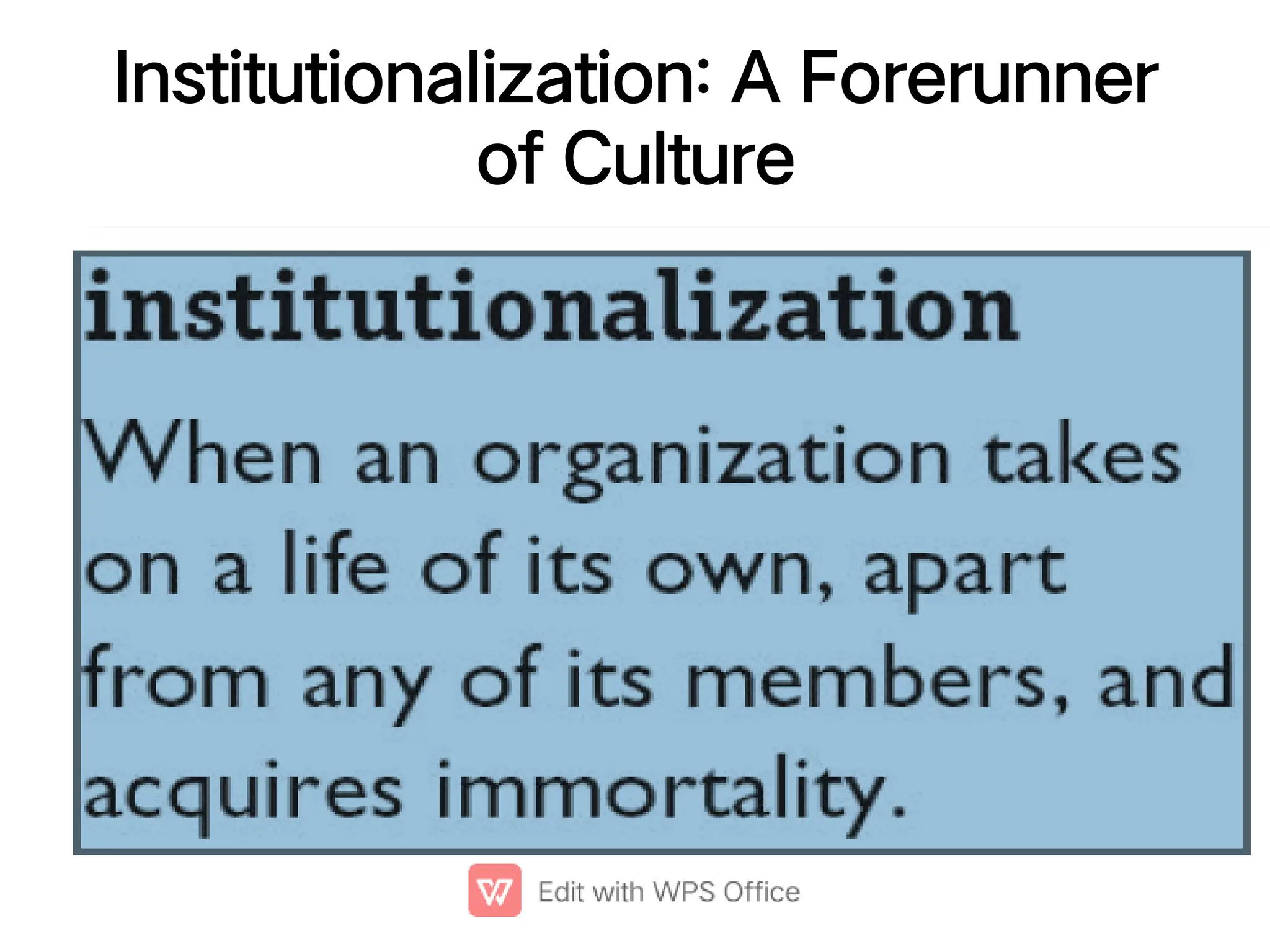
Institutionalization: A Forerunner
of Culture
•
•
•
Organizational culture is the set of values
that helps the organization’s employees
understand which actions are considered
acceptable and which are unacceptable.
It refers to some set of values held by
individuals in a firm.
Values help members of an organization
to understand how they should act.
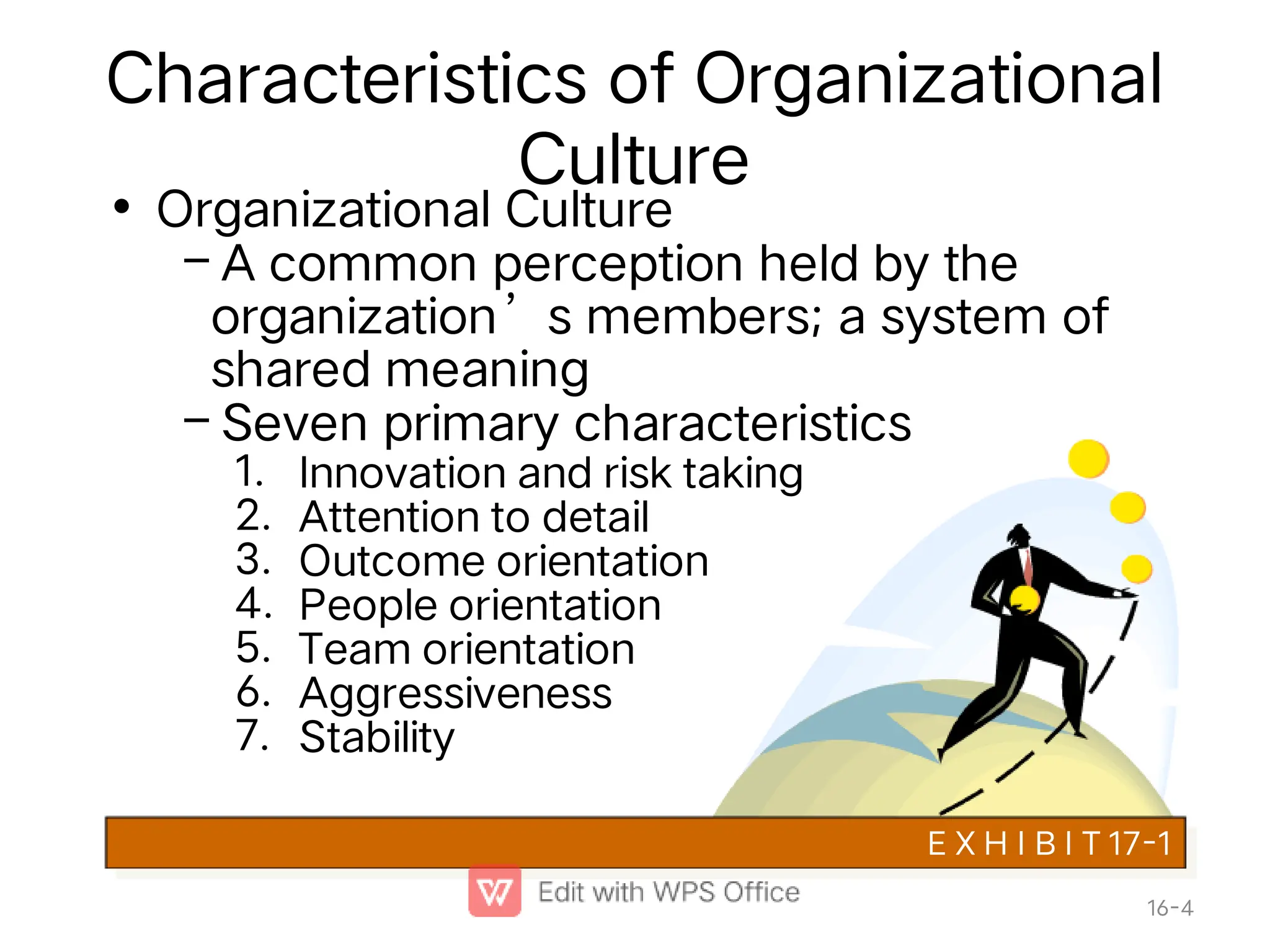
Characteristics of Organizational
Culture
•
–
–
1.
2.
3.
4.
5.
6.
7.
Organizational Culture
A common perception held by the
organization’s members; a system of
shared meaning
Seven primary characteristics
Innovation and risk taking
Attention to detail
Outcome orientation
People orientation
Team orientation
Aggressiveness
Stability
E X H I B I T 17-1
16-4
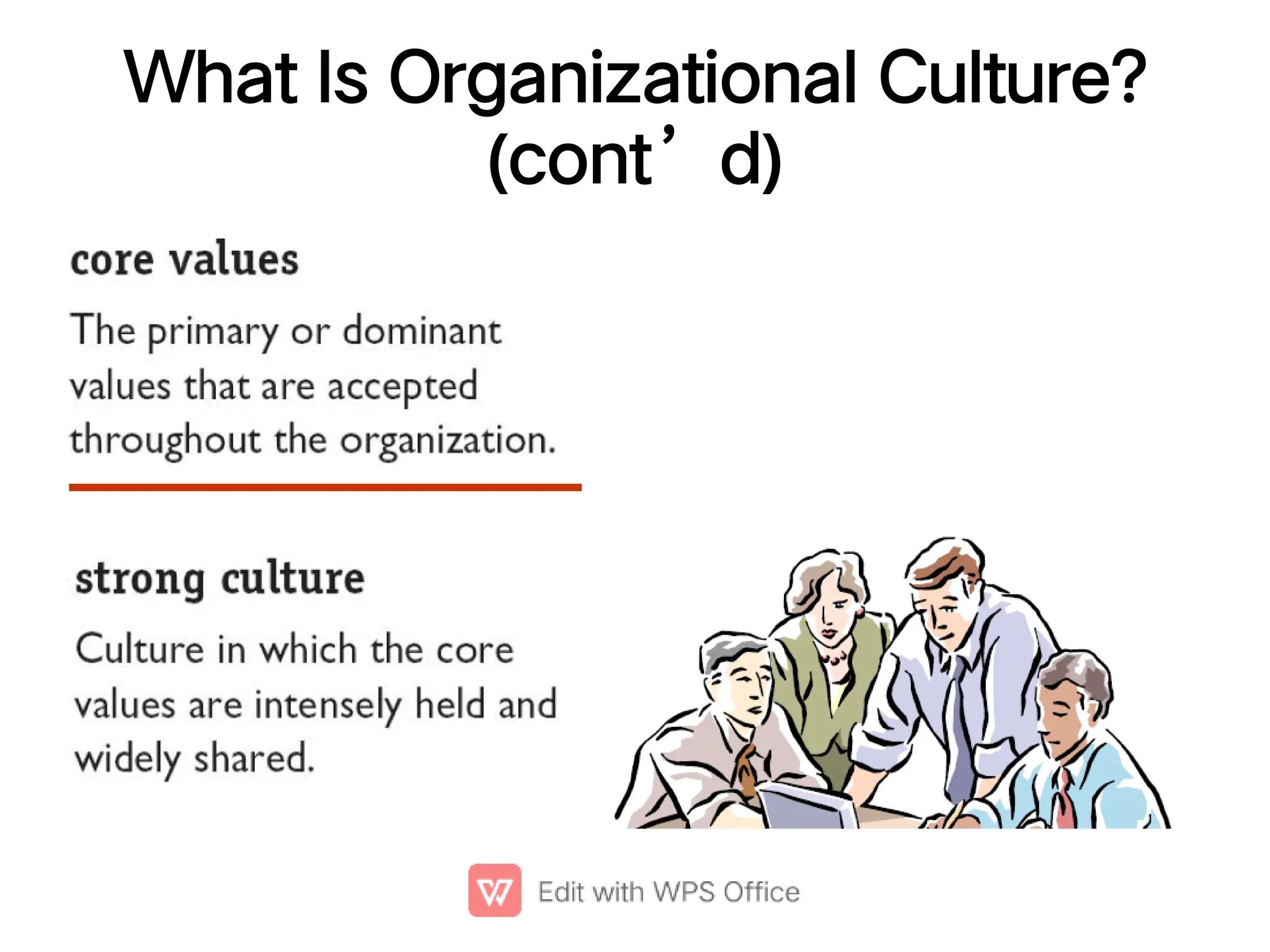
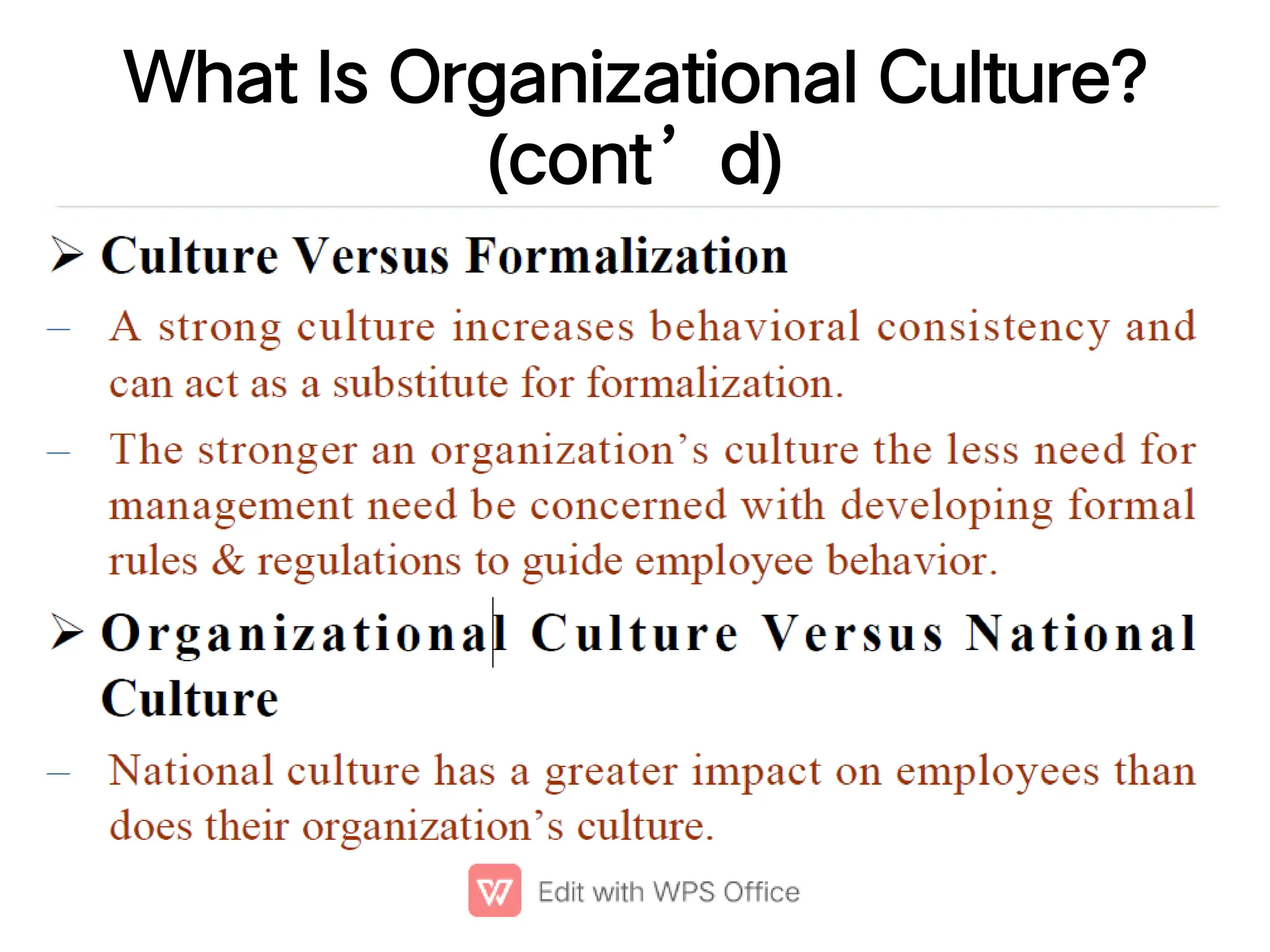
What Is Organizational Culture?
(cont’d)
What Is Organizational Culture?
(cont’d)
•
•
•
If most employees have the same opinion
about the organization’s mission & values, the
culture is strong; if opinion vary widely the
culture is weak.
A strong culture should reduce employees
turnover, because it demonstrates high
agreement about what the organization
represents.
Such unanimity of purpose builds cohesiveness,
loyalty, & organizational commitment.
Strong Culture
•
•
•
•
A company with a strongculture provides clear
expectations for employees about their jobs,
behavior and dress.
There should also be a clear cut chain of command.
This type of atmosphere fosters a sense of wellbeing
in employees and helps them to work towards the
greater good of the company.
The only danger of a strong organizational culture is
concept called “group think” (group thinks so
similarly that they lose the ability to become
innovative and make poor decisions).
Weak Culture
•
•
•
•
•
A weak organizational culture is one in which employees
are not clear with what their goals are.
A weak culture is evident when most employees have
varied opinions about the organization’s mission and
values.
The company is disorganized and this requires extra
efforts and time to attain maximal unity of purpose.
Employees waste time spinning their wheels, because of
inability to focus on what’s important. Weak
organizational culture allows for increase in turnover of
employees because of a lack of corporate cohesiveness
and mission.
This spirals into low employee morale and employee
disengagement.
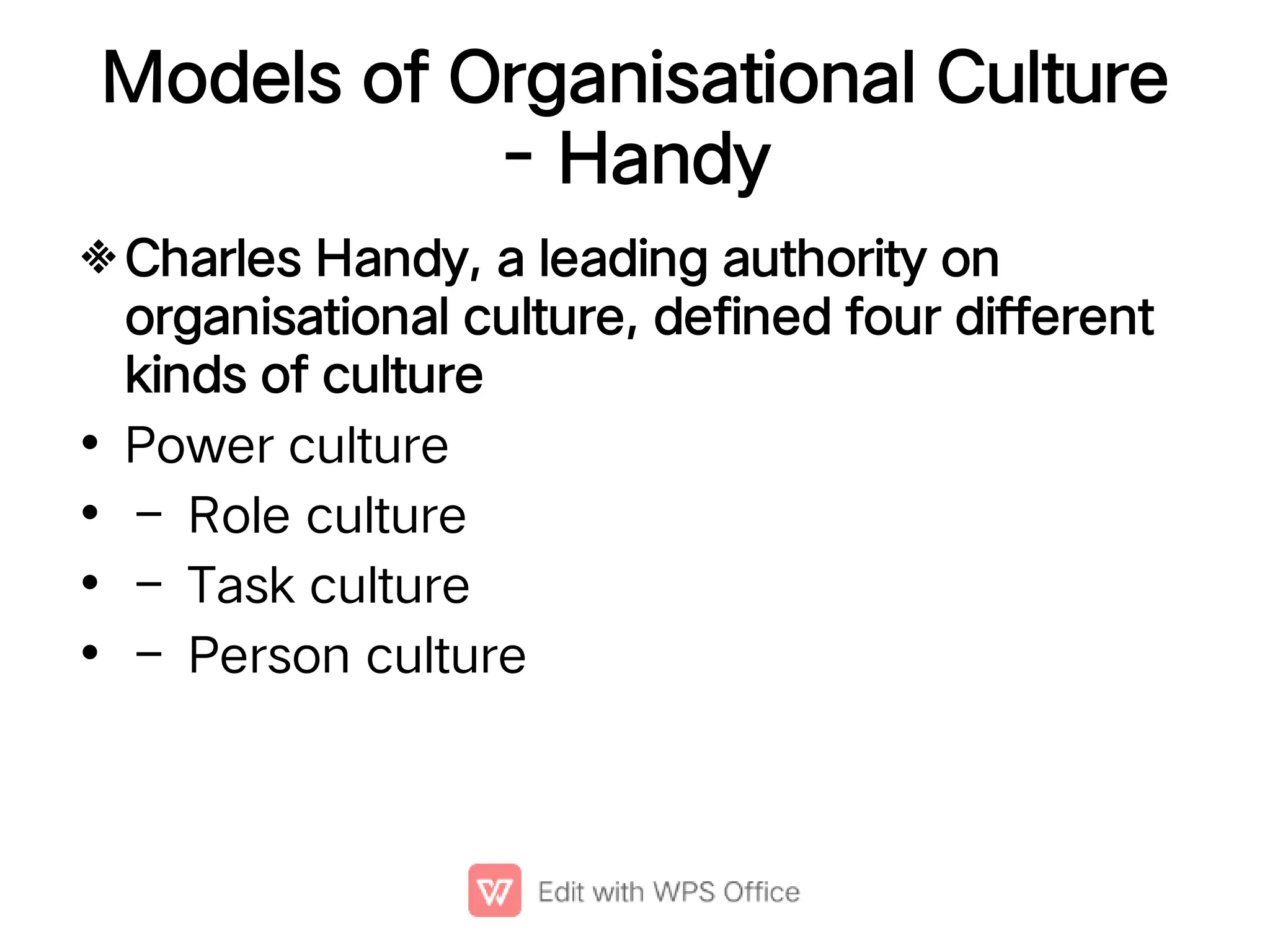
Models of Organisational Culture
- Handy

•
•
•
•
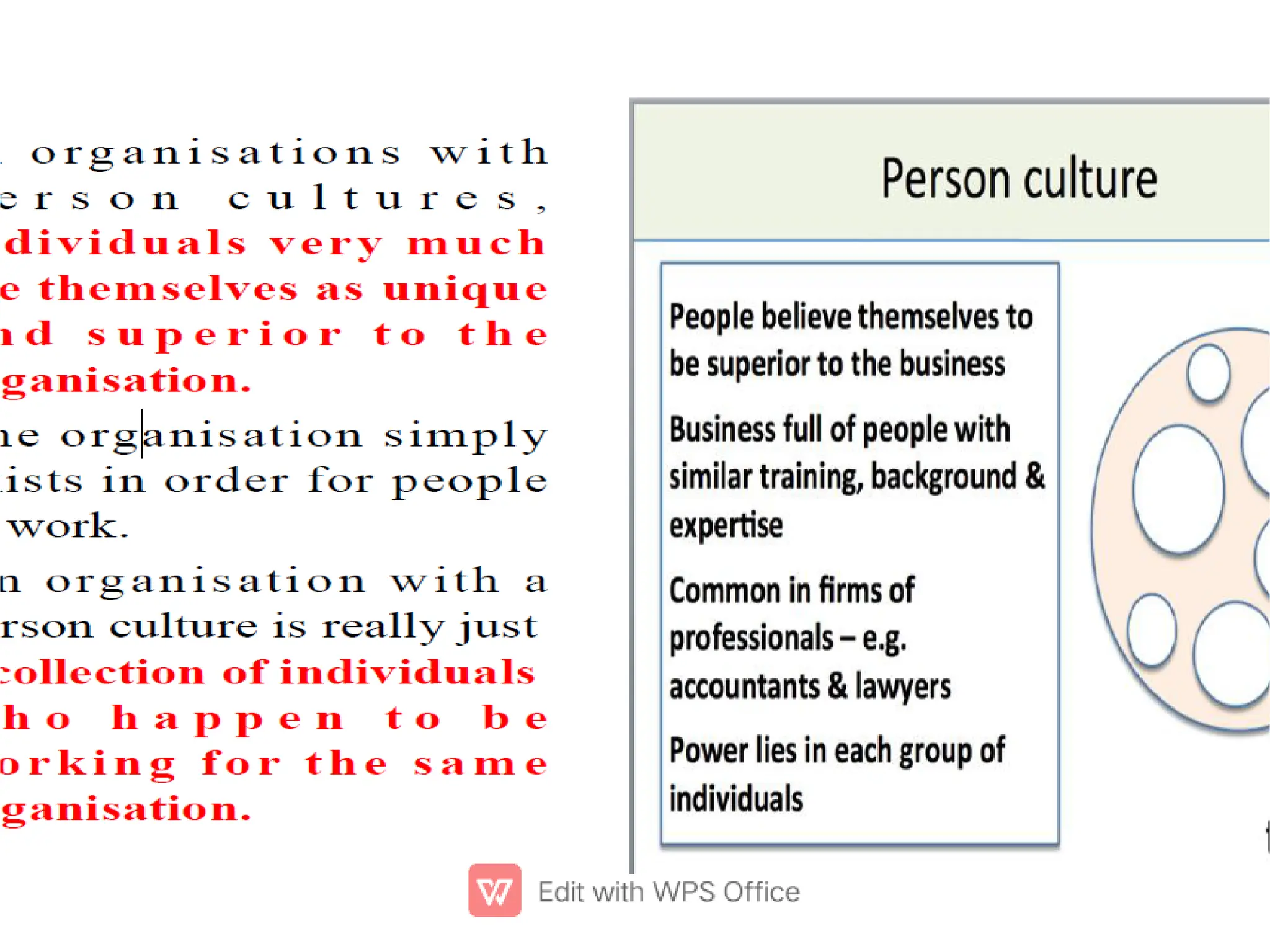
Charles Handy, a leading authority on
organisational culture, defined four different
kinds of culture
Power culture
– Role culture
– Task culture
– Person culture
What Is Organizational Culture?
(cont’d)
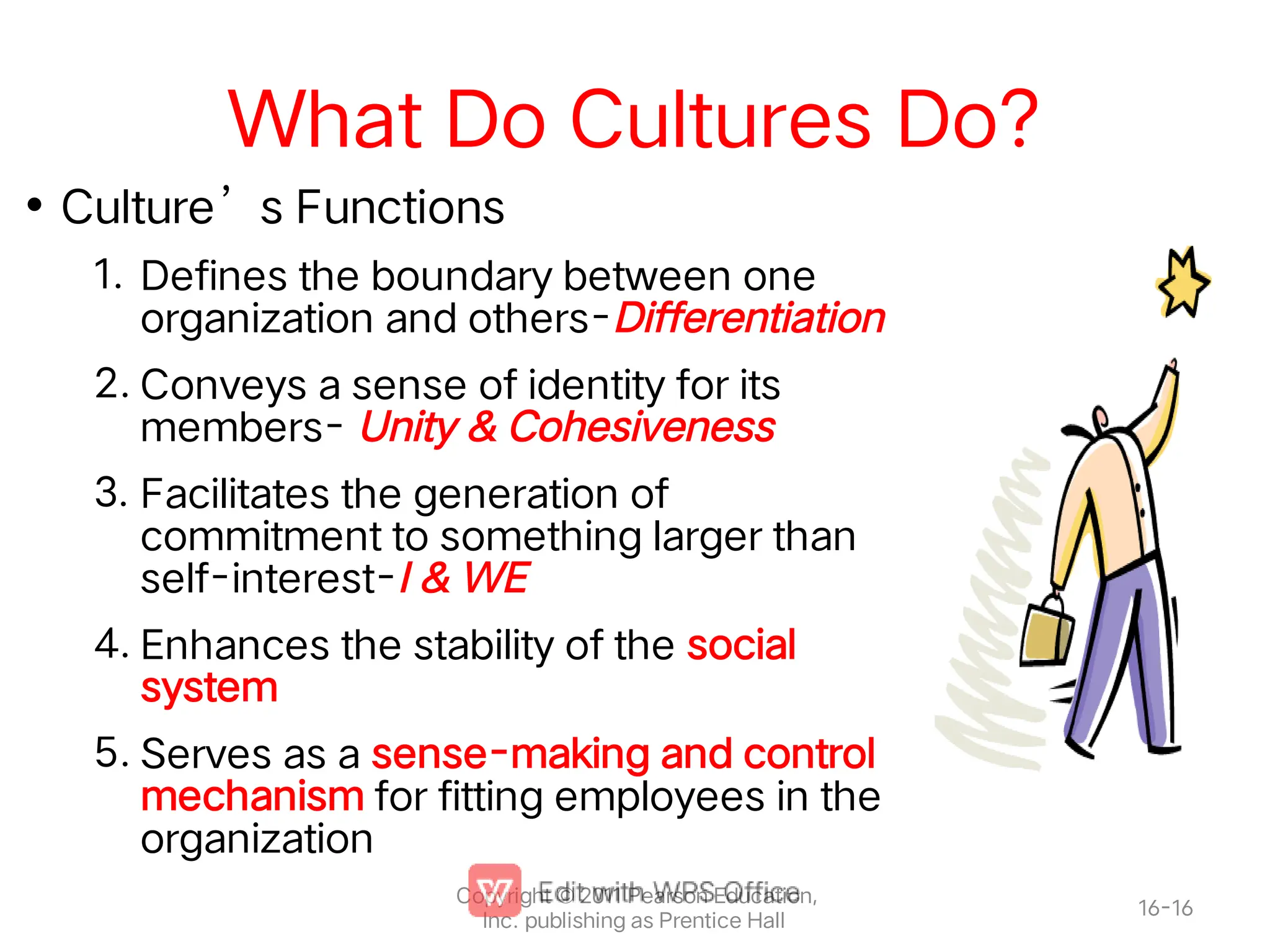
What Do Cultures Do?
•
1.
2.
3.
4.
5.
Culture’s Functions
Defines the boundary between one
organization and others-Differentiation
Conveys a sense of identity for its
members- Unity & Cohesiveness
Facilitates the generation of
commitment to something larger than
self-interest-I & WE
Enhances the stability of the social
system
Serves as a sense-making and control
mechanism for fitting employees in the
organization
16-16
Copyright © 2011 Pearson Education,
Inc. publishing as Prentice Hall
Culture as a Liability
•
–
•
–
•
–
•
–
Institutionalization
A company can become institutionalized where it is
valued for itself and not for the goods and services it
provides
Barrier to change
Occurs when culture’s values are not aligned with
the values necessary for rapid change
Barrier to diversity
Strong cultures put considerable pressure on
employees to conform, which may lead to
institutionalized bias
Barrier to acquisitions and mergers
Incompatible cultures can destroy an otherwise
successful merger
16-17
Copyright © 2011 Pearson Education,
Inc. publishing as Prentice Hall
Creating &
Sustaining
Culture
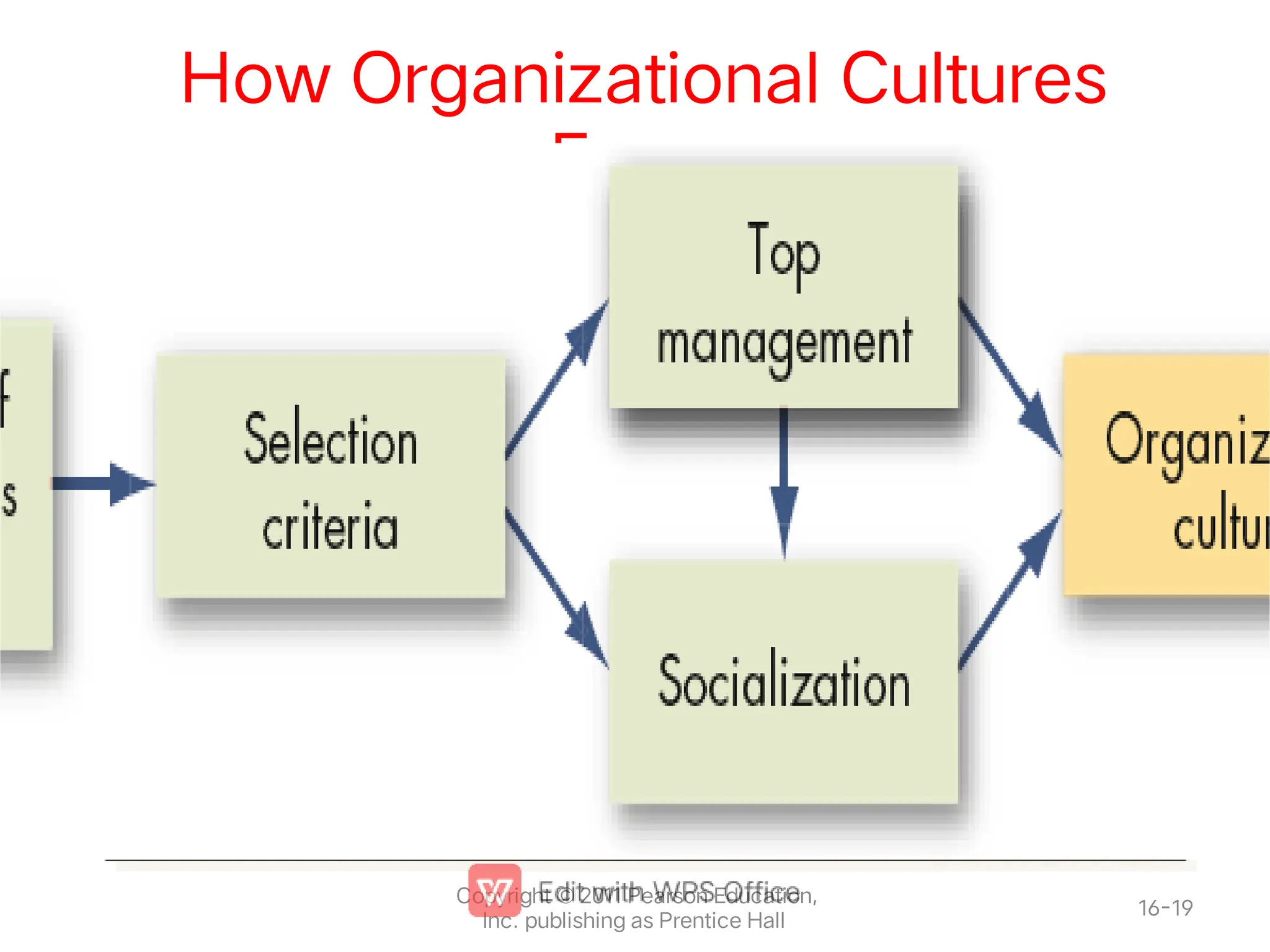
How Organizational Cultures
Form
•
•
Organizational cultures are derived
from the founder
They are sustained through managerial
action
Copyright © 2011 Pearson Education,
Inc. publishing as Prentice Hall
16-19
E X H I B I T 16-4
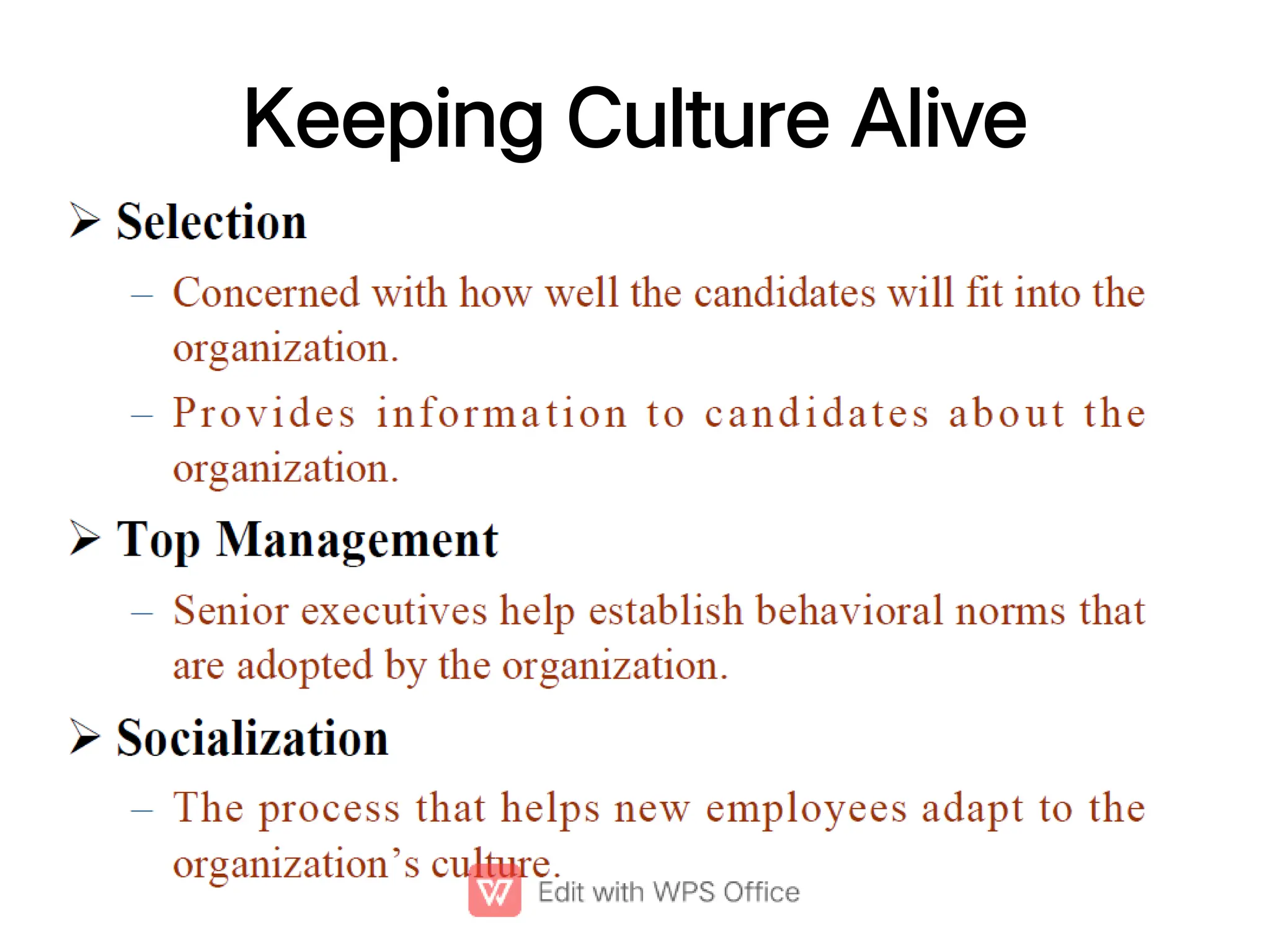
Keeping Culture Alive
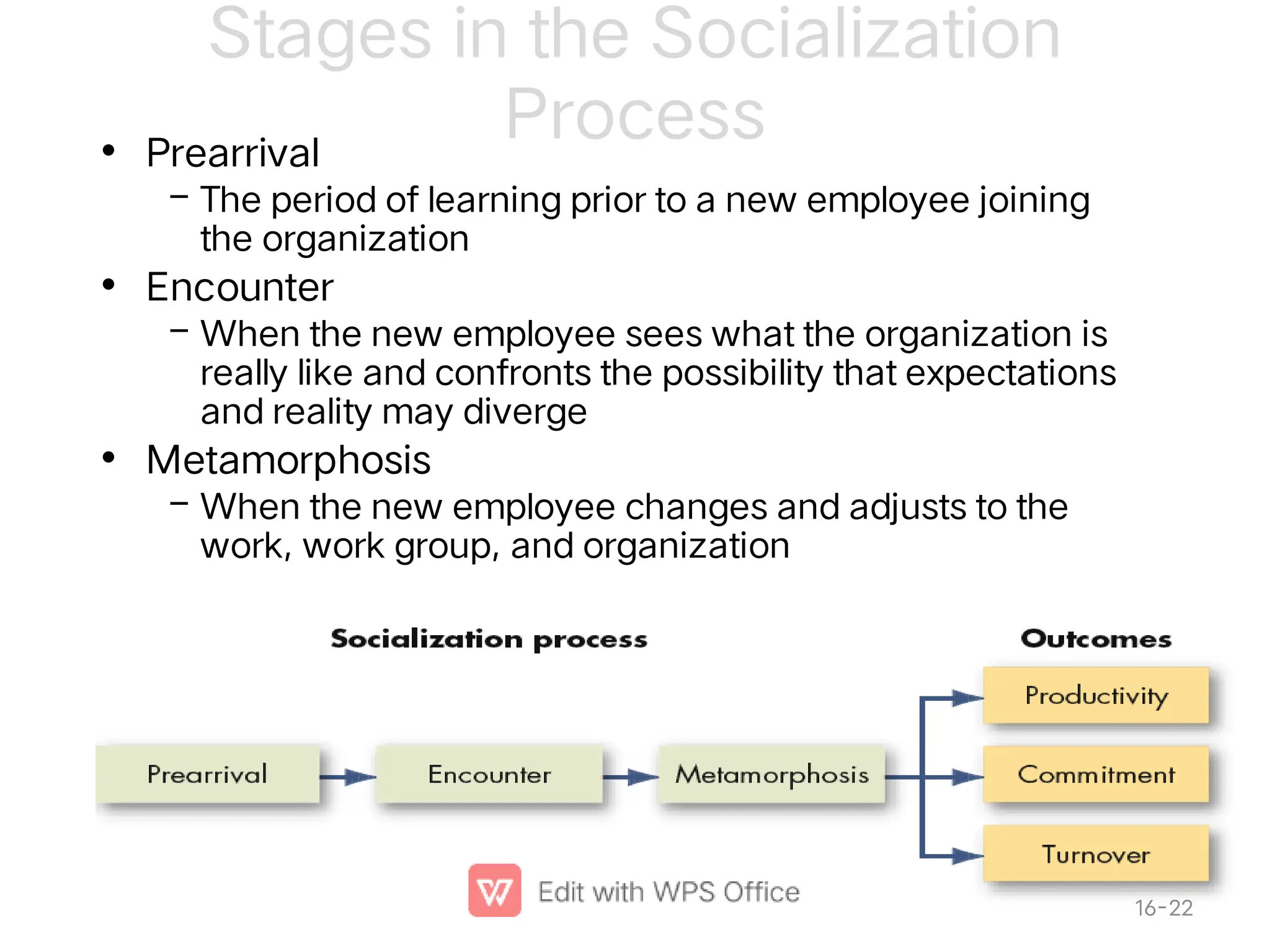
Stages in the Socialization
Process
Stages in the Socialization
Process
•
–
•
–
•
–
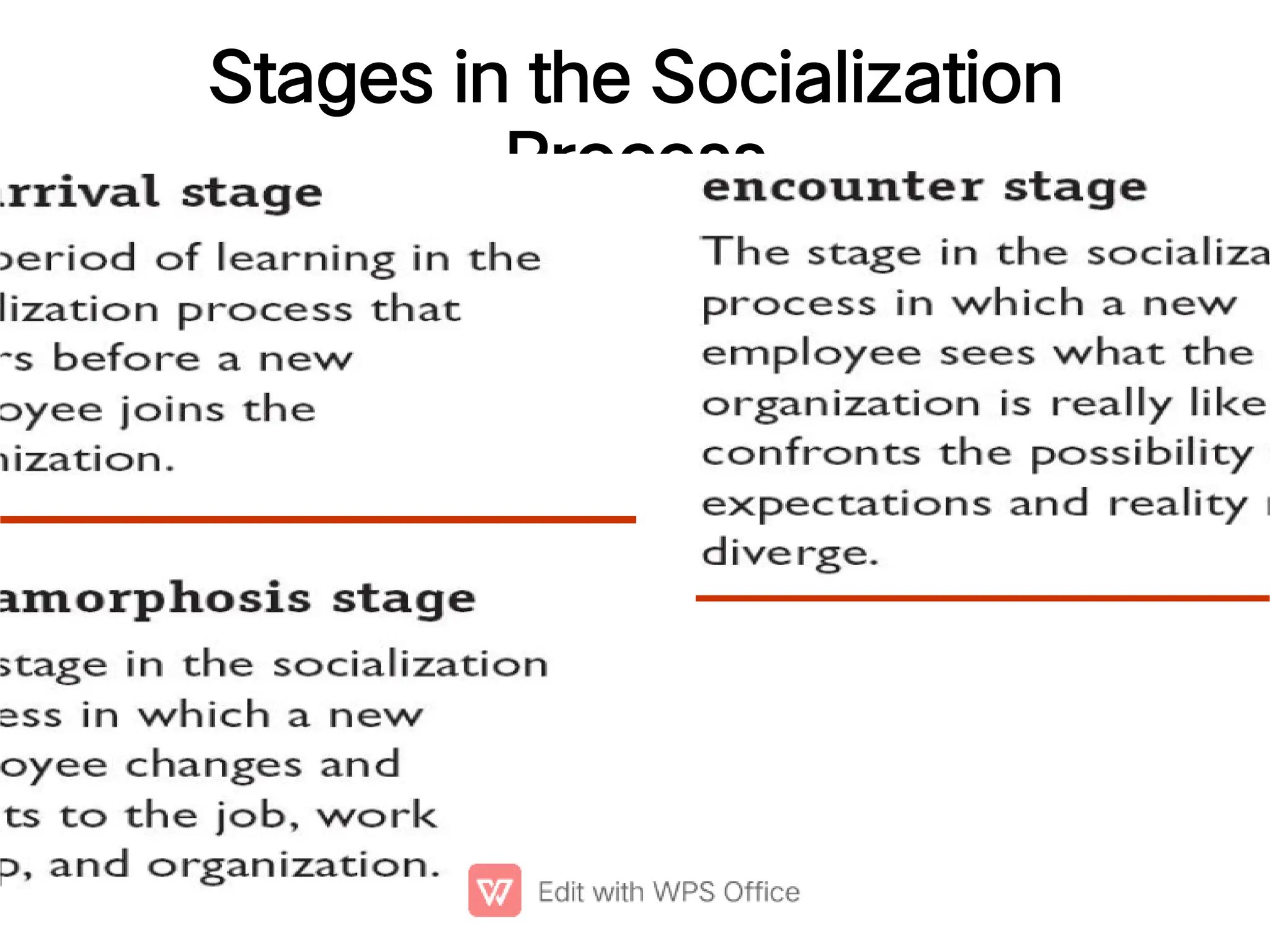
Prearrival
The period of learning prior to a new employee joining
the organization
Encounter
When the new employee sees what the organization is
really like and confronts the possibility that expectations
and reality may diverge
Metamorphosis
When the new employee changes and adjusts to the
work, work group, and organization
16-22
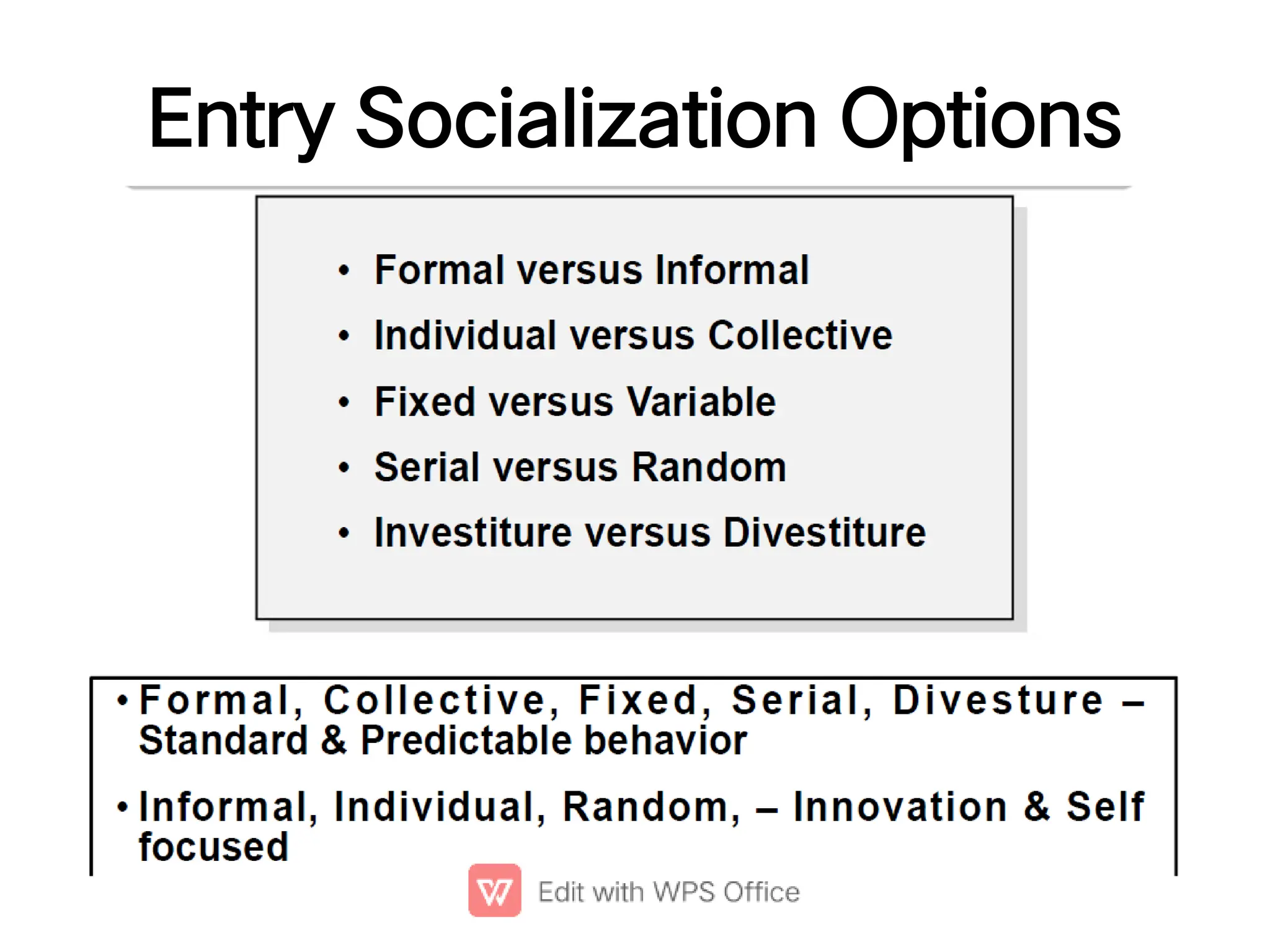
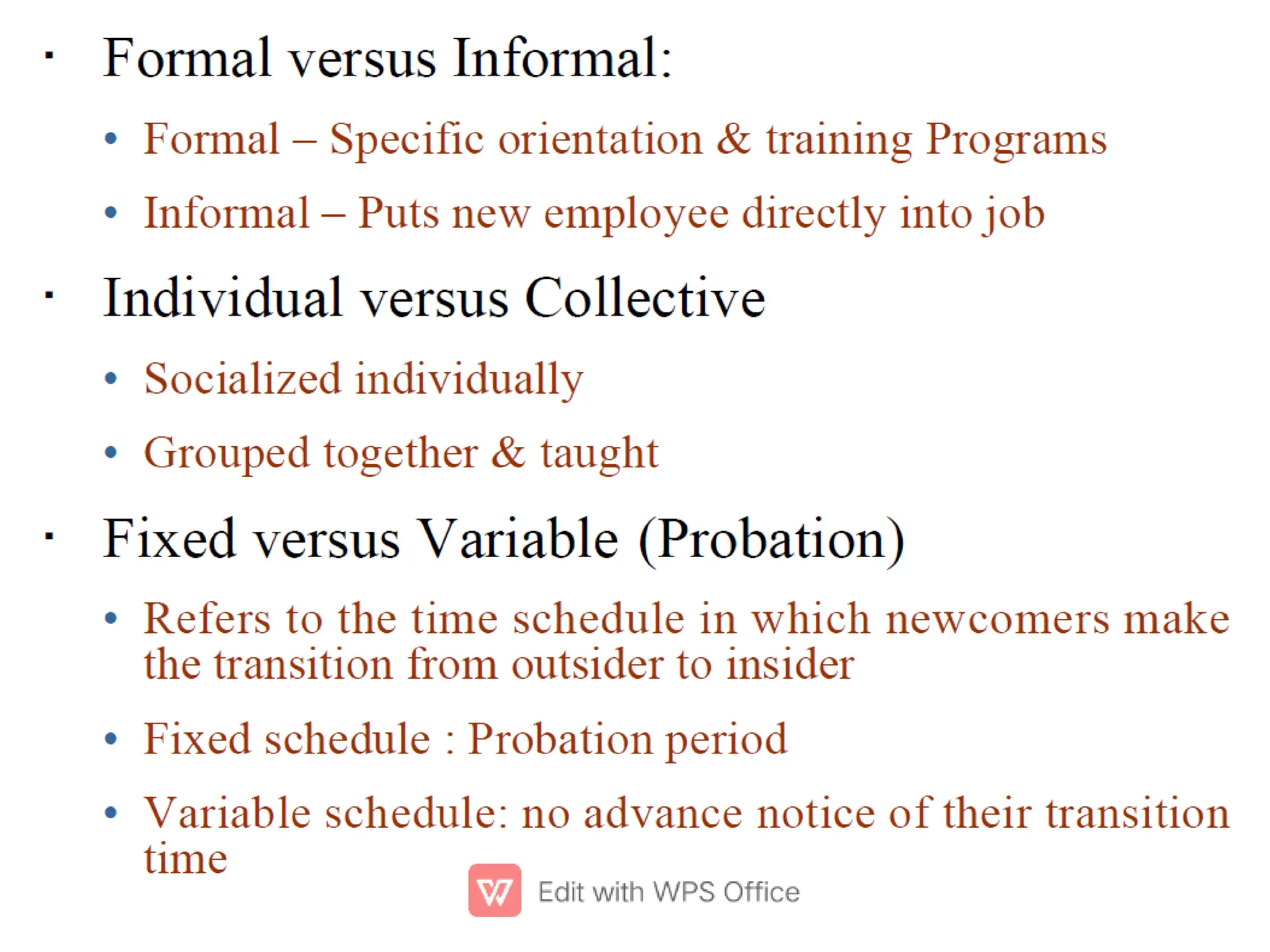
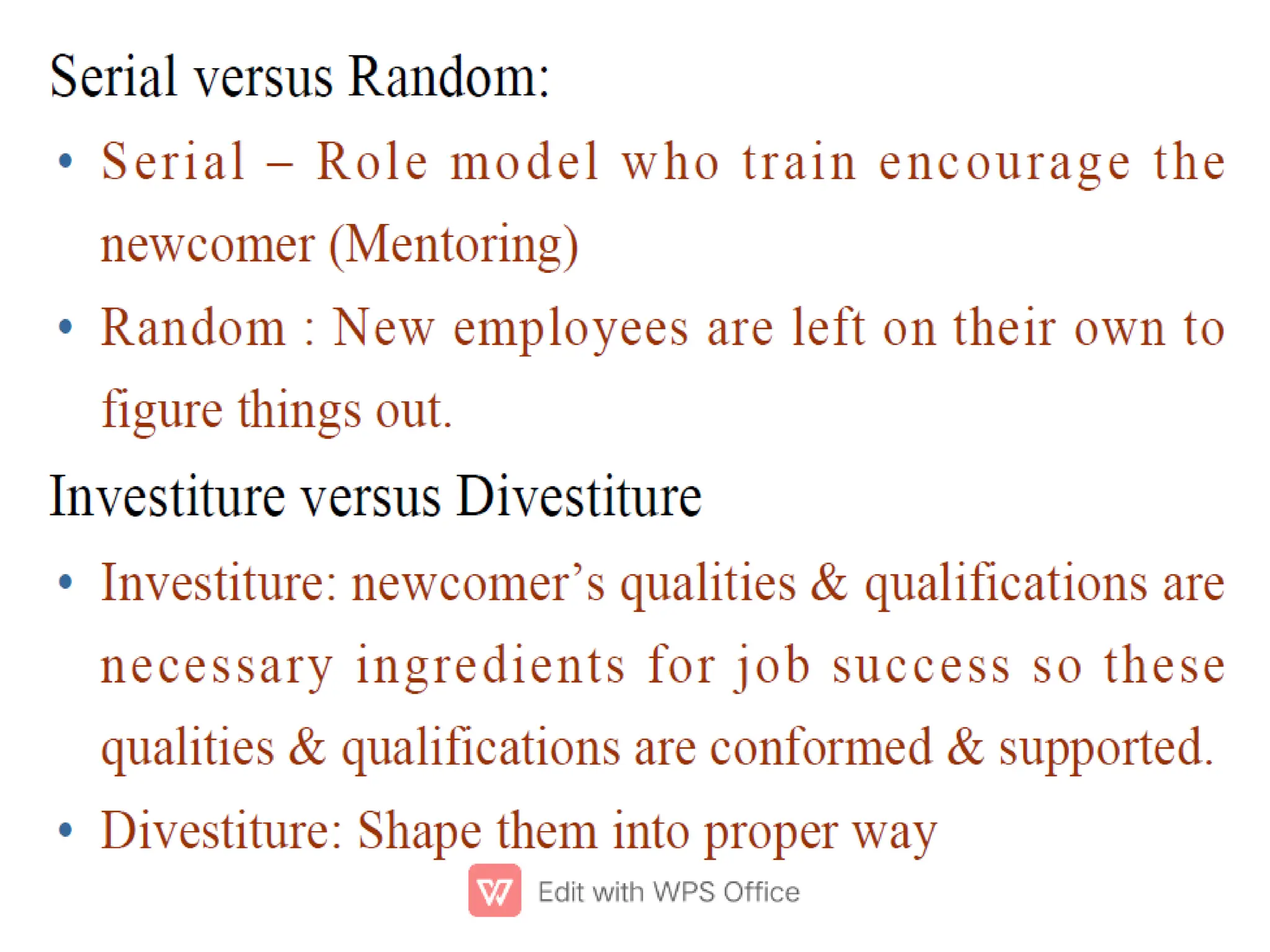
Entry Socialization Options
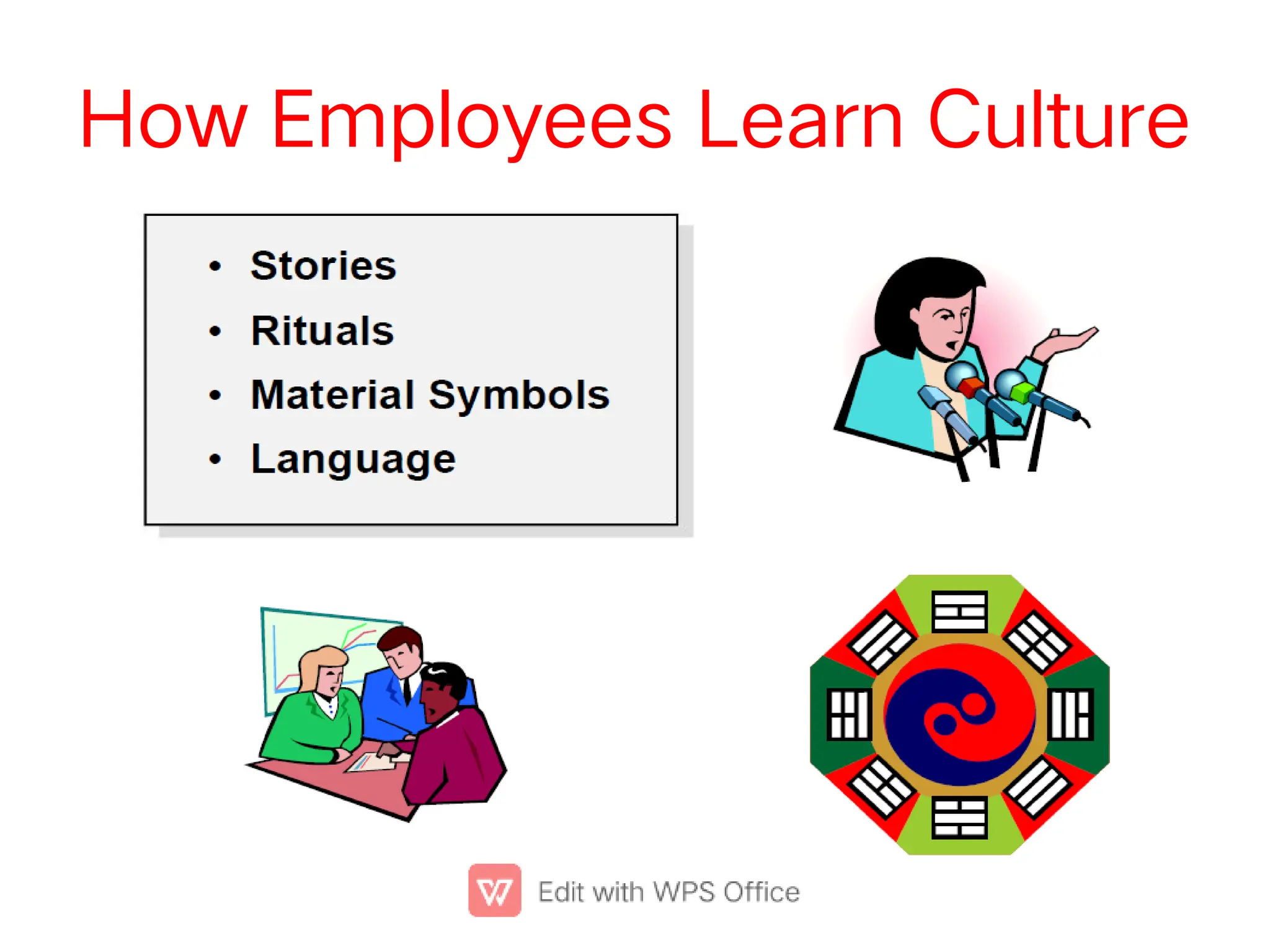
How Employees Learn Culture
MODULE-V (C) OB Org. Culture 12.09.2023 (1).pdf

MODULE-V (C) OB Org. Culture 12.09.2023 (1).pdf

  • 1.
  • 2.
  • 3.
    • • • Organizational culture isthe set of values that helps the organization’s employees understand which actions are considered acceptable and which are unacceptable. It refers to some set of values held by individuals in a firm. Values help members of an organization to understand how they should act.
  • 4.
    Characteristics of Organizational Culture • – – 1. 2. 3. 4. 5. 6. 7. OrganizationalCulture A common perception held by the organization’s members; a system of shared meaning Seven primary characteristics Innovation and risk taking Attention to detail Outcome orientation People orientation Team orientation Aggressiveness Stability E X H I B I T 17-1 16-4
  • 5.
    What Is OrganizationalCulture? (cont’d)
  • 6.
    What Is OrganizationalCulture? (cont’d)
  • 7.
    • • • If most employeeshave the same opinion about the organization’s mission & values, the culture is strong; if opinion vary widely the culture is weak. A strong culture should reduce employees turnover, because it demonstrates high agreement about what the organization represents. Such unanimity of purpose builds cohesiveness, loyalty, & organizational commitment.
  • 8.
    Strong Culture • • • • A companywith a strongculture provides clear expectations for employees about their jobs, behavior and dress. There should also be a clear cut chain of command. This type of atmosphere fosters a sense of wellbeing in employees and helps them to work towards the greater good of the company. The only danger of a strong organizational culture is concept called “group think” (group thinks so similarly that they lose the ability to become innovative and make poor decisions).
  • 9.
    Weak Culture • • • • • A weakorganizational culture is one in which employees are not clear with what their goals are. A weak culture is evident when most employees have varied opinions about the organization’s mission and values. The company is disorganized and this requires extra efforts and time to attain maximal unity of purpose. Employees waste time spinning their wheels, because of inability to focus on what’s important. Weak organizational culture allows for increase in turnover of employees because of a lack of corporate cohesiveness and mission. This spirals into low employee morale and employee disengagement.
  • 10.
    Models of OrganisationalCulture - Handy  • • • • Charles Handy, a leading authority on organisational culture, defined four different kinds of culture Power culture – Role culture – Task culture – Person culture
  • 15.
    What Is OrganizationalCulture? (cont’d)
  • 16.
    What Do CulturesDo? • 1. 2. 3. 4. 5. Culture’s Functions Defines the boundary between one organization and others-Differentiation Conveys a sense of identity for its members- Unity & Cohesiveness Facilitates the generation of commitment to something larger than self-interest-I & WE Enhances the stability of the social system Serves as a sense-making and control mechanism for fitting employees in the organization 16-16 Copyright © 2011 Pearson Education, Inc. publishing as Prentice Hall
  • 17.
    Culture as aLiability • – • – • – • – Institutionalization A company can become institutionalized where it is valued for itself and not for the goods and services it provides Barrier to change Occurs when culture’s values are not aligned with the values necessary for rapid change Barrier to diversity Strong cultures put considerable pressure on employees to conform, which may lead to institutionalized bias Barrier to acquisitions and mergers Incompatible cultures can destroy an otherwise successful merger 16-17 Copyright © 2011 Pearson Education, Inc. publishing as Prentice Hall
  • 18.
  • 19.
    How Organizational Cultures Form • • Organizationalcultures are derived from the founder They are sustained through managerial action Copyright © 2011 Pearson Education, Inc. publishing as Prentice Hall 16-19 E X H I B I T 16-4
  • 20.
  • 21.
    Stages in theSocialization Process
  • 22.
    Stages in theSocialization Process • – • – • – Prearrival The period of learning prior to a new employee joining the organization Encounter When the new employee sees what the organization is really like and confronts the possibility that expectations and reality may diverge Metamorphosis When the new employee changes and adjusts to the work, work group, and organization 16-22
  • 23.
  • 26.