

CORPORATE CULTUREAco MomcilovicHR SpecialistL’Oreal Adria d.o.o.
ContentIntroductionDifferent ModelsWhy it is importantCultural FitHow it is created (Examples, Interpretation)Cultural InterviewDoes It Make Difference? (Effectiveness)ExamplesFinish
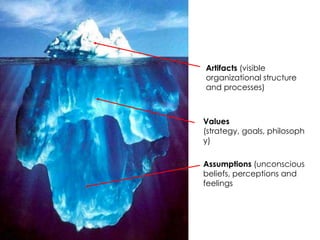
Artifacts (visible organizational structure and processes)Values (strategy, goals, philosophy)Assumptions (unconscious beliefs, perceptions and feelings
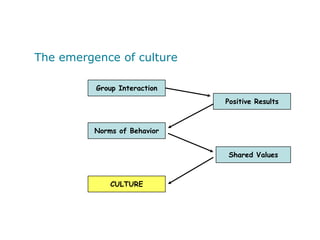
Group InteractionPositive ResultsNorms of BehaviorShared ValuesCULTUREThe emergence of culture
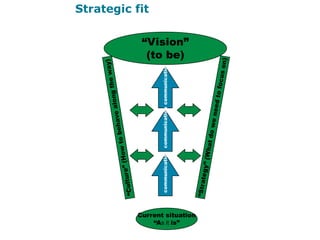
Strategic fit“Vision”(to be)communicationcommunication“Strategy” (What do we need to focus on)“Culture” (How to behave along the way)communicationCurrent situation“As it is”
DIFFERENT MODELS
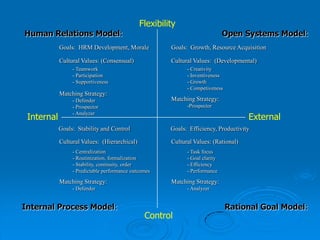
FlexibilityOpen Systems Model:Human Relations Model:Goals:  HRM Development, MoraleGoals:  Growth, Resource AcquisitionCultural Values: (Consensual)Cultural Values:  (Developmental)- Creativity- Inventiveness- Growth- Competiveness- Teamwork- Participation- SupportivenessMatching Strategy:          - Defender          - Prospector          - AnalyzerMatching Strategy:            -ProspectorInternalExternalGoals:  Stability and ControlGoals:  Efficiency, ProductivityCultural Values:  (Hierarchical)Cultural Values: (Rational)- Task focus- Goal clarity- Efficiency- Performance- Centralization- Routinization, formalization- Stability, continuity, order- Predictable performance outcomesMatching Strategy:          - DefenderMatching Strategy:            - AnalyzerRational Goal Model:Internal Process Model:Control
Role, Control, Goal andSoul Models
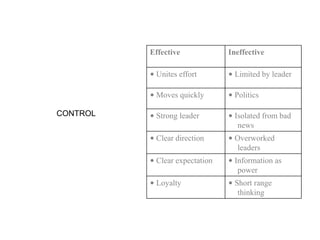
CONTROL
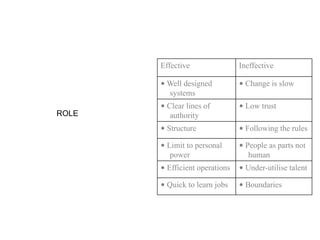
ROLE
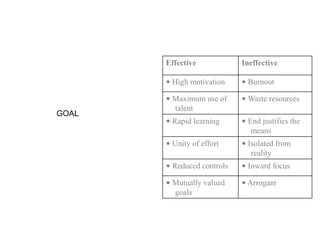
GOAL
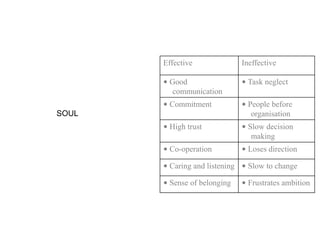
SOUL
In Riding theWaves of Culture, Fons TrompenaarsIn the same way, we believe that effective organisations focus attention not on one culture, but on an appropriate balance of the four cultures so that the best attributes of each enable the organisation to thrivesystemic model - described three levels ofculture; 1) the explicit layer made up of artifacts and products and other observable signs, 2) themiddle layer of norms and values and 3) the implicit layer, which is comprised of basic assumptionsand beliefs.
Why is corporate culture so important?To survive and prosper in a ever-changing environment, adaptability is key industries need more than gradual adjustment to changing circumstances; we need to shift paradigmsThe central challenge: to create and lead an adaptive enterprise
Cultural Fit ResearchA&DC – effects of cultural fitwhen Cultural Fit is absent employees report lack of engagement with their employer and their colleaguesIn small and mid-size businesses, it’s common for the company culture to reflect the person at the top.
One More TimeWith some examples
Corporate Culture  Organization Culture Defined:
Set of key behaviors, beliefs and shared understandings that are shared by members of the organization.Defines basic organizational values and communicates to new members the correct way to think and act.Each firm has a distinct culture.Corporate Culture  Interpreting Culture:
  Rites and ceremonies  -  Elaborate planned events conducted for the benefit of an    audience.-  Used to reinforce specific values or create a bond among people.-  Four types of rites and ceremonies: Rites of passageCorporate Culture Rites of enhancement
  Annual awards night.
  Enhances social identities and increase status of employees.Corporate Culture Rites of renewal
  Refurbish social structures and improve organizational     functioning. Rite of integrationCorporate Culture  Stories
  Narratives based on true events that are shared among    organizational employees and told to new employees to inform    them about an organization.-  Stories keep alive the primary values of the organization.-  Commonly include company heroes or historic legends.
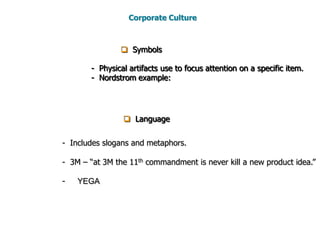
Corporate Culture  Symbols  -  Physical artifacts use to focus attention on a specific item.  -  Nordstromexample:  Language
  Includes slogans and metaphors.
  3M – “at 3M the 11th commandment is never kill a new product idea.”
YEGA How to explore culture?Culture Interviews
Does Culture Makes Difference?
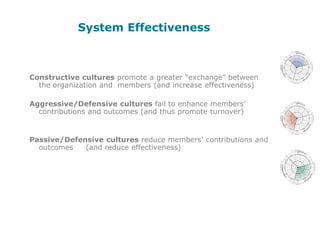
System EffectivenessConstructive cultures promote a greater “exchange” between the organization and  members (and increase effectiveness)Aggressive/Defensive cultures fail to enhance members’ contributions and outcomes (and thus promote turnover)Passive/Defensive cultures reduce members’ contributions and outcomes     (and reduce effectiveness)
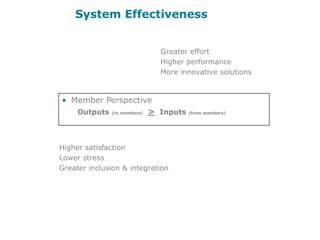
System EffectivenessGreater effortHigher performanceMore innovative solutions Member PerspectiveOutputs (to members)>  Inputs (from members)Higher satisfaction Lower stressGreater inclusion & integration
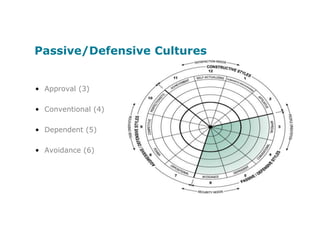
Approval (3)Conventional (4)Dependent (5)Avoidance (6)Passive/Defensive Cultures
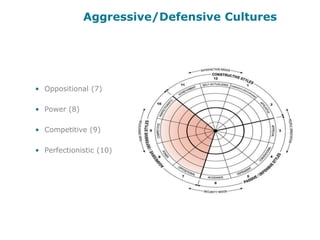
Aggressive/Defensive CulturesOppositional (7)Power (8)Competitive (9)Perfectionistic (10)
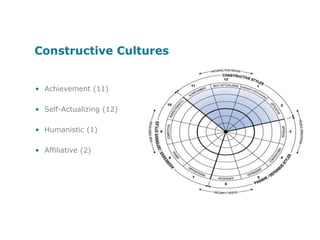
Achievement (11)Self-Actualizing (12)Humanistic (1)Affiliative (2)Constructive Cultures
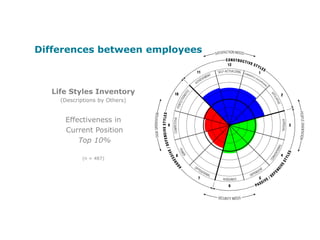
Differences between employeesLife Styles Inventory(Descriptions by Others)Effectiveness in Current Position Top 10%(n = 487)
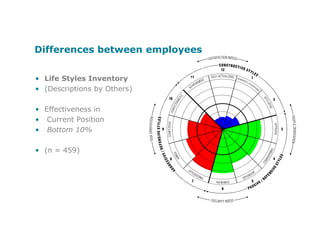
Differences between employeesLife Styles Inventory(Descriptions by Others)Effectiveness in Current PositionBottom 10%(n = 459)
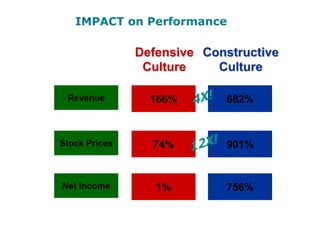
166%Revenue74%Stock Prices1%Net IncomeIMPACT on PerformanceDefensiveCultureConstructiveCulture682%4X!901%12X!756%
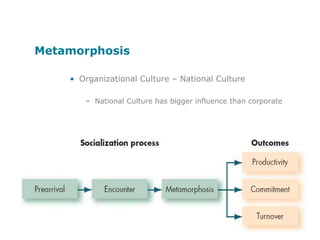
MetamorphosisOrganizational Culture – National CultureNational Culture has bigger influence than corporate
Different ExamplesImagine few extreme cultures
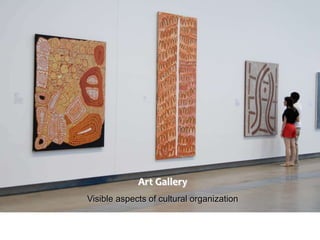
Art GalleryVisible aspects of cultural organization
LIBRARYWay to solve problems, documentation, politics, written communication ...
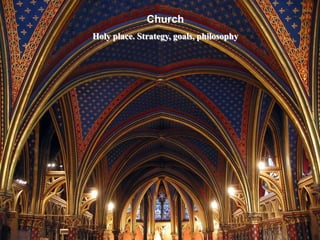
ChurchHoly place. Strategy, goals, philosophy

Corporate Culture General 1.3.Blank

  • 1.
    CORPORATE CULTUREAco MomcilovicHRSpecialistL’Oreal Adria d.o.o.
  • 2.
    ContentIntroductionDifferent ModelsWhy itis importantCultural FitHow it is created (Examples, Interpretation)Cultural InterviewDoes It Make Difference? (Effectiveness)ExamplesFinish
  • 3.
    Artifacts (visible organizationalstructure and processes)Values (strategy, goals, philosophy)Assumptions (unconscious beliefs, perceptions and feelings
  • 4.
    Group InteractionPositive ResultsNormsof BehaviorShared ValuesCULTUREThe emergence of culture
  • 5.
    Strategic fit“Vision”(to be)communicationcommunication“Strategy”(What do we need to focus on)“Culture” (How to behave along the way)communicationCurrent situation“As it is”
  • 6.
  • 7.
    FlexibilityOpen Systems Model:HumanRelations Model:Goals: HRM Development, MoraleGoals: Growth, Resource AcquisitionCultural Values: (Consensual)Cultural Values: (Developmental)- Creativity- Inventiveness- Growth- Competiveness- Teamwork- Participation- SupportivenessMatching Strategy: - Defender - Prospector - AnalyzerMatching Strategy: -ProspectorInternalExternalGoals: Stability and ControlGoals: Efficiency, ProductivityCultural Values: (Hierarchical)Cultural Values: (Rational)- Task focus- Goal clarity- Efficiency- Performance- Centralization- Routinization, formalization- Stability, continuity, order- Predictable performance outcomesMatching Strategy: - DefenderMatching Strategy: - AnalyzerRational Goal Model:Internal Process Model:Control
  • 8.
    Role, Control, GoalandSoul Models
  • 9.
  • 10.
  • 11.
  • 12.
  • 13.
    In Riding theWavesof Culture, Fons TrompenaarsIn the same way, we believe that effective organisations focus attention not on one culture, but on an appropriate balance of the four cultures so that the best attributes of each enable the organisation to thrivesystemic model - described three levels ofculture; 1) the explicit layer made up of artifacts and products and other observable signs, 2) themiddle layer of norms and values and 3) the implicit layer, which is comprised of basic assumptionsand beliefs.
  • 14.
    Why is corporateculture so important?To survive and prosper in a ever-changing environment, adaptability is key industries need more than gradual adjustment to changing circumstances; we need to shift paradigmsThe central challenge: to create and lead an adaptive enterprise
  • 15.
    Cultural Fit ResearchA&DC– effects of cultural fitwhen Cultural Fit is absent employees report lack of engagement with their employer and their colleaguesIn small and mid-size businesses, it’s common for the company culture to reflect the person at the top.
  • 16.
    One More TimeWithsome examples
  • 17.
    Corporate Culture Organization Culture Defined:
  • 18.
    Set of keybehaviors, beliefs and shared understandings that are shared by members of the organization.Defines basic organizational values and communicates to new members the correct way to think and act.Each firm has a distinct culture.Corporate Culture Interpreting Culture:
  • 19.
    Ritesand ceremonies - Elaborate planned events conducted for the benefit of an audience.- Used to reinforce specific values or create a bond among people.- Four types of rites and ceremonies: Rites of passageCorporate Culture Rites of enhancement
  • 20.
    Annualawards night.
  • 21.
    Enhancessocial identities and increase status of employees.Corporate Culture Rites of renewal
  • 22.
    Refurbishsocial structures and improve organizational functioning. Rite of integrationCorporate Culture Stories
  • 23.
    Narrativesbased on true events that are shared among organizational employees and told to new employees to inform them about an organization.- Stories keep alive the primary values of the organization.- Commonly include company heroes or historic legends.
  • 24.
    Corporate Culture Symbols - Physical artifacts use to focus attention on a specific item. - Nordstromexample: Language
  • 25.
    Includesslogans and metaphors.
  • 26.
    3M– “at 3M the 11th commandment is never kill a new product idea.”
  • 27.
    YEGA How toexplore culture?Culture Interviews
  • 28.
  • 29.
    System EffectivenessConstructive culturespromote a greater “exchange” between the organization and members (and increase effectiveness)Aggressive/Defensive cultures fail to enhance members’ contributions and outcomes (and thus promote turnover)Passive/Defensive cultures reduce members’ contributions and outcomes (and reduce effectiveness)
  • 30.
    System EffectivenessGreater effortHigherperformanceMore innovative solutions Member PerspectiveOutputs (to members)> Inputs (from members)Higher satisfaction Lower stressGreater inclusion & integration
  • 31.
    Approval (3)Conventional (4)Dependent(5)Avoidance (6)Passive/Defensive Cultures
  • 32.
    Aggressive/Defensive CulturesOppositional (7)Power(8)Competitive (9)Perfectionistic (10)
  • 33.
    Achievement (11)Self-Actualizing (12)Humanistic(1)Affiliative (2)Constructive Cultures
  • 34.
    Differences between employeesLifeStyles Inventory(Descriptions by Others)Effectiveness in Current Position Top 10%(n = 487)
  • 35.
    Differences between employeesLifeStyles Inventory(Descriptions by Others)Effectiveness in Current PositionBottom 10%(n = 459)
  • 36.
    166%Revenue74%Stock Prices1%Net IncomeIMPACTon PerformanceDefensiveCultureConstructiveCulture682%4X!901%12X!756%
  • 37.
    MetamorphosisOrganizational Culture –National CultureNational Culture has bigger influence than corporate
  • 38.
  • 39.
    Art GalleryVisible aspectsof cultural organization
  • 40.
    LIBRARYWay to solveproblems, documentation, politics, written communication ...
  • 41.