MODULE- V
Department ofMechanical Engineering , SVCE, Bengaluru
LEARNING OBJECTIVES
After completing this Unit, you should be able to:
• Identify and classify hazardous wastes;
• Explain the techniques of hazardous waste management, treatment and
minimisation;
• Describe the physical, chemical, thermal and biological methods of
treating hazardous waste;
• Adopt waste minimisation and pollution prevention techniques.
2.
MODULE- V
Department ofMechanical Engineering , SVCE, Bengaluru
HAZARDOUS WASTE:
IDENTIFICATION AND CLASSIFICATION
• Hazardous wastes refer to wastes that may, or tend to, cause
adverse health effects on the ecosystem and human beings.
These wastes pose present or potential risks to human health
or living organisms, due to the fact that they:
• are non-degradable or persistent in nature;
• can be biologically magnified;
• are highly toxic and even lethal at very low concentrations.
3.
MODULE- V
Department ofMechanical Engineering , SVCE, Bengaluru
The above list relates only to the intrinsic hazard of the waste,
under uncontrolled release, to the environment, regardless of
quantity or pathways to humans or other critical organisms
(i.e., plants and animals). The criteria used to determine the
nature of hazard include toxicity, genetic activity and bio-
concentration. The threat to public health and the environment
of a given hazardous waste is dependent on the quantity and
characteristics of the waste involved.
4.
MODULE- V
Department ofMechanical Engineering , SVCE, Bengaluru
Waste categories
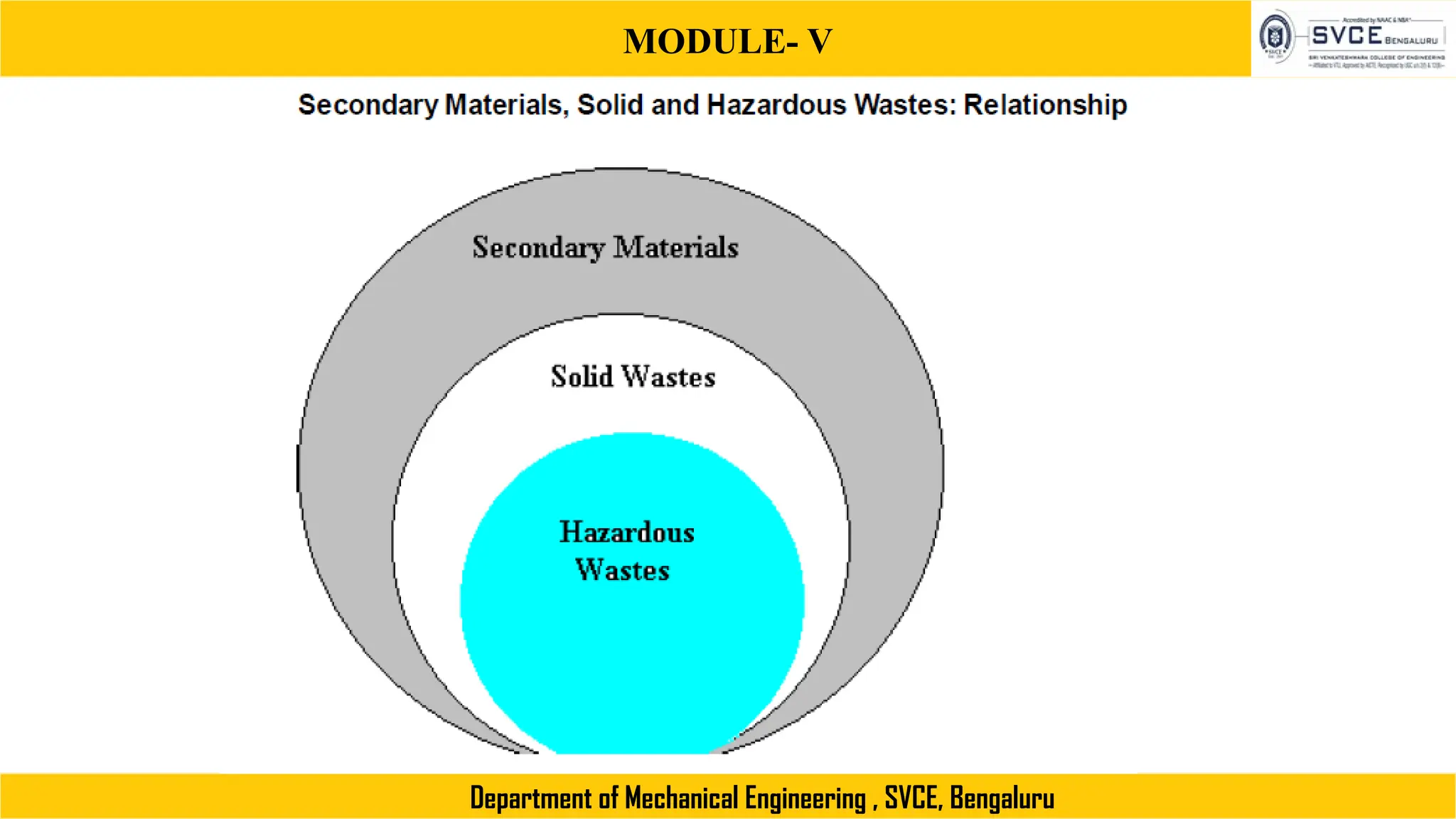
Wastes are secondary materials, which are generally classified into six categories as
inherently waste: like
Materials,
Spent materials,
Sludges,
Byproducts,
Commercial chemical products and
Scrap metals.
Solid wastes form a subset of all secondary materials and hazardous wastes form a
subset of solid waste. However, note that certain secondary materials are not
regulated as wastes, as they are recycled and reused.
MODULE- V
Department ofMechanical Engineering , SVCE, Bengaluru
Identification
By using either or both of the following criteria, we can
identify as to whether or not a waste is hazardous:
• The list provided by government agencies declaring that
substance as hazardous.
• Characteristics such as ignitibility, corrosivity, reactivity and
toxicity of the substance.
7.
MODULE- V
Department ofMechanical Engineering , SVCE, Bengaluru
Listed hazardous wastes (priority chemicals)
A specific list showing certain materials as hazardous wastes
minimises the need to test wastes as well as simplifies waste
determination. In other words, any waste that fits the definition of a
listed waste is considered a hazardous waste.
Four separate lists cover the wastes from generic industrial
processes, specific industrial sectors, unused pure chemical
products and formulations that are acutely toxic, and all hazardous
waste regulations apply to these lists of wastes.
We will describe these wastes, classified in the F, K, P, and U
industrial waste codes, respectively
8.
MODULE- V
Department ofMechanical Engineering , SVCE, Bengaluru
F-LIST
The F-list contains hazardous wastes from non-
specific sources, that is, various industrial
processes that may have generated the waste.
The list consists of solvents commonly used in
degreasing, metal treatment baths and sludges,
wastewaters from metal plating operations and
dioxin containing chemicals or their precursors.
Solvent mixtures or blends, which contain
greater than 10% of one or more of the solvents
listed in F001, F002, F003, F004 and F005 are
also considered F-listed wastes.
Examples of solvents that are F-
listed hazardous wastes, along
with their code numbers, include
Benzene (F005),
Carbon tetrachloride (F001),
Cresylic acid (F004),
Methyl ethyl ketone (F005),
Methylene chloride (F001),
1-1-1 trichloroethane (F001),
Toluene (F005) and
Trichloroethylene (F001).
9.
MODULE- V
Department ofMechanical Engineering , SVCE, Bengaluru
K-LIST
The K-list contains hazardous wastes generated by specific industrial
processes. Examples of industries, which generate K-listed wastes
include
wood preservation
pigment production
chemical production
petroleum refining
iron and steel production
explosive manufacturing and
pesticide production.
10.
MODULE- V
Department ofMechanical Engineering , SVCE, Bengaluru
P and U LIST
The P and U lists contain discarded commercial chemical products, off-specification
chemicals, container residues and residues from the spillage of materials.
An example of a P or U listed hazardous waste is a pesticide which is not used
during its shelf-life and requires to be disposed in bulk. The primary distinction
between the two lists is the quantity at which the chemical is regulated.
The P-list consists of acutely toxic wastes that are regulated when the quantity
generated per month, or accumulated at any time, exceeds one kilogram (2.2
pounds), while
U-listed hazardous wastes are regulated when the quantity generated per month
exceeds 25 kilograms (55 pounds). Examples of businesses that typically generate P
or U listed wastes include pesticide applicators, laboratories and chemical
formulators.
11.
MODULE- V
Department ofMechanical Engineering , SVCE, Bengaluru
Characteristic of hazardous Waste
• Ignitability
• Corrosivity
• Reactivity
• Toxicity
12.
MODULE- V
Department ofMechanical Engineering , SVCE, Bengaluru
Ignitability
(EPA Waste Identification Number D001): A waste is an ignitable hazardous
waste, if it has a flash point of less than 60 C; readily catches fire and burns so
vigorously as to create a hazard; or is an ignitable compressed gas or an
oxidizer.
A simple method of determining the flash point of a waste is to review the
material safety data sheet, which can be obtained from the manufacturer or
distributor of the material.
Naphtha,
lacquer thinner,
Epoxy resins,
Adhesives and oil based paints are all examples of ignitable hazardous wastes.
13.
MODULE- V
Department ofMechanical Engineering , SVCE, Bengaluru
Corrosivity
(EPA Waste Identification Number D002): A liquid waste which has a
pH of less than or equal to 2 or greater than or equal to 12.5 is
considered to be a corrosive hazardous waste.
Sodium hydroxide, a caustic solution with a high pH, is often used by
many industries to clean or degrease metal parts.
Hydrochloric acid, a solution with a low pH, is used by many industries
to clean metal parts prior to painting. When these caustic or acid
solutions are disposed, the waste is a corrosive hazardous waste.
14.
MODULE- V
Department ofMechanical Engineering , SVCE, Bengaluru
Reactivity
(EPA Waste Identification Number D003): A material is
considered a reactive hazardous waste, if it is unstable, reacts
violently with water, generates toxic gases when exposed to
water or corrosive materials, or if it is capable of detonation or
explosion when exposed to heat or a flame.
Examples of reactive wastes would be
Waste gunpowder
Sodium metal or
Wastes containing cyanides or sulphides.
15.
MODULE- V
Department ofMechanical Engineering , SVCE, Bengaluru
Toxicity
(EPA Waste Identification Number D004): To
determine if a waste is a toxic hazardous waste, a
representative sample of the material must be subjected
to a test conducted in a certified laboratory.
The toxic characteristic identifies wastes that are likely
to leach dangerous concentrations of toxic chemicals
into ground water.
16.
MODULE- V
Department ofMechanical Engineering , SVCE, Bengaluru
Classification of hazardous Waste
• Radioactive substance
• Chemicals
• Biomedical wastes
• Flammable wastes
• Explosives
• Household hazardous wastes
17.
MODULE- V
Department ofMechanical Engineering , SVCE, Bengaluru
Radioactive substance
Substances that emit ionising radiation are radioactive. Such
substances are hazardous because prolonged exposure to
radiation often results in damage to living organisms.
Radioactive substances are of special concern because they
persist for a long period.
The period in which radiation occurs is commonly measured
and expressed as half-life, i.e., the time required for the
radioactivity of a given amount of the substance t
18.
MODULE- V
Department ofMechanical Engineering , SVCE, Bengaluru
Uranium compounds have half-lives that range from
72 years for U232
23,420,000 years for U236.
The management of radioactive wastes is highly controlled by
national and state regulatory agencies.
Disposal sites that are used for the long-term storage of
radioactive wastes are not used for the disposal of any other
solid waste.
19.
MODULE- V
Department ofMechanical Engineering , SVCE, Bengaluru
Chemicals
Most hazardous chemical wastes can be classified into four groups:
synthetic organics,
inorganic metals, salts,
acids and bases, and
flammables and explosives.
Some of the chemicals are hazardous because they are highly toxic to
most life forms. When such hazardous compounds are present in a
waste stream at levels equal to, or greater than their threshold levels,
the entire waste stream is identified as hazardous.
20.
MODULE- V
Department ofMechanical Engineering , SVCE, Bengaluru
Biomedical wastes
The principal sources of hazardous biological wastes are hospitals and
biological research facilities.
The ability to infect other living organisms and the ability to produce
toxins are the most significant characteristics of hazardous biological
wastes.
This group mainly includes malignant tissues discarded during surgical
procedures and contaminated materials, such as hypodermic needles,
bandages and outdated drugs.
This waste can also be generated as a by-product of industrial
biological conversion processes.
21.
MODULE- V
Department ofMechanical Engineering , SVCE, Bengaluru
Flammable wastes
Most flammable wastes are also identified as hazardous chemical wastes.
This dual grouping is necessary because of the high potential hazard in
storing, collecting and disposing of flammable wastes.
These wastes may be liquid, gaseous or solid, but most often they are
liquids. Typical examples include
organic solvents,
oils,
plasticisers and
organic sludges.
22.
MODULE- V
Department ofMechanical Engineering , SVCE, Bengaluru
Explosives
Explosive hazardous wastes are mainly ordnance (artillery)
materials, i.e., the wastes resulting from ordnance
manufacturing and some industrial gases. Similar to
flammables, these wastes also have a high potential for hazard
in storage, collection and disposal, and therefore, they should
be considered separately in addition to being listed as
hazardous chemicals. These wastes may exist in solid, liquid
or gaseous form.
23.
MODULE- V
Department ofMechanical Engineering , SVCE, Bengaluru
Household hazardous wastes
Household wastes such as
cleaning chemicals,
batteries,
nail polish etc constitute hazardous waste.
Especially batteries contain mercury which are alkaline which is
dangerous enough to kill people. Generic household hazardous
material include
non chlorinated organic, chlorinated organic, pesticides, latex paint,
oil based paints, waste oil, automobile battery and household battery.
24.
MODULE- V
Department ofMechanical Engineering , SVCE, Bengaluru
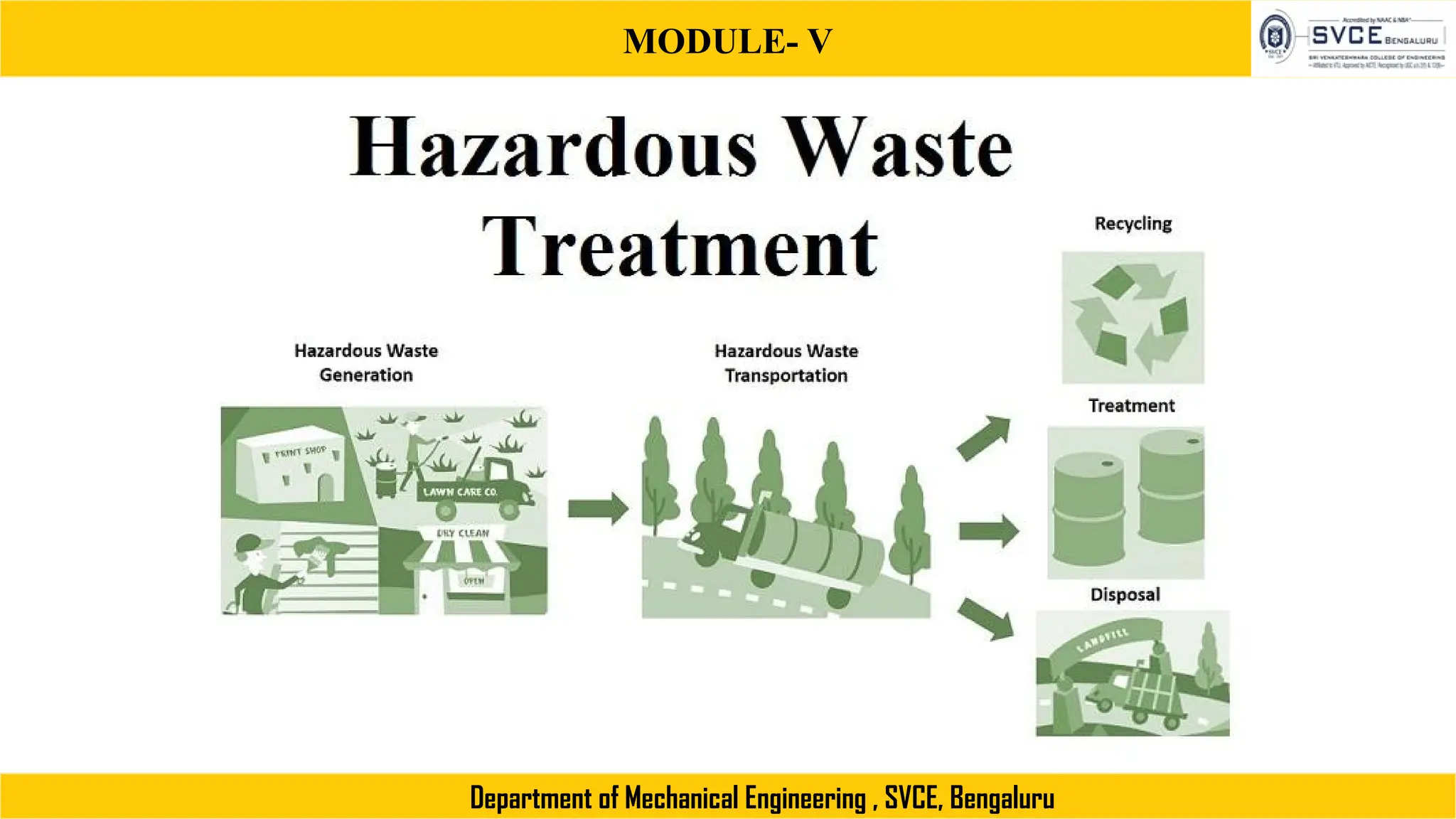
HAZARDOUS WASTE MANAGEMENT
•Generation
•Storage and collection
•Transfer and transport
•Processing
•Disposal
MODULE- V
Department ofMechanical Engineering , SVCE, Bengaluru
Generation
Hazardous wastes are generated in limited amounts in a community and very
little information is available on the quantities of hazardous waste generated
within a community and in various industries.
Hazardous waste generation outside the industry is irregular and very less in
amount, rendering the waste generation parameter meaningless.
The only practical means to overcome these limitations is to conduct a
detailed inventory and measurement studies at each potential source in a
community. As a first step in developing a community inventory, potential
sources of hazardous waste are to be identified. The total annual quantity of
hazardous waste at any given source in a community must be established
through data inventory completed during onsite visits.
27.
MODULE- V
Department ofMechanical Engineering , SVCE, Bengaluru
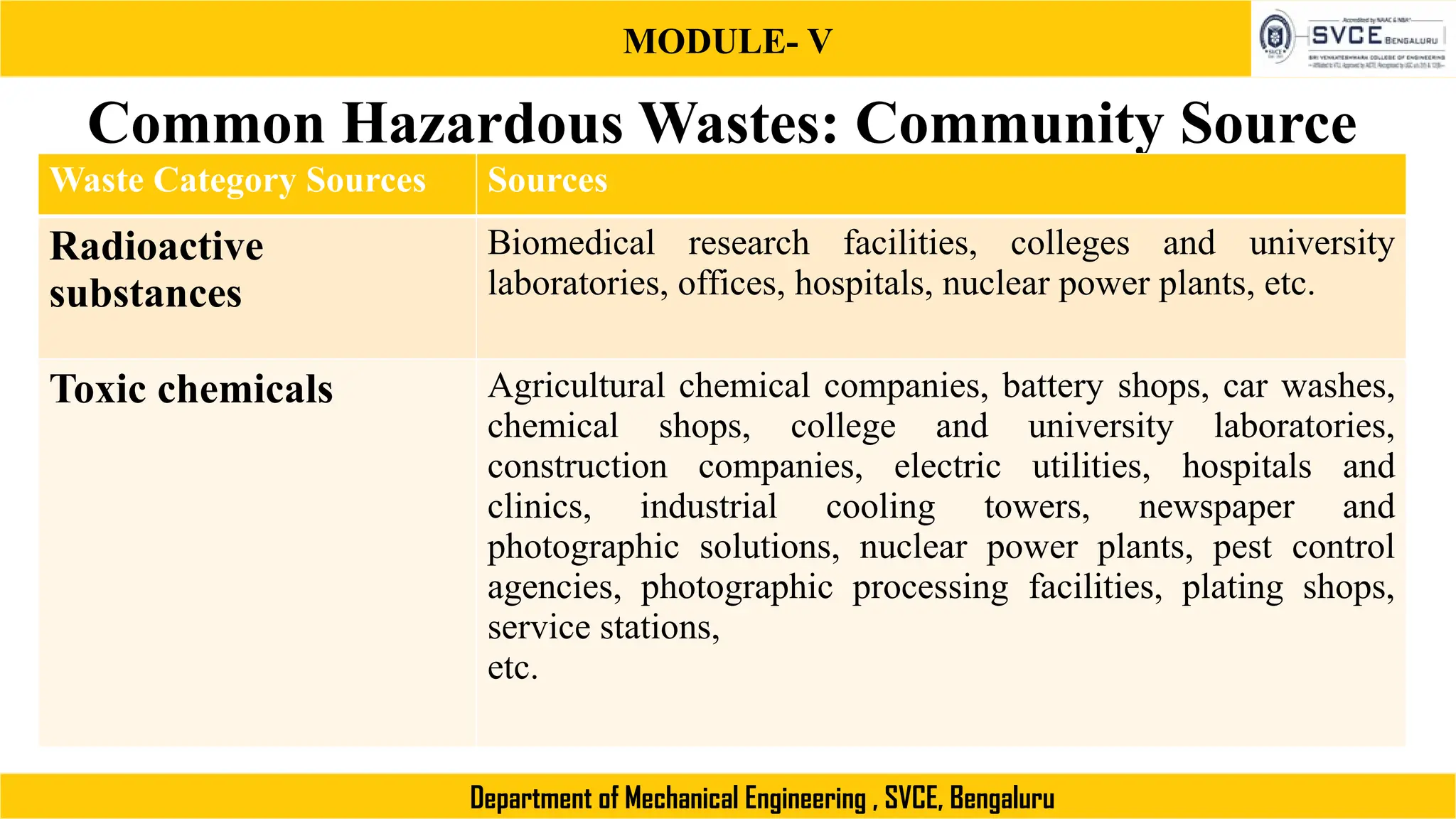
Common Hazardous Wastes: Community Source
Waste Category Sources Sources
Radioactive
substances
Biomedical research facilities, colleges and university
laboratories, offices, hospitals, nuclear power plants, etc.
Toxic chemicals Agricultural chemical companies, battery shops, car washes,
chemical shops, college and university laboratories,
construction companies, electric utilities, hospitals and
clinics, industrial cooling towers, newspaper and
photographic solutions, nuclear power plants, pest control
agencies, photographic processing facilities, plating shops,
service stations,
etc.
28.
MODULE- V
Department ofMechanical Engineering , SVCE, Bengaluru
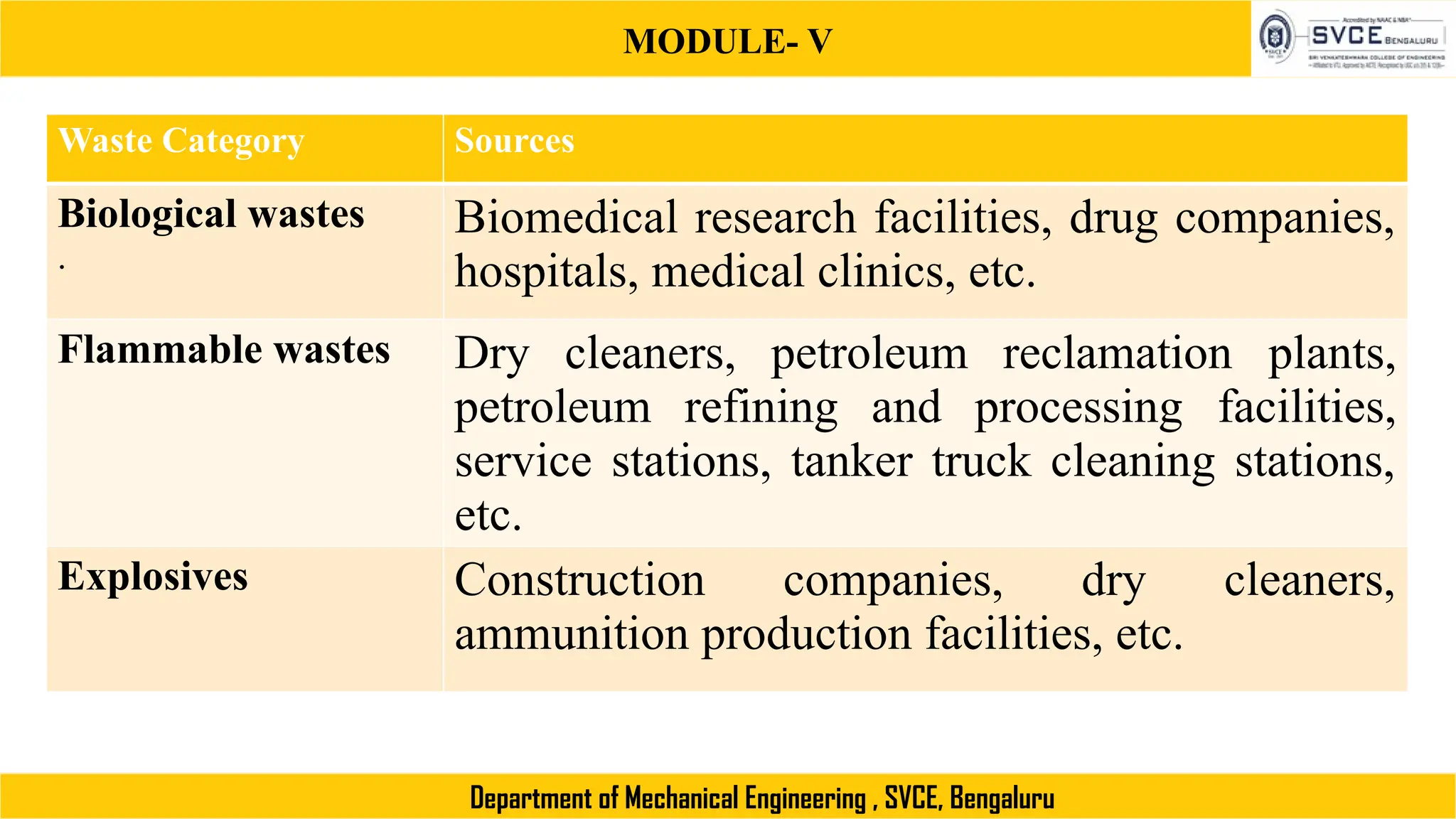
Waste Category Sources
Biological wastes
.
Biomedical research facilities, drug companies,
hospitals, medical clinics, etc.
Flammable wastes Dry cleaners, petroleum reclamation plants,
petroleum refining and processing facilities,
service stations, tanker truck cleaning stations,
etc.
Explosives Construction companies, dry cleaners,
ammunition production facilities, etc.
29.
MODULE- V
Department ofMechanical Engineering , SVCE, Bengaluru
Storage and collection
• Onsite storage practices are a function of the types and amounts of
hazardous wastes generated and the period over which generation occurs.
• Usually, when large quantities are generated, special facilities are used that
have sufficient capacity to hold wastes accumulated over a period of several
days.
• When only a small amount is generated, the waste can be containerised, and
limited quantity may be stored.
• Corrosive acids or caustic solutions are stored in fibre glass or glass-lined
containers to prevent deterioration of metals in the container. Great care
must also be exercised to avoid storing incompatible wastes in the same
container or locations.
30.
MODULE- V
Department ofMechanical Engineering , SVCE, Bengaluru
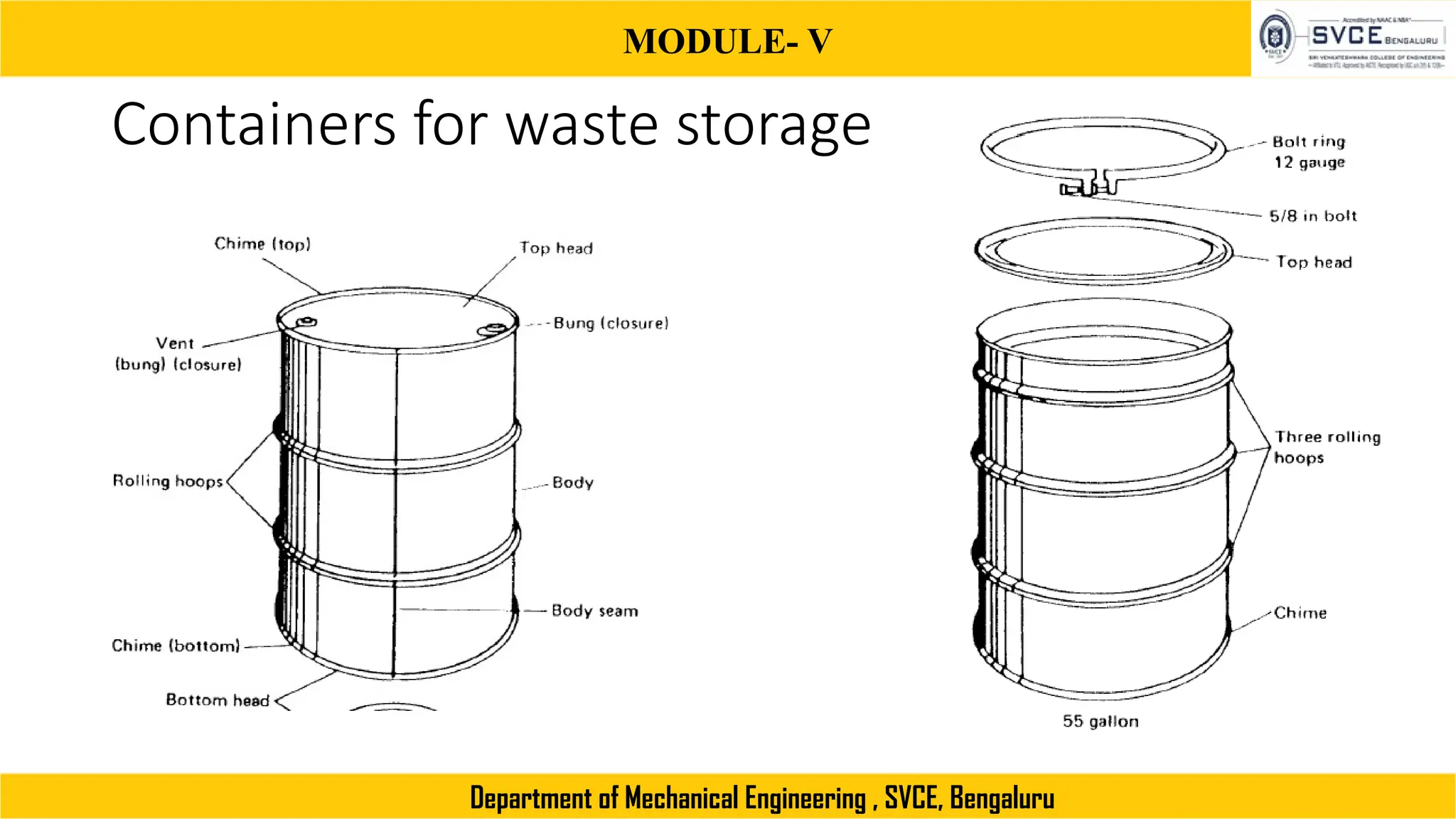
Containers for waste storage
31.
MODULE- V
Department ofMechanical Engineering , SVCE, Bengaluru
The loading of collection vehicles is completed in either of the following
ways:
• Wastes stored in large-capacity tanks are either drained or pumped
into collection vehicles;
• Wastes stored in sealed drums or sealed containers are loaded by
hand or by mechanical equipment onto flatbed trucks.
MODULE- V
Department ofMechanical Engineering , SVCE, Bengaluru
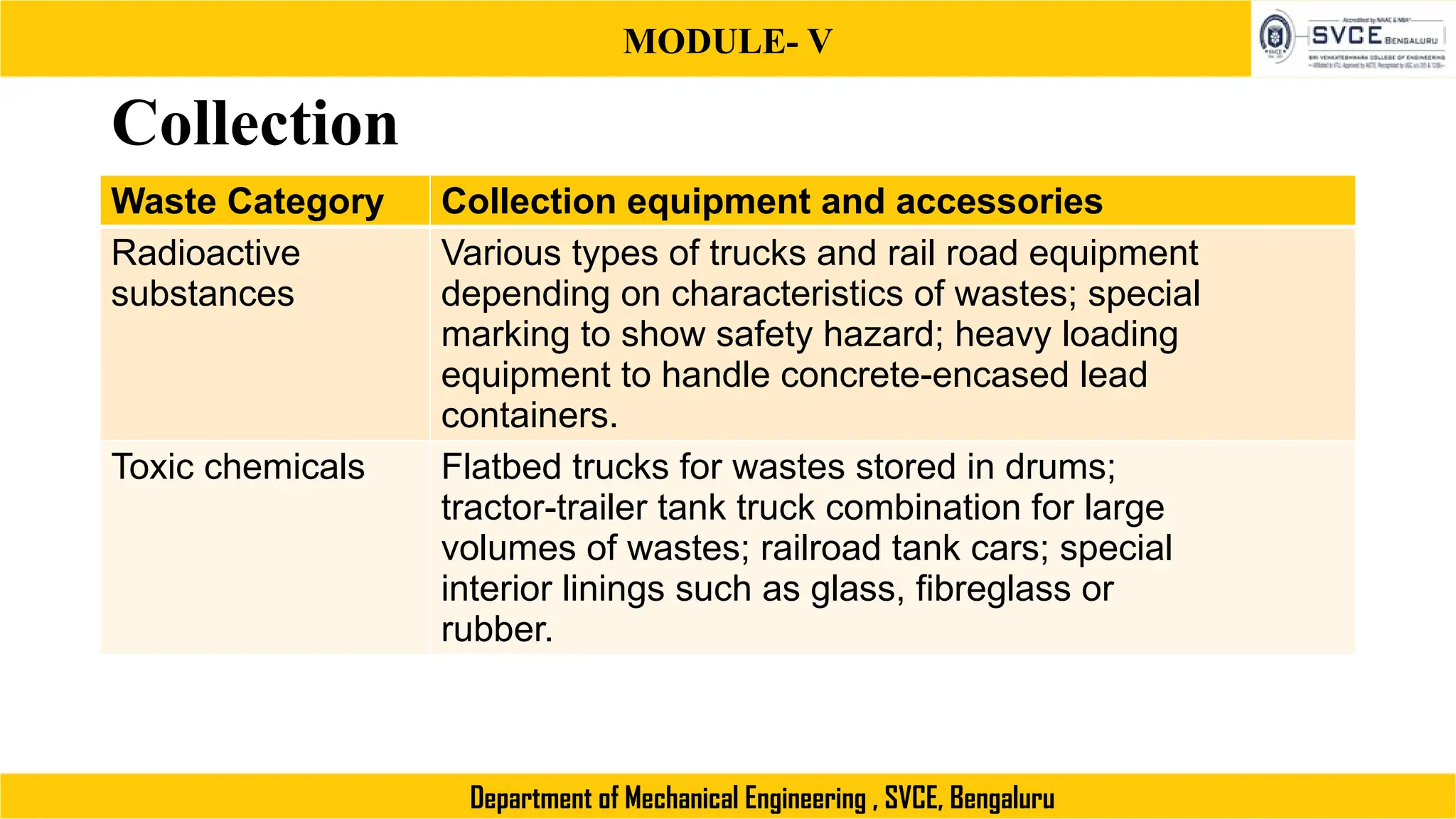
Collection
Waste Category Collection equipment and accessories
Radioactive
substances
Various types of trucks and rail road equipment
depending on characteristics of wastes; special
marking to show safety hazard; heavy loading
equipment to handle concrete-encased lead
containers.
Toxic chemicals Flatbed trucks for wastes stored in drums;
tractor-trailer tank truck combination for large
volumes of wastes; railroad tank cars; special
interior linings such as glass, fibreglass or
rubber.
34.
MODULE- V
Department ofMechanical Engineering , SVCE, Bengaluru
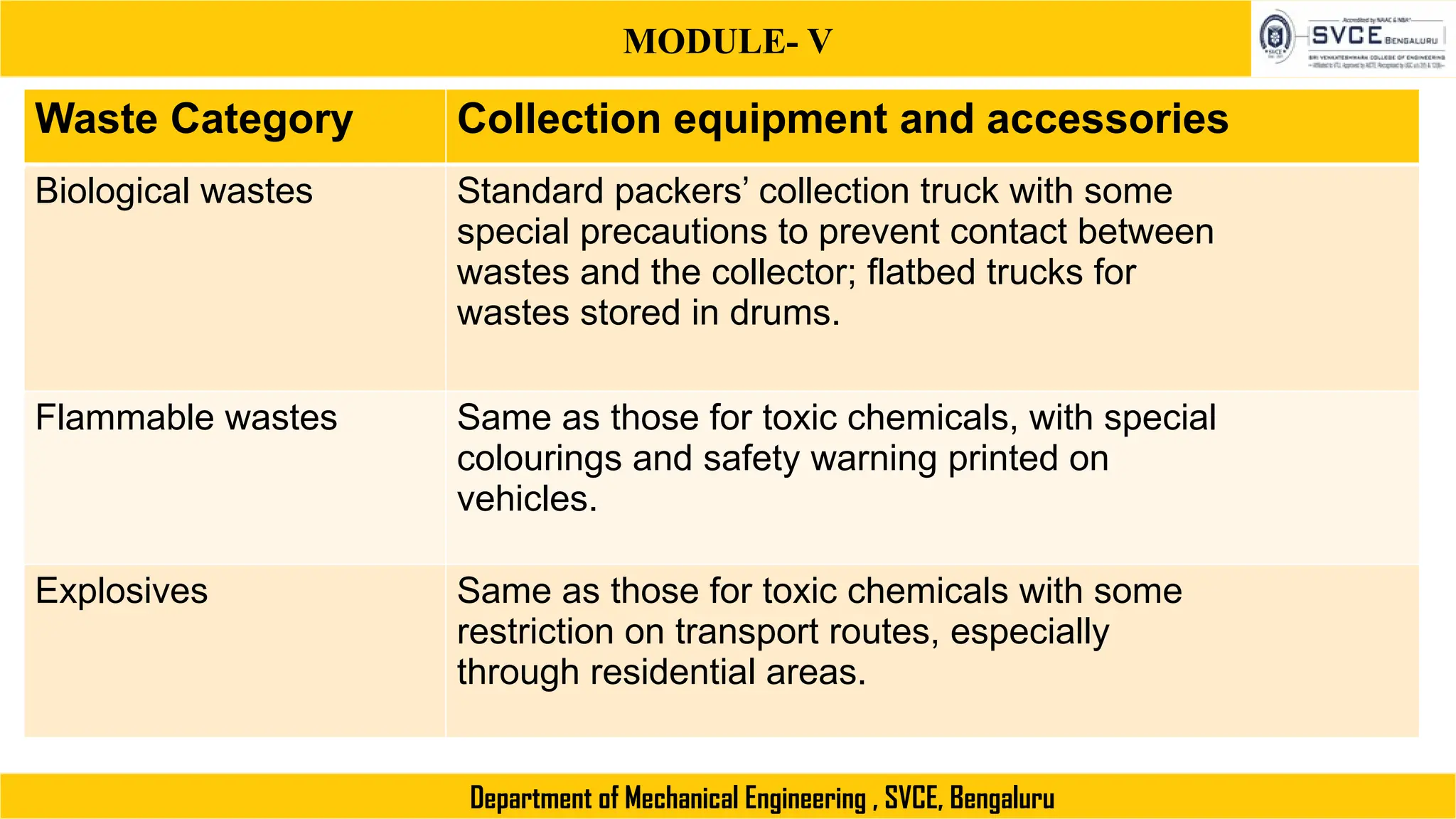
Waste Category Collection equipment and accessories
Biological wastes Standard packers’ collection truck with some
special precautions to prevent contact between
wastes and the collector; flatbed trucks for
wastes stored in drums.
Flammable wastes Same as those for toxic chemicals, with special
colourings and safety warning printed on
vehicles.
Explosives Same as those for toxic chemicals with some
restriction on transport routes, especially
through residential areas.
35.
MODULE- V
Department ofMechanical Engineering , SVCE, Bengaluru
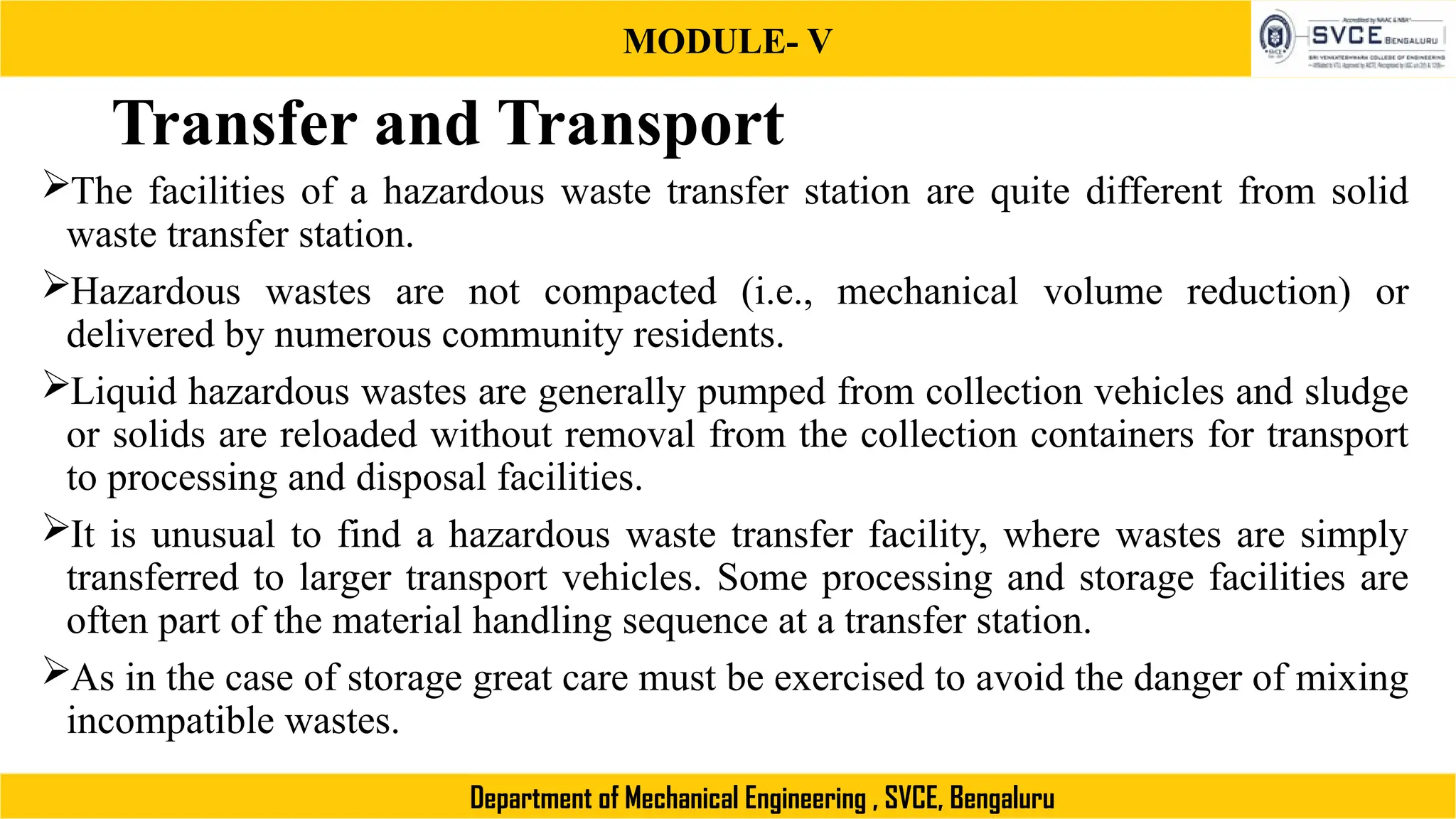
Transfer and Transport
The facilities of a hazardous waste transfer station are quite different from solid
waste transfer station.
Hazardous wastes are not compacted (i.e., mechanical volume reduction) or
delivered by numerous community residents.
Liquid hazardous wastes are generally pumped from collection vehicles and sludge
or solids are reloaded without removal from the collection containers for transport
to processing and disposal facilities.
It is unusual to find a hazardous waste transfer facility, where wastes are simply
transferred to larger transport vehicles. Some processing and storage facilities are
often part of the material handling sequence at a transfer station.
As in the case of storage great care must be exercised to avoid the danger of mixing
incompatible wastes.
36.
MODULE- V
Department ofMechanical Engineering , SVCE, Bengaluru
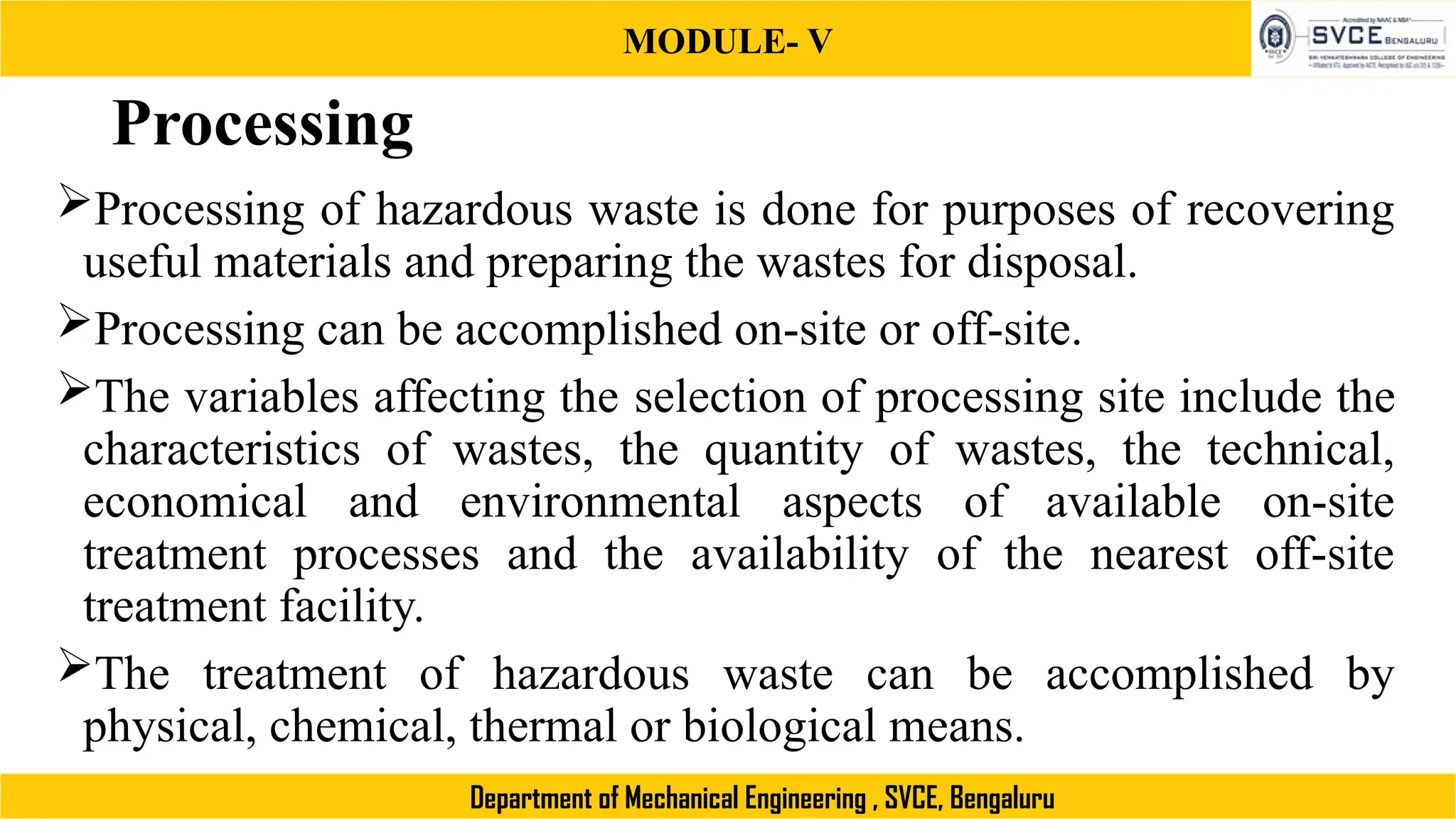
Processing
Processing of hazardous waste is done for purposes of recovering
useful materials and preparing the wastes for disposal.
Processing can be accomplished on-site or off-site.
The variables affecting the selection of processing site include the
characteristics of wastes, the quantity of wastes, the technical,
economical and environmental aspects of available on-site
treatment processes and the availability of the nearest off-site
treatment facility.
The treatment of hazardous waste can be accomplished by
physical, chemical, thermal or biological means.
37.
MODULE- V
Department ofMechanical Engineering , SVCE, Bengaluru
Disposal
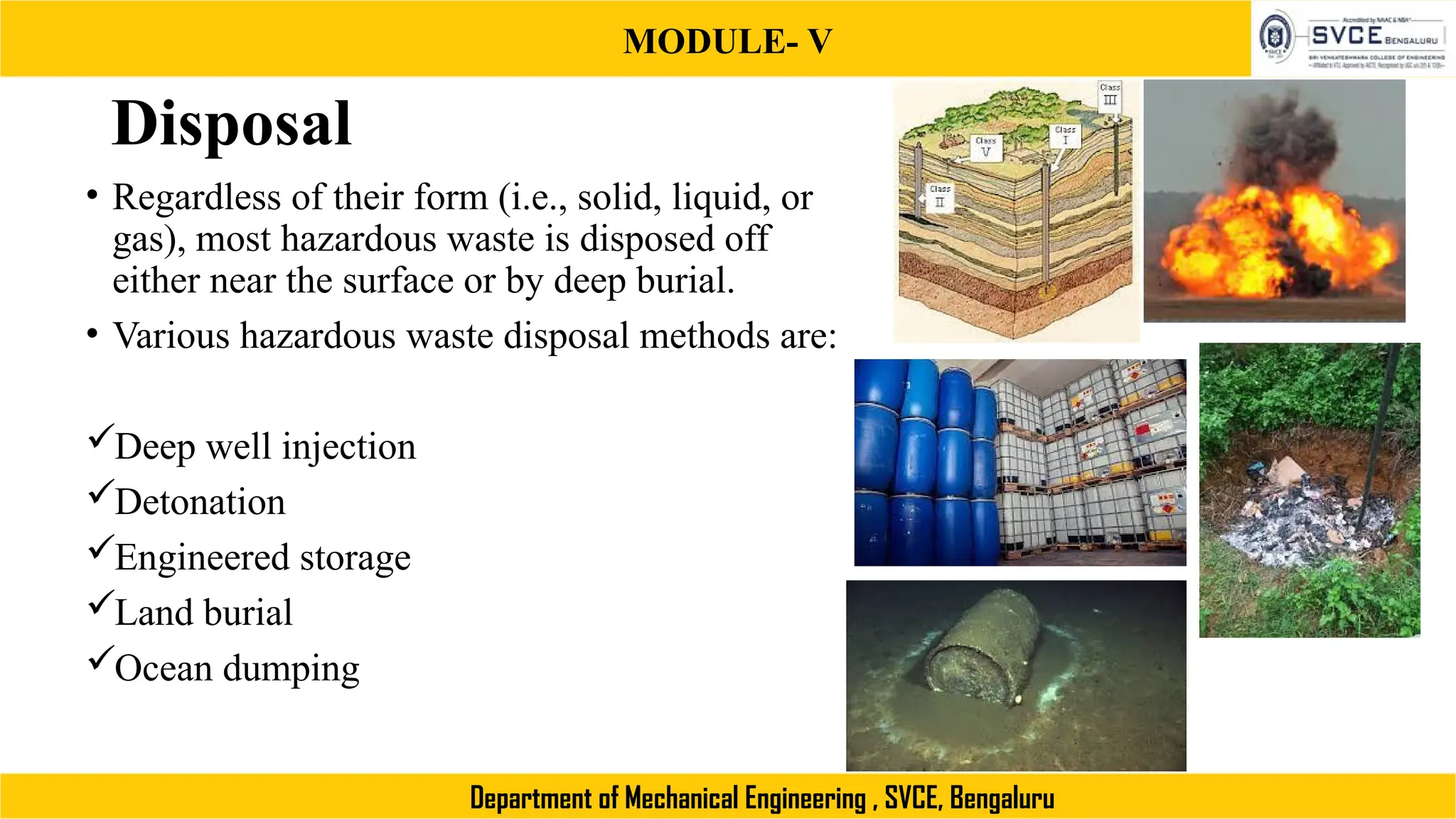
• Regardless of their form (i.e., solid, liquid, or
gas), most hazardous waste is disposed off
either near the surface or by deep burial.
• Various hazardous waste disposal methods are:
Deep well injection
Detonation
Engineered storage
Land burial
Ocean dumping
38.
MODULE- V
Department ofMechanical Engineering , SVCE, Bengaluru
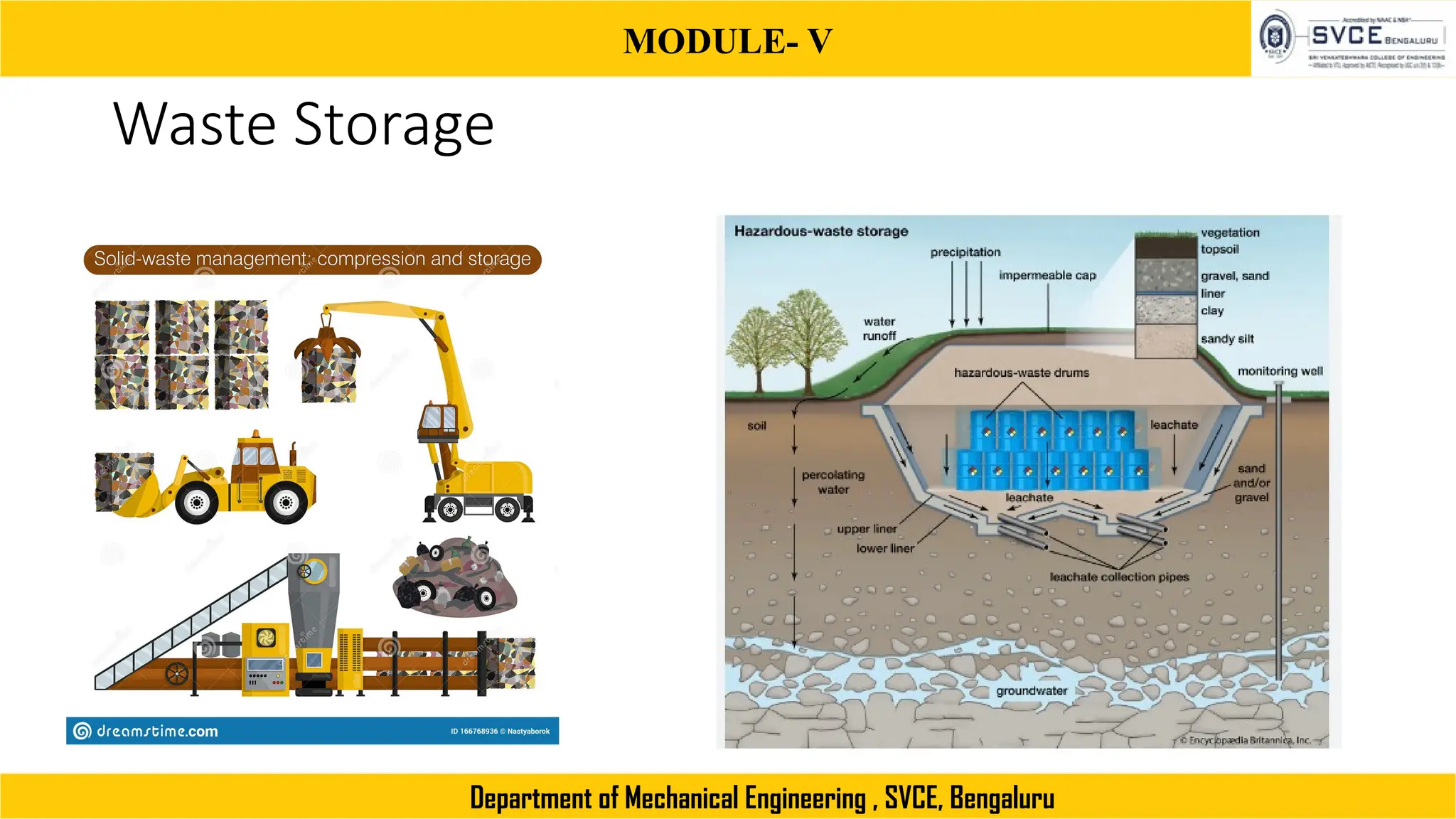
• In general, disposal sites for hazardous wastes should be separate from those for
municipal solid wastes
• Liquid wastes are usually stored in a tank near the site and can be introduced into the
landfill by means of trenches or lagoons, injection
• Sludges are also placed in trenches. During disposal of lightweight wastes, the
disposal area must be kept wet to prevent dust emissions.
• To avoid rupturing, the containers are unloaded and placed in position individually.
• Provision should be made to prevent any leachate escaping from landfill site. This
requires a clay liner, and in some cases, both clay and impermeable membrane liners
are used.
• A layer of limestone is placed at the bottom of the landfill to neutralise the pH of
leachate. A final soil cover of 25 cm or more should be placed over the liner. The
completed site should be monitored continuously, both visually and with sample
wells.
39.
MODULE- V
Department ofMechanical Engineering , SVCE, Bengaluru
Hazardous Waste Treatment
Physical and chemical treatment
1. Filtration and separation
a) Clarification
b) Dewatering
2. Chemical precipitation
3. Chemical oxidation and reduction
(redox)
4. Solidification and stabilisation
a) Solidification
b) Stabilisation
c) Chemical fixation
d) Encapsulation
5. Evaporation
6. Ozonation
Thermal treatment
1. Incineration
2. Pyrolysis
Biological treatment
1. Land treatment
a) Waste characteristics
b) Soil characteristics
c) Microorganisms
d) Waste degradation
2. Enzymatic systems
3. Composting
4. Aerobic and anaerobic
treatment
40.
MODULE- V
Department ofMechanical Engineering , SVCE, Bengaluru
Physical and Chemical Treatment
Physical and chemical treatments are an
essential part of most hazardous waste treatment
operations, and the treatments include the
following
1) Filtration and separation
• Filtration is a method for separating solid
particles from a liquid using a porous medium.
• The driving force in filtration is a pressure
gradient, caused by gravity, centrifugal force,
vacuum, or pressure greater than atmospheric
pressure.
41.
MODULE- V
Department ofMechanical Engineering , SVCE, Bengaluru
The application of filtration for treatment of
hazardous waste fall into the following categories
a) Clarification
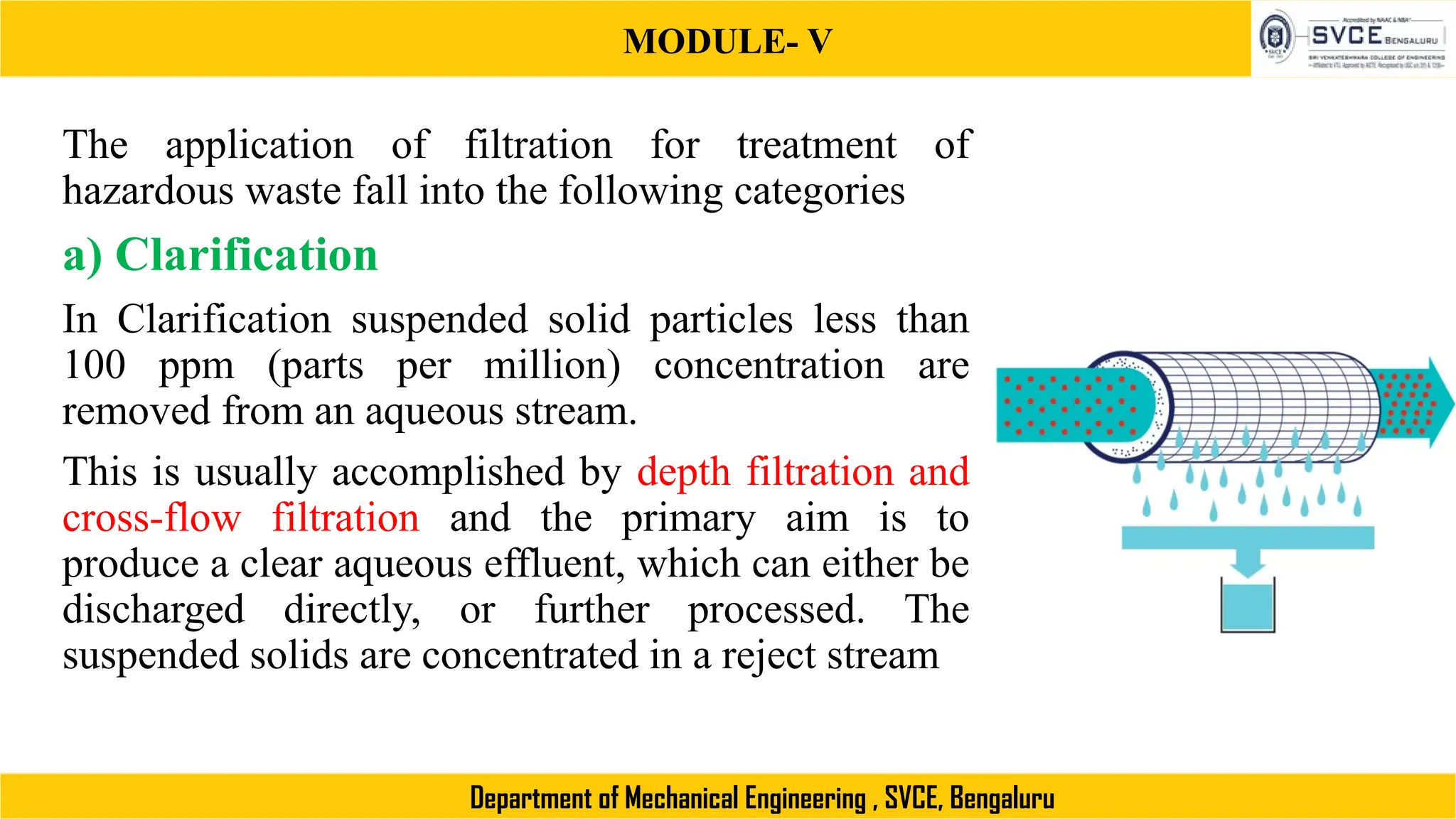
In Clarification suspended solid particles less than
100 ppm (parts per million) concentration are
removed from an aqueous stream.
This is usually accomplished by depth filtration and
cross-flow filtration and the primary aim is to
produce a clear aqueous effluent, which can either be
discharged directly, or further processed. The
suspended solids are concentrated in a reject stream
42.
MODULE- V
Department ofMechanical Engineering , SVCE, Bengaluru
b) Dewatering
• Dewatering of slurries of typically 1% to 30 % solids by weight.
• Here, the aim is to concentrate the solids into a phase or solid form for
disposal or further treatment.
• This is usually accomplished by cake filtration.
• The filtration treatment, for example, can be used for neutralisation of
strong acid with lime or limestone, or precipitation of dissolved heavy
metals as carbonates or sulphides followed by settling and thickening of the
resulting precipitated solids as slurry.
• The slurry can be dewatered by cake filtration and the effluent from the
settling step can be filtered by depth filtration prior to discharge.
43.
MODULE- V
Department ofMechanical Engineering , SVCE, Bengaluru
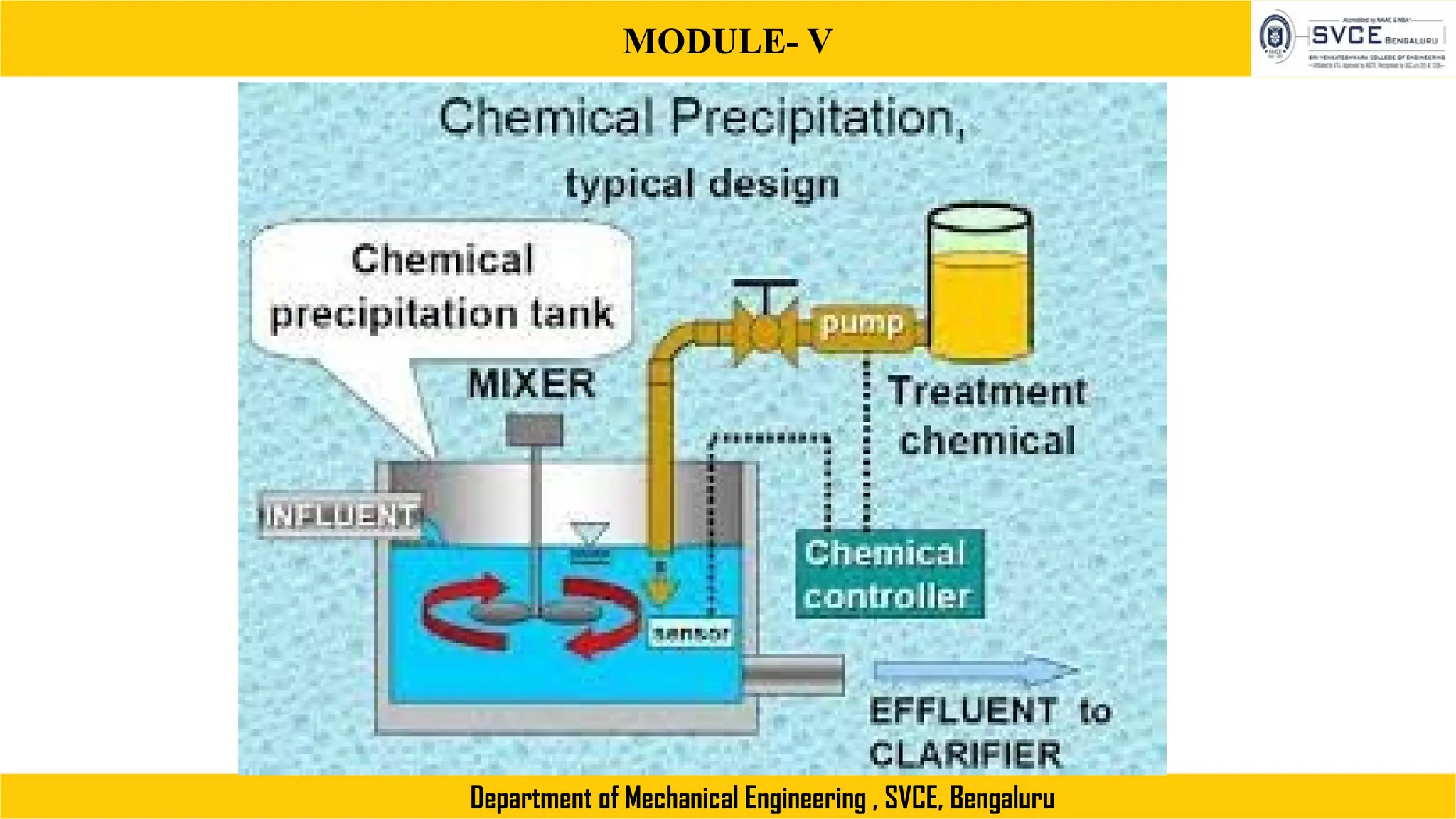
2) Chemical precipitation
This is a process by which the soluble substance is converted to an insoluble
form.
Settling and/or filtration can then remove the precipitated solids. In the
treatment of hazardous waste, the process has a wide applicability in the
removal of toxic metal from aqueous wastes by converting them to an
insoluble form.
This includes wastes containing arsenic, barium, cadmium, chromium, copper,
lead, mercury, nickel, selenium, silver, thallium and zinc. The sources of
wastes containing metals are metal plating and polishing, inorganic pigment,
mining and the electronic industries.
MODULE- V
Department ofMechanical Engineering , SVCE, Bengaluru
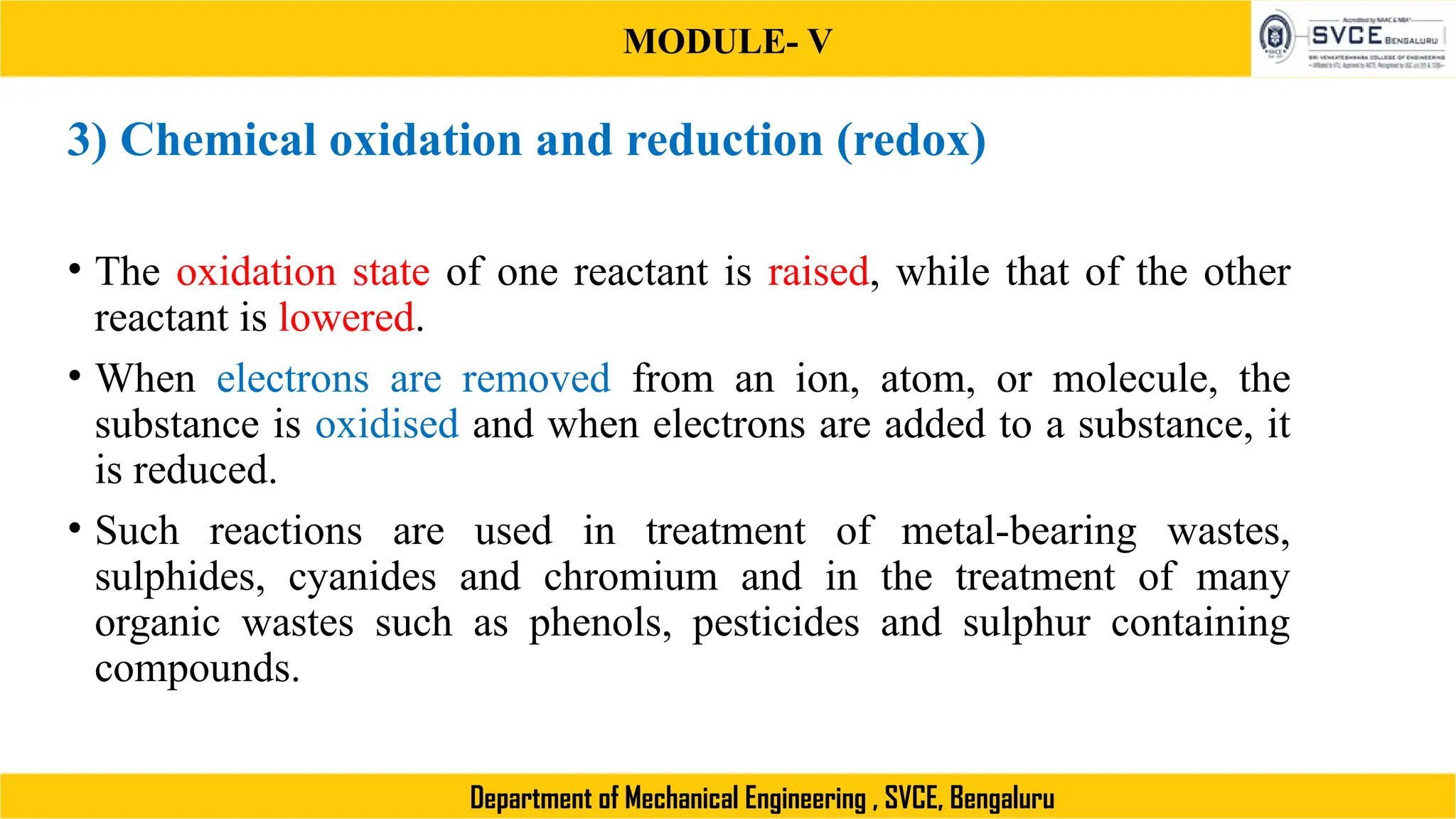
3) Chemical oxidation and reduction (redox)
• The oxidation state of one reactant is raised, while that of the other
reactant is lowered.
• When electrons are removed from an ion, atom, or molecule, the
substance is oxidised and when electrons are added to a substance, it
is reduced.
• Such reactions are used in treatment of metal-bearing wastes,
sulphides, cyanides and chromium and in the treatment of many
organic wastes such as phenols, pesticides and sulphur containing
compounds.
46.
MODULE- V
Department ofMechanical Engineering , SVCE, Bengaluru
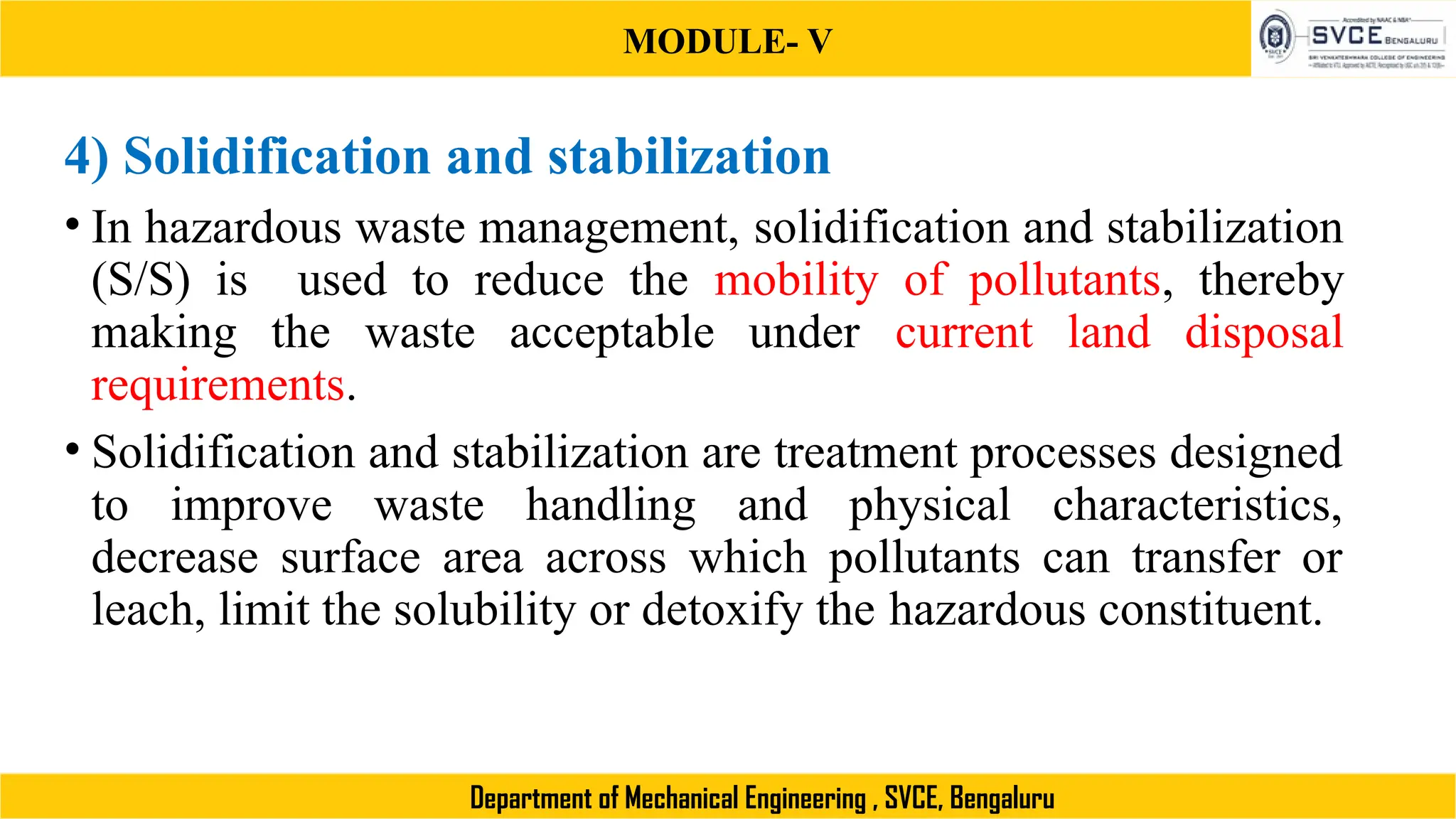
4) Solidification and stabilization
• In hazardous waste management, solidification and stabilization
(S/S) is used to reduce the mobility of pollutants, thereby
making the waste acceptable under current land disposal
requirements.
• Solidification and stabilization are treatment processes designed
to improve waste handling and physical characteristics,
decrease surface area across which pollutants can transfer or
leach, limit the solubility or detoxify the hazardous constituent.
47.
MODULE- V
Department ofMechanical Engineering , SVCE, Bengaluru
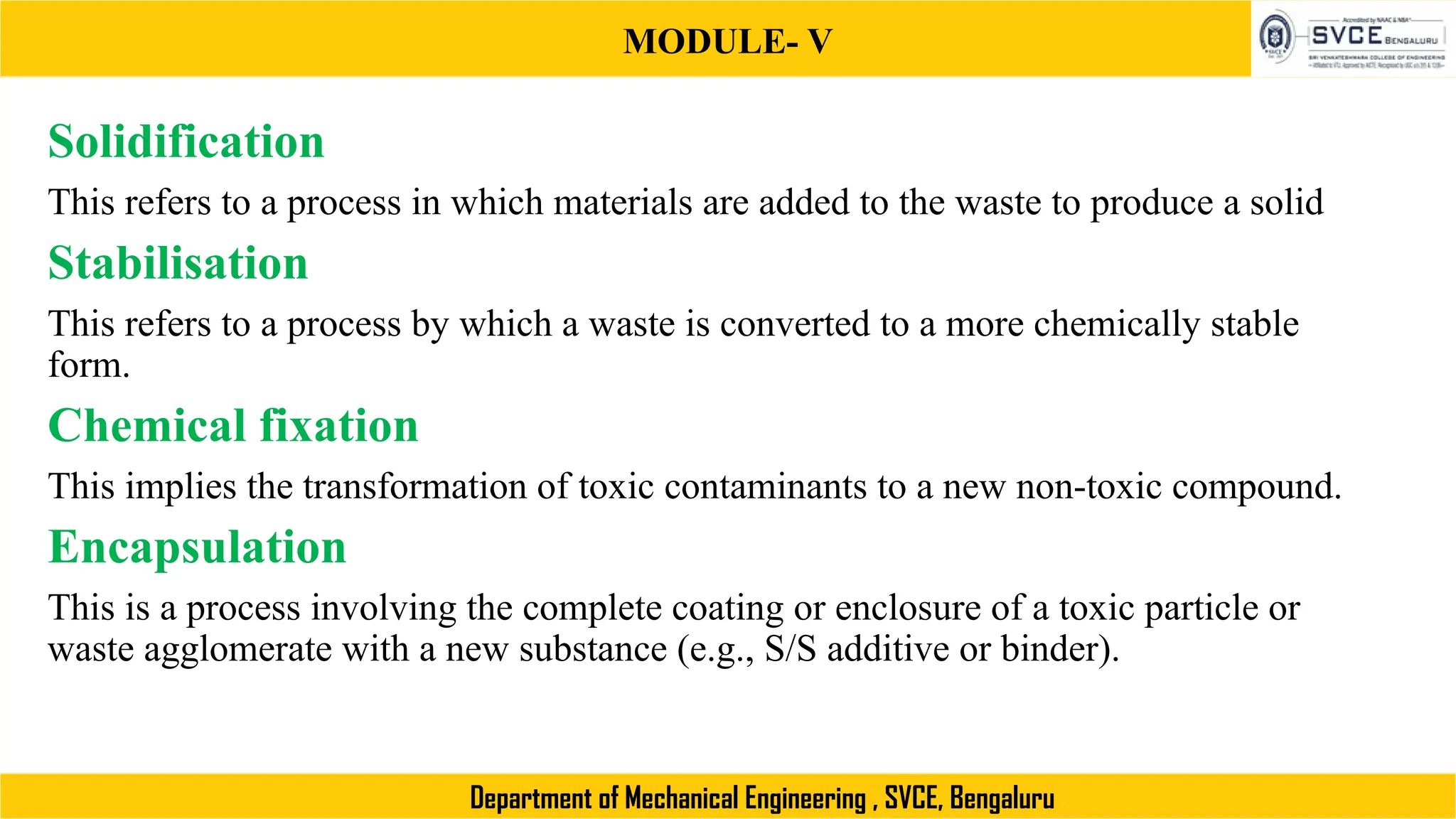
Solidification
This refers to a process in which materials are added to the waste to produce a solid
Stabilisation
This refers to a process by which a waste is converted to a more chemically stable
form.
Chemical fixation
This implies the transformation of toxic contaminants to a new non-toxic compound.
Encapsulation
This is a process involving the complete coating or enclosure of a toxic particle or
waste agglomerate with a new substance (e.g., S/S additive or binder).
48.
MODULE- V
Department ofMechanical Engineering , SVCE, Bengaluru
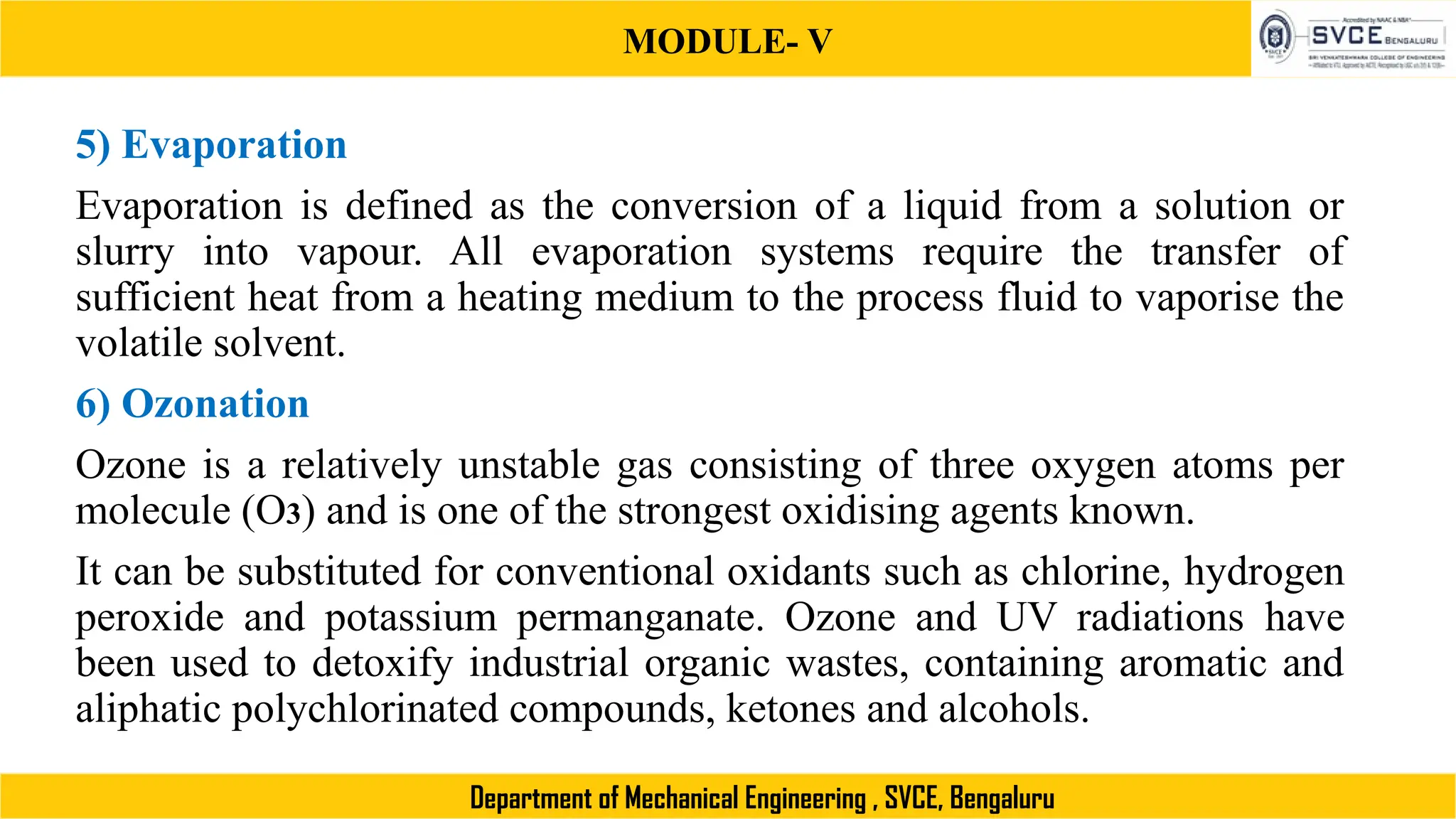
5) Evaporation
Evaporation is defined as the conversion of a liquid from a solution or
slurry into vapour. All evaporation systems require the transfer of
sufficient heat from a heating medium to the process fluid to vaporise the
volatile solvent.
6) Ozonation
Ozone is a relatively unstable gas consisting of three oxygen atoms per
molecule (O3) and is one of the strongest oxidising agents known.
It can be substituted for conventional oxidants such as chlorine, hydrogen
peroxide and potassium permanganate. Ozone and UV radiations have
been used to detoxify industrial organic wastes, containing aromatic and
aliphatic polychlorinated compounds, ketones and alcohols.
49.
MODULE- V
Department ofMechanical Engineering , SVCE, Bengaluru
Thermal treatment
Incineration
Incineration can be regarded as either a pre-treatment of hazardous
waste, prior to final disposal or as a means of valorising waste by
recovering energy. It includes both the burning of mixed solid waste
or burning of selected parts of the waste stream as a fuel. The
concept of treating hazardous waste is similar to that of municipal
solid waste.
50.
MODULE- V
Department ofMechanical Engineering , SVCE, Bengaluru
Pyrolysis
This is defined as the chemical decomposition by heating in the
absence of oxygen. This is a thermal process for transformation of
solid and liquid carbonaceous materials into gaseous components.
To elaborate, pyrolysis is applicable to hazardous waste treatment,
as it provides a precise control of the combustion process.
In the first step, wastes are heated to separate the volatile contents
(e.g., combustible gases, water vapour, etc.) from non-volatile char
and ash. In the second step volatile components are burned under
proper conditions to assure incineration of all hazardous
components
51.
MODULE- V
Department ofMechanical Engineering , SVCE, Bengaluru
Biological Treatment
1) Land treatment
This is a waste treatment and disposal process, where a waste
is mixed with the surface soil and is degraded, transformed or
immobilised through proper management. Compared to other
land disposal options, land treatment has lower long term
monitoring, maintenance and potential clean up liabilities.
In land treatment, the organic fraction must be biodegradable
at reasonable rates to minimise environmental problems
associated with migration of hazardous waste constituents.
52.
MODULE- V
Department ofMechanical Engineering , SVCE, Bengaluru
The various factors involved in the land treatment operation are
a) Waste characteristics
Biodegradable wastes are suitable for land treatment. Radioactive
wastes, highly volatile, reactive, flammable liquids and inorganic wastes
such as heavy metals, acids and bases, cyanides and ammonia are not
considered for land treatment.
Land treatability of organic compound often follows a predictable
pattern for similar type of compounds.
Chemical structure, molecular weight, water solubility and vapour
pressure are few of the characteristics that determine the ease of
biodegradation.
53.
MODULE- V
Department ofMechanical Engineering , SVCE, Bengaluru
b) Soil characteristics
The rate of biodegradation and leaching of waste applied, the
availability of nutrients and toxicants to microorganisms are
determined largely by the soil’s chemical and physical
characteristics or reaction.
Principal soil characteristics affecting land treatment processes are
pH, salinity, aeration, moisture holding capacity, soil temperature,
etc. Some of the characteristics can be improved through soil
amendments (e.g., nutrients, lime, etc.), adjustments of loading
rate, frequency, etc., at the time of waste application.
54.
MODULE- V
Department ofMechanical Engineering , SVCE, Bengaluru
c) Microorganisms
The types and population of microorganisms present in the
waste-amended soil depend on the soil moisture content,
available oxygen, nutrient composition and other characteristics.
The key groups of the microorganisms present in the surface soil
are bacteria, actinomycetes, fungi, algae and protozoa.
In addition to these groups, other micro and macro fauna, such aS
insects are often present.
55.
MODULE- V
Department ofMechanical Engineering , SVCE, Bengaluru
d) Waste degradation
Conditions favourable for plant growth are also favourable for
the activity of soil microorganisms.
The factors affecting waste degradation are soil pH (near 7),
soil moisture content (usually between 30 to 90 %), soil
temperature (activity decreases below 10 C) and nutrients.
56.
MODULE- V
Department ofMechanical Engineering , SVCE, Bengaluru
2) Enzymatic systems
Enzymes are complex proteins ubiquitous in nature.
Enzymes capable of transforming hazardous waste chemicals to
non-toxic products can be harvested from microorganisms grown
in mass culture.
The factors of moisture, temperature, aeration, soil structure,
organic matter content, seasonal variation and the availability of
soil nutrients influence the presence and abundance of enzymes.
57.
MODULE- V
Department ofMechanical Engineering , SVCE, Bengaluru
3) Composting
The principles involved in composting organic hazardous wastes are the same
as those in the composting of all organic materials.
The reaction is that certain types of hazardous waste molecules can be
degraded by only one or a very few microbial species.
The factor in composting of hazardous wastes will govern all biological
reactions.
The principal physical parameters are the shape and dimensions of the
particles of the material to be composted and the environmental factors of
interest in an operation are temperature, pH, available oxygen, moisture, and
nutrient availability.
58.
MODULE- V
Department ofMechanical Engineering , SVCE, Bengaluru
4) Aerobic and anaerobic treatment
• In aerobic treatment there is growth of microorganisms by carbon and
energy source,
Nutrients such as nitrogen, phosphorus and trace metals and oxygen provides
the source
Temperature and pH must be controlled as needed and the substances that are
toxic to the organisms (e.g., heavy metals) must be removed.
• Anaerobic treatment is a biologically destructive process in which
hydrocarbons are converted, in the absence of free oxygen, from complex to
simpler molecules, and ultimately to carbon dioxide and methane.
59.
MODULE- V
Department ofMechanical Engineering , SVCE, Bengaluru
POLLUTION PREVENTION AND
WASTE MINIMISATION
Pollution prevention is the use of materials, processes, or
practices that reduce or eliminate the generation of pollutants
or wastes at the source.
It includes practices that reduce the use of hazardous and non-
hazardous materials, energy, water or other resources.
It involves the judicious use of resources through source
reduction, energy efficiency, reuse of input materials and
reduces water consumption.
60.
MODULE- V
Department ofMechanical Engineering , SVCE, Bengaluru
• Waste minimization means the feasible reduction of hazardous
waste that is generated prior to treatment, storage and disposal.
• Practices that are considered in waste minimization include
recycling, source separation, product substitution,
manufacturing process changes and the use of less toxic raw
materials.
61.
MODULE- V
Department ofMechanical Engineering , SVCE, Bengaluru
Factors contributes the pollution prevention and waste
minimization
Management support and employee participation: A formal
policy statement must be drafted and adopted. The purpose of this
statement is to reflect commitment and attitude towards protecting
the environment, minimizing or eliminating waste and reusing or
recycling materials by the laboratories, departments and industries.
Training: Employees must be provided with formal and on-the-job
training to increase awareness of operating practices that reduce both
solid and hazardous waste generation.
62.
MODULE- V
Department ofMechanical Engineering , SVCE, Bengaluru
Waste audits: The audit programme includes the identification of hazardous
wastes and their sources, prioritization of various waste reduction actions to be
undertaken, evaluation of some technically, economically and ecologically
feasible approaches to waste minimisation and pollution prevention.
Good operating practices: These practices involve the procedural or
organizational aspects of industry, research or teaching activities and, in some
areas, changes in operating practices, in order to reduce the amount of waste
generated.
Material substitution practices: The purpose of these practices is to find
substitute materials, which are less hazardous than those currently utilized and
which result in the generation of waste in smaller quantities and/or of less
toxicity.
63.
MODULE- V
Department ofMechanical Engineering , SVCE, Bengaluru
Technological modification practices: These practices should be oriented
towards process and equipment modifications to reduce waste generation.
Recycling options: These options are characterised as use/reuse and
resource recovery techniques. Use and reuse practices involve the return of
a waste material either to the originating process or to another process as a
substitute for an input material. Reclamation practices tender a waste to
another company.
Surplus chemical waste exchange options: Inter- and intra-department
chemical exchange is to be implemented and encouraged by
employers/employees
64.
MODULE- V
Department ofMechanical Engineering , SVCE, Bengaluru
HAZARDOUS WASTES MANAGEMENT IN INDIA
• In the USA, more than 70% of the hazardous waste generated was
produced from chemical and petrochemical industries. Of the
remaining waste produced, 22% was generated by metal related
industries. As industrialisation proceeds, the management of
hazardous wastes is increasingly becoming a serious problem in
India as well.
• There are 13,011 industrial units located in 340 districts, out of
which 11,038 units have been granted authorization for multiple
disposal practices encompassing incineration, storage land
disposal and other disposal options.
65.
MODULE- V
Department ofMechanical Engineering , SVCE, Bengaluru
• India is the first country that has made provisions for the protection and improvement of
environment in its Constitution.
• has enacted the following laws, regulations and standards governing the country's
environmental protection:
• The Water (Prevention and Control of Pollution) Act, 1974 as amended in 1988.
• Water (Prevention and Control of Pollution) Rules, 1975.
• The Water (Prevention and Control of Pollution) Cess Act, 1977, as amended by
Amendment Act, 1991.
• The Water (Prevention and Control of Pollution) Cess Rules, 1978.
• The Air (Prevention and Control of Pollution) Act, 1984, as amended by Amendment Act,
1987.
• The Air (Prevention and Control of Pollution) Rules 1982 and 1983.
• The Environment (Protection) Act, 1986.
66.
MODULE- V
Department ofMechanical Engineering , SVCE, Bengaluru
Hazardous Changes to the Hazardous waste
Rules
• Existing Regulation: The Ministry had notified the Hazardous Wastes (Management
and Handling) Rules,1989 as amended in 2000 and 2003 for regulating management
and handling of hazardous waste. Based on the experience gained in the
implementation of these Rules, the Hazardous Waste (Management, Handling and
Transboundary Movement) Rules, 2008 have been notified repeating the earlier Rules
with a view to ensuring effective implementation.
• Current Scenario:The hazardous waste generated in the country per annum currently
is estimated to be around 8 million tonnes out of which 70% is being generated by five
states, namely Gujarat, Maharashtra, Tamil Nadu, Karnataka and Andhra Pradesh.
Only three States have developed common TSDF (Treatment, Storage, Disposal
Facility), which are essential component of proper hazardous waste management
activity for ultimate disposal of the hazardous wastes in an environmentally sound
manner.



![Hazardous_Waste_[Group_7]__final.pptx](https://cdn.slidesharecdn.com/ss_thumbnails/hazardouswastegroup7final-220909130211-ac718b66-thumbnail.jpg?width=640&height=640&fit=bounds)


